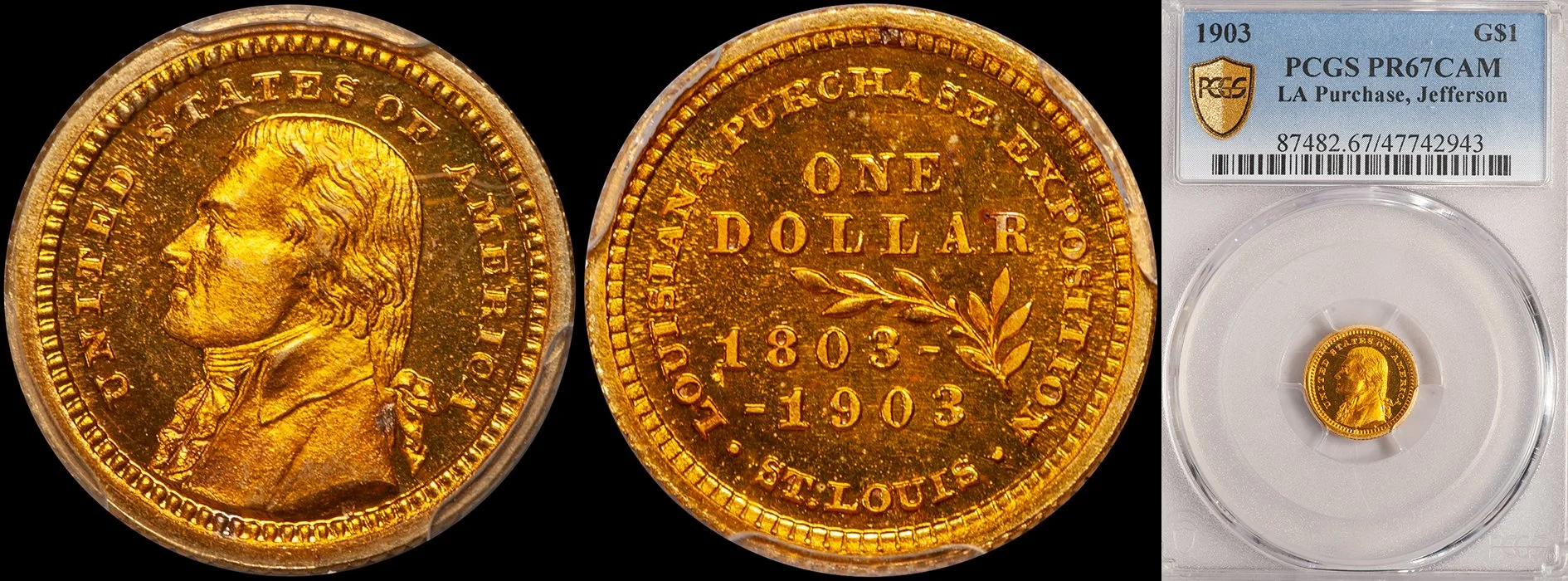
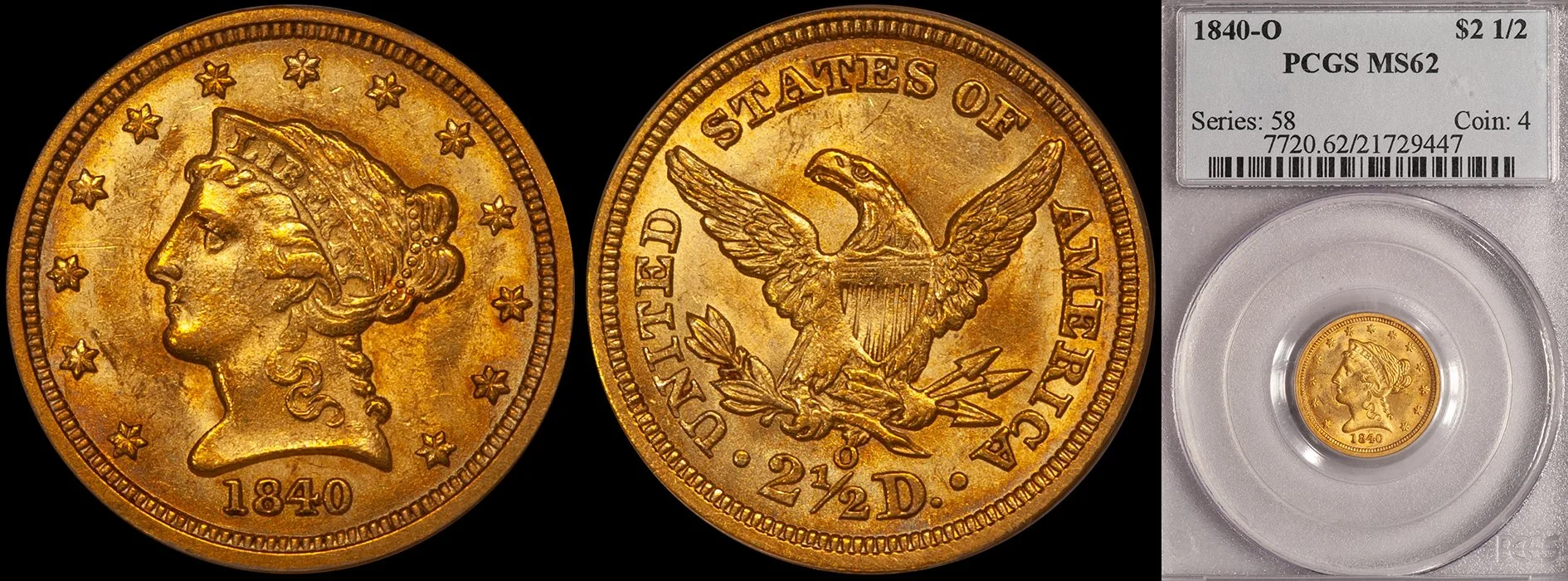
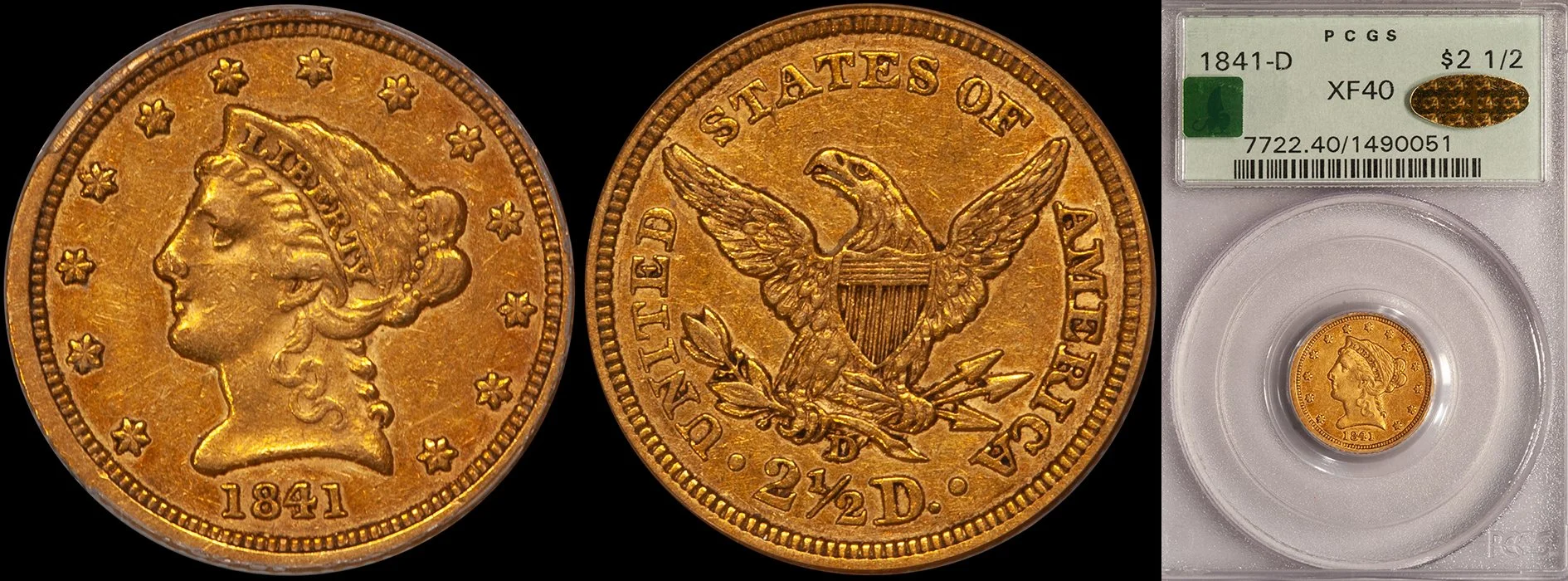
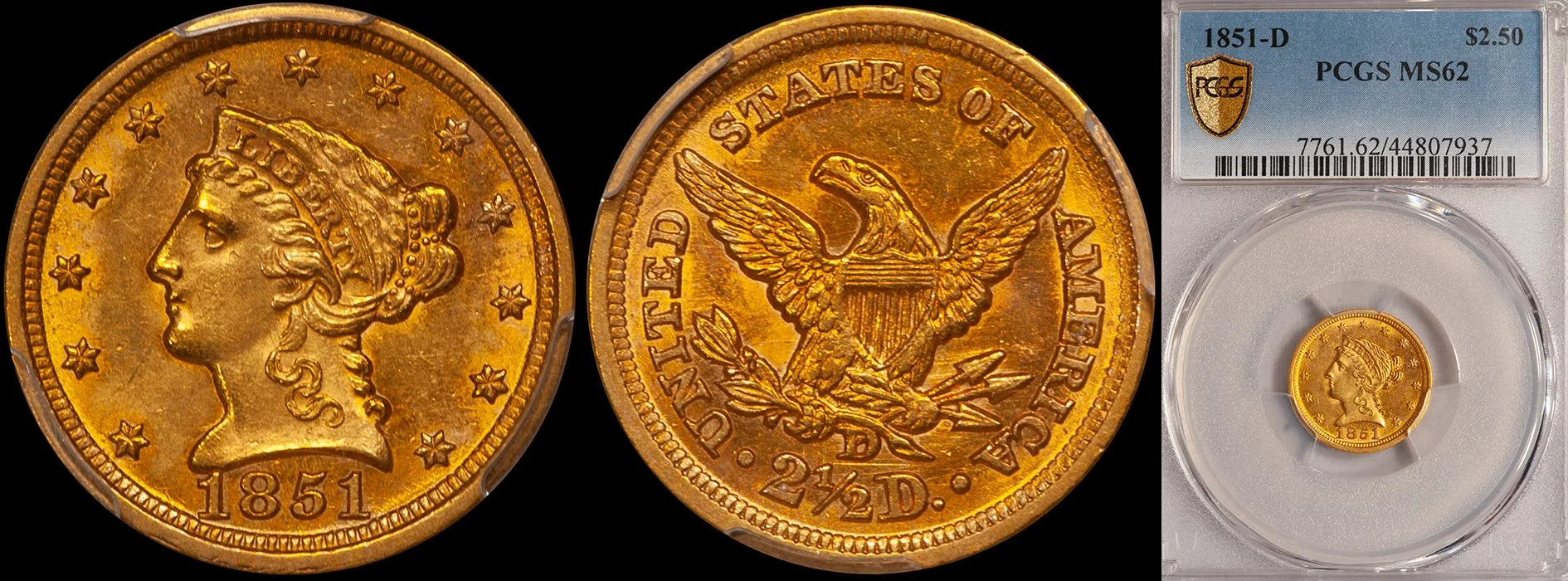
The NFL GM's Theory of Coin Buying

Is it possible that a strategy used by the General Manager of your favorite National Football League team can be applied to building your collection? This might not be as much of a stretch as you are, no doubt, thinking - and I invite you to read this blog and give my theory some thought. Have you ever wondered why some NFL teams select a linebacker in the first round of the draft even though they already have three excellent starters in their line-up and some good backups as well? What were they thinking? They were probably using the "draft the best available athlete" strategy and this can, in my opinion, be applied to your coin collection.

First, a little background is in order here. Some coin collectors have a very clearly defined focus to their set(s). They might collect something like Charlotte quarter eagles by date and they know exactly what they need to complete the set. But many other collectors are not this focused and I frequently get emails from collectors or calls from existing clients asking me "Doug, what set should I be focused on?"

The key word here is "focus" and I feel that focus is something that's very important for a new or advanced collector. Having a focus gives you a sense of purpose as a collector and allows you to see a beginning and an end of your endeavors.

But "focus" means one thing to one collector and another thing to another. Some collectors are exceptionally focused and are excited by the thought of collecting every known die variety and die state of 1798 half eagles; for others this would be torture. So how exactly can the "NFL theory" work for the collector who knows he needs some sort of direction to follow but who doesn't want to follow an overly-narrow course?

Remember what I said earlier about drafting the best available athlete? Well what if a collector's focus was the "best available coin?" This might mean that he wasn't buying a certain Charlotte quarter eagle because it fit into a date set but rather because it was scarce or had a great "crusty" look or it was low population (or a combination of all these factors).

Most collectors have laid some basic ground work for their collections. They might buy just gold coins, as opposed to coins in all metals. Taking this further, what if the collector then decides to specialize in gold coins struck between 1800 and 1900? There are a number of things this collector can now decide to become more focused without becoming too much of a specialist. Some examples might include the following:

-Buying coins priced between $2,500 and $5,000 -Buying coins with a certain sort of "look" -Buying coins with original mintages of less than 10,000 -Buying coins that are in the top 10% of all those graded for the date -Buying coins from branch mints -Buying coins not from branch mints

Its my belief that too many collectors worry about being over-specialized and that, in order to deal with DWN they have to be specialists. This isn't the case.

Coin collecting should be about buying what interests you and what makes sense for your budget. I know of many collectors who are, in a loose sense of the word "specialists" but not in the traditional sense.

1855 $20.00 PCGS EF40

The 1855 is one of my favorite "sleeper" Type One double eagles. This choice, evenly worn example has nice even green-gold color and very sharp overall detail. The obverse shows some abrasions across the fields; the reverse is choicer. With current spot price at close to $1,800, this coin melts at a bit over $1,700. How can you go wrong buying such a scarce date at such a small premium factor?

1863 $20.00 PCGS AU58

The two rarest Civil War double eagles are the 1862 and 1863, in that order. Both dates have become quite expensive in Uncirculated grades, making nice AU58's (like this coin) a viable option for most collectors. This piece is semi-prooflike and very boldly detailed with no real wear but enough friction on the high spots to accurately grade it as an AU58. But this isn't your average, run-of-the-mill AU58. It is a lovely "super slider" with nice light orange-gold and rose color and great overall eye appeal. There are some abrasions on both sides, probably from being shipped loose in a bag, but other than a shallow scrape below star one on the obverse, none of these are very detracting. The last few AU58 examples of this date that I have seen at auction or on the bourse floor have traded in the $14,000-15,000 range but lacked the overall eye appeal that this piece has in spades. A terrific coin for the advanced collector of Type One double eagles or the Civil War gold specialist.

Mintmark Varieties of Dahlonega Half Eagles

For variety collectors, the half eagles struck at the Dahlonega mint are fertile ground. There are a number of very interesting varieties, but currently just a handful of collectors appreciate them. With the upcoming release of the third edition of my Dahlonega book, I feel that this situation may change. In the first two editions of this book, the variety section(s) were not illustrated and, to be honest, had a number of errors and omissions. Thanks to the assistance of Brian Kollar, a cataloger at Heritage Auctions, this has changed. The variety information in the new Dahlonega book is truly "state-of-the art" and I think it will jump-start this area of the market.

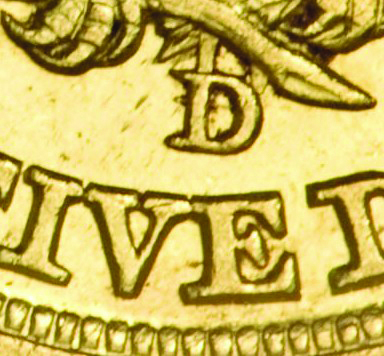
Brian spent a lot of time and effort helping me with the varieties. One thing that I have learned from his groundbreaking work--and something I'd like to share with collectors of Dahlonega half eagles--involves the numerous mintmark sizes found on these coins. I think it will be helpful to illustrate each of the three mintmark sizes used and to discuss which years these are found on. I'm also going to discuss the relative scarcity and importance of these varieties.

There are three mintmark sizes seen on Dahlonega half eagles. These are as follows:

Small D: This mintmark is found on 1840-D, 1841-D, 1842-D Small Date, 1842-D Large Date, and 1843-D half eagles. In the new book, the reverses that employ the Small mintmark are lettered as follows: C,D, E and F. It is illustrated below:

Small D

Medium D: This mintmark is found on 1843-D, 1844-D, 1854-D, 1855-D, 1859-D, 1860-D, and 1861-D. In the new book, the reverses that employ the Medium mintmark are lettered as follows: G, CC and JJ. It is illustrated below:

Medium D

Large D:. This mintmark is the most common size and it is found on the 1838-D, 1839-D, 1840-D, 1841-D, 1845-D, 1846-D (both the normal mintmark and the D/D), 1847-D, 1848-D (both the normal mintmark and the D/D), 1849-D, 1850-D, 1851-D, 1852-D, 1853-D, 1854-D, 1855-D, 1856-D, 1857-D, 1858-D, 1859-D, and 1860-D. In the new book, the reverses that use the Large mintmark are lettered as follows: A-B, H-Z, AA, BB and DD-II.

Large D

There are six different years in which Dahlonega half eagles are known with more than one mintmark size. Let's take a look at each of these years and discuss the different varieties.

1840-D: There are a total of two different varieties known for this year.

The first is the Large D (Winter Variety 3-B) which is recognized by PCGS as the Tall D. For the sake of consistency I refer to it here as a Large D, but it is sized and configured differently than what is seen in later years. My guess is that this punch was created by Gobrecht and shows his style; the later Large D punch was by Gobrecht and was executed in his distinctive style. The 1840-D Large (or Tall) D half eagle is the more common of the two varieties seen for this year.

The second is the Small D (Winter Variety 4-C) which is recognized by PCGS as the Small D. It is usually seen with a die crack from the rim through the right diagonal of the V in FIVE through the right side of the mintmark and then up onto the shield. This variety is very scarce.

1841-D: There are three die varieties for this year which use two different mintmark sizes.

Winter 5-B uses the Large (or Tall) mintmark first seen on the 1840-D. This is a rare variety and one that is likely to sell for a premium. It is believed that only 4,105 examples were produced early in the year.

Winter 5-D and Winter 6-D use the Small mintmark but it is not the same one as seen on the 1840-D half eagle. Variety 5-D is common; Variety 6-D (which shows repunching on all four digits of the date) appears to be rare.

1843-D: There are two die varieties known for this year.

The first has a Small mintmark as seen on the 1842-D Small Date. Designated as Winter Variety 10-F, it is quite rare and it should sell for a good premium over the other variety of the year.

The second, Winter 11-G, has a Medium mintmark and it is also seen on the 1844-D. Interestingly, it can be best determined by its obverse as it shows a line of three tiny die lumps between the first and second stars which is not present on Variety 10-F. This variety is quite common.

PCGS recognizes two mintmark sizes for the 1853-D half eagle, but this is not correct. All 1853-D half eagles have a Large mintmark. PCGS lists six coins in the population report as having a Medium mintmark.

The next year in which two different mintmark sizes are known for Dahlonega half eagles is 1854.

1854-D: There are a total of four die varieties known.

The two most common varieties of the year, Winter 36-AA and Winter 37-BB, have a Large mintmark.

The rarest of the four varieties is Winter 37-CC, which has a Medium mintmark. This variety should sell for a premium over the Small mintmark but it is less likely to than other years, given how common the 1854-D is as a date.

The most unusual variety of the year, Winter 37-DD, actually has "no" mintmark (!) It was, of course, struck at the Dahlonega mint but the mintmark was so faintly entered into the reverse die that it is sometimes totally impossible to see. Examples do exist, however, with traces of the top of the D.

1855-D: There are two die varieties known for this year.

The more common of the two, Winter 38-CC, has a Medium mintmark. It is appears that this is the same mintmark first used in 1854 to strike Winter 37-CC.

The rarer of the two, Winter 38-EE, has a Large mintmark. It appears to be very scarce and possibly even quite rare.

1859-D: There are two die varieties known for this year.

The first, Winter 43-CC, has a Medium mintmark and it is common. It is the same reverse that was used to strike Winter 37-CC (1854-D) and Winter 38-CC (1855-D).

The second variety, Winter 44-HH, uses a Large mintmark and it is very rare. It uses the same reverse first employed to strike Winter 42-HH (1858-D).

1860-D: There are three varieties known for this year.

The first, Winter 45-HH, has a Large mintmark. It uses the same reverse as on Winter 42-HH (1858-D) and Winter 44-D (1859-D). The second, Winter 45-II, also has a Large mintmark but it is placed closer to the branch than on Winter 45-HH. The former is very rare and the latter is rare.

The third and final variety of the year is Winter 45-JJ. It has a Medium mintmark and is also found on the 1861-D half eagle. It is common.

One can't discuss the mintmark size varieties of Dahlonega half eagles and not discuss the spectacular 1846-D over D and 1848-D over D varieties.

1846 D/D

There are actually two different varieties of 1846-D/D half eagle, Winter 17-J and Winter 18-J. The first has a low date and it was also used on the 1846-D Normal Mintmark, Winter 17-I. On the reverse, the mintmark was first punched too high and too far to the right. The second mintmark is lower and further to the left. The second variety of 1846-D/D, Winter 18-J, has a slightly different date punch with the numerals placed a bit higher in the field. The 1846-D/D is common but it is popular due to the fact that it is clearly visible to the naked eye.

A similar but less known variety exists for the 1848-D. The 1848-D/D half eagle, Winter 22-O, shows the original mintmark punched too low and the second punched to the left and then effaced. This variety is much more subtle than the 1846-D/D and unless it is an early die state with both of the mintmark punches visible to the naked eye, it doesn't command a premium.

1848-D

The mintmark varieties that I have listed here are the ones that I believe to be important and to be the most potentially collectible if and when Dahlonega half eagles become collected in this fashion. There are, of course, dozens of less obvious varieties and this includes some that are very rare.

Two Cool Proof Civil War Gold Dollars Sold by DWN

1862 graded Proof-64 Deep Cameo by PCGS, CAC approved

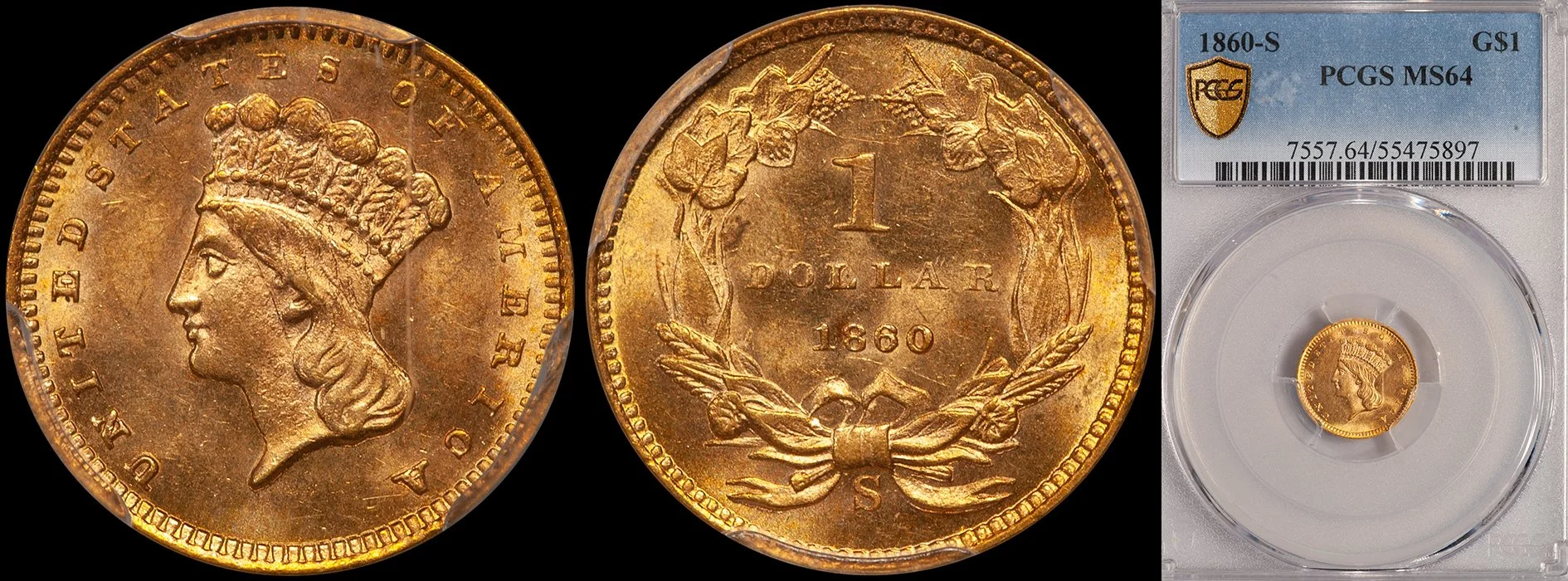
Douglas Winter Numismatics recently sold two very rare and very beautiful Proof gold dollars from the Civil War era. These were an 1862 graded Proof-64 Deep Cameo by PCGS, and an 1864 graded Proof-66 Deep Cameo by PCGS. Both coins had also been approved by CAC. I'd like to share some information about these pieces with you and discuss very rare but comparatively affordable Proof gold from this era as well.

The rarity of Proof 1862 gold dollars is not widely recognized, probably due to the fact that business strikes are very common and were minted to the tune of 1.36 million pieces. Proofs are another story with just 35 coins struck for collectors. On the PCGS website, it states that "between 18 and 25 are known," but this number seems high to me given the typical survival rate for small-size gold proofs of this era. I believe that the number known is more likely in the area of 15 to 18, with the average piece grading PR64 to PR65.

As of the end of October 2011, PCGS has graded a total of 17 Proof 1862 gold dollars. This includes seven in PR65 and two in PR66 with no adjectival modifier(s), as well as two in PR64 Deep Cameo and two in PR65 Deep Cameo. NGC has also graded 17 Proofs for this date. Included in this number are four in PR65 and two in PR66 with no modifiers, as well as two in PR66 Ultra Cameo and a single coin in PR67* Ultra Cameo. I believe that these numbers are significantly inflated by resubmissions, especially in PR65.

The finest known Proof 1862 gold dollar is clearly the NGC PR67* Ultra Cameo that was last sold as Scotsman 10/08: 790 ($51,750). It was earlier ex Eliasberg: 50 and it is one of the nicer Proof gold dollars of this era that I have ever seen.

A number of Proof issues of this denomination are challenging to distinguish between Proof and business strike manufacture. This is not the case with the earlier Type Three Proofs. Business strikes from the 1856-1872 era tend to seldom come with the deep, reflective surfaces that are seen on the 1872-1889 issues and these early Type Three Proofs have an overall "look" that is totally different from business strikes of this era.

The 1862 dollar that is illustrated above is a choice enough coin for the grade that I think it merits a paragraph or two to discuss why it is "only" a PR64.

While not necessarily clear on the image, there are a few very light hairlines on the obverse that very narrowly preclude a PR65 grade. How hairlined can a Proof gold coin be to still garner a PR65 grade?

Back in the early days of PCGS and NGC, the grading services were extremely strict when grading Proof gold. A coin with any signs of friction or hairlines (even hairlines that were not from past cleanings) was automatically knocked out of the Gem level and this meant that larger denomination Proofs (specifically eagles and double eagles) were almost never seen in PR65 and were essentially unknown above this.

In today's market, a Proof gold coin can have a few very light hairlines and still grade PR65. But in order to garner a PR66 or higher grade, a coin has to be exceptional. And what about lintmarks or other mint-made features on the surfaces? Lintmarks (which are cause by polishing the blank planchets before striking in order to attain a highly reflective surface) are generally overlooked in the grading process unless they are extensive or they are situated in extremely obvious focal points such as the cheek of Liberty or exposed in the left obverse field.

1864 graded Proof-66 Deep Cameo by PCGS, CAC approved

In 1864, mintages of Proof gold coins actually increased to 50 pieces. Given the severe economic climate of the war-ravaged country, this seems like wishful thinking on the part of the U.S. Mint, and it is likely that at least some of these coins went unsold and were melted.

PCGS estimates that "17 to 22 examples survive." As with many of their estimates, I find them a bit on the high side. My guess for total number known is around 14 to 18, and this is based on the fact that there are only 12 auction appearances for Proof 1864 gold dollars dating back to the early 1990's.

The 1864 gold dollar is rarer than than the 1862 in high grades with at least a few pieces known in the PR62 to PR63 range. It is extremely rare in Gem, and there appear to be around four or five known that grade PR65 and higher grades.

As of the end of October 2011, PCGS had graded seven in all. The best non-cameo was a single PR66, while the best Deep Cameo was the PR66 DC shown above. NGC shows a very inflated population of 16 in all grades. The single highest graded was a PR67 Cameo. They have also graded two in PR66 Ultra Cameo.

The aforementioned NGC PR67 Cameo has never appeared at auction and I have not seen it. The record price at auction is $32,200, set by Heritage 10/11: 4625, which sold for $32,200. This is the exact coin shown above. I bought it for a client in an NGC PR66 Ultra Cameo holder, crossed it to a PCGS PR66 Deep Cameo holder, and received approval at CAC.

This coin has terrific overall eye appeal with deep, reflective fields that are strongly contrasted by the devices. There are a few very small lintmarks (as made), but no hairlines.

It is interesting to note that the collector I purchased this coin for has been working on an 1864 gold proof set for a number of years. The gold dollar was the last coin he needed and the set is now complete. I find this to be a real endorsement of the rarity of the 1864 gold dollar in Proof; given that this collector was able to find the rare (and expensive) eagle and double eagle of this year before he could locate the humble (and more affordable) gold dollar.

Which brings us to the final topic of this blog: it has been said again and again that Proof gold is the "caviar" of American numismatics. There is no question about the fact that Proof gold is an expensive area to collect and that specializing in this area of the market is ambitious, to say the least.

But within the area of Proof Gold, there are pockets of value. I have always liked the smaller-size (dollar and quarter eagle) issues with mintages of 50 or fewer in PR63 to PR65 grades. As an example, the 1862 dollar that I discussed above was a beautiful PCGS PR64 Deep Cameo example with CAC approval. Without knowing the market, would you care to venture a guess of this coin's value? $20,000? $30,000? More?

Surprisingly, I listed and sold this coin in the mid-teens.

Say a collector had a budget of $30,000-40,000 to spend each year on Proof gold. Would he be better off buying a few relatively common coins in exceptional grades (an example of such a piece would be a 1902 quarter eagle in PR67 cameo) or a few very rare coins in choice but not as spectacular grades?

Being someone whose numismatic decisions are typically based around rarity, I'd go with two very rare low mintage coins in the $20,000 range as opposed to one more common but spectacular coin in the $40,000 range. The exception would be if I were putting together a type set of Proof gold and I needed just a single example of each type. Then, I would tend to go with a coin like an 1886 gold dollar in PR66 as opposed to, say, an 1866 gold dollar in PR64.

Do you have questions about Proof gold? Feel free to contact me via email at dwn@ont.com and I would be happy to answer them for you.

1876-CC $20.00 NGC AU58 CAC

If you've spent any time on this site, you might now that I am a big, big fan of high end AU58 gold coins. True "sliders" are coins that have the look and eye appeal of a much more highly graded piece often at a significant savings from, say, an MS61 or an MS62 example of the same issue. The present coin is a case in point. It is nearly fully lustrous and shows just a smidgen of wear in the left obverse field and the high spots of the cheek and brow. The surfaces are far cleaner than usual for the issue and both sides show attractive rich natural orange-gold hues. I have sold a number of MS61 1876-CC double eagles at double the price of this AU58 that were not as attractive and this, to me, is what makes this a very good value for the CC double eagle collector. This is one of only eight 1876-CC double eagles in AU58 to have received approval at CAC; fourteen finer have been approved as well.

1867 $5.00 NGC AU55

Only 6,870 examples of this date were minted and the survival rate is even lower than one might expect for a Reconstruction Era gold coin. I believe there are fewer than 100 known in all grades and this is confirmed by the fact that there are just 34 graded at PCGS and another 53 at NGC (that's 87 "grading events" which could translate to as few as 40-50 distinct coins). This slightly reflective example has typical surfaces for the issue but it lacks any of the deep, poorly situated marks that characterize most higher graded 1867 half eagles. The color is a light rose gold and there are vestiges of dirt in the protected areas of the reverse. The last 1867 half eagle in AU55 to sell was Heritage 2011 FUN: 6915 (slabbed by NGC) which was extensively abraded and inferior to this piece; it sold for $3,594. For under $4,000, this is a fantastic value as it is not far removed from the Condition Census and it is a legitimately rare coin in this grade.

1855 $20.00 NGC AU58 CAC

Along with the 1856, the 1855 is my favorite "sleeper" issue among Type One double eagles. There used to be other dates I put in this group, such as the 1862, 1863 and 1866-S No Motto, but these dates have been discovered and are no longer affordable like the 1855. The present example is a delightful slider with nearly full mint luster in a hard, satiny texture as is typical for high quality 1855 double eagles. The color is a light green-gold hue and the surfaces are exceptionally clean with just a few tiny abrasions visible to the naked eye. In MS60, Trends jumps to $11,500 and if you can find a decent quality Uncirculated example (no easy feat, given the scarcity of this issue in Mint State) you will probably be spending in the area of $12,500 to $15,000. This is one of just two examples in AU58 (with one finer) that have been approved by CAC; the other (a PCGS AU58) brought $5,175 in Heritage's April 2011 sale.

1862-S $20.00 NGC AU53 CAC

The 1862-S remains one of the harder Civil War era San Francisco double eagles to find in higher grades. The best examples that are generally seen are in the AU53 to AU58 range, and more often than not, coins that qualify as such have numerous abrasions and no natural color. This lightly worn piece shows exceptional rich russet-gold hues and nice, lightly marked surfaces. There are a few minor abrasions in the left obverse field that are not inconsistent with the assigned grade.