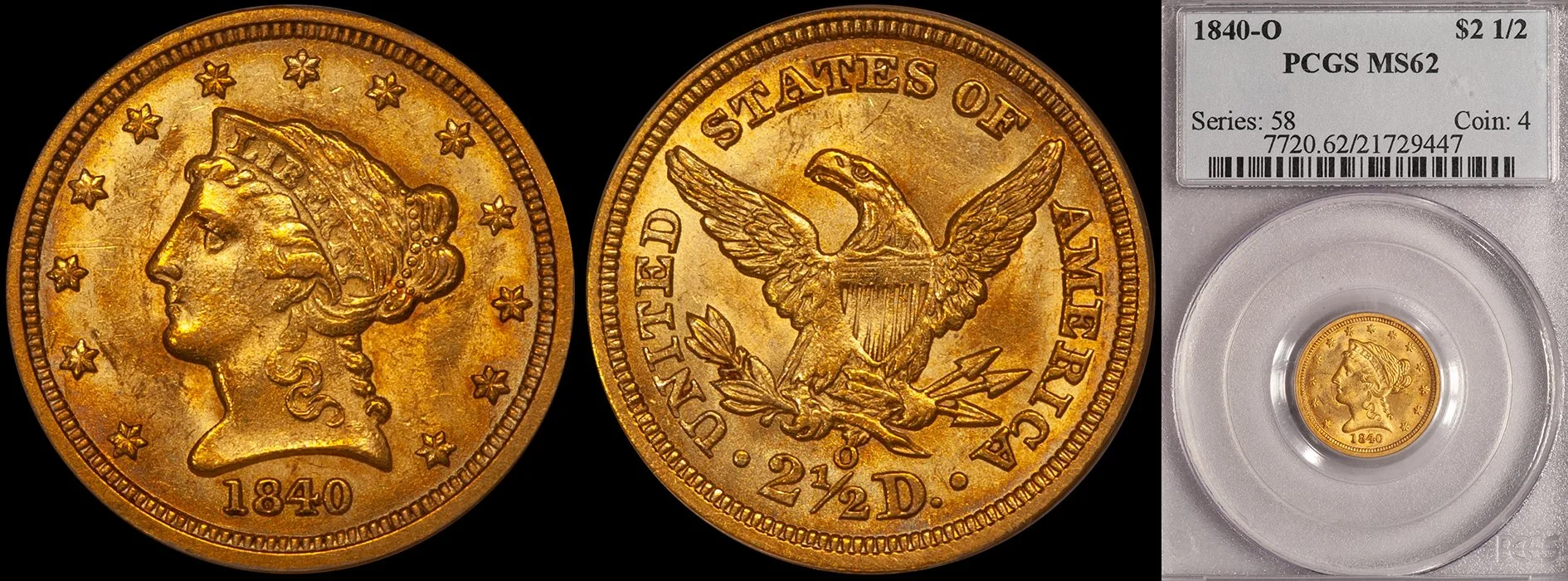
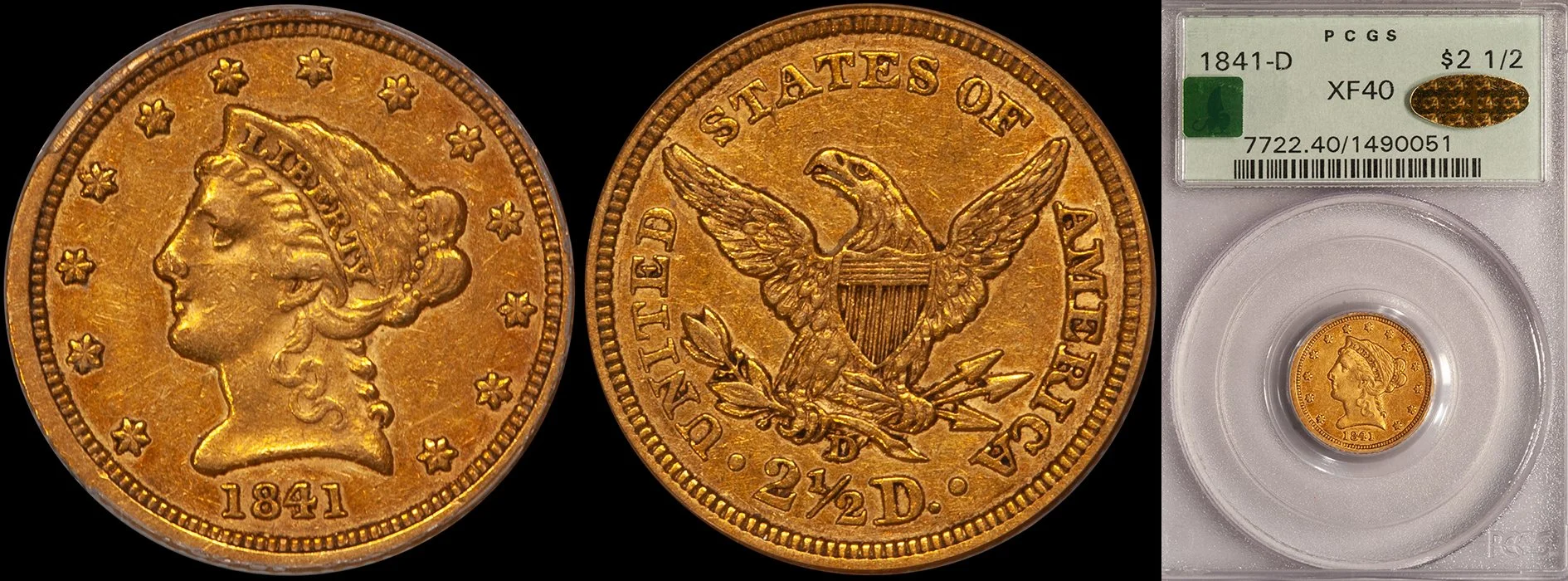
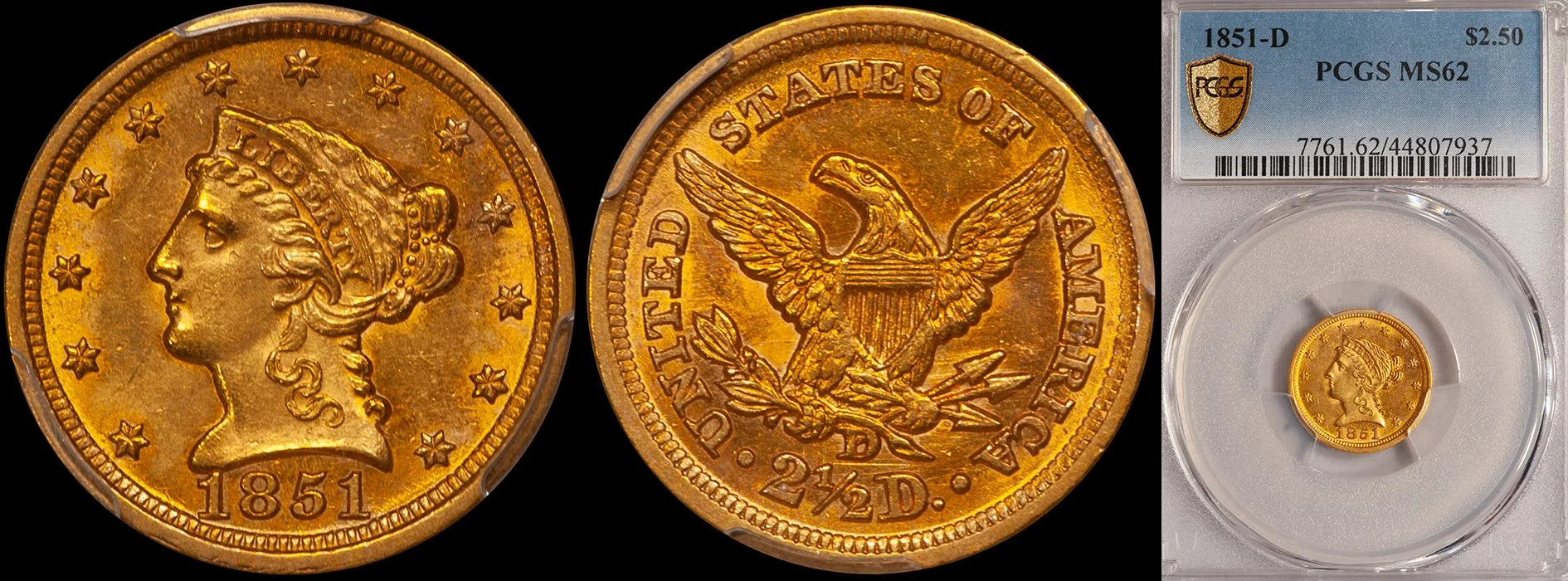
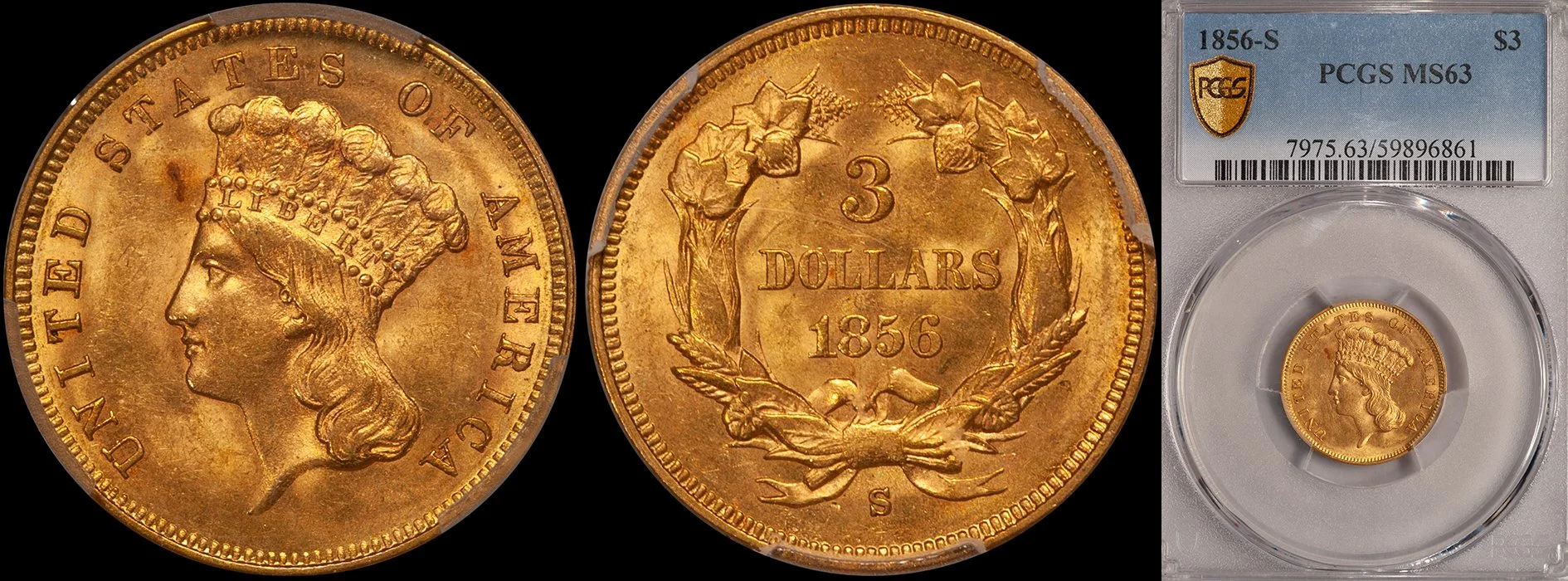
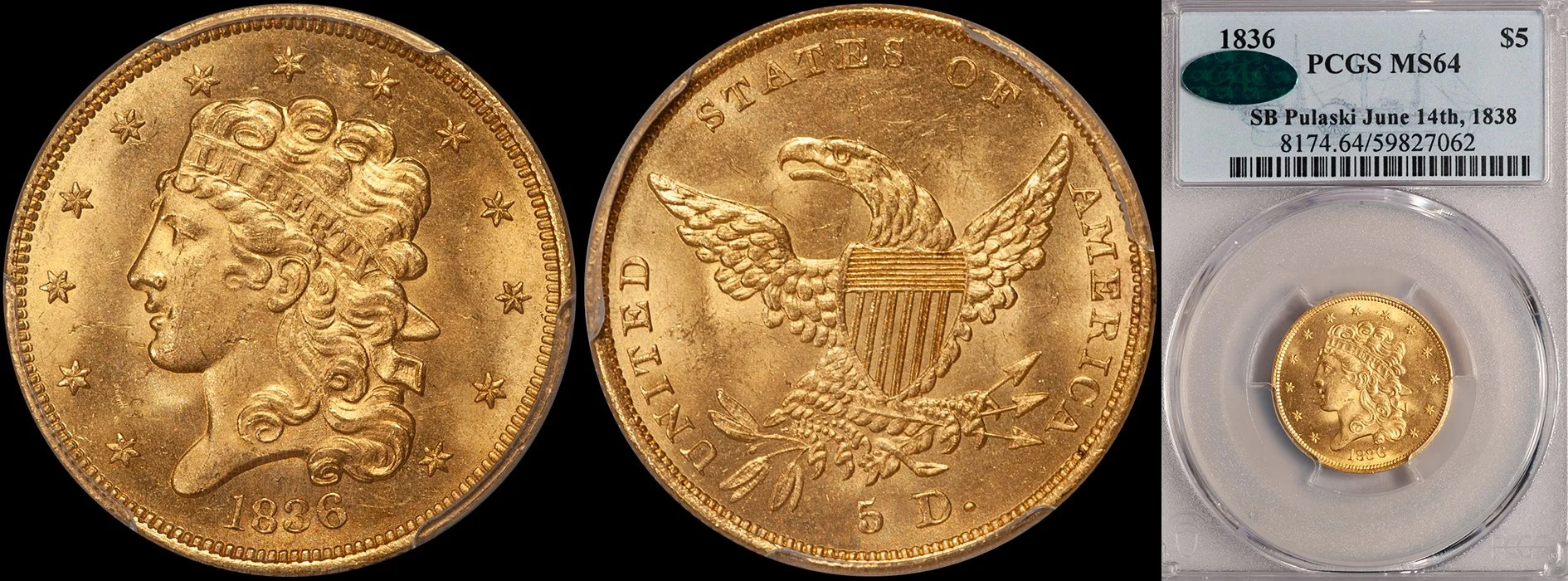
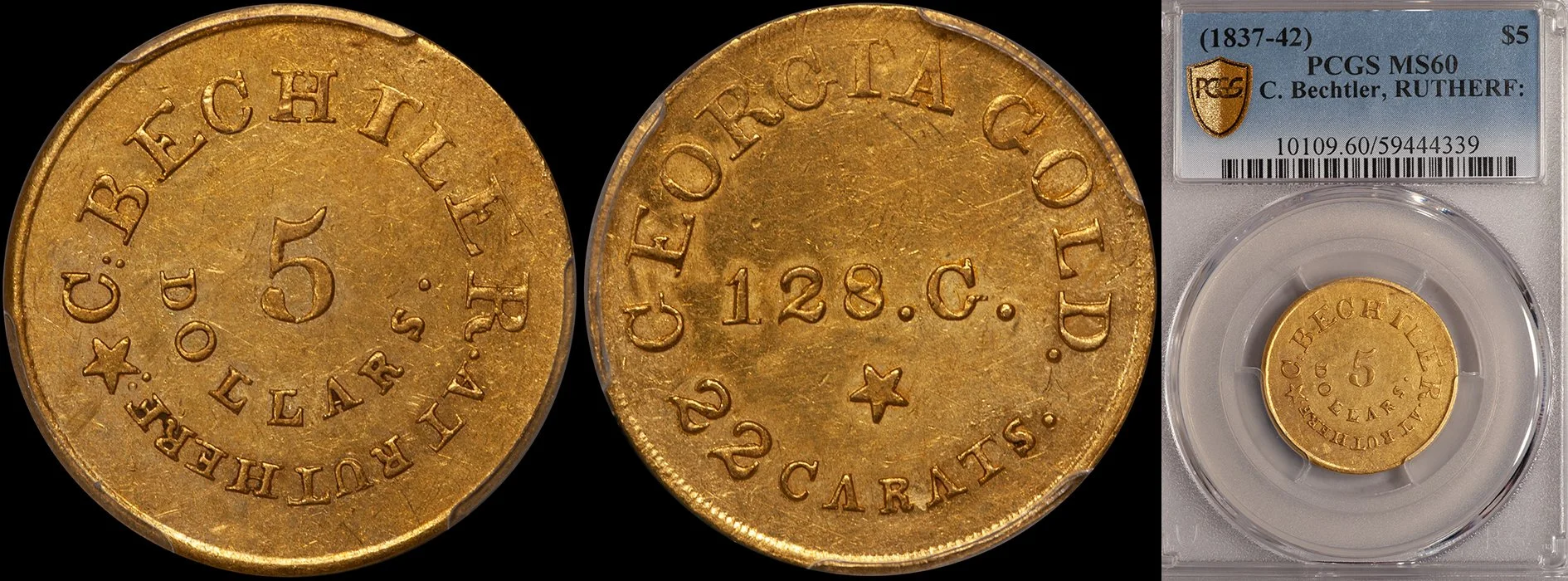
In the recent Schuyler Rumsey coin auction, there were a number of coins that I would define as "really special." After the sale was over, I thought about the prices they brought and was initially pretty stunned. Upon further reflection, I still think that these coins brought strong prices but the numbers now make a little more sense . Let's take a look at some of these specific coins and then ask (and answer) a bigger question: how do you price a really special coin?
This was not a condition-related sale and there were only a few coins that brought a tremendous amount of money because they were high grade for the issue. Examples of such coins include the 1852-O eagle in PCGS AU55 (Lot 982) that brought $18,400 and the 1870-CC eagle in PCGS EF45 (Lot 1030) that sold for $97,750. In both cases these coins sold to savvy dealers who clearly believed that the coins would upgrade significantly. If they don't upgrade, both coins will prove to be bad deals for their buyers.
But the coins that were of real interest to me in the sale were the still-slightly-under-the-radar rarities like the 1864-S eagle, the 1873 eagle and the 1876 eagle. These aren't coins that condition is solely relevant. They are what I call "fundamental rarities" or coins that are rare in all grades.
In the Liberty Head eagle series, the 1864-S, 1873 and 1876 are three of the rarest collectable issues. In fact, the only eagle that is rarer is the 1875 which is, for all intents and purposes, nearly impossible to find.
The 1864-S eagle in the Rumsey sale (Lot 1017) was graded VF30 by PCGS. It was a coin that I thought was accurately graded and, in spite of a scratch on the reverse, it was evenly worn and rather handsome for the grade. This coin sold for $34,500; by far a record price for the date in this grade. I know the buyer of this coin; he is a very sophisticated collector. The underbidder was a knowledgeable dealer. Were these two individuals crazy or were they savvy?
Before we can accurately answer that question, some background information about the 1864-S is in order. And after this, we need to look at ways in which really special coins (which any 1864-S eagle is) are priced.
The 1864-S is the second rarest Liberty Head eagle after the 1875. There are probably no more than 20-25 known to exist. In my experience, the opportunity to purchase one occurs maybe once every three to five years. This is verified by the fact that only one piece (Bowers and Merena 7/06: 1640, PCGS EF45 at $50,600) had sold in the last five years. To find a piece that was comparable to Rumsey:1017 you had to go all the way back to the Richmond I: 2074 example (graded EF40 by NGC and selling for $10,350 but a coin which, as I recall, was really no better than the PCGS VF30 being offered).
Using comparable auction prices to help determine the price of a rare coin has become commonplace in the last few years. In the case of the 1864-S, this was not a good method for at least two of the following reasons:
The number of auction records for VF30 1864-S eagles is virtually nonexistent. The last coin sold at auction as "VF30" was a raw, cleaned example in July 1997 that brought $8.050. Clearly, this is of no help.
Since the Richmond I: 2074 coin was sold back in 2004, the market for this issue has totally changed. This is proven by the $50,600 that an EF45 brought just two years later. But that was six years ago and, if anything, the number of collectors who want an 1864-S eagle in any grade has at least doubled--if not tripled.
Since we can safely state that using auction comparables to price an 1864-S eagle isn't going to work, then how about checking a published price guide like Coin World Trends? According to the most recent edition, values for the 1864-S eagle are $5,500 in VF20 and $12,500. These were probably accurate in 1992 but in 2012 they are clearly completely and utterly irrelevant in 2012 (but that's another story...)
Before I render my verdict on whether the 1864-S in the Rumsey sale was a good deal or a bad deal, I think there are two other points to touch on.
The first is opportunity cost. If you are a deep-pocketed collector and you are particpating in a challenging series with a number of really special issues included (Liberty Head eagles are a poster child for this) you always have to determine how often will you have the chance to buy an acceptable example. In the case of the 1864-S, it's been pretty well established that its going to be once every three to five years if you are lucky. So the chance to buy a decent one represents an exceptionally important opportunity for the serious collector.
Second is the fact that any really special coin is part of what I refer to as a transaction-driven market. What I mean by this is that when you buy an 1864-S eagle in PCGS VF30 for $34,500 you have essentially created a new market. Yes, this market is considerably higher than it was the last time that one traded. But the reality of the market is that since a VF30 just traded for $34,000 in a public transaction, all the geniuises that live by comparable auction prices realized are now going to see this $34,000 trade. Even if Trends ignores this transaction and keeps their estimated value at 1992 levels, the bar has still been raised.
Let's take a less involved look at the other two really rare date eagles that I mentioned above.
The 1873 eagle in the sale (Lot 1040) was graded EF45 by PCGS. It sold for $43,125.
While not as rare as the 1864-S, the 1873 eagle is still a seriously rare issue with an estimated three dozen or so known from an original mintage of just 800. I have handled two or three in the last five years and actually had a reasonably hard time selling them as I found this to be an issue that lacked the rarity recognition that other issues in the series have.
The last EF45 to sell at auction (an NGC EF45 coin) brought $11,212 in Superior's 9/08 auction. The last transaction of any sort was an NGC AU58 sold by Heritage in June 2010 that realized $27,600. Based on these two transaction and on my knowledge of the series, I figured that the 1873 in the Rumsey sale would bring somewhere in the $15,000-20,000 range.
Why did it sell for so much this time? I think there are a few reasons. First of all, at least two people really wanted this coin. Even though the opening bid was a very strong $24,000, these two bidders slugged it out until the final bell rang at $37,500. Strong price? Yes! Crazy price? Maybe not...
As I thought about the 1873, I had the following realization. For years, this was an absurdly undervalued date. The NGC AU58 that sold for 28 grand in 2010? Even though it wasn't a cosmetically appealing coin, even then I knew it was really cheap. And here's why. For years, the quartet of very rare business strike Type Three Philadelphia double eagles traded in the $5,000-10,000 range for decent EF examples. But after they suddenly got hot, prices rose to $20,000, then to $30,000, then even higher. An 1873 eagle is just as rare as any of the Big Five Philly Type Threes. Why should it sell at such a discount? Especially now that Liberty Head eagles have some strong collector support?
The 1876 eagle in the Rumsey sale (Lot 1047) was graded AU53 by PCGS and it also sold for $43,125. To me, this was a very surprising price.
I find the 1876 to be less rare than the 1873, despite a lower mintage of 687 coins. There are around forty to fifty known and I can recall having owned at least three in the last two to three years. Like the 1873, they were not an easy sell even with the fact that the mintage figure is the second lowest in the whole series after the 1875.
Heritage 10/10: 4892, graded AU53 by PCGS, was a good comparable to the Rumsey coin and it sold for $14,950. I figured the Rumsey coin might bring as much as $20,000 and it opened at just $13,000. Again, two bidders slugged it out and this time, the match lasted longer.
Good deal or bad deal? I liked the coin better than the 1873 (I thought it migt upgrade to AU55 if resubmitted) but I didn't think that the 1876 carried as much opportunity cost. In other words, I would have told a collector that if this one doesn't work out, it's possible that another decent coin will turn up in a year or so; maybe even less. So, on this one, I'm going to have to vote more towards the "not a bad deal but probably not a good deal" camp.
As is so often the case in my writing (and my thinking!) I've gotten a bit off track and still don't feel that I've totally answered the original question in this blog: "how do you price really special coins?"
I've mentioned above that published price information is not a good indicator for really rare coins. And while sometimes helpful, auction price data has to be very subtly interpreted to be truly helpful.
Ultimately, the price of a really special coin boils down to what your gut feels that it is worth. If you are willing to pay $25,000 for a decent 1864-S eagle and you've been waiting four years for the chance to buy one, shouldn't you be willing to pull the trigger at $30,000 or even $35,000?
What I find most helpful is knowing the series in question very well. As I mentioned above, the Liberty Head eagle series has become more popular in the last two or three years than at any time I can remember. So pre-2010 auction prices often have to be taken with a grain of salt. And it helps to know that certain other rare issues, like the 1883-O, have a number of recent auction trades and private sales in the $40,000-70,000 range. The 1883-O is more popular than the 1873 and the 1876 but it is of comparable rarity. If an AU50 example of this date is worth $50,000-60,000 then shouldn't an 1876 in AU53 be worth at least half this?
These are the sort of questions that make numismaics such an enjoyable pasttime to me. Do you have questions or comments regarding the values of really special rare coins? If so, please feel free to email me at dwn@ont.com