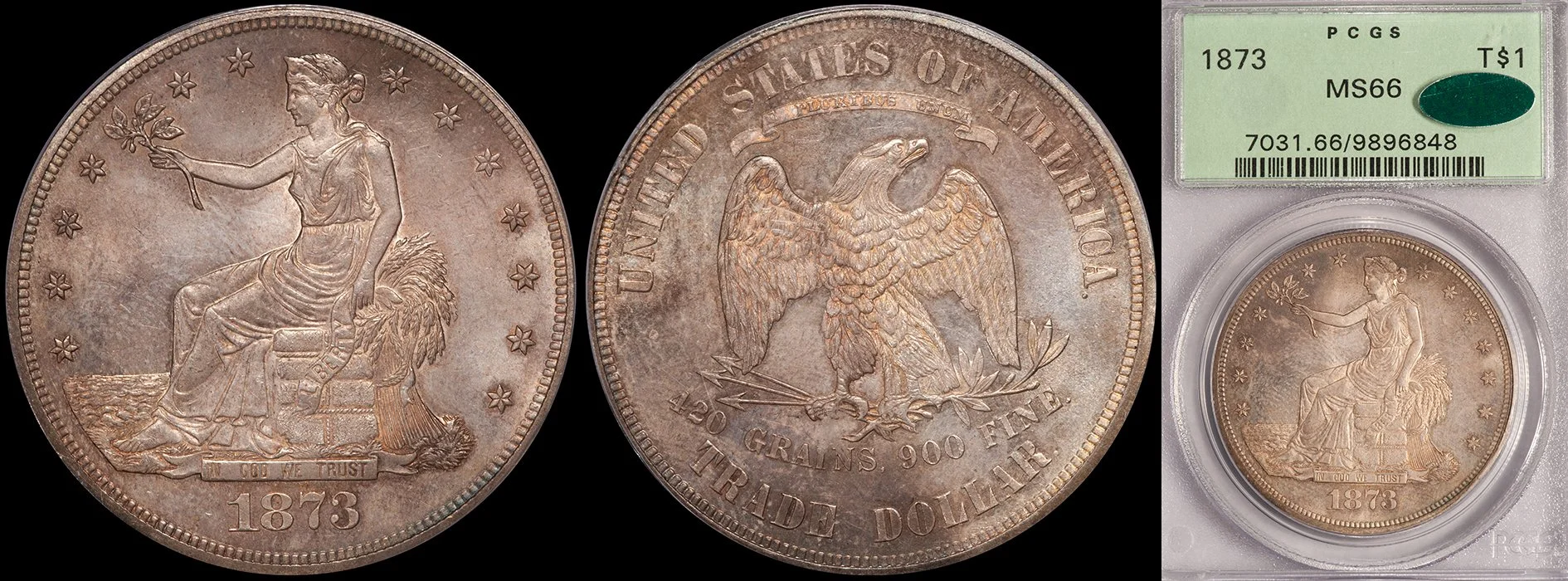
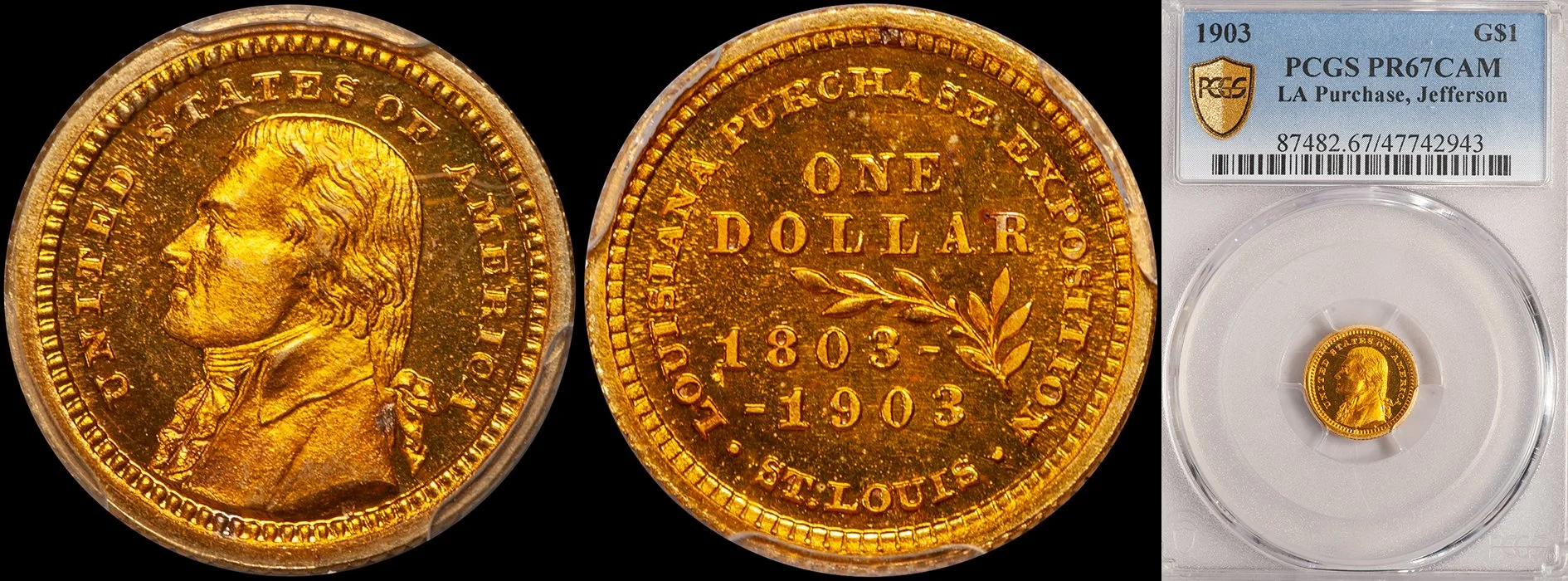
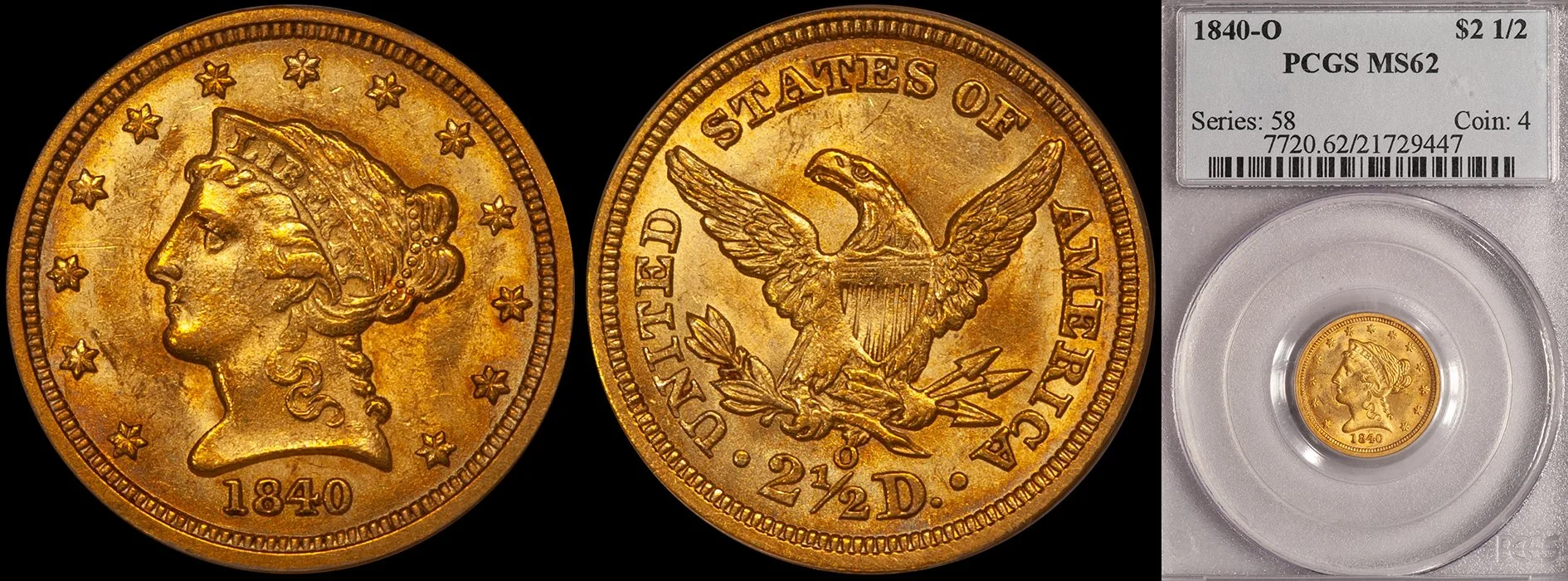
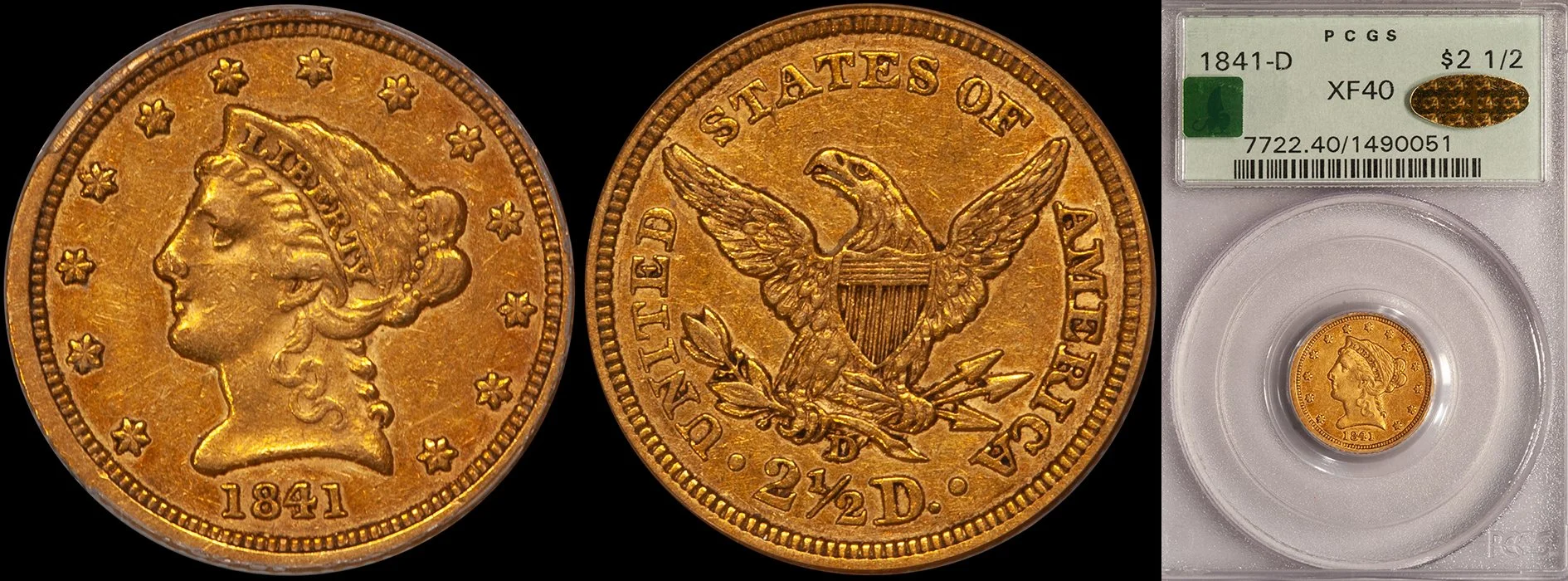
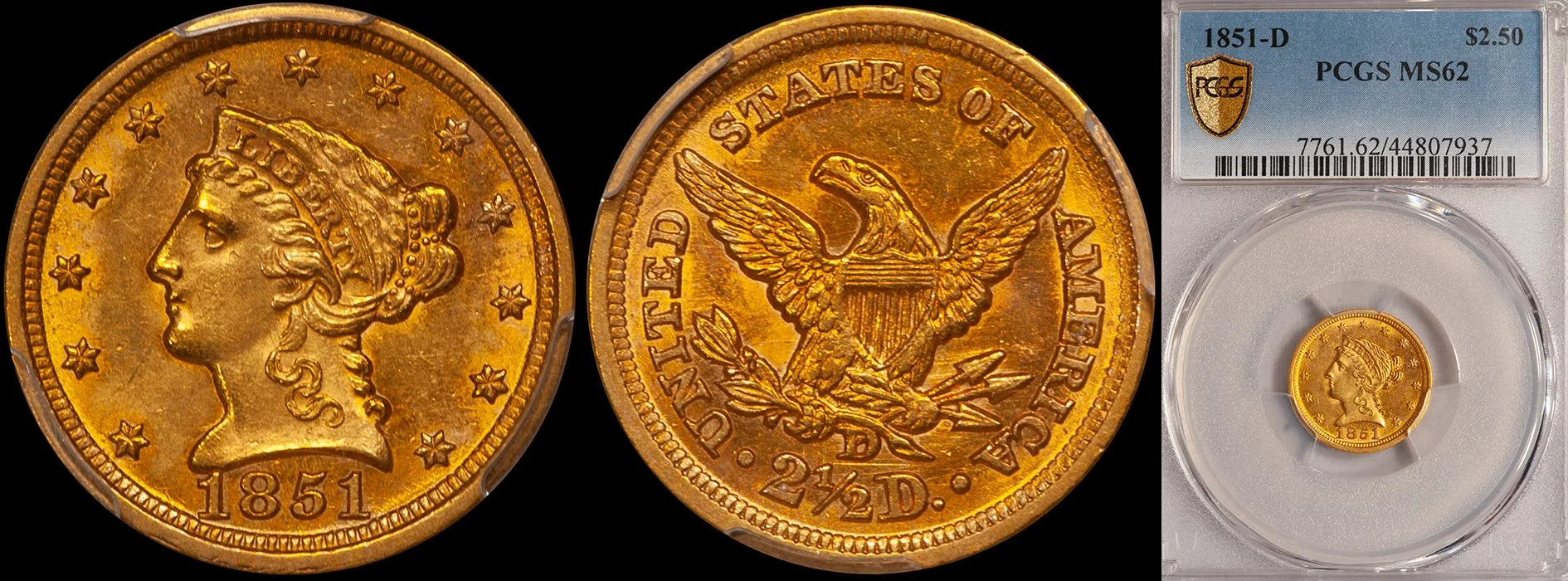
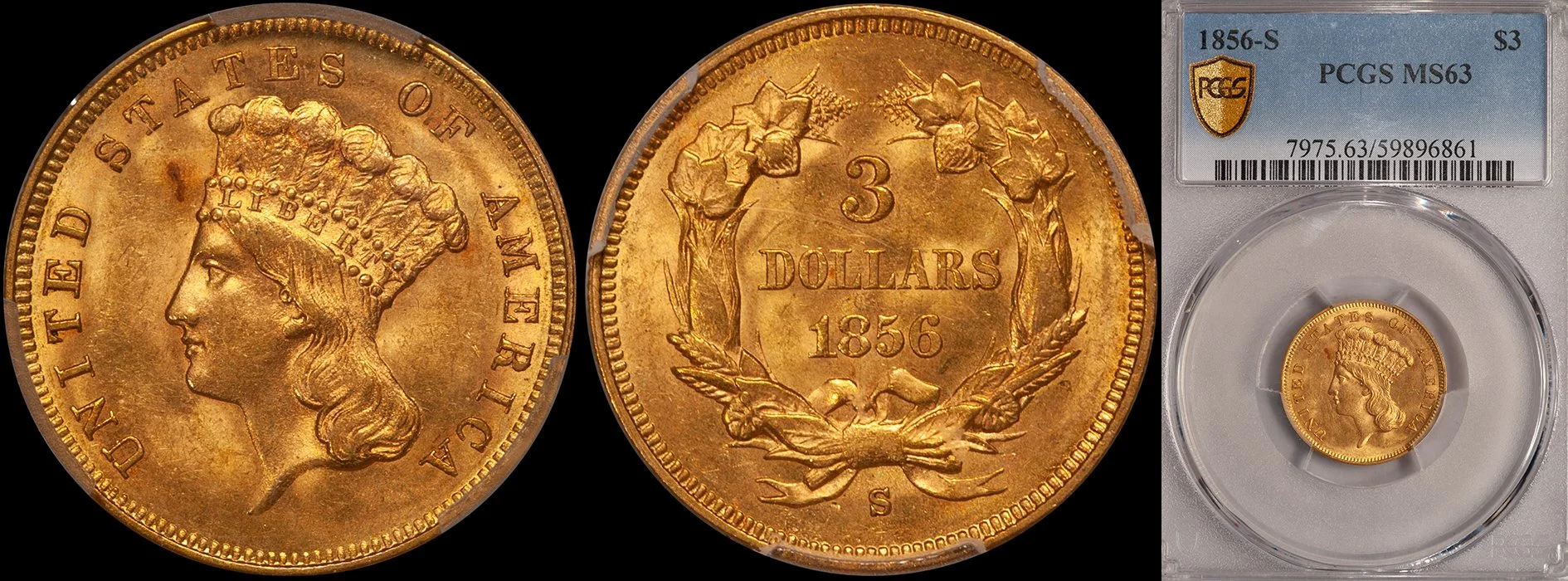
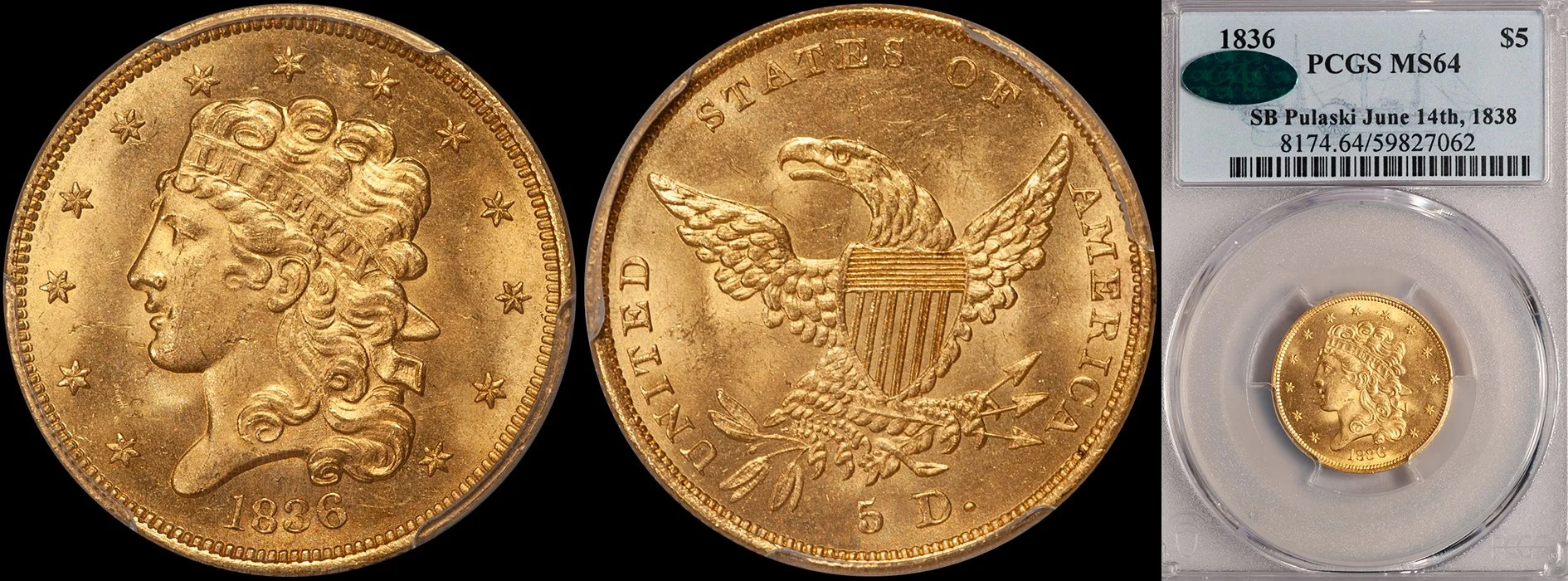
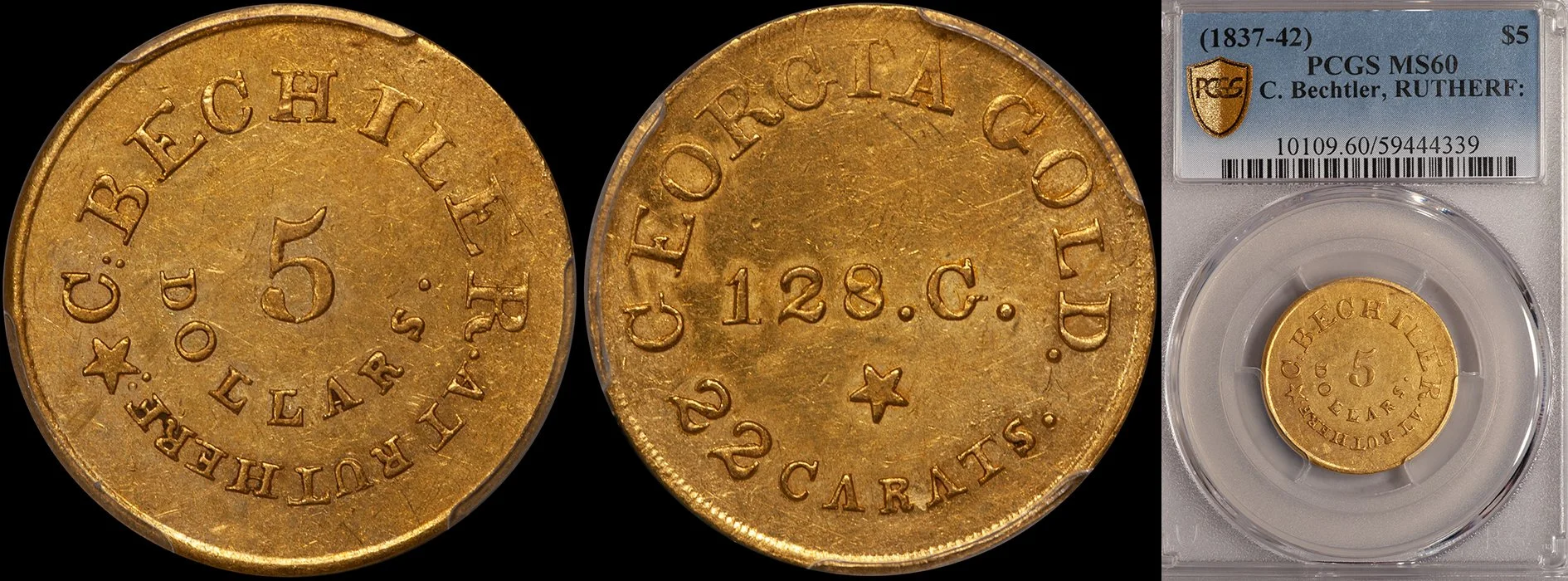
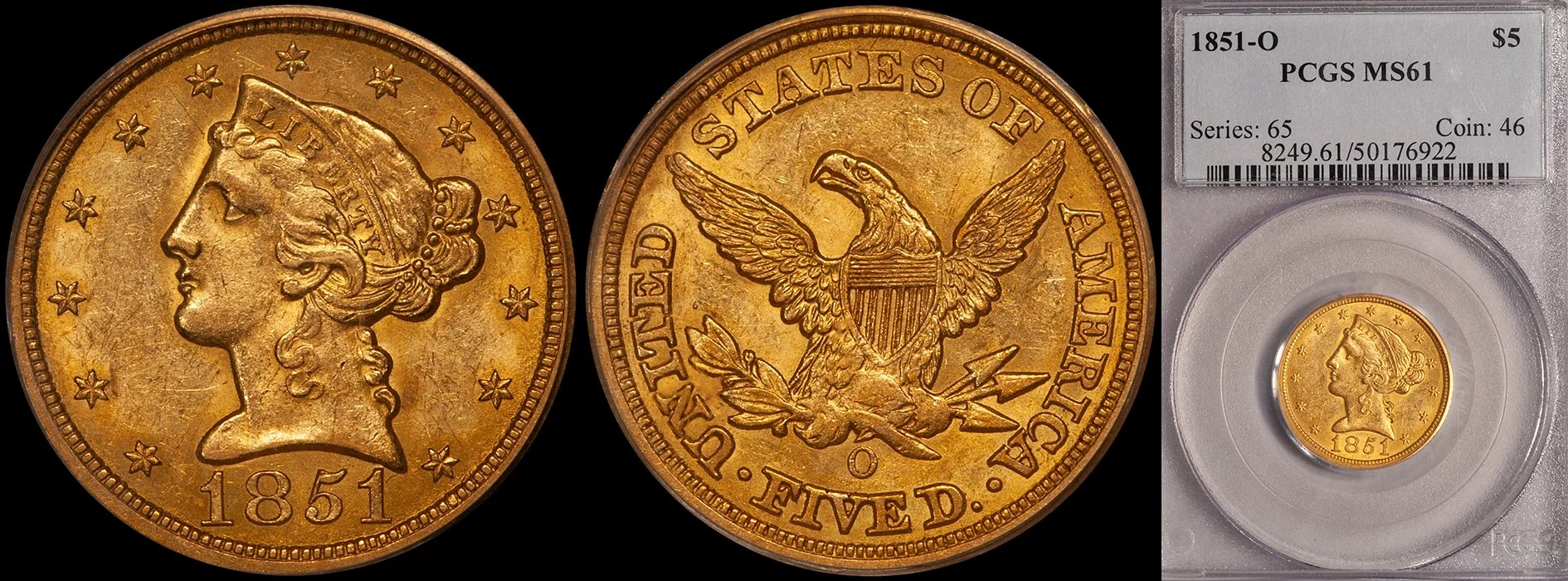
1846-O $10.00 PCGS AU50

Normal Date variety. Winter-2. This is the rare "Normal Date" variety which is seen far less often than the so-called "Overdate." This example is bright and lustrous with scattered non-detracting abrasions seen on the obverse and reverse. The strike is far better than normal with good detail at the centers; the radial lines in the stars are slightly flat as is typical for the variety. This coin was formerly in an NGC AU53 holder and the original NGC tag is available if the buyer desires it. There have been no PCGS AU50 examples of this issue sold at auction since Heritage 4/01: 7828 which brought $2,760. Think about that: none available in slightly over a decade. That's rare! And yet this coin is priced at a very reasonable level. This demonstrates, at least in my opinion, the excellent values that await the savvy collector of Liberty Head eagles from this era.

"What Do You Collect?"

Reader F.N. of New York City recently asked me an interesting question: "Do you collect coins and if so what do you collect?" I'd like to take the chance to give you a brief history of what I have collected in the past and supplement this with some thoughts on collecting coins in general. I started early in numismatics. I was pretty much hooked by age seven, and was obsessed with coins by the time I was nine or ten. I was always attracted to cool, older coins and the first things I can remember buying included a few bust half dollars, a holed small size quarter (that I tried to plug with candle wax; an early foray into doctoring?) and a few odds and ends.

When I was ten or so, I started a set of Indian Cents. I got bored quickly with this and could never really "get" why I'd have to pay $100 for a decent 1877 when they seemed to be so easy to find.

I always had an interest in Colonial and Revolutionary War history and this was fueled by trips with my maternal grandfather to places like Boston, Lake George/Fort Ticonderoga, Valley Forge, etc. It was around this time that I got hooked on colonial coins; Connecticut coppers specifically.

For a kid in the 1970's with a small budget, collecting Connecticuts was ideal. They were cheap, reasonably easy to find, and very few people knew or cared about rare varieties. After some searching, I discovered the standard reference by Henry Miller and started to learn how to attribute the coins by variety. I was good at this, and within a year I was able to attribute many of the better varieties by memory.

Growing up in New York in the 1970's was a great environment for a kid who loved coins. There were shops everywhere and a major show seemed to take place at least once every two months (sadly, these shows are long gone. RIP to the GENA, AINA, Greater New York, etc.) There were also shows every Sunday at the long-gone Roger Smith and Hotel Manhattan where I would, from time to time, stumble on a really good colonial coin.

I stayed loyal to colonials until the time I was a mid-teenager and discovered Seated Liberty coinage; specifically seated quarters. I can still remember the epiphany I had about this series: one day I was skimming the Redbook and realized that there were really rare coins with mintages of 20,000 or so that had guidebook values of less than $200. These coins were so cheap that, if I could find them, I'd actually be able to buy nice looking, rare issues for $100-200 per coin; my budget at the time.

My Seated Liberty mentor when I was a kid was the late Kam Ahwash. Kam treated me really fairly and I fondly recall combing through boxes of his seated coins at his tables when he would come to a New York show. I'd generally select more than I could afford, but I'd sell a rare colonial or two that I had cherrypicked.

Grading back then was far less exact than it is today and I would carefully check the surfaces of all the seated quarters that Kam had to avoid those that had been cleaned and retoned.

Given my budget and my sense of aesthetics, I developed a strict set of parameters for my quarter set that has stayed with me even today. I preferred coins in the VF-EF range as they showed good detail but were affordable. I loved coins that were original with warm gunmetal grey color. To me, the things that killed a coin were deep, unsightly scratches, rough surfaces, and rim problems.

I learned what dates were the most undervalued and wasn't worried about owning "too many" 1859-S or 1872-S quarters; I could always trade them for something else when the rest of the world learned how rare these coins were (they did; just 20 years later than I thought they would!)

Once I went to college and started my own coin business, the extra money I had went other places than coins. And when I finally did have some extra money, I either reinvested it into my business or bought real estate.

During the last two decades as a dealer specializing in rare U.S. gold coinage, I haven't really "collected" much in the way of what I sell; primarily because I don't want to have a conflict of interest with my clients.

About a decade ago, I worked on a set of MS66 Three Cent Nickels. I got to within two coins of being complete, but got bored and sold the set for a nice profit.

The most serious collecting I did was a year set of 18th century coinage (I specialized in a specific year that I won't mention here) that was complete from half cent to eagle, and which included a number of important varieties and sub-varieties. When prices for early type soared in 2006-2008, I decided that it was time to sell and broke the set up.

Today, I'm kind of a dabbler. I buy the occasional pretty, interesting coin and put it away. But I know I'll always be a seller of these coins, especially if I have a client who I like and who is looking for a coin of the sort that I have put away.

If I ever became a more serious collector again, there are a few parameters that I'd work within.

I love gem slider AU58 coins for the appearance and value that these coins provide. I'm talking about a choice, original coin that is a technical AU58, but which has the look and appeal of an MS64. These coins are far harder to find than you might imagine, but I do handle them from time to time. I could see having a random collection of 19th century gold coins with these attributes.

I love pedigreed coins. I find the coins that are hardest for me to part with as a dealer are ones that were owned by great past collectors like Harry Bass, Louis Eliasberg, James Stack, or the Norweb family. As a dealer, I tend to be more interested in the history of the coin business than the history of the coins themselves and there is something that excites me about being only the third owner of a specific gold coin since, say, the early 1900's.

I love gold coins with great eye appeal. If I buy a Dahlonega quarter eagle with really rich natural coloration, I sometimes think "I want to put this coin away." (I almost never do, though, because coins like this are so easy for me to sell.) Bright coins from the 1840's aren't appealing to me unless they are Choice or Gem quality and are naturally vibrant.

If I had to pick a specific era of numismatics from which the coins are most appealing to me, I'd have to say it would be from the late 1820's through the late 1840's/early 1850's. I think this is a great period of American history, but what I find most interesting are the designs of these coins, the richness of the naked-eye varieties, and the fact that there are coins from this period that can be found for less than $10,000 with superb eye appeal.

As someone who has been involved with coins for just about his whole life, I know I'll never totally stop collecting. I wouldn't be surprised if, within a few years, I find a series that I want to start a small collection in. I just worry that, given the amount of passion that I approach the other collectibles that I specialize in, I would get too consumed by this new area. Given how selective a buyer I am that probably won't happen, but you never know....
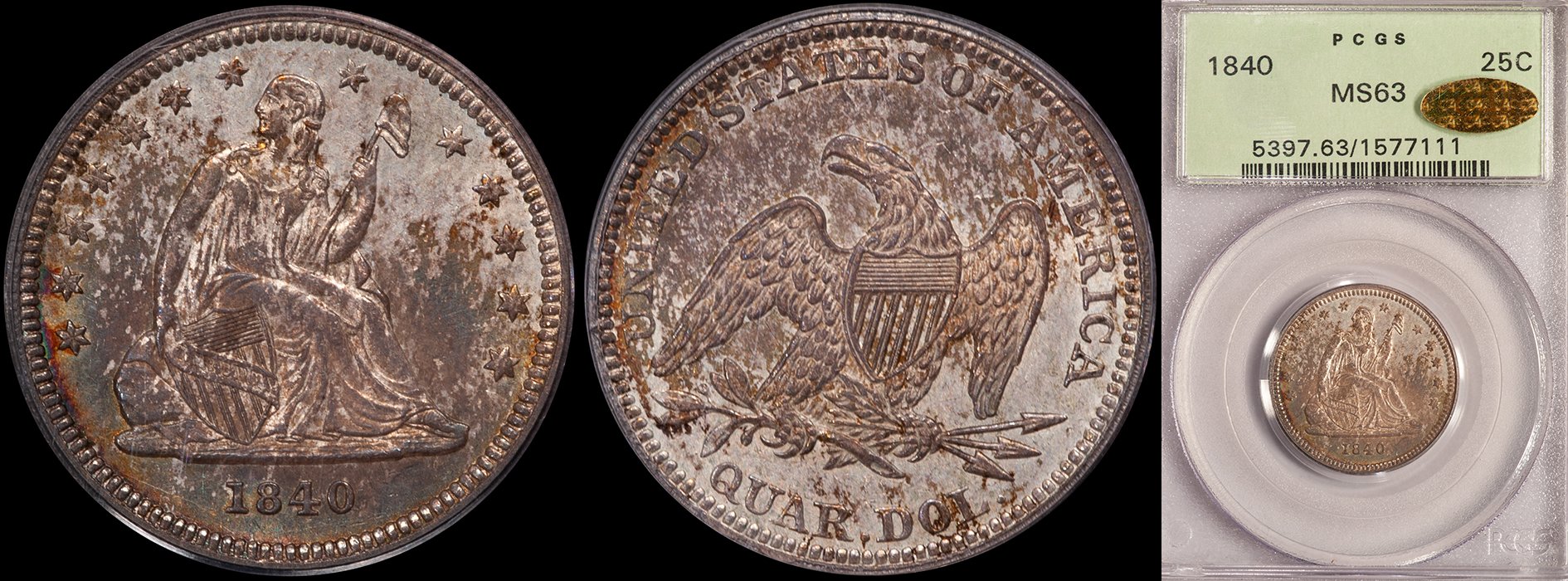
1858 $20.00 SS Republic NGC MS62

As a rule I am not a huge fan of shipwreck gold coins but this piece is exceptional, both from the standpoint of appearance and rarity. The surfaces of this piece showe virtually no signs of exposure to seawater and are bright with a great degree of vibrancy. The "meat" on this coin suggests an MS63 grade but there are just a few too many scuffs in the obverse fields. For the sake of identification, there is a small barely noticeable grease stain on the obverse hanging off the lowest curls. This is one of just two MS62 1858 double eagles salvaged from the S.S. Republic; the other, sold as Bowers and Merena 4/05: 2015, brought $21,275 at a time when important high grade shipwreck coins were not as avidly collected as they are today. If you collect shipwreck double eagles or are looking for an important Condition Census example of this conditionally scarcer date, consider adding this impressive 1858 to your holdings.

This is one of just two 1858 double eagles graded MS62 found on the S.S. Republic. Noe were graded higher than this.

The Two Types of Coin Collectors

In my day-to-day dealings with collectors, I note at least two distinct typologies. First, there is the collector who has either been buying coins since he was a child, or who was a collector as a kid and has since rekindled his early romance with numismatics. And then there is the newcomer who is generally introduced to coins through precious metals/bullion/modern coins. The lifetime collector versus the precious metals advocate. Which is "better?"

My answer to this question is simple: neither is "better." And I think both schools can learn a little something about coins and the coin hobby from each other.

Whether you choose to admit it or not, financial considerations should enter into every transaction that you the collector makes. A true collector might not worry about paying an irrational amount of money for a much-coveted coin, but every purchase should be considered for its long-term implications. I've seen dealers write comments to the effect that "it doesn't matter what you pay for a great coin; the market always takes care of high-quality purchases." I think this is a self-serving comment and I think that price considerations are, in virtually all cases, important.

In other words, the dyed-in-the-wool collector sometimes needs to think more like an investor and consider what the upside and downside is for his purchases.

Since the 1980's and the era of coin telemarketing, many people have been introduced to numismatics by a simple three step process: 1) buy gold, usually in the form of bullion, 2) be converted or up-sold to semi-numismatics, usually in the form of St. Gaudens double eagles or, lately, Proof American eagles, and 3) become interested in rare coins and start a collection (or a random assortment) of numismatic coins.

Given their backgrounds as investors, these individuals need to think a bit more like collectors.

It's kind of a cliche, at this point, to write this but in my long years of experience in numismatics, the collectors that I see who are the most successful are a hybrid of collector and investor. And the ones that are the most unsuccessful are the ones who approach numismatics strictly as an investment.

Any sort of hobby, whether its crochet, yoga, or coin collecting, is made more enjoyable when it is approached with passion. In the case of numismatics, this means learning about coins, learning about the market, and becoming familiar with the buying and selling process. Coin buyers who see nothing more than market cycles and who study the CU3000 index more than the latest auction catalog and not going to get the fulfillment (emotionally or financially) that the old-school collector derives from his coins.

One of the great things about today's world is the accessibility to information that we all have. If I were writing this same blog ten years ago, it would be hard for me to tell an investor to go online and read a lot about rare coins to become a more confident buyer. Today, there is a tremendous amount of information available.

What can the investor do to orient himself more like a collector? Obviously, the first answer is to do as much due diligence as possible. Read. Learn about the market. Choose a reputable dealer. Become a specialist. Become as familiar as possible with the concept of eye appeal and comfortable with the basics of grading.

What can the collector do to think more like an investor? Learn not to make purchasing decisions based entirely on emotions and learn the concept of buying and holding. Study the ups and downs of the coin market and learn to buy at the bottom or middle of the cycle and not at the top. Become aware of who to buy the best coins from at the most reasonable prices.

I find that as the years pass, the pure collector becomes more of a collector-investor and the pure investor becomes more of an investor-collector. Ultimately, the "twain does meet" (sort of) and these two types have more common ground that you might actually believe.

1855-O $1.00 PCGS AU53

The 1855-O is the only Type Two gold dollar from New Orleans and its status as a one-year type makes it very popular with a broad range of collectors. It is nowhere near as scarce as the 1855-C or 1855-D but it so much more affordable than these two issues. This particular example has wonderful eye appeal for the issue with intense rich orange-gold colors seen on the obverse and reverse. There is a small scrape below TAT in STATES that removes this coin from strong consideration at the AU55 level. Choice, attractive and great value at less than $2,000.

1859-S $20.00 NGC AU55 CAC

A choice and very fresh example with an obvious "Euro" appearance. The obverse is a deep orange-gold with contrasting darker highlights; the reverse is much lighter with pleasing pale rose and yellow-gold hues. Both sides are quite lustrous and show fewer abrasions than usual for this date. The 1859-S is common below AU55 but it is scarce in properly graded AU55 to AU58 and very rare in full Mint State. It is an especially ahrd coin to locate with good eye appeal as most are poorly struck and extremely baggy. This piece is among the nicer circulated 1859-S double eagles that I have seen or handled in the last few months.

1862 $20.00 PCGS AU53

The 1862 is the rarest Philadelphia double eagle struck up through 1881 (not including, obviously, the exceedingly rare 1861 Paquet reverse). For many years it was an obscure issue that I literally had to beg collectors to buy. Today, when nice examples are offered, they cause considerable excitement. I recently offered a nice PCGS EF40 example of this date and within a day of listing on my website, I had six orders for it. That's why I'm pleased and somewhat amazed to be offering a second example; and in PCGS AU53, no less! This example is very clean for the issue and has far fewer marks than what is typically seen on this usually-baggy date. The color is a light to medium green-gold with orange tinges and there are a few areas of deeper color in the reverse fields. Since 1994, there are only nine auction records for this date in AU53. That's an average of one coin in AU53 every two years or so; proving the difficulty of finding this date in the lower AU grades. If you collect Type Ones or you fancy Civil war gold coins, you know how tough this date is and what an important opportunity this represents.

1864-S $20.00 NGC MS61

While not designated as such by NGC, my guess is that this coin is one of the examples recovered from the S.S. Brother Jonathan. It has a slightly semi-granular texture and even light yellow gold color which is reminiscent of the better quality coins from this remarkable group. The eye appeal is really excellent with pleasing color, great detail for the issue (including full radial lines within the stars on the obverse) and very minimally abraded surfaces. A small area of scuffing in the left obverse field is probably all that is keeping this coin from an otherwise-possible MS62 grade. Since the beginning of 2009, only four MS61 examples of this popular Civil War date (all encapsulated by NGC) have sold at auction and anything graded higher than this is very difficult to locate as one might imagine. An important Type One double eagle for the advanced collector.

1856-S $10.00 PCGS AU50

Medium S mintmark. A fresh European example recently graded by PCGS in their Paris office and notable for strong luster, light even wear and nominally abraded surfaces. Not really a rare coin in this grade but a pleasing, wholesome piece which is desirable as an affordable early SF mint eagle.