1874-CC $20.00 NGC VF30 CAC

If there is such a thing as a "Gem VF" Carson City double eagle, this is it. While extensively worn, this piece has clean surfaces which are overlaid with deep reddish toning; more-so on the reverse than on the obverse. Ironically, this date is probably harder to find in VF than it is in EF or AU and it would be a perfect introductory coin for the new collector who wants to get his feet wet in the area of Carson City double eagles.

As of the end of June 2011, this is the only 1874-CC double eagle in VF 30 that has received CAC approval.

1848-O $10.00 PCGS AU50

The 1848-O is tied with the 1850-O and the 1854-O Small Date as the eleventh rarest of twenty one No Motto eagles from this mint. I estimate that there are a few hundred examples known but from personal experience, I do not see this date very often in the AU50 to AU55 range; the "sweet spot" for many collectors of this series. The present example is very lustrous with light orange-gold and rose color atop surfaces that, as usual, show a number of scuff marks from handling. The strike has some weakness at the center, especially on the reverse. Overall, a very presentable example of a date that has just a few dozen known in this grade range.

1853-O $10.00 PCGS AU55

While very common in lower grades, the 1853-O eagle is much scarcer than generally realized in AU55, rare in AU58 and exceedingly rare in Uncirculated with just three or four currently known. This example, which is fresh from Europe and has the three-pronged gasket within the slab that is indicative of a coin graded in PCGS' Paris office, has lovely deep green-gold and rose-orange color with some dirt within the protected areas. A considerable amount of luster remains and the fields show fewer marks than usual for the date. The last comparable to sell at auction was Heritage 1/11: 7030, graded AU55 by PCGS, that realized $2,530. This example is nicer and it is exceptional value at under $3,000.

1858-C $5.00 PCGS MS62

This important coin has an interesting background and appearance. It is part of a small group of half eagles that was found in New England a short period ago. The stars of this group were an amazing pair of 1840-C (graded MS63 and MS64+, respectively, by PCGS) that were later consigned to the Heritage January 2011 sale. This 1858-C half eagle, which was also in that sale, was bought back by the consignor due to an overly-zealous reserve but it later sold privately and is now available at a more reasonable level than it would have taken to buy it at the auction. This coin has the body and skin of a virtual Gem but it has been net graded (properly) by PCGS due to some mint-made planchet roughness on the obverse and reverse; the most notable areas of roughness are on the left obverse field and the cheek of Liberty. The remainder of the coin is sensational with thick, creamy luster and virgin original color that tends towards a rich natural orange-gold hue. As a date, the 1858-C is common in circulated grades but it is very rare and much under-appreciated in Uncirculated. I estimate that there are around a dozen Mint State coins known with the finest of these being Heritage 1/04: 3038 ($29,900; as PCGS MS63) that is now in an NGC MS64 holder. The Bass II: 1106 coin, graded MS62 by PCGS, brought $23,000 back in October 1999 and an NGC MS62 sold for $18,975 in the 2003 ANA auction. The aforementioned planchet roughness on this coin makes it a piece that is not for everyone but I think this 1858-C is one of the very finest known and you aren't likely to ever see a fresher example.

1810 Large Date $5.00 PCGS AU58 CAC

BD-4, Rarity-2. Large Date, Large 5.. If I had to pick a "sweet spot" for early half eagles (or maybe even for all early gold) it would have to be the AU58 grade. Early gold that is properly graded in AU58 holders can have really nice eye appeal yet it is priced at an amount that is often significantly less than coins in MS60/MS61 holders. Let's look at this 1810 half eagle which is a perfect example. It shows no real signs of having circulated; just what used to be referred to as "cabinet friction" on the high spots. The color is lovely with rich green-gold centers framed by fiery natural reddish-gold at the borders; the reverse has a deeper overall hue than the obverse. Both sides are free of detracting marks and a good deal of luster remains. The last nice PCGS AU58 example of this date to sell at auction was Spink/Smythe 5/11: 11 that brought $12,075. If you need a nice example of the Capped Head Left half eagle type or you collect these by date, this coin will look great in your set!

1843-D $2.50 NGC AU53 CAC

Given the fact that this is the most common quarter eagle from this mint and it is among the best produced, the 1843-D is a perfect type coin for the collector who is becoming interested in Dahlonega gold. This deep green-gold example is original and choice with a good deal of dirt in the recesses of the obverse and reverse. It is sharply detailed and has good overall eye appeal for the date and grade. I'm often asked if it is still possible to purchase nifty branch mint gold for $2,000-3,000 and I offer a coin like this as proof that such pieces still exist.

Some Rare Coins That You (Almost) Never See Anymore

I was thinking the other day about the cycles of availability that run through the coin market. Around ten years ago, the market was flooded with rare date Proof gold; today you almost never see it. In the late 1990's, there were a number of wonderful collections of Charlotte and Dahlonega sold at auction; today you rarely see more than a few interesting pieces scattered here and there. What are some of the other rare, interesting coins that have gone from being formerly available to currently almost unavailable? 1. 1861-D Gold Dollars and Half Eagles: A quick check of my records shows that I handled four 1861-D gold dollars in 2008, three in 2009 and exactly one since then. After sighing in frustration, I couldn't bring myself to check the numbers on the 1861-D half eagle but I'm sure they are similar.

Neither of these issues are truly rare but they are immensely popular and have a collector base that extends out of the core group of Dahlonega cultists that you'd expect would want to own them. This means that once a collector buys a "dream coin" like an 1861-D gold dollar he isn't likely to sell it; even though values have risen appreciably on this coin (and the similarly dated half eagle) in the last three years.

2. Really Nice AU55 to AU58 Dahlonega Half Eagles. Where exactly have these all gone? In the not-so-distant past I might have three to five different crusty AU55 to AU58 Dahlonega half eagles in stock, especially after returning from a major show or big auction. Today, it seems like months can go by before I am able to buy one or two.

I have a few theories as to these coin's sudden disappearance. many of the formerly crusty AU55 and AU58 coins have been dipped-n-stripped and are now bright, unappealing MS60 to MS61 coins. Many of the very nice crusty pieces that I sold over the years are in tightly-held collections and aren't likely to be sold any time soon. Prices have been flat for a number of years on these coins and collectors who might have bought, say, an 1852-D half eagle in crusty AU58 back in 2004 have no real reason to sell from a financial standpoint. So, the supply of nice DWN-quality Dahlonega half eagles is currently at the lowest level I can remember in years.

3. Rare Date Fat Head Fives: I used to be an active buyer of the half eagles struck between 1813 and 1834, I still am except for the fact that nearly all of my activity in this area, of late, has been focused on a small group of dates: namely the 1813, 1814/3, 1818 and 1820. Virtually all the other dates of this type have become unavailable in recent years.

Not that they were ever flooding the market, but a decade ago you could count on one or two examples of dates like the 1824, 1826, or 1827 to become available every year. Now, they seem nearly unavailable. Four 1826 half eagles half eagles have appeared at auction since early 2006, only two 1826's since 2005 and no 1827 half eagles since the middle of 2008. That's frustrating for collectors and dealers alike!

4. Uncirculated No Motto New Orleans Eagles. If you discount the small groups of coins found on the S.S. Republic and S.S. New York shipwrecks, the number of nice Uncirculated No Motto New Orleans eagles available in the last five years or so has been very small.

Looking back at my records, I've handled no 1841-O or 1842-O in Uncirculated, two 1843-O, no 1844-O, one 1845-O, no 1846-O, three 1847-O, one 1848-O, no 1849-O and so forth and so on. Yes, these coins are all rare (with the exception of the 1847-O) but it seems like the pattern of availability has changed. I'd attribute this to the fact that the majority of the coins that did become available in the late 1990's and early 2000's (which I'm now beginning to realize was a once-in-a-generation period of rare date gold fertility) were generally snatched up by serious collectors who are not currently in a sell mode.

5. Major Rarities. If you own truly rare United States gold coins, pat yourself on the back. You own something that many new collectors and investors would give (almost) anything to add to their collections.

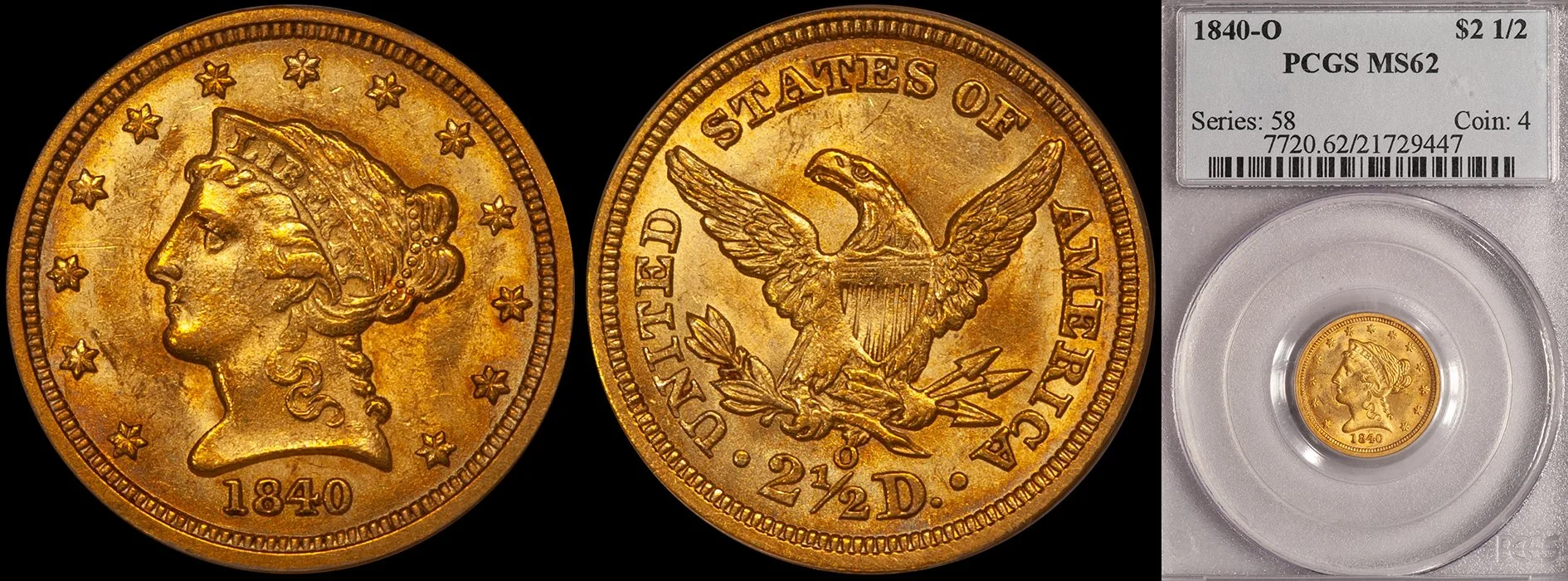
Let's look at a few examples. The rare 1854-S quarter eagle suddenly became reasonably available in 2005 and three examples (out of around 12-13 known) were sold at auction. But since then, only three other appearances at auction have occurred with the last of these being in July 2009.

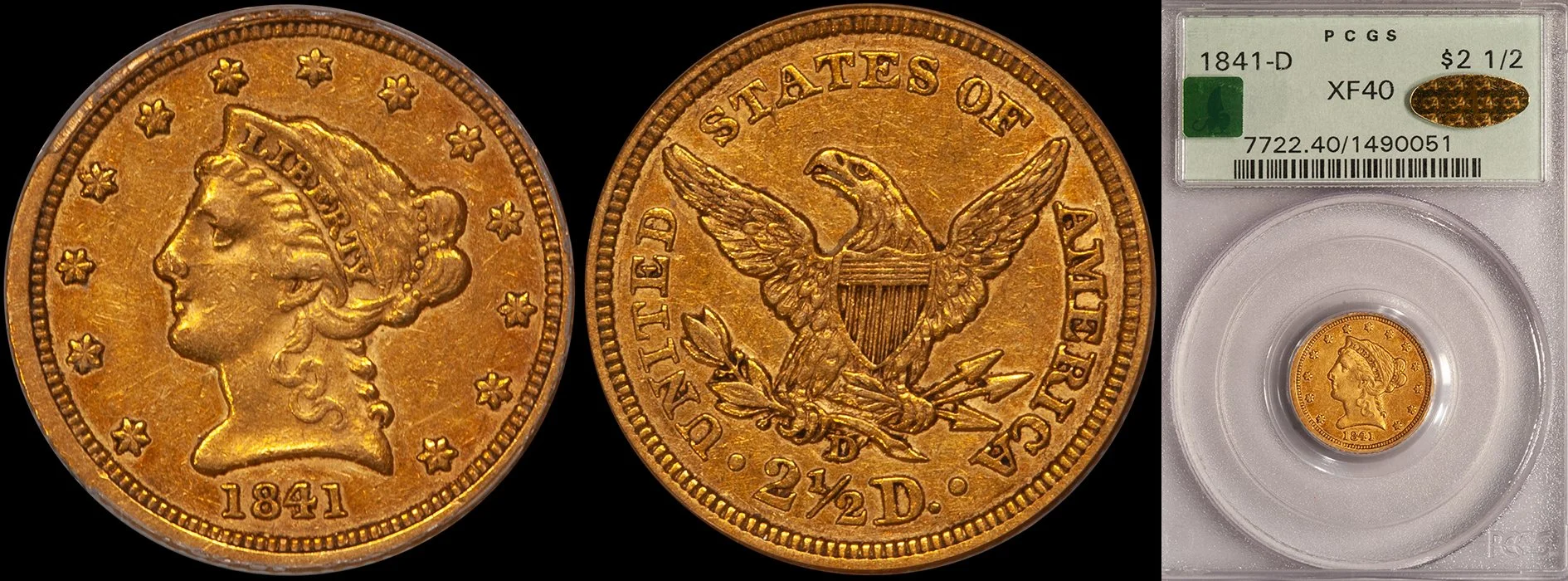
Another rarity in the quarter eagle series is the 1841 with around fifteen or so known in total. In 2004, there were three auction appearances and another two sold in 2005. Since then, only two have been offered at auction with the last record in July 2009.

The list could go on and on and, by now, I'm assuming you get the point: really neat coins that we had become fairly accustomed to seeing during the late 1990's and up to the middle of the 2000's have become rarer than I would have imagined. With the demand for these really neat coins seemingly at its strongest point in a number of years, it will be interesting to see what, if any, important single coins or collections come to the market in the next year or two.

1892-O $5.00 NGC MS61 CAC

The 1892-O is an historic and numismatically significant issue. It is the first half eagle produced at the New Orleans mint since the denomination was discontinued at this facility in 1857. Only 10,000 were struck and most were either melted or shipped to Europe. Of the 100-125+ that exist, virtually all are in the AU50 to MS60 range and show extensively abraded surfaces. The present example is far above-average for the issue and not far from the Condition Census for the date. It is vibrant and highly lustrous with intense orange-gold color atop scuffy surfaces. The obverse is more abraded than the reverse and both sides lack any of the mint-made stains or spots that are sometimes seen on 1892-O half eagles. The last comparable piece to sell at auction was Heritage 12/08: 2042, graded MS61 by NGC, which brought $4,600. This is the only 1892-O half eagle in this grade to have received approval by CAC and no finer pieces have received the coveted "green bean."

1842-O $5.00 PCGS VF35 CAC

If there was such a grade as "VF39" this coin would qualify as such. It clearly isn't your typical VF35 but it falls just a hairsbreadth shy of qualifying as a real EF. The surfaces show attractive deep, rich green-gold color with some reddish areas at the obverse periphery. The detail is good for the date and grade with less weakness of strike at the centers than usual. There are scattered small abrasions that are consistent with the grade. The 1842-O is the second rarest half eagle from New Orleans and it is highly undervalued in all grades. This is the sort of coin that, if you saw in an auction or a dealer's case at a show, you'd go "wow, that's cool." And it is a truly interesting piece: a very rare and totally problem-free example that is within the budget of nearly any rare date gold collector.

This is one of only two 1842-O half eagles in any grade that have received approval from CAC. The other is an NGC AU58 from the Logan's Landing collection that I sold earlier this year.