Back From The Dead: Formerly Unpopular Gold Coins That Have Become Popular

As recently as five years ago, most of the rare date gold coins that I sold were from the Southern branch mints; pieces from Charlotte, Dahlonega and New Orleans. But today, these coins make up a smaller percentage of my inventory and my sales. I now find myself making a market in coins that I formerly considered very difficult--if not impossible--to sell. What are these "back from the dead" coins and why are they suddenly popular? The Poster Children for impossible-to-sell rare date gold coins used to be expensive Philadelphia and San Francisco issues from the late 1850's, 1860's and early 1870's. These coins have now garnered a small but growing following. After years of being unsalable they can now find homes BUT only if they a) are choice for the grade and have good eye appeal (CAC verification helps) b) are larger denomination coins (a half eagle or larger) and c) are either low mintage issues or are from the Civil War era.

I was going to add one more point: relating to price. But the more that I think about it, the more I realize that the "right" coin of this type doesn't necessarily have to be affordable (i.e., below $10,000). In fact, I can now sell $25,000 or $50,000 coins that I regarded as formerly illiquid if they have one thing going for them.

And that's rarity.

Let me give you an example of what I'm talking about. A few weeks ago, I bought an 1874 half eagle in PCGS MS62. It was a great coin: fundamentally rare, beautiful, and very low population. A few years ago, this is a coin that I would have passed on by rationalizing that "it was cool but how could I possibly sell it?" But I took a chance on it because it was a coin that I thought "if I was a collector, I'd want this coin in my collection."

Within three hours of posting the coin on my website, I had four serious inquiries about it. Two of the inquiries were from collectors who are working on sets of Liberty Head half eagles. But the other two were from collectors who liked the concept of this coin. It wasn't cheap (around $15,000). But it was the second or third finest known of probably no more than five or six that exist in Uncirculated and it was a coin that is actually pretty rare in all grades. In comparison to Southern branch mint, a coin like this nice Uncirculated 1874 half eagle suddenly seems like a heckuva deal.

So why are coins like this becoming more popular?

I have a few theories. Here are a few of them.

1. Trends Has Come Down. In the past, Trends was too high on some of these coins. Certain Trends values have come down, in some cases substantially, making these coins look like better values at the new, lower numbers.

2. Rarity Is In Vogue. For a number of reasons, new collectors are more attracted to really rare coins than common coins in uncommon grades. A coin like, say, an 1862 half eagle or an 1863 eagle is really rare in any grade and this appeals to this new, sophisticated breed of collector/investor.

3. Half Eagles and Eagles Are Being Collected by Date. Both the Liberty Head half eagle and eagle series are now being seriously collected by date. This makes certain formerly unpopular semi-key issues (I'll throw out one as an example: the 1876-S half eagle) more popular if the coin is right.

4. Auction Prices Are Nutty. When you see auction prices like an 1875 eagle in PCGS AU53+ for $345,000 this drives the market. It suddenly becomes a lot easier to sell an 1862 eagle in nice AU55.

5. Collectors Crave Value. "Value" is the new mantra of the coin market. Collectors seek coins that have price levels that make sense. The factors that I listed above combine to make coins like 1864 half eagles or 1867-S half eagles seem like good deals.

6. Not All These Coins Have Been Ruined. Something that has hurt the Southern gold market is the relative unavailability of choice, original coins. Certain P+S mint issues have been spared the processing/doctoring that has beseiged C+D gold due to their relative obscurity.

So does this mean that I am done with Southern branch mint coins and, from now on, want to be known as Mr. P Mint half eagle? Certainly not; I love Southern coins and will continue to specialize in them. But I do note a renewed interest in non-Southern coins and I think that this is excellent for the overall health of the rare date gold coin market.
1839/8 $10.00 PCGS AU53 CAC

Head of 1838, Large Letters reverse. There are two distinct types of eagles made in 1839. The first--and more available--is the Head of 1838 which has a mintage of 25,801. The second--and scarcer--is the Head of 1840 which has a mintage of 12,447. The 1839/8 Type of 1838 is reasonably scarce in all grades but it becomes very scarce in the mid to high AU grades and it is quite rare in Uncirculated. The present example has the luster and body of an AU55 to AU58 coin but it has been net graded as an AU53 due to some chatter in the fields. These marks are clearly visible but not overly detracting. The color of this coin is a nice natural light butter-gold hue and the strike is very sharp with the exception of the radial lines in the stars which, as on most 1839/8 eagles, are weakly impressed. The last auction trade for this variety in PCGS AU53 is Heritage 1/09: 5499 which brought $7,475. The current CAC census for this variety is just two in this grade and one approved higher. A great coin for the advanced collector of Liberty Head eagles.

1857-O $5.00 NGC AU53

A beautiful, original coin with deep natural green-gold and russet hues on the obverse and the reverse. This date is rare in all grades and it is extremely hard to find with natural color as most have been dipped and/or processed. This piece is well-detailed, has very clean surfaces and shows far above-average eye appeal for the date and grade. A total of 13,000 were struck of which around 100 or so are known today. Most are seen in the VF-EF grade range and AU 1857-O half eagles are quite rare with two dozen or so accounted for. How hard is it to find an example in AU53? Well, since 1999 there have been just two sold at auction: Heritage 1/06: 5219 (graded NGC AU53 by NGC that sold for $4,485) and Bass II: 1100 (graded AU53 by PCGS that sold for $3,680 all the way back in 1999). If you collect New Orleans half eagles by date, you know the importance of this offering. If you don't but like cool coins priced at under $5,000, this piece should also generate some interest.

1848-O $10.00 NGC AU55

The 1848-O is one of the hardest New Orleans eagles from the 1840's to locate but it is actually seen from time to time in Uncirculated, unlike dates such as the 1842-O, 1846-O and 1849-O that are nearly impossible in MS60 or better. This flashy, golden-green example has plenty of natural luster remaining and it shows the typical strike for the issue: an obverse that has a slightly sunken appearance and a sharper reverse. There is a lot of "meat" left on this coin and the surfaces show just a few scattered marks that are consistent with the assigned grade. Only a few dozen properly graded AU 1848-O eagles are known and relatively few have the eye appeal and natural appearance that this piece shows.

1860-C $5.00 NGC AU53 CAC

This is the second-to-last half eagle made at the Charlotte mint and it is a scarcer issue in all grades. It is also one of the most crudely made with improperly hardened dies making it appear very worn on the reverse; even on higher grade examples. This piece is one of just a handful of 1860-C half eagles that remain with natural color and it has never been cleaned or dipped like most. The color is an attractive deep, even green-gold with a thin band of contrasting coppery-rose at the border. There are a couple of old marks in the fields that are nicely hidden by the depth of the color and a small horizontal strip in the left obverse field is as made.

1889 $20.00 NGC MS61

When gold was $750 an ounce, dates like the 1889 sold for significant market premiums over common Type Three double eagles. But now that gold has soared to over $1,800, the premium factor for the 1889 is next to nothing. This means that you can buy a genuinely scarce coin for essentially no premium. No brainer, eh? Not only is this an easy coin to appreciate its value, its a choice, original piece with handsome color and natural luster. Take advantage of values like this while you can!

1859-S $20.00 NGC AU53 CAC

This is certainly not a scarce date until you get into the Mint State grades but locating choice, unmolested About Uncirculated examples is much harder than you might think. In my experience, most 1859-S double eagles have been dipped and show extensive abrasions as well. This choice example has attractive deep original color and a considerable amount of luster for the grade. To find a finer 1859-D double eagle in this date and price range will prove next to impossible.

1827 $5.00 PCGS MS62 CAC

Due to extensive meltings beginning in 1834, the half eagles from the 1820's and early 1830's include a number of great rarities. One is these is certainly the 1827, an issue for which only 30 or so are known to exist. As with most of the half eagles of this era, the 1827 did not circulate and the few that survive tend to be in relatively high grades. There are a handful of Gem 1827 half eagles known including an NGC MS66 that sold for $322,000 in the Stack's January 2008 auction.

This example is fresh to the market and it has a superb appearance for the grade. The surfaces are very clean with lovely satiny luster below rich green-gold color which is totally "right" for this date. There is a small semi-circular line in the planchet located on the top of Liberty's cheek that is mint-made and serves as ready identification; a small reverse toning spot at the D in the valuation also assists in identifying this gorgeous coin.

The last 1827 half eagle in MS62 to trade at auction was Stack's 6/08: 2088 (encapsulated by NGC) that brought $74,750. There have been 11 auction appearances in total for the 1827 half eagle since 2000, and no PCGS MS62 examples have ever sold at auction.

An excellent coin to compare this to is the 1832 13 Stars half eagle that was just sold by Stack's Bowers in the 2011 ANA auction as Lot 7674. As with the present coin, that 1832 half eagle was graded MS62 and had CAC approval. But I think this 1827 is a nicer looking coin from a visual standpoint, and it is clearly a rarer date. The 1832 brought $86,250 and it sold to a savvy wholesale dealer.

Coins like this 1827 half eagle are rarely encountered, and are almost never offered via private treaty. If you have been looking for a meaningful coin to "put away" or if you would like to own a lovely example of an indisputable great rarity, this is the coin you have been waiting for! 1827 Half Eagle Graded MS62 by PCGS and CAC Approved

Coinapedia Update

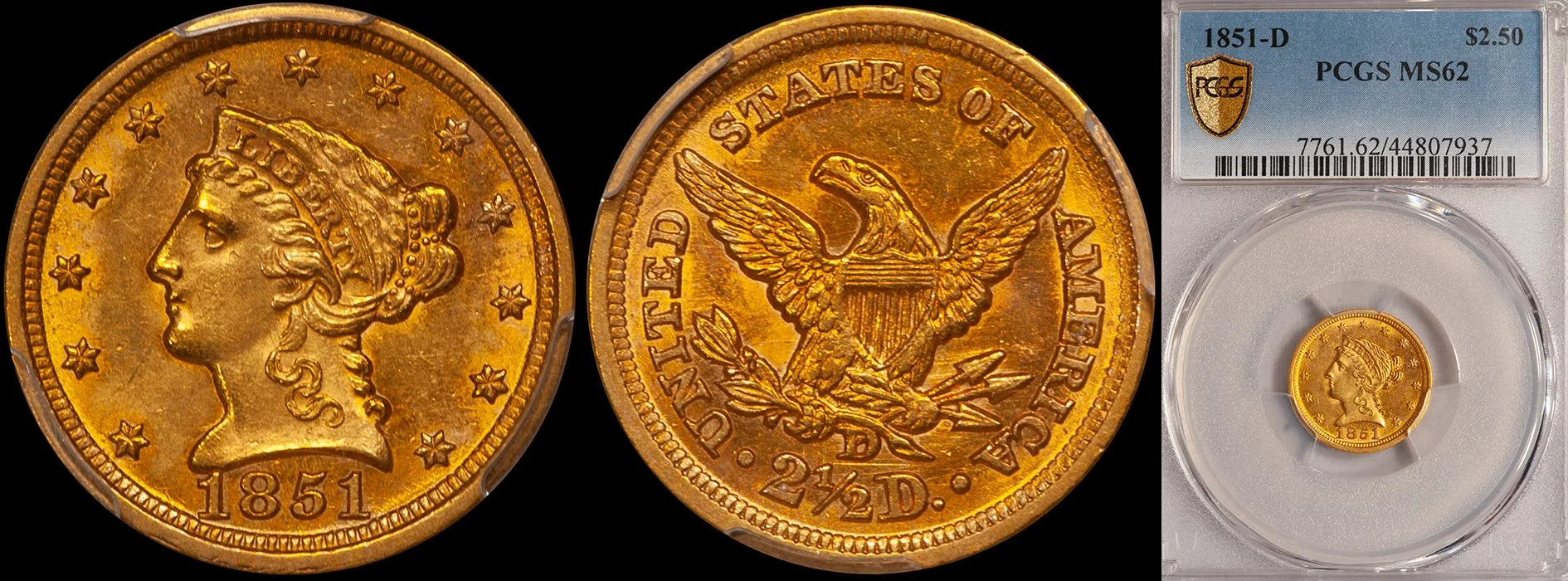
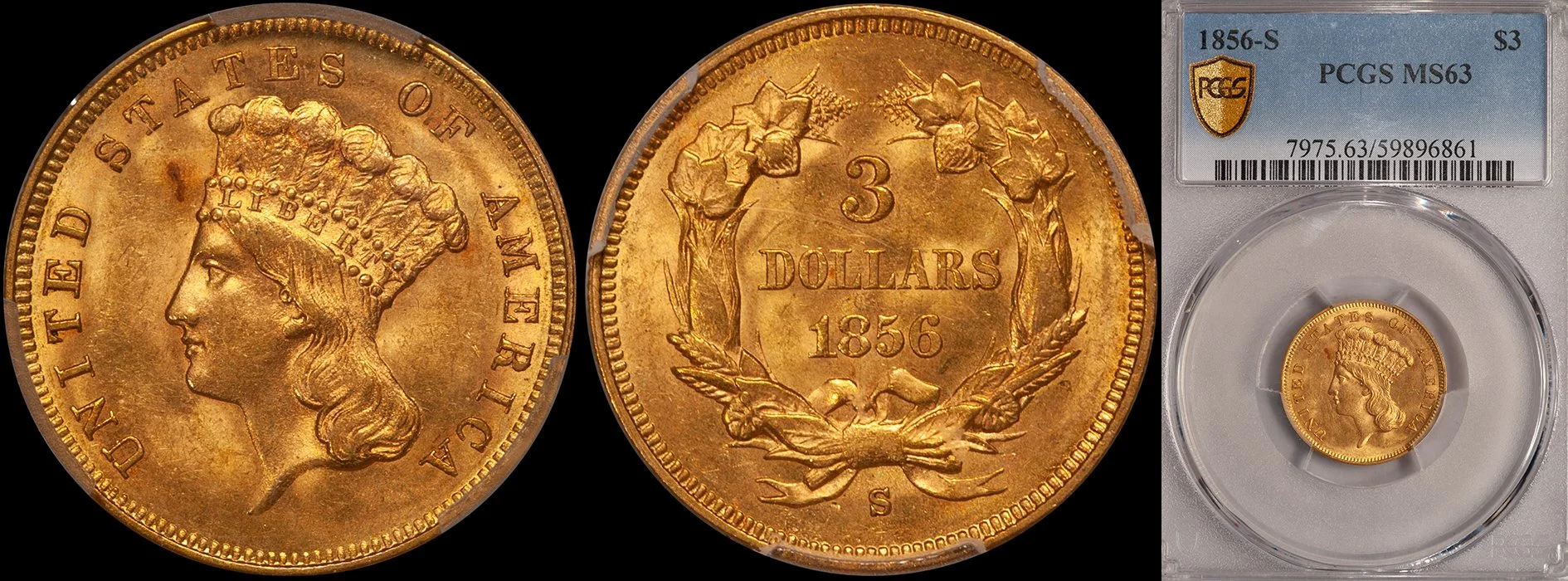
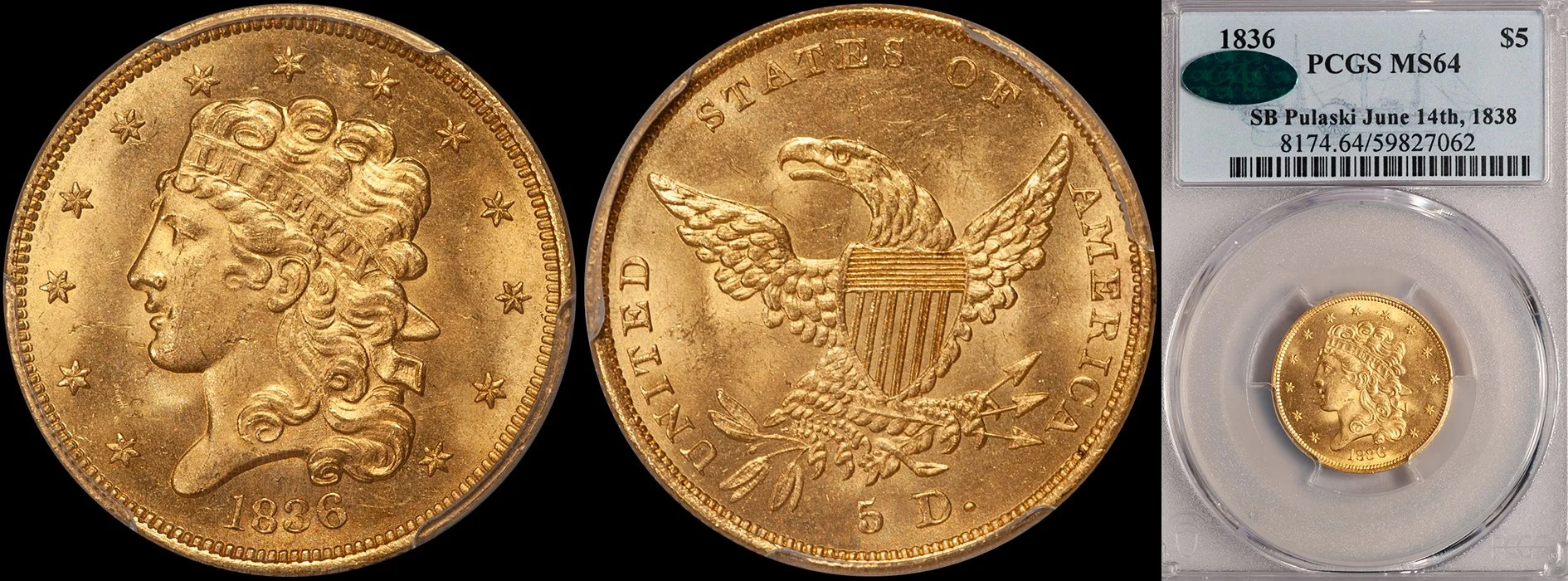
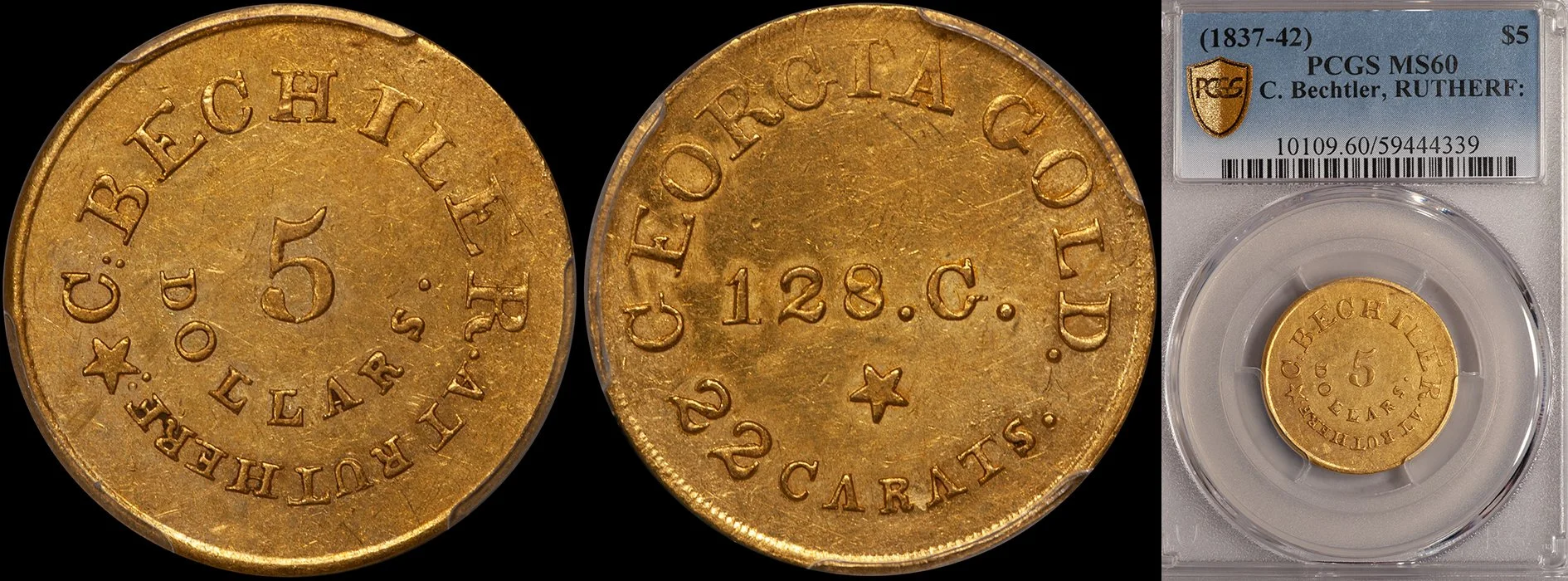
One of the truly great features on the DWN website (www.raregoldcoins.com) is the Coinapedia. Many collectors now use this site as a reference--some even daily--but others aren't familiar with it. The reason that I started the Coinapedia project last year was simple: I don't think there is enough high quality non-commercial information available for the collector of United States gold coins. So I decided to create an online coin encyclopedia that would, eventually, feature pictures and descriptions of nearly every issue of United States gold coin produced between 1795 and 1933.

Here's the catch: the coins that are pictured are ones that I have sold within the last two or three years. Instead of just cutting and pasting images from various websites and online resources, I wanted to use the talents of my assistant Jenna Van Valen, whose work is the best in the coin industry. I wanted the images to not only be good but to be consistent.

The descriptions of the coins are taken from the descriptions on my site when they were listed for sale. But I've tried to take out all commercial references and focus on the "meat." This makes Coinapedia a real on-line reference, not just fluff for my firm.

So where do we stand with Coinapedia as of the end of the Summer of 2011?

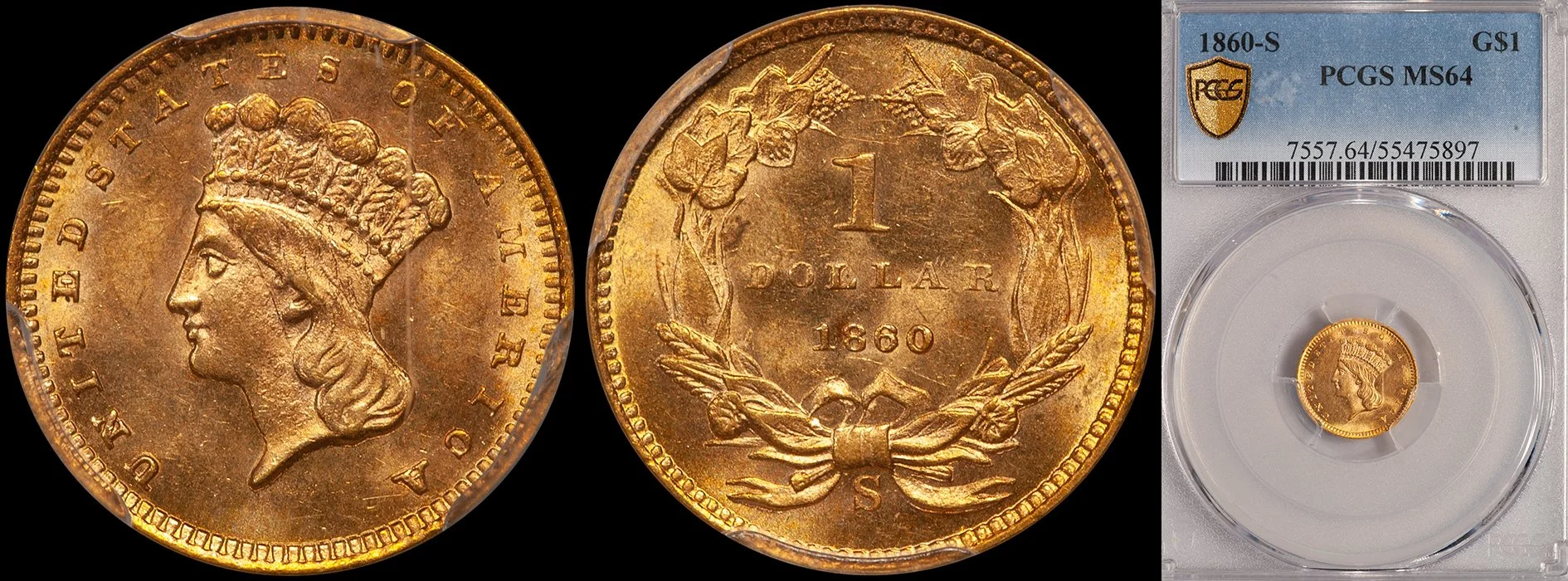
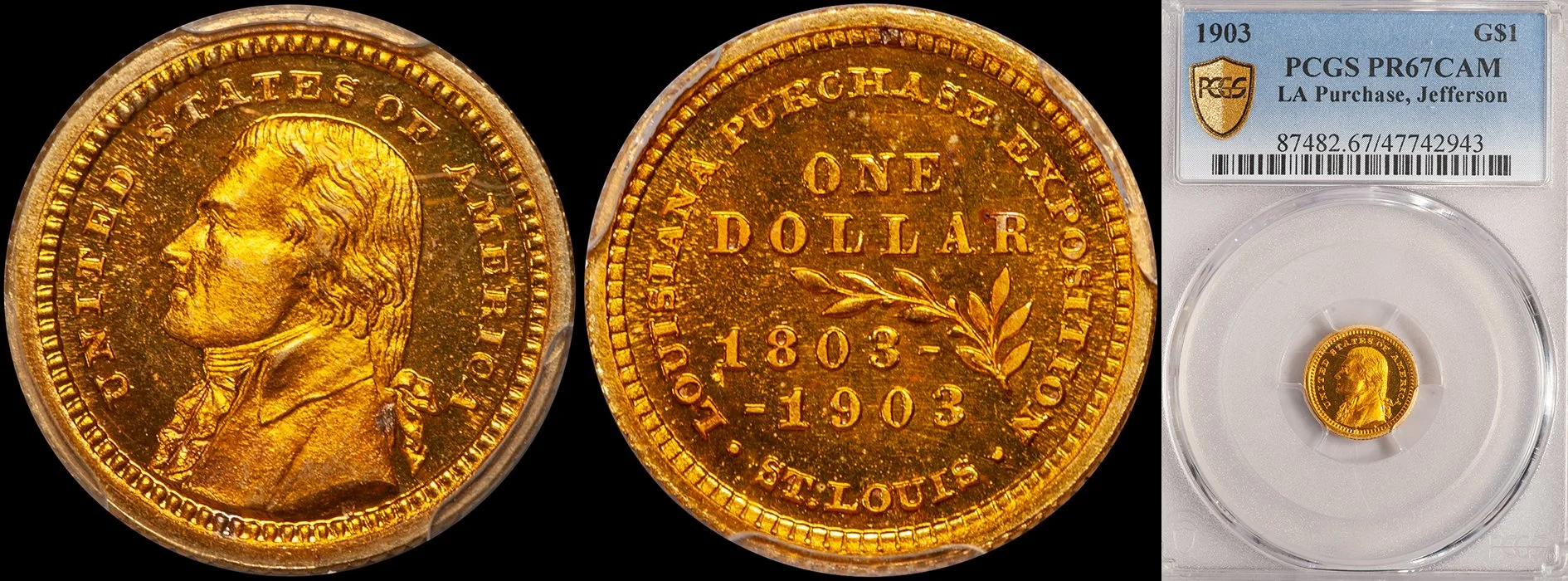
Gold Dollars are a strong area on the site with no less than 52 different images and descriptions. I anticipate that most of the branch mint gold dollars will be present within the next year or so. The common dates from the 1880's might actually be the last coins added as I rarely handle these.

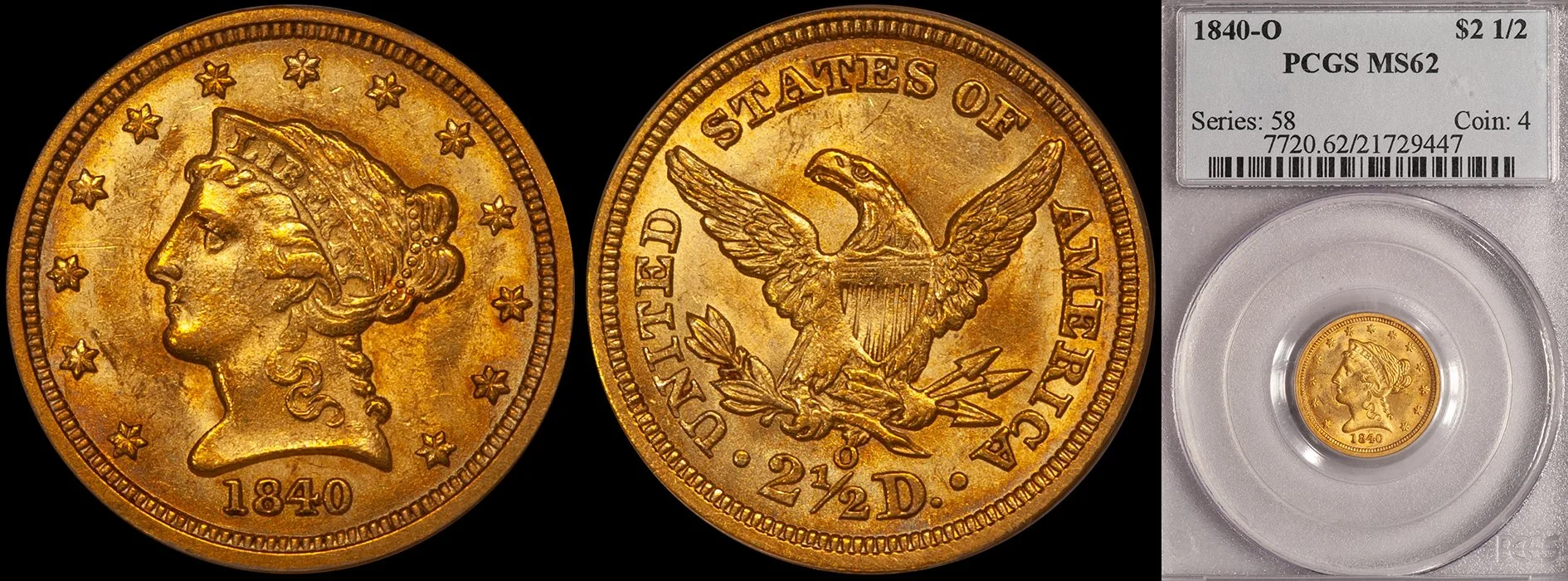
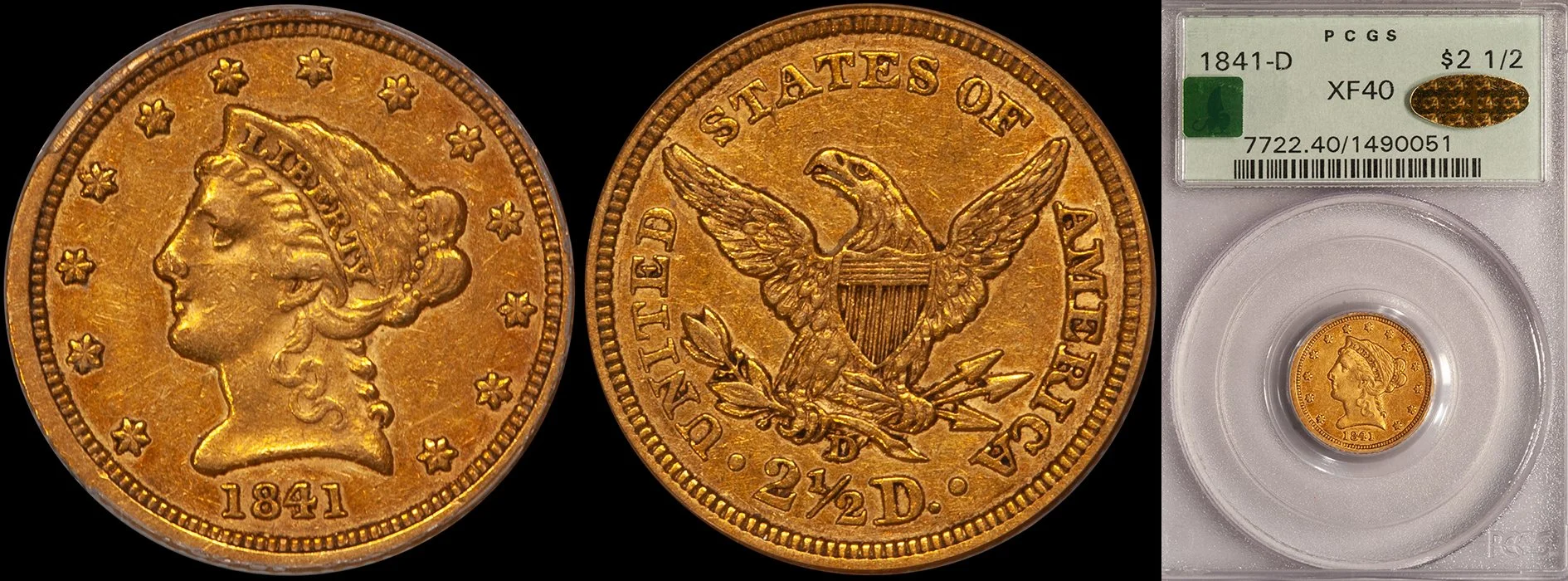
There are now 95 images and descriptions of quarter eagles on Coinapedia, and I would expect that by the end of the year we will have well over a hundred different issues included.

Three Dollar gold pieces, despite being a favorite series of mine, are probably the weakest part of the Coinapedia site right now. There are just 30 issues represented. I hope to be up over 50 by the Spring of 2012.

By far the strongest part of the site are the half eagles with no less than 145 (!) images and descriptions included to date. While this denomination will, obviously, never be complete (I doubt that I will be handling an 1854-S any time soon...) it is, nonetheless, the best on-line reference for this denomination that currently exists.

The eagle denomination is shaping up nicely with 84 different issues currently included in Coinapedia. I expect this to become a very strong area of the site as eagles are a series that I actively buy and sell. There will be one area of weakness: the common With Motto issues from 1880 to 1907 aren't likely to be included as I seldom--if ever--handle these.

Given the fact that I am one of the leading market makers in double eagles, I expected there to be more than 76 issues represented by this time. The problem with this denomination is that many of the better double eagles that I buy get shipped out to buyers so quickly they never make it onto Jenna's camera stand for imaging. I promise to slow the process down a little bit and to make certain more of the prized Liberty Head double eagles that come through DWN are imaged for future reference!

I hope you will give the Coinapedia a try and see if you don't think its an invaluable reference. I would love your input about it and welcome emails to me at dwn@ont.com.