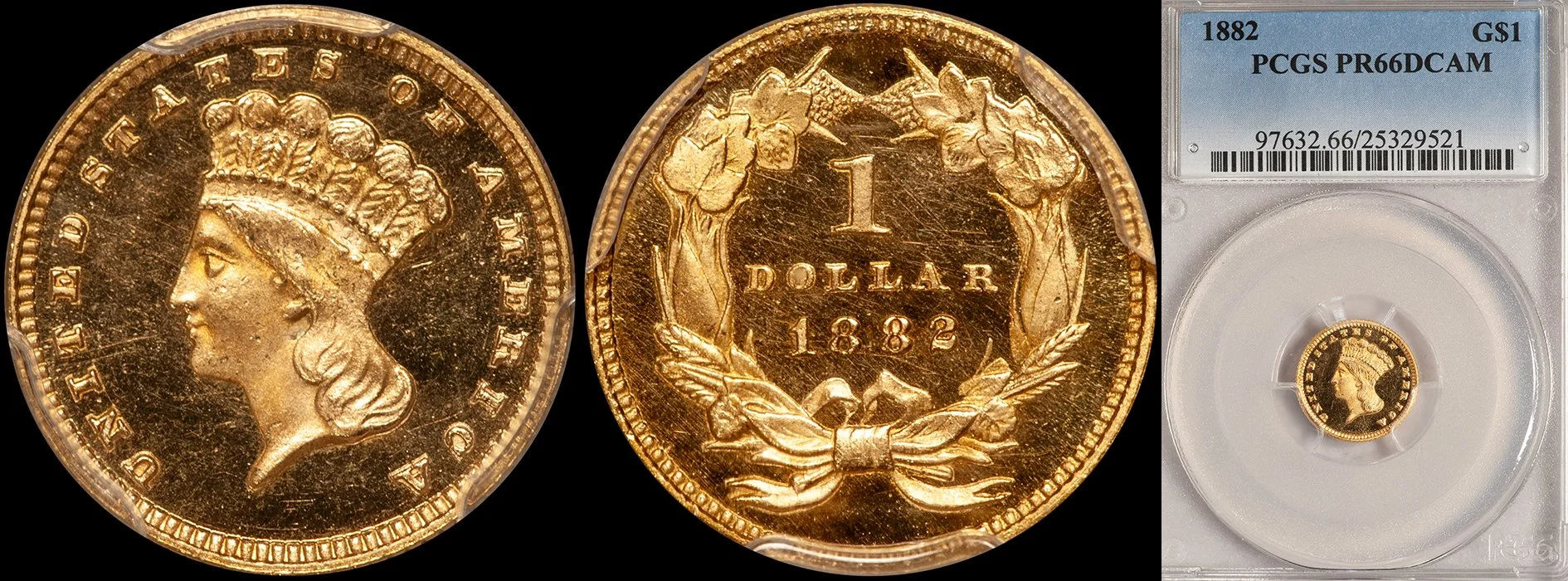
In a recent blog, I mentioned the fact that the entry level to become a buyer of interesting United States gold coins was a much lower barrier than many new collectors realize. I mentioned some general issues and types that could be found in the $1,000-2,500 range that I felt were interesting and good values. I'd like to expand this idea and discuss 20 specific rare coins that can be purchased for $5,000 or less. 1. 1865 Gold Dollar. Unlike the low mintage gold dollars from the 1880's, this Civil War issue was actually used in commerce. Only 3,700 business strikes were produced and just a few hundred examples are known today. I wouldn't exactly call this issue "rare" but it is certainly not one that you are going to be able to go to a national-caliber coin show and find more than one or two; if that.
For a collector with a $5,000 per coin budget, you can buy a really nice 1865 gold dollar. As an example, Heritage 1/11: 6672, graded MS61 by NGC, brought a reasonable $3,450. I sold a solid PCGS AU58 last year as an "E-Special" to raregoldcoins.com preferred clients for $1,500.
2. 1872 Gold Dollar. The 1872 is another low mintage issue but it doesn't receive the attention that the 1865 does since it isn't a Civil War issue. Only 3,500 were struck and I doubt if more than 200 or so are known; most in the AU53 to MS61 range.
This date remains very affordable in the lower Uncirculated grades as witnessed by the recent sale of an NGC MS62 for $1,265 in the Heritage June 2011 auction. Interestingly, only one example better than MS64 has sold at auction since January 2009 (an MS67) yet a nice quality MS64 should be available, with some searching, for around $3,000.
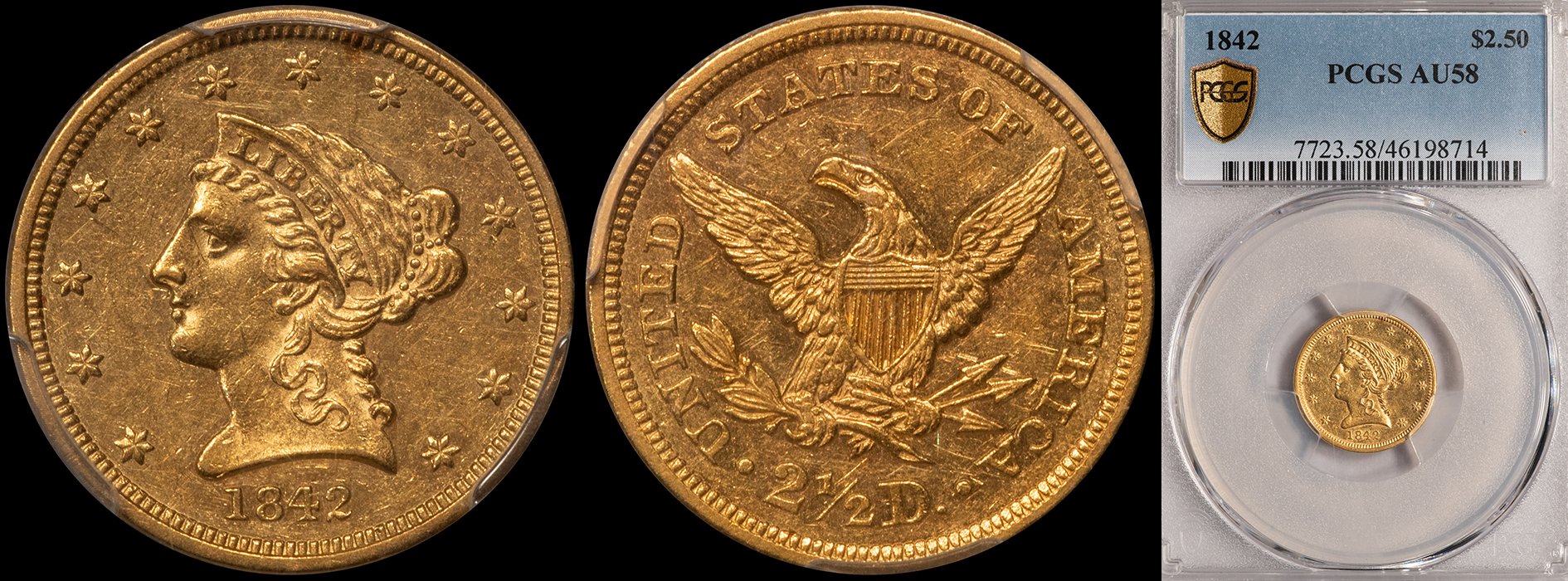
3. 1839 Quarter Eagle. This date has been a favorite of mine for years. It is by far the rarest Philadelphia Classic Head quarter eagle. Interestingly, it has fewer appearances at auction over the last two decades than the celebrated 1838-C and 1839-D and it might actually be a rarer issue than these two first-year branch mint emissions.
Despite the scarcity of the 1839, it remains a good value for the collector with a $5,000 and lower budget. An AU50 is currently worth Around $2,500-3,000 while an AU55 goes for $3,500-4,000 and an AU58 should sell for $4,500-5,000. Be aware of the fact that this is an extremely hard date to find with natural color and surfaces and a choice, high piece is worth as much as a 50% premium over a typical example.
4. 1845-O Quarter Eagle. This is another long-time favorite of mine. The 1845-O is by far the scarcest quarter eagle from New Orleans and it has an original mintage of just 4,000. This date has been recognized as a rarity in higher grades and a nice AU coin is going to be out of reach for the collector with a $5,000 budget. But that doesn't mean that a presentable example is out of the question.
I sold a nice NGC VF25 example of this date a few months ago for around $1,500. Heritage 3/11: 4631, graded EF40 by PCGS, sold for $4,025 and as far as I can tell this seems to be a record price for an EF40 that was clearly not going to upgrade; others have sold in this grade for $2,500-3,000 in the last few years. I can see EF's eclipsing the $5,000 mark in the near-future so this is one undervalued date that might not be so undervalued the next time I write an article of this sort!
5. 1867 Quarter Eagle. You'd think that an issue with a total PCGS population of just twenty-nine in all grades (that's the exact same number, by the way, as the 1856-D quarter eagle; an issue that's worth more than 10x an 1867 in AU) would be better recognized as a scarcity. Yet the 1867 continues to languish and it remains an affordable issue.
Trends for the 1867 quarter eagle is $1,900 in AU55 and $3,000 in AU58 and, when available, examples tend to sell for a discount in relation to these numbers. If just a few people started to collect Liberty Head quarter eagles by date (or if one or two people began to haord 1867 quarter eagles) I could see the price of this issue doubling nearly overnight.
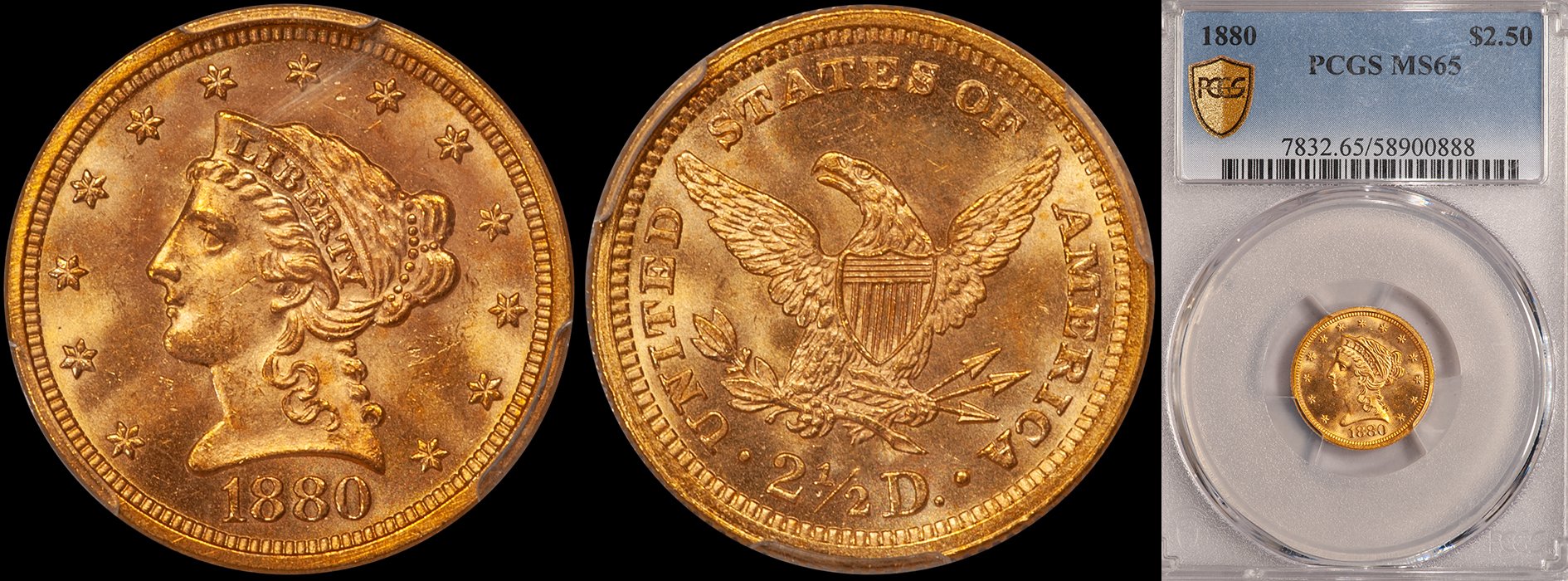
6. 1883 Quarter Eagle. The date run of quarter eagles produced between 1877 and 1895 contains many low mintage issues and a number of these are affordable, scarce and undervalued. I probably could have chosen four or five of them for this article but decided to focus on the 1883, an issue that I like very much.
Just 1,920 business strikes were made and my best estimate is that around 100-125 are known today. I have never personally seen an 1883 quarter eagle that graded higher than MS62 and only one or two at that level. The last Uncirculated piece to sell was an NGC MS61 that brought $4,313 in the Heritage 3/11 auction. Despite this coin obvious rarity, you can still buy a nice AU in the $2,000-3,000 range and MS61 examples have sold in the $3,500-4,500 during the last few years.
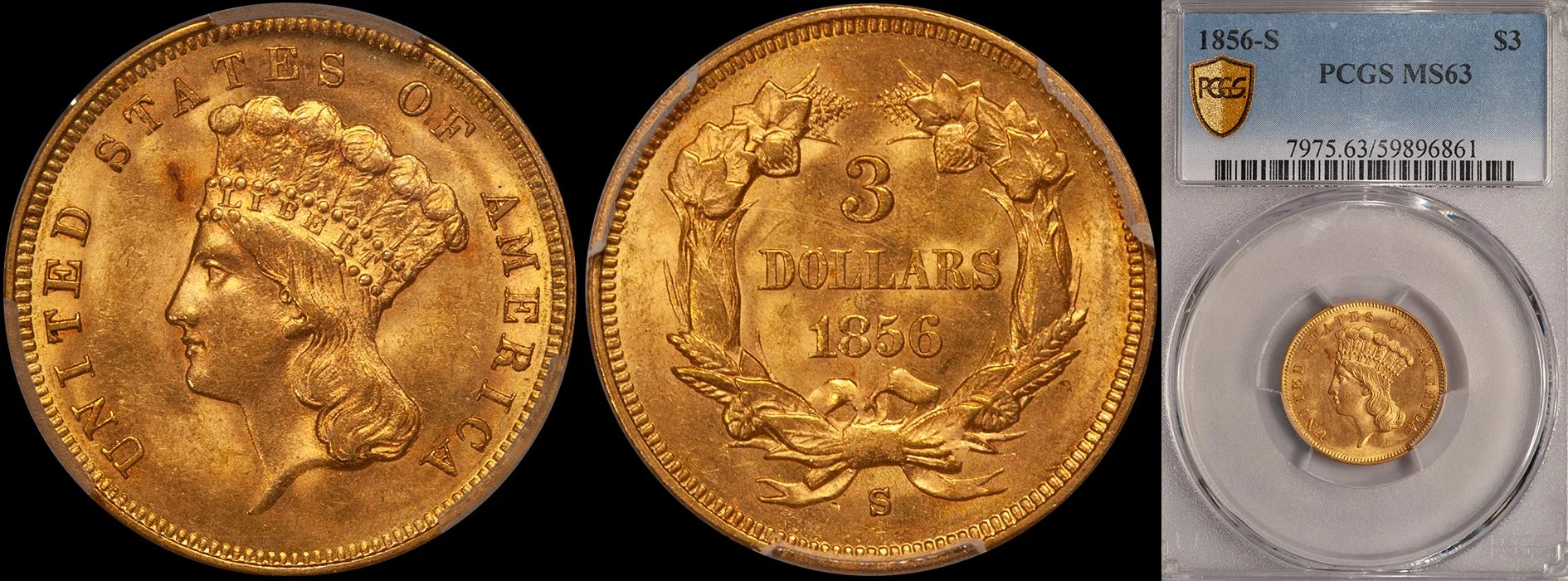
7. 1867 Three Dollars. In circulated grades, the 1867 doesn't sell for all that much of a premium over some reasonably common dates of this design. I have found the 1867 to be a challenging coin to locate and it appears for sale less often than such heralded issues as the 1864, 1870, 1871 and 1872. There were 2,600 struck and most are seen in the AU grades.
For $3,000 to $4,000 you can purchase an attractive AU5 to AU58 1867 Three Dollar gold piece. I would personally look for a really choice AU58 with original color and choice surfaces. These pieces do exist although they are hard to find.
8. 1884 Three Dollar. I've been a big fan of the low mintage Three Dollar gold pieces from the 1880's for years. The 1884 is not the rarest issue of this group (that honor belongs to the 1881) but it is very underrated, especially in higher grades.
There were exactly 1,000 business strikes produced. Unlike many of the low mintage Threes of this era, the 1884 is nearly impossible to find in grades above MS63. In Uncirculated, this date is going to be out of the price range for the sub-$5,000 coin buyer but I have sold at least two or three nice AU58's for less than $4,250 in the last two years.
9. 1842 Large Letters and Small Letters Half Eagle(s). There are a number of No Motto half eagles that are great values for less than $5,000 and both varieties of half eagle dated 1842 rank close to the top. The Large Letters is the scarcer of the two but both are extremely hard to locate.
Every year at auction, I only see maybe one or two decent 1842 half eagles yet EF coins continue to sell in the $2,000-2,500 range while AU's bring around $4,000-5,000 depending on quality. I very rarely see examples that are choice and original and I personally think a high end coin, even in VF grades is worth a significant premium.
10. 1842-O Half Eagle. I could have put at least three (if not four) New Orleans half eagles in this article. Despite a big boost in popularity in the last few years, nice EF No Motto examples of the scarcer date New Orleans half eagles remain within reach of most collectors.
The 1842-O is the second rarest half eagle from this mint. Probably no more than 50-75 are known from a mintage of 16,400. I just sold a very presentable VF example for around $1,500. Last summer, a pair of PCGS EF45's sold at auction for $3,738 and $3,881 respectively. I think a really nice EF45 coin can still be bought for less than $5,000 and I think it's one of the single best values in this group of twenty: a rare coin, a coin that's in demand and an issue that becomes extremely pricey as the grade scale is increased.
11. Undervalued Dahlonega Half Eagles. Even though this series is avidly collected by date, there are at least three Dahlonega half eagles that I can think of that carry virtually no premium in VF and EF grades yet are two or three times rarer than the "common" dates of this type. The ones that come to mind are the 1846-D Normal Mintmark, the 1848-D and the 1851-D.
The most recent Coin World Trends values the common date 1853-D and 1854-D at $3,000 in EF45. In the same grade, the 1846-D Normal Mintmark is valued at $2,750, the 1848-D at $2,750 as well and the 1851-D at $3,000. At common date valuations, these three issues are extremely good buys for the collector. A little hint: the 1848-D half eagle is really rare in EF with a sharp strike and natural color. At a price anywhere near its current Trends value, it is a really exceptional deal.
12. 1850 Half Eagle. This is the rarest half eagle struck at the Philadelphia mint between 1843 and 1862 (with the possible exception of the 1859 which is another really undervalued issue). Yet the last two I've sold in AU58 (both were nice coins, by the way) fetched around $1,500 each.
The 1850 half eagle is actually a scarcer coin in AU grades than its Charlotte and Dahlonega counterparts; at around a quarter of the price. Yes, I know the C+D mint issues are around four times more popular but the 1850 half eagle still seems like a great value.
13. San Francisco Half Eagles, 1858-1867. If you like truly rare coins and have $2,500-$5,000 to spend on each purchase, this subgroup would make for a very interesting date run. You can't buy the 1864-S in any grade without spending at least $10,000+ but the other nine dates will be within your budget as long as you focus on VF and EF grades.
Most of these issues have surviving populations of less than 100 coins and nearly all become very rare and very expensive in AU50 and higher. Yet they remain affordable in VF and EF grades. They certainly aren't plentiful; as an example, PCGS has only graded twenty-five examples of the 1862-S in EF and lower grades. Factoring in resubmissions and ugly coins, this probably equates to no more than fifteen or so pieces. Rare, yes, but not so much so that you can't find one without some patience. And at $3,000-4,000 for a nice VF+ example, a hard coin not to like!
14. Slider No Motto Liberty Head Eagles. If I were collecting gold coins and had a $2,500-5,000 per coin budget I'd give very serious thought to assembling a date run of No Motto Philadelphia eagles from the 1840's and the 1850's.
With the exception of a few dates (the 1844-1846 and 1858), most of these issues can be found in AU58 in this price range. The more common dates can be found for less than $1,500. Given the fact that a very common With Motto issue has a "basal value" of around $750-850 in slider grades, the fact that you can buy a coin like, say, an 1852 $10 in AU58 for around $1,500 seems like great value to me.
15. 1862-1877 Liberty Head eagles. As long as you are patient and willing to buy coins in the VF-EF range, there are some great values in the eagles series. Almost every date struck between 1862 and 1877 at the Philadelphia and San Francisco mints was melted in abundance and this fact, coupled with low original mintages in many cases means rare dates. In most cases, we're talking about 75-100 known.
It would be fun to collect coins like this in conjunction with similarly dated half eagles. In the eagle series, your $2,500 per coin expenditure isn't going to go very far so it might be wise to budget closer to $5,000 per coin. At this level there are plenty of interesting coins.
16. "Better Date" Liberty Eagles, 1880-1907. One of the consequences of the current weakness in the generic gold market is the near-total evaporation of the Market Premium Factor for certain semi-scarce to scarce eagles produced in the 1880's, 1890's and early 1900's.
Let me give you an example. Currently, a generic MS62 Liberty eagle is worth around $850. For $900-$1,100 you can buy coins like an 1882-S or an 1889-S in this grade that are many times scarcer than a common date. Will the market premium factor that these issues once had ever return? I think they will, to a degree. But in the mean time, it's kind of fun to buy conditionally scarce coins for little or no premium.
17. 1889 Eagle. I couldn't mention the late dates of this denomination without specifically discussing the rare 1889. You can make the case that a number of the issues from the 1880's and 1890's are scarce solely based on grade but not the 1889; this is a genuinely scarce coin in all grades with an original mintage of just 4,440.
An About Uncirculated 1889 eagle has a current market value of around $2,000. In Uncirculated, you should expect to spend around $4,000 or more for an MS60. It should be noted that this date almost never comes with good eye appeal so, in this case, a clean(ish) AU55 might actually make more sense than an abraded MS60 to MS61.
18. 1854 through 1858 Philadelphia Double Eagles. No, I don't own rolls of these and am not constantly self-promoting them. But as a dealer who sells alot of Type One double eagles, I'm always looking out for the 1854 Large Date, 1855, 1856, 1857 and 1858 in nice AU53 to AU58.
My experience has shown me that these coins are very popular, very liquid and still within the budget constraints of most collectors. I find that many San Francisco Type One double eagles are not well struck and have appearance issues. These five Philadelphia issues tend to be better struck and have better eye appeal than their San Francisco counterparts.
19. 1869, 1870 and 1871 Double Eagles. These three Type Two Philadelphia double eagles remain affordable in EF and AU grades yet they are scarce and desirable issues.
Of the three, I personally like the 1871 the most but all are hard to find in the higher AU grades. You are looking at around $3,000 for a low-end AU and a bit more than $5,000 for a coin at the upper end of this range. I'd suggest being patient and waiting for examples that are clean for the grade, choice and as original as possible.
20. Big Spread S Mint Type Three Double Eagles. The early date San Francisco Type Three issues (specifically those produced between 1877 and 1882) are true condition rarities. Most of these issues are expensive in MS62 and above but affordable in MS61. I like the value of these coins in MS61.
Here's an example. In MS62, an 1879-S is worth in the $11,000-13,000 range. The same date in MS61 is worth around $4,000 to 5,000. In some cases, a high end MS61 is as attractive as a lower end MS62. As Type Threes become more popular with date collectors (and I think they will), it seems like many people will gravitate towards the 1879-S in nice MS61.
There are dozens of other undervalued United States gold coins that could have made this list. I'd be curious to hear from you with your comments about omissions as well as about those included on this list.

Date…….1849-O
Grade…….PCGS MS63 CAC
PCGS Price Guide.…….……35000
CDN Greysheet/CPG.…..…37500
Population (PCGS).……….….3/0
Population (NGC)……...………1/1
Population (CAC).….....….…..2/0
Serial Number……5414.63/61207008
PCGS Lookup Number.……….5414