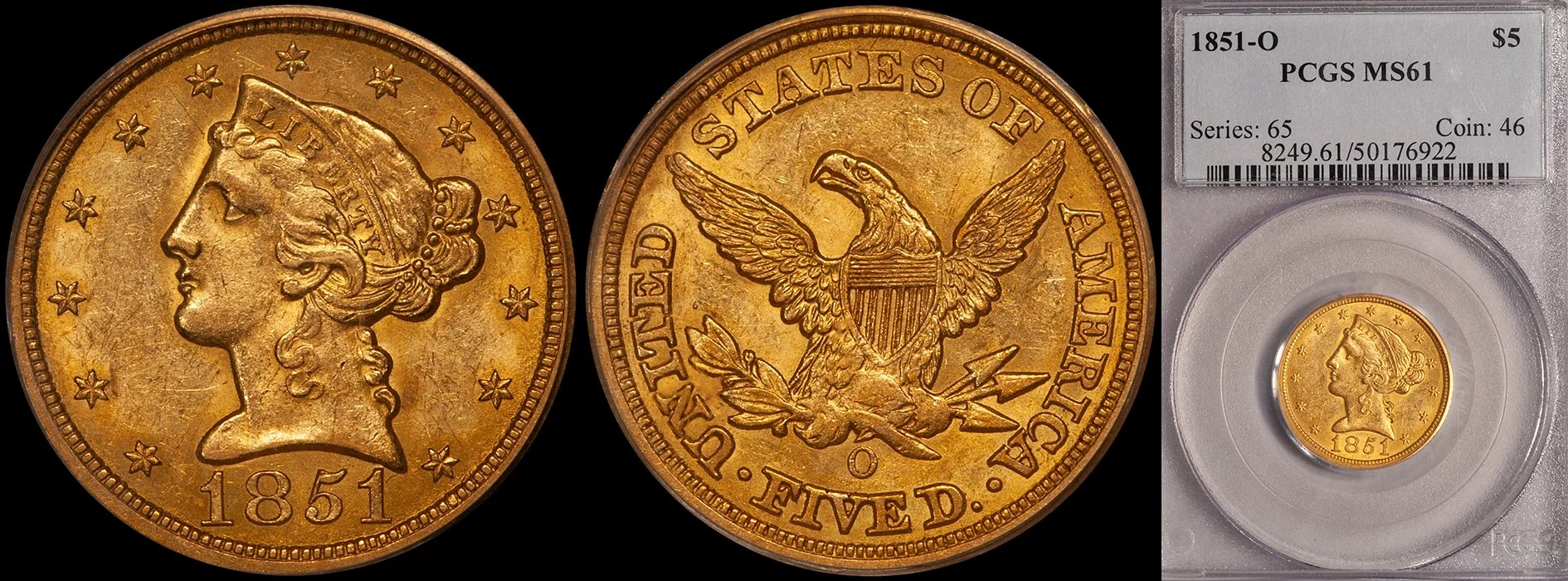
Some of My Favorite Obscure United States Gold Coins: Part One

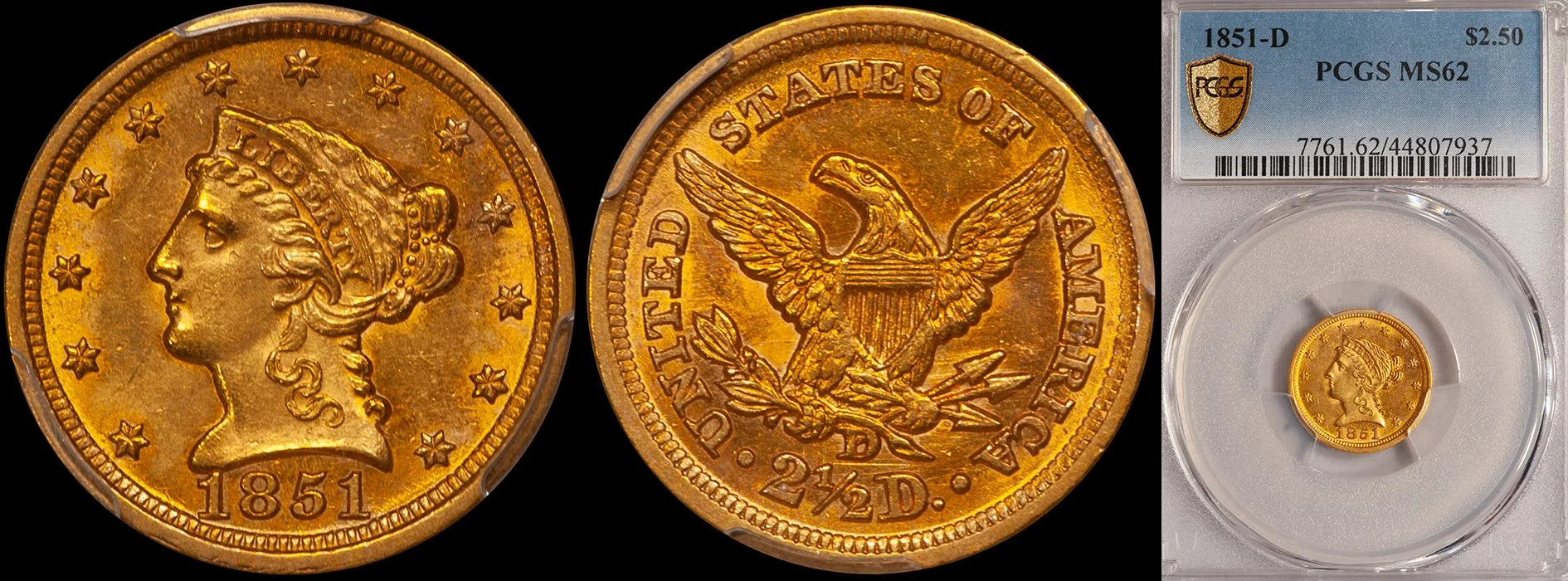
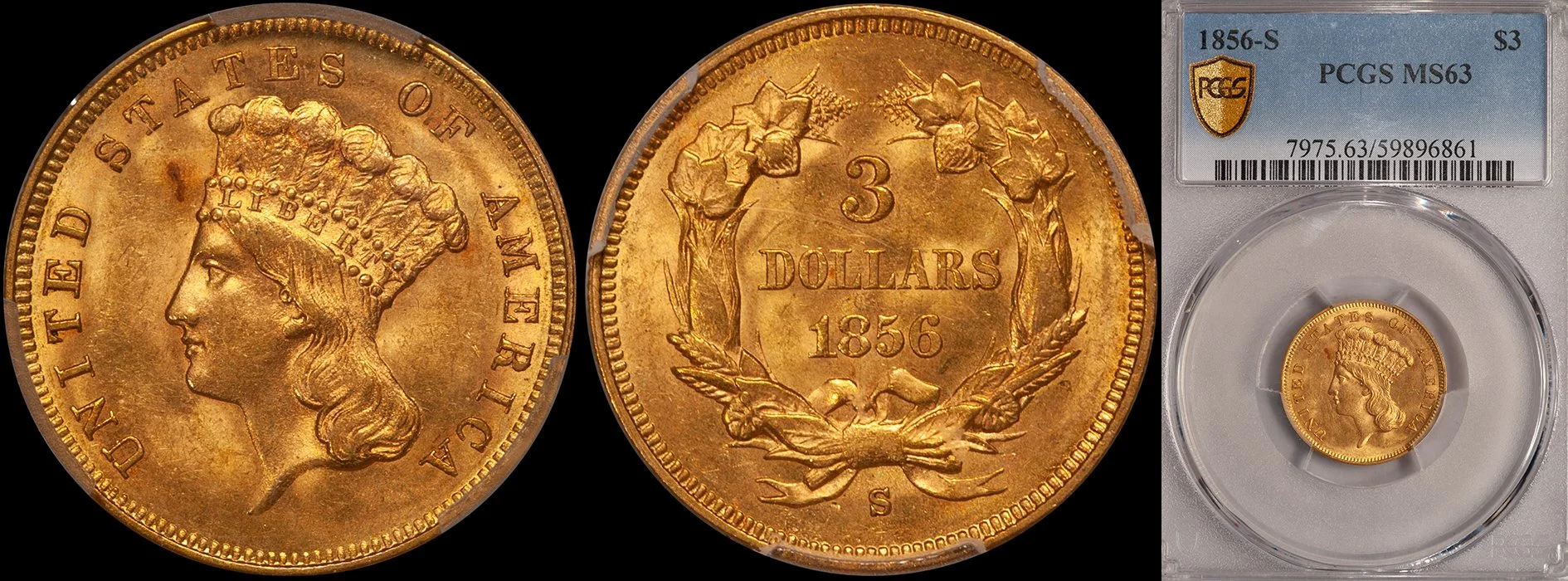
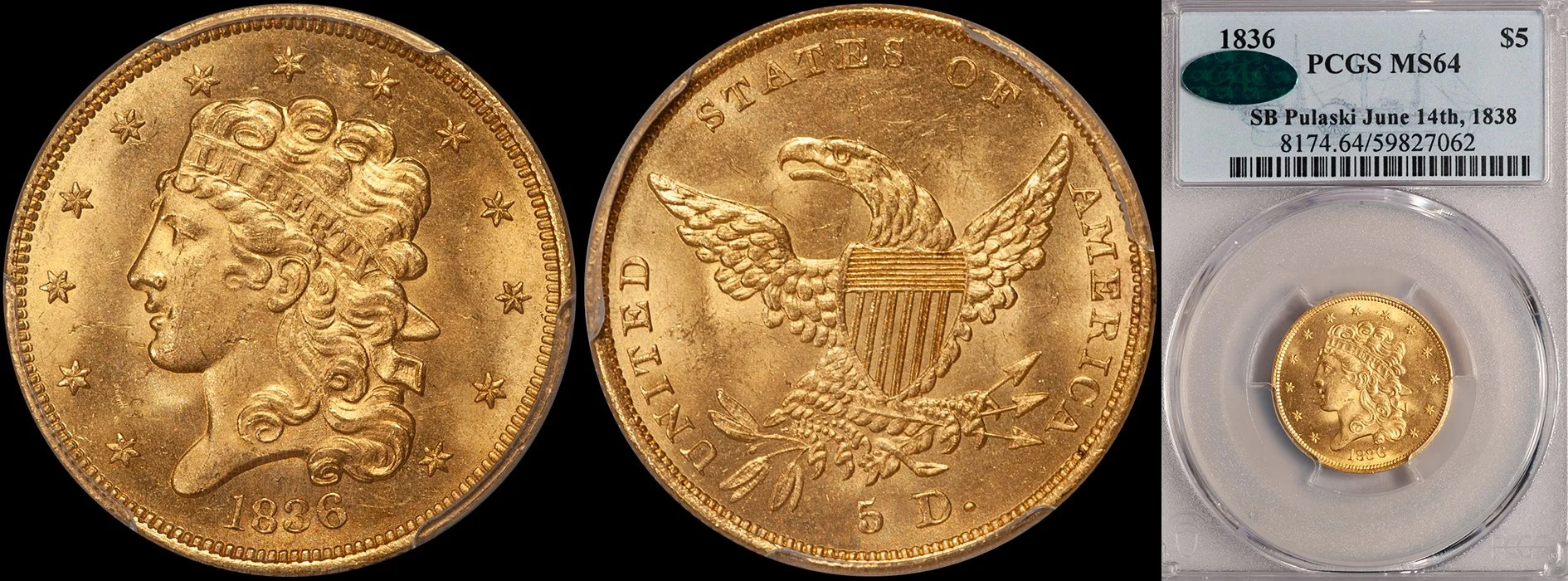
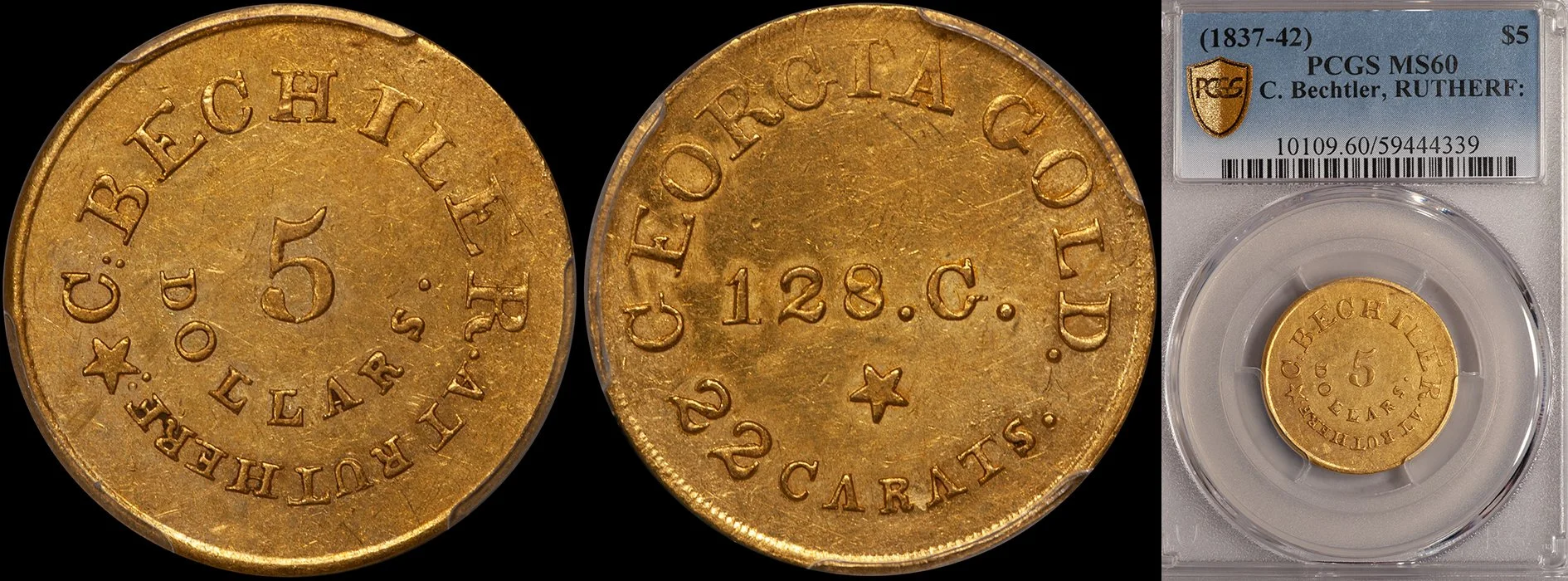
One of the things about the Christmas/New Year's holidays is that they are a time of remembrance. If you are a coin dealer (and if you've been one for as long as I have...) this is a good time to sit around and get all nostalgic about interesting coins that you have seen or sold. I originally thought about writing an article that talked about the great U.S. gold coins that I have sold over the years. But the more I thought about it, the more it seemed like a disingenuous puff piece and I think one of the reasons that people like to read my web articles is that they are not simply written to extol the virtues of Douglas Winter Numismatics. So, what I've decided to do instead is to modify the article but keep the basic theme. I'm going to discuss three interesting coins from each denomination that are, in my opinion, extremely important but not necessarily that well known. A few are coins that I've handled but most aren't. And none are currently for sale or are likely for sale anytime in the near future.

I. Gold Dollars

a) 1849-C Open Wreath Gold Dollar, Graded AU58 by PCGS

This coin is important to me for a number of reasons. I sold it back in 1999 via private treaty to another dealer who then sold it to a collector who resides in the South. It is still in this collection and it is still in the same old green label holder that it has been in since 1997.

The 1849-C Open Wreath is the rarest gold dollar and it is, by far, the rarest coin from the Charlotte mint. There are five examples known. One has been graded higher than this coin (an NGC MS63PL that was sold by David Lawrence Rare Coin Auctions in July 2004 as Lot 1005 in the Richmond I sale; it brought $690,000) but I personally like this piece more on account of its superb original color and unmolested surfaces.

This coin was part of the North Georgia collection that I sold in 1999 in conjunction with Hancock and Harwell. Jack Hancock was a good friend of mine and he died far too young. Jack and I did alot of business together and had a lot of non-coin related fun at shows and at his house in Georgia. The aforementioned 1849-C Open Wreath gold dollar was the most expensive--and neatest--coin that the two of us ever handled together and whenever I think of this coin, I think of my buddy Jack.

b) 1863 PCGS MS68

I first saw this coin a number of years ago in David Akers' case at a show. Dave has owned it for a number of years and he likes to display it, from time to time. Its never really been for sale but its a coin that I find remarkable for a n umber of reasons.

The 1863 is one of the truly rare Philadelphia gold dollars. It has a much lower survival rate than the other Civil War issues and it is especially rare in Uncirculated. While a decent MS62 to MS64 trades from time to time (I sold a lovely NGC/CAC MS64 earlier in the year) Gems are extremely rare. But the Akers coin is just amazing. It is one of the finest business strike gold dollars of any date that I have seen with incredible luster and color and nearly perfect surfaces. The fact that it is really rare and really gorgeous makes it a very special coin.

c) 1875 PCGS MS65

This coin sold in the February 2010 Heritage sale as lot 1427. I had heard about it years ago but had never actually seen it. I wasn't disappointed. The coin is a total Gem with superb natural coloration atop gorgeous prooflike surfaces. It is housed in an older green label holder and would likely upgrade a point if it were resubmitted. The coin sold for $109,250 which I felt was extremely aggressive buy, as the old cliche goes, where are you going to find another one like this at any price?

The 1875 is a rarity in all grades with an original mintage of just 400 business strikes. When available, it tends to come in the AU range and I have never personally seen another Gem (and only a handful of nice Uncirculated coins).

This was another coin that, like the 1863 I mentioned above, neatly combined rarity, high grade and superb eye appeal in one neat package.

2) Quarter Eagles

a) 1842 PCGS MS62

The 1842 is among my favorite quarter eagles. It is a rare date in all grades. Only 2,823 were struck and most of the three to four dozen that exist are well worn. Which is why I think this coin, graded MS62 by PCGS and very choice for the grade by today's standards, is among the more interesting Liberty Head gold coins that I have ever handled.

I've actually owned this coin twice. I first bought it out of the Superior 9/99 auction where it brought $31,050. I sold it to a Nevada specialist who considered it one of the prizes of his quarter eagle collection. I purchased his entire collection from him in 2002 and then sold this coin to a Midwestern collector who has, without much fanfare, assembled the greatest set of quarter eagles ever assembled (and I'm proud to say that I've built essentially his whole set!)

I would love to have this coin in my case at a major show. I think it would be a great litmus test for dealers and collectors who fancy themselves experts on U.S. gold coins. If you are a true expert, you are going to swoon when you see a coin like this 1842; if you are a faux gold coin expert, you'll walk right on by and not even look twice.

b) 1842-C PCGS MS65

There are a small number of coins like this 1842-C quarter eagle: items that are not only spectacular from a condition standpoint but which are very rare as well. This 1842-C quarter eagle, which is best known to specialists as the Elrod coin (it was owned by the noted Charlotte gold expert Stanley Elrod from 1980 to around 1992) is not only the single best Charlotte quarter eagle of any date that I have seen. It is also the finest known 1842-C quarter eagle by a mile and it is one of just two or three examples of this date that exist in Uncirculated.

This coin last appeared for sale as Heritage 2/99: 6146 (as an NGC MS65; it was subsequently crossed into a PCGS MS65 holder) where it brought $90,850. I was the underbidder and this is one of the few expensive coins that I have ever bid on at auction with the total intention of buying it for myself and putting it away. Had I bought it I'm not sure I would have sold it yet and the current owner, a Southern connoisseur who does not specialize in branch mint gold, was smart enough to realize the significance of this coin.

c) 1864 NGC MS67

I have written about the Byrod Reed sale that was held by Spink's in October 1996. This is a sale that I'd love to be able to travel back in time to and spend about ten times more money than I actually did. Prices, at the time, seemed high but, in retrospect, they were dirt cheap. The most amazing thing about the coins in this sale where how fresh they were. You are talking about coins that had lain undisturbed since the 1870's or 1880's....ahhh, be still my heart.

There were numerous terrific coins in the Reed sale but the coin I remember most was the 1864 that was cataloged as "Gem Brilliant Uncirculated." It was by far the best example of this very rare date that I had ever seen (and there is still nothing even close). It later graded MS67 at NGC and sold for $132,000 in the auction.

I don't think this coin has traded in many years and I'm not certain where it is today. Whoever owns this coin has one of the really great Civil War rarities and it is a piece that I think might bring an extremely strong price if offered today.

3) Three Dollar Gold Pieces

a) 1854 PCGS MS68

You'll have to bear with me on this coin as I don't totally recall all the facts behind it. I do remember that the coin turned up at a small coin show in Dallas in the mid-1980's and I missed buying it by about five minutes, much to my chagrin. The coin was submitted to PCGS around 1987 and it graded MS67; back when MS67 meant , essentially, perfection.

Now here's where my memory is a bit murky. I think this coin was sold in the Superior January 1990 sale for $132,000 which, as you can guess, was an amazing price for a common date Three Dollar gold piece; still is, in fact. It was eventually sold to John Moores, the owner of the San Diego Padres, and it was in his incredible type collection that was sold by Sotheby's in November 1999 to raise money for Scripps Hospital. As with all the coins in this sale, it went very cheaply at $57,500. It finally resurfaced as Heritage 6/04: 6219, graded MS68 by PCGS, where it brought $112,215.

This is easily the finest business strike Three Dollar piece I've ever seen and it may be the best pre-Civil War gold coin I have seen as well. It has amazingly clean surfaces, glowing luster, a razor sharp and as much eye appeal as you could hope for. 1854 Threes come nice but, man, this coin is something special.

b) 1854-D PCGS MS62 This is not the most valuable Three Dollar gold piece (the 1870-S holds that honor) but it is clearly a coin that has very widespread appeal and would be considered desirable even by someone who owned no other examples of this denomination. This is a coin that is universally considered to be the finest known 1854-D and it resides in the incredible Great Lakes collection which is easily the finest set of business strike Three Dollar pieces ever assembled.

This coin last appeared for sale in the Superior January 1996 sale where it sold for a reasonable $72,600. It was later upgraded to MS62 by PCGS.

While it has been fifteen years since I've last seen this coin, I remember it well. It had superb color and surfaces and was well-made for the issue. At the time, it was the only 1854-D three that had ever been graded Uncircuclated by PCGS. Since then, PCGS has graded a few more in Uncirculated (as has NGC) but this is still the only example that I uncategorically regard as Mint State.

c) 1865 NGC MS67*

Its not so much the specific coin that I remember in this case; its more the collection and the thrill of the research that went with it.

This coin was one of the centerpieces of the wonderful Richard Jewell Collection of Three Dollar gold pieces. I assembled this collection with Rich from 2002 to 2004 and in the beginning of 2005, I was informed it was for sale. I decided to place it in the ANR March auction. As part of the agreement, it was decided that I would write a book about Threes with the Q. David Bowers.

Dave Bowers has been a hero of mine since I was a kid and the thought of working on a project with him was exciting, We had to race through the book due to time constraints but the day a finished Doug Winter/Dave Bowers book on Three Dollar gold pieces arrived at my office was one of the numismatic highlights of my career.

Part 2 of this article will cover half eagles, eagles and double eagles and it will be published on my website in around 30 days.

The Three Kings: The Proof-Only Double Eagles Dated 1883, 1884 and 1887

Continuing my fascination with Proof-only issues, I'd like to discuss the rare Proof-only double eagles dated 1883, 1884 and 1887. These issues are not all that well-known outside of Type Three Liberty Head collectors and I think they merit more than a passing mention. Beginning in 1881, production of double eagles at the Philadelphia mint became little more than an afterthought. And it would remain as such until 1888. In 1883, there were no business strikes produced. The Mint did strike 92 Proofs; ostensibly for the limited numbers of collectors who were interested in Proof double eagles at this point in time.

The Mint struck considerably more Proof 1883 double eagles than they were able to sell and it is believed that as many as half of the original mintage was melted later in the year. Of the four dozen or so that were distributed to collectors and dealers, around twenty at most are known today. This figure includes at least three that are impounded in museums and another two or three that are impaired.

The 1883 is the second rarest collectible Liberty Head double eagle, trailing only the 1884 (I consider the 1849 and the 1861 Paquet reverse non-obtainable and do not include them). Despite this coin's indisputable rarity, it is only fairly recently that the 1883 became known as a major rarity. Prices for this issue had remained fairly stagnant for many years, hovering in the $75,000-100,000 range. This only changed in 2004 when Heritage sold an example for $172,500. Today, a Gem is worth at least $200,000-225,000.

There are a small number of Gems that have been graded by the services and at least one has been slabbed as PR66 by NGC. I know of six or seven Gems and the two nicest that I have personally seen are Heritage 1/06: 3580 (graded PR65 Ultra Cameo by NGC) and Heritage 1/04: 3224 (graded PR65 Deep Cameo by PCGS and possibly also ex Dallas Bank collection).

There are a few diagnostic criteria that make this an easy issue to authenticate. All show roughness on the back of the eagle's neck and fragmentation of the fleur de lys beneath its beak. These die markers do not exist on any business strike reverses of this era.

The 1884 is the rarest of these three Proof-only issues. A total of 71 were struck and it is possible (although unconfirmed) that a few were melted as unsold, given the fact that so many Proofs dated 1883 suffered this fate. There are slightly fewer than twenty known. I wrote in 2000 that 15-17 exist and I think this number might be a tiny bit on the low side. A total of twelve have sold at auction since 2000 but this includes a number of coins that have sold more than once.

The current auction record is $264,500 which was set by ANR 8/06: 1644, a coin graded PR66 Cameo by NGC. It had sold two years earlier (as Heritage 1/04: 3225) for $149,500.

The 1884 is much rarer in Gem than the 1883. I do not believe that a full-blown Gem exists and most that I have seen are in the PR63 to PR64 range. For some reason, this date was not as well handled as the 1883 or 1887 and most show signs of having been cleaned.

There are some interesting die characteristics for this issue that make it very easy to identify. All known examples show an uneven pattern of frost on Liberty's face. It is thick on the right half of the neck and near the ear but it is quite light on the neck. This is why none have ever been designated as "deep cameo" or "ultra cameo" by PCGS or NGC. In addition, all 1884 double eagles have a noticeable diagonal die line just to the left of the Y in LIBERTY.

There is no question that, as a date, this is the rarest collectible Liberty Head double eagle. Given this fact, it seems fairly reasonably priced at current levels.

The last of the Three Kings is the 1887. This issue has a mintage of 121 struck. I believe that, as in 1883, a number went unsold and were later melted. My best guess is that around half were released to collectors and that there are 25-30 known today.

The 1887 tends to come better preserved than the 1883 and 1884 and it is more available in Gem than the other two Proof-only dates. There are around six to eight Gems known. The finest is an incredible NGC PR67+* Cameo that will be sold in the upcoming Heritage 2011 FUN auction. The current auction record for this issue is $161,000 that has been achieved twice (Goldberg 9/08: 1295 and Heritage 1/07: 3145) but this mark is certain to be broken by the aforementioned Heritage coin.

There are no major die characteristics seen on Proof 1887 double eagles. This tends to be a very well made issue and many of the examples that exist show excellent contrast between the frosted devices and the mirror fields.

The three Proof-only Liberty Head double eagles from the 1880's are among the more interesting and desirable United States issues from the 19th century. I believe that they are all highly undervalued, considering how few are known for each issue. As I have said in other recent blogs, if the Type Three series were to become more active among date collectors, these three issues would be considered true "stoppers" and would show dramatic increases in price.

Proof-Only Gold Coins

The presence of a number of important Type Three Proof Liberty Head double eagles in the upcoming 2011 FUN auction got me to thinking about Proof-only United States gold coins. What are these coins, why are they important and do they deserve the market premiums they enjoy? A Proof-only coin is an issue that exists only in a Proof-only format where business strikes could have been produced as well. These coins exist in a variety of denominations but for this blog, we'll focus on the ones in various United States gold series.

Some of the most famous Proof-only gold coins are the double eagles from 1883, 1884 and 1887. The mintage figures for these dates are 92, 71 and 121 respectively. I believe that there are around twenty 1883 double eagles known, maybe fifteen 1884's and as many as thirty to thirty five 1887's.

There are two ways to look at these coins. The commonly accepted way is to consider them solely as a date. In other words, even though there are many Proof double eagles that are rarer than these three, there are no other Type Threes that compare to the 1883 and 1884 in terms of the total number known. If a date collector wants to buy an 1883 for his set of Type Three double eagle he has to buy a Proof. This is different than a rare date like the 1881 or the 1882 that exists in dual formats; i.e., as business strikes and Proofs, and thus presents the collector with two options.

Collectors who are new to double eagles might balk at having to pay $150,000-200,000 for a nice 1883 double eagle when they can purchase a Proof of comparable rarity from this era for half as much--or less. Why, they wonder, does a Proof-only issue get such a high premium?

The mistake that they are making is to compare the 1883 to, say, an 1880. They need to look at the rarity of the 1883 on an absolute level. The 1883, from the standpoint of total number known, is even rarer than such celebrated issues as the 1854-O and the 1856-O; two issues that now sell for $300,000-500,000. If the Type Three series were to ever become as popular with date collectors as the Type One series currently is, the current prices for Proof-only issues such as the 1883, 1884 and 1887 could double or triple.

One Proof-only issue that I have always found interesting is the 1863 quarter eagle. Only 30 were made and this is one of the major rarities in the entire quarter eagle series. In the Liberty Head design it is the third rarest issue, trailing only the 1854-S and the 1841. The 1863 is an issue that has alot going for it; most notably its charismatic Civil War issuance. It has been a heralded rarity for well over a century. Values have steadily risen for the 1863 over the last decade and I expect this issue to become more and more sought-after in the future.

Another Proof-only issue is the 1887 half eagle. It has a mintage of 87 and an estimated thirty or so survive. Unlike the 1863 quarter eagle, this is a date that doesn't "feel" like it should be a Proof-only coin; especially given the fact that many of the other Philadelphia half eagles of this era are common in business strike format.

What I think hurts the 1887 most in terms of its appeal is that Liberty Head half eagles are not currently a series that are actively collected by date. The 1887 feels like an overvalued date to me, given that a Gem is worth over $100,000 as compared to less than half this amount for comparable Proofs of this era that aren't Proof-only.

Two of the most interesting Proof-only issues are the 1875 and 1876 three dollars. Both are less rare than their original mintage figures of 20 and 45 would suggest and this is due to the fact that restrikes exist for both issues. I find the 1875 to be a very intruiging issue because of the magic of the date 1875 as a Proof. Every Proof 1875 issue has an exceptionally low original mintage and at least two denominations (the half eagle and eagle) are virtually unobtainable as business strikes.

Back to the Proof-only Type Three issues. When I first became ingterested in US gold coins, these three issues were heralded rarities and they were bringing $25,000 and higher back when 25 grand could buy you some serious rare Liberty Head double eagles. The 1883, 1884 and 1887 have certainly increased in value over the years but not at the pace of the rare Type Ones or, ironically, even at the pace of the formally-overlooked business strike rarities of the Type Three series.

It will be interesting to see how the next appearances of the rare Proof-only gold issues that I've mentioned are met by an increasingly rarfity-driven coin buying audience. My hunch is that we will see very strong prices on most of these coins and that they represent good value for the collector or investor who fancies true blue-chip numismatic items.

How to Become a Good Coin Collector

One of the oldest jokes in the book goes, "How do I get to Carnegie Hall? Practice, practice, practice." Hoary? Yes. Old when your grandpa was a kid? Sure. But oh so true and applicable to the subject of this blog which is, as you no doubt already know, "how to become a good numismatist." Because to become a good collector, you do need to practice. But what exactly do you need to practice most? I think the most important piece of advice I could give a new collector is to look at as many coins as possible. There are self-proclaimed numismatic experts who gain their knowledge from research but the truly savvy collectors that I have met have acquired their knowledge the same way that I have: they've looked at countless coins.

How do you get to look at coins? There are really only two ways that the average collector is going to be able to view significant numbers of important coins: at shows and at auctions. If you specialize in a specific sort of coin, make certain that you spend the limited amount of time you have at shows or at auctions looking at the coins you really need to be viewing; save the numismatic tourism for later.

One trick I suggest that collectors try at auction viewing is to cover the grade of the coin that they are looking at and guess what the grade actually is. Or, establish grade parameters and write if you think the coin is an "A" "B" or "C" quality example. After the sale is over and you analyze prices realized, you can get an idea of how accurate your precision grading really is.

I can't think of a better way to become a good collector than to buy, sell and trade coins. I'm not saying that you have to become a fledgling numismatic empire. But I think one of the best ways to become comfortable with any hobby is to be an active participant in both the buying and selling side.

One of the things that you learn from being a buyer and a seller is how to calculate your "upside/downside rate" with each purchase. It might be easy to justify paying $3,500 for a certain Dahlonega half eagle for your collection but what would it sell for if you placed it in the open market? $2,750? $3,000? $3,500? As they say, you can't play if you don't pay...

You've probably read a hundred times how important it is for a collector to learn how to grade. I haven't met that many collectors who know how to grade; at least outside of their realm of expertise. But the most successful collectors I've met all share at least one trait: they understand the aesthetics of numismatics. In other words, they may not be able to tell the difference between an MS62 and MS63 Charlotte quarter eagle but they know the difference between a below-average coin, an average coin and a high end coin.

The "aesthetics" of coins is probably the most important point I'm making in this blog. To be a good collector you really need to understand what constitutes a "good" coin in your series. If you collect St. Gaudens double eagles, the parameters will be much different than if you collect Type One double eagles.

And this is where having a good relationship with a dealer enters the picture. Behind every great collector there is a great dealer who acts as a conduit, providing information, guidance and coins. In this day of information overload it is tempting to think that the collector can go it alone and build a meaningful collection bidding in on-line auctions. If you are incredibly lucky, you'll only make an occasional mistake going the I-can-do-it-myself route. If you have average luck, you'll make a number of errors and some may prove costly.

One last thing: study and read all that you can about the coins that interest you and the market itself. It never ceases to amaze me when I hear stories about very successful businessmen who spend $1 million on generic gold and overpay by 40%. You would think they would spend thirty minutes on the web to compare prices and get a feel for the absolute basics of the market.

I've said this before and I'll say it again: the time that you put into numismatics will be doubly or triply rewarded as you wade further and further into the coin pool. This can be an infuriatingly complex hobby but there are ways to simplify it and this will only serve to give you more and more enjoyment.

Which Civil War Gold Coins Will Be Promoted in 2011?

I don't consider myself to be a real pro when it comes to rare coin promotion but even I know a no-brainer when I see it. 2011 marks the 150th anniversary of the beginning of the Civil War. As sure as the sun will rise tomorrow, you can bet that rare coin promotion gurus who are far more clever than I have been preparing for this event for some time. So if you are Joe Coin Promoter and you are gearing up for the Civil War Sesquicentennial in 2011, what kind of gold coins can you get enough of to do a promotion? Let's go denomination by denomination and figure this out.

I. Gold Dollars

Only two mints made gold dollars in 1861: Philadelphia and Dahlonega. The 1861-P is common and cheap; the 1861-D is rare and expensive. The 1861-D is unpromotable; it is too rare to accumulate in quantity and is already too expensive. A clever dealer could probably stealthily buy 40-50 1861-P gold dollars in lower Mint State grades over the course of a year and have enough coins to promote. He could probably find as many 1862-P gold dollars and maybe have as many as 100 coins in total. I would have to wonder, though, if the intended audience for this promotion would get excited about gold dollars as they are small, common and not really "sexy." As a collector I'd probably avoid stockpiling any Civil War gold dollars to ride the coattails of a promotion.

II. Quarter Eagles

Two mints made quarter eagles in 1861: Philadelphia and San Francisco. The 1861-S is unheralded but scarce and I doubt if you could put together a group of more than three or four over the course of a year. The 1861-P is common in grades up to MS63 and it might be possible to accumulate enough to promote. I like the promotional possibilities of this issue and it might not be a bad idea for a collector to buy a few MS62 to MS63 pieces and see if prices increase in the next few years. None of the other Civil War Philadelphia issues can be found in enough quanity to promote. The San Francisco issues are all rare but it might be possible to put together a rag-tag group of circulated examples.

III. Three Dollar Gold Pieces You couldn't promote threes in Uncircirculated as all of the Civil War issues are rare enough and expensive enough to preclude this. But you might actually be able to acculate a few dozen nice circulated pieces. This promotion actually makes sense to me as the three dollar denomination is odd and interesting and it would appeal to non-collectors. It is also out of favor right now so the possibility of buying a fair quantity exists. The 1861-64 dates are all moderately scarce but available in the EF-AU range for less than $4,000 per coin. As a promotion bandwagon jumper, these three dollar gold pieces kind of make sense to me.

IV. Half Eagles

The two southern branch mint half eagles (1861-C and 1861-D) would be fantastic issues to promote but they can not be found in quantity. The San Francisco half eagles of this era are also very rare and while not as glamorous as the 1861-C or 1861-D, issues like the 1862-S and 1864-S half eagle are highly unlikely to be used in a promotion. This leaves the Philadelphia coins. The 1861 is the only one that is common although I wonder if a promoter could find, say, fifty to one hundred examples. I imagine that if you were willing to sell cheap pieces, like in EF40 or EF45, it might just be possible. Not "easy," but maybe "possible."

V. Eagles

Civil War era ten dollar gold pieces were made only at the Philadelphia and San Francisco mints. All of the west coast issues are rare in any grade and the possibility of finding more than a few in any grade is unlikely. The Philadelphia issues are even rarer with the exception of the 1861 which can be found in some quantity in circulated grades. But I just don't think you could come up with enough coins to make for a good promotion. Which is actually kind of shame as a group of 1861 eagles in EF and AU grades would make a great Civil War-themed promotion.

VI. Double Eagles

There isn't a better denomination to promote these days than the double eagle. The coin are big and with gold at $1,400 or so per ounce, they interest nearly every investor. Unfortunately, there is just a single Civil War double eagle that might be available in a quantity great enough to promote: the 1861 Philadelphia. This is probably the most common non-shipwreck Type One double eagle and it exists in significant quantity in circulated grades. But....there may be a fly in the proverbial ointment. Type One double eagles are currently as popular as any series of American coin and an issue like the 1861-P, which used to be fairly easy to buy in quantity, is now in demand by legitimate collectors. It still might be possible but its not going to be an easy task.

After thinking about Civil War era gold coins to promote for the Civil War Sesquicentennial in 2011, I've pretty much come to the conclusion that unless someone has been working on this project for at least a year already, it probably can't be done in time. Given the scarcity of these coins and the costs involved, maybe it would make more sense to work on buying 500 circulated 1861 Indian Cents or 750 circulated 1864 and 1865 Two Cent pieces.

The Fab Five Type Three $20 Liberty Head Double Eagles

There are five ultra-low mintage Type Three Liberty Head double eagles that were produced for circulation during the 1880's and 1890's. These five issues have not necessarily received the attention that the so-called Fab Five late date St. Gaudens double eagles (the 1929, 1930-S, 1931, 1931-D and 1932) have but they are now popular with collectors and have risen dramatically in value over the last decade. The 1881, 1882, 1885, 1886 and 1891 double eagles have a combined mintage of just 5,911. There are a number of possible reasons as to why these issues were made in such limited quantities. The first is that the Philadelphia mint was primarily interested in making silver dollars in these years and a majority of their efforts went towards these coins. I don't find this plausible as mintage figures for other gold denominations during these years were high; as an example the mint made nearly four million eagles in 1881 alone. The second was that there was limited demand. This is certainly possible but it does not explain why mintage figures for double eagles during these years at the San Francisco mint tended to exceed one million per annum. Another reason is that the United States economy was slow or worse during most of these years.

In looking at these dates in terms of overall rarity (the total number known) and high grade rarity (rarity in AU50 and higher grades), I rank the Fab Five as follows:

I. Overall Rarity 1. 1882 2. 1881 3. 1886 4. 1891 5. 1885

II. High Grade Rarity

1. 1881 2. 1882 3. 1886 4. 1891 5. 1885

Let's take a look at each of these dates and discuss their overall and high grade rarity, Condition Census levels, the numbers graded by PCGS and NGC and record prices realized at auction.

I. 1881 Double Eagle

A total of 2,199 were struck of which an estimated three to four dozen exist today. There are none that I know of that grade lower than EF and around seven to ten are known in this grade range. The majority of the examples known are in the AU grades with around twenty-six to thirty-four accounted for.

I am aware of two in Uncirculated and they are as follows:

1. PCGS MS61. Heritage 4/09: 2762 ($120,750), ex Heritage 10/08: 3091 ($138,000), Heritage 1/07: 3203 ($138,000).

2. PCGS MS61. Heritage 6/04: 6363 ($57,500), probably ex Heritage 1997 ANA: 7843 ($29,325; where graded MS60 by PCGS).

The record auction price for this date is $138,000 which was set twice by the coin listed first in the Condition Census above. PCGS, as of December 2010, has graded 24 examples in all grades with just two in Uncirculated (both MS61). NGC has graded 19 in all grades with three in Uncirculated (an MS60 and two in MS61). I believe that the populations for AU coins are inflated by resubmissions. The 1881 is the rarest of the Fab Five is higher grades.

As I mentioned above, there are only two that I am aware of that grade Uncirculated. Of the two to three dozens AU that are known, most are lower end with heavy bagmarks and signs of circulation.

The 1881 is always found with below average surfaces and most have poor eye appeal as a result. Interestingly, despite this issue's low mintage figure, the luster is often frosty in texture; not the reflective prooflike finish that one might expect.

For many years, it was possible to purchase a very presentable EF to AU example in the $10,000-20,000 range. This is no longer the case, but it is still possible to buy an above-average 1881 double eagle for less than $60,000. I think this is incredible value, given the price levels of less rare (but more popular) Type I double eagles from New Orleans or better date CC double eagles.

II. 1882 Double Eagle

The 1882 is one of two business strike Liberty Head double eagles with an original mintage of less than 1,000 (the other is the 1885). It is the rarest of the Fab Five overall but I regard it as just a little less rare than the 1881 in high grades. To put the rarity of this date in perspective, it is rarer overall than the celebrated 1854-O and 1870-CC and comparable to the 1856-O.

There are either two or three known in Uncirculated and they are as follows:

NGC MS62. Sotheby's 10/01: 88 ($86,250), ex Dallas Bank Collection. It is likely that this coin was upgraded from a PCGS MS61 holder and may not have been removed from the PCGS population report.

PCGS MS61. There is a second coin graded MS61 by PCGS. It may be a second appearance of the Dallas Bank coin. PCGS MS60: Heritage 1/07: 3204.

The auction price record is $138,000 which was set by the PCGS MS60 coin listed above. The NGC MS62 would sell for more if it were to become available.

As of December 2010, PCGS had graded eighteen examples with seven in Extremely Fine, eight in About Uncirculated and three in Mint State. NGC had graded only tweleve with one in Extremely Fine, ten in About Uncirculated and one in Mint State. These figures are inflated, especially in AU grades.

Almost every example of this date that I have seen is very heavily abraded and has reflective surfaces which make the marks look even more pronounced. The 1882 is a true rarity in all grades and there are an estimated thirty to forty known. I think the grade distribution includes six to nine in Extremely Fine, twenty-two to twenty-eight in About Uncirculated and two to three in Uncirculated.

Prices for this date have risen considerably in the last few years as collectors have become aware of the real rarity of the 1882. A presentable example will cost in the area of $60,000-80,000 and a Condition Census piece might cost in excess of $100,000. In my opinion, this is still reasonable given the extreme rarity of this issue.

III. 1885 Double Eagle

The 1885 is the most curious of the Fab Five. It has a tiny mintage of 751 business strikes, the second lowest of this illustrious group. This coin is clearly very scarce but it is more available than one might expect and I regard it as the least rare of the Fab Five. It is also a date that has a slightly different grade distribution than, say, the 1882. The 1885 is more available in Uncirculated than the other four dates in this group and it is also seen in lower grades; showing that it did actually circulate to a degree.

I am aware of five Uncirculated examples which are as follows:

1. PCGS MS63. Bowers and Merena 2003 ANA: 4291 ($50,600)

2. NGC MS62. Heritage 6/08: 2332 ($103,500)

3. PCGS MS62. Heritage 6/08: 2333 ($86,250)

4. NGC MS61. Heritage 2007 FUN: 3738 ($63,250)

5. PCGS MS61. Heritage 10/09: 1754 ($57,500) As far as I am aware, these are all different coins. It is interesting to note that four of the five have appeared for sale within the last three years. These are not coins that are previously unknown. I believe that most--if not all--were coins that previously resided in About Uncirculated holders and were upgraded.

The current auction record for the 1885 double eagle is $103,500 which was set by Heritage 6/08: 2332. I am aware of at least one private treaty sale for a figure higher than this.

The eye appeal of this date tends to be better than the 1881, 1882 and 1886. It is a coin that is typically seen in About Uncirculated grades and with prooflike surfaces. Most are found with heavy marks but I know of a small number that are actually high end.

Aproximately sixty to eighty 1885 business strike double eagles are known. I can account for at least five in Uncirculated and feel that there may be a few more that qualify as such by today's standards. Around fifty to sixty exist in AU grades plus another six to ten in Extremely Fine and below.

The 1885 is the most affordable of the Fab Five. It is possible to buy a decent quality example in the $40,000-50,000 range. While I think this is an interesting and legitimately scarce coin, I don't think it is as good a value as the 1881, 1882 and 1886. That said, I would strongly advise purchasing an 1885 in AU55 or above at current price levels if the piece is choice and original.

IV. 1886 Double Eagle

A total of 1,000 business strikes were produced. I regard the 1886 as the third rarest overall of the Fab Five and the third rarest in high grades as well. I know of at least two that are Uncirculated. These are as follows:

1. PCGS MS63. Superior 10/92: 1612 ($45,100), ex Akers Auction '90: 1968 ($66,000).

2. PCGS MS61. Heritage 3/98: 6637 ($35,075), probably ex Stack's Miles sale.

A coin graded "MS65" appears on the NGC population but I would assume that this is a clerical error and that the coin does not exist.

The current auction record for a business strike 1886 double eagle is $86,623 which is held by a PCGS AU55 sold as Heritage 10/08: 3103. If an Uncirculated coin were to appear it would shatter this record with ease.

There are an estimated forty to fifty pieces known. I know of either two or three in Uncirculated as well as another two to three dozen in About Uncirculated and a dozen or so in Extremely Fine. The typical 1886 double eagle is a low end EF to AU that has heavily abraded surfaces and unappealing Prooflike luster. This date is exceedingly hard to find with good eye appeal and I can't recall the last piece I saw that was original and appealing.

An "entry level" example costs in the area of $60,000-70,000 and you can expect to spend closer to six figures (if not more) for a Condition Census level piece. I regard the 1886 as good value even at these current levels.

V. 1891 Double Eagle

The 1891 is the fourth most available of the Fab Five. There were only 1,390 business strikes made of which an estimated four to five dozen are known. I am aware of three of four Uncirculated, forty or so in About Uncirculated another ten to twelve in VF to EF grades.

The Uncirculated examples are as follows:

PCGS MS64 (this coin also appears in the NGC population as MS64): Heritage 1/05: 30540 ($155,250), ex Sotheby's 10/11: 111 ($80,500), Dallas Bank collection.

PCGS MS63: Heritage 1/10: 2267 ($138,000), ex Stack's 1/08: 9211 ($115,000).

PCGS MS 61: I do not know the pedigree of this coin.

The auction record for the 1891 double eagle is $155,250 set by the PCGS MS64 listed above. In my opinion, this is among the single most significant Type Three double eagles of any date. It is a magnificent coin that combines rarity and great appearance.

The 1891 double eagle is usually seen in th EF45 to AU55 range and it is characterized by deeply reflective prooflike surfaces. Most examples are heavily abraded although a few choice, clean examples are known.

Price levels on this date were reasonable for many years and I can remember selling nice AU examples for well under $20,000 at the beginning of this decade. Today, such a coin will cost double or triple this amount but I still believe that the 1891 is good value at current levels.

I'd like to thank my good friend Paul Nugget of Spectrum Numismatics for his input on the rarity rankings of these double eagles.

If you have an interest in the Fab Five and would like to discuss them in greater detail feel free to email me at dwn@ont.com

The Record-Setting Sale of an 1875 Half Eagle: What Does it Portend?

In the Bowers and Merena November 2010 Baltimore auction, a business strike 1875 half eagle sold without a lot of fanfare for a lot of money. I think this was one of the most significant individual sales in the rare gold coin market in 2010 and I'd like to spend a bit of time analyzing both the coin that was sold and the significance it portends for both the Liberty Head half eagle series and the rare gold market as a whole. The 1875 is the rarest collectible Liberty Head half eagle. (The 1854-S is rarer but with no pieces likely available to collectors in the near future, I regard this issue as "non-collectible.") Only 200 business strikes were produced and the number of pieces known has generally been estimated to be in the area of ten. I think this estimate is reasonably accurate although I think the actual number known could be as low as seven or eight.

The 1875 is unknown in Uncirculated and most of the examples that exist are in the EF40 to AU50 range. PCGS has graded five coins including an EF40 and two each in AU50 and AU53 while NGC has graded four: one in EF45 and three in AU55. I believe that these figures are inflated by resubmissions and the total number of distinct 1875 half eagles in slabs is four or five. There have been 10 auction appearances since 1991. Six have occurred since 2000 but this includes a number of reappearances of the same coin(s).

The coin in the Bowers and Merena auction was graded AU55 by NGC and it appeared to have been the same coin that was offered as DLRC's Richmond I: 1444 back in July 2004 where it brought a record-setting $86,250. There had been no other 1875 business strikes that had been available since the Goldberg 2/07: 2335 coin that brought $74,750.

1875 $5.00 NGC AU55, image courtesy of Bowers and Merena

The Bowers coin was part of an interesting set of 1875 gold coinage called the "Kupersmith Once in a Lifetime" collection. Terrible name but an interesting and impressive set with examples of the rare Philadelphia gold dollar, quarter eagle and three dollar gold piece from this year but, curiously without the very rare 1875 business strike (or Proof) eagle.

The coin in the Bowers sale brought $149,500 which is far and away a record price for a business strike of this date. Considering that this is an esoteric coin and, to be honest, it wasn't a really nice-looking piece, I think this price is very significant.

In the same sale, the coin right before the business strike was an 1875 half eagle graded PR66 Cameo by NGC. With a mintage of just 20, this has long been recognized as a great rarity and it is an issue that has usually brought more than its under-appreciated (but rarer) business strike counterpart. The Proof in the Bowers sale, sold as Lot 5042, brought $143,750. I was really surprised but really pleased to see this happen.

I've been thinking for a year or two that Liberty Head half eagles have a chance to be the "next big thing" in the world of rare date gold. Here's why. The Liberty Head double eagle series is extremely popular right now and there are not many "ground floor" opportunities for the new collector. Same goes for the eagle series although I still think there are some very undervalued issues. But the Liberty Head half eagle series remains under-collected and there are dozens and dozens of individual issues that are extremely undervalued.

So why is a $149,500 Liberty Head half eagle so an important? Because its the rarest collectible issue in the series and you typically see high-end collector activity in a series start with coins like this. In other words, you can buy the C and D mint issues any day but how often can you buy the Big Gun like the 1875?

If the coin had sold for, say, $80,000 or $90,000 I don't think it would have been a big deal. But with a sale at nearly $150,000 the bar has been raised and I think we'll see higher prices for other very rare non-Southern Liberty Head half eagles like the 1863, 1864, 1864-S and 1865.

Of course there is the very real possibility that this coin was not bought by a collector who plans to do a date set of Liberty Head half eagles and this totally blows a hole into my theory. It could have just as easily of been bought by someone doing a set of 1875 business strike gold coinage or someone who likes really rare coins like the 1875 half eagle and thinks that 150k is a great value for an issue with just eight or nine business strikes known. All true but, as I said above, the bar has now been raised for the rarities in this series and the days of being able to buy an 1875 half eagle in AU for less than $100,000 are gone.

Why Don't More People Collect 20th Century U.S. Gold Coins by Date?

Why don't more people collect 20th century gold coins by date? The four major designs (Indian Head quarter eagles, half eagles and eagles and St. Gaudens double eagles) are clearly among the most beautiful United States issues ever released. They are relatively short-lived and none of them are impossible to complete due to fabulously expensive or incredibly rare individual dates. So why, then, do these series lag such non-gold 20th century designs as the Lincoln Cent, Buffalo Nickel, Mercury Dime and Walking Liberty Half Dollar when it comes to numbers of active set collectors? I can think of a number of reasons. Some are pretty obvious while some are pretty far-fetched and I'm throwing them out there only to encourage debate. Here are some of the reasons I came up with:

1. 20th century U.S. gold is typically marketed as type coins and not by date. Traditionally, people have viewed coins like Indian Head half eagles as something you just need one of, not dozens. Simultaneously, higher grade 20th century gold coins are frequently sold more as "investments" than collectible coins. Over the last two decades, I have seen many collectors burst on the scene in a specific 20th century series only to flame out and sell their coins back a year or two later. The Steve Duckors and Austin Fursts of the 20th century gold world are alot rarer than their quick-in quick-out counterparts.

2. "They all look the same." A new collector once told me this when he decided not to continue with the Indian Head eagle set that I was helping him build. Now, I don't agree with this. If you become a student of, say, the Indian Head half eagle series it becomes clear that a 1911-D looks a lot different than a 1916-S. Its struck differently, has a different texture and has different coloration as well. But these subtleties are often lost on novice collectors.

3. There's too much difference in value for barely distinguishable quality. For many key date 20th century U.S. gold coins, the difference in price between an MS64 and an MS65 can be huge. As an example, an MS64 1913 Saint Gaudens double eagle is worth $7,500 or so while a no-question asked MS65 is worth over $50,000. It takes a real leap of faith for a new collector to pay a 7x premium for a difference in quality that he not only doesn't see but probably doesn't understand. The creation of CAC has made it a little less scary for a new collector to pay huge premiums for MS65's but from personal experience I know that the value for Gem coins just isn't always there.

4. There is no up-to-date reference work. David Akers wrote a terrific book on 20th century United States gold but it was published in 1988 and the information is out-of-date (not to mention that the book is out-of-print and fairly scarce). If Akers or a new expert were to take this book and update it with information that was relevant to the current coin market, this would be a huge shot in the arm for 20th century gold.

5. There is no sense of nostalgia inherent with these coins. People buy coins like 1909-S VDB Cents or 1916-D Dimes because they couldn't afford one when they were ten years old and filling holes in their blue Whitman folders. No one is haunted by the 1927-D Saint that they couldn't save enough money from their paper route to afford when they were a kid.

6. High grade 20th century gold coins are very expensive. It is a pretty serious financial commitment to collect Saints in Gem or Indian half eagles in MS64 and up. This obviously limits the number of people who can collect these coins.

7. Affordable grade 20th century gold is ugly. OK, maybe not "ugly." But you'll have a hard time convincing me that an Indian Head gold coin in EF and AU grades is remotely attractive. This is not the case with Liberty Head gold coins which is really attractive with limited wear.

8. Pricing information for many 20th century gold coins is hard to come by. Yes, its easy to figure out what a common date Saint is worth in a PCGS MS64 holder. But its not so easy to determine what a 1913 is worth in an NGC MS65 holder versus a PCGS MS65 holder versus a PCGS MS65 holder with CAC approval. If someone published accurate pricing information on the 20th century series, I believe it would jump-start collector interest.

9. There are few "go to" retail dealers for better date 20th century gold. If you collect 19th century Liberty Head gold, there are some obvious candidates who to buy from (and I'd like to think that DWN is one of them). The person who, in my opinion, is the sharpest dealer for rare date 20th century gold is Kevin Lipton and Kevin is a wholesale dealer who probably is going to be hard for many collectors to deal with as he has no website.

As I mentioned in the beginning of this blog, 20th century gold coins deserve to have more date collectors than they currently do. These are attractive, interesting coins. They are within reasonably short-lived series and unless you attempt a Gem set, they are within the price range of many collectors. I'd be curious to know what your take is on why they are not as popular as Lincoln Cents or Mercury Dimes and invite you to send me an email at dwn@ont.com with your input.

The DWN Rare Gold Coin Market Heat Index: 2010

As someone who is pretty attuned to the strengths and weaknesses of the rare gold coin market, I can accurately rate how well (or poorly) a specific series is performing. 2010 was an interesting year for gold coins. We saw tremendous price increases in gold bullion but many areas of the coin market were flat. In the first annual DWN Rare Gold Coin Market Heat Index (cue sizzling sound effect...), I am going to discuss the relative position(s) of the most commonly traded areas of the market. This totally non-scientific study is keyed to the following ratings, which go from 1 to 10:

1. This series is so cold you couldn't give the coins away 2-5: This series ranges from ice cold to moderate strength 6-9: This series ranges from strong to very strong 10: This series is en fuego

And without further ado, let's talk hot or cold gold...

I. Gold Dollars There is pretty solid overall collector support for gold dollars. While there do not appear to be many specialists working on complete sets, there are a number of collectors working on focused subsets; i.e., Dahlonega dollars, Civil War issues, etc. I would say that Type One branch mint dollars are probably the strongest overall segement of this market and the weakest is, clearly, high grade non-branch mint Type Two coins.

In the Type Three series, I am noticing some strength in very high quality Philadelphia issues from the 1870's and 1880's. In most cases, the coins that are the strongest are PCGS graded MS67 and better pieces with great eye appeal. The Charlotte and Dahlonega market is very bifurcated. Top quality original pieces in all grades are very strong while overgraded, non-original pieces are hard to sell even at a serious discount.

OVERALL RATING: 5. This denomination is collector-driven and reasonably strong as of the end of 2010. The coins showing the greatest demand include the very rare Dahlonega issues (1855-D, 1856-D and 1861-D), mintmarked Type Two coins in "collector grades" and Finest Known or high Condition Census Type Three issues graded by PCGS and approved by CAC.

II. Quarter Eagles This is perhaps the most mixed denomination in the entire U.S. gold oeuvre as the heat index ranges from borderline frigid to pretty toasty. Early quarter eagles are showing mixed collector support. These coins are still undervalued when compared to other early gold denominations but they are no longer "cheap." Some weak auction results for overgraded 1796 No Stars and 1808 quarter eagles have lowered Trends but nice examples of these two significant dates are still in demand. Collectors of early quarter eagles are looking for value. They want either very rare issues that are underpriced (such as the 1826/5 or the 1834) or coins that are choice and original.

The Classic Head series seems fairly weak right now with the exception of nice EF-AU grade branch mint pieces which are still popular.

The Liberty Head series is beginning to attract more collectors as people come to realize that there are many legitimately scarce coins from the 1840's, 1860's and 1870's available for $5,000 and less. Branch mint coins from this series have a good following. Dahlonega quarter eagles are very popular and easy to sell as long as they are decent quality (or better) for the grade. Charlotte and New Orleans issues are less popular. Unless these coins are very choice and original, they sell for discounts relative to Trends.

The Indian Head series remains cold although it shows more heat than at this time last year. Prices are inching up for certain issues. The key 1911-D still seems overvalued, even at the new lower level(s) that it has adjusted to.

OVERALL RATING: 4 1/2. Without the Indian Head series I would actually have ranked the quarter eagle denomination a 6 but the weakness of these coins (along with softness in the generic MS65/MS66 common date Liberty Head issues from 1898-1907) drag down the overall score by one to one-and-a-half points. The coins showing the greatest demand include the rarities (1841, 1854-S, 1863 and 1875 in higher grades) and the key issues from Dahlonega (especially the 1856-D). Also in demand are nice pre-1834 quarter eagles in AU55 and above that are choice, original and well-made. I'm noticing some subtle demand (demand-in-the making?) for affordable higher quality Philadelphia and San Francisco coins from the 1860's and 1870's. These have gone from ice cold to moderately strong in 2010.

III. Three Dollars

The Three Dollar gold denomination remained one of the least in-demand areas of the rare coin market in 2010. Despite a strong price increase in gold bullion, values for Uncirculated generic Threes dropped and, in the case of MS65 coins, they dropped fairly precipitously. There is some demand for the popular Civil War issues and exotic later date low-mintage issues occassionally breakout of the sell-for-a-discount box that they have resided in for the last few years.

There is a good supply of nice Threes on the market right now (and this is one of the few denominations that this is so) and a contrarian collector with alot of self-confidence could put together an outstanding collection in the next few years. I'm not certain what it will take to jumpstart this series but, at this time, the patient is on life support.

OVERALL RATING: 2. Three Dollar gold pieces are in the doldrums and they don't appear to have more than marginalized support. There are occasional bright spots in this market. Very rare, low mintage Proofs have brought strong prices at their infrequent auction apperances and any PCGS graded, CAC approved finest known branch mint issue has enough collecor support that it would bring a record price if available. Two iconic branch mint issues are showing mixed results. The 1854-O is weak now due to an oversupply of overgraded examples. The 1854-D is actually showing much more strength than a year or two ago and prices have risen for this popular coin in 2010. A Gem 1875, if available, would be in demand as well.

IV. Half Eagles

If I had to predict which U.S. gold coin is poised for the biggest potential gains in the next few years it would be the half eagle. There is alot of value to be had in this denomination (especially in the Liberty Head series) and I wouldn't be surpised to see a few ambitious collectors attempt to make a splash in this area.

Early half eagles are showing good demand, especially in the EF45 to MS62 range. Any pre-1813 half eagle that is graded by PCGS and NGC and is priced below $7,500 has eager buyers, as long as it is reasonably attractive. The 1795 half eagle has renewed demand after having dropped in price since its peak in late 2007/early 2008. Higher grade (MS63 and above) half eagles struck from 1800-1812 are steady to slightly up in value but the coins must be nice for the grade to sell for published levels. There have been almost no Fat Head half eagles (other than the usual array of 1813's) on the market in the last two or three years. These coins are generally off the market in tightly-held collections and I believe that if any fresh, mega-rare pieces were to become available in the next few months, they would sell for all-time highs.

The Classic Head market is fairly soft with the exception of the 1838-C and 1838-D which are extremely popular in all grades. It's been quite some time since I've seen a nice 1838-D for sale and a choice, original Uncirculated coin could bring alot of money in this market.

As I mentioned above, collectors are beginning to recognize the value inherent in the Liberty Head half eagle series. Nice Uncirculated coins from the 1840's and 1850's are very rare and in the case of the Philadelphia coins, they are affordable in grades up to and including MS63. Charlotte and Dahlonega half eagles are strong as long as the coin(s) are nice for the grade with good surfaces and color. New Orleans half eagles of this era remain popular with collectors and the supply of higher grade examples (AU55 and above) seems to have suddenly dried-up. The rare date No Motto issues from San Francisco remain difficult to sell with a few exceptions; notably the very rare 1864-S. I would rate the No Motto market as strong and getting stronger.

The With Motto market is not as strong. Carson City half eagles seem to be less popular with advanced specialists than in the past and are selling for discounts unless they are exceptional. Better date Philadelphia and San Francisco issues are weak with the exception of the excessively rare 1875 (an AU55 example just sold for $143,750 in the November 2010 Bowers and Merena auction). Generic With Motto Liberty Head half eagles are weak with MS65 and MS66 coins having dropped in price during 2010.

The Indian Head half eagle series is showing a bit of strength in the better-date mintmarked issues from the 1910's. Common dates are weak and prices for MS65's have dropped significantly in the last year; enough to the point that I actually think they are a good value right now.

OVERALL RATING: 5. The half eagle market is solid but not spectacular. The "right" coin can sell for a record price (as witnesed by the AU55 1875 that I mentioned above) but there are enough overgraded, low-demand pieces selling for discounts at auction to keep the overall heat index factor at just a "5." I have had very good success selling early half eagles and No Motto Liberty Head half eagles in the $2,000-25,000 range this year. My gut instinct tells me that some of the overlooked rare dates from the 1855-1875 era could be seeing more demand in the coming years.

V. Eagles

For years, I've written that eagles were "the next big thing" and, for once, I was right. This denomination saw a number of record prices in 2010 and Liberty Head eagles led they way due to competition among a small but dedicated number of collectors at the top end of the market.

But not all was rosy in the World of Eagles. Early eagles saw weakness that continued from 2009. This is clearly the result of some truly gross coins in holders. I often see coins graded AU55, AU58, MS61 and even MS62 that are 100% unoriginal and lack any semblance of eye appeal. While pieces of this (low) quality still brought decent prices at auction in 2006-2008, the market has become more selective and now these coins sell for discounts. This has reduced values across the board but, suddenly, I like choice, original examples at 20-25% discounts off of previous market highs. I can't remember any properly graded MS64 or better early eagles selling in the last year and I think a CAC-approved example would still bring a very strong price.

The Liberty Head eagle series did really well in 2010 and this trend should continue for the foreseeable future. Any Finest Known or high Condition Census coins, regardless of date or mint, should do quite well. New Orleans eagles are popular and in demand and interesting high grade pieces (like the record-breaking 1842-O that brought over $70,000 this year at auction) will continue to bring high prices. I think a real value play in this area are common date Philadelphia No Motto coins from the 1840's and 1850's in choice AU to MS63 grades.

With Motto coins of this denomination saw sporadic levels of demand. Carson City eagles sputtered a bit but really high end, choice pieces were actively sought. If a very nice 1870-CC came on the market it would be a potential record-setter. New Orleans eagles were led by the 1883-O which, in a short period of time, has gone from hugely undervalued to hugely priced. Even the formerly undervalued 1880-O saw some love in higher grades. The semi-scarce Philadelphia and San Francisco issues from the 1880's and 1890's remained overlooked and these are undervalued. If the concept of the "short set" were ever applied to With Motto eagles, these dates could appreciate quite a bit.

Indian Head eagles were similar in performance to their half eagle counterparts. There was some interest in AU58 to MS63 better dates from the teens and the rare 1920-S and 1930-S saw slightly increased demand. Common dates in MS65 and above were weak. Proofs were weak unless the coins were PCGS graded and CAC approved. The few original Gem Indian Head eagles that sold in the last year brought very strong prices as collectors have come to realize how few of these coins remain with natural color and surfaces.

OVERALL RATING: 7 Based on the results of the Stack's Johnson-Blue auction this Fall, I might have rated this denomination a "9" but one extremely strong auction doesn't make for a blazing hot market. But that said, the demand for nice eagles has picked up quite a bit. Early eagles will continue to be soft unless the coins are "all there." I think Liberty Head eagles are a great example of what happens when a few collectors begin to compete for nice coins. As I have always said, it doesn't take dozens of new players in a market to drive prices up if the coins are genuinely scarce. I'd look for the middle end of the Liberty Head eagle market to show some appreciation this year as collectors who are priced out of the higher end coins look at pieces in the EF45 to AU55+ range. Quality and originality will remain a key factor in this area of the market.

VI. Double Eagles

If you follow the rare gold coin market just a little, itsy-bitsy bit you probably are aware that double eagles were the unquestioned darling of the market in 2010. I see no reason why this won't continue into 2011--and beyond.

Why are double eagles so popular right now? A combination of factors. Obviously, their size and intrinsic worth helps them. They have a great back story and the presence of shipwreck coins has brought hundreds of serious new buyers into the double eagle market. I also think that it helps that these coins are rare but no so much so that they are unpromotable. You can promote an 1870 quarter eagle in Mint State; there just aren't enough to go around. But most of the popular dates in the double eagle series exist in a large enough quantity that nearly everyone who wants one can have one. maybe not in the ultimate grade(s) but in close to optimal condition. And that's the beauty of this denomination, in a nutshell.

There wasn't a more popular series of coin in all of the numismatic market in 2010 than Type One Liberty Head double eagles. These coins were in demand in all grade and price levels. Even though values rose considerably, there are still at least fifteen to twenty different dates in the series that can be bought in Extremely Fine grades for $3,000 or less. This series did well in both the low end and high end although a few dates like the 1861-S Paquet and 1866-S No Motto are off their 2007/08 historic highs. New Orleans issues did nicely this year as did San Francisco coins. I think the best value play in this market are the Philadelphia coins struck from 1854 to 1860 in AU50 or better.

After a few years of softness, the Type Two market picked up quite a bit. The Philadelphia issues from 1866 to 1872 were popular and the Carson City coins were in strong demand. Speaking of Type Two CC double eagles, the 1870-CC remains a bit of an enigma. Clearly, its price level is off its high of a few years ago but no really nice examples came to the market in 2010. I'd be very curious to see what a high end PCGS AU50 or AU53 brought if available.

The Type Three market was a bit more spotty. The unquestioned leaders from a demand standpoint were the CC issues which are suddenly in very strong demand in all grades. The extremely rare low mintage Philadelphia dates (1881, 1882, 1885, 1886 and 1891) continued to sell for record prices when available. The weakest area were the condition rarity common and semi-scarce Philadelphia and San Francisco issues. But even these coins could occasionally hit a huge home run at auction if they were really choice for the grade, free of serious marks and had population of ten or less with fewer (or none) better.

The Saint Gaudens market did not fare as well. It seems like there are not enough new buyers to keep up with the supply of scarce and rare dates that were available in the last year and prices dropped accordingly. There were exceptions. PCGS graded, CAC examples of genuinely rare dates from the 1920's and early 1930's brought strong prices if the coins were graded spot-on. If they were marginal quality, they often sold at a strong discount. It was possible for a coin like a 1927-S in MS64 to have a value range of $50,000-60,000 for a low end coin and $75,000-85,000 for a high end one. The generic Saint market was, as always, like a numismatic yo-yo with lots of ups and downs. Premiums for MS63 to MS65 coins were high around the middle of the year but shrunk as the price of gold soared. MS66 and MS67 coins with CAC stickers were in strong demand and did well. It seems likely that they will continue to be in demand in the coming year.

OVERALL RATING: 8 1/2. If dated Saints had performed better in 2010, this number would clearly be a "9." Liberty Head double eagles were the top performer in the rare gold market in 2010. The areas that were in the greatest demand included rare Type One issues in all grades, "exotic" shipwreck coins (i.e., non-S mint Central America coins, PL and DMPL pieces, etc.), high end rare date Type Two coins, rare low mintage date Type Threes and virtually all Carson City pieces.

I'd like your comments and feedback about the 2010 Heat Index. Please feel free to send me an email at dwn@ont.com and let me know which areas of the dated gold market were the most sizzlin' in 2010 and which you think will be the hotties of 2011.