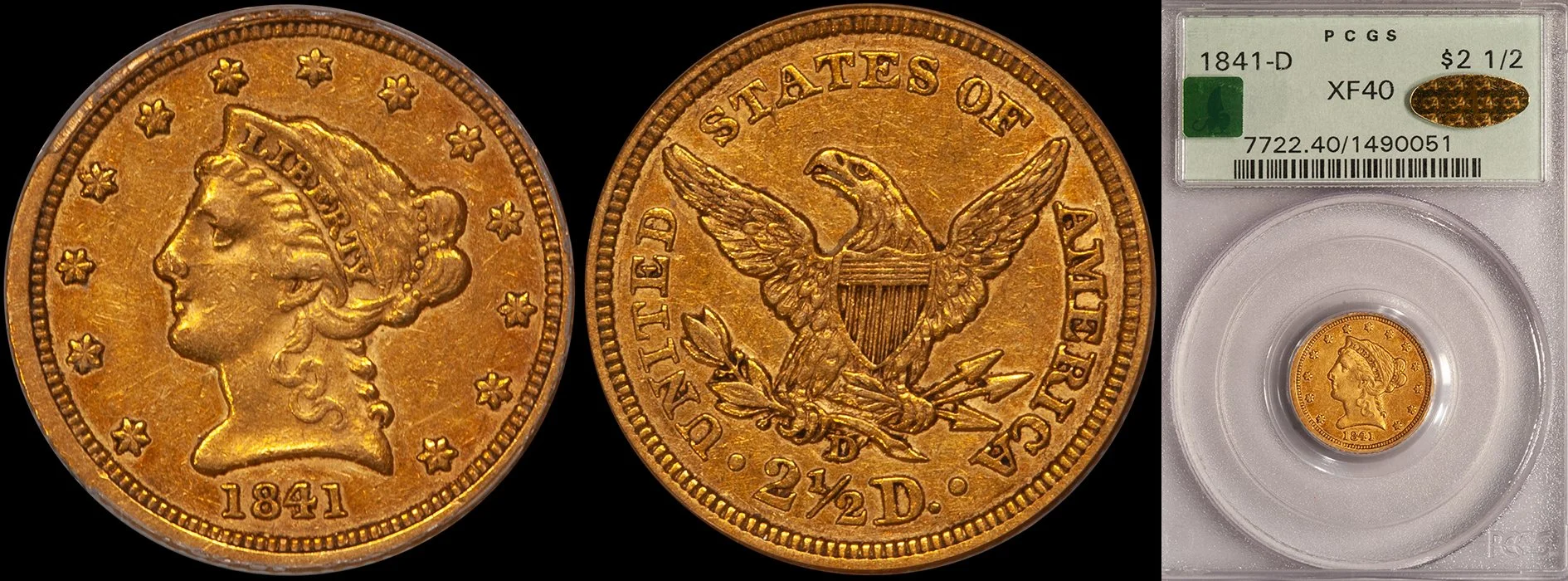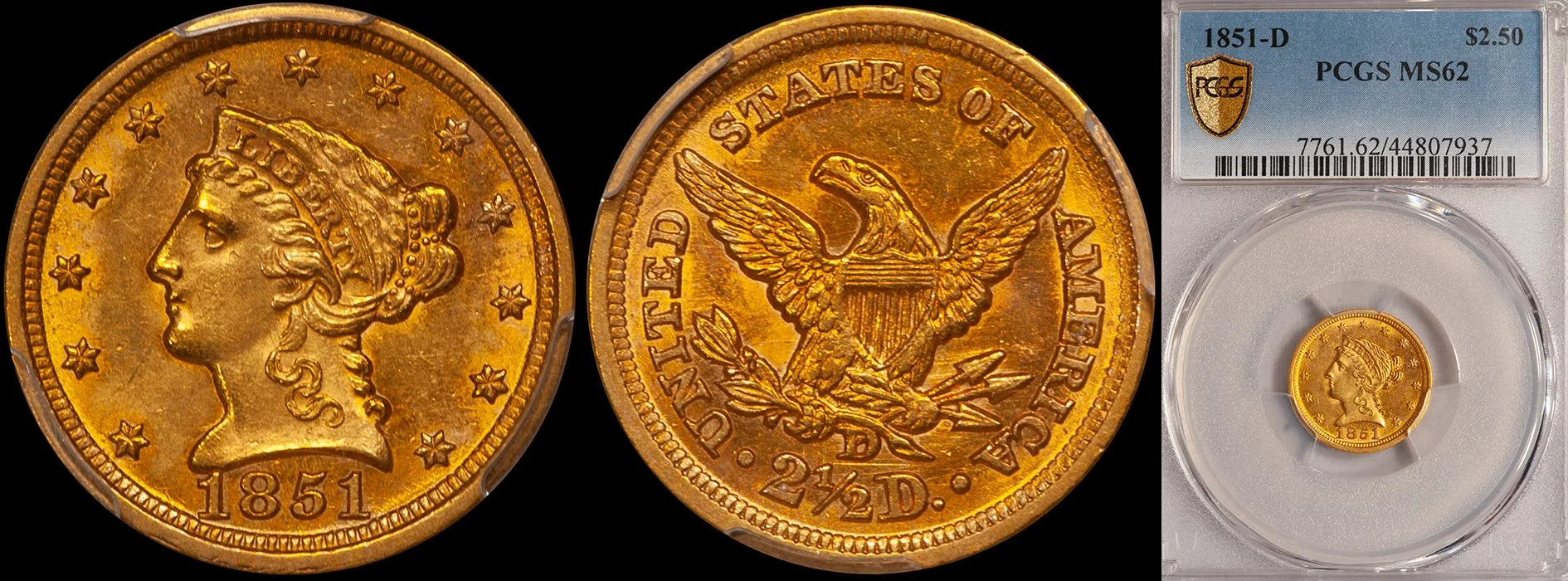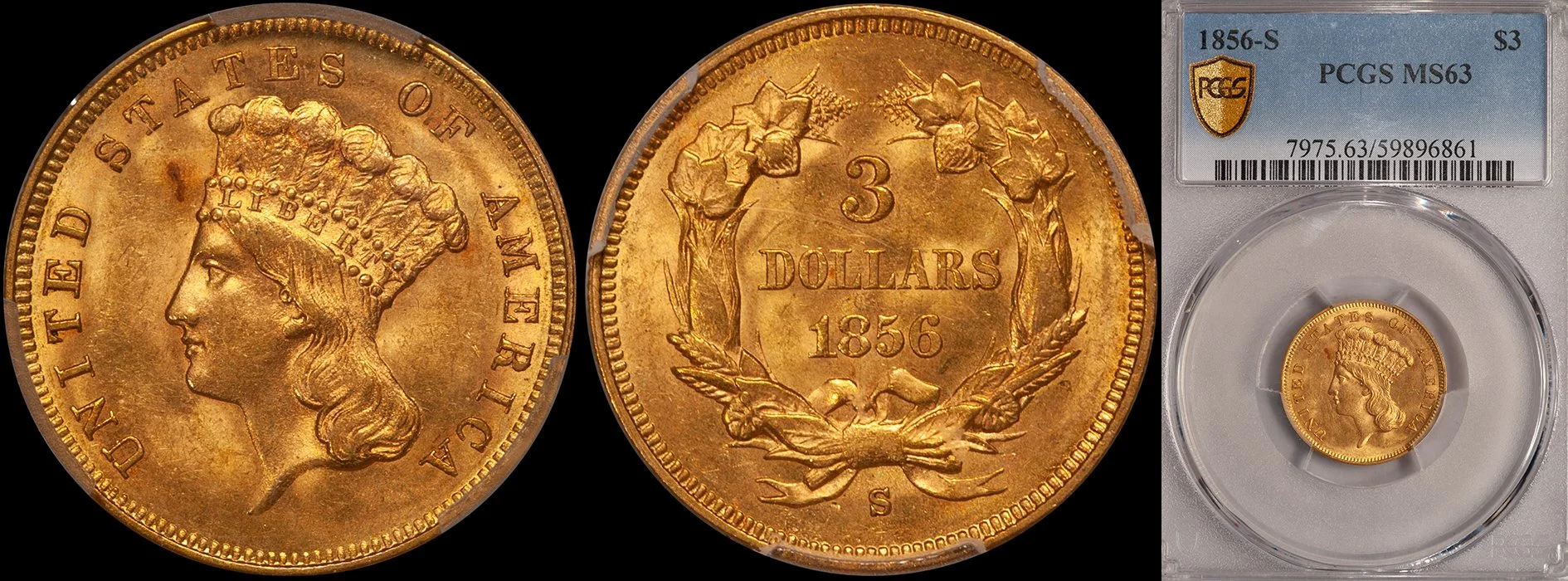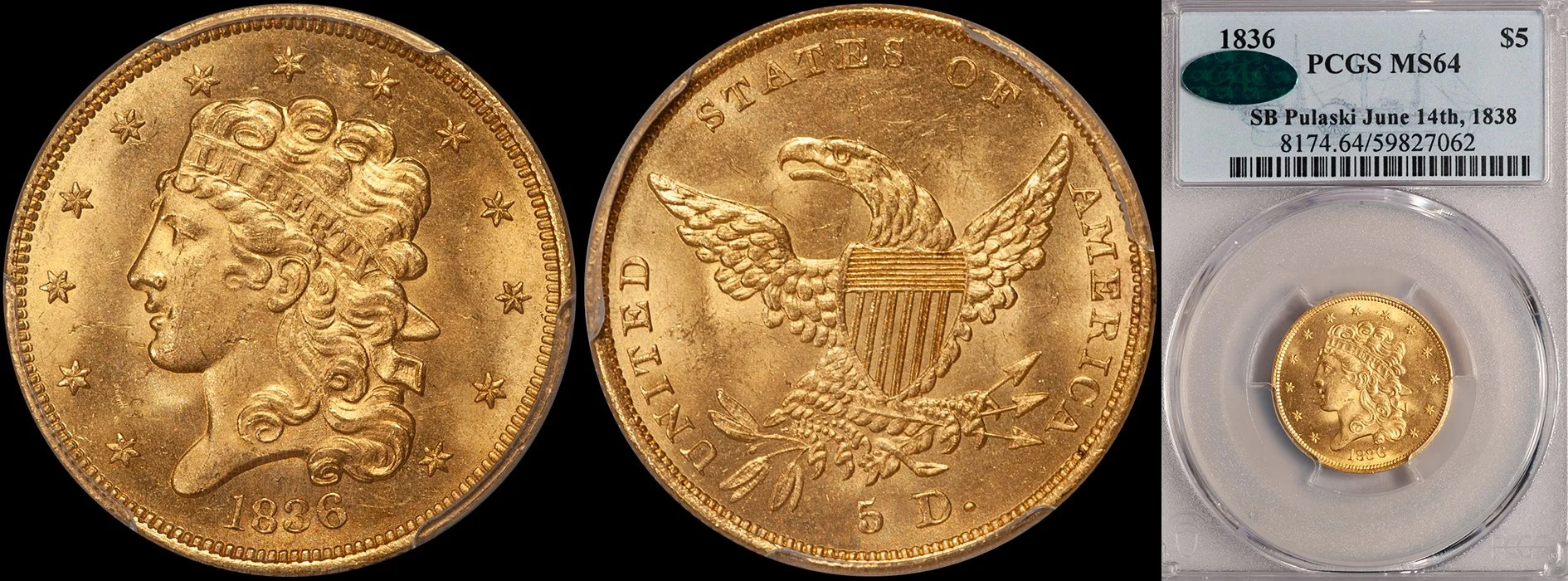
Tips on Selling Your Coins Via Dealer Consignment

Many retail dealers, myself included, welcome consignments from collectors. It's a great way to increase the size of a dealer's inventory without laying out cash and it is often an excellent source for dealers to place useful, fresh attractive coins to new or existing clients. As a potential consignor, what are some of the questions you should be asking a dealer and what are some of the expectations you should have? 1. What rate should you be paying a dealer? I can't speak for every dealer, so I'll share this from a DWN perspective. I generally charge between 5 and 10% to sell a coin on consignment. I've heard of dealers charging more than 10% and that seems a bit on the gouge-y side. On the other hand, to expect a dealer to sell your coins for less than 5% is unreasonable unless you are talking about a very low spread item like bullion or generics (which probably shouldn't be consigned to dealers in the first place).

2. What should my expectations be as a consignor? Obviously, your first expectation is for the coin to sell. But there should be other expectations as well. You should expect a dealer to work hard at selling your coins. This means listing them promptly on his website, imaging them, giving them good descriptions and offering them directly (via phone or email) to existing clients. You should expect clear, concise paperwork from the dealer including a receipt stating the terms and conditions of the consignment. You should expect prompt payment with good funds. And you should expect honesty and integrity. No games, no "funny stuff."

3. What sort of payment terms should I expect? There is no set answer to this so, once again, I'll share with you how I take care of payment. First of all, I am very careful to sell consigned coins to collectors or dealers who I know will pay me. There are certain dealers, for instance, whose check I absolutely will not take. I wouldn't sell these guys any of my own coins so why would I subject a collector to the risk of "will I or won't I get paid?" I generally pay clients for coins within a few days of being paid myself; a few days usually meaning two or three. In the case of having multiple coins on consignment from one collector, I pay them as they sell. I never wait until the end of a deal to pay the consignor and I don't think that's fair, unless that's what the consignor requests.

4. How long should the consigning process take? This depends on the coins that your are consigning. If you have very esoteric coins, the consignment process is going to take a while (in this case maybe three months or so). If you have very liquid coins, the process should be short (in this case just a few weeks). I would suggest that you ask the dealer how long that you think it will take him to sell each coin in the consignment. You don't want to let the consignment process go on forever. If your coins are appearing on a dealer's website they will be "stale" after a few months and will be very hard to sell in the near future should you decide to put them in auction or with another dealer.

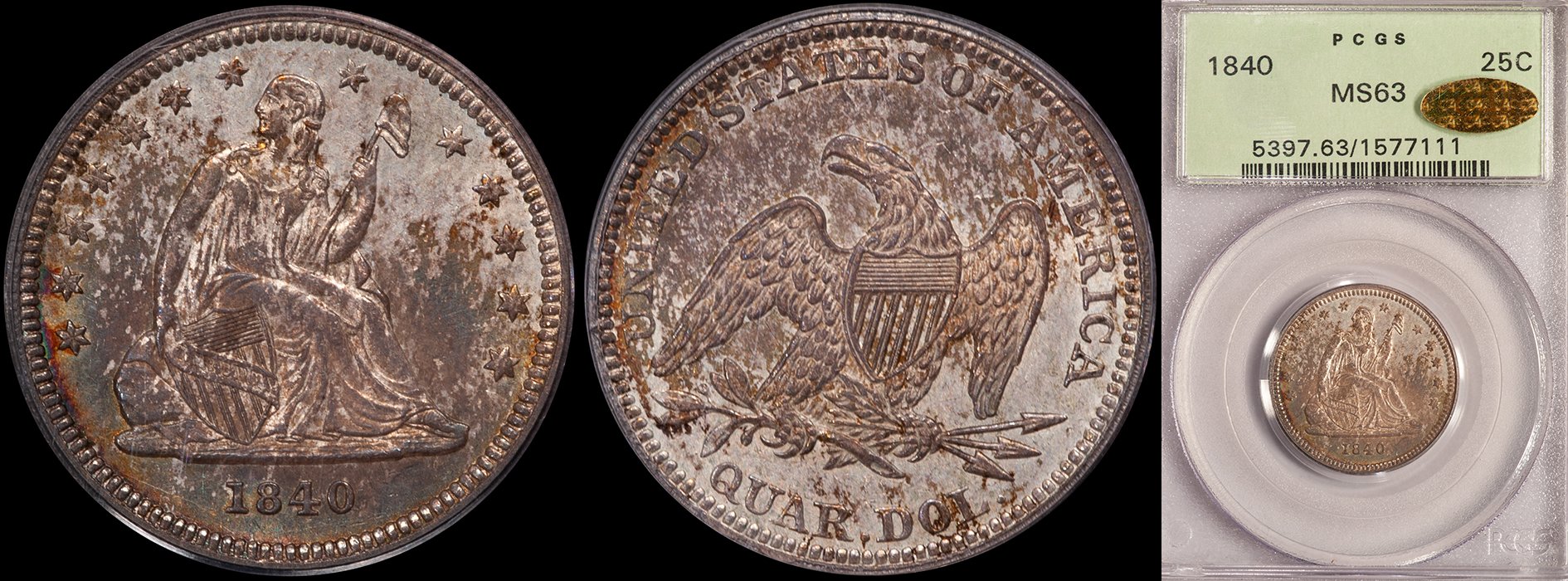
5. How should I price the coins I am consigning? It is important to price your coins realistically or they are not likely to sell. Some dealers will take any coin that you offer them at any price. Other dealers, myself included, will probably pass on coins that are not priced in line with the current market. I would suggest you price your coins the same way that I do: look to see if there are recent comparables at auction and use these as a base line. There are, of course, exceptions to this rule. An extremely rare coin, a coin in an old green label PCGS holder or something that is currently very "hot" might deserve premium pricing. As a seller, you need to ask yourself, how badly do you want to move your coin(s)? If you price a $5,000 coin at $8,000 it is likely to taint it and potential buyers may be skeptical when the price is suddenly--and dramatically--reduced.

6. What about consigning special collections? Over the years I have had a number of in-depth specialized collections consigned to me for sale. For these collections, I've created special "websites within my website" that feature these coins and they are not intermixed with my regular inventory. I would suggest that you request this when selling. It is smart marketing, it should help to sell your coins and it's a nice, lasting memorial for your collection that you can keep record of. If the dealer you are using to sell your coins is web-oriented and he is incapable of providing this service, I'd suggest you question whether he is the right person to sell the coins. If the dealer is just going to sell them wholesale, then this process is, of course, not needed.

7. What should you not expect? Just as you should have expectations of what to expect from the dealer you select, there are a few things you should not expect. One of these is for the dealer to have an obligation to tell you who your coins were sold to. You certainly have every right to tell the dealer not to sell your crusty original coins to an "upgrader" who is likely to strip and ruin them. You probably shouldn't expect daily updates on how your consignment is doing but it isn't asking too much of your dealer to hear, from time to time, how the consignment is faring.

8. How should I choose the dealer I consign to? If you've made it this far, you are probably waiting for the answers to this important question. I'd say the two most important things to consider are the relationship you already have with the dealer and his ability to understand (and get good prices) for your coins. If you have been dealing exclusively or semi-exclusively with a dealer for a few years and you like/trust this person it seems obvious to select him to sell your coins. The second point seems obvious but is worth reiterating. I think my firm is a great choice to sell branch mint gold or early gold but I'd be a poor person to sell a high grade set of Buffalo Nickels. I could probably do a decent job of presenting Buffalo Nickels but I don't know the series well and have zero clients for these coins. In this increasingly specialized market, it makes sense to choose someone who is a specialist himself, providing that you have a collection with a reasonably specific focus.

I think dealer consignments are a good way to sell your high quality, rare United States coins. Hopefully this short blog answered a few questions. If you have more, please feel free to contact me via email at dwn@ont.com

Set Premiums: Fact or Fiction?

One of the things that new collectors are often told is that if they build a set, the collective value of the coins will be greater than the individual value when it is time to sell. Is this correct or is it just clever marketing hype? I believe that the answer to this question is yes, no and maybe. Let's take a random example of a set--Charlotte quarter eagles--and look at instances where there would or would not be a premium factor established upon completion.

There is, in theory, a clear-cut instance of when a set of Charlotte quarter eagles would gain value if it were complete. This would occur if all the coins were very high high grade and the set would be almost impossible to duplicate at any price. But what if the coins themselves are not as impressive as the plastic they reside in? I have seen sets of Charlotte quarter eagles in which all the coins were accorded very high grades by PCGS and NGC but the coins themselves were unimpressive; some were recolored while others were puttied. Among well-informed collectors of Charlotte quarter eagles there are high grade sets that are famous for having great coins and there are sets that are (in)famous for having coins that are "maxed out" and unappealing despite impressive grades.

A set of Charlotte quarter eagles might not have to be high grade to be impressive and to gain value on a completed basis. I have seen sets where all of the coins were "only" in the EF to AU range but the individual coins were gorgeous with matched natural color, nice surfaces and strikes and strong overall eye appeal. In this instance, I think a set could gain as much as 10-15% premium. The reason it would gain value is that a potential buyer would realize that in today's market--where most Charlotte quarter eagles are stripped-n-dipped--the opportunity to acquire high quality coins is rare; and the opportunity to acquire a complete set of them is even more rare.

An instance where a "maybe" answer might have to be given is with a clearly mixed quality set. I know of a few sets of Charlotte quarter eagles where the quality is wildly uneven. There might be a common date in EF45 which isn't very nice alongside a rare date in MS63 that is spectacular. This lends itself to a sort of numismatic version of "which came first, the chicken or the egg?" Would you pay a premium for a set that had some great coins but which you knew that you would be forced to do significant upgrades on others? I think the answer has to be made on a case-by-case basis. If the highlights off the set were enough to offset the low-lights than I think a premium factor would be in order; just maybe not the 10-15% that I mentioned above.

There are other instances where I think that a set premium would be in order. I would pay a healthy premium for a set that all the coins had good pedigrees (not necessarily famous pedigrees but they may have come from good retail dealers or not-so-famous auctions that have a high regard among specialists). I would pay a premium for a set of coins that were original. And I would probably pay a premium for a set of early gold coins in which each piece was better produced than usual.

Here's the rub on set premiums. Most collectors enjoy the thrill of the hunt and putting together a set. But the concept of long-time collecting has becoming somewhat antiquated in the Internet age and today's faster-paced lifestyle has shortened the attention span of everyone; even middle-aged coin collectors. Not everyone has the patience to wait five or ten years to assemble a nice set of Extremely Fine Charlotte quarter eagles. The chance to knock out the whole set with one punch is appealing to certain collectors who can afford to write a one-time check.

In the very high end of the market, opportunity costs have to be considered. If you are a serious collector of Charlotte quarter eagles (or anything else for that matter...) the chance to buy an incredible one-of-a-kind set may truly be a once in a lifetime opportunity. In this instance, the chance to buy a great set for a 10% premium seems to me to be a great value.

Over the years I have purchased a number of superb specialized collections. There has never been a time that I didn't want to sell the collection intact, preferably to a loyal collector who, I hoped, would sell it back to me at a later date. I've even been willing to sell it at a discount price, as an intact set, knowing that there was a chance I could handle it again in the future. But in virtually every case I have had to break the set up and sell it two coins here and three coins there. Why? In the case of million-dollar and higher sets I think price has been as issue. There are not many collectors who can (or would) write a check for a million-plus dollar specialized collection.

As I mentioned above, the "set premium factor" is a term often used by marketers when selling coins to new collectors. This concept is typically negated by the fact that these marketers are selling lower end coins or they are in the midst of promoting material that is common and isn't ever worthy of some sort of premium factor down the road. But I do believe that set premium factors do exist and that savvy collectors can create their own mystique when it comes times to sell.

If you don't believe this, study the results of the recently-concluded Steve Duckor collection of Barber half dollars. Yes, the coins were great. Yes, the selling venue for them was ideal. And, yes, Heritage did a fine job cataloging and presenting them. But I honestly believe that many of the buyers, consciously or not, paid a strong premium factor because they believed (rightfully, in this case...) that "if the coin had a Duckor pedigree, it had to be good." This was a case where there was a set premium factor; in some cases a remarkably strong one.

The Johnson-Blue Collection of Liberty Head Eagles: An Analysis

Every few years, an auction takes place that gives me a bad case of "Dinosaur Syndrome." By this, I mean the coins bring so much more than what I bid that I think to myself that I'm a dinosaur and am out of touch with current Numismatic Reality. After I talk myself out of this and take a deep breath or two, I find that analyzing the sale is a useful tool for my bruised psyche. Just prior to the 2010 Boston ANA convention, Stack's sold a specialized group of Liberty Head eagles that they named the "Johnson Blue" collection. These coins were interesting for a number of reasons. First of all, they were clearly fresh to the market and, I am told, many of them were purchased by the consignor back in the 1980's. Secondly, the coins mostly had original surfaces with a nice crusty appearance; a welcome change from the usual processed better date Liberty Head eagles that one sees available in today's market. Finally, there were a number of dates that you typically don't see much anymore (such as 1863, 1864 and 1865) in grades that were above-average.

I had a feeling that this was going to be a strong sale, but the final results were pretty stunning to me. In some cases my bids were close to winning a lot; in other cases they were laughably distant from the eventual final bid. Let's take a look at some of the more significant eagles in this collection and ponder on their prices.

1842-O MS61 PCGS, Lot 1094. Image Courtesy of Stack's

1842-O, Graded MS61 by PCGS. Lot 1094. Stack's sort of underplayed this lot in the catalog, but New Orleans eagle collectors knew that this was a special coin. There are just three Uncirculated examples known to me and this fresh example had excellent color and surfaces. The last Uncirculated piece to sell was Superior 5/08: 103, graded MS61 by NGC and pedigreed to the S.S. Republic shipwreck. It brought $29,900 but I discounted this price as the coin was not attractive. But given this prior sales record, I bid $40,000 for the Johnson-Blue example and thought I had a decent shot of buying it. I wasn't even close. The coin brought $74,750 which, to me, is an incredibly strong price and one that shows me the depth of this market.

1848-O AU55 PCGS, Lot 1101. Image Courtesy of Stack's

1848-O, Graded AU55 by PCGS. Lot 1101. This was a nice example of a date that isn't really all that rare in the higher AU grades. I figured it would grade AU58 at NGC. There have been at least seven different auction records between $5,000 and $6,000 in the last six years for AU55 coins and a nice AU58 is worth $7,500 to $8,500. This coin brought $12,650, or around double what I would have paid. And results like this set the tone for the whole evening.

1852-O AU55 PCGS, Lot 1108. Image Courtesy of Stack's

1852-O, Graded AU55 by PCGS. Lot 1108. I like this date very much but wasn't really overwhelmed by the quality of this coin. It was what I call "product." This means a coin that I would be happy to own but since it is just so-so for the grade, I wouldn't bid strongly for it. There have been at least nine auction trades in the last seven years for 1852-O eagles in AU55 (mostly in NGC holders and mostly low end for the grade) and they have typically brought between $5,000 and $6,000. This example sold for $8,912.50. While I don't regard this price as "astonishing" I do think it is very strong; especially when one considers that Trends for an 1852-O eagle in this grade is only $8,750.

1862 AU58 PCGS, Lot 1133. Image Courtesy of Stack's

1862, Graded AU58 by PCGS. Lot 1133. This is an interesting date. It is common in the lower circulated grades and only moderately scarce in AU53 to AU55 but it is very rare in properly graded AU58 and there are just two known to me in Uncirculated. The Johnson-Blue coin was among the best 1862 eagles I've seen; clean and lustrous with good color and nice eye appeal. But I didn't think it would upgrade. Enough of these have traded in AU58 that I expected a nice PCGS AU58 like this to bring $5,000-6,000; possibly as much as $7,500 given the nature of this sale. The final price realized was $25,300. What makes this price even more remarkable was that the far superior Bass IV: 681 coin, graded MS62 by PCGS, sold for just $12,650. Maybe I'm totally out of touch with the market, but I think you could have taken the exact 1862 eagle that sold in this auction and shown it to five very sharp gold dealers at $7,500 before the sale and all five (myself included) would have passed.

1863 AU50 PCGS, Lot 1135. Image Courtesy of Stack's

1863, Graded AU50 by PCGS, Lot 1135. I was reasonably certain that this coin was going to be a bidder favorite. The 1863 is among the rarest Liberty Head eagles with just 1,218 struck. There hadn't been a piece available at auction since Stack's 9/06: 1492 (a raw "AU" that sold for $21,850) and just five slabbed pieces had sold since 2000 (including the amazing PCGS MS63 that was ex: Bass IV: 683 and which, at just $52,900, has to rank as one of the single biggest bargains in the final Bass sale). The Johnson Blue coin was a bit "ticky" but it had nice color and was notable for its originality. It brought $27,600 which seems like an incredible price given that Trends is $17,500 and CDN Bid is $15,000. I'd say it is actually a pretty good value and that published price information is way too low; and should be changed to reflect the true value of this extremely rare issue.

1864 AU53 PCGS, Lot 1138. Image Courtesy of Stack's

1864 Graded AU53 by PCGS. Lot 1138. The 1864 is not as rare as the 1863 (mintage this year increased to a "whopping" 3,500) but its Civil War issuance makes it popular. The last comparable coin to sell at auction was an NGC AU53 (Superior 9/08: 458) that went for $10,925. The Johnson Blue coin was one of the nicer AU examples of this date that I've seen and I thought it was a good candidate to upgrade to AU55. That said, I never expected it to sell for $23,000. Especially since an NGC MS61 had brought only $16,766 back in Heritage 3/05 auction. But the market has clearly changed for Liberty Head eagles and yesterday's prices suddenly look like the bargains that I've been ranting about for the last decade+.

1865 AU53 PCGS, Lot 1139. Image Courtesy of Stack's

1865 Graded AU53 by PCGS. Lot 1139. The last of the four important Civil War Philadelphia eagles in this collection and a rare, underrated issue with an original mintage of 3,980. I find the 1865 to be a harder coin to locate than the 1864 although the PCGS population figures do not support this. The Johnson-Blue coin was a decent AU53 which was a trifle on the dull side but which had nice color and a good overall look. It sold for $9,775 which I though was a pretty reasonable price, given what the 1862 and 1864 eagles sold for. The last AU53 to trade at auction was an NGC piece, Heritage 2009 CSNS: 3844, that sold cheaply at $5,463. The Johnson-Blue coin brought more because it was nicer. Trends on this date is only $10,000 in AU55 and I think it should be raised to reflect the true rarity of this issue.

1870-CC EF45 PCGS, Lot 1149. Image Courtesy of Stack's

1870-CC Graded EF45 by PCGS. Lot 1149. This was one of my favorite coins in the sale. It was a choice, original example of a date that is recognized as the key eagle from the Carson City mint but which is, at the same time, a coin that is still undervalued in many respects. My gut feeling was that this coin was worth in the $40,000-45,000 range and I bid $35,000. I did not win the coin as it sold for $46,000. With Trends at $45,000 this seems like a very strong price for the issue but I actually think that while not "cheap" it was a pretty good value for the buyer. There have been very few nice 1870-CC eagles available since 2007 and the last decent piece to trade at auction, a PCGS EF40, brought $40,250 as Lot 2147 in the Heritage June 2008 sale.

What did this sale prove to me? The first thing was that it reiterated (for about the 8,776th time...) that there is a huge demand for nice fresh coins and when they become available, published price levels often have to be ignored if you want to buy them. The second thing was that the Liberty Head eagle series has really come of age. With the Liberty Head double eagle series out of the price range for many collectors due to the high price of the rare issues, eagles are no longer regarded as a poor cousin. There are clearly a number of collectors assembling date sets of eagles and many of the dates that were ignored in the distant past are now in demand. If a coin is high in the Condition Census, in a PCGS holder and attractive for the date and grade there are eager collectors who are not bashful about paying up for the coin(s). My guess is that Liberty Head half eagles will be the next series to show this surge of interest and if a fresh deal of these does become available, I wonder if we will see a repeat of the Dinosaur Syndrome where I leave another auction with my prehensile tail tucked between my legs.

The Garrett 1808 Quarter Eagle

I handled some very interesting coins at this year's Boston ANA show. One of the ones that I thought was the most interesting was the Garrett specimen of the 1808 quarter eagle; a coin that was both very rare from a numismatic standpoint and historic from the standpoint of its pedigree.

The 1808 quarter eagle is a one-year type with a mintage of only 2,710. It is actually a less rare coin that other quarter eagles of this era but it is famous due to its status as a one-year type and, along with the 1796 No Stars, it is probably the most famous and desirable issue.

I would estimate that there are around 100-125 examples known in all grades. When available, the 1808 quarter eagle tends to be in lower grades and examples with nice, original coloration are really rare. There are a few very choice pieces known, the finest of which is the ex Dr. Judd coin owned by a Dallas family and graded MS65 by PCGS. The second finest is a PCGS MS63 that was most recently sold as Stack's 11/08: 4176 (at $517,500). A few other Uncirculated pieces are known as well.

The Garrett 1808 quarter eagle has a great background. It was sold as Lot 742 in Bowers and Ruddy's famous Garrett I auction, held in March 1980, where it was graded "Extremely Fine-40." It sold for $30,000 which was a strong price for a circulated 1808 quarter eagle at the time. The Garrett family had obtained it from the collection of Dr. Edward Maris who was far more famous for his study of New Jersey copper coins than for his gold issues.

This coin next appears at auction as Bowers and Merena 10/04: 606 where it brought $80,500. It then sold for $94,875 as ANR 3/06: 1421. Two years later, it went for $103,500 as Lot 1894 in Heritage's 2008 ANA sale. I purchased it at the ANA at a private sealed bid sale.

The Garrett 1808 quarter eagle is now owned by a specialist in early quarter eagles who appreciates its originality and pedigree. My thanks to him for allowing me to handle this wonderful coin and for being able to share it with you.

Some Observations About the 2010 Boston ANA Show

To be perfectly frank, I hate coin show reports. I hate to write them. I hate to read them. I don't care what restaurants a dealer went to and what they ate and I don't really care that Dealer X spent this much money on those coins at the show. That said, I also know that the ANA is the show that everyone who didn't attend wants to know about. So, with these people in mind, I thought I'd share a few random observations about the ANA. On a scale of 1-10, I'd rate this show as a solid 6; possibly a 7. Overall, I'd say a was a tiny bit disappointed. I was expecting the show to be an 8 or a 9 because of the fact that it was the first ANA in Boston since 1982 and the fact that Boston is within a few hours of huge numbers of serious collectors.

I go to coin shows primarily to buy and from a buying standpoint I was reasonably pleased. I bought some great coins. These include an 1854-O double eagle in PCGS AU55, the Garrett specimen of the 1808 quarter eagle (graded AU53 by PCGS) and over fifty crusty original 19th century gold pieces, most of which have already found their way onto my website. I would have liked to buy more but, hey, that's what I say at every show; even when I'm wondering how I'm going to sell all the great coins I just bought. And, yes, this paragraph is self-promotion.

Attendance seemed good and the mood among dealers and collectors seemed upbeat and positive. I didn't have any little old ladies walk up to my table with a New England shilling in a cigar box (a fella can dream, can't he?) but I was fairly pleased at the number of fresh coins that I was able to purchase on the floor.

I participated in three auctions. The Stack's sale contained an interesting fresh deal of Liberty Head eagles and prices were amazing (more on this in a future blog). The Bowers and Merena sale was reasonably strong but prices were mainly reflective on the quality of the coins. In other words, nice coins brought good prices while schlock sold cheaply, if at all. The Heritage sale was strong although prices didn't seem as off the charts as in years past. With the exception of the eagles in the Stack's sale the coins brought basically what they were worth. That sounds trite but, in past ANA sales, many coins brought a lot (stress a lot) more than they were worth. A lot.

In the area of rare gold, I noticed some definite market trends. Early date (i.e., pre-1834) gold was almost non-existent. Even the low end, overpriced stragglers that had been overhanging the market seemed to have disappeared. I can't remember an ANA at which I saw fewer early gold coins nor a major show that I purchased fewer.

There was extremely strong demand for Type One double eagles. The coins that nearly everyone seemed to want were common and somewhat better dates in AU50 and up, especially in the $2,000-7,500 price range. Demand was also strong for interesting Type Ones in the $10,000-20,000 range. Its hard to say what demand was like for expensive, really great Type Ones as there were almost none to be seen at the show.

Branch mint gold also was in demand. I bought and sold a few interesting pieces of Dahlonega at the show and had quite a few people come to my table with specific wants. I searched through dozens of dealers' inventories in a Quest for Crust and was unable to find more than a handful of truly DWN-worthy coins.

Another area that suddenly seems strong is Carson City double eagles. I sold a number of interesting CC Twenties and was pleased at the prices they bought. I tried to buy an amazing 1872-CC in NGC MS62+ that was far and away the finest known for the date but was outbid despite figuring it for nearly six figures. Congratulations to whoever purchased this coin; it was sensational.

Off the subject of coins for a second. I hadn't been to Boston in about a decade and it was great to return. What a fantastic city. Great places to shop, small and compact with wonderful walking, fantastic architecture; my kind of place. I was able to leave the show early one day and went to the Gardner Museum. The Rembrandt self-portrait and the two Botticellis were breathtaking, to say the least.

So, another ANA show has come and gone. After nearly 30 years of ANA's, I don't feel the excitement that I used to but this is clearly THE show of the year and the 2010 edition was memorable.

San Francisco Double Eagles: A Date by Date Analysis Part Three

In 1877, a third type of double eagle was created when the reverse valuation was changed from TWENTY D to TWENTY DOLLARS. Liberty Head double eagles were produced with just one interruption (1886) from 1877 through 1907. This is a very easy series to complete as all thirty issues are readily available in the lower Uncirculated grades and many of the post-1890 date can even be found in Gem. I would recommend this series for beginning collectors or advanced collectors who are more interested in grade than absolute rarity. What follows is a date-by-date analysis of each issue.

1877-S: This is the most common Type Three San Francisco double eagle from the 1870’s. It is common in grades up to an including MS62. It becomes scarce in MS63 and is very rare in MS64 and above. Most are seen with good luster and nice color but heavily abraded surfaces. The finest known is Stack’s 1/09: 1420, graded MS65 by NGC, which set a record price for the date at $29,900.

1878-S: The 1878-S is scarcer than the 1877-S but it is still a fairly easy date to find in grades up to an including MS62. In MS63 it is rare and it is extremely rare above this. The finest that I have personally seen is the high end PCGS MS63, ex Heritage 9/06: 4139, which sold for a strong $23,000. This date is characterized by soft, frosty luster and heavy abrasions on the surfaces.

1879-S: This is easily the scarcest San Francisco Type Three double eagle from the 1870’s and it is one of the harder SF issues of this type to locate. It is scarce even in the lowest Uncirculated grades and it is very scarce in properly graded MS62. In MS63, the 1879-S is very rare and there is but one example graded better than this, a PCGS MS64, ex Heritage 9/07: 3851, which sold for an amazing $63,250. Virtually every known example is marred by excessive bagmarks and many have impaired luster as a result.

1880-S: The 1880-S is only marginally scarce in MS60 to MS61 but it becomes a hard date to find in properly graded MS62. It is rare in MS63 and very rare above this but there are a few very high quality pieces known. The best is a superb NGC MS66, ex Heritage 2004 ANA: 7626, which brought a hefty $92,000 and the second best is an NGC MS65, ex Bowers and Merena 2/06: 603 that was bid up to $54,625. These are the two best early date Type Three San Francisco double eagles that I have personally seen.

1881-S: The 1881-S is much more available in the MS60 to MS62 range than the 1879-S and 1880-S. It is only moderately scarce in MS62 but it becomes rare in MS63 and I have never seen one that graded higher than this. The best I am aware of are a small group of nice PCGS MS63 coins, the last of which to sell was Heritage 4/09: 2763 (at $17,250). As with all of the early S Mint Type Three issues, this date is characterized by good luster and color but heavy surface marks.

1882-S: Beginning with this issue, the Type Threes from San Francisco become more available in the lower Uncirculated grades. The 1882-S is very common through MS62 and slightly scarce in MS63. But it is very rare in properly graded MS64 and I am not aware of any Gems. The best I know of is ex Heritage 7/06: 1714; a PCGS MS63 that brought $23,000.

1883-S: The 1883-S is very common through MS63 but it becomes very rare in MS64 and it may not exist in Gem. This date is seen with good luster and color but is almost always very heavily abraded. There is a small group of properly graded MS64’s known and the last of these to sell was Heritage 1/10: 2261, graded by NGC, which realized $16,100.

1884-S: The 1884-S is among the more common SF double eagles from the 1880’s. It is easy to find in MS60 through MS63 but it is very scarce in properly graded MS64. In MS65 it is extremely rare and the only one I can recall having seen was a PCGS coin sold as Lot 2036 in Heritage’s 2007 ANA that brought a very strong $46,000. This is yet another date that is characterized by heavily abraded surfaces.

1885-S: The 1885-S is very common in grades up through and including MS63. It is moderately scarce in MS64 but it is extremely rare in MS65 and I’ve never seen a Gem. There is no clear-cut finest known example as many of the MS64’s are similar in quality.

1887-S: This is a “sleeper” date that is considerably rarer in terms of total known that the other SF issues from this era. It is slightly scarce in the MS60 to MS62 range, rare in MS63 and very rare above this. There are actually a few Gems known including the Eliasberg coin (which does not appear to have surfaces since it was sold in 1982) and Superior 6/97: 1566, graded MS65 by NGC.

1888-S: The 1888-S is the most common SF Type Three issue from this decade. It is very common through MS63 and it is scarce in MS64. I have never seen a Gem although I wouldn’t be surprised if one exists. Many of the MS64’s are similar in quality and there is no clear-cut finest known.

1889-S: This date is very common up to MS63. It is rare in properly graded MS64 and doesn’t appear to exist in full-blown Gem. There have been three PCGS MS64 examples to sell at auction since 2006 and they have realized $13,800, $17,825 and $18,400 respectively. 1890-S: The 1890-S is very similar in overall and grade rarity to the 1889-S. It becomes rare in properly graded MS64 and there is just one Gem (an MS65) at PCGS. There have been eight coins graded MS64 sold at auction since the beginning of the 21st century and the highest price realized is $13,800 set by Goldberg 2/07: 2560.

1891-S: The 1891-S is more common than the 1889-S and 1890-S. It is readily available in MS63 and is seen much more often in MS64 than these two other dates. I have never seen a Gem.

1892-S: The 1892-S is another date that is common in grades up to and including MS63. It is only moderately scarce in properly graded MS64 but it is extremely rare in Gem. The finest known is ex Bowers and Merena 3/09: 3978, graded MS66 by NGC, which brought a strong $46,000.

1893-S: This date is very common in MS63. It is scarcer in MS64 than the 1890-S through 1892-S double eagles and it is extremely rare in Gem with just one graded as such (an MS65) by PCGS. The highest prices realized at auction is $18,400 set by Heritage 6/06: 3808, graded MS64 by PCGS.

1894-S: The 1894-S is among the most common San Francisco double eagles. It is easy to find in Uncirculated through MS64 but it is extremely rare in Gem. The finest I am aware of is an NGC MS65, ex Stack’s 1/09: 1439, which sold for $19,550.

1895-S: This date is very common in MS63 and only marginally scarce in MS64. There are probably as many as ten to twelve Gems known but none finer than MS65. The best I have seen is ex Heritage 2007 ANA: 2040 that sold for $12,650; it was graded MS65 by NGC.

1896-S: The 1896-S is more common than the 1895-S. It is easy to locate in MS63 and even MS64’s are not really scarce. Gems are extremely rare. The finest known is an amazing PCGS MS67 that is ex Eliasberg: 996; it sold for $13,200 back in 1982.

1897-S: The 1897-S is similar in overall and high grade rarity to the 1895-S. Gems are extremely rare. There is a pair of PCGS MS67’s known. One is ex Superior 2/05: 3410 (at $60,375), Eliasberg: 998.

1898-S: This is the most common 19th century S mint double eagle by a fairly significant margin. It is the only 19th century Type Three issue from this mint that is available in MS65 for a reasonable sum. The finest known is a PCGS MS67 that is ex Bowers and Merena 3/04: 3263, Eliasberg: 1000.

1899-S: The 1899-S is very common through MS64 grades. In Gem, it is extremely rare with just three to five known. The best, by a huge margin, is a superb PCGS MS67 that is ex Eliasberg: 1002. It brought $16,500 back in 1982.

Aging Baby Boomers and Rare Gold Coin Prices

I recently received an email from a collector who asked what I thought were an extremely intelligent group of questions. In a nutshell, he asked the following. As boomers age, are we nearing a bubble in coin prices? At some point will the number of collectors with the financial means to collect rare gold decrease and will prices suffer accordingly? Go to any coin show and you will see a disturbing trend. The buyers of most “serious” coins (i.e., coins priced at $1,000 and above) are in their 50’s or 60’s and the dealers selling them these coins tend to be at least the same age, if not older. There are not many young collectors at shows and the number of “A” level dealers in their 20’s and 30’s can be counted on one hand. This spells trouble for the coin market, right?

I contend that the answer is not as obvious or as clear-cut as it would seem to be. I am a keen student of the history of the numismatic marketplace and, as far as I can tell, ever since coin collecting became popular in the United States (in the late 1850’s/early 1860’s) it’s been a hobby that mainly attracts older people. Think about it: coins are expensive and people in their 20’s and 30’s have never had enough discretionary income to be making impulsive non-essential purchase. When you are 27 years old, you are thinking about buying a house and saving money for your child’s education; not deciding what series of 19th century gold coin to specialize in.

But the world has changed in the last generation or two and wealth is no longer the exclusive province of the middle-aged and the mature. For the first time that I can remember I have a few good clients who are younger than I am and these collectors tend to be self-made entrepreneurs.

In the 1950’s, many collectors grew old at around the same time and the hobby was in a precarious spot. Lots of great collections were coming on the market at the same time and it seemed unlikely that these coins would be absorbed. For a while, prices were depressed and the short-term outlook of the market was gloomy. But along came the roll craze of the early to mid-1960’s and the market was suddenly reinvigorated by young collectors; some of who became famous dealers who are active to this day.

In the mid to late-1970’s the same trend was occurring. Collectors were graying and lots of coins were coming on the market. All of a sudden, precious metals prices began to boom and lots of new blood came into the market. Two decades later it was the State Quarter program that jumpstarted a moribund market. Again and again, we have seen cycles of demand in the coin market and when things appeared gloomy, something would happen that infused youth into the hobby.

The X factor in today’s market—and the future coin market(s)--is, of course, the Internet. Unlike in 1960 or 1980 or in 1990, it will be easier to replace this generation of graying numismatists with younger buyers due to the accessibility of information and the ease of purchasing rare coins on-line. And there is another factor that I believe will come into play as well: foreign buyers.

As is well-known, huge middle-class and upper-class populations are being created in China and India. These are countries with an interest in American culture and cultures that greatly prize gold. It is possible (not likely, but possible) that new markets for American gold coins could develop in these countries and this, of course, would greatly change the dynamic of the future coin market.

My guess is that some time in the next decade or so, we will see a significant change in the demographics of the coin market. Many of today’s “super-collectors” are going to be net sellers in a decade or so and it is certainly possible that prices at some point could drop in the short-term. But if this scenario occurs, I think it is highly possible that this dip will be short-lived and that a new generation of eager collectors will fill the void.

Revisiting The 1841 Quarter Eagle

A few years ago, I wrote a blog about 1841 quarter eagles that basically stated that the currently-accepted belief that all of the known examples were Proofs was wrong. After recently being able to examine no less than four 1841 quarter eagles at one time, I am now totally convinced that this issue exists in two distinct formats. Numismatic tradition states that the 1841 quarter eagle was struck only as a Proof. This has never made sense to me. With as many as 15-17 pieces known, why would the Mint have made so many Proofs in 1841 when virtually none were struck in any other year between 1842 and 1853? And why would most of the survivors be in such low grades (EF40 to AU50) when most of the Proof gold coins from the 1840's that still exist tend to be in reasonably high grades?

This enigma has become a semi-obsession of David Hall's and when you are the head of Collector's Universe/PCGS you can get things done. David was able to wrangle four different examples of the 1841 quarter eagle including a PR60 illustrated below. A few weeks ago, one of his security detail flew the four coins up to my office in Portland and I am now more convinced than ever that 1841 quarter eagles exist in two formats.

1841 $2.50 PCGS PR60

First, a few words about the Proofs. One of the main reasons that you can determine that a Proof 1841 quarter eagle actually is a Proof is that is “looks like one.” These coins are not weakly struck, nor is there any question about whether they have squared edges or incomplete reflectiveness to the fields. These coins look just like other Proof gold coins from the 1840's. They may have some mint-made flaws such as pits in the planchet or lintmarks but their appearance is not much different than Proofs from the latter part of the 19th century either.

There appear to be just three or four Proofs known. The finest is a PCGS PR64 owned by a prominent Texas collector that is ex Heritage 6/04: 6204 where it brought $253,000; it was earlier in the Eliasberg sale and it sold for $82,500 in October 1982. The second Proof is owned by a customer of mine and it is graded PR60 by PCGS. I purchased it out of Bass II in October 1999 and paid $110,000 for it. A third Proof is in the Smithsonian. I have not seen the coin in person but it has been confirmed by Jeff Garrett whose opinion I respect. A possible fourth Proof is the ex Davis-Graves coin that was last sold as Superior 2/91: 2664 at $66,000. This coin might be the piece that appears in the PCGS population report as a PR62.

When I recently examined the Eliasberg and Bass Proofs, I made the following observations about them. I’m certain they apply to the other one or two Proofs as well.

*Proof 1841 quarter eagles have fully reflective fields that look like Proofs should. They are not "semi-prooflike" or "mostly prooflike." They are Proofs, no ifs and or buts.

*On Proof 1841 quarter eagles, there is sharpness of strike on the curls below the ear of Liberty. This sharpness does not appear on business strikes.

*The texture on the face of Liberty is different on Proofs. This may be attributable to the fact that the luster pattern on the cheek has not yet been worn off as it has on circulated business strikes.

*The curls on the back of the neck have a bold, almost three-dimensional look on Proofs. On business strikes they are not as sharp.

*On the Proofs the edges are sharp and fully squared. They are not as sharp and clearly not fully squared on business strikes.

I can quickly summarize why I think the lower grade 1841 "proofs" are not proofs at all and were clearly produced as business strikes (but using the same dies as the Proofs).

First of all, logic dictates that there are just too many 1841 quarter eagles known for all these coins to be Proofs. The number of coins that I feel are real Proofs (three or four) is consistent with the number known for other Proof quarter eagles from the 1840's. It just doesn’t make sense that the Mint would have made 30 or so Proofs in 1841 but five or so (if that) in every other year during the 1840's. Could they have been struck for a special occasion? It's possible but I have always doubted this reason and until documentation is found that states that they were made to commemorate an event or to give to VIP's, I am skeptical at best.

Secondly, many of the surviving 1841 quarter eagles are very low grade; in the Fine to Extremely Fine range. I have never seen or heard of another Proof quarter eagle from the 1840's that was this impaired.

Thirdly—and I believe most importantly—the business strikes, while Prooflike, just don’t "look" like Proofs. The marks on them don't fall in the same pattern that you see on Impaired Proofs; i.e., they look like circulated business strikes. As I stated above, they are not as well struck as the unquestionable Proofs and lack the squared rims and bold central details that are found on the true Proofs. They just don’t look or "feel" like Proofs.

In my opinion, David Hall and PCGS are to be credited for bringing this issue out into the opinion. It will be interesting to see if PCGS starts categorizing 1841 quarter eagles as Proofs and circulation strikes/business strikes and it will be interesting to see if the market starts according a premium to the Proofs as there should be, given their greater rarity.

What Makes Certain Coins Popular--and Others Unpopular?

I often make buying decisions based on a coin's popularity. As an example, I will buy a coin like an 1839-O quarter eagle for stock because it is popular and I know it will sell. But I might pass on a rarer coin like an 1862-S quarter eagle because it is not a popular issue and it will be a harder coin to sell. This got me to to thinking: what makes one coin popular and another unpopular? Certain 20th century series are popular with collectors because of a strong nostalgia factor. I would imagine most of the collectors who focus on Lincoln Cents or Mercury Dimes remember collecting them as a kid and the sense of accomplishment that they get from completing a set is an act of closure that extinguishes the nightmares they felt as kids about filling those pesky 1909-S VDB Cent and 1916-D Dime holes.

The nostalgia factor does not really apply to gold given the fact that circulation for these coins ended in the early 1930's. There are certainly some collectors who can remember being given an Indian Head quarter eagle for the holidays by their grandparents or aunt and uncle. But I'm willing to bet that the majority of gold coin collectors are not working on a set of Charlotte half eagles because it rekindles pleasant childhood memories.

The word "promotion" gets a bad rap in numismatics. Yes, there are naughty promotions where worthless modern trinkets get hyped and sold to unsuspecting people for multiples of their true value. But in the better sense of the word, coin promotions can turn formerly unpopular series--like Type One Liberty Head double eagles--into popular ones. The key to a coin promotion is that it has to be sustained and it needs more market participants than the first wave to regenerate its initial success(es).

I mentioned the Type One double eagles series in the last paragraph. One of the most brilliant coin promotions of all time was the S.S. Central America.. The marketing group that owned the coins not only was able to sell them, they were able to generate enough new interest in this denomination that it impacted all Type Ones, not just the few dates that were included in the hoard.

A coin that is historic is always going to be popular. What represents "history" to be may not be what represents history to you. But I'm almost certain we can both agree that a gold coin produed in the 18th century--the first decade of the operations of the new U.S. Mint--is clearly historic. This is one reason why a coin like a 1795 half eagle or a 1799 eagle, while not truly "rare," is still always going to have a very high level of demand among collectors.

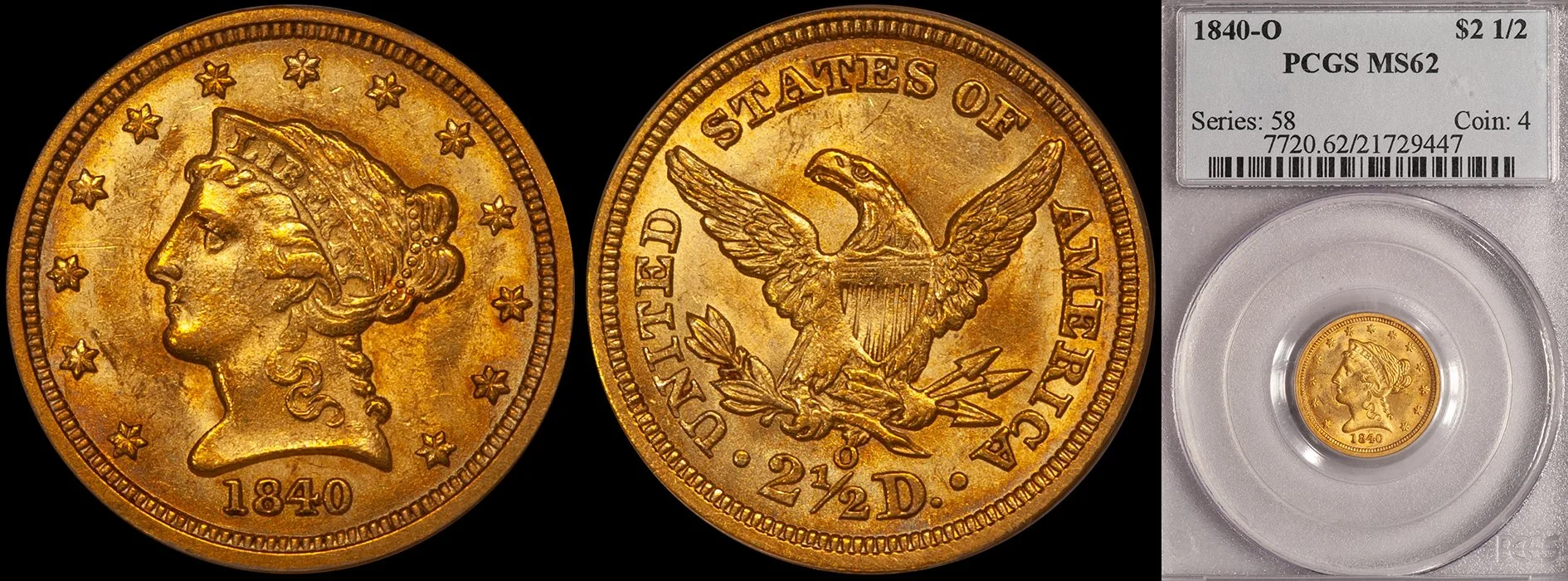
Other coins are historic due to numismatically significant factors. In the first paragraph I mentioned the 1839-O quarter eagle. This is a coin that is fairly common in lower grades yet I still really like the issue and will buy nearly any problem free example I can find. Why? It is a first year of issue coin, it is a one year type and it is a visually interesting issue in that it has the short-lived Classic Head design paired with the obverse placement of the mintmark. These factors give it broad appeal and it is one of the few New Orleans quarter eagles that would be of interest to a non-specialist.

Another factor that makes a coin popular or unpopular is its design. A coin like a High Relief is extremely popular because it is beautiful and its design appeals to virtually all collectors. "Plain Jane" coins like three cent nickels and liberty head nickels get little respect from collectors because, to be frank, they are not especially attractive designs.

There is an element of geography with certain types of coins that makes them popular. Dahlonega gold coinage has a large following in the Atlanta and North Georgia area due to having been produced in this part of the country. This isn't to say that a collector from New York City might not become a major collector of Dahlonega gold but the majority of interest in these coins tends to be in the south.

A factor in determining the popularity of a coin has to do with the availability of good reference material. Without tooting my own horn too loudly (OK, at least not blaring it...) I'd like to think that part of the reason that Southern branch mint gold is popular has to do with the fact that I have written easy to use basic reference guides that are updated every few years, inexpensive to purchase, readily available and easy to transport to coin shows and auctions. This might be a coincidence, but the two least popular 19th and early 20th century gold issues (Philadelphia and San Francisco mints) are the ones that I just happened to not have written books about. At least yet...

Size has become an important factor in making gold coins popular or unpopular. Double eagles are more popular than gold dollars mostly because they are much bigger. People like bigger coins and new collectors feel more justified in spending $3,000 for a big, hefty double eagle than they do for a small gold dollar. As the age of collectors continues to climb, it seems inevitable that even more people will shy away from small coins; if only because they will have trouble seeing them.

These popularity factors are just a few of the reasons why certain coins are popular and others are not. If you ask many collectors why they specialize in a certain area, the reason may be hard to determine. Often, these individuals collect "what they like" and there is no clearly definable reason; it's just a gut instinct that, say, tells them that they should focus on Proof gold dollars or Gem Saints. And that's the beauty of rare coin collecting.