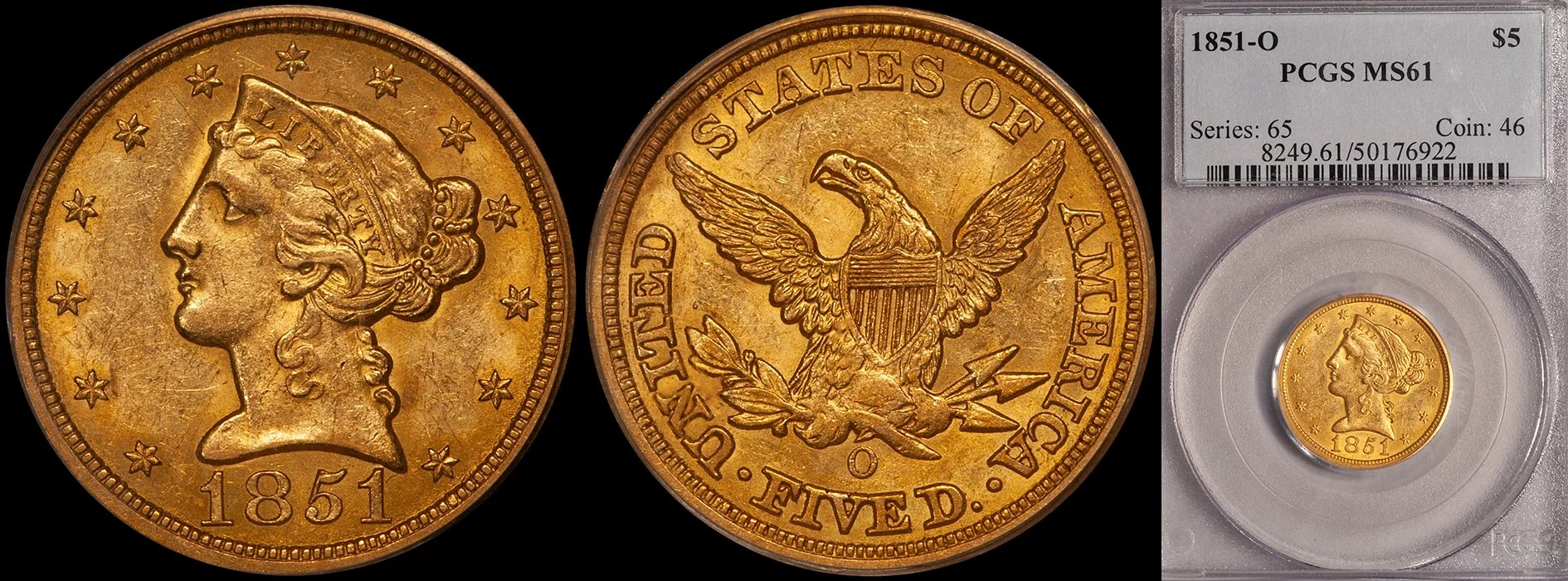
Classic Head Gold: An Update

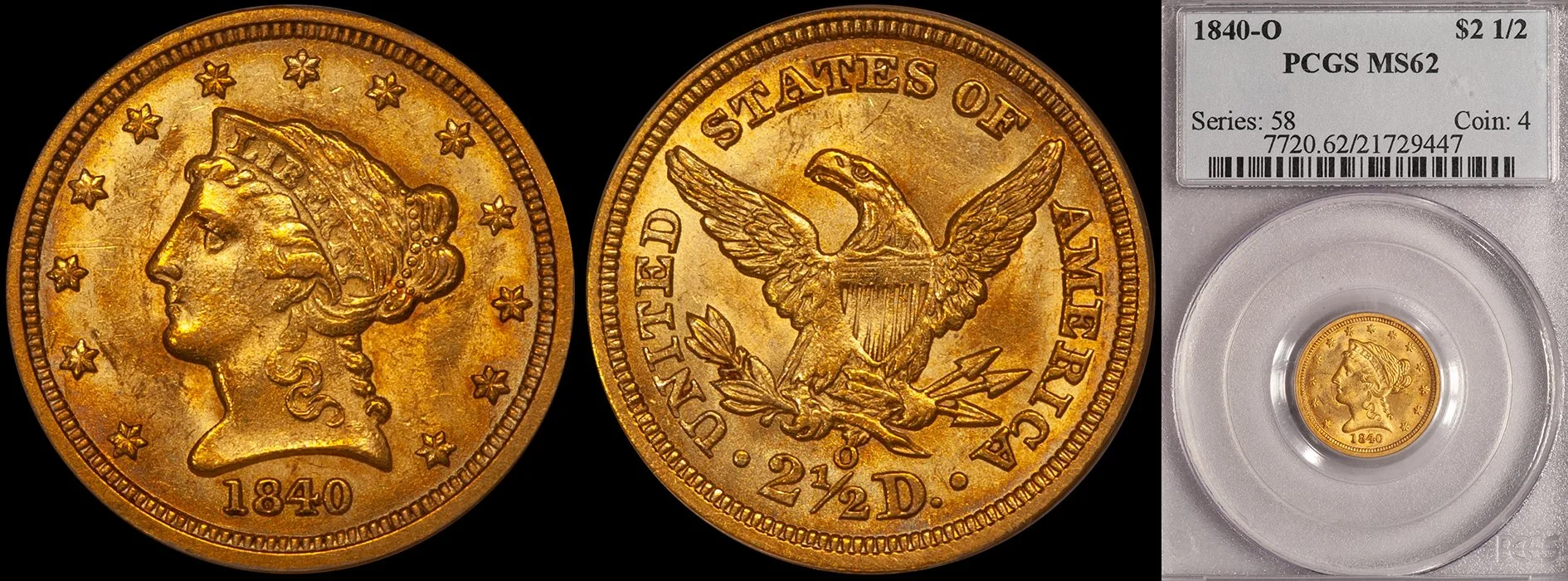
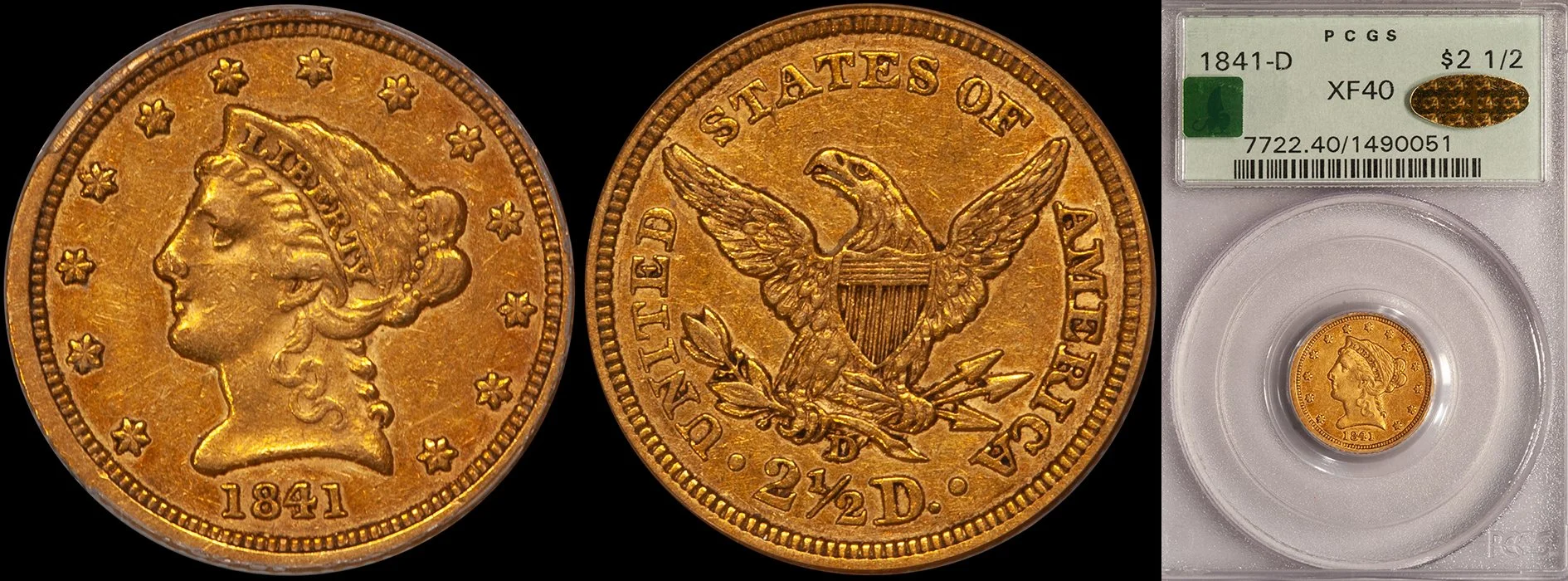
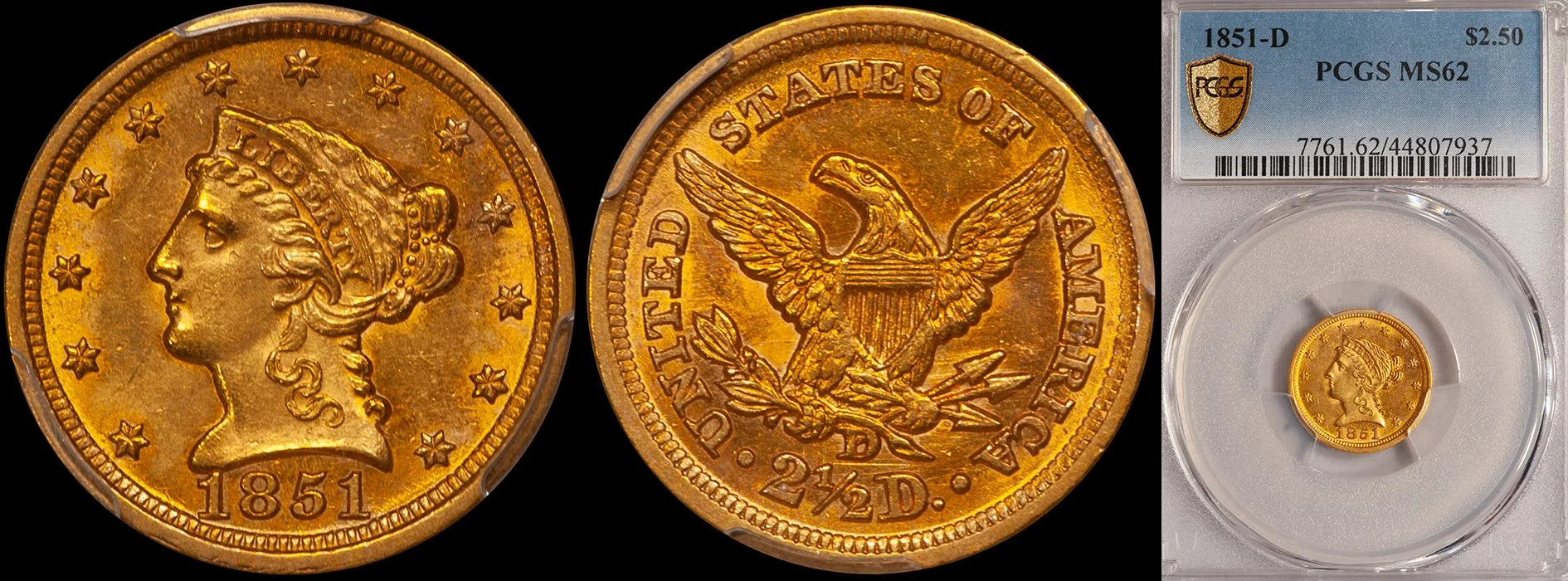
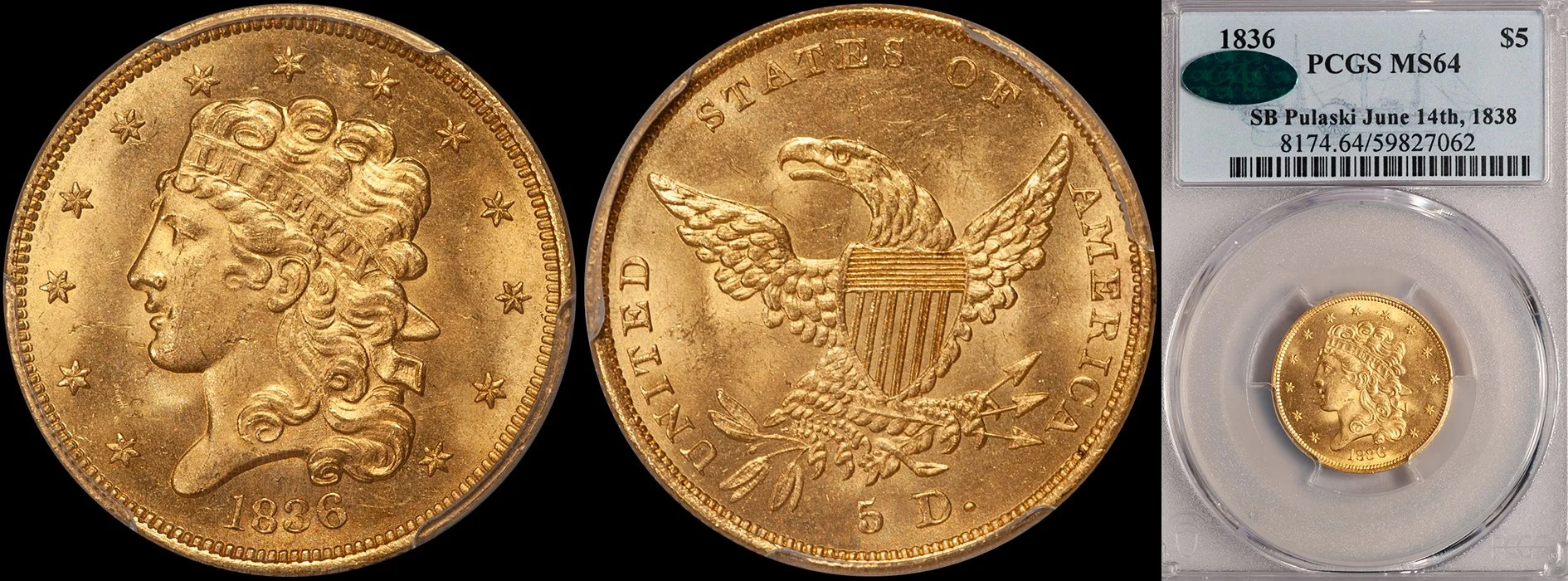
I frequently write about the state of the market as it pertains to early gold and Liberty Head issues but I haven’t commented on Classic Head gold in quite a while. So how is the market for Classic Head quarter eagles and half eagles and what do I expect the coming months to look like for these coins? To answer these questions, we need to turn the clock back a few years. Classic Head gold was dormant for what seemed like an eternity. Everyone thought these coins had “potential” but there was never much demand for Classic Heads and they snoozed away in their own little niche-like corner of the market.

This began to change around 2004-2005. A dealer in the Southeast had been quietly building a large position of coins (primarily in the EF-AU grade range) and he carefully began to raise his buy prices. Within a year or two, he had accumulated an impressive number of coins and, on paper, the value of the position had increased.

I never really understood what he did next. Instead of slowly marketing these coins, one day they showed up in another dealer’s inventory (apparently on a consignment) and for many months, the secondary dealer toted hundreds and hundreds of Classic Head gold coins to every major show. It was hard to get excited about this deal when it seemed like every Classic Head gold coin that had ever been slabbed was for sale. At once.

So now you had coins that doubled in price and were readily available. Would the market be able to sustain the new levels? The answer was “no, not really” but in some isolated cases yes.

Had the market for Classic Heads been properly developed, there would have been collectors lined-up for all the EF and AU common dates that were available. As I’ve written before, I think this series is begging for a collecting guidebook. Most dates have a number of very interesting varieties, the sets are completable by collectors on a relatively limited budget, the designs are great and the number of pieces that make up a set are not overwhelming (as with Liberty Head issues).

At the height of the Classic Head market run-up, it wasn’t unusual to see a common date quarter eagle in AU55 trade for $1,750 or so. Today, these same coins have dropped down to $1,250. That’s still a relatively strong level considering that these were $750-1,000 in the earlier part of the decade. How have the common dates in higher grades done? The current market for a common Classic Head quarter eagle in MS63 is around $7,000-8,000. These had been as high as $9,000-10,000 but only if the coin in question was exceedingly nice for the grade. Considering that common dates MS63’s had been around $4,000-5,000 for many years at the earlier part of the decade, I think they’ve held their value reasonably well.

The part of the Classic Head market that has always been the most interesting for me has been the branch mint issues: namely the 1838-C and 1839-C quarter eagles, the 1839-O quarter eagle and the 1838-C and 1838-D half eagles. Unlike the Philadelphia Classic Head issues these five dates have the added demand level caused by branch mint specialists, first-year-of-issue collectors and individuals who just like “neat” coins.

Values for the 1838-C and 1839-C quarter eagles jumped to what I believe were unsustainable levels. This is especially so for the 1839-C. There were suddenly oodles of AU55 and AU58 examples available for sale in the $10,000-20,000 range but the demand for such coins couldn’t keep up with the prices. I think you’ll see levels for these two dates in AU continue to drop but they will remain strong in the “collector grades” (i.e., VF and EF).

The two Classic Head issues that continue to exhibit very strong demand in all grades are the 1838-C and 1838-D half eagles. In the last thirty days, I owned three (!) 1838-C half eagles graded between EF40 and AU50 and, remarkably, every one of them sold within a week of being listed on my website. If I were able to purchase three nice 1838-D half eagles I believe the results would be the same. These are coins where the demand exceeds the supply and I won’t hesitate to continue to buy nice examples whenever they become available.

What are my expectations of the Classic Head market in the coming months? I think you’ll see some continued drops in prices for common date coins graded AU55 to MS63 with the exception of pieces that have nice original color and choice surfaces. I wouldn’t be surprised if the schlocky, processed shiny examples drop another 10-20%.

At new, lower levels I think choice, original common date Classic Head quarter eagles and half eagles are a good value. If you can buy a nice AU55 1834 quarter eagle in the $1,250-1,450 range that seems like a good deal to me. Same goes with a nice AU55 1834 half eagle at, say, $1,500 or so. As I mentioned above, I still love the 1838-C and 1838-D half eagles and I think both of these issues have real upside at current levels.

I think the “secret” dates in the quarter eagle and half eagle series are probably worth exploring right now. I like the 1837 quarter eagle and have always thought that nice 1839 quarter eagles were highly undervalued. In the half eagle series, I think that the 1837 is a good value.

One final thing before I end this article. I’m not going to be the person who does this, but I’d sure like to see someone properly promote the Classic Head series the next time around. By this I don’t mean manipulate prices and demand, but help take a slightly chaotic market and make sense of it. Write a good book, get collectors interested in these coins and gently “push” the market in the right direction by actively buying and selling. That would be a beautiful thing...

The Proof 1878 Quarter Eagle

When viewing mintage figures, most numismatists exclaim that a coin is “rare” because only 10,000 or so were produced. But this figure seems almost laughable in comparison to the mintages for Proof gold coins struck prior to 1900. In fact, many of these issues have mintages that were lower than 100 coins. Proof gold was struck for collectors every year from 1858 until 1915. From the 1850’s until the early 1880’s, mintages were incredibly low. In fact, a few issues have mintages as low as twenty coins. A number of these issues are well-known and highly prized by collectors but a few have fallen through the cracks and their true rarity remains unknown even today. One of these overlooked issues is the Proof 1878 quarter eagle.

I recently sold an NGC PR65 Ultra Cameo example of this rarity to an Eastern collector. In searching through my records I realized that this was the first Proof 1878 quarter eagle that I have handled. And the more I studied this issue, the more I realized just how rare it truly is.


With an original production figure of only 20 Proofs, the 1878 is tied with three other issues (1874, 1875 and 1877) as the lowest mintage Proof date of this denomination from 1859 onwards. The rarity of this was known by numismatists as early as the 1910’s/1920’s. As recently as 1975, David Akers wrote the following about this date:

“Proofs are extremely rare and the 1878 is, in fact, the rarest post-1859 quarter eagle in Proof. At least I know of fewer examples of this date than of any other Proof after 1859. I would estimate that only a half dozen or so remain in unimpaired condition, most of which are impounded in museums or prominent collections.”

Despite this praise from Akers, the rarity of the 1878 seems to have been forgotten by this generation of collectors and other Proofs of this type, namely the 1875, are more highly regarded.

As a rule, Proof gold of this era has a survival rate of approximately half of the original mintage. This typically holds true in the quarter eagle series but the 1878 appears to be an exception. Akers believed that some of the 1878 Proof gold coinage may have been melted after it went unsold and given the extreme rarity of all Proof gold denominations from this year, I feel that this may well be correct.

Unfortunately, the population reports for Proof 1878 quarter eagles include a number of resubmissions and this has further obfuscated the true rarity of this issue. PCGS has graded three: one example each in PR64, PR64 Deep Cameo and PR65 Deep Cameo. NGC shows ten submissions but I can all but guarantee you this number is severely inflated. These include one each in PR63, PR64 and PR65 plus four (!) in PR64 Ultra Cameo and three in PR65 Ultra Cameo.

In the last decade or so, I am aware of only two distinct examples of this date being available for sale at public auction. The most recent of these was a PCGS PR65 that was offered as Superior 8/06: 639. It brought $32,570.

My best estimate is that there are seven or eight examples known. This includes at least two that are impounded (ANS and Smithsonian). Breen wrote that “at least three” are impaired but I have never seen or heard of one of these.

As someone who has specialized in rare United States gold for over two decades, it isn’t often that I handle a coin that is so rare that it causes me to write a blog about it. But this was clearly the case with the Proof 1878 quarter eagle that I just sold. It was an exciting piece for me to handle and I greatly appreciate being able to buy and sell it.

Some Thoughts on Proof Bust Silver Coinage: Part One - Half Dimes and Dimes

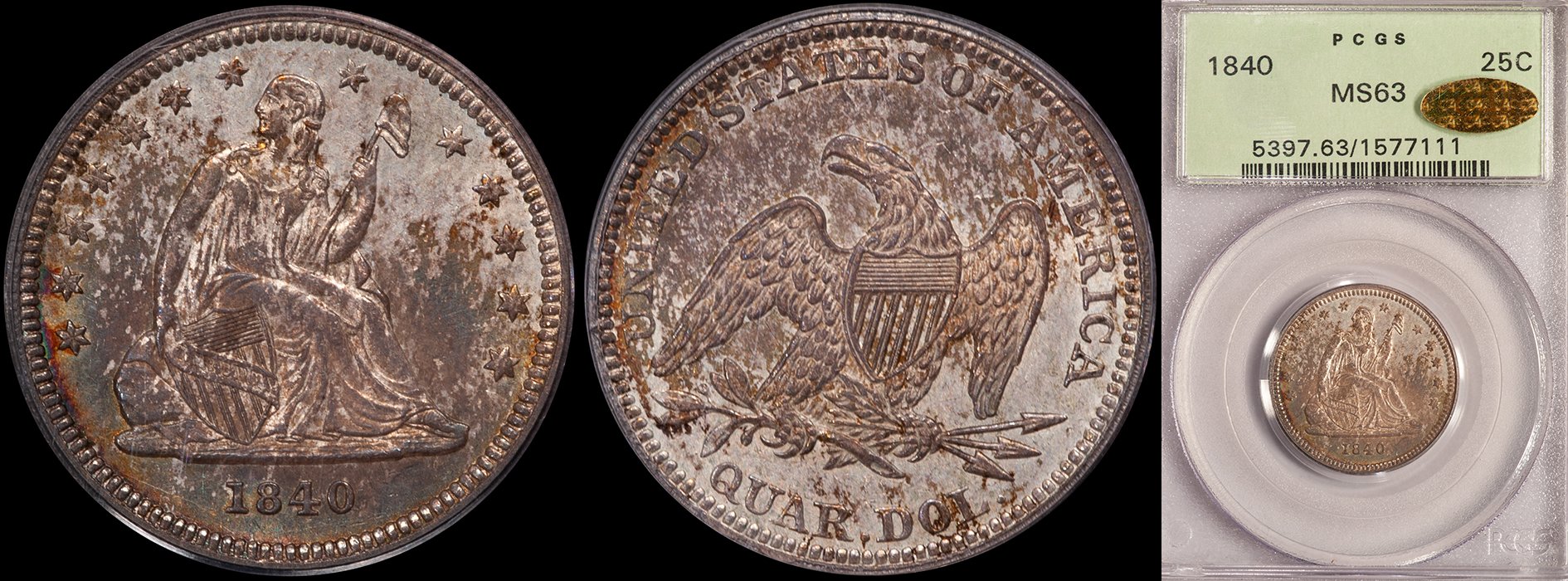
Proof gold coinage has been called the “caviar of numismatics” - and with good reason. Everyone loves a nice Proof gold coin and there is no denying the rarity of these issues. But compared to Proof Bust silver coins, most Proof gold is common. I would contend that Proof Bust silver coinage is one of the most fascinating—and undervalued—areas in all of numismatics. The earliest known Proof silver coins (at least those that are universally regarded as having been unquestionably struck as Proofs) date to around 1820. From the early part of the 1820’s until 1837 (when the Capped Bust design was replaced), Proof silver coins were struck in limited quantities. Generally speaking, mintages were around ten to twenty pieces per year. In most cases, official mintage figures were not accurately recorded and rarity estimates today are somewhat speculative. It is clear to state, however, that all Proof Bust silver is, at the very least, quite rare.

The intention of this article is to give the beginning and intermediate collector an overview of Proof Bust coinage by focusing on each of the denominations that were produced in the Proof format. In addition, at the end of this article, I will discuss some pertinent points about these coins that I think are important for all collectors to consider.
I. Bust Half Dimes

There are a few 1794 half dimes known that have been categorized by NGC as Specimen strikings but the first true Proofs were made in 1829. The 1829 has a reported mintage of thirty pieces and it is the most obtainable issue of this type as a Proof by a fairly large margin. I think there are around ten to fifteen known including a few really superb Gems. The best of these is a single example graded PR67 by PCGS; the single finest Proof Bust Half Dime of any date graded by PCGS.

The 1830 has a reported mintage of ten and it is extremely rare with an estimated four or five known. An example graded PR65 by PCGS was recently sold as Lot 1039 in the Heritage 12/08 auction for a strong $50,025. If I’m not mistaken, this is the most that a PR65 Bust Half Dime has ever brought at auction.

The 1831 is another extremely rare issue. I think it is comparable in rarity to the 1831 or perhaps it is just a touch less rare.

The 1832 and the 1833 both have reported mintages of ten Proofs but neither may exist. There have been examples sold at auction as “Proofs” but these were actually reflective business strikes.

The 1834 is probably the second most available date in Proof with as many as ten or so in existence. PCGS has graded two in PR65 and two in PR66 but I have not personally seen a nice example in many years.

The 1835 is a mysterious issue. Ten Proofs were reportedly struck but neither PCGS nor NGC have ever certified an example. Given the fact that Proofs of this year exist for other silver denominations, I would not be surprised if a few exist.

1836 is an extremely rare year with just three to five Proofs known including an amazing PR66 certified by PCGS. No Proof 1837 Bust half dimes are known or rumored to exist. Overall, the Bust Half Dime series is extremely rare in Proof. Only four dates (the 1829, 1830, 1831 and 1834) are even collectible and just one (the 1829) is seen with any degree of regularity. Until recently, Proof Bust half dimes were very reasonably priced given their rarity but this appears to have changed a few years ago. Still, the $40,000-50,000 that it would now take to purchase a PCGS Gem Proof example is still probably good value considering their true rarity.

These coins tend to be very difficult to determine Proof status. Unlike Dimes and Quarters which often “look Proof,” very few Proof Half Dimes of this era have unquestionable status. See the end of this article for some buying tips.
II. Bust Dimes

The Large Size Bust Dimes of 1809 to 1828 are extremely rare as Proofs. It is likely that no more than five to ten Proofs were struck most years and, in some cases, the actual number could well be less. Coinage of Proofs began in 1820.

The existence of Proof 1820 Dimes is controversial but at least one has been certified by NGC. There are an estimated two or three known 1821 Proof Dimes known including a Gem from the Garrett collection.

It is believed that three 1822 Proof Dimes are known. Two have been graded PR66 by PCGS. No Proof 1823 Dimes are believed to exist while three 1824/2’s are known. The finest Proof 1824/2 is the remarkable Bareford/Menjou coin that is currently in an NGC PR67. Many specialists regard this as the single finest known Proof early dime.

There are two or three Proof 1825 Dimes known. The 1827 is the most available Proof of this type with as many as five or six known from an estimated mintage of ten. Interestingly, at least one is known that is from a Proof-only die pair. There are more Gems in existence of this year than of the other early Proofs as well. No 1828 Large Date Proofs are known.

In 1828, the design of the Dime was changed. The 1828 Small Date exists in Proof but it is extremely rare. It has been stated that as many as five Proofs are known but I believe that this is inaccurate and that there are only three. 1829 saw a larger mintage of Proofs with an estimated ten or so struck. At least five or so exist and it is interesting that of the twelve different die varieties known for this date at least three exist in a Proof format.

Proof 1830 Dimes are extremely rare. I believe that there are three or four known including one or two Gems. The 1831 is the most obtainable Proof Bust Dime. There are as many as ten to twelve known and I have seen at least six of these coins including three Gems.

There is just a single Proof 1832 Dime known and it is a PCGS PR64 that I sold to a Louisiana specialist around a decade ago. At one time it was believed that 1833 Dimes were unknown in Proof but PCGS has graded two and NGC has graded four, making it likely that at least two or three distinct examples exist. The finest known is a PCGS PR66 that recently sold for $149,500 in the Heritage 2008 ANA sale.

1834 is among the more available early dimes in Proof. There are as many as seven or eight known including examples in three different die varieties. This includes a piece in the famous King of Siam Proof Set and as many as two superb Gems graded PR67 by PCGS. All 1835 Proof Dimes appear to be struck from the same die pair (JR-4) and this date is one of the more available of this design in Proof. I believe that there are around eight or so known with at least half of these grading in the PR63 to PR64 range. I know of at least two Gems including a PCGS PR67CAM which is unquestionably the finest known.

Proof 1836 Dimes are extremely rare. All are from the JR-2 dies and it is doubtful if more than three are known. None are Gems. The final year of issue for this type is the 1837 and this is a controversial year as far as Proofs go. The authors of the book “Early United States Dimes, 1796-1837” believe that at least two Proofs are known but neither PCGS nor NGC have yet to grade one. I believe that they exist but that they have not traded via public auction since the early 1980’s.

As I mentioned at the beginning of this article, I have some buying tips for collectors who are interested in purchasing Proof bust coinage. These tips are based on having bought many of these coins myself and having looked at most of the major offerings that have appeared at public auction since the mid-1980’s.

  1. When it comes to Proof bust coins, pedigree is exceedingly important. With some research, you can determine what a coin sold for before it was slabbed by PCGS or NGC. As an example, if an 1831 Dime that was called a “Proof” sold for a seemingly low figure when it was offered for sale as a raw coin in the 1980’s or 1990’s, this is a strong red flag. For collectors of Proof bust coins, important old-time collections such as Eliasberg, Pittman and Norweb are the Holy Grail. If a coin from one of these collections was cataloged as a Proof and it brought the right level, I’d consider this a strong endorsement for the coin’s status as a Proof.

  2. My first rule of determining if a coin is or isn’t as Proof is as follows: if it doesn’t look like a Proof it isn’t. I tend to go with my gut instinct and if I have to convince myself that a coin is a Proof, that’s not a good sign.

  3. Just because PCGS or NGC calls it a Proof does not mean absolutely for certain that it is. I have seen a number of coins that these services have called Proof that I do not agree with.

  4. Learn which varieties are known in Proof. If a coin is the wrong variety then it probably is not a Proof. Buy the standard references for each series and learn the characteristics of the varieties that have known Proofs.

  5. Make a trip to the Smithsonian when it reopens and look at their early Proofs. Or go to the ANA Museum and look at Harry Bass’ early gold Proofs. These are true Proofs and you can get a good idea of what the base line is for comparative purposes.

Next month: Part Two, focusing on Proof Bust Quarter and Bust Half Dollars.

Long Beach Show Report Feb. 2009

Even in the best of markets, I go to Long Beach with limited expectations. I love the convenience factor (it’s one of my few sub-two hour flights) but this show has, in my experience, really lost its luster. Keep on reading for my thoughts on the Decline of Long Beach and a recap of the show. I think there are two significant reasons why Long Beach has gone from a great coin show to a so-so one. The first is the high price of the tables. Back when tables were more competitively priced, there were tons of small coin shops, Mom-n-Pop dealers and vest pocket dealers who had their own tables or shared them. This was a great source for fresh coins and it meant that there was a lot of coin trading as items went up the numismatic food chain. Now, these dealers no longer attend and this means that there is very little fresh material.

The other reason that Long Beach has suffered has to do with the draconian California tax laws. I’m not going to address these at length but let’s just say that Baltimore has become a great show in large part because Maryland’s tax laws are not quite as “zealous” as our friends in California.

As I said, I went to Long Beach with low expectations. I actually think the show was a bit better than I would have expected. The crowds were decent and my sales were not bad. I was happy with the limited number of coins that I bought and virtually everyone who I spoke with had a good—if not great—show. I think a lot of a dealer’s success right now has to do with what he deals in and his or her desire to sell older inventory at new levels. Simply put, if you have nice quality collector-oriented coins in your inventory, they sell. If you have a bunch of expensive, esoteric coins or boring widgets in stock, you aren’t selling much. If you have coins in stock that have been sitting around since June and you haven’t adjusted the prices downwards, you aren’t selling anything.

I have already posted descriptions and images of many of my new purchases. Some of the highlights are as follows:

-A superb 1897-O eagle graded MS64 by PCGS -A choice NGC MS63 1839 half eagle -A rare and popular PCGS AU50 1838-C half eagle -A very rare PCGS MS61 1846-O half eagle -An underrated and high end 1846-D Normal Mintmark half eagle graded AU58 by NGC

I still don’t think I have a really accurate handle on the coin market but given the awful state of the economy, I think things are holding up far better than I would have expected. Trust me, I have experienced some truly dreadful coin markets and we aren’t even close to any of these. Every dealer is feeling the effects of the economy and everyone is reducing (or wants to reduce) their inventory. But all things considered I am pleasantly surprised. At least so far...

The Heritage auction contained a boatload of rare date gold and I figured it would be an interesting test of the market. Some of the coins were not especially high end for the grade and there were certain dates that were represented by multiple examples. Given the fact that the traditional bottom-feeder buyers for coins like this are either saddled with large inventories, large debt, large headaches or all three I figured that there would be some very cheap prices. I was proven correct.

Many of the not-so-nice Charlotte and Dahlonega coins in the $5,000 to $10,000 range sold for the lowest prices I can recall in quite a while. There were instances where coins sold for less than half of Trends. But (and this is a BIG but) there is a good reason for this. Buyers of these coins have become sophisticated enough that they will not pay good money for a bad coin. If a coin is in an AU58 holder and it is a bright-n-shiny piece with the eye appeal of an AU50, that’s what it is going to trade for, regardless of the holder. That’s the beauty of knowledge. If you learn what a coin is supposed to look like you do not have to use the grading services as a crutch.

The irony of the sale was that some nice coins got dragged down with the not-so-nice ones. There were some exceptional Charlotte quarter eagles that were pedigreed to important collections such as Dingler, Elrod and Eliasberg and they sold for 15-25% less than what I would have thought. As I had expected, this sale represented a great opportunity for a savvy collector to get a great head start on a world-class Charlotte quarter eagle collection at prices that haven’t been seen since the mid-1990’s.

Not everything in the sale went cheaply. The New Orleans eagles were strong. An 1841-O graded AU55 by PCGS brought $25,300, the Bass 1847-O eagle graded MS64 by PCGS sold for a record-setting $51,750, an NGC MS60 1856-O set a record for this date when it sold for $15,525 and a PCGS EF45 1883-O brought an amazing $29,388 - far and away a record price for this date in this grade.

The affordable, collector quality coins in the auction that were nice did pretty well. There were a number of instances where a solid-for-the grade EF45 or AU50 brought nearly as much (or as much) as not-solid-for the-grade pieces in AU50 or AU53 holders. The market for solid $1,500 to $3,000 Charlotte and Dahlonega gold, in fact, seems much stronger right now than it does for the more expensive coins. The one exception is when the more expensive coins are popular, rare or just plain old spectacular.

Prooflike Gold Coinage: A Look at an Evolving Market

One of the newer promotions in the rare gold coin marketplace are coins that are Prooflike. NGC began designating Prooflike gold a few years ago (PCGS has yet to add this designation) and enough have been graded for a collector to get an appreciation of the relative rarity of these issues. What is a Prooflike gold coin, what is the market for these coins like and what does the future hold for Prooflike gold? Generally speaking, when a pair of new dies is used to strike coins, they are highly polished. The first few hundred examples from this die pair (this number can be significantly less or more, depending on the type of design and the mint that produces the coin) are reflective. This degree of reflectivity can range from subtle to intense. Obviously, the more intense the degree of reflectiveness, the more desirable a coin is.

There are basically two tiers of “Prooflikeness” that gold coin collectors are concerned with. The first is the blanket term of “Prooflike” which means that a coin has a certain degree of reflectiveness on both the obverse and reverse. While there is no absolute standard of what constitutes a Prooflike gold coin (at least in terms of the depth of reflection) it is essential that a true P/L coin be reflective on both sides. A coin that is “deep mirror Prooflike” shows considerably more reflectiveness on both sides than one that is merely Prooflike. It resembles a Proof in appearance and it may have an attractive “black and white” appearance that is the result of contrast between the frosted devices and the mirror-like fields.

There is a very strong market for Prooflike Morgan silver dollars. Collectors began paying premiums for these coins as far back as the 1960’s and, today, deep mirror Prooflike (DMPL) dollars can sell for huge premiums over “normal” frosty or satiny coins. Interestingly, there is not much of a market for Prooflike silver coins above and beyond Morgan dollars.

I think the market for Prooflike dollars is as strong as it is for three significant reasons. The first is that a number of dealers back in the 1960’s and 1970’s did a good job of promoting these coins and getting the market jumpstarted. The second is that there are more Prooflike coins in the Morgan dollars series than in all other silver coins combined. Lots of coins equals the ability to promote these as a collectible. The third reason is the appearance of these coins. A high quality DMPL coin can be extremely attractive and a collector can easily appreciate why he should be paying a premium for such a coin.

The market for Prooflike gold coins remains in its infancy. Is there a possibility that Prooflike gold could become as popular as the market for Prooflike dollars? I think this is a small possibility that this could happen but in small, selective increments.

I feel that the one area of Prooflike gold that is likely to see the most “play” with collectors in the next few years is Liberty Head double eagles. I think this is going to happen for a number of reasons. The first is that Liberty Head double eagles are already popular, so it isn’t a big stretch for a collector to jump from “normal” examples to ones that are Prooflike. The second is that these coins are available enough to be actively traded but they are, at the same time, relatively scarce. The third and probably most important fact is that a high quality DMPL double eagle is extremely impressive from a visual standpoint.

As I mentioned at the beginning of this article, NGC has been grading Prooflike gold coins for long enough that a few conclusions can be reached.

Taking a look at double eagles, I note that NGC has designated 1,287 $20 Libs as Prooflike. But what is most interesting is the fact that only twenty-eight examples of this series have been designated as DMPL and of these just five have been graded higher than MS62. The conclusion that is most easily reached about DMPL examples is that they are quite scarce and pieces above MS62 are genuinely rare. This is especially true for any date other than the ultra-common 1904.

The current price record for a DMPL gold coin is, as far as I know, the $126,500 that was attained by an NGC MS64* 1866 double eagle that was sold by Heritage in their 2008 ANA auction.

From examining auction prices, it seems that predictable price levels for DMPL $20 Libs are starting to be recognizable. MS61 and MS62 examples of non-1904 dates seem to be bringing in the $2,000-3,000 range. The few MS63 examples that have traded have brought in the $4,000-6,000 range. Coins in MS64 and higher are rare enough that it is hard to establish price levels.

In closing, I have a few personal thoughts about Prooflike gold coinage.

A number of 19th century gold coins are easily found with Prooflike or even deep mirror Prooflike surfaces. The most prominent of these include gold dollars from the 1880’s and three dollar gold pieces from this era. I do not think that collectors should, in most cases, pay a premium for these. The exception would be for a DMPL coin that had really great eye appeal.

Many DMPL gold coins have poor eye appeal due to the fact that the reflectiveness of their surfaces accentuates marks or abrasions. I would be careful paying a large premium for an ugly DMPL coin, even if it is a rare issue.

I mentioned above that I think that Liberty Head double eagles are likely to be the only series that collectors will pay close attention to PL and DMPL issues. My second choice for the series most likely to have some degree of date-by-date popularity would be Liberty Head eagles. The PL and DMPL issues that I would suspect collectors would like most would be the New Orleans coins from the 1890’s.

"I Know What I'm Going to Collect. What's Next?"

So you've made the decision that you are going to collect a specific series. What are the next step(s) that you should take? If you are going to form a serious, high-end collection one of the first things that you need to do is to examine comparable collections. As an example, if you have decided to assemble a set of Liberty Head eagles, it would make sense to know the grades of other sets that have been put together.

When it comes to 19th century gold, some of the old stand-bys are the Norweb, Eliasberg and Bass collections. It is very instructive to compile lists of the coins in these three collections as they pertain to what you are planning to collect yourself. For example, if you have decided to assemble a set of high grade New Orleans half eagles, you can make a spreadhseet of the relavent coins in these three collections.

Luckily, this information is reasonably easy to access. (Thank you, Internet...) On the PCGS website, the Set Registry pages list the "probable" grades of the Eliasberg and Bass gold coins (not to mention another pretty decent set, that found in the Smithsonian). The grades of the coins in the Norweb collection can be found in the three sales of this collection that were conducted by Bowers and Merena back in the mid-1980's.

Knowing what quality coins were owned by a great collection is important informantion for a new collector. As an example, let's sat you are being offered an MS63 example of a specific Liberty Head eagle. If the best piece Bass owned was an MS61 and Eliasberg only had an AU55, then the chances are good that this is a significant coin.

There are exceptions to this rule, however. Let's say that the MS63 Liberty Head eagle mentioned above is from a small hoard that was discovered after Bass or Eliasberg stopped actively buying coins. In this situation, the significance of the Bass and Eliasberg holdings are not as great. An example of this would be an 1894-O eagle in MS63. This date was essentially unknown in Uncirculated when Eliasberg was buying and very few examples better than MS60 were available to Bass. Today, because of hoards found overseas, this issue is scarce but not impossible to find in MS63.

If the series that you are goping to collect has a number of active Set Registry collectors, it is important to study the top sets that are on both the PCGS and NGC websites. Let's say that you are focusing on St. Gaudens Double Eagles. Without being congnizant of the best active sets in the Registries, you won't have a good idea of what grades you'll need to make your set competitive.

But there is much more to assembling a high-quality set than checking out Set Registry information. I'd strongly suggest that before you buy any coins for your new set that you invest a few hundred dollars in books and auction catalogs. There is no more important guide for the new collector than important specialized auction catalogs. I have written articles on which catalogs are important for the gold coin specialist to own and won't be redundant be listing them again; use the search function on my website to look for these.

One other thing you need to decide is just how high-end you want your set to be. If you have deep pockets and lots of patience, you will probably want to purchase coins that are either the finest known or which rate high in the Condition Census. If you are have a more modest budget, you will want to stick with coins that are above-average for the issue but not necessarily in Uncirculated grades. Learning the quality of other specialized sets will give you a good idea what the best grades for each specific issue are.

No Motto Philadelphia Half Eagles and Eagles: A New-Found Appreciation

A few months ago, I decided to start focusing more on No Motto half eagles and eagles from the Philadelphia mint than I had in the past. Formerly, I had sort of pooh-poohed these coins as being “boring” but the more I’ve studied these series, the more I think they may be one of the true Final Frontiers of the rare date gold market. As a buyer, one of my major criteria for making a purchase is the fundamental rarity of a coin. By this, I am referring to the availability of a coin in all grades. Virtually all Charlotte and Dahlonega gold has a good degree of fundamental rarity, meaning that a specific issue is hard to locate in any grade, not just in Gem. This isn’t the case with No Motto Philadelphia half eagles and eagles. Or is it?

The more I began to study these two series, the more I realized that many of the issues that I formerly thought were common in circulated grades were just not as available as I presumed. Let’s say that I decided that I was going to promote Philadelphia eagles from the 1840’s in AU grades. If these coins were as available as I had felt, I probably would be able to accumulate fifty or even a hundred coins over the course of a six month period; certainly enough to make the promotion worthwhile.

You can probably guess where this is going. I did make a decision to do this very promotion and after searching for nice, crusty coins in the AU55 to AU58 range I was able to come up with exactly eight pieces. And this is after five months of pretty intensive searching. Given the fact that my per-coin cost basis was in the $1,000 range, I became more and more intrigued. Clearly, my epic promotion wasn’t going to happen. But in the course of planning it, I became smitten by No Motto half eagles and eagles from the Philadelphia mint.

Let me give you a couple of reasons why I think these coins are interesting:

1. There are no true “stoppers.” Virtually every branch mint series has a few issues that are extremely rare and expensive. In the Philadelphia No Motto half eagles from the 1840’s and the 1850’s, there are no impossible coins. In fact, with the exception of a small number of coins (1842 Small Letters half eagle, 1858 eagle) nearly all of the issues can be found in either the very high circulated grades or even in Uncirculated.

2. The per-coin cost basis in these series is far lower than for branch mint issues. If you want to collect Dahlonega half eagles in AU grades, every coin you buy is going to cost at least $3,000-4,000. You can purchase many of the more available Philadelphia half eagles for around $1,000 per coin and many of the eagles are $1,250-1,500 each in very presentable condition.

3. For someone like myself who loves choice, original coins there are a lot more nice Philadelphia half eagles and eagles available than branch mint pieces. Because of the fact that there is a big value spread for the branch mint issues between EF45 and AU55 (or even AU55 and MS61) there is tremendous financial motivation to scrub original coins. Many dealers have made a career out of taking an AU50 Charlotte quarter eagle that they bought for $3,000, processing it, getting the coin into an AU55 or AU58 holder and selling it for $5,000, $6,000 or even more. The financial motivation to destroy a nice, original AU55 Philadelphia half eagle is currently not that great and, ironically, a greater percentage of the coins remain intact.

4. Since very few people currently collect these coins, you have less competition and an easier shot to buy the nice pieces without having to pay nutty money.

So does this blog signal an end to my love affair with branch mint gold issues? Hardly. I still am a strong buyer of all nice Carson City, Charlotte, Dahlonega and New Orleans gold coins (from dollars through double eagles) and will continue to be so as long as I am a professional numismatist. But I’ve become much more appreciative of No Motto Philadelphia half eagles and eagles and you will see more of them appear for sale on my website in the future. Will I write a book on them? Probably not. I will, however, probably write in-depth features in my monthly web articles that discuss these coins on a date-by-date basis.

The New Rules: Coin Buying In 2009

The realities of the new coin market are such that I have refined and revised my buying strategies for 2009 and, most probably, beyond. I think my “dealer strategies” can be easily applied to “collector strategies” and they are useful for most people. My first strategy isn’t so much “new” as it is a refinement of an existing strategy. I have always considered myself to be a fussy, critical buyer with what I believe is one of the better eyes around when it comes to originality. Well now I’m even fussier than before. If a coin isn’t all there, I don’t want to buy it; even if it is a special date that I have a soft spot for.

Let me give you an idea of how this strategy works. At the recent FUN show, I saw two comparably high grade examples of the 1856-O half eagle. This is a scarce issue that I really like and it has always been a good seller for me. I generally would have no problem with owning two (or even three) pieces simultaneously. The first example I saw was an NGC AU58. It was priced fairly but it really wasn’t very nice for the grade with little of its originality intact. This is a coin that I might have bought a few months ago, given that it was fairly priced and really rare in this grade. A few hours later I saw an NGC AU53 example of the same date that was choice and fully original. I bought it without hesitation. In this market, it pays to be a fussy buyer. If I were a collector of New Orleans half eagles, I would personally rather have a choice, original AU53 than a not-so-choice and not-so-original AU58. Even though the holder says that one of the coins is five points “better” than the other, my eyes told me that the lower grade coin was aesthetically superior.

My buying guidelines have always been that I want a coin that is in the top 5-10% for the grade with choice, original surfaces, nice color and good eye appeal. I want the sort of coin that will get a sticker when I send it to CAC. In the new coin market of 2009, I am repeating this to myself every time I look at a coin (be it at auction, in another dealer’s inventory or when a collection is sent to me by a specialist-collector). I’m being ultra-careful not to slacken on my quality standards and neither should you.

Another thing that I am focusing on is a lower price point. Some dealers are still able to sell coins priced at $10,000 and up. I find these pretty hard to sell right now unless they are extremely special. Generally speaking, I’d rather have ten interesting $5,000 coins in stock than one not-as-interesting $50,000 coin.

There are exceptions to this. Obviously, if I want to participate in the early gold market, I’m not going to go very far if I limit myself to $5,000 coins. And I would without a doubt be a buyer of a $25,000, $50,000 or even $100,000 early gold coin if it met the following parameters: really choice, really original, really rare and really saleable. But expensive “product” is an area of the market that has already begun a significant downwards correction and I think such coins could go a lot lower in the coming months.

How does this apply to you? If you are a high-end collector who purchases expensive coins I am certainly not telling you to stop (in fact, I’d be thrilled to sell you all the expensive coins you’d like right now...just call me on the phone to discuss this!). What I am saying is that the expensive coin market has shifted from a seller’s market to a buyer’s market. You might be able to buy a coin that was $35,000 a few months ago for $30,000 today; maybe even a hair cheaper. If this is your price point, though, I think it is more important than ever to be hyper-critical about every potential new purchase you contemplate making.

Which brings me to another point: buying the right coins. When the market is on an unstoppable upwards course, you can make sloppy decisions and the greater fool theory will inevitable rescue you. How many collectors made poor buying decisions in 2005 or 2006 and were saved by putting lemons in an auction and having their mistakes become lemonade? This is unlikely to happen in 2009, 2010 and beyond. You want to be really careful with what you buy. Collectors with short attention spans are going to find it hard to get rid of pieces that they lose interest in after a few months because something else has captured their fancy. My suggestion is to buy every coin like you are going to keep it for five or ten years.

Another decision that I am going to try to rigorously adhere to in 2009 involves over-expanding my numismatic horizons. In years past, I dabbled in areas that I really didn’t know that well because they “seemed cool” or I “thought they were good value.” In 2009, I am going to stick with what I know best. That doesn’t mean that I’m going to stop buying bust silver coins or rare date Seated quarters and half dollars. I like these coins and I know these areas of the market well enough not to make dramatic mistakes. But I am definitely establishing a stronger “comfort level” this year and will likely coinslap myself anytime I am tempted to stray from it.

One last strategy I am zealously adhering to seems like a no-brainer but I think it’s important enough to bear repeating. I am going to try very hard to have an inventory that is full of popular “bread and butter” coins like nice 1854-O three dollar gold pieces and 1839-O quarter eagles. These aren’t necessarily the rarest coins but they are very popular and have multiple levels of demand. Liquidity is a key factor for collectors and dealers alike in the New Market.

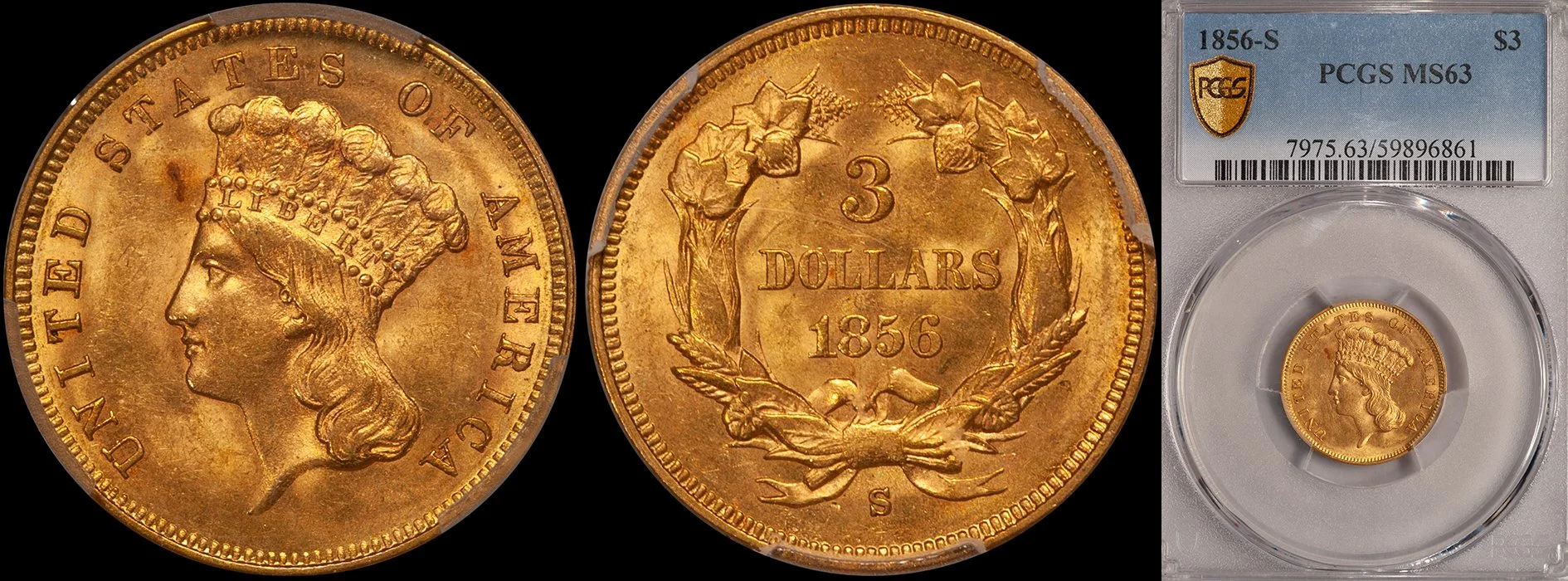
Are there coins that I haven’t really specialized in the past that I will be buying more of in 2009? I anticipate buying and selling more No Motto Philadelphia half eagles and eagles in the AU55 to MS63 range because I think they are great values. I’ll probably buy more non-New Orleans Type One double eagles because this is an active market and a number of the dates are still undervalued, in my opinion. And I think I’ll start moving back into the Three Dollar gold piece market again because I like these coins at current levels.

2009 FUN Show Report

As I stated in my last Market Report (and you have no doubt read on many other numismatic websites) the 2009 FUN show promised to provide interesting insights into the State of the Coin Market in 2009. What happened and what numistidbits did I glean from my week in Orlando?I decided to arrive a day and a half earlier than usual this year for two reasons. The first was to get out of the awful weather we’ve been having in the Northwest and to get a little Florida sunshine and the second was to give myself a bit more time to get prepared for the show. When I arrive the night before an East Coast show starts it’s hard to face the first day of trading when I’m still on West Coast time and have woken-up at the equivalent of 4 a.m.

I went to the pre-show for little more than a cameo appearance and found it extremely depressing. I hate the FUN and ANA pre-shows because I think they mentally drain dealers. I understand why they exist. Wholesale-oriented firms like these shows as it gives them an opportunity to engage in some serious dealer-to-dealer trading. The problem is that encourages dealers to leave the “real” show early. For one-person operations like myself, the thought of attending a two to three day pre-show and following this up with a four to five day regular show is a bit of Numismatic Hell that I’d rather not subject myself to.

I also made a cameo appearance at the Stack’s sale and noted what seemed to be an inordinate amount of buybacks (i.e., coins not meeting their reserves and going back to their owners). I don’t attribute this to a weakness in the market as much as I do the auction firm not vetting the reserves as well as they should have. There were some great coins in the sale but many of them had been in other auctions within the last year and were reserved for numbers higher (or even much higher) than their last sale. In this market, that dog ain’t gonna hunt...

The show opened to dealers and collectors with early admissions badges on Wednesday. These opening hours were an interesting buyer vs. seller dance. Most dealers seemed unwilling to pull the trigger on any interesting coins but, conversely, there didn’t seem to be much available to buy and the consensus seemed to be “let’s wait until the Heritage auction(s) occur to see exactly how bad the market is.”

On Wednesday night, Heritage sold the Quellar-Lemus collection of Pattern coinage. While I don’t really deal in patterns anymore, I did attend the sale for a few hours mostly for educational purposes. I thought this was an important auction for a few reasons. It was a “fresh” deal, it was a highly specialized collection and it involved very rare coins in a very thinly traded market. The results were extremely impressive. The collection brought at least 20-30% over pre-sale estimates and the bargains that many bidders thought they’d be able to find in pre-sale discussions were, for the most part, non-existent. Something that I found especially interesting was the activity for the extremely rare but very esoteric patterns. There were a number of issues that weren’t especially attractive or historically important but they were R-8 (meaning that an estimated one or two were known) and buyers had to pay record-smashing prices for these. This proved to me that the market is still there when it comes to seemingly irreplaceable coins.

Thursday was the opening day for the public and, at least for me, I found it to be the slowest first day at FUN that I could remember. That’s the bad news. The good news is that the crowds were excellent and collectors were most definitely out in full force. The feeling I got from most of my encounters with collectors and dealers during the early part of Thursday was that their buying was curtailed but not necessarily for the “right” coin.

Something interesting happened to me later that day while I was looking through a dealer’s boxes. I pulled out about six or seven coins to ask for prices. As he was figuring out levels he said to me: “You’re one of the few people all day that has actually pulled out anything numismatic. It seems like all everyone wants to price is cheaper stuff.” This made me reach a conclusion: if this is indeed the case, the current market malaise is tailor-made for collectors who still appreciate rarity.

The Thursday night Heritage Platinum sale was interesting as it contained a mix of coins that ranged from fresh and highly desirable to not-so-fresh and not-so-desirable. For the most part, I’d say the prices and the sell-through rate were about what I expected. Coins that I knew had sold within the last year or so generally brought around 10-20% less this time. Expensive faux-rarities did better than I would have expected (these same coins were very, very hard to sell on the bourse floor). As recently as a few weeks ago, I had wondered if the Platinum Night session was going to be an unmitigated disaster. Because of Heritage’s exceptional Internet presence I’d have to say it was better than I would have imagined although still not the blockbuster extravaganzas of FUN 2006 or FUN 2007.

Friday was my last day at the show. And for some reason, the vibe seemed a lot more upbeat. I sold three expensive coins to collectors and had a few nice wholesale transactions. I left feeling a lot better than I had when I left the show on Wednesday and Thursday.

So what was my overall take on FUN 2009? I’d say that it was bit better than expected. All markets are psychological in nature and as long as the participants in the coin market are relatively upbeat, the market will be OK. Until the economy turns around (and I think we are looking at another year of Recession) people will likely cut back on their coin purchases. But most collectors are unwilling to totally give up their purchases. The bottom line was that at FUN, collectors were active but more selective than I can remember.

What sold and what didn’t sell at the show? For me, interesting coins in the $5,000 and under range were good sellers as was anything with choice, original surfaces. I noticed strong demand for CAC-stickered coins. And I was surprised at the number of people looking for New Orleans gold. Expensive coins were hard to sell. This wasn’t always the case at the auctions but on the bourse floor you literally had to plead with dealers to look at your “big boy” coins. I expect that this will continue for the next few shows as well, if not longer.