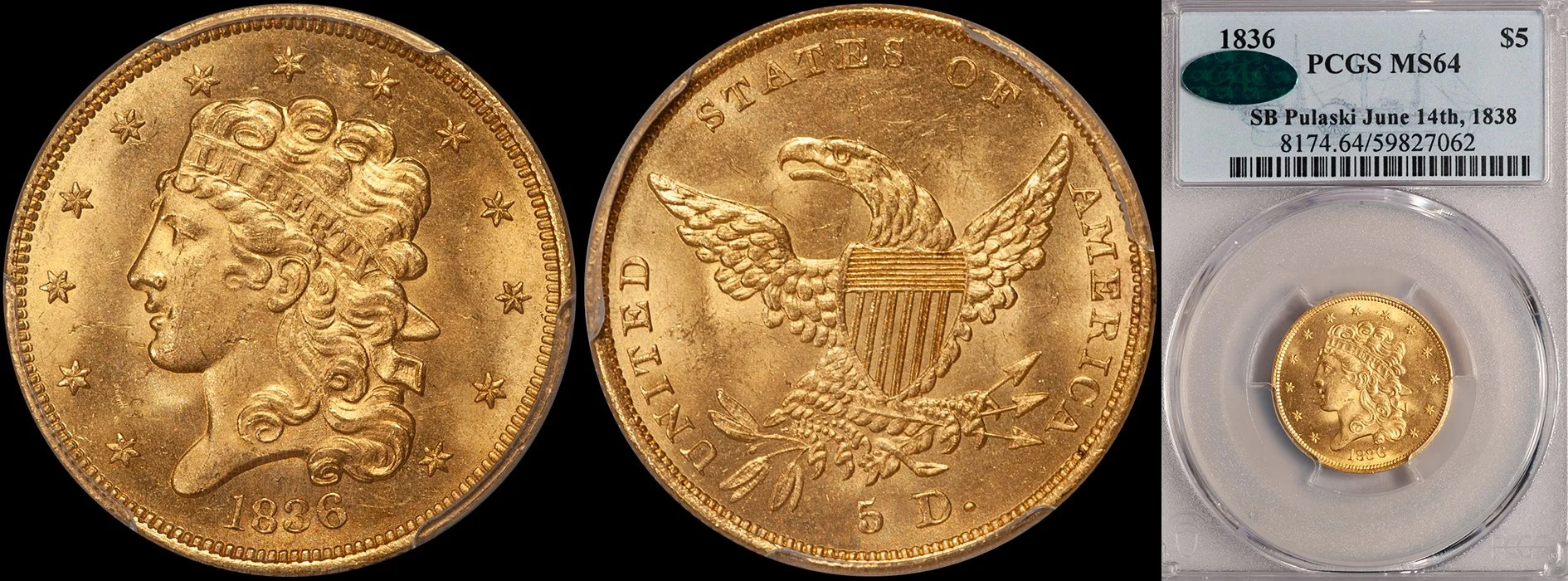
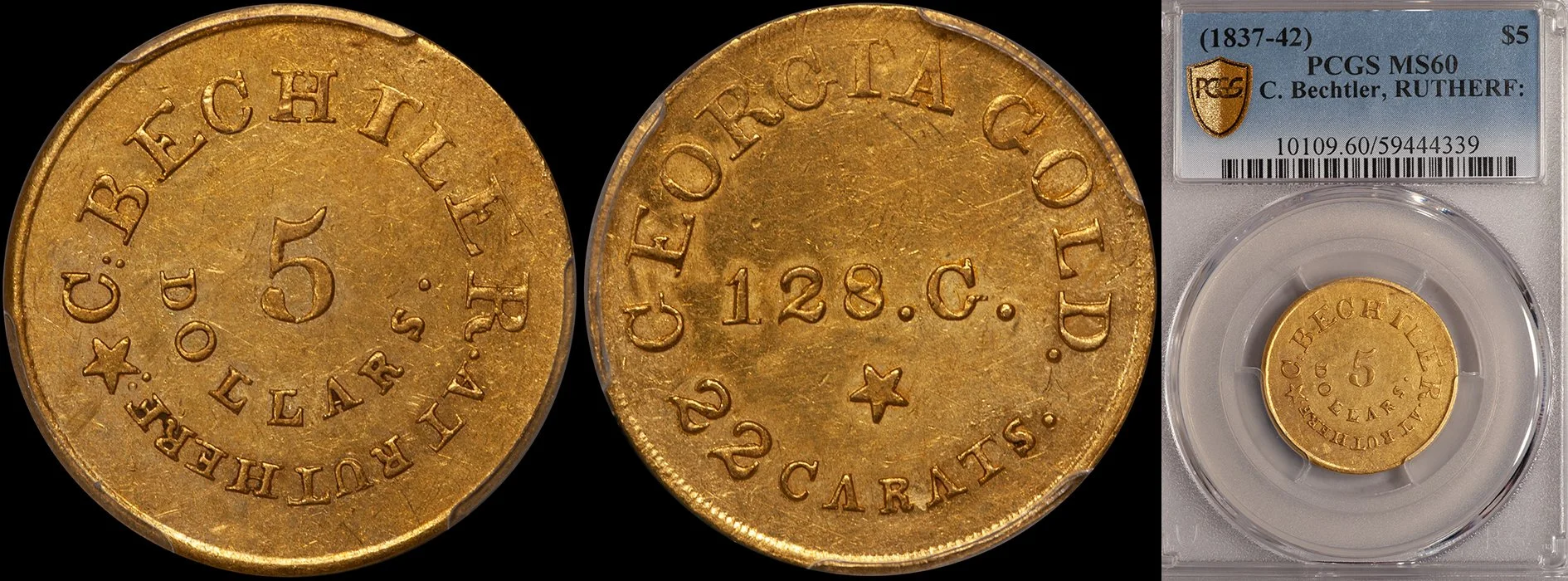
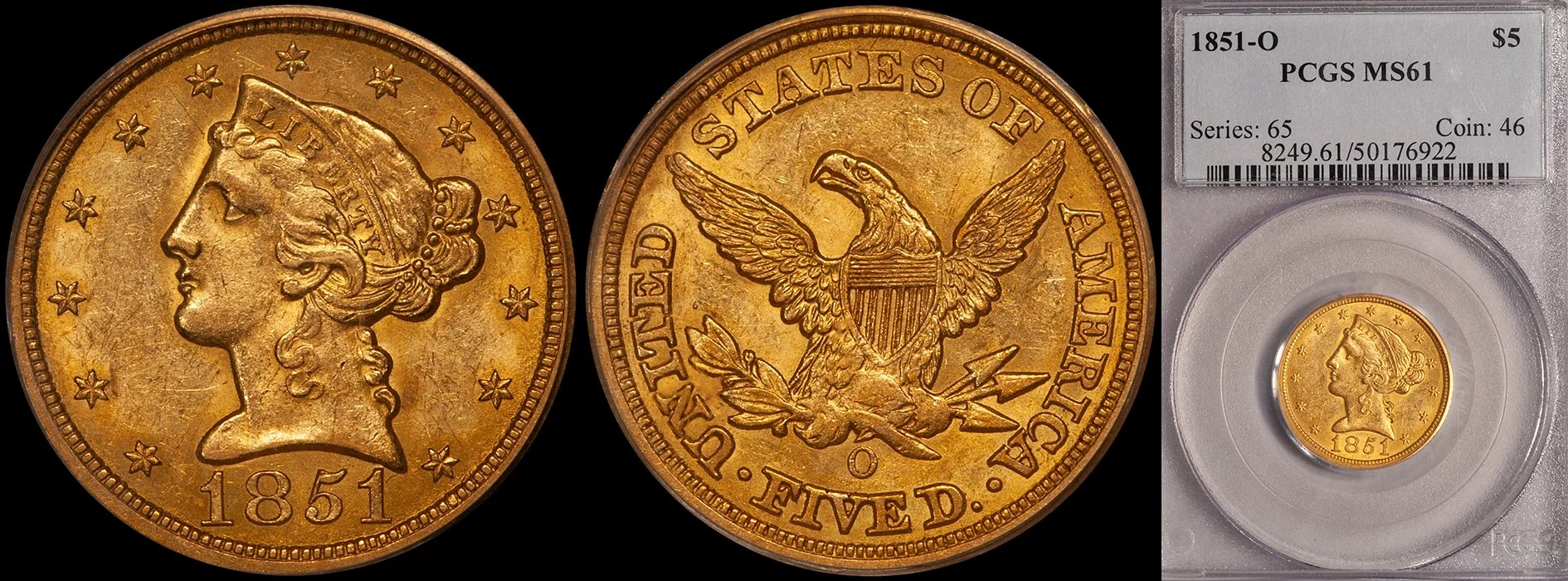
Pre-FUN Observations

I think this year's FUN show will reveal alot about the direction of the market for the year. On Wall Street, it's a known fact that if January is strong, the rest of the year is as well. I can't state this with total certainty as far as coins go but my experience is that a strong FUN generally means the rest of the year will be good as well. Early reports from the pre-FUN show (which I am not attending) are interersting. Some dealers clearly "get" the fact that the market isn't as strong as it was and that their coins need to be repriced to sell. Others appear to be in strong denial mode. If you notice minimal changes in your favorite dealer's inventory after this show, you'll quickly figure out if he or she "gets" it or not.

For me, a problem at past FUN shows has been a lack of material. I'm not sure this will be the case this year. I've already bought some pretty outstanding new coins and I have the feeling that buying this year will not be as hard as in the past. Plus there is always the looming specter of $100 milion+ in coins at the auctions.

Someone asked me the other day what the keys will be to a dealer's success (or lack of it) in 2009. I think it boils down to three simple things: ample capitalization, having good clients and having established programs to sell into. Any dealer who is weak in at least two of these three areas is in for a long year.

I'm not totally certain that the rare date gold market is going to be as easy to analyze post-FUN as is, say, the type coin or widget markets. None of the major auctions are especially strong in any of the important areas of dated gold. Early indications appear that nice pre-1834 gold seems to be doing fine, particularly if the coins have been approved by CAC. The Heritage sale contains an important collection of Indian Head eagles so we will, no doubt, get a feel for what gem examples of the rarities in this aerea are worth. But I'm afraid that areas like C+D gold, TYpe One and Two double eagles and Carson City issues won't be as easy to gauge; at least not for the next month or two.

12 Great Values in the Rare Date Gold Market Priced Below $5,000 Part Two: Eagles and Double Eagles

In the first part of this article, I discussed gold dollars, quarter eagles, three dollar gold pieces and half eagles priced below $5,000 that I felt were good values. In the second part, I am going to continue the same format but focus on eagles and double eagles. Given the popularity and high bullion value of these two denominations, you’d think that eagles and double eagles didn’t offer collectors in the $5,000 and under range many good values. This is far from the case. The eagle denomination contains so many exceptional values that I easily could have chosen over a dozen from the Liberty Head type alone. And there are a number of double eagles that are great values as well.

1. 1838 Eagle in VF and EF Grades

If you have a $5,000 and under budget, you won’t have a lot of opportunities to purchase an 1838 eagle. But if you can stretch your budget a bit and you have a chance to acquire a decent-looking example in a third-party holder, I would strongly encourage you to go for it. I absolutely love this issue. It is the first Liberty Head eagle and it has a low mintage figure of just 7,200. I’ve mentioned before that Trends values for this issue are absurdly low. As an example, the current values for an EF40 and EF45 1838 eagle are $2,900 and $4,025, respectively. This date is worth at least double in these grades but I still think it is a good value, given its historic significance and strong collector demand.

2. 1844 Eagle in EF

Since Philadelphia eagles from this era are not avidly collected by date, the 1844 is an issue that does not get a lot of respect. It is actually among the scarcest No Motto eagles. As of December 2008, PCGS had only recorded twenty-seven examples in all grades (including fifteen in EF) while NGC had recorded thirty-eight in all grades (including fourteen in EF). Allowing for resubmissions, I would estimate that there are around a dozen distinct third-party graded EF examples of the 1844 eagle. Heritage shows just three EF’s in their archives sold since 2000 and I have only handled two EF examples in this last decade. This date is still within reach of most collectors, despite its unquestionable rarity. Trends for an EF40 is $3,000 while an EF45 has a suggested value of $4,000. Were this a more popular series, I could easily see an EF 1844 eagle being worth $6,000-8,000.

3. Common Date No Motto Eagles in AU58

Properly graded, cosmetically appealing common date No Motto eagles from the 1840’s and 1850’s are far less available than one might assume, given current population figures. Let’s look at a random date—the 1851—as an example. As of December 2008, PCGS had graded a whopping two (!) in AU58 while NGC had graded forty-nine (including fifteen from the S.S. Republic). Now let’s assume that the thirty-four non-shipwreck AU58’s from NGC include a number of resubmissions as well as some coins that are not nice for the grade. This may leave us with as few as ten or so properly graded AU58’s. Trends for an 1851 eagle in this grade is just $2,500. So, I would contend that an 1851 eagle in nice AU58 at anywhere close to $2,500 is a fantastic bargain. The same holds true with other supposedly common dates like the 1847, 1848, 1850 Large Date, 1854, 1855, 1859 and 1860.

4. 1852-O Eagle in EF

If you have a budget of $5,000 and less per coin, you can get a lot of bang for your buck(s) in the area of New Orleans eagles. Many of the scarcer dates from the 1840’s and 1850’s are pricey in About Uncirculated but are very affordable in Extremely Fine. One of my favorite issues is the 1852-O. I rank this as the fifth rarest No Motto eagle from this mint (it is tied with the 1855-O and 1856-O) and there are probably fewer than 100 known from the original mintage of 18,000. The current Trends values for the 1852-O in EF40 and EF45 are $1,100 and $2,500. I’m guessing that you’ll have to pay more than this for nice, properly graded pieces but the fact that you can buy a very presentable example of this legitimately rare date for less $2,000 makes it an exceptional value, in my opinion.

5. 1855-O Eagle in EF

Another No Motto New Orleans eagle that I think offers the collector a lot of value is the 1855-O. This date is similar in overall rarity to the 1852-O. In fact, the mintage is identical with just 18,000 produced. What I like about the 1855-O is that while it is genuinely scarce in EF grades, it is not impossible to find. Looking through my records over the last five years, I have bought and sold six of them in EF (two in EF40 and four in EF45) and I have never sold an EF for more than $3,250. If this is a coin that interests you, I’d suggest that you look for a piece that has nice original color and surfaces. Strike is not an important factor on this date but eye appeal is and I would always pay a premium for a good looking example.

As an FYI, I would add the 1846-O, 1848-O, 1850-O, 1856-O and 1857-O as other No Motto New Orleans eagles in EF that are affordable but quite scarce.

6. Low Grade 1863 or 1864-S Eagles

These are two of the absolutely rarest dates in the entire Liberty Head eagle series. The 1863 has an original mintage of just 1,248 business strikes while the 1864-S has a mintage of 2,500. The 1863 has a Trends value of just $4,500 in VF while the 1864-S has a Trends value of $5,500 in VF. That’s the good news. The bad news is that you are going to have a pretty tough time finding an affordable example of either date. PCGS has graded just five 1863 eagles in VF and lower grades and just six of the 1864-S in this range. But if you are patient and keep the funds available, these coins do exist and they, in theory, should be available. I generally do not like gold coins in grades below EF but I would make an exception for either of these. In fact, I’d even buy an 1863 or an 1864-S that had been lightly cleaned.

7. 1872 Eagle

Here’s another really rare coin that won’t appeal to everyone who reads this article. Some collectors prefer higher grade coins and they are going to spend their $5,000 budget on a coin (or coins) that are Mint State or thereabouts. Others appreciate true rarity and will like coins like the 1872 eagle. This issue has a mintage of just 1,620 business strikes and a surviving population of three dozen or so. Unlike some of the other dates from this era, the 1872 is sometimes seen in higher grades and I know of two or three Uncirculated examples including a PCGS MS64. So what does five grand buy you in regards to this date? Heritage 6/08: 2150, a nice PCGS VF25 in an old green label holder, brought $4,313. If you are patient you should be able to buy a very presentable VF for around the same price.

8. 1915-S Eagle, MS62

A few years ago, there was a large spread in values between many of the rare date Indian Head eagles in MS62 and MS63. The reason for this was simple: there was a significant difference in visual quality between an MS62 and an MS63. Today, this is not really the case and many collectors have a hard time telling the difference between an MS62 and MS63. Because of this fact, the value spread between these two grades has shrunk. On a percentage basis, the greatest difference between these two grades is seen on the 1915-S. In MS62, a nice example is worth $7,000 or so. In MS63, the price jumps to $15,000+. In my opinion, a nice MS62 is a good value, especially if the coin has a CAC sticker.

9. 1854-S Double Eagle in EF

Unless you are a Type One double eagle specialist, you probably are not aware of the fact that the 1854-S is a scarce and much undervalued issue in all grades. What is confusing about this date is its relative availability in the lower Uncirculated grades as a result of a few small groups found in shipwrecks a few years ago. In circulated grades, however, the 1854-S is a really scarce issue, especially with original surfaces. Another important factor about this date is its strong historic significance. It is, of course, the very first double eagle produced at the San Francisco mint and it has strong Gold Rush association as a result. Trends for an EF40 is just $2,800 while an EF45 is $4,000. I believe that an attractive EF example at anything close to these levels is a great value.

10. 1855, 1856, 1857 and 1858 Double Eagles in AU

I have been a big fan of these four dates for many years. They are probably the most common coins that I have discussed so far in this article but “rarity” is a relative term and they are part of the very popular Type One double eagle series. If you look at a coin like an 1855 in AU58 and compare it to an 1851-O or an 1852-O in a similar grade, you’ll be impressed. As of December 2008, PCGS had graded twenty-one in AU58 as well as another fourteen higher. The figures for the 1852-O are thirty in AU58 with a dozen better. According to these numbers, the 1855 is certainly in the same league as the 1852-O. But look at the Trends values: the 1855 is $5,500 in AU58 while the 1852-O is $20,000. Now granted that the 1852-O is more popular and it is a branch mint coin. Is it worth nearly four times more, though? If I were a collector of double eagles, I’d want to put together a nice little date run of these four Philadelphia issues in AU58 while they were still affordable.

11. 1868 Double Eagle in AU

I first learned about the 1868 double eagle back in the 1980’s when you could buy a really nice example for less than $1,000. This is obviously not the case today but the 1868 remains the best value in the entire Type Two double eagle series. This date is reasonably available in EF grades but it becomes scarce in the medium AU range and it is quite rare in Uncirculated. Today, a nice AU55 can be bought for around $5,000. Given the fact that the Type Two double eagle series is currently out of favor, I think the opportunity factor for this date hasn’t been this good in a few years. When Type Two double eagles become popular again (and I can pretty much guarantee you they will...) I can see the price of the 1868 rising appreciably.

12. CAC Approved Slightly Better Date Double Eagles in MS64

The market for slightly better dates Saints is pretty interesting right now. Due to a number of factors, dates that formerly had a Market Premium Factor of 10-20% can be purchased for little or no premium over a common date. When the market for these coins becomes less out of whack, I would expect them to regain much of their old pricing premium. The key to buying these dates is holding out for solid coins for the grade and this is why I think paying a premium for CAC examples makes sense. The dates that I like most in MS64 are the 1907 No Motto, 1908-D, 1909-S, 1910, 1910-D, 1911-S, 1913-D, 1914-D and 1922. Not all of these can be bought for common date levels (and you are going to have to pay a premium for a nice CAC coin) but if you do some basic research you will note that a number of these can be bought at nice discounts relative to their highs in 2007/2008.

This was a hard article to write as I could have easily mentioned another dozen issues that I thought were good value at the sub-$5,000 level. Something that many new collectors do not realize is that interesting gold coins do not necessarily have to be “expensive” and that you do not have to be a rich person to put together a fine collection of U.S. gold.

What's Hot/What's Not: End of 2008 and Beginning of 2009

What a difference a year makes. I can remember sitting down in December 2007 to compile my annual What’s Hot/What’s Not list for 2008 and thinking “every area in the market is so strong right now, what am I going to force myself to list as ‘not hot?” Fast forward to December 2008 and now it seems like I have to pull ideas out of the hat like Numismatic Rabbits to come up with areas that are hot while the “not so hot” areas seems a lot easier to ponder. But perhaps I’m being a little harsh here. Just as in late 2007 where the real truth of the market was not as obvious as it seemed (in retrospect maybe not every single facet of the market was so strong...) perhaps the real truth today is that while some areas of the market do seem poised for major corrections, others will probably hold out better than eternal pessimists like myself might presume.

OK, enough of the prelude. Let’s get to the heart of the matter and discuss the Hot/Not Hot list of 2009.

I. Hot Series in Late 2008/Early 2009

a) Great Coins

My guess is that really great one-of-a-kind, super-duper, unforgettable types of coins will do well in the coming months. Obviously, only a small number of coins qualify as such. What would a few examples of these be? Taking the Heritage 2009 FUN Platinum Night sale as a base, I think examples would include the ex: Garrett 1815 half eagle graded MS64 by NGC (Lot 4062), one of two known 1842-C Small Date half eagles (this one is a PCGS MS62 and is Lot 4069) and the uber-cool NGC PR64 1842 half eagle (lot 4078) that is one of just two known and has a fantastic pedigree that goes back over a century. The market for coins like these is limited but the buyers who are likely to purchase any of these have deep pockets and are probably a bit more Recession-proof than Joe Collector.

b) Solid Collector Coins in Strongly-Collected Markets

To use a non-gold coin series as an example, take a look at the prices that interesting Large Cents have been bringing at auction in the past year. There are three different collector bases for Large Cents (early dates, middle dates and late dates) with very little overlap but similarly zealous enthusiasm. This will be severely tested in 2009 when the Naftzger middle dates, Dan Holmes and March Wells collections all go on the auction block. Will this be a scenario like the Southern Gold Tsunami of 1999-2000 when three major collections flooded the market and effectively killed it or will it foster new collectors and inject even more life into this area of market? I tend to former the later scenario.

To further add to this point, I think the collector-oriented gold coins that are the strongest right now are those in the sub-$10,000 range. The air is a little thin for coins priced above this unless they are very fresh, very choice and very interesting.

c) Type One Double Eagles

This area is strong for two reasons. The first is the good ‘ol double play impact. With any Liberty Head double eagle worth at least $1,000-1,100 in XF grades, this added value and demand for the boring, lower-grade common issues. The second is continued collector demand for higher grade and rare issues. As an example, the key 1854-O and 1856-O remain in great demand and both set record prices in 2008 at auction. I can think of at least six other dates off the top of my head (1854-S, 1855-O, 1859-O, 1860-O, 1861-O and 1863) that also set price records in 2008 whether at auction or via private treaty. I believe that demand will remain very strong in 2009 for interesting Type Ones.

II. Not Hot Series in late 2008/early 2009

a) Schlocky Overgraded Coins in Nearly Any Series

Let’s face an unavoidable truth: there are a lot of really junky coins overhanging the coin market right now. If you look on many dealers’ websites (or in their cases at a show like FUN) you are going to see some familiar faces. You know what I mean: coins that have been around for months (or years in some instances) because they are too dark or too bright or have some sort of problem that makes them low-end for the grade. In the past, there were always bottom feeder collectors and dealers who would buy low-end “stuff” at the right price but many of these individuals have been Slapped by the Recession already and are not as active as they were. Until much of this stuff leaves the market (and there are hundreds of millions of dollars worth of coins like this out there right now) expect to see them languish in dealer’s inventories (or go unsold at auction) and drag values down in the published price guides.

b) Unpopular Coins With Questionable Market Premium Factors

If a coin in a largely unpopular series is currently selling for a 10-30% premium because of a low mintage figure or a slightly low PCGS/NGC population, it is likely that it will lose much (or all) of its MPF. Some examples of these coins are a number of the quarter eagles from the 1880’s and 1890’s, certain lower mintage Three Dollar gold pieces from the 1880’s and many of the San Francisco Type Three double eagles from the 1890’s and early 1900’s in grades up to and including MS63.

c) Crappy, Processed Charlotte and Dahlonega Mint Gold As someone who is pretty widely-known as a leading dealer in Charlotte and Dahlonega gold, it pains me to look at a majority of the coins on the market today. Overgraded junque is, I’m afraid, the rule rather than the exception and a considerable amount of said material overhangs the market. Until recently, there were always bottom feeders who bought the nastiest C+D rejects at the right (read: c-h-e-a-p) price but many of these Numismatic Catfish have current cashflow crises to deal with. Personally, I’d like to take the 300-400+ truly vile C+D coins that travel like gypsies from auction to auction and inventory to inventory and melt them. This would allow the nice, original coins (which still have solid collector demand) to regain their place in the sun.

d) Indian Quarter Eagles

Dead as a doorknob. Sleeping with the fishes. Circling the drain. Numismatic Cannon Fodder. Muerto. Did I mention that this series is pretty slow right now?

The Great RYK/DWN Mashup Part Two: Twelve Overvalued United States Gold Coins

A few weeks ago, I published an article written by collector Robert Kanterman that discussed U.S. gold coins that he regarded as good values. Along with each of selections, I posted my comments. Some of them were in agreement with Robert, others were not. The response to this blog was exceptional and I believe it was among the most popular of the nearly 250 that I’ve written since I began this feature around two years ago.

Robert must have received a Big Box of Motivation for the holidays because he became inspired to write the natural counterpart to the last article: a feature on gold coins that he regards as being “overvalued.” Naturally, I am pleased to publish it and am responding with my comments for each of his selections.

One quick word before we begin. What does “overvalued” mean to the gold coin collector? There is no definite answer to this important question and I’m not 100% certain that if you asked this question to Robert and I independently if we’d agree. My perception is that an overvalued coin is an issue that has a pricing premium that, in the current market environment, is difficult to justify. This parameter is not indelible and it can change, given the conditions of the market and the circumstances of the individual collector.

And away we go....

RYK: Here are my 12 overvalued and/or overpriced rare date gold coins. I would only qualify this group of selections by saying that there is nothing inherently wrong with any of these coins (I have owned several in the past). I just do not agree with how the market values them.  I will be interested in reading DW's rebuttals.

1.  1854 and 1855 Philadelphia Type II Gold Dollars, Especially in MS-62 and Higher

This is actually one of my favorite designs across the U.S. gold series, but just because I like the coin, does not mean I like the value it offers. The MS coins are hardly scarce, yet they sell for several thousand dollars and up. I personally have trouble believing that there are that many people who "need" high grade examples for a type set. I would be happy to settle for a nice AU-58 for under $1000 and use the difference somewhere else.

DW: It’s hard not to agree with RYK on this one. I also love the Type Two gold dollar. I love the design, dig the history and like the fact that it is a short-lived issue. But I have a very hard time justifying the current price levels for examples graded MS62 and higher; even though these levels are significantly reduced from past highs. Currently, a common date Type Two gold dollar (i.e., an 1854 or an 1855) is worth $17,000 in MS64 and around $40,000 in MS65. The current PCGS population figures for Type Two gold dollars are 418 in MS64, 87 in MS65 and another 28 in MS66 and above. Unless there are significantly more collectors assembling high grade gold type sets than I’m aware of, these price levels seem inflated.   2.  1840-D, 1841-D, and 1842-D Quarter Eagles

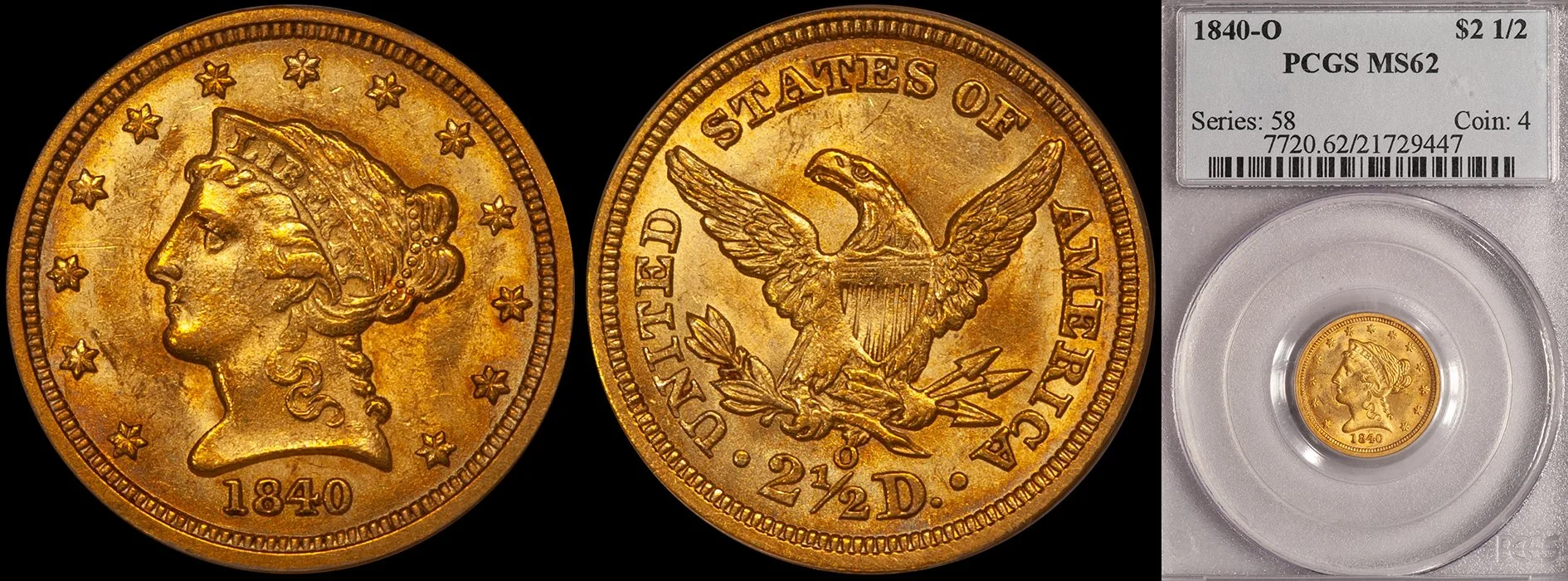
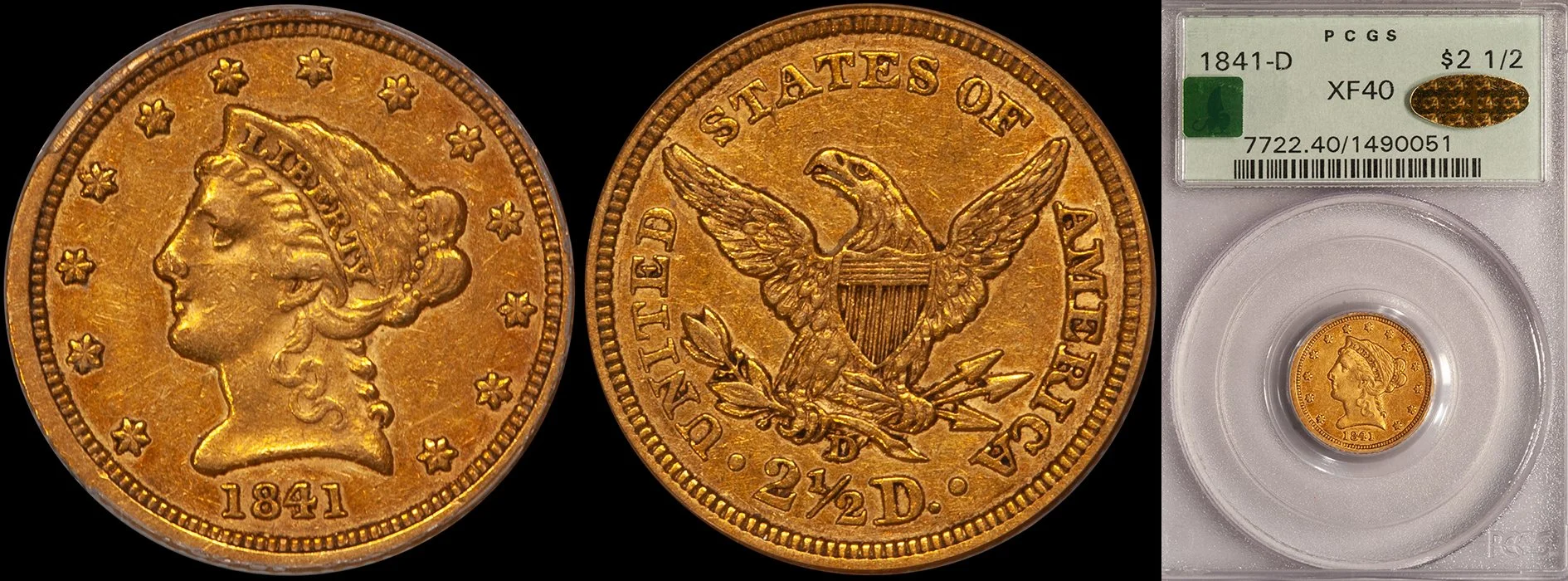
After the 1855-D and 1856-D quarter eagles, this trio is next in line for scarcity, filling out the top five.  Perhaps unfairly, I tend to group these together when considering them, but I see them with about the same frequency as one another, and there is a significant rise in availability of Dahlonega quarter eagles after this date.  In AU-55, these are $12,000-20,000 coins, which seem like a lot for a series that has as limited an audience as this one does.

DW: I don’t totally agree with RYK on this selection. If you are a date collector of Dahlonega quarter eagles, these are important issues (if you are a type collector, these issues, I realize, are meaningless). Something that’s hurt the reputation of the 1840-D, 1841-D and 1842-D quarter eagles is that there are a lot of lousy examples in third-party holders. In properly graded EF and better, all three are genuinely scarce and in AU55 or better they are very rare. Given the value levels in this series, I don’t think that any of the three are overvalued.

3.  So-Called Better Date Quarter Eagles After 1885

When one looks at the Redbook, there is a string of quarter eagles with very low mintages in the later years of the series. I think that these are often sold to collectors as better dates, but the auction records and the frequency with which these are sold do not support this. With the exception of the 1881 and the 1885, it's probably best to put away the books and consider these as generics.

DW: I agree but not with a lot of enthusiasm. The dates that Robert refers to are a classic example of Market Premium Factor. In a good market, an issue like the 1886 or 1894 gets a significant premium due to its low mintage and relatively small PCGS/NGC population figure(s). In a weaker market, this MPF tends to evaporate and a coin that once sold for a 10-30% premium becomes obtainable at levels closer to common date status. Given the fact that very few people collect late date Liberty Head quarter eagles by date, most of these probably do not merit a premium. In higher grades, however, certain of these are genuinely rare and I would be happy to buy all of RYK’s 1894 quarter eagles in MS64 or MS65 for common date prices!

4.  1911-D $2.50

The 1911-D quarter eagle is the most overrated and overpriced dated gold coin in the US series, bar none. I understand the argument that it is the key date of the most collectible gold series, but I have a very hard time believing that there are enough collectors of the series to support the obscene price of the fairly common issue. (I was going to add that it is the 09-S VDB Cent of U.S. gold coins, but I think that it would give this coin more credibility than it deserves.)

DW: Ouch! Do you have the feeling that Robert isn’t going to be inviting a 1911-D quarter eagle to the prom? But who am I to argue, given the fact that I’ve already accused the 1911-D of being one of the leading Faux Rarities in all of American Numismatics. This is clearly one key date that is priced too high and I would not be surprised to see its price plummet in the coming months. At least until the next time the Indian Head quarter eagle series gets (re)promoted...

5.  1857-S $3   I must admit that I was struggling to pick a selection from the $3 gold series, not because these coins are all undervalued, but because so few stand out from the pack. I chose this issue because I felt that the premium attached to this issue for being a branch mint issue seems out of proportion to its actual scarcity. Stated more succinctly, it's twice as common as the historic 1865 $3 (one of the keys to the series), yet sells for about the same price in AU-55. Look yourself at the population spreads and accompanying prices on the PCGS site, and you will see exactly what I mean.

DW: Here’s another issue which I am in partial agreement with the Good Doctor. (I’ve always wanted to write the expression “the Good Doctor” in a blog!) When you compare it to the 1865, the 1857-S is an overvalued issue but this isn’t totally fair because the 1865 is probably the most undervalued coin in the whole Three Dollar series. Just as with the 1840-D/1841-D/1842-D quarter eagles, the population figures for the 1857-S don’t tell the complete story. Most every 1857-S I see in AU55 is (cough, cough) “enthusiastically graded” and choice, crusty examples in EF45 and higher are awfully scarce. If I had to pick an overvalued issue in the Three Dollar series, I’d select the 1854-O or the 1885. But that’s another story. Or another blog.

6. 1879 Flowing Hair Stella $4   This is a coin that I dreamed of owning as a young collector and one that owes its popularity and high price to its capricious inclusion in the Redbook. There are four offered in the upcoming FUN sale, and I have long said that you can't swing a dead cat at a major show without hitting at least a couple of these. These days, $150,000 buys an ugly, much-too-bright  Stella. So much for my dream coin.

DW: The 1879 Flowing Hair Stella was one of my primary “faux rarities” in my infamous blog of a few months ago, so no one is going to be surprised when I say that I agree fully with RYK on this one. Prices on this issue are going to drop in the coming months and it will be interesting to see where they settle. Maybe RYK will be able to afford his “dream coin” after all!

 
7. 1842-C Small Date $5

I think that Doug has commented on this in the past, and as a devotee of the southern branch mint $5's, this issue always stood out to me as one that was more common than believed and consistently overpriced. When I was active in C and D $5's, the ones that were on the market seemed to stay on the market a very long time (or jump from auction to auction), so I think that the collector market agrees with me.

DW: I still regard this as a rare date. The problem with the 1842-C Small Date, however, is the fact that not everyone regards it as essential for “completeness” in the Charlotte half eagle series. Another problem is that Trends values are way too high for the 1842-C Small Date. This is compounded by the fact that many of the AU examples in third-party holders are pretty gnarly. As a value buyer, I’d still give strong consideration to a crisp, crusty EF example but I’d pass on an AU until levels come down.

8. 1860-D $5   For some reason, the price guides have always treated this Dahlonega $5 as a better date.  Doug ranks it #16 out of 26 Dahlonega $5's in overall scarcity (I rank it 17th), and it warrants no premium over the "common" Dahlonega $5 (i.e. 44-D, 45-D, 47-D, etc.). There is no logical reason why this coin is priced as a better date among Dahlonega half eagles.

DW: I can’t argue with this choice. This issue somehow started selling for a premium a few years ago despite the fact it is no rarer than the 1858-D or 1859-D. I’m not sure that I’d single it out as one of Baker’s Dozen most overvalued U.S. coins but I do think it should be priced as a common date.

9. 1799 $10   This is the most common 18th century U.S. gold coin with large numbers in PCGS and NGC holders and large numbers in lower tier holders and raw (or raw equivalent). They are big and beautiful coins, but they are everywhere. $30,000 for an AU-55 seems like a lot of money when a considerably more scarce 1799 $5 is about half the price in the same grade.

DW: I strongly agree with this choice despite the fact that I really like everything about the 1799 (except its current market valuation). I can remember not so long ago when a nice fresh AU 1799 eagle was an easy coin to find at $13,000-15,000. Today, they are double this amount and the typical coin is apt to be processed and unappealing. If you really want to own a 1799 eagle (and I think a nice early ten is an integral part to any potential collection of U.S. gold) I’d probably wait a while and see if prices retreat back to the levels of five-seven years ago.

10. 1851-O and 1852-O $20   Several years ago, I thought these were really good values, when they could be purchased for a small premium over the majority of the Philadelphia Type I $20's. At $5,000 or so for an AU-50, when a more scarce Philly issue like an 1855 sells for about one-third of the price and a considerably more historic and scarce 54-S sells for about $3,000, the value of these two is no longer apparent.

DW: I have mixed feelings on this choice. Having very much helped to create the market for Type One New Orleans double eagles, I am pretty stunned to see nothing-special examples of the 1851-O and 1852-O selling for $5,000-10,000. This does seem like a lot of money for nothing all that special. In the defense of these two dates, remember that they are the most available double eagles from this popular mint and there is very strong collector demand for said coins. But I do agree with Robert that your $3,000 is better spent on a nice 1855.

11. High Relief Saint   The High Relief Saint is arguably the most beautiful U.S. coin (gold or otherwise) ever struck by the U.S. Mint. One can also make the argument that based on its availability that it is significantly overpriced. I would love to own one but not at these levels.

DW: Agreed. Next....

12. Hoarded 1920's Branch Mint Saints   I was discussing the possible auction purchase of a 1920's branch mint Saint with a wise coin dealer (who happens to be a specialist in rare date gold) when he turned  to me and said, "You have to be careful with these hoard dates—the ones from the 1920's that are being slowly released into the market."  He then rattled off a few of these dates. Sure enough, when one tracks the auction records for these, there appear to be several dates undergoing quiet distribution at prices that are not supported by their level of availability.

DW: I’m going to waffle a bit on my answer to this one, even though I am (I think...) the supposedly wise coin dealer who made the comment cited above. I do think you have to be careful buying many of the mintmarked Saints from the 1920’s. You have to be careful for three reasons. The first is that some dates do exist in hoard quantity and it’s important to pay careful attention to the PCGS/NGC population figures. Secondly, the quality of these coins is all over the map. I’ve seen 1926-S double eagles in MS65 holders that were true Gems and I’ve seen 1926-S double eagles in MS65 holders that I wouldn’t break out of an MS64 holder. Unless you are an expert grader, you need to work with an expert in this area. Finally, the market for dated Saints can change quickly based on the number of active collectors. What seems undervalued today can seem overvalued in a few months (and vice-versa) if the market loses (or gains) participants in the high-end arena.


Bonus:  Anything Overgraded, Especially XF coins, dipped and in AU Holders   It goes without saying that processed and/or overgraded coins are generally not a good buy, especially when they are premium priced. That said, I am going to be a bit of a contrarian. There may be opportunities that arise when the collector can recognize the overgraded coin and pay the appropriate price while others simply pass because the coin is overgraded. One of my best acquisitions was made precisely under these circumstances.

DW: I disagree with Robert here that “opportunities may arise” when it comes to buying overgraded coins and paying the appropriate price. I’m not sure why you’d ever want to buy an overgraded coin. But if a dealer will sell you an EF45 in an AU50 holder for an EF45 price, then I guess this makes sense (huh??)

Bonus II: Many Shipwreck Coins, Especially 1857-S SSCA $20's   For the sake of this discussion, let's limit our focus to the Brother Jonathon, the S.S. Central America, and the S.S. Republic coins. I am a big fan of shipwreck gold coins—I love the history, the exploration, the retrieval, and the science of conservation. I think that there is nothing more fascinating than holding a coin in your hand that sank to the bottom of the ocean in a storm 150 years ago, was found buried in sand in deep water 145 years later, and conserved to look like it did the day it left the Mint. However, the shipwreck premium, in many cases, is well beyond reason. I will concede that for some better dates, there is some logic to the shipwreck premium, but certainly not for the 1857-S $20 from the S.S. Central America. These are readily available in quantity in any major auction or coin show.

DW: In theory, Robert is right. What he doesn’t realize is that there are a number of large retailers who can sell the heck out of these shipwreck coins and that the demand is generally well in tune with the supply. While I agree with Robert that the price levels seem out-of-whack with the populations, what he needs to realize is that these shipwreck coins are, in a way, a distinct “mini-market” within the broader market. The history and neatness factor of these shipwreck double eagles makes them unfair to compare with other, less active segments of the coin market.

So there you have it: the Numismatic Dan Ackroyd and Jane Curtin of this generation (for those of you too young to get this reference, look it up online) have, I hope, given you plenty of numismagrist to chew on this holiday season.

An Amazing Gem 1869 Half Eagle

If you are a regular reader of my blogs, it’s a pretty safe assumption that you are interested in United States gold coins. And if you like U.S.gold, I don’t think I’m going too far out on a limb to state that you probably like to see photos of and read about special pieces. Well, I’ve got the skinny on one of the more amazing 19th century issues I’ve seen in some time; a one-of-a-kind coin that recently passed through the portals of Douglas Winter Numismatics. The coin in question, shown below, is an 1869 half eagle that has been graded MS64* by NGC. I’m going to start out by giving you some background about this issue, then about the specific coin and, finally, some thoughts as to how and why this remarkable coin exists.

I think the 1869 half eagle can best be described in two words: “forgotten rarity.” There were a scant 1,760 business strikes produced of which perhaps as many as four dozen are known. This issue is generally seen in the EF grades and it is rare in properly graded AU50 or better. I believe that there are around a dozen known in AU. PCGS has graded a total of thirty-three with the finest a single coin in AU58; NGC has graded a total of thirty-five with two different coins in Uncirculated: the present example and another, which grades MS64PL.

The present example was first offered at auction in the October 1999 Bass II sale where it brought $33,350 as Lot 1166. At the time, it was housed in a PCGS MS64 holder and according to my notes in the original catalog I called the coin “amazing!” Harry Bass had purchased the coin via private treaty from a source identified in the catalog as N.K.S. on June 8, 1971. He had kept his ownership of it a secret as it was unknown to both Breen and Akers when they wrote their books on, respectively, United States coins and half eagles.

The Bass 1869 half eagle next appeared for sale as Heritage 5/00: 7668 in an NGC MS64 holder where it brought $22,425. After this, it was sold into the Ashland City collection where it remained until it was offered as Heritage 1/03: 4815 (still in an NGC MS64 holder) realizing $28,750. I recently resubmitted the coin to NGC where it was given a star designation because of its exceptional eye appeal. I also had NGC delete the Ashland City pedigree and reinstate the Bass pedigree as I felt it was far more appropriate to a coin of this stature.

If you study the photo above, you will note that the quality shown by this 1869 half eagle is quite amazing. The surfaces are mostly prooflike with more than enough frost to clearly indicate that this piece was made for commercial usage. It is extremely well struck and attractively toned in light orange-gold hues. A few small scuffs can be seen in the left obverse field with the primary identifying mark being a tiny mint-made strike-through near the southeastern point of star four.

How does such a remarkable 1869 half eagle exist? There were no date collectors of business strike half eagles in 1869 and any well-heeled collector of this denomination in the 19th century would have preferred a Proof to a business strike. My theory is as follows.

Every year, the Assay Commission met in Philadelphia to examine a group of current coins to determine whether or not they conformed to legal requirements. Although I can’t prove this for a fact, my belief is that, from time to time, someone on the Assay Commission (of which there were approximately two dozen members) saw an interesting coin and decided to “keep it” as a souvenir. I am assuming that if a commissioner chose to, he could trade an older “used” half eagle for a brand new one. There are a small number of gold coins from the 1860’s and 1870’s that are just so much nicer than any other example from this date/denomination that it seems highly possible that they originate from the Assay Commission.

There is another possibility, although it is not as glamorous as the one posited above. It is possible that this 1869 half eagle might have somehow been “put away” by a Philadelphia area collector or non-collector in 1869 and through random chance been passed down through generations without having been melted, sold, cleaned or lost. I have handled spectacular gold coins that have been rediscovered by a family member after fifty or a hundred years and I know that these things happen from time to time.

The Bass 1869 half eagle is a beautiful and fascinating coin that deserves more attention than it has received in the past. I know that collecting Philadelphia half eagles by date is not “fashionable” but it seems hard to believe that this coin is worth about the same as a High Relief double eagle in the same grade range despite the latter coin being dirt common in comparison.

Is Collecting by Date a Thing of the Past?

Is the age of collecting by date or variety over? Have coins become so expensive and collecting so complex that it is inevitable that new collectors will focus solely on type coins? As a dealer who sells rare gold coins to both highly specialized date collectors and to sophisticated type collectors I think numismatics is definitely going through a change but that collecting by date remains (and will continue to be) very popular with a certain type of individual. To collect a series or a mint by date requires a type of mindset. I think of date collectors as being more patient than type collectors and probably a bit more research-oriented. To a generalized, type-oriented collector, there is no difference between an 1848-D and an 1858-D half eagle. To the date collector, there is a significant amount of difference between these two coins; be it strike, appearance, coloration, etc.

I don’t think there is a “right” or a “wrong” way to collect. I admire the highly specialized date collector who takes years to assemble a set of Charlotte half eagles or Liberty Head eagles. During the process, he is probably learning more about the specific series that he is collecting than most dealers. He “gets” the difference between the 1848-D half eagle and the 1858-D half eagle and does not have to have it explained to him.

But I can absolutely see the reason to collect by type as well. Not everyone has the patience to assemble a long set of coins and most series have one or two (or more) stoppers that make completing a set impossible. And there is clearly something cool about the fact that a type collector buys something different every time he makes a purchase. Anyone can tell the difference between an 1838 Classic Head half eagle and a 1910 Indian Head half eagle; most people see an 1848-D and 1858-D half eagle and they see essentially the same coin(s).

To the coin market gurus who emphatically state that collecting by date or variety is a dying endeavor, I would answer that this is not the case. To refute this, one need only look at the fact that in this golden era of numismatic publishing, there continues to be a run of titles that deal with specific series but virtually none that deal with type collecting. In the area of gold coins, in the last few years we’ve seen titles about gold dollars, 20th century issues, three dollar pieces, Charlotte and New Orleans issues, etc.

Not only is collecting by series alive and well, specialization seems to be doing just fine, thanks. In the recent Bowers and Merena Baltimore auction, the seventh known example of the 1795 Liberty Cap with Reeded Edge Cent brought an astonishing $402,500. What’s even more incredible about this figure is the fact that the coin is only graded Good-4 by PCGS and it clearly isn’t going to win any beauty contests. However, it is an extremely rare variety in an extremely popular series (early Large Cents by Sheldon variety). As we all know, it just takes two to tango and if two well-heeled collectors decide to butt heads on a coin that they know they might not get another chance to own, the final price realized is often jaw-dropping. Weak economy or not, many highly specialized collector series remain as strong as ever.

What does the future hold for date collecting? I see a few possible scenarios.

There are some series that are so long and so challenging that they will never attract more than a handful of date collectors. As an example, Liberty Head eagles are so tough that it is hard to imagine more than three to five people at one time competing against each other to form a set. But, on the flip side, when you have as many rare dates as the Liberty Head eagle series does, a sudden onslaught of demand would be untenable.

Other series that were once popular to collect by date are likely to become less popular due to the vicissitudes of taste. A century ago, virtually no one knew what a branch mint gold coin was, let alone collected them; today these are more popular than issues from Philadelphia. What is popular today could become forgotten a generation or two from now.

If well-written reference books on a formerly-overlooked series are released, date collecting can gain appeal. I’d like to think that the publication of my New Orleans gold coin book in 2006 spurred a number of people to collect by date. Newly released books on Colonials/Early American coins and Peace Dollars could have a huge impact in these two markets as well.

Something that we are likely to see in the future is a hybridization of collecting tastes. I wouldn’t be surprised if date and type collecting become more finely synthesized. As an example, someone might decide he doesn’t want to collect a full date set of Charlotte half eagles. But he likes the series enough that he wants to do more than collect the three types. He might become an “advanced dabbler” who doesn’t feel compelled to complete the series but who decides to own five or six or even seven different dates because he feels that Charlotte half eagles are really interesting.

One thing we are destined to see in many series if prices go down is the shrinking of the Market Premium Factor. In series that are not terribly popular, coins that formerly sold for a 10-30% premium over a common date are likely to lose this premium and retract down to a common type coin level. We are already seeing this in some of the 20th century series and I wouldn’t be totally shocked to see this in the early gold and Liberty Head gold markets.

Another point to address: how will key dates fair in series that become less popular with date collectors? The answer depends on whether or not there are multiple levels of demand for this coin. As an example, the 1873 three dollar gold piece is a key date but if the three dollar series becomes less popular, its level of demand will shrink. The 1854-D three dollar is likely to lose less value in a declining market because there are a broader range of collectors who want this coin: not only specialists in the series, but Dahlonega collectors and one-year type collectors as well.

The 1884 Three Dollar Gold Piece

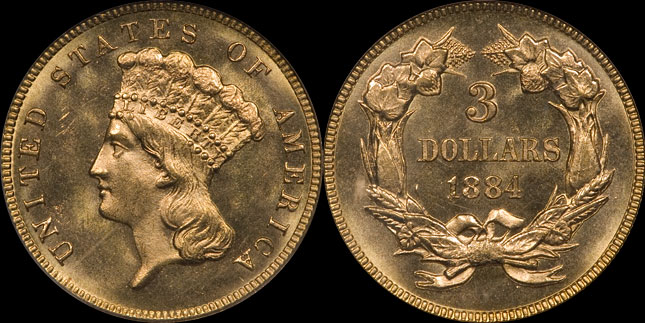
One of the things that’s fun about being a coin dealer is the variety of interesting numismatic items that come across your desk. Just yesterday, within the span of an hour, I handled a cleaned Extremely Fine High Relief double eagle, an interesting group of Dahlonega quarter eagles, a rare date Seated Liberty quarter dollar and what I believe is among the finest known 1884 Three Dollar gold pieces. I have liked this date for many years and as recently as a few days ago, I listed it as one of my 12 Great Values in the Market Priced at Under $5,000 in my December 2008 featured article. But handling this superb 1884 Three Dollar gold piece, graded MS66 by PCGS, gave me the motivation to write about this date in greater detail.

There were just 1,000 business strikes produced and these were not made until December 13th. This very late date of issuance leads me to believe that there was essentially no demand for this denomination at this point other than for examples to be given as Christmas presents or to sell to collectors. And this belief is borne out by the fact that very few 1884 Three Dollar gold pieces are known in circulated grades. As of December 2008, PCGS had graded 92 examples of which 83 (or a whopping 90%) were in Uncirculated.

As with most of the later date Three Dollar gold pieces, the 1884 is a very well produced issue. The strike is typically very sharp with complete definition noted on the hair, the wreath and the denticles. A few show some minor weakness on the curls just to the left of Liberty’s ear. The surfaces are generally clean although the examples that grade MS63 and below tend to show light handling marks or hairlines from previous cleanings. The luster varies from Prooflike to very frosty. The coloration on uncleaned, original coins is often quite attractive with a range of hues seen: light rose, green-gold and orange-gold. This date generally has good eye appeal and there are some truly handsome examples known.

While available from time to time in MS63 and MS64, the 1884 becomes a rarity in Gem. PCGS has currently graded five in MS65 and two in MS66. NGC has graded four in MS65 and three in MS67. I am pretty certain that the NGC numbers are inflated by resubmissions. I do know for a fact that at least one coin exists in MS67 as I handled it a few years ago and sold it to a collector in South Texas. The other PCGS MS66 resides in the Great Lakes collection, which is the finest set of high grade Three Dollar gold pieces ever assembled.

The 1884 Three Dollar imaged above is one of the single most aesthetically attractive examples of this type that I have handled in many years. Unlike many of the high grade Threes that have thick, creamy luster (as seen on dates like the 1878 and 1888), this piece has a shimmering texture that can best be described as a blend between frosty and semi-prooflike. The coin has exquisite delicate green-gold and rose color and the surfaces approach perfection. The dealer who sent me this piece told me that it, literally, came “out of nowhere” and this is the first time it has ever been photographed or described.

One last thing before I close. How many 1884 Threes are known? In my book on this series (written with Q. David Bowers and published in 2005) I estimated that 55-75 were known in Uncirculated as well as another 25-35 in circulated grades for a total of around 80-110. I believe that this figure is a bit on the low side and I’ve recently revised my estimate upwards to 125-150. As I stated above, most are in the lower Uncirculated grades. The PCGS population in MS64 is highly inflated byresubmissions and properly graded examples in MS63 and above are quite rare. I would seriously doubt if there are more than five to seven Gems.

The Great RYK/DWN Mashup: Robert Kanterman’s Twelve Undervalued Gold Coins Priced Below $5,000

At the end of my last blog I said that I’d like to hear from collectors about which coins they believe qualify as undervalued sub-$5,000 U.S. gold coins. Robert Kanterman responded with this thoughtful list and I thought I’d publish it along with my comments (which are in italics at the end of each of his paragraphs). Without further ado, take it away RYK... Doug Winter has challenged me to identify 12 gold coins that are under $5,000 that are relatively good values. As a hobbyist, I am not nearly as knowledgeable and up-to-date in pricing, availability, and recent transactions, as Doug is. Most of my information is from sources like Heritage's auction archives, Coin Values, and the PCGS price guide and population reports. Each of these resources has its inherent flaws and weaknesses, yet each represents a sizable block of information, as well. I will also add that as a collector, I am often willing to dip down in grade level to a point that is lower than Doug typically does. This allows me access to some rare coins that I might otherwise not be able to afford. I would also stress that my selections below all are for coins that are original and attractive for the grade. On this website, that goes without saying.

1. 1854-S Gold Dollar in MS-62

I am always attracted to better date coins that have a historic or numismatic significance. The 1854-S dollar is important as it is the first year of operation of the San Francisco Mint, and it is the only SF mint gold coin that can be purchased in MS for under $5,000, with an MS-62 running in the $3,000-4000 range. This is definitely an issue that flies under the radar screen.

DW Comment: Nice choice. I had actually considered this for my list. This is a historically significant issue with a high “neatness” factor. I think a properly MS62 at $3,500-4,000 is a wonderful value. Just as an aside, I think all of the SF gold dollars are exceedingly good values and I have written previous articles on them which detail each issue.

2. 1857-D, 1858-D, or 1859-D Gold Dollar in AU-50 to 55

The combined mintage of these three issues is about 12,000 coins--yes, I said combined--and they can be had in AU-50 for $4,000 or less and a little more for choice AU. These are all charming, scarce, and historic. Within four years of the earliest of the trio, the Dahlonega Mint was overrun by the Confederates, who struck the gold dollars for the last and most famous issue of the series--the 1861-D. Of the three, the 1858-D gold dollar typically comes with the best strike.

DW Comment: Having owned dozens and dozens of each of these three dates I tend to overlook them but I think RYK has raised a good point. All three are scarce in the true meaning of the word. If I were able to choose just one date out of the trio, I would pick the 1857-D as I think it is considerably scarcer than the 1858-D and 1859-D. A caveat: many of the AU50 examples I see in holders are poor quality, so be patient and wait for the right example to come along.

3. 1839-C and 1839-D Quarter Eagles in XF-40+

I do not see much value in the classic head series, in general, but compared to the rest, the branch mint issues from Charlotte and Dahlonega seem to still have some value. Neither is especially rare, but with MS graded coins pushing into the high five figures, a dirty, original mid-circulated grade coin for $5,000, give or take a few, in a very popular series, seems like a pretty fair deal.

DW Comment: Nice choice, RYK. Even though properly graded EF examples of these two dates have probably doubled in price in the last few years, they are still good overall value. I’m not certain I would call them “undervalued” but the important thing to remember is that coins like this are in great demand and many collectors can’t afford the higher grade pieces that seem so readily available. I would personally choose the 1839-D over the 1839-C if I had to buy just one.

4. 1881 Quarter Eagle in AU-55

I hope I do not get bounced for saying this here, but after 1865 or so and with the exception of the 1875, the Liberty coronet $2.50 series becomes a long, boring series with few coins of interest to all but the diehards of the series. 641. What's that number? That's the original mintage of the 1881 quarter eagle for circulation strikes. If I were going to own one late date coronet quarter eagle, this would be the one.

DW Comment: At first I was going to heartily disagree with this choice but the more I got to thinking about it, the more I realized that at $3,500-4,000 for an AU50, this date is pretty good value after all. I do disagree with RYK that the post-1865 quarter eagles are a “long, boring series...” but you don’t expect me to agree with everything he says, do you?

5. 1864 Three Dollar in AU-55 or 58

The Civil War dates in many series are becoming the focus of collectors, and this is no exception for the $3 gold series. The 1865 $3 gets all of the credit for being low mintage (1,140), low pop, and one of the handful or so better dates of the entire series. The 1864 $3, however, has a mintage of 2,630, with a survivorship of a little under twice that of the 1865 and a price tag less than half of the 1865. Additionally, there is no apparent premium when compared to the higher mintage and more common 1861 through 1863 $3's. By all metrics, it is the best value among Civil war date $3's.

DW Comment: This is a really good choice. I probably see three 1861, 1862 or 1863 three dollar gold pieces for every 1864 despite the fact that the latter gets very little price premium in circulated grades. You have to like the history of any gold coin dated 1864 and most Philadelphia coins from this year were extensively melted.

6. Bust Right (or Bust Left) Early Half Eagles in XF-40

This is a personal favorite and may not be right for all collectors, but there is recent auction data to back this selection up. When AU coins are regularly selling for nearly $10,000, a nice original, piece with a bit more circulation in the $5,000-6,000 range seems like a better buy.

DW Comment: I love this choice except for one problem. Finding a crusty, original EF bust right or bust left half eagle is going to be a real chore as most of the real EF45 coins are now in AU50 or AU53 holders. When I do see EF examples they tend to be net graded AU’s—in other words, they have the details of an AU50 but have been cleaned at one time. That said, I agree with RYK that a crusty, attractive EF45 at $6,000 makes more sense for most collectors than a marginal, bright AU55 at $10,000.

7. Dahlonega Half Eagle Varieties in XF or AU

There are a number of scarce, easily recognizable varieties of Dahlonega half eagles (1840-D Small D, 1843-D Small D, 1848-D D/D, etc.) which can be purchased for little and often no premium to the more common variety. The grading services and astute collectors are only starting to recognize them, but they are well-documented and described in Doug's book, “Gold Coins of the Dahlonega Mint.” Instead of buying the common example for the date in which 150 pieces are known, it makes sense to seek the one in which only 15 or so are known.

DW Comment: On this choice, I believe that RYK was “overthinking.” While I love the concept of buying a very rare die variety for little or no premium over a common one, the problem with these is that only a handful of collectors care. The 1840-D Small D half eagle is, as an example, a truly rare coin but I doubt if more than half a dozen collectors would pay a premium for it. My feeling is that the collector should learn these varieties and try to cherrypick them if possible but that there are just a small handful of Dahlonega half eagle varieties (most notably the 1848-D/D) that (currently) merit a premium.

8. Pedigreed Coins Better Date Gold Coins Under $5,000

I am a big fan of pedigreed coins, and I know that Doug is, as well. When I talk about pedigreed coins, I am generally speaking of the Big Three (Eliasberg, Garrett, and Norweb), but for rare date gold, there are others of significance, including Bass, Milas, Dallas Bank, to name a few. I am not talking about hoards like Wells Fargo, shipwreck coins (because they tend to be overpriced), or dubious pedigrees like Rainy Day. Often, the best way to buy pedigreed coins is to rediscover them yourself. Failing this, dealers like Doug Winter will often sell these with little or no price premium. I have found that while I enjoy owning them, selling them is usually painless as there seems to be quite a few collectors out there who also desire these. I make sure that I do not compromise my standards for quality for the grade and still seek good value.

DW Comment: I love this choice but would change the Big Three to the Big Four as I consider the Bass pedigree to be every bit as important as Eliasberg, Garrett or Norweb. RYK makes a great point when he suggests that the best way to find coins from these sales is to do some leg work. If you collect quarter eagles, make sure you own all of the major quarter eagle sales. If a coin has a distinguishing mark it may be reasonably easy to pedigree it.

9. 1870-CC Half Eagle Up To VF-20

Here is a coin that Doug Winter would not typically purchase for inventory, but I think is good value for the money. 1870 was the first year of the Carson City Mint and the 1870 gold issues are all the rarest in their respective series. The 1870-CC $5 is the most common of the three gold denominations and the only one that can be purchased in any form that resembles a coin for under $10,000. VF-25's have recently sold publicly for $6,000 or so, so it might require a drop in grade to F-15 or VF-20 to acquire this popular, historic, and legitimately scarce coin.

DW Comment: Actually RYK is wrong about me not typically buying a nice VF 1870-CC half eagle (or eagle or double eagle, for that matter...) for my inventory. I have actually owned three or four 1870-CC half eagles in lower grades and have always found them to be popular and readily liquid. On a rare, historically significant issue like the 1870-CC, I know I am willing to compromise my standards a bit. This would be a great addition to any collection.

10. 1838 Eagle in VF

Here's another coin that might be a bit lower in grade than what Doug might purchase for inventory, but when you consider that these coins actually did circulate (like the 1870-CC $5), it make sense to buy one that did circulate. This is a legitimately scarce, first year of issue, with a somewhat different design from the rest of the long series, and the first eagle struck for circulation in 35 years. A crusty, older holder example sold earlier this year in VF-25 for $4,000, which seems like a pretty good deal to me.

DW Comment: I wasn’t planning on including this issue in Part Two of my article but I like this choice. I am generally a big fan of first-year-of-issue coins, especially if they are genuinely scarce like the 1838 eagle. I would warn the potential buyer of this issue that Trends and CDN Bid tend to be unrealistically low in all grades and there are not many that can be bought in the sub-$5,000 range.

11. Any With Motto 1860's Eagles (except 1868-P) in XF-40 Through AU-50

The Liberty $10 series is chock full of scarce dates that fall below the radar screen of most collectors, even those who are active in rare date gold. From 1866 through 1869, there are multiple legitimately scarce dates that can be had in XF to low AU for under $5,000, but they do not come available very often. Omit the 1868 Philadelphia issue, as it is the most common of the group.

DW Comment: I couldn’t agree more with this choice although I might not necessarily single out the 1868 as the one “do not buy” coin from this era. These dates all have low mintages and low survival rates. They tend to be extremely expensive in AU and higher grades bit are surprisingly affordable in VF and EF.

12. 1850 Double Eagle in AU

I generally have difficulty finding good value in the $20 gold series (Liberty and Saints). I chose the 1850 $20 among the 1850's Philadelphia issues because it is the first year of issue, and it often comes nice. If you like the value in this one, you would probably like the some of the other 1850's Philadelphia $20's because they are even less expensive. Big pieces of 150+ year old gold are impressive now and will remain so for the foreseeable future.

DW Comment: I’m going to disagree with RYK on this one. At one time, I was a huge advocate of this date and I even included it in an article I wrote about “A Dozen Cool U.S. Coins” a number of years ago. But that was before prices shot up and population figures in AU soared. While this date has the cachet of being the first collectible double eagle, I think dates like the 1855, 1856, 1857 and 1858 in nice AU55 to AU58 are much better values than the 1850.

I’d like to give a shout-out to Robert Kanterman for his exceptional list of undervalued coins and I hope I haven’t embarrassed him to the point that he’ll never participate in the new interactive raregoldcoins.com blog again. So, who is next??

12 Great Values in the Rare Date Gold Market Priced Below $5,000 Part One: Gold Dollars Through Half Eagles

In this economy, everyone likes a good value. If you don’t have the discretionary funds for coins now that you had a year ago, every last dollar counts. This brings us to the question at hand. Are there good values in the rare gold market in the $5,000 and under price range? And if so, what are they? This article is focused on twelve of the better values that come to mind in the gold dollar through half eagle denominations. I think there are dozens of other pieces that could be added to this list. Part Two of this article, which will appear on my website in January 2009, will cover the eagle and double eagle denominations and will focus on another dozen undervalued issues in the $5,000 and under range.


1. 1865 Gold Dollar

For many years my favorite “sleeper” date in the Gold Dollar series was the 1863. After a long period of neglect, the 1863 has been discovered and it now sells for levels well in excess of current Trends. But there are other Civil War era gold dollars that remain in the budget of the typical collector. My personal favorite is the 1865 which has an original mintage figure of just 3,700 business strikes. Unlike the low mintage gold dollars from the 1880’s, the 1865 was not hoarded and it is unlikely that more than 100-125 are known. Interestingly, the 1865 is almost never seen in lower grades so the range that the collector with a moderate budget should be searching for is MS61 to MS62. In the Bowers and Merena 9/08 auction, an attractive PCGS MS62 1865 gold dollar brought a very reasonable $2,760 and I know of a small number of others in this grade that have sold privately in the $2,500-3,000 range.

To me, this coin is desirable on a number of levels. It is a Civil War issue which gives it historic significance and it is better produced than some of the other gold dollars of this date. It has a low original mintage as well as a modest survival rate. As of December 2008, PCGS has still recorded just forty-four in all grades.

2. 1884 Gold Dollar (MS 64 and above)

I have always thought that with some creative marketing, the gold dollars produced from 1876 through 1889 could be sold as a “short set” akin to the similarly-themed Walking Liberty half dollars of 1941-1947. In this fourteen coin run, the 1884 has always been an issue that I have found to be much undervalued. It is traditionally regarded to be a common date and it seldom gets any sort of premium over the readily available issues such as the 1881, 1883 and 1887-1889. However, it is considerably scarcer and Gems are actually quite rare. The most recent PCGS population figures show forty graded in MS64, twenty-five in MS65 and another thirty-four higher but I believe these figures are inflated by resubmissions.

At current price levels, I like most all gold dollars in MS64 and above but the 1884 seems really reasonable. The patient collector should be able to buy an MS64 in the $1,100-1,300 range and a very nice MS65 for $2,250-2,500.

3. Accurately Graded PR63 Gold Dollars

Most Proof gold is priced well beyond the collector of average means. Generally speaking, if you have a budget of $5,000 or so, you don’t get to play in this market. But there is one exception. Many of the Type Three gold dollars have CDN Bids in PR63 in the $3,900-4,700 range. These are coins that have mintage figures that are often below 100 and even the “common” Proofs struck from 1884 to 1889 have fewer than 100-150 survivors despite comparatively high original mintages in the 1,000-1,700 range.

There are a few caveats that must be thrown in before you run out and try to buy up all the PR63 Type Three gold dollars you can find at CDN Bid. The very low mintage dates from the 1860’s and 1870’s with Bids in the $4,000-5,000 range are basically impossible to find at these prices. It is more likely that the collector with $4,000-5,000 to spend will have to focus on a more available date from the 1883-1889 range. Still, these coins offer a lot of bang for your coin buying buck; especially if you can locate a PR63 with reasonably good overall eye appeal.

4. 1837 Classic Head Quarter Eagle

Classic Head quarter eagles have grown immensely in popularity in the last few years. And with good reason. They are a short-lived, completable set that includes a number of interesting branch mint issues and they form an interesting bridge between “old gold” and the more modern Liberty Head design that was employed all the way up to 1907. Among the Philadelphia issues, I have always had a soft spot for the 1839 but the rarity of this date has become fairly well-known. But the 1837 remains undervalued.

A quick perusal of the PCGS population figures will show that the 1837 is about three times as scarce as the 1834 and 1836 Script 8. If I were going to purchase a single Classic Head quarter eagle for type purposes, I would strongly consider an 1837 and pay the 25%+ premium that this date carries. I would personally be looking for an MS62 as a type coin and if I were specializing in the Classic Head series I’d probably look for a nice AU58.

5. 1842 Quarter Eagle

I wanted to avoid the “needle in the haystack” sort of coins that always drive me crazy when I read other articles of this sort. But I love this date and am still amazed that it is possible that the collector with a budget of less than $5,000 can purchase a very presentable example. In September 2008, I wrote an article about the ten rarest Liberty Head quarter eagles and the 1842 made it onto the list at #10. There isn’t another Top Ten date in this series that is as affordable as the 1842.

Only 2,823 examples were struck and I estimate that between four and five dozen are known. For the collector on a $5,000 or lower budget, I would suggest either an EF40 or an EF45. The former is currently valued at $3,500-4,000 while the latter is worth $5,000-6,000. The only example to sell in recent memory was Heritage 1/08: 3826 (graded EF45 by PCGS) that sold for $4,888; a remarkable value, in my opinion.

6. Uncirculated 1870 Quarter Eagle

There is probably no other 19th century gold series that offers as much value for the collector with a $5,000 or lower budget than Liberty Head quarter eagles. An especially fertile era in the quarter eagle series is the Reconstruction period of 1866-1874. Mintages during this era tend to be very low (in the case of Philadelphia issues, often less than 5,000) and survival rates for higher grade pieces tend to be even lower.

The 1870 is a vastly overlooked issue with an original mintage of just 4,520. There are an estimated 150-200 known but this date is generally seen in EF40 to AU50 and it becomes very scarce in the higher AU grades. In Uncirculated, the 1870 is genuinely rare with an estimated six or seven known. PCGS has only graded three in Uncirculated (MS61, MS62 and MS65). Despite the obvious rarity of this coin, I have sold two Uncirculated pieces in the last year (an NGC MS62 and a PCGS MS61) for less than $7,000 and even though this is a bit of a budget buster for the collector with $5,000 per coin to spend, I believe that this is an issue worth stretching on.

7. 1914 Quarter Eagle, MS63

When it comes to value, I’m not generally a big fan of the Indian Head quarter eagle series. However, I have always liked the 1914 as a date and I think that a solid, high end example in MS63 is a comparatively good value in this series. Here’s my logic. The key date of the series is the 1911-D. The current PCGS population of this date is 321 in MS63 with 331 graded higher. The 1914 has a population of 432 in MS63 with 320 higher. In my experience, the 1914 is not all that different in rarity from the 1911-D until you get up to the MS65 level. The big difference is price. The current CDN Bid for an MS63 1914 is $4,100 while the 1911-D is Bid at $17,500. When it comes to these two dates, I’m of the belief that the 1914 is undervalued and the 1911-D is overvalued. At current levels, I like the 1914 quite a bit.

Assuming that the Indian Head quarter eagle series stays popular with date collectors, there will be a decent level of demand for the 1914. It is, after all, the second scarcest date in the series and it does have recognition as a semi-key. In my experience it can be harder to find an MS63 1914 than a 1911-D (sometimes it seems that there are 1911-D quarter eagles around everywhere you look!).

8. 1884 Three Dollar Gold Piece

This is another date that I’ve touted for many years. It tends not to get the recognition that the 1881 or 1885 get because those two issues have mintages below 1,000 but the 1884 is comparable to the 1881 in terms of overall rarity and it is far rarer than the 1885 in all grades. There were exactly 1,000 business strike 1884 Three Dollar gold pieces produced and an estimated 150-200 are known, mostly in the lower to medium Uncirculated grades.

This is an issue that did not freely circulate and there are just a few dozen extant in circulated grades. Despite this fact, Trends is just $5,000 in AU55 and I have sold very presentable examples in this grade in the $4,000-4,500 range and AU58’s for $5,000-5,500.

9. 1838-C Half Eagle, Choice XF

I wasn’t going to include any Charlotte coins on this list because, quite honestly, I wasn’t sure how many sub-$5,000 pieces I truly consider to be good value. But the more I thought about it, the more I realized that the 1838-C is an issue that really has everything going for it. Numismatic significance? Check—it’s a first-year-of-issue and a one-year type. Collector demand? Certainly—every time I list one on my website, it sells within a few days. Scarcity? While I wouldn’t call this issue rare from the standpoint of total known, it is very hard to find a nice Extremely Fine with good eye appeal.

While prices have climbed quite a bit for nice EF 1838-C half eagles, I think this is another issue that merits a stretch by our hypothetical $5,000 per coin collector. A properly graded, attractive EF40 can still be had for $5,000 or so although such coins are becoming more and more difficult to find.

10. 1847-O Half Eagle, Choice XF

I’ve been raving about the value of this date for years and still the 1847-O half eagle doesn’t command the respect it deserves. Even though it is part of a relatively popular series (No Motto New Orleans half eagles) and it is clearly the key issue in this set, it is still priced at a fraction of the less rare key date branch mint issues from Charlotte and Dahlonega. As an example, let’s compare the 1847-O to the 1842-C Small Date and the 1842-D; the keys from the Charlotte and Dahlonega mints, respectively. The 1847-O has a PCGS population of thirty-two in all grades and a Trends value of $7,000 in EF40. The 1842-C Small Date has a PCGS population of thirty-eight in all grades and an EF40 Trends value of $25,000. The 1842-D Large Date has a PCGS population of sixty-nine in all grades and it Trends for $7,000 in EF40.

It is still possible to buy a nice EF40 example of this date in the $4,500-5,500 range and if the collector is willing to stretch a bit (a well-deserved stretch, in my opinion...) he may be able to find an EF45 for $6,000-7,000. Given the rarity, popularity and upside potential of such a coin, I would give it my strongest recommendation.

11. 1892-O Half Eagle

Here’s another date that I’ve been foaming at the mouth about for years. People have finally caught on to the fact that the 1892-O is a really scarce half eagle but I think it still ranks as one of the neater mintmarked coins of this denomination that you can purchase for less than $5,000. And for $3,000-4,000 you can still buy a really respectable example that is not far removed from Condition Census quality.

There were only 10,000 examples produced and I believe that there are fewer than 100 known; mostly in the AU50-AU55 grades. In Uncirculated, the 1892-O is rare with 15-20 known; mostly in the MS60 to MS61 grades. If you are offered an 1892-O half eagle it is likely to be heavily abraded and probably not really attractive but unless it has really horrible eye appeal, you want to buy this coin. Maybe even two...

12. 1910 Half Eagle, MS64

I’ll let you in on a little Indian Head half eagle secret: in MS64, the 1910 is much scarcer than many of the common issues in this series but unless this series is hot or being actively promoted, you can generally buy it for little or no premium over a date like a 1908, 1911 or 1912.

In truth, no properly graded MS64 Indian Head half eagle is “common.” And I really like the fact that there is a huge price jump to the next grade. With Gems currently bringing close to $20,000, you have to love a nice MS64 1910 half eagle at $4,500-5,000.

As I mentioned at the beginning of this article, there are literally dozens of great values in the rare date gold market. If you have a budget of around $5,000 per coin, there are some exceptional pieces that are available for purchase. In these trying economic times, good value is exceptionally important.

I’d love to hear from you regarding the gold coins in this price range that you feel are great values.