Coin Buying "Tricks"

As a dealer who has spent over $100 million on rare coins, what are some of the “tricks” that I have learned that can help you when you are buying coins? Read on to see some of the ones that I think you will benefit most from. When I buy a coin I am looking to sell it immediately for a profit. This makes my needs as a buyer slightly different than yours as a collector. But your ultimate goal, I would hope, is to sell your coins for a profit. What are a few of the most obvious but most important parameters to consider each and every time you buy a coin?

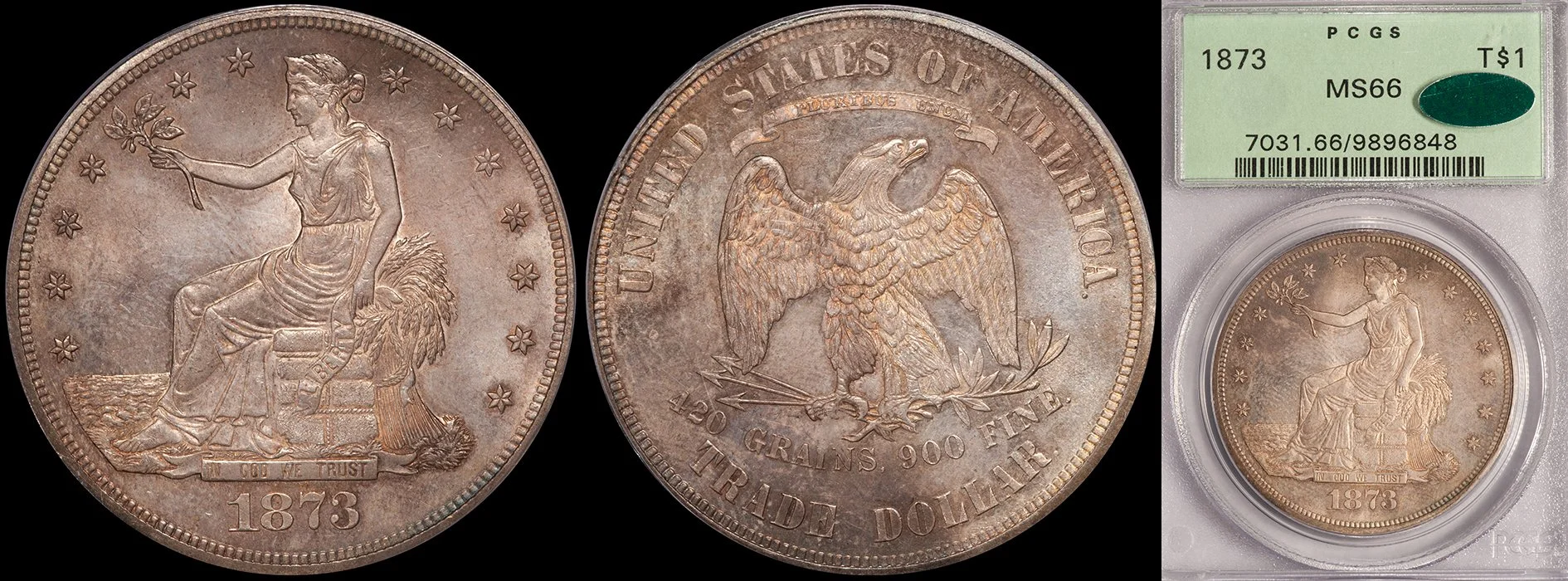
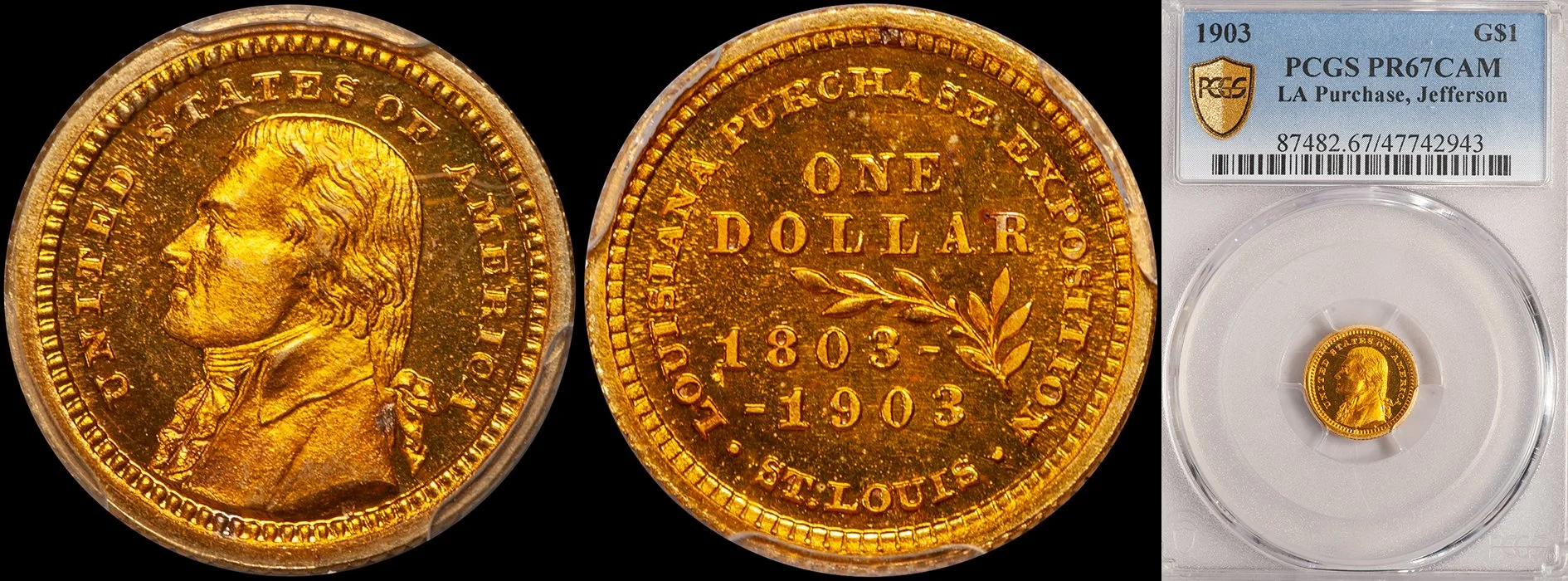
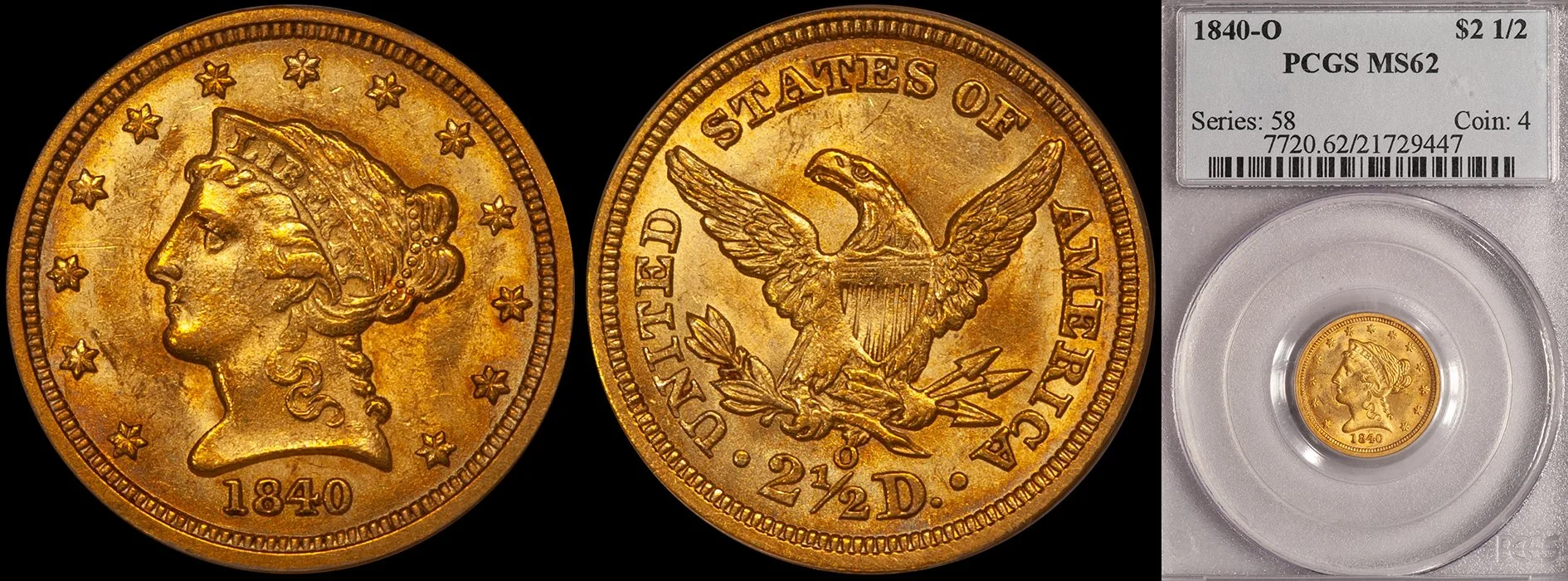
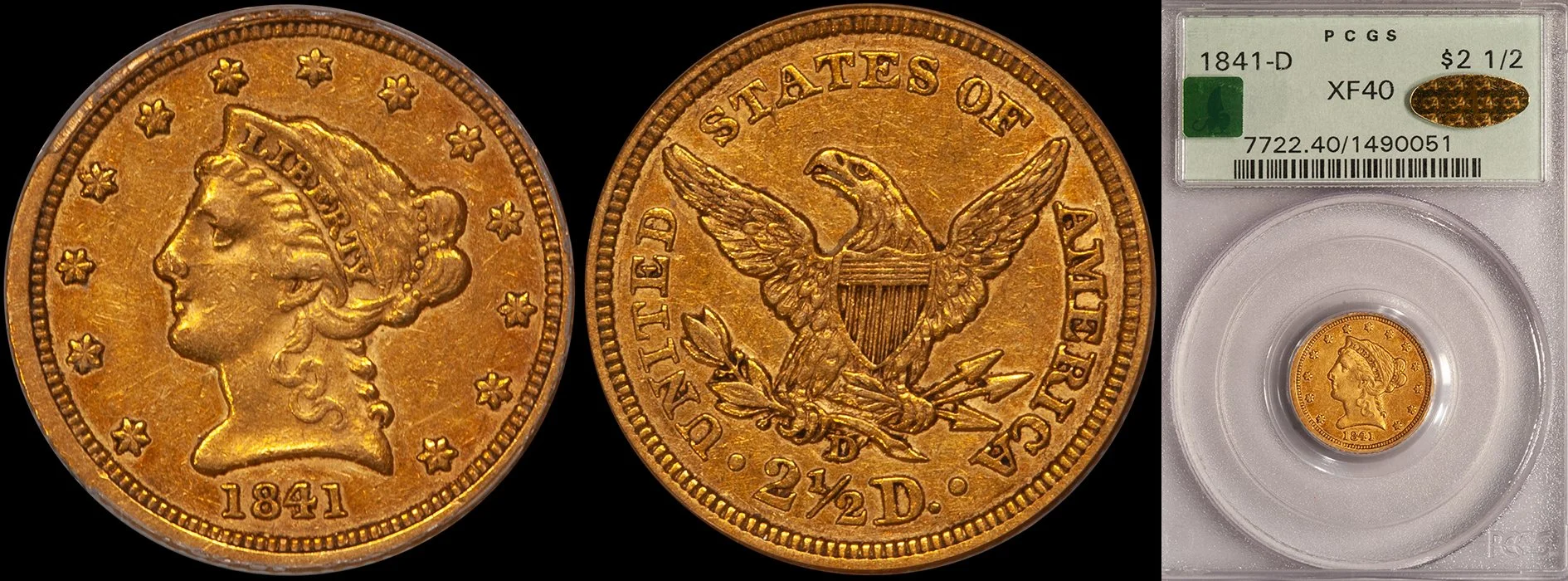
1. Buy Coins That Are Pretty

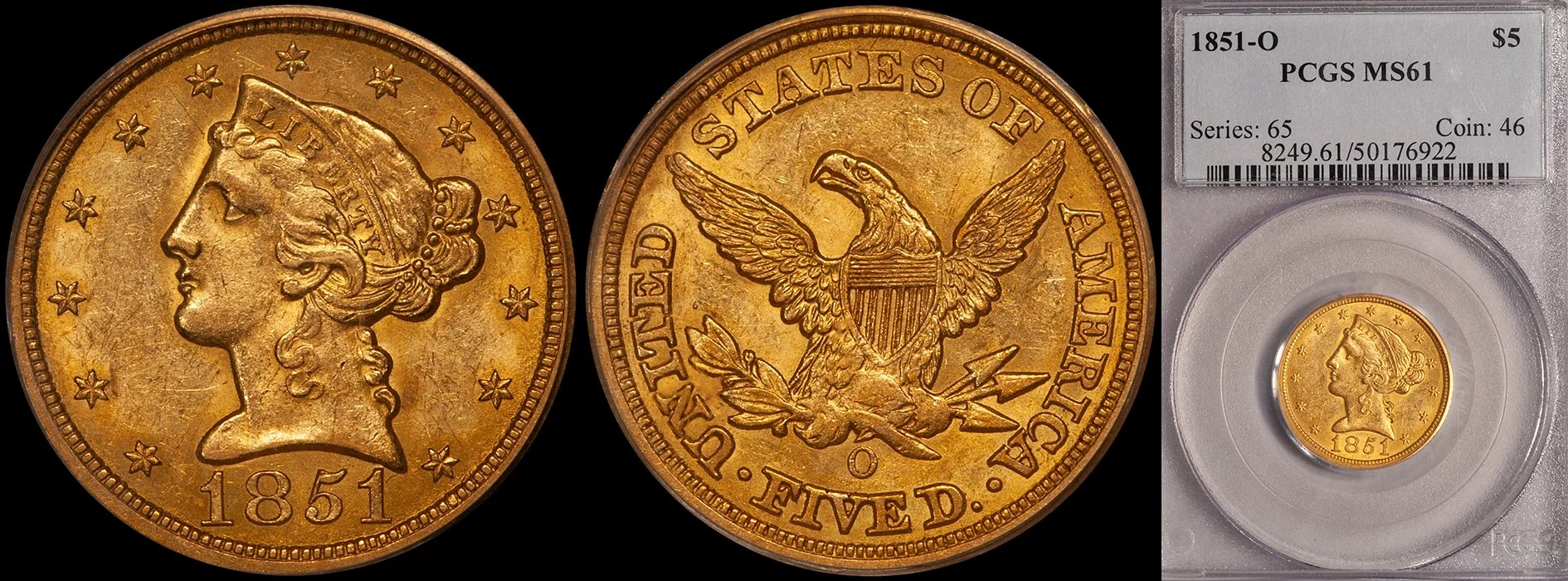
Numismatics has always been a highly visual hobby. But the advent of the Internet has made the visual aspects of numismatics more significant than ever before. When I look at coins now one of the first questions I ask myself is: will it image well on my website? Coins that are pretty are very easy to sell.

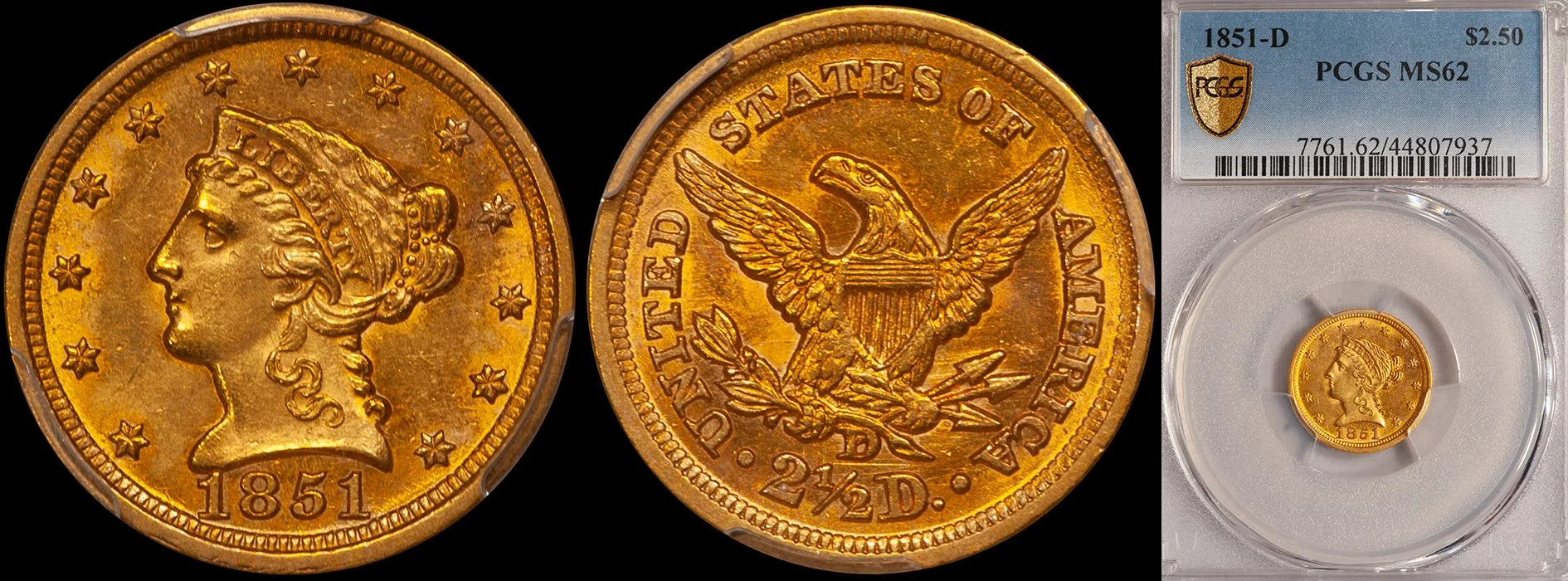
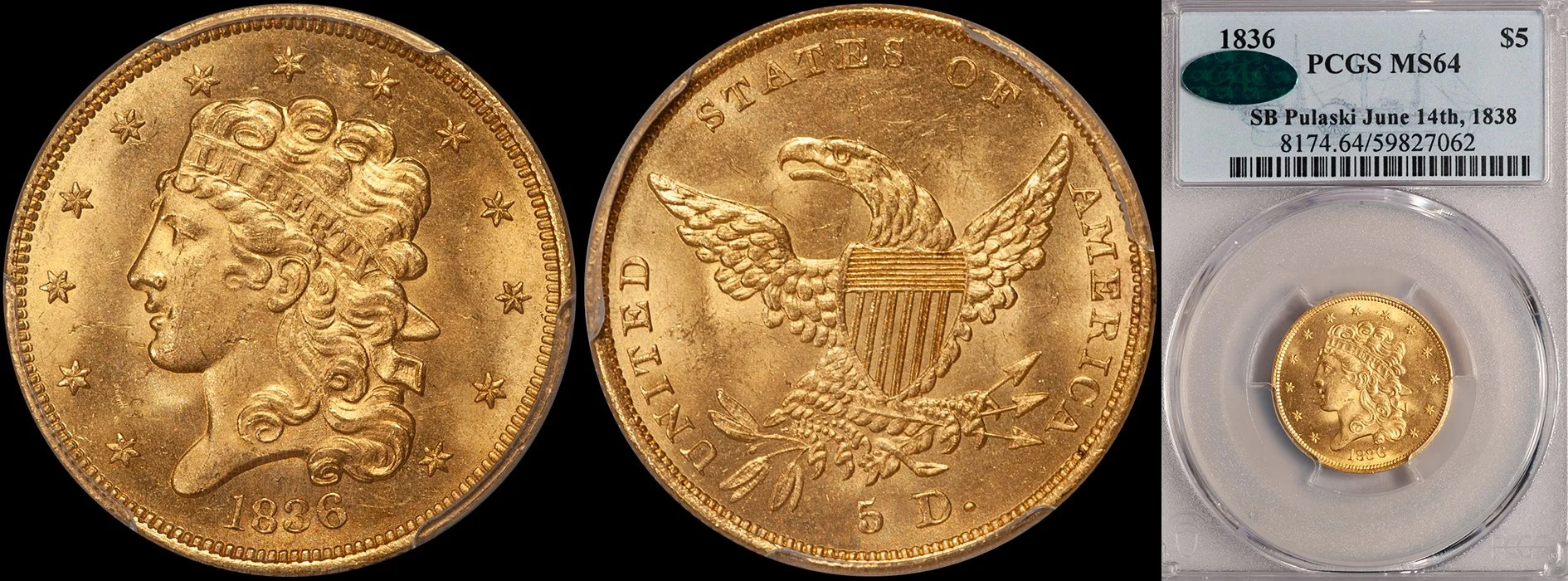
The term “pretty” is somewhat semantic. I tend to like gold coins that are dark and dirty and find these to be aesthetically appealing. Not everyone agrees me. Some people like gold coins that have bright, dazzling luster while others prefer coins that two-tone contrast between the devices and the fields. But I think most people can agree that a certain percentage of coins are, for lack of a better term, “special.” This does not necessarily mean “expensive.” I have seen circulated $100 Bust dimes that I thought were really pretty. The bottom line is that you should try and have as many pretty coins as possible in your collection.

2. Buy Coins That Are Popular

There are many coins that no matter how many examples I have purchased over the years, I have never lost money on them. As an example, I have probably owned twenty 1838-D half eagles in the past decade, ranging in grade from VF25 to MS62. Every time I’ve owned one, it has sold quickly to a happy collector and I’ve made a decent amount of money on each transaction. It’s obvious to me why this date sells quickly: it’s a first-year-of-issue, it’s a one-year type, it has a neat design, it’s a Dahlonega coin and it is relatively affordable.

In the last few years, key date coins in virtually every series have shown dramatic increases in value. There is a good reason for this: they are very popular and this creates a constant level of demand for these issues. In some cases (like 1901-S quarters or 1907 High Reliefs) prices are now probably too high and these key issues are currently overvalued. But I would personally rather have a collection (or inventory) that was full of popular coins than ones that were too esoteric and hard to sell.

3. Buy Coins That Are Problem-Free

I’m pretty staggered at how unappealing most coins are that I see these days. As I look through other dealer’s inventories at coin shows or at auction lots, nearly every coin I pull out has some sort of problem. It has been dipped. It has funky color. It has hairlines from an old cleaning. That’s why when I see something that I really like, I try and aggressively pursue it.

In certain 18th and 19th century series, it is likely that 90-95% of all the coins currently on the market have some sort of problem. If you can patiently and carefully assemble a collection that focuses on the remaining 5-10% of the coins that are what I would call high end and choice, you will have a truly significant coin collection.

4. Buy Coins That Pre-Sell Themselves Every time I’ve made a big mistake purchasing a coin for inventory, it’s been a coin that I had to give myself a hard sell on. I’ve found that my first impression regarding a coin is inevitably correct. If I see a coin and it makes me gasp because it’s so pretty or it’s so above-average an issue that usually comes with bad eye appeal, I’m inevitably going to buy this coin no matter what. If my first reaction is “I don’t really like this” or “It’s OK except that spot in the right obverse field sort of bothers me” that doesn’t strike me as the sort of coin that is going to go flying out of my inventory when it is imaged and described on my website. As a rule, if you don’t like a coin the first time you see it, don’t buy it.

5. Buy Coins That Have Been Pre-Screened

Never, never, never buy expensive coins sight-unseen or based solely on a mediocre quality image with no return privilege. It’s one thing if someone is trying to sell you a generic MS63 St. Gaudens double eagle sight-unseen; even if the coin is low-end it is essentially a commodity and what it looks like is not especially important. But I can’t tell you how many times I’ve had clients send me expensive coins that they have purchased sight-unseen out of an auction and how many times I’ve had to politely tell them that it is very low-end. If your dealer insists you buy coins sight-unseen, find another dealer. If you think you can buy nice coins sight-unseen out of auctions, swallow your pride and hire a trusted representative to view the coins in person for you.

Comparing PCGS & NGC Population Statistics

As a dealer, I hear a lot of comments about how PCGS and NGC grade rare gold coins. I thought it would be interesting to compare the population statistics for two commonly traded series, Charlotte half eagles and Dahlonega half eagles, using recent published population figures from the PCGS and NGC databases. Before I get into the numbers themselves, I think a few background tidbits are necessary. I chose Charlotte and Dahlonega half eagles because these are two branch mint series that do not have a lot of problematical issues that are extremely hard to grade (unlike, say, Dahlonega quarter eagles which are especially hard to grade). Also, the market accords relatively similar value levels to Charlotte and Dahlonega half eagles in either services’ holder (unlike, say, high quality Mercury Dimes which are clearly more valuable in PCGS holders). Finally, I chose these two series because they have comparatively high numbers of coins that have been graded, which makes the population sample we are looking at more relevant than more esoteric series that have had few coins graded.

A few more quick points. The Charlotte half eagle series consists of twenty-four coins, including the 1842-C Small Date and Large Date. For both services, I included only these twenty-four issues. For NGC coins only, I also included 1850-C and 1854-C which were designated by that service as “Weak C.” PCGS does not make this differentiation. The Dahlonega half eagle series consists of twenty-six coins, including both varieties of 1842-D, the 1846-D/D and the 1848-D/D. I also included coins designated by NGC as “Weak D.”

I. Charlotte Half Eagles

As of June 2007 PCGS had graded a grand total of 2,626 Charlotte half eagles in all grades. A breakdown of these is as follows:

    Very Fine and lower, 636 (24.21% of the total graded)

    Extremely Fine, 889 (33.85% of the total graded)

    About Uncirculated, 930 (35.41% of the total graded)

    Uncirculated, 165 (6.28% of the total graded)

As of June 2007 NGC had graded a grand total of 2,877 Charlotte half eagles in all grades. A breakdown of these is as follows:

    Very Fine and lower, 288 (10.21% of the total graded)

    Extremely Fine, 750 (26.06% of the total graded)

    About Uncirculated, 1506 (52.34% of the total graded)

    Uncirculated, 321 (11.15% of the total graded)

Before I analyze these numbers, I think there are a few very important points to make. Both PCGS and NGC have an inherent flaw with their population figures: these numbers are inflated (often severely) by resubmissions. PCGS does a recently good job of clearing the deadwood off their report and they offer submitters a “bounty” for each used coin insert that ensures that a decent number of labels will be returned. NGC, unfortunately, does not offer a bounty and this discourages certain large submitters from returning their old inserts. When I look at the NGC population figures for Charlotte half eagles, what strikes me is the large number of coins graded AU55 and higher. I think these numbers are greatly inflated due to resubmissions.

So, what do I deduct from these numbers? First of all, I am struck by the nearly equal number of total coins graded by PCGS and NGC; 2,626 for the former and 2,877 for the latter. I would have predicted that the total number would have been much higher for NGC and much lower for PCGS. Secondly, I find it very interesting that PCGS has graded around 42% of all the Charlotte half eagles submitted to them in AU and higher grades while NGC has graded slightly over 63% in AU and higher. I find it very hard to believe that over six in ten of all Charlotte half eagles grade AU50 and better, even factoring in gradeflation. One final statistic that I think is very interesting is that NGC has graded nearly twice as many Charlotte half eagles in Uncirculated than PCGS. Even factoring in the inflated population figures at NGC due to submitters not returning duplicate tags, I am still intrigued by this disparity.

II. Dahlonega Half Eagles

As of June 2007 PCGS had graded a grand total of 3,355 Dahlonega half eagles in all grades. A breakdown of these is as follows:

    Very Fine and lower, 749 (22.32% of the total graded)

    Extremely Fine, 990 (29.50% of the total graded)

    About Uncirculated, 1329 (39.61% of the total graded)

    Uncirculated, 261 (7.77% of the total graded)

As of June 2007 NGC had graded a grand total of 3,266 Dahlonega half eagles in all grades. A breakdown of these is as follows:

    Very Fine and lower, 313 (9.58% of the total graded)

    Extremely Fine, 781 (23.91% of the total graded)

    About Uncirculated, 1824 (55.84% of the total graded)

    Uncirculated, 338 (10.34% of the total graded)

In looking at these two sets of numbers, there are two areas where great disparity can be quickly noted: with coins graded VF and lower and with coins graded AU. What accounts for this?

In regards to the lower graded coins, my guess is that there are two major reasons. The first is that PCGS tends to be a bit more generous than NGC in terms of what they will or will not encapsulate in this grade range. PCGS will often net grade a lower quality Dahlonega half eagle while NGC will tend to either not grade such a coin or place it in an NCS holder. The second reason is that these lower grade coins tend to appeal more towards pure collectors than investors or speculators and these individuals often prefer to have their coins in PCGS holders.

How can the great disparity between NGC and PCGS for AU grade Dahlonega half eagles be explained? I think there are two important things to consider. The first is that the NGC populations for Dahlonega half eagles graded AU55 and (especially) AU58 are hugely inflated by resubmissions. If NGC were to clean-up their populations figures, I think the number of AU coins would be reduced by at least 200-300+. The second reason is probably due to the fact that the NGC grading line for AU Dahlonega half eagles is a bit looser than PCGS’. In my opinion, a number of AU50 Dahlonega half eagles graded by NGC would not qualify as such at PCGS.

The most important thing to remember about these numbers is that they are subject to any number of interpretations. If you are pro-NGC, you will form your own conclusions while if you are pro-PCGS you will, no doubt, reach another conclusion.

Where Have All The Nice Coins Gone?

If you talk to nearly any dealer or read nearly any numismatic newsletter you’ve no doubt heard a similar complaint for many years: it has become incredibly hard to buy “nice coins.” Clearly, this is true. But the reason(s) why nice coins have become so hard to buy are somewhat less obvious. I have a few theories as to where all the nice coins have gone and why it is so hard in today’s market to find others. The first reason has to do with the increased size and scope of the rare coin market. There are far more deep-pocketed collectors than ever before and certainly far more than most people realize. There are many reasons for this: the increased appeal of numismatics as a result of the Internet, the explosion of wealth in this country and around the world and the lack of good investment alternatives as in years past. Simply put, tens of thousands of very high quality coins have left the market as a result of new collectors.

The second reason is a little less obvious. It is my opinion that more formerly-nice coins have been ruined by cleaning and processing than we realize. Let’s take a typical common date Dahlonega half eagle as an example. Let’s say that there are 200-300 examples known of this date in all grades. Even before the mania for cleaning coins began, at least 75% of these coins had either been harshly cleaned, damaged or very heavily worn. This leaves us a pool of approximately 25-50 original or semi-original “nice coins.” Now let’s say that this number has been reduced another 50% in the last decade as dealers have given into the temptation of taking a crusty EF coin and turning it into an ugly AU coin. Now we are talking about maybe as many as 15-25 nice original examples of this supposedly common date. This number is further diluted by the fact that most of the choice examples of scarce, popular collector coins are off the market in tightly-held collections. At the end of the day, we are talking about a tiny pool of nice, original coins available for the new collector.

Here’s another theory of mine which we’ll call reason #3. Veteran observers of the rare coin market (like me) became jaded by the proliferation of great collections which came to the market in the 1980’s and the 1990’s. Eliasberg, Bass, Pittman, Norweb...the list goes on and on. We were spoiled by these great old collections and now that hardly any other great old collections await us, our reaction is that “there are no more nice coins left.” I find it interesting that the coin market of the 2000’s has become more democratized than the market(s) of the past. Instead of one person owning huge numbers of great coins (i.e., Harry Bass), there are now many collectors who own smaller numbers of the good stuff. Old School dealers like me are just going to have to get used to the fact that the auctions we will be attending in the future are not likely to be Eliasberg-esque.

One final reason comes to mind. The rare coin market has become watered-down by modern coins. As recently as a decade ago, no one collected coins made during their lifetime; let alone paid huge premiums for coins struck a year or two ago. A number of dealers (and collectors) who used to be active in the market for “nice coins” jumped ship and are now focusing on modern issues. Moderns also get a lot of publicity these days while the day-to-day trading of attractive classic issues is done with less fanfare. Ironically, there’s a whole new generation of collectors who are a lot more excited by a PR70 American Silver Eagle from 1999 than by a superbly toned PR67 Barber Quarter from 1899. As always, what is “nice” is a matter of perspective...

I think the bottom line is this: in 2007 we are seeing a lot more collectors competing for a lot fewer nice coins. It was never easy to buy nice coins. In some ways, I’d love to turn back the clock to 1987 but when I really stop and think about the market twenty years ago, nice coins weren’t growing on trees back then and when you did have them, they were a lot harder to sell.

State of the Market Report: Early United States Gold Coinage

In the last five years, early United States gold has been one of the most active areas in the coin market. In this article, we will examine each of the major types of pre-1834 gold coinage and see how the market has performed. In addition, we will look at some future trends and make some predictions which may be of interest to the specialist. Early coinage has always been a popular area with collectors but all pre-1834 gold types have been just about the most avidly collected area of the coin market since the beginning of the current bull market. I think this is attributable to a number of factors including the following:

* In 2000, the oldest early gold coins became three centuries old which added a sense of age that was very impressive in comparison to more modern issues.

* Some excellent books and specialized research tools made these coins more accessible to new collectors.

* A number of dealers (myself included) steered many wealthy new collectors into this area of the market due to the "coolness factor" of these coins. The resulting spike in demand significantly reduced the already limited availability of these coins, resulting in an increase in price.

* Some important old-time collections (Pittman, Bass and others) came on the market, making a number of seldom-seen early gold pieces available to collectors. This spurred interest and a number of new collections were begun as a result.

I. Quarter Eagles, 1796 to 1834

A. Draped Bust No Stars, 1796 Only

As one might expect, this celebrated one-year type has seen a huge increase in price and demand in the past five years. In 2002, it was possible to find a nice AU example in the $60,000-70,000 range. Today, a similar coin is going to cost a collector $125,000 to $150,000.

I wouldn’t have a problem with this price increase except for the fact that grading standards for this type have become very lax in the last few years. Most of the 1796 No Stars quarter eagles that I see in AU holders are very low-end, unoriginal coins that would have been graded EF as recently as a few years ago. I still love this type and would recommend it to a wealthy collector as a blue-chip investment vehicle but I think great caution has to be taken when buying $100,000+ examples of this type.

The high water mark for this issue was in June 2005 when a superb PCGS MS65 example sold at auction for $1.38 million.

B. Draped Bust With Stars, 1796-1807

Five years ago, it was still possible for the collector of slightly above-average means to purchase a respectable example of this type. Today, the rarity of the With Stars quarter eagle type has been widely acknowledged and it is almost impossible to find a problem-free example for less than $15,000-20,000.

That said, I still think that this type is a great value and that it is undervalued when compared to the half eagles and eagles of this era. I am especially fond of the 1790’s dated issues. They have clearly risen in value, although nowhere near as much as the 1796 No Stars. As an example, I purchased a decent PCGS AU53 1797 quarter eagle in an auction in 2003 for around $50,000. Today, this coin would sell for around $70,000-80,000. An AU 1798 was worth around $30,000 five years ago and today it might sell in the $50,000-60,000 range. My gut feeling is that nice quality examples of these two dates aren’t going to be available for much longer at these levels and they should be purchased if and when they become available.

The 1802/1, 1804 14 Stars, 1805 and 1807 are the more common dates of this type. All four of these have become nearly impossible to locate with original color and surfaces. A common “type” example of one of these dates in the MS61 to MS62 range was reasonably available five years ago for around $20,000. Today, such a coin would cost $30,000-35,000 but most of the pieces I see in MS61 and MS62 holders are very unappealing. I have been advising collectors for many years that this type is undervalued and, despite the price rise in the past five years, I still believe that this is the case.

C. Capped Bust Left, 1808 only

As with all significant one year early type coins, the value of the 1808 quarter eagle has risen dramatically in the past five years. Today, a solid AU example is worth in the $100,000-150,000 range. Five years ago, it was possible to find an AU priced in the $40,000-50,000 range.

I wouldn’t have any qualms with the new price levels for this date if I actually liked many of the 1808 quarter eagles that I have viewed in the past year or two. The days of finding choice, original pieces in EF and AU holders may well be over, although I have seen a few examples in the last year graded AU55 and AU58 that I thought were acceptable for the grade.

I would expect that there will be some leveling off on prices for this issue in the coming year or two, if only because levels have risen so dramatically since 2002-2003. That said, I think a choice, attractive 1808 quarter eagle is a great coin to purchase. As long as there are collectors assembling type sets of early gold, there always is a very strong demand level for this one-year type.

D. Capped Bust Large Size, 1821-1827

Five years ago, I was literally begging clients to purchase examples of this type. This was one area of the early gold market that $10,000 would go a long way and this figure would buy you an impressive example of a legitimately scarce coin. The rap against early quarter eagles back then was that the coins were “too small” and that they were “too rare for their own good.” I thought these were silly reasons for these coins to be undervalued and, today, they seem positively quaint, given the new level of respect and interest that early quarter eagles command. Nevertheless, I still feel that quarter eagles of this type remain the most undervalued early U.S. gold coins.

The sort of coin that was available five years ago for $10,000+ is now more realistically a $20,000+ coin; not to mention the fact that it has become very hard to locate. But I still feel that any date in this series is an excellent value. I especially like the underrated 1821 and the low-mintage 1826.

I don’t think that the future of this type is date collecting as these coins are simply too challenging for most collectors. I think that the future is as a type coin and I would anticipate that five years from now it will be very difficult to find a nice, problem-free Capped Bust Large Size quarter eagle for much less than $30,000+.

E. Capped Bust Small Size, 1829-1834

The quarter eagles produced between 1829 and 1833 have also seen a surge of interest in the past five years. In 2002, you could buy a nice AU example of any of these dates for $7,500 or so. Today, a similar coin will cost you $12,500-15,000. Five years ago, an MS63 example of this type could be purchased for around $15,000-20,000. Today, a similar coin is more likely to cost in the area of $30,000-35,000.

I’d like to think that at least part of the reason that this type has shown such strong price increases in the last five years is due to the continual urging I’ve given clients to buy these coins. I have often written that I felt these were the best values in the early gold market. I still feel this way, although I have been pretty disappointed at the quality of a number of the coins I have seen lately in MS60 to MS63 holders.

That said, I think the future of this series remains very bright. Despite small original mintage figures, these coins exist in large enough numbers to make collecting by date a possibility. The stopper in the series remains the 1834 which, curiously, has become impossible to locate. I am not aware of a single example of this date appearing at auction since October 2004 and only two separate problem-free pieces appearing at auction since 2000. The last piece to sell was a PCGS AU55 which brought $35,600. Today, the same coin could bring as much as $65,000-75,000.

II. Half Eagles, 1795 to 1834

A. Draped Bust Small Eagle, 1795-1798

This type includes two relatively obtainable issues (the 1795 Small Eagle and the 1796/5) and three rarities (the 1797 15 and 16 Stars and the 1798 Small Eagle).

The 1795 has become one of the most popular early United States gold coins and for good reason. It is one of the first two gold coins struck by this country, it is charmingly designed and generally well produced and it can be found in relatively high grades. Five years ago, a collector could expect to find a nice AU for around $15,000 and a properly graded MS62 for around $50,000. Today, a nice AU should cost in the area of $40,000-50,000 while an MS62 will run around $100,000. I still recommend purchasing this issue in nearly any grade, as I feel it is a coin that will always be in great demand. I would definitely caution the new collector to seek an example with good eye appeal, nice surfaces and as much original coloration as possible. Nice, original coins are becoming extremely hard to find and I think they will begin to command a huge premium in the coming years.

The 1796/5 half eagle is many times scarcer than its 1795 Small Eagle counterpart but it does not command as much of a premium as one might expect. This has to do with the fact that it is not a first-year issue and, thus, is not as “sexy” a date. The 1796/5 has proven to be very rare and it is generally only offered at major auctions. I highly recommend this issue and feel that it is still an excellent value at its current level of $50,000-60,000 for a solid AU coin.

The great rarity of this type is the 1798 Small Eagle of which only seven or eight pieces are currently known. The last example to sell was a PCGS EF40 that brought $264,500 at auction in June 2000. I think this coin would easily sell for $500,000 today and I think a slightly nicer example, if available, could break the $1 million mark with ease.

B. Draped Bust Large Eagle, 1795-1807

For most collectors this type is dividable into at least two groups: the issues struck from 1795 to 1799 and those produced from 1800 to 1807.

The 18th century Draped Bust Large Eagle half eagles have proven to be extremely popular with collectors in recent years. As one can readily guess, they became especially popular around 2000, once they turned three centuries old. The two reasonably available issues are the 1798 and the 1799. These have both seen dramatic price increases in the last five years. As an example, a nice AU 1799 half eagle was worth $7,500-10,000 in 2002. Today, such a coin is valued at $15,000+. The increase in value is more dramatic in higher grades. Five years ago, with some careful searching, it was possible to find an MS63 1799 half eagle for around $40,000. Today, if such a coin became available (good luck convincing the guy who bought one in 2002 to sell his today!) it would sell for $65,000-75,000. Despite the new, higher levels, I still like the concept of an 18th century half eagle and would advise collectors to be on the lookout for nice 1798 and 1799 half eagles in EF45 and higher.

The common date half eagles from 1800 to 1807 have also shot up in value. Five years ago, nice AU coins were easily located in the $4,000-5,000 range. Today, similar coins are worth $10,000-12,500. I have mixed feelings about the value levels of these coins. Clearly, at around $5,000 they were very fairly priced. At $10,000 they are no longer cheap, especially when one considers the relative availability of these coins. I will no longer buy these common date half eagles for inventory unless they are wholesome, choice original coins with very good eye appeal. If they are bright-n-shiny, riddled with adjustment marks or vastly overgraded, low end coins, I will almost always pass.

What about higher grade common dates of this type? Five years ago, you could have purchased a common date in MS63 for around $12,500-15,000 and an MS64 for around $20,000-22,500. Today, the former costs around $25,000 and the latter runs $40,000-50,000+. I have mixed feelings about these. I think a fresh, original MS63 in the mid-20’s is still an excellent purchase and would recommend it to a collector or an investor. I’m a little less excited about a common date in MS64 at around $50,000 unless the coin is extremely high end and looks like it could gradeflate to an MS65 someday.

C. Capped Bust Left, 1808-1812

The Capped Bust Left half eagles are the most available and affordable early gold issues. They have proven to be remarkably plentiful in the AU50 to MS62 grade range and this makes them popular with collectors. For some reason, this type has never really appealed all that much to me. I don’t really care for the design and the relative availability of these coins make them seem like the Morgan Dollars of early gold.

In spite of my obvious early gold snobbery, this type has proven to be popular with collectors. It is the only series of early half eagles that could be realistically completed by date and there are a number of interesting varieties as well. In 2002, a nice AU type example was easily purchased for $3,500-4,500. Today, a nice AU commands $7,500-9,000+. Five years ago, a really nice MS63 common date was worth $12,000-14,000. Today, this same coin is worth $20,000+.

My opinion has changed on the desirability of this type. I generally like the quality of slabbed AU examples more than I do for the earlier Draped Bust type and I think any nice, original AU example that can be purchased for less than $10,000 is pretty decent value in today’s market. I have mixed feelings about higher grade examples. If I’m going to buy a $20,000+ MS63 for my inventory, it had better be a high end, attractive coin with original color and surfaces. Same holds true for an MS64, especially since we’re talking $40,000+ for a common date.

D. Capped Bust, Large Size 1813-1829

It’s hard for me to discuss this series without getting passionate as Fat Head Fives are probably my favorite series in the early gold issues. Why? Well, it’s clearly not the beauty of the design as this is arguably the most homely United States gold coin ever struck. For me, it’s all about the rarity and these coins are amazingly rare. When you kick out the “common” 1813 and 1814/3, the coins in this series range from downright rare (1818, 1820 and 1823) to virtually impossible (1819, 1821, 1824-1829). And we won’t even begin to mention the classic rarities like the 1815, 1822 and 1825/4.

The really rare coins in this series are hard to monitor as they trade so infrequently. When I look back at what prices were like in 2002, they seem amazingly cheap by today’s standards. As an example, in February of that year, a PCGS AU58 1827 sold in the Goldberg’s Benson II auction for $19,550. Today, a properly graded example is worth triple this amount.

What about the common 1813? Five years ago, a nice AU example would have cost you $4,000-5,000. Today, you’d have to pay around $10,000. In my opinion, this date is still a great value at less than $10,000. In 2002, a nice MS63 1813 would have been priced at around $12,500. Today, the same coin is worth $20,000. Again, I think it is an excellent value as it is the only reasonably obtainable date of this rare type and properly graded MS63’s are far, far scarcer than common date Capped Bust Left and Capped Bust Right half eagles despite being similarly priced.

E. Capped Bust, Small Size 1829-1834

As rare as the Large Planchet type of Fat Head half eagles is, the Small Planchet is even rarer. At least with the earlier type, the collector has a chance to buy such relatively common and affordable issues as the 1813 and the 1814/3. But the Small Planchet type offers no such chance for collectors with limited budgets. This is a series with seriously rare coins with seriously high price tags. And rightfully so.

If you were smart enough to be purchasing 1829-1834 half eagles in 2002, give yourself a large pat on the back. You are smart and you made yourself a lot of money. Let’s say you decide that you want to start buying these coins in 2007. How does the future of your investment look? I’d say pretty good. Now that nearly everyone understands how rare these coins are and appreciates them, I think the levels for the series will continue to soar. I’d just give my usual warning on expensive coins: if you are going to pay $50,000+ for a fat Head half eagle, make certain you know what you are doing. Buy a coin that is attractive for the date and grade and which is original as possible.

So there you have it: the DWN State of the Market Report on early gold coinage. I doubt if anything I wrote in this article is terribly surprising to people who read my articles on a normal basis. I’ve always loved early gold and I will continue to be an active participant in this market for as long as I am a coin dealer.

State of the Market: Three Dollar Gold Pieces

In the fourth installment of my series of State of the Market articles, I take a look at the popular Three Dollar Gold piece series. How has this cult favorite fared in the past few years and what does the future look like for this denomination? After years of neglect, interest in the Three Dollar series spiked dramatically in 2004 and 2005. This can be directly attributed to two reasons: the publication of the first book on Three Dollar gold pieces (written by myself and the legendary Q. David Bowers) and expert marketing and promotion of the series by a few firms which introduced many new collectors to this interesting series.

For a variety of reasons, the promoters who focused on Threes moved on to other series in the middle of 2006 and the last year or so has seen a fairly dramatic drop in prices in the series. I would estimate that high grade common dates Three Dollar gold pieces have dropped between 30 and 50% while rare dates have seen price drops more in the range of 10-30%.

Perhaps the most dramatic price decreases in the entire series have been for common dates in MS64. These can now be bought for $6,000-7,000 but they were priced at $12,000-14,000 around two years ago. MS63 common dates are now $5,000 to $6,000; they used to be $9,000 to $11,000. MS62 common dates now sell for $3,500 to $4,500 and were priced at $6,000 to $7,000 at the height of their popularity.

In my opinion, common date Three Dollar gold pieces are a great value right now if they can be bought at around $6,000. These coins are generally very nice and if you can find a high end example with good color and luster as well as minimal marks at the low end of the current value range, I think this is an excellent coin to put away for a while. I find it a little strange that an MS64 common date is selling for just a $2,000 premium over a common date in MS62. My gut feeling is that an MS62 is not a great deal at this level.

The rarer date mintmark issues in this series are, for the most part, doing rather well. There is strong collector demand for issues such as the 1855-S and the 1857-S and the 1860-S seems to have become extremely hard to locate in grades above AU55.

One issue that is especially interesting to follow is the 1854-D. I have always thought of this as being a coin that, while technically a Three Dollar gold piece, is totally different from the other issues in this series. The reason for this is obvious: its primary source of demand is from Dahlonega collectors, most of who will never aspire to own another Three Dollar gold piece besides this date. Nice AU examples seem to have formed up considerably in the last six months and I would say they are worth between 5 - 15% more than when they hit a comparatively low level last summer.

Another interesting issue is the 1854-O. This date has become the most two-tiered Three Dollar gold piece in terms of value. It is clear to me that NGC tends to be considerably more liberal when it comes to the 1854-O in AU, especially in the upper ranges of this grade. A nice PCGS AU55 or AU58 1854-O is really quite a rare coin and it now commands a strong premium over the typical NGC graded AU55 or AU58. I have also noticed that 1854-O Threes with original color and surfaces and good strikes are commanding strong premiums over bright-n-shiny, processed examples.

So what lies ahead for this denomination?

I think Threes are far too interesting and far too collectible to stay inactive for long. My prediction is that you will see some of the marketing companies that dropped out of the series a few years ago get back in. It’s hard not to like a Three Dollar gold piece that was priced at $10,000 as recently as a few years ago when it is now priced at $7,000.

My guess is that you will see the greatest new interest in the series occur with the most interesting coins. These include the following:

    1854-D, all grades

    All San Francisco issues (except for the 1856-S) in AU50 and above

    Civil War issues, all grades

    Rare low mintage dates such as the 1858, 1865 and 1877 in all grades

Issues with mintages of less than 1,000, AU50 and above

When you take a hard look at this series, it’s easy to see what happened in 2005 and 2006. Prices went up too quickly, too many coins came on the market and the speculators who were driving the market bailed. My best guess is that, starting soon, the Three Dollar gold series will go back to being mostly collector-driven and it will regain its spot as a popular, oddball gold denomination that has long been in demand.

Starting a Charlotte Half Eagle Collection

For a collector who is new to branch mint gold coins, assembling a set of Charlotte half eagles is an excellent place to begin. New collectors tend to like half eagles more than the other denominations produced at this mint. These coins are larger in size than their gold dollar and quarter eagle counterparts and they tend to be more available in higher grades. Due to the fact that Charlotte half eagles are currently somewhat out of favor with collectors, many nice half eagles from this mint are currently available. In other words, this is a good time to start a Charlotte half eagle collection due to the fact that a new collector will have less competition than usual and will find a greater assortment of desirable pieces available.

In my opinion, there are basically three tiers of collections that the Charlotte half eagle collector can tackle. For the sake of classification, we can identify these as follows: beginner level, intermediate and advanced.

A beginner level set consists of 24 coins, generally in the EF40 to AU50 grade range. (NOTE: On all three of these sets, if the collector chooses not to include the 1842-C Small Date, the number of pieces he needs to purchase decreases by one). The five key issues in the beginner set are the 1842-C Small Date, 1840-C, 1844-C, 1846-C and 1838-C. With the exception of the 1842-C Small Date, all of the other key issues can be found in nice Extremely Fine for under $5,000.

A few pieces of advice for the collector who decides to work on a beginner level set of Charlotte half eagles:

    Take your time. This set can be completed in a few months but a rushed set will include many low end coins. A set that is assembled over the course of a few years will be more fun and it will include nicer coins.

    Whenever possible, throw in a few higher grade coins. Right now it is possible to buy nice AU53 to AU55 examples of common dates for just $1,000 or so more than an EF40. While this might slow up completion of your set, in the long run a collection with some higher grade coins will be a better investment than one with just EF40’s.

    Try and learn what choice, original coins look like and then become fixated on buying only coins with the “right” look. Whenever possible, avoid bright-n-shiny, processed pieces.

An intermediate level set consists of all AU coins. Most collectors will probably look for the key issues in the AU50 to AU53 range and the more common dates in AU55 to AU58. This is clearly more difficult to assemble than a beginner set, not to mention (obviously) a more expensive one. The dates that will prove to be the most difficult to locate in this grade range include the 1838-C, 1842-C Small Date, 1840-C, 1844-C and 1846-C.

A few pieces of advice for the collector who decides to work on an intermediate set of Charlotte half eagles:

    You are going to be confronted with a seemingly endless array of AU Charlotte half eagles in auctions and dealer’s inventories. Try to make your first decision the right one and don’t buy a coin that you will regret purchasing a few years later.

    Many dates that have seemingly high population figures in the PCGS and NGC population reports are actually quite scarce with original color and surfaces. If you see a nice, original example of a date like an 1838-C or an 1861-C, do whatever it takes to buy it, even if this means your budget is decimated for six months or more.

    In my opinion, it makes more sense to stretch and splurge on the rarer dates in the series than it does on the common ones. While the Charlotte market is in its current slump, this is a great time to be looking for the scarce issues and not worrying about common dates.

An advanced set of Charlotte half eagles consists of coins that grade MS60 and above. If the 1842-C Small Date is not included in this set, every issue is obtainable in Uncirculated; some in grades as high as MS63 to MS64. This is a set that requires a formidable amount of patience and deep pockets to complete. It would take at least $500,000 to form a set of Uncirculated Charlotte half eagles and a truly world-class set could run closer to $1 million.

A few pieces of advice for the collector who decides to work on an advanced set of Charlotte half eagles:

    Whenever possible, buy coins with good pedigrees. High quality Charlotte half eagles from collections formed by such men as Harry Bass, Stanley Elrod, Paul Dingler, Louis Eliasberg, Ed Milas and others are generally characterized by choice, original surfaces and are regarded with high esteem by knowledgeable collectors and dealers.

    Buy the right coin the first time. If you already own a very nice MS63 1852-C half eagle, it usually does not make sense to upgrade this to an MS64. The only time such an upgrade would make sense is if you can sell your existing coin for a good price and the new coin is considerable nicer in appearance when you put the two coins side-by-side.

    Carefully research the price history of expensive Charlotte half eagles. If you are going to spend $20,000++ on a coin, make certain you have a good idea how much other comparable coins have sold for at auction and via private treaty. Avoid dealers who do not help you readily access such information.

As I mentioned above, this is a great time to start a collection of Charlotte half eagles. After the new third edition of my book on Charlotte coinage is released (hopefully by the end of 2007 or early in 2008) I would expect to see renewed interest in this area of the market. This will make it harder to buy nice coins, especially at the currently favorable market levels.

State of the Market Report: San Francisco Gold

In the third part of my State of the Market, I kick it West Coast style and take a look at what’s happening with the gold coins from the San Francisco mint. Are these coins still as dead as the proverbial doorknob or has some breath been jumpstarted into this long-overlooked part of the market? Looking at the market for San Francisco gold coins from a macro perspective, I’d have to say that the overall health of these coins is pretty weak. However, this blanket statement most certainly can not be applied across the board. There are segments of this market that are unquestionably strong and that will, I feel, continue to show strong growth in popularity.

The strongest area in the San Francisco market is rarities and essential one-year type coins. As an example, price levels on 1854-S quarter eagles have increased dramatically over the past few years. In 1999, the finest known example from the Bass Collection sold for just a shade over $135,000. In an auction earlier this year, Heritage sold an example that was clearly not as nice as the Bass coin to a knowledgeable dealer for $345,000. Two other key dates that have seen strong price appreciation in the past few years are the 1864-S half eagles and eagles.

One San Francisco coin that, were it to become available, would almost certainly become one of the most expensive coins ever sold would be the 1854-S half eagle. Only two or three examples are known and just a single piece is in private hands. If this coin were to come up for sale while the market for ultra-rarities remains strong, it could bring as much as $4-6 million.

There are a few other segments in the San Francisco gold coin market that I see strength in. One of these is gold dollars. In the past few years, every time I’ve owned an affordable, nice quality example of a date like the 1857-S or 1858-S, it has sold very quickly. Collectors looking for San Francisco gold dollars tend to be interested in coins in the AU50 to MS61 grades and priced in the $1,750-5,000 range. In my experience, higher grade San Francisco gold dollars are not as easy to sell.

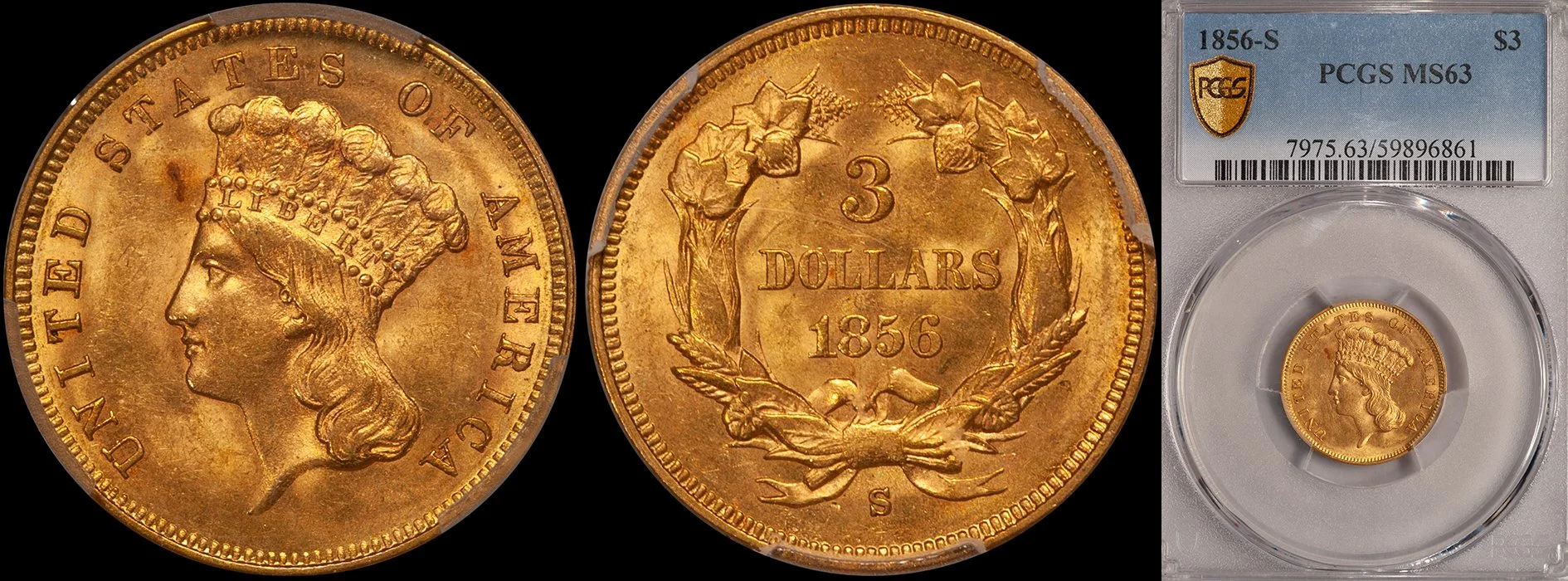
Another group of coins from San Francisco that maintain an active level of collector interest are Three Dollar gold pieces. This is interesting because of the fact that, viewed as a whole, this series is currently not in favor. Pleasing Extremely Fine and About Uncirculated examples of the 1855-S, 1857-S and 1860-S have remained very desirable and have not declined in price like the majority of the Philadelphia Three Dollar gold pieces from this era. The one San Francisco Three Dollar gold piece that has declined in popularity is the 1856-S. This is the result of a very large number being available for sale in the last year or two.

The market for San Francisco double eagles has shown some ups and downs in the past year. High grade examples of the scarcer Type One issues remain in demand and the 1861-S Paquet and 1866-S No Motto have experienced greater price increases in the past two or three years than nearly any Liberty Head gold coins. I have noticed some price resistance on average quality Type Two double eagles from San Francisco and the market for most Type Threes from this mint is down significantly from the high levels of a year or two ago.

There are at least two areas of the San Francisco gold coin market that remain very weak: the rare date half eagles and eagles from the 1850’s through the mid-1870’s and the semi-scarce issues from the 1880’s through the early 1900’s. The reason for the weakness in these two areas is the same: lack of collector interest.

The half eagles and eagles struck in San Francisco between 1854 and 1877 are, for the most part, very rare. But they have never had the collector support that characterizes the southern branch mints or Carson City. As I’ve mentioned before, the lack of a standard reference work on these coins has certainly not helped. But I think there is another factor that keeps collector level down.

A coin like an 1861-S half eagle in AU55 or an 1860-S eagle in AU53 is unquestionably rare. But both of these are already quite expensive; $10,000 or so in the case of the half eagle and $20,000 or so in the case of the eagle. This is a lot of money for a series with virtually no collector interest. If prices were adjusted downwards to reflect these coins as sleepers or potential rarities and not established rarities, perhaps more pioneers would enter the market.

Another factor that hurts these coins is that most are very ugly. There is a huge price spread between grades for coins like an 1860-S eagle. Because of this price spread, there is considerable temptation to take a nice original EF45, scrub it to death and get it upgraded to AU53. In theory, lots of value has been added but now you’ve got an already unpopular coin like this 1860-S eagle that is now bright-n-shiny and that has a very high Trends valuation to boot.

I’ve weighed in on semi-scarce San Francisco gold coins before. I don’t like coins like this very much as, to me, they represent the unglamorous segment of an unpopular area in the market. That said, if you had bought coins like an 1882-S eagle in MS62 a few years ago, you did pretty well, if only because of the rise in bullion prices.

One area of San Francisco gold that continues to shine is high quality 20th century rarities. In the past year, we have seen record prices for a number of Indian Head eagles and St. Gaudens double eagles from San Francisco. The fabulous PCGS MS67 Duckor 1920-S Indian Head eagle at $1,725,000 was a remarkable price for this coin but what was even more incredible was the fact that at least three or four bidders were actively pursuing this coin at the $1million level.

San Francisco gold has underperformed other areas of the rare date gold market but it is not the hopeless laggard it was as recently as two or three years ago. I think we will continue to see small pockets of popularity. Some currently moribund areas that I would keep an eye on include Civil War issues from this mint and Condition Census or Finest Known gold dollars, quarter eagles, half eagles and eagles struck prior to 1878. In addition, I think better date Indian Head half eagles and eagles from San Francisco will be a very strong area in the market in the near future.

The Ten Coolest United States Coins Revisited

In June 2000, I wrote an article entitled “The Ten Coolest United States Coins.” Let’s say you were a true Douglas Winter Numismatics cultist and you had decided to follow my advice to the letter. How would your seven year investment have performed? Are there any coins I would have deleted from this list? Some analysis and random thoughts regarding these ten coins follows. In 2000, I suggested purchasing an example of this popular, historic issue in Choice About Uncirculated and stated that an example would cost around $10,000. I think this amount represented a typo as, even back then, a Continental Dollar in AU would have cost at least twice the amount I listed.

My decision to include this coin was prescient, to say the least. This has proven to be among the most popular and in-demand early American issues in the last seven years. And how can it not have been? This issue has everything going for it: size, interesting history, unique design and the magical 1776 date.

Today, a nice AU 1776 Continental Dollar will probably cost in the area of $60,000. And if you had bought a really nice AU55 to AU58 back in 2000, the chances are better than even that this coin would be regarded as an MS61 today with an estimated value closer to six figures. Clearly, this would have been a very good purchase.

I. 1776 Continental Dollar

This is not a regular issue coin but, rather, a proposed or speculative issue. Varieties are known in silver, pewter and brass and with different spellings of the word CURRENCY. For this set, I would suggest a pewter piece with the spelling "CURENCY" and the lack of the designers initials (represented on this coin as "EG FECIT," which is believed to signify that the design was by Elisha Gallaudet).

It is probable that these coins did circulate in colonial America and that they did have a recognized value. This fact makes them a legitimate candidate for the first "dollar" struck in this country as well as the largest coin, in terms of size, issued prior to the establishment of the United States. The magical date 1776 makes them even more desirable, in my opinion. And, finally, the charming design on the reverse (featuring thirteen interlinked rings with the name of each colony and symbolizing unity) is believed to have been suggested by Benjamin Franklin.

For this set, I would opt for a very slightly worn piece; perhaps in the About Uncirculated-55 to 58 range. I like the idea that the coin saw some light circulation during the colonial era but would want it to be lustrous and well struck. Such a coin would cost $7,500-$10,000; making it an exceptional value for such an incredibly historic issue.

II. 1792 Half Disme

This is another coin that seemed much undervalued to me back in 2000. I like this issue for many of the same reasons I mentioned above for the Continental Dollar: great story, interesting design and fascinating history. In 2000 I suggested purchasing a nice AU example and felt it would cost around $10,000-15,000. If you had been able to find a nice half disme back then, you probably would have been able to buy it at the high end of my suggested range.

As with most early coins, this is an issue that has performed fantastically since 2000.

If you can find a good looking AU55 to AU58 half disme (and this will be hard as most real AU coins are now in MS61 and MS62 holders) you are probably going to have to pay around $100,000 for this coin. Even an example which looks like its been run over by a train is going to cost in the mid-five figures.

Without patting myself on the back too much, I’d have to say that this choice was a home run. Of course, I wasn’t smart enough to listen to myself and actually put away any nice half dismes...

III. 1793 Chain Cent

There aren’t all that many coins left that still give me a tingle in the spine when I buy one, but Chain Cents qualify. I love the design and history of these coins and admire the fact that they have been coveted by collectors since the late 1850’s.

In 2000 I recommended buying an EF or an AU Chain Cent and felt that it would have cost in the area of $20,000 to $45,000. It wouldn’t have been easy to find a decent looking example but with some searching you might have been able to buy one with good detail and reasonably choice surfaces.

Today, Chain Cents are not only nearly impossible to find in grades above VF20, they are just about the most overgraded type I have seen in third-party holders. Coins that I personally grade Fine-12 are housed in EF-40 holders and both services seem to conveniently overlook the fact that coins in EF holders are riddled with problems.

Assuming you could find a decent coin in 2007, you’d be looking at spending $60,000-80,000 plus for an EF and at least $100,000 for an AU.

This was a good choice but in retrospect I think I might have selected a 1793 Liberty Cap instead. But, as I recall, I didn’t choose this type in 2000 because I thought it would be impossible to find one that I liked even back then.

IV. 1794 Silver Dollar

This is the first and largest United States silver coin. Any well-heeled collector who couldn’t be sold on the desirability of this coin back in 2000 had to truly have his head in the sand.

In my 2000 article I suggested a nice EF example of this coin and that such a piece might be available in the $75,000-90,000 range. This value range might have been just a touch low and I’m guessing that if anyone did take my advice, they probably had to pay closer to $100,000.

Regardless of what this theoretical collector paid, if he did buy a 1794 dollar, he did very, very well. Early dollars caught fire a few years ago and the 1794 proved to be the ultimate trophy coin in the early dollar series.

A nice EF 1794 dollar today is worth $250,000 to $300,000. Any significant investment made in early dollars around 2000 would have done fantastically well seven years later but the 1794 is the one issue which I believe will continue to show the greatest strength in the future.

V. 1795 Eagle

I selected this coin for my group of 10 because it is the first United States gold coin and it is the sort of big, neat, old gold coin that new and old collectors alike seem to love. Looking back at this choice, I might have changed it to a 1796 quarter eagle or another 18th century issue.

In 2000, a nice About Uncirculated 1795 eagle was available for around $30,000-35,000. Such a coin would have graded AU53 to AU55 (and would grade AU55 to AU58 in today’s looser environment). Today, the same sort of coin would be priced at around $80,000-90,000; possibly a bit more if the coin was original and had nice eye appeal.

I am not as enthusiastic about this issue today as I was seven years ago. I think at close to $100,000 the 1795 eagle in AU is pretty pricey, given the fact that it still somewhat available. More importantly, most pieces in AU holders are really low end for the grade.

Still, a rise in value from $35,000 or so to around $90,000 isn’t too shabby for a seven year hold. This is typical of most early gold during the past seven years.

VI. 1836 Gobrecht Dollar

I didn’t choose a Proof 1836 Gobrecht Dollar as one of my Ten Most Cool Coins because of its history or numismatic significance. I chose this issue because I love the design. There’s just something about the stark cameo-like appearance of the obverse and the eagle flying in the field of stars on the reverse that I’ve always found very appealing. Apparently, I’m not the only one who thinks this way.

Back in 2000, nice PR63 Gobrecht Dollars seemed pretty cheap. They could be bought for around $20,000. Today, the same coin is more likely to cost in the area of $30,000-35,000. So the gain that this coin has shown has been pretty impressive although it pales in comparison to some of the early issues listed above.

Personally, I think PR63 and PR64 1836 Gobrecht Dollars are still a good value and even though the market for these pieces is a bit soft right now, they are a good long-term purchase at current levels. Examples which are too dark should be avoided as should pieces which have been overdipped and which are now bright white.

VII. 1850 Double Eagle

What could I possibly have been thinking when I put this issue on my list of Ten Cool Coins? Sure it’s interesting and it has status as a first-year-of-issue but I’d hardly put it in the same ballpark as the other nine coins on this list.

That said, this issue has performed very nicely since 2000, especially in high grades. In my first article, I suggested purchasing an MS61 and figured that such a piece would be obtainable in the $6,000-9,000 range. Today, a nice MS61 sells for $12,000 or so.

In retrospect, a Liberty Head double eagle collector could have done a lot better from an investment standpoint if he had purchased a few nice New Orleans pieces. As an example, the 1854-O and 1856-O issues have shown spectacular price gains in the past seven years and even the secondary rarities such as the 1855-O, 1859-O, 1860-O, 1861-O and 1879-O have performed exceptionally well.

I’m not going to totally disown this choice but I’m pretty embarrassed to see it alongside such issues as a 1794 Dollar or a Chain Cent.

VIII. 1861-D Gold Dollar

The 1861-D gold dollar remains my favorite Dahlonega coin of any denomination. It’s the most historic southern issue, I love the crudeness of its manufacture and it is, of course, genuinely rare.

Back in 2000, the 1861-D gold dollar seemed to be available on a somewhat regular basis. With a little luck and patience you could find one at auction or in a specialist’s inventory. Today, these coins seem to have disappeared and I have not personally handled an 1861-D in close to a year.

I recommended purchasing a nice AU58 example and suggested that it would cost $17,500-20,000. If you heeded my advice, you did very well as a similar example would probably fetch double that amount today. What makes this all the more remarkable is the fact that the high end of the Dahlonega market has been fairly flat in the past seven years with certain coins actually dropping in value despite what is arguably the most sustained bull market in modern numismatic history.

This is another coin which I would hang on to for the long term if I had one put away right now. Despite its rise in price, it is a coin which is in great demand and which has such a wonderful story that it can’t help but appreciate in value in the coming years.

IX. 1879 Flowing Hair Stella

Unlike the 1861-D dollar, the 1879 Flowing Hair Stella is a truly rare coin. If you check auction records over the past few years, you’ll note that a lot of pieces have sold. But I still think the Stella is a coin that is genuinely cool. It is interesting, has a unique design and history and it really is a perfect “trophy coin” for a well-heeled investor.

In 2000 I suggested purchasing an example that graded PR63 (back then, Stellas existed in this grade. The PR63 of 2000 is now a PR64). A nice example would have been available back then for around $50,000-55,000. Today, the same coin would probably be worth around $150,000.

When nice Stellas were worth $50,000 or so they were a great value. At today’s price level, I don’t really like the value that they represent. But, I can certainly see how coins like this trade for $150,000 given their great story and always high level of demand.

Time to pat myself on the back one final time. This was a great recommendation and if you listed to me you made a ton of money!

X. 1907 High Relief Double Eagle

I can remember struggling with the decision to make this the tenth and final coin on my list. High Reliefs are big, beautiful and “cool” but they are just so...common. I hated to put a coin on this list that I knew could be obtained by the truckful at major auctions and conventions. But this was a list built around cool coins and if a High Relief isn’t a cool coin than what was?

My recommendation was to purchase a nice MS64 and back in 2000 this coin was obtainable in the $14,000 to $17,000 range. For a number of years, the market for High Reliefs stayed pretty flat but this coin was extensively promoted in 2005 and 2006 and it rose in value to a high of around $35,000-40,000. Today, the market for these has softened and a nice MS64 High Relief is more likely to sell in the $26,000-28,000 range.

If I were in the market for a High Relief as an investment, I’d probably consider buying one now, while prices are somewhat depressed. I’m guessing that MS64’s could drop as low as around $22,500-25,000 but at that level there would be enough market support that people would jump in and start pushing up demand.

So there you have it. Ten Cool Coins revisited seven years later. Had you bought some or all of these coins you would have tripled your money and had a pretty neat little coin collection to boot. The best lesson to learn from this list is that cool coins are always what people will want to buy, regardless of what series or price range you are discussing.

State of the Market Report: Dahlonega Gold

In my second State of the Market report, I look at the always popular area of Dahlonega gold and see what’s up with these coins. Dahlonega gold coins clearly remain the most avidly collected of the three southern branch mints. But this market has become very two-tiered in the past few years. Because of this market bifurcation, prices have fluctuated recently and two coins of the same date in the same grade can have wildly divergent values.

1. GOLD DOLLARS

Dahlonega gold dollars are by far the most popular branch mint gold dollars. In fact, I have noticed a number of new collectors in this area of the market in the past two or three years including at least a few who are assembling high quality, complete sets of Dahlonega gold dollars.

The Type One issues have shown a considerable amount of strength in the past few years and I would suggest that these are probably the most popular gold dollars from this mint right now. I am always able to easily sell any Type One Dahlonega gold dollar I have which is priced in the $1,500-3,000 range. The more expensive coins are a bit harder to sell unless they are rarer issues (such as the 1850-D or the 1854-D) if they are choice for the grade with nice color and surfaces. Very high quality pieces are extremely elusive and the few Finest Known or Condition Census pieces which have come onto the market in the past few years have brought strong prices.

The one-year type 1855-D is still extremely popular. A few years ago, there were a decent number of these on the market. But in the last year or so, I don’t think I’ve seen more than three or four and most of these have been higher grade. I think I could sell a nice, relatively affordable EF 1855-D gold dollar multiple times but these appear to be put away in private collections and not currently available.

The market for Type Three Dahlonega gold dollars is a little bit harder to figure out. Clearly, the better dates in this series have been hurt by a number of vastly overgraded coins put into holders by the grading services. In addition, the population figures for dates like the 1858-D and 1859-D have been greatly inflated by multiple submissions. One date which has suddenly become impossible to find is the 1861-D. I don’t recall having seen a slabbed piece which did not have a problem in close to two years. I would have to think if a nice PCGS AU55 came on the market, it would bring well over Trends due to very strong current demand.

2. QUARTER EAGLES

If I were going to assemble a set of Dahlonega coins for my own collecting pleasure, I would probably choose this denomination. Quarter eagles are the hardest Dahlonega coins to consistently find with good eye appeal and there are a few specific dates which have almost disappeared from the market.

The 1839-D has gone from being moderately popular a few years ago to being very popular today. It has been quite a while since I’ve seen a nice Uncirculated piece or a nice, problem-free EF. Most of the pieces currently on the market are processed, overgraded AU’s.

In the Liberty Head series, most of the coins I see offered these days tend to be the more common issues such as the 1843-D, 1844-D, 1846-D, 1847-D and 1848-D. Nice EF examples of these dates have doubled in price in the last three or four years but I still think that a choice EF Dahlonega quarter eagle at $2,500 or so is pretty good value in the big picture. The rare dates from the 1840’s, such as the 1840-D, 1841-D and 1842-D, remain extremely hard to find in properly graded AU50 and better and most of the ones offered at auction these days are low end and unoriginal.

The scarce 1850’s Dahlonega quarter eagles are currently an enigmatic sub-series, in my opinion. I have seen a lot of low-end Uncirculated examples of dates such as the 1852-D, 1853-D, 1857-D and 1859-D in the last two or three years. These mostly tend to be the same group of overgraded coins which bounce from auction to auction and from dealer to dealer, seeming to never find a good home. Two dates that remain truly rare are the 1855-D and the 1856-D. It has been at least two years since I’ve seen a really nice 1856-D for sale and this date has proven to be the rarest Dahlonega quarter eagle, in my opinion, by a significant margin.

3. THREE DOLLAR GOLD

If any Dahlonega coin could be termed “volatile” it would be the popular 1854-D Three Dollar gold piece. This issue is always in demand due to its one year status. What many people have learned, though, is it is clearly not nearly as rare as its small mintage of 1,120 would suggest (a comment on this follows, see below).

A few years ago, the market seemed inundated with 1854-D Threes. I can remember owning no less than four AU58 examples at one time. Prices shot upwards but many collectors realized that $40,000+ for a decent quality example seemed like pretty marginal value when there were more interesting Dahlonega coins available at a fraction of the price. As with the market for Three Dollar gold pieces in general, values for the 1854-D declined in the past year or two. But they seemed to have firmed in the past six months and it appears clear to me that they aren’t going to get cheaper anytime soon.

A note on this issue’s rarity: clearly the 1854-D was saved at the time of issue and its survival rate is considerably greater than other Dahlonega coins of this era. But the number of pieces which appear for sale is misleading. I know of a few 1854-D Three Dollar gold pieces that have appeared in at least four or five consecutive auctions as well as on various dealers’ websites. Properly graded, original examples have never been easy to find and the ones that bounce around these days tend to be the ones which are, to put it nicely, not so “pretty.”

4. HALF EAGLES

For a number of years the half eagles have been the most popular denomination from this mint. Prices have risen for lower grade examples but I find the higher end of the half eagle market to be somewhat weak right now. The culprit for this, of course, is the abundance of overgraded coins. I know that the dealers who specialize in Dahlonega gold coins are happy to purchase all the high quality half eagles that they can find but their complaints are unanimous: the nice coins just aren’t readily available.

I would have to say that two of the most popular Dahlonega issues right now are the 1838-D and 1839-D half eagles. The former was once easy to find in nearly any circulated grade but it is now very hard to find an 1838-D even in EF grades. The 1839-D, after years of languishing in obscurity, has become the “coin du jour” in the half eagle series and auction prices for nice AU pieces have broken the $10,000 barrier in the past two years.

There are a few dates which I never seem to see in higher grades. These include the 1842-D Large Date, 1846-D Normal Mintmark, 1848-D, 1850-D and 1861-D. The other Dahlonega half eagles tend to be fairly readily available in most grades but, as I said above, finding attractive, original coins can be very challenging.

At some point in time, an enterprising dealer will publish a price guide for Dahlonega gold coins which has two sets of prices. The first will be for the run-of-the-mill pieces which are typically offered for sale. The second will be for the crusty, original pieces which are all but disappearing. The price differential right now is only 15% or so. I would not be surprised if in five years a crusty AU55 common date Dahlonega half eagle is worth 50-100% more than its processed counterpart.

One final comment before I end this report. The 1861-D is one date in the half eagle series that is just about impossible to find these days. I used to handle a nice 1861-D every two or three months. Now, it’s more like once every year or two. I believe the reason for this is that the 1861-D is a classic collector favorite and all the nice, middle grade pieces are owned by people who have no real interest in selling them.