Online Coin Sale Observations

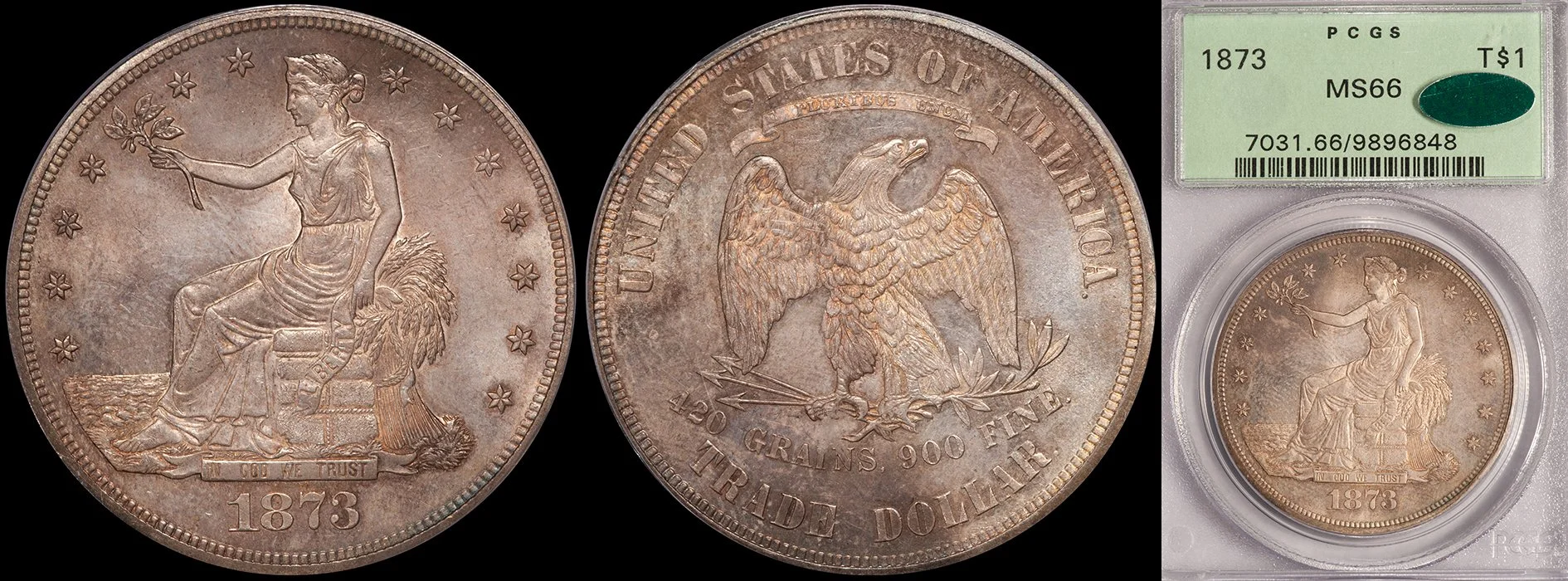
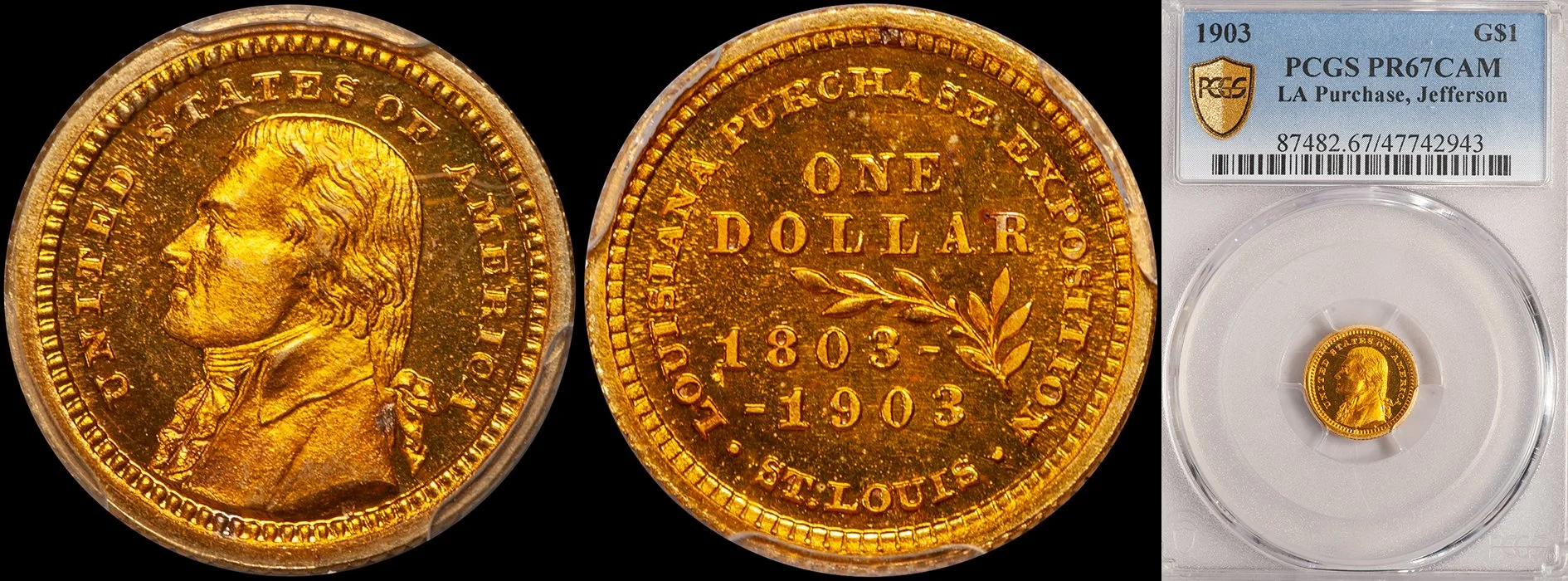
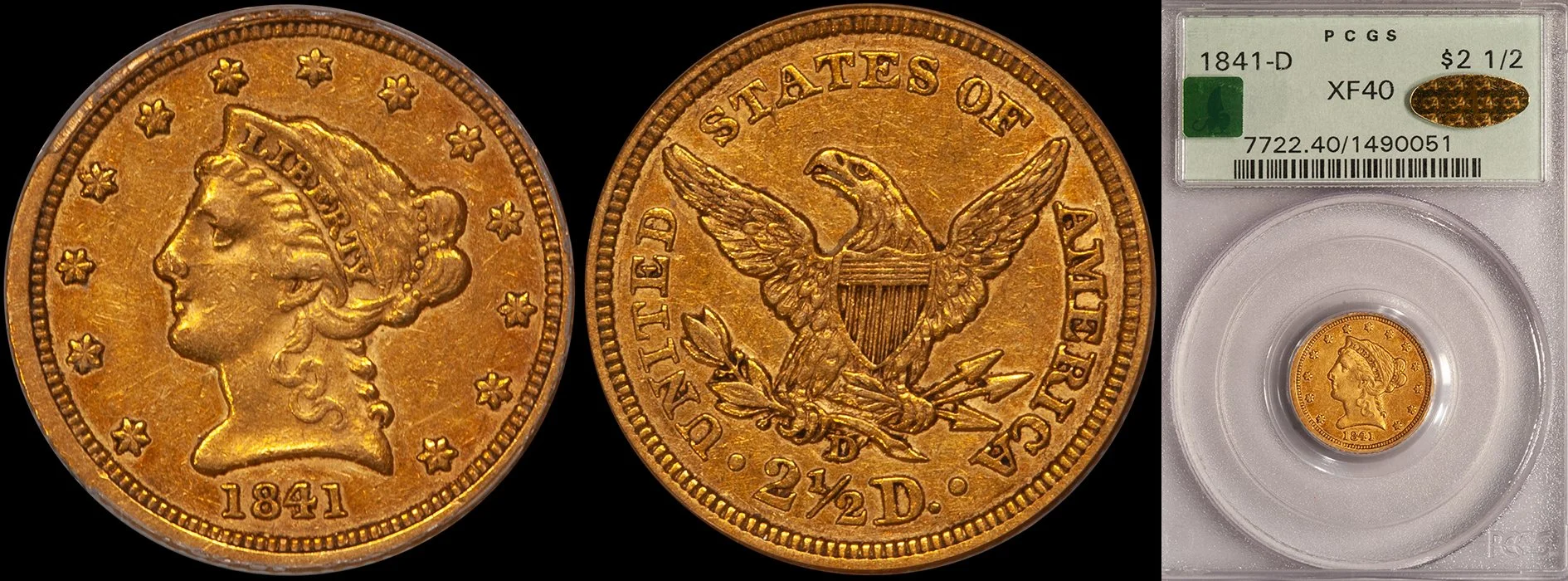
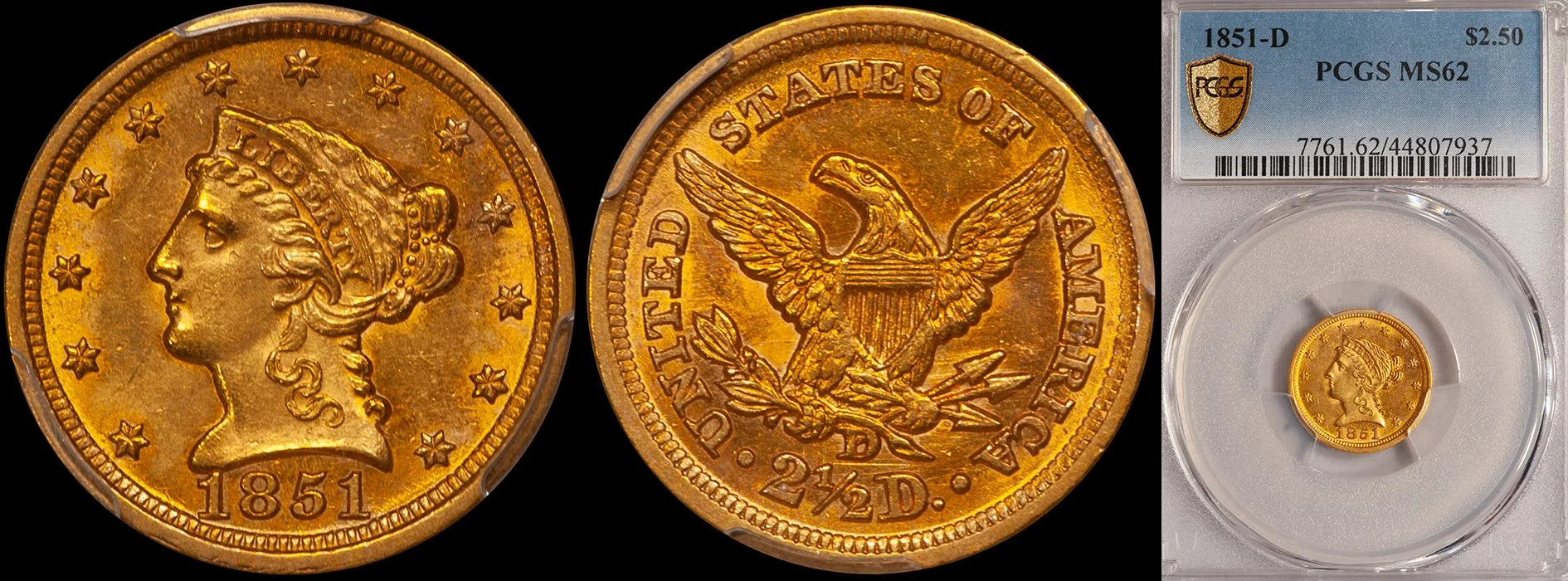
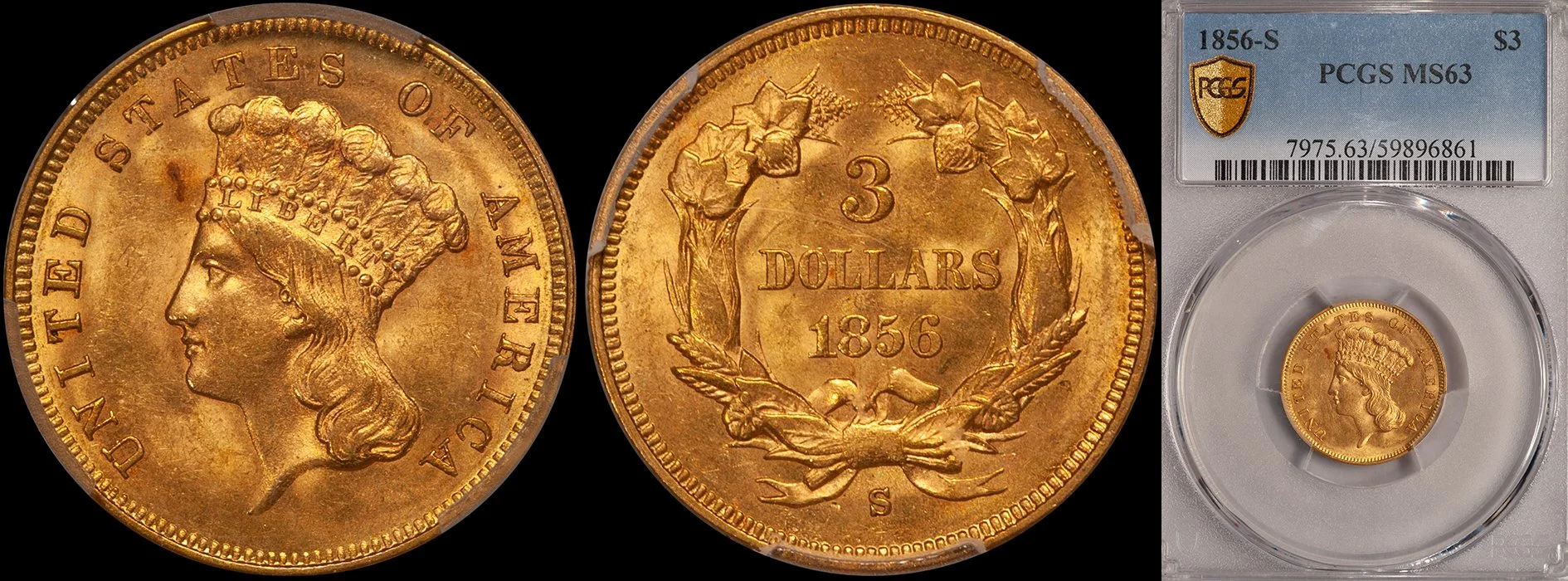
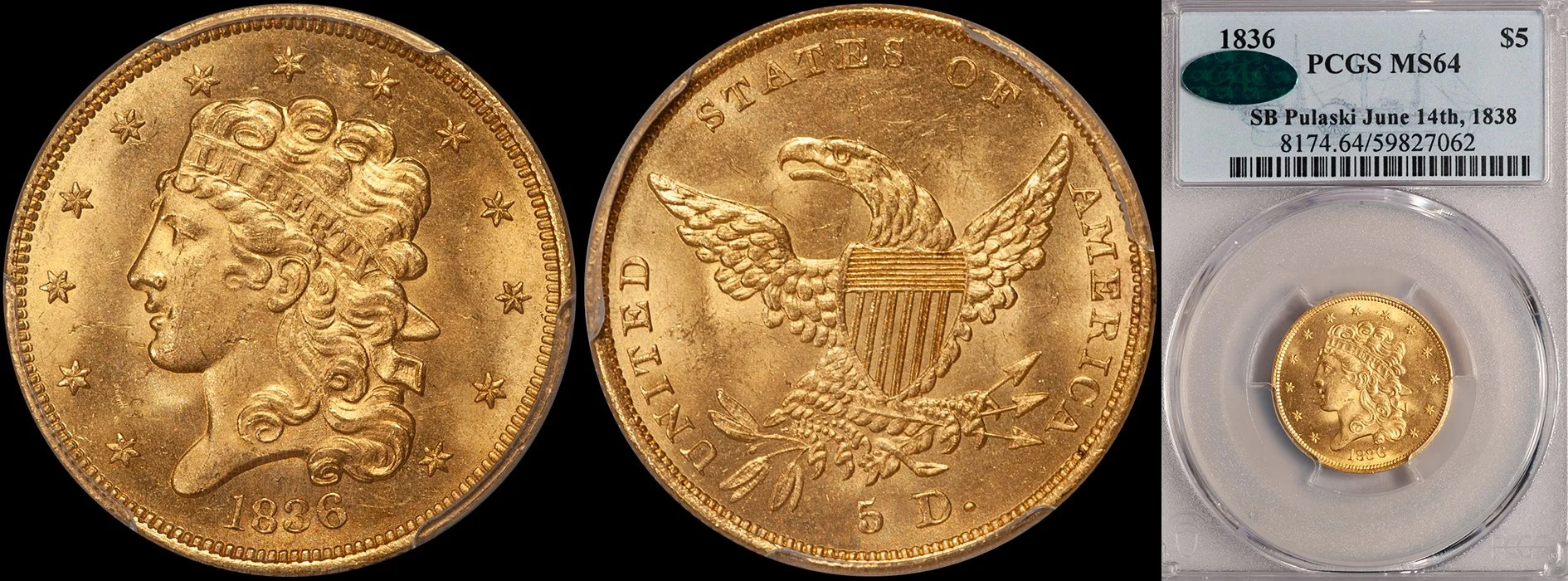
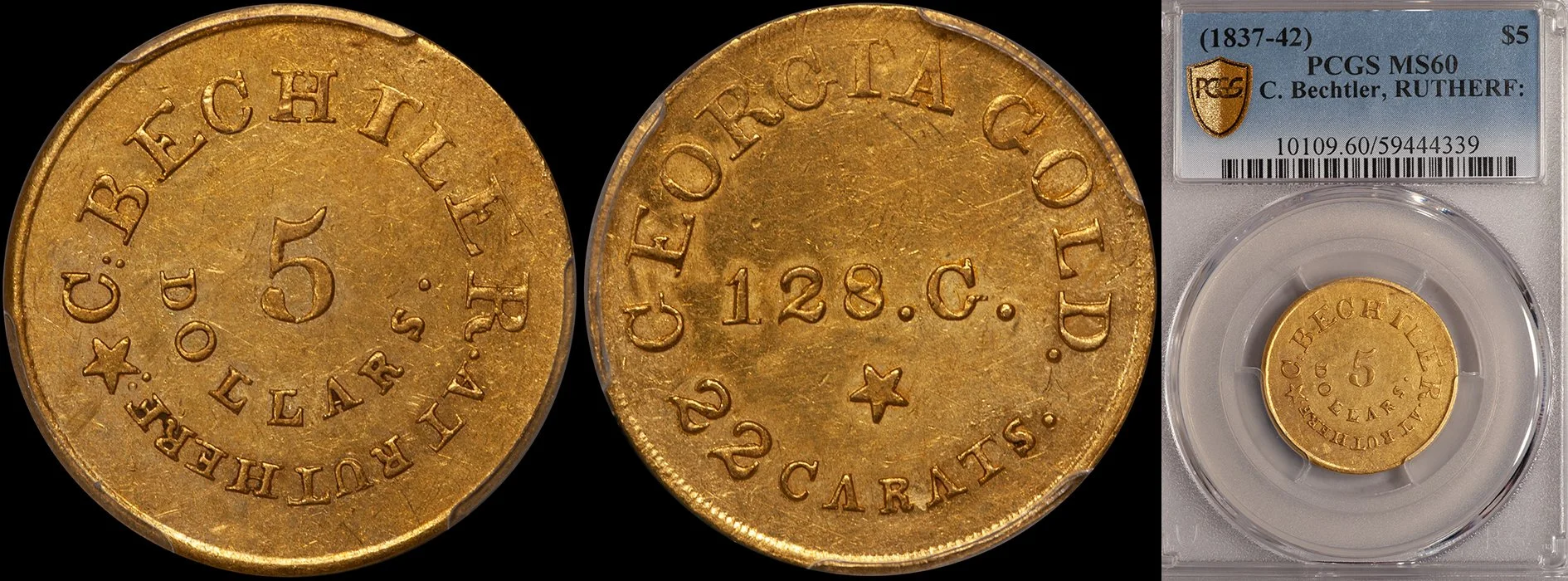
In the last five years, my website raregoldcoins.com has become a primary focus in my business. It has been interesting to observe which coins sell the most quickly and why, in my opinion, they do. I’d like to pass on some of the lessons I’ve learned as I believe it will help you make better decisions when it comes to your collection.ntage Adidas jackets and sporting event tickets. But when it comes to buying coins on Ebay, I think I’m pretty much done. 1. Photogenic coins sell. In this instance the term “photogenic” is interchangeable with the more numismatic term “eye appeal.” When I buy a coin which has really pretty color or which has great luster or which has a very sharp strike (or, better yet, a combination of all these attributes) I can be reasonably certain the coin will sell well. If a coin has a glaring negative attribute that is readily apparent in an image, it is likely to be a hard sell. As an example, an otherwise nice coin which has a large grease spot on Liberty’s cheek will be hard to sell, even if the coin is quite rare. When you are putting together a collection, buy coins that are pretty.

2. Coins in the right pricing “sweet spot” sell. For me, this pricing zone is in the $2,500 to $7,500 range. There are coin dealers who seem to be able to sell lots of $25,000+ coins. (I certainly sell my fair share of them). But once you get past $10,000 or so, the air gets pretty thin in most series and liquidity drops. That’s why I like interesting coins in the $2,500-7,500 range. They are generally quite liquid and I can turn over my inventory a lot more quickly when I’m selling coins in this price range then when I’m selling expensive coins. Let me add that I have no problem with buying expensive coins but that my resistance level increases based on the series. In other words, with early gold coins, there are virtually no decent pieces available in the $2,500-7,500 and I would expand this sweet spot to $10,000-20,000. But with Charlotte, Dahlonega and New Orleans issues, I feel that there is excellent value in the lower price range(s) and my focus shifts accordingly. I will certainly buy a $20,000 Charlotte or Dahlonega coin but it has to be pretty special to get me interested.

3. Interesting coins sell. People like coins which can be summarized in a few words or less. The 1838-C half eagle is popular because it’s a first year of issue and it’s the only Classic Head half eagle from the Charlotte mint. Even if you aren’t a specialist in Charlotte coinage, you are likely to quickly discern the appeal of this coin. In the same series, an 1844-C half eagle may not be an easy to sell. It is clearly a scarcer date than the 1838-C but its range of appeal is limited to collectors who specialize in Charlotte gold coinage; whereas the 1838-C might appeal to type collectors, date collectors and people who just like neat coins. There are other “neatness factors” that appeal to collectors: very low mintage figures, unusual designs, key date status, good pedigrees and large size are all positive attributes. If a coin which I am being offered for sale has one or more of these attributes, the chances are good that I will add it to my inventory. A collection that contains interesting coins is a collection that I would be very pleased to purchase from its owner.

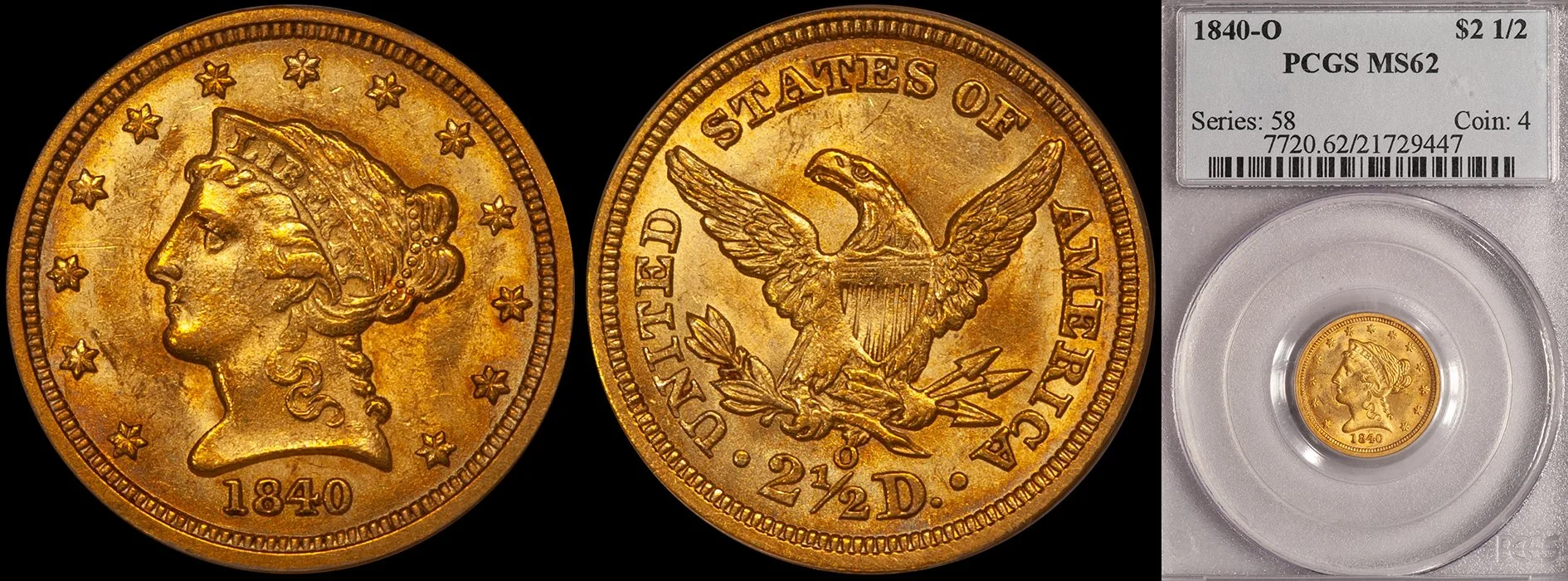
4. Coins have to be properly priced. In this day and age, it is reasonably easy for a collector to determine how much the last four AU55 1840-0 quarter eagles have brought at auction. If I price a coin comparably to these four auction records (and it is a decent looking piece) the chances are good that it will sell. If I price my coin at 50% more than the last four records, it won’t sell. Now there are exceptions to this rule. Coins that do not trade regularly at auction (like the same 1840-O quarter eagle but in MS63) are much harder to price. And certain coins (like an 1880-O eagle in AU50 or better grades) are clearly undervalued and are worth more than most published pricing guides suggest.

5. Rare coins sell. This sounds obvious but it is a point that needs to be reiterated. Whenever I list a really rare coin for sale (like an 1861-D gold dollar, an 1847-O half eagle or an 1870-CC eagle) it sells quickly and receives multiple enquiries. People want to own rare coins, especially if they are attractive and fairly priced. If I had to chose between, say, an 1870-CC eagle in EF45 and an 1873-CC eagle in AU55 (an issue which is rarer than the 1870-CC in higher grade yet priced comparably) I would always choose the former. Unless you are putting together a date set, focus on the rare dates for each series.

So what doesn’t sell? Obviously, I don’t go out and try to purchase coins for my inventory that are going to sit around for months and stagnate. But there are patterns I see on my website and these are patterns which you should avoid when assembling your collection:

1. No matter how rare the coin, certain series are really hard to sell. An example of this would be Liberty Head San Francisco eagles. Even if I have a really attractive, fairly priced example of a very rare issue like an 1863-S this is a hard coin to sell unless I happen to be working with a specialist collector who needs this specific date. I try to avoid thin, highly specialized markets.

2. Even if they are cheap, I avoid ugly coins. On more than one occasion, I’ve bought a coin at auction because it’s been too cheap to resist. But it’s been cheap for a good reason: it has heavily abraded surfaces or it is obviously scrubbed or it is very poorly struck. You get what you pay for and if you are buying coins based solely on price, you are destined to have a collection full of duds.

3. Ubiquitous coins are hard to sell as well. If I listed a bunch of common and semi-common Liberty Head half eagles or had a long list of common Saint Gaudens double eagles, the chances are good that they wouldn’t sell, even if they were genuinely nice coins for the grade or if they were priced competitively. Buyers go on my website looking for rare gold coins. You are building a rare coin collection. Always keep the word “rare” in mind when you are considering adding a coin to your set.

I Hate Ebay

It’s official. I hate Ebay. This is a pretty big statement coming from someone who has, in the past, been an enthusiastic user and supporter of Ebay. And I still do use Ebay to look for knick-knacks like National Bank postcards, vintage Adidas jackets and sporting event tickets. But when it comes to buying coins on Ebay, I think I’m pretty much done. For the sort of coins that I am interested in, the selection of coins on Ebay has gotten pretty dismal. With a few exceptions, most of the coins are either cleaned no-grades or they are housed in third-world slabs (including a few so-called grading companies that even I haven’t heard of!). Yes, there are occasionally a few interesting, fresh coins but, man, do you have to troll through a lot of trash to find the occasional jewel.

For me, it’s a question of time. If I want to spend time searching through coins online (and at this point in my life I’d like to think I have a few better things to do…) I’d rather spend an hour on the Heritage website going through their 7,000+ Signature Sale lots. There seems to be a lot more of a payoff on an auction site specifically designed for coins than on one like Ebay, where coins are one of hundreds of categories.

Ebay really is like the world’s biggest flea market. It’s as if every item was dumped on a table and you have to sort through it (with the assistance of some pretty nifty technology…). I’m tired of the lousy images, the poor descriptions and the games that you know many of the sellers are playing.

And when I do bid on something on Ebay…ah, that’s when the fun begins. It seems that every day I get yet another Phishing email from someone trying to get my account number or password or credit card number. When I bid with Heritage, I might get a little too much spam but at least I don’t get Phished three times a day. Not to mention the fake post-sale re-offering of lots from my friend Vladimir in Estonia.

With Ebay, I just don’t feel a sense of security anymore. Sure, I’m willing to bid on a $65 Adidas jacket but I’m very hesitant to bid on a $5,000 coin from a seller that I don’t know. I think that Ebay’s caveat emptor attitude is tiresome.

Ebay would argue that their feedback system is safe and it represents the market policing itself. I say that is a crock. I have seen coin sellers with extremely high feedback rates (and hundreds—if not thousands-- of transactions) that I wouldn’t trust as far as I could throw them. When I bid in an online coin auction with Heritage or ANR or Goldberg, I know exactly who I am dealing with and I have recourse in case there is a problem. In Ebay’s world, you’re on your own.

Another thing that drives me crazy about Ebay is sniping. Yes, I know that I can use software that enables me to bid 0.01 seconds before a lot closes. But why should I have to go through the hassle? The problem with Ebay is that I never feel secure enough about the whole process to bid my maximum early in the game.

I’m not certain that I’ll ever be able to totally resist the allure of Ebay. I can think of at least three items I purchased on Ebay that I’ve made alot of money on. The greedy side of my nature thinks there is another five-figure payday waiting for me at the end of the Ebay Rainbow and I guess I’ll have to check the coin listings every now and then to find that special New Orleans double eagle or Dahlonega gold dollar.

But that doesn’t mean that I’m going to enjoy my Ebay experience any more than I already do…not.

Proposed New Grading System

Oh great…just what we need: more numbers to further complicate grading. I’ve got a proposal that doesn’t entail expanding the current Sheldon scale or creating new adjectives. But I think it could be very beneficial to collectors. Let me run it by you and see what you think. Back in the early to mid 1980’s, before the creation of PCGS and NGC, I knew a few reputable dealers who employed an expanded numerical grading system. This system never really caught on but the more I think about it, the more I like it.

A sample grade using this system would be as follows:

1886 $2.50 MS65 A/B/A/B/B

Basically what this means is that an 1886 quarter eagle has been graded MS65 and it is rated as an A for strike, B for luster, A for color, B for surface quality and B for overall eye appeal. This system was used, in a form somewhat similar to this, by ANACS back when they were the only game in town and graded coins using photo-certificates. What if PCGS and NGC decided to use this system and these expanded ratings appeared on their holders?

There are, of course, good things and bad things about this system. The good things are that these expanded grades tell a potential buyer more about a coin that just the simple grade of “MS65.” The negative aspect is that it potentially adds more subjectivity to a system that has already been accused of being too subjective.

But I don’t think this system is a negative. I think if standards are created within each series, than a system with expanded grade modifiers could be very helpful to the collector.

As an example, rating a coin from “A” to “F” based on strike is really not all that difficult. In the case of an 1886 quarter eagle—an issue that is generally seen very well struck—most examples will garner either an “A” or a “B.” What would be more difficult is an issue like an 1844-O eagle which shows a wide variation in strike. My answer for this is that only a few 1844-O eagles will be given an “A” for strike; most will be called a “B” or even a “C.”

Luster is not difficult to categorize. A coin either has superior luster (which means it will be given an “A”) or it has inferior luster (it will, in this case, probably be given a “C”).

Coloration on gold coins does not presently carry the weight that it does on silver so it should not prove to be as controversial to call a coin an “A” when it comes to this factor. However, there are certainly some subjective areas here, especially when it comes to circulated coins. As an example, I tend to not like coins which have what I call a “Euro Grime” look. These are coins that have been stored in European bank vaults for 50-100 years and they have developed a dark golden color with blackish highlights. Other people do like this color and think coins with this look are “original.”

Surface preservation is also reasonably easy to categorize. A coin with very clean surfaces for the grade and issue is clearly easy to identify as is a coin with heavily marked surfaces. Certain issues, like Type Two double eagles from San Francisco, are almost never seen with choice surfaces so an example that was given an “A” for its surfaces might be more desirable than one given a “C.”

The really difficult category would be the fifth and final one: eye appeal. This is clearly the most subjective of these categories. A coin that one person finds appealing might be looked at as unappealing by others. However, I think that experts can reach a very high level of consensus on eye appeal. If you show a certain Dahlonega half eagle to ten experts, I think that nine or ten of these people would consistently agree that this coin has “A” level eye appeal.

If all coins were given these five categories, it would be interesting to see the effect on pricing. Obviously, an 1886 quarter eagle in MS65 that was rated as A/A/A/B/A would sell for more money than a similarly graded coin that was rated as B/B/B/A/B.

I’ve read about possible changes to the Sheldon system which include expanding to a 100 point system. I hate this idea. But changing the current 70 point system to a system with five ranked categories just might make sense.

Fat Head Fives: A Date By Date Analysis Part One: 1813-1824

The half eagles struck from 1813 through 1834 have been given the appellation of the “Fat Head” design, due to the uncommonly large size of Liberty’s head and neck. John Reich’s half eagles of this era certainly have a “so ugly it’s charming” quality about them. But while they will probably never win a beauty contest, they are a fascinating series of coins which contain a host of great rarities. There are two major types of half eagle known with this design. The first, struck from 1813 to 1829, has a smaller bust with a larger sized planchet. There were a total of 667,536 pieces produced. The second, struck from 1829 through 1834, was modified by William Kneass and these coins show size reduction in the date, stars and lettering as a reduced diameter. There were 700,279 coins struck.

The Fat Head half eagles are a good example why a coin’s true rarity can not be gauged solely by its original mintage figure. The vast majority of half eagles struck between 1813 and 1834 were melted and the survival rate for most dates tends to be well under 1% of the original production.

Very few collectors attempt to collect Fat Head half eagles by date. This is due to the extreme rarity of most of these coins and their per-coin price levels. There is only one date in the entire series that is reasonably available (the 1813) and one (the 1822) is considered by many collectors to be among the greatest of all United States numismatic rarities. That said, these coins have become very popular with collectors in the past few years.

This date-by-date analysis is not meant to be a standard reference on this series. Rather, I intend to touch on some basic points on each date so that the collector can make informed decisions if and when he is considering the addition of one of these coins for his type (or date) set.

1813

As mentioned above, the 1813 is by far the most available date of this type. There were a total of 95,428 struck of which an estimated 600-900+ are known today. This is one of the few dates of this design that appears to have actually circulated and examples can be found in grades as low as Extremely Fine. The 1813 is reasonably common in all circulated grades and can even be found in the lower Uncirculated grades without a huge amount of effort. It becomes rare in MS63 and it is very rare in properly graded MS64. Gems are extremely rare. Most 1813 half eagles are yellow-gold or green-gold and have very frosty luster. The strike is usually sharp at the centers but weak at the borders with many of the denticles not completely defined. I have seen a number with adjustment marks and others with dark spots. Due to the availability of this date, it is the perfect Fat Head Five for the collector seeking a single piece for a type set.

There are two varieties known. The more common shows the first S in STATES over the right side of the E in E PLURIBUS UNUM. The scarcer variety has the first S over the left side of the E.

1814/3

The mintage for this date has traditionally been believed to be 15,454 coins but some contemporary researchers believe that the actual figure might be as low as 10,000. Given the fact that there are probably no more than 75-100 examples known, I would tend to concur with the lower mintage. This variety shows a clear overdate and it is considerably rarer than the 1813 although it does not get a substantial premium over this common issue, especially in lower grades. The 1814/3 tends to be much better struck than the 1813 with strong detail noted at the centers and borders. The color is typically a deep green-gold hue which is sometimes accentuated by orange-gold shadings. The luster is frosty but not as good as seen as on the 1813. The 1814/3 is usually seen in AU to MS61 grades. It is very scarce in MS62 and rare in properly graded MS63. This is a very rare issue in MS64 and I am not aware of a single coin that could be called a Gem by today’s standards.

There is just a single variety known. The reverse is the same as seen on the second variety struck in 1813 and it was also used to produce the very rare 1815 half eagles.

1815 The 1815 has the lowest mintage figure of any half eagle of this type. Only 635 are believed to have been struck. There are approximately a dozen pieces known and this includes five pieces that are housed in museums. The last example to be sold was the lovely AU58 from the Bass collection that was previously in the Eliasberg sale. It sold for $103,500 in 1999, a figure that seems extremely cheap today. There is a single Gem known (ex: Naftzger collection) which is graded MS65 by PCGS and is in a well-known private collection that, in my opinion, is one of the most impressive early gold coins in existence. This tends to be a well-produced issue with a good strike. The Bass II: 805; Eliasberg coin has superb rich coppery coloration and the other Bass coin (ex Norweb, Farouk), which is housed in the ANA Museum, is attractively toned as well.

All 1815 half eagles have the same reverse as that seen on the second variety of 1813 half eagles and on all 1814’s.

1818

There were no half eagles struck in 1816 or 1817. Coinage resumed in 1818 and a total of 48,588 pieces were produced. There are three important varieties known and these are as follows:

Normal Reverse: This variety is easily distinguished by ample space between the words STATES and OF. This is the second most available of the three varieties. There are around five to six dozen pieces known. Unlike the other two varieties, the Normal reverse is sometimes seen in relatively low grades; I have personally handled at least two in EF40. This variety is most often seen in AU50 to AU55 and it is quite scarce in the lower Uncirculated grades. It is rare in properly graded MS62 and very rare in MS63 or better. There is a single MS65 that has been graded by PCGS while NGC shows a solitary Gem as well. This is the best struck of the three varieties and most are very bold at the centers and borders. Most have rich orange-gold color, very frosty luster and numerous marks on the surfaces.

STATESOF Reverse: On this variety, there is no spacing between these words. It is the most available of the three 1818 half eagles with as many as 125-150 pieces believed to exist. This variety is seldom seen in grades below AU55, suggesting that it did not see a great deal of commercial usage. It is somewhat available in the lower Uncirculated grades and sometimes seen in grades as high as MS63 but it is very rare above this. PCGS has graded one coin in MS66 (ex: Norman Stack type set) which is among the best Fat Head half eagles of this type that I have ever seen. This variety is often somewhat weak at the centers and some of the denticles are not fully brought up as well. The luster is often frosty and the natural coloration is a handsome canary yellow hue.

5D/50 Reverse: This is the rarest of the three varieties known for this year but it is not as rare as has been claimed in the past. This variety was created when the D in 5D was inadvertently punched over a 0. This reverse was used again in 1819. There are an estimated 30-40 pieces known and most are in the AU55 to MS60 range. PCGS has graded two Gems (an MS65 and an MS66) and there appear to be around four to six pieces known in the MS63 to MS64 range. The strike is usually somewhat weak at the borders while the curls are not fully brought up. The natural coloration is a distinctive green-gold hue while the luster is very frosty and sometimes has some semi-prooflike reflectiveness in the fields. Most examples are somewhat scuffy and at least a few have light mint-made adjustment marks.

1819

While the mintage figure for this date is reported to be 51,723, it is believed that this might include coins dated 1820. Whatever the actual number struck (and I personally believe the number is significantly lower than 51,723), the 1819 is unquestionably a very rare coin with an estimated 20-30 pieces known. There are two significant varieties known to exist. The first uses the 5D/50 reverse that is found on 1818 half eagles. This is the more available of the two and it is likely that around 15-22 exist. This includes one or two Gems (PCGS and NGC have both graded coins MS65 although I am not certain if these are the same) and a small number in the MS63 to MS64 range.

The second variety of 1819 half eagle has a different date with the numerals much closer and a normal reverse without the 5D/50 blunder. This is a very rare coin with as few as 5-8 examples known. PCGS has only graded one in any grade (an MS61) while NGC has graded two (an EF40 and an MS60 which may be the same coin as the PCGS MS61). This variety is typically seen only in great collections of early gold and it generally appears at the rate of once every two or three years at auction.

1820

There were more half eagles struck in 1820 than in any other year between the advent of this denomination in 1795 and the beginning of the Classic Head design in 1834. The mintage is reported to be 263,806 but this is somewhat misleading as the great majority of these coins were melted. Today, the 1820 is much scarcer than the 1813 but it is more available than the 1818 and 1814/3. There are no less than nine die varieties of 1820 half eagles including a number of extreme rarities. Most advanced collectors focus on the major varieties of this issue of which there are three. These are as follows:

Square Base 2, Large Letters: There are four die variations of this obvious, naked-eye variety. On the obverse, the base of the 2 is flat while the reverse has the A and the second T in STATES close at the base. This variety is easily the most available of the 1820 half eagles. It is almost always seen in Uncirculated grades and this suggests that most were either melted soon after they were struck or were stored in banks and did not enter commerce. Survivors often have exceptional luster which can be frosty or prooflike in texture and vivid rich yellow-gold or green-gold shadings. Most of the Uncirculated coins that exist are in the MS62 to MS63 range. The current population at PCGS in MS64 (55 coins!) is greatly inflated by resubmissions and Gems are extremely rare.

Curved Base 2, Large Letters: There are two die variations of the 1820 Curved Base 2, Large Letters. The more available of the two has the tip of the bottom arrowhead pointing to the outside of the C in AMERICA. It is unlikely that more than two dozen 1820 Curved Base 2, Large Letters half eagles are known. Most of these are Uncirculated coins and many of these are choice examples that grade in the MS63 to MS64 range. The finest known is a PCGS MS66. When available, this variety tends to come very well struck, with excellent luster and superb green-gold or rich yellow-gold coloration. A Proof exists in the Bass collection at the ANA Museum and this is regarded as the earliest known Proof half eagle. It is an absolutely spectacular coin in person!

Curved Base 2, Small Letters: Three die varieties of the 1820 Curved Base 2 Small Letters are known and all are very rare. In all, it is likely that fewer than fifteen examples exist with nearly all of these grading Uncirculated. Interestingly, the last three that I have seen have all been Gems (two were graded MS65 by PCGS while one was graded MS65 by NGC) and all were superb pieces with amazing detail, blazing semi-prooflike and frosty texture and rich green-gold coloration.

1821

The 1821 is a date that does not receive as much attention as other half eagles from this decade but it is a major rarity. There were reportedly 34,641 pieces struck and if this number is accurate than an amazingly high percentage were melted as it is unlikely that more than 12-15 pieces are known. There are actually two die varieties. The more available has the thirteenth star touching the hair while the rarer shows this star away from the hair. There appear to be around four or five 1821 half eagles known in circulated grades (these are all in the AU53 to AU58 range) while the rest are Uncirculated pieces. The finest known is a single MS66 graded by PCGS and also by NGC. All of the 1821 half eagles that I have personally seen are prooflike with a good strike and greenish-gold coloration. There is at least one Proof known (ex: Norweb collection) and the Bass coin in the ANA Museum is a fully prooflike Gem business strike.

1822

The 1822 half eagle is one of the great rarities in all of American numismatics. There are just three examples known to exist. Two are housed in the Smithsonian Institution and are off the market while the third is in the Pogue collection and was obtained for $687,500 back in 1982 when the Eliasberg collection was auctioned by Bowers and Ruddy.

Time for an Editorial: I have always thought that one of the best ways to solve the never-ending cash crunch at the Smithsonian in relation to the National Numismatic Collection would be to sell one of the 1822 half eagles in the collection. Here’s a coin that would fetch $5 million or thereabouts in the open market and which would focus tremendous attention on the collection. Does the Smithsonian really need two examples of this coin?

1823

The 1823 generally gets lumped in the “semi-available” category of Fat Head half eagles along with the 1814/3, 1818 and 1820 but it is a date that I see less often. The mintage figure was reported to be 14,485 coins but I believe that this is a bit low and the actual number might be more like 17,500-20,000. There are probably in the area of 75-100 known with nearly all of these coins grading at least AU55 to AU58. Uncirculated examples of this date tend to be heavily abraded and generally grade in the MS60 to MS62 range. The 1823 is very rare in MS63 and extremely rare in MS64. NGC has graded one coin in MS65 while PCGS has never graded an example better than MS64. The 1823 is generally weakly struck at the left obverse border and on the curls around the face of Liberty; the reverse is bolder with sharp denticles and good detail on the feathers. The luster is very frosty in texture while the original color tends to be a deep green-gold. Many examples have been dipped.

There is just a single variety known and it shows the Large Letters reverse first used in 1820.

1824

The 1824 is the third most available Fat Head half eagle from this decade but it is a very rare coin in all grades. The original mintage figure is listed at 17,340 but I believe the actual number is somewhat lower than this. I believe that there are around 30-40 pieces known. As with most of the half eagles from this era, the 1824 saw virtually no circulation and there are not more than a small handful of pieces that grade below MS60. Most of the Uncirculated coins are in the MS60 to MS62 range and pieces that grade MS63 are quite rare. The combined PCGS/NGC population of twenty-two coins graded in MS64 is definitely inaccurate and this reflects a few coins that have been submitted multiple times in an attempt to secure a higher grade. There are one or two Gem examples known; both PCGS and NGC have graded an example in MS65 but these may be the same coin.

The 1824 is generally a well struck issue although some show weakness at the obverse border from 9:00 to 12:00. The luster is a bit less frosty than that seen on the 1823 and examples that have not been dipped are often a medium to deep green-gold. Only one die variety is known and it employs the Large Letters reverse first used in 1820.

In Part Two of this article, which will be added to www.raregoldcoins.com in November 2006, we will discuss the 1825-1834 half eagles and offer a number of collecting and grading tips for the series.

Atlanta Coin and Collectibles Expo Show Summary

The Atlanta Coin and Collectibles Expo has real potential. It’s held in an excellent facility which has seen many great shows in the past—including at least one ANA convention. It’s well-run by friendly and efficient people and it has an aura of class that is sadly lacking at most other shows. In fact, it is only missing one thing…attendance. There just weren’t a lot of collectors at the show. The crowds were very light on Thursday and you’d almost have to view this day as wholesale-only. I actually did a decent amount of wholesale business and sold a few five-figure coins. I would have liked to have bought some interesting new material but, to my regret (but not my surprise) there was not much available to purchase. The few new coins I came home with are described and imaged on my website.

I’m told that Friday and Saturday are the more active retail-oriented days of the show. I can’t really offer any incisive comments on this as I bailed out during the early afternoon hours of Friday. I did see most of the major collectors from the Atlanta area and had the chance to speak with a few new collectors who I had not previously met.

In my opinion, there are two major reasons why this show is not doing well and these are problems that, if not corrected soon, will probably do irreparable damage. The first is that the auction that is part of the show has not traditionally been strong; certainly not strong enough to draw any collectors for a special trip down to Atlanta. Secondly, neither PCGS nor NGC were at the show. Simply put, no grading services and no auction of note means no new coins getting made and becoming available for trading among dealers.

Speaking of the auction, I attended the Stack’s/ANR sale on Thursday night. It was an extremely small sale with just 100 or so lots of United States gold. Prices, for the most part, reflected the quality of the coins that were offered. Most of the gold coins appeared not to hit their reserves but the few lots I purchased were extremely reasonable. I would blame the weakness of this sale more on its venue and lack of exciting material than on the market.

From my observation at the show and from conversations with a number of savvy wholesale traders, I can state with no fear of rebuke that the market has clearly slowed down from a few months ago. What is interesting about the current market, though, is the strong degree of realism shown by most of the leading market traders. Certain coins have dropped 15-35% in the past few months but with very few exceptions, I do not see people refusing to believe in these new levels and trying to get “old market” prices for their coins. This is a complete change from past market slowdowns where certain dealers might hold onto their bad deals for years before conceding that, in fact, their values had dropped.

There are still a number of areas that are showing strength. These include Carson City issues of nearly all denominations and price points and early gold. I had four pieces of early gold that I brought to the show and I sold every one of them to dealers for my full asking price. If I had had another four (or maybe even fourteen) similar coins I think I could have sold them as well. New Orleans gold is also selling well. I bought six New Orleans gold coins at the show and sold four of them to collectors. Scarcer half eagles and eagles from New Orleans appear to be in very strong demand right now with a number of collectors beginning sets of these two denominations.

Other areas are clearly showing weakness. Charlotte and Dahlonega gold priced at over $10,000 is very hard to sell right now unless the coin is either really nice or really rare. Common date Three Dollar gold pieces have dropped dramatically in price in the last few months, especially in MS63 to MS66 grades. I actually think the market has overreacted on these coins and they are really good deals at the new, lower levels. Generic gold is also very weak right now, especially Indian Head quarter eagles and half eagles. While I do not encourage speculating in generics, I think that some smart people will make a fortune in the next few months buying depressed series like Liberty Head eagles in MS63 and MS64 or Indian Head half eagles in MS64, running prices up and selling into the market.

At this point, there are not many major shows or auctions left until the end of the year. The forthcoming October Stack’s auctions in New York are impressive and we should see some record-breaking prices. The Baltimore show in November will, in my opinion, be much better than most people expect as this is going to be, for all intents and purposes, the close to the numismatic year.

Winter's New Book Reviewed

A review of my book “Gold Coins of the New Orleans Mint 1839-1909” was recently featured in the on-line publication “The Esylum” dated October 1, 2006 and listed as Volume 9, Issue #40. The Esylum is the online weekly publication of the Numismatic Bibliomania Society and I very highly recommend it to anyone with an appreciation for numismatics as it is a really exceptional publication made all the more wonderful by the fact that it appears, like clockwork, every Sunday night in the in box of my email. To subscribe, contact Wayne Homren (the newsletter’s editor) at his email address which is whomren@coinlibrary.com. BOOK REVIEW: GOLD COINS OF THE NEW ORLEANS MINT 1839-1909

One new book I've had the pleasure to review recently is the second edition of Doug Winter's "Gold Coins of the New Orleans Mint 1839-1909." The 237-page paperback is published by Zyrus Press ($34.95). From the publisher's web site: "In 1989, the first edition of Doug Winter's book Gold Coins of the New Orleans Mint: 1839-1909 was published. It popularized these under-appreciated coins and introduced many new collectors to the field.

In the ensuing two decades, much has changed in the New Orleans gold market. Newly discovered hoards have changed the rarity levels of certain dates while others remain very difficult to locate."

Well, it hasn't quite been two decades since 1989, and the book wasn't published in 1989, it was published in 1992. Still, fourteen years between editions is a long time. But it's been worth the wait. The new edition is much improved, starting with the all-new enlarged color images of each coin. But this new edition is more than just an update - it is essentially a new book with completely updated information encompassing all that has been learned about the series in the past fourteen years.

One of the biggest changes, acknowledged by the author in his preface, is the number of post-1880 eagles that are now known. He writes: "Substantial quantities of these coins have been found in Europe since 1992. In some cases, total populations have doubled or even tripled and I don't doubt that the numbers will continue to rise in the coming years."

For example, I turned randomly to the entry for 1894-O Eagles and compared it with the corresponding entry in my copy of the first edition. Of the original mintage (still believed to be 107,500), the total number known is now 550-750+, whereas at the time of the first edition only 140-160 were known.

The layout of each entry follows a common format and is very easy to read, another great improvement over the first edition. Mintage, Rarity Rankings, Strike, Surfaces, Luster, Coloration, Eye Appeal, Die Characteristics, Major Varieties, Significant Pieces Known, Auction Records, and Total Known (with a breakdown by grade) are listed for each coin.

To address what he felt were two major shortcomings of the first edition, the author included research articles which in my opinion, are worth the price of the book alone. In his Preface, Winter writes "[in the first book] ... there was virtually no information about the history of the New Orleans Mint. I am not a historian and I felt that my contributions about this topic would be unoriginal at best. I commissioned Greg Lambousy, the Director of Collections of the Louisiana State Museum, who wrote what I feel is a simply brilliant concise history of the Mint. Also, David Ginsberg has written an article about how gold coins of this era circulated; a study that will explain exactly why so many of these coins are so rare today.”

Lambousy's article draws on many of the known sources in numismatic literature such as the 1862 Harper's New Monthly Magazine article "Making Money" and writings by and about Mint official John Leonard Riddell, but it also references a number of much lesser known sources. The bibliography is quite complete to my knowledge, although I didn't see a reference to the 1846 Merchants Magazine and Commercial Review article by Freeman Hunt titled "United States Branch Mint at New Orleans." The thirteen-page article includes two pages of photos of the interior of the New Orleans Mint and its workers, courtesy of the Louisiana State Museum.

I have to agree with Winter that Lambousy's article is a very valuable concise history of the Mint, and well worth reading. There are some great tidbits of history here, numismatic and otherwise, such as Riddell's invention of the rotary ingot machine, and brothers Rufus and Philos Tyler's invention and patenting of the silver dollar counting table. Along the way there are interesting diversions into Riddell's conflicts with fellow workers, structural problems of the Mint building, control of the Mint under the Confederacy, and story of William Mumford who was hanged by Union forces in front of the Mint of June 7th, 1862.

David Ginsberg's article is equally original, well-researched, and interesting to read. In addition to consulting some of my own favorite references on this era (Carothers' "Fractional Money" and Gibbons' "The Banks of New York, Their Dealers, The Clearing House, and the Panic of 1857," Ginsburg uncovered a number of valuable other sources including an 1843 publication, "The Letters of Lowndes, Addressed to the Hon. John C. Calhoun." The book has a priceless account, reprinted here, of a traveler's maddeningly difficult cross-country journey while attempting to conduct commerce with a mishmash of different paper money issues. Such difficulties make it easy to understand how having gold coinage could greatly ease the problem of traveling to distant parts of the country in those days.

On page 88 Winter reprints a delightful account by David Akers of "Debunking the Myth of the '1841-O Half Eagle,' taken from the October 1997 Pittman I catalog. It's the story of John J. Pittman's 1841-C Half Eagle, which he purchased in the Farouk sale. The coin had earlier been part of the Col. E.H.R. Green collection. The New York firm Stack's had a beautiful album of photographs of the Green Half Eagle collection in their research library, and Walter Breen reviewed it while researching his monograph on U.S. Half Eagles.

"Because of the shadows on the photo, the C mintmark looked like an O to him, so Breen mistook it for an example of the legendary (but non- existent) 1841-O." Breen's mistake was taken as fact and carried on through the decades while the grinning Pittman would neither confirm nor deny the existence of the coin, saying only coyly, "It pays to look at every lot!" Pittman later admitted "I always knew there was no such thing as an 1841-O Half Eagle, but I had so much fun going along with Breen's story."

Three Dollar Gold Pieces From the 1880's

As I have mentioned before, I have long been a fan of the low mintage Three Dollar gold pieces struck during the 1880’s. I like these coins because of their very low original mintage figures and their relative affordability. Even though the Three Dollar gold series is currently showing a slowdown after two or three years of intense activity, these particular issues are still in great demand. Let’s take a quick look at these low mintage Threes from the 1880’s. 1881: This is the rarest of the five issues we are focusing on, from the standpoint of high grade rarity. There were just 500 pieces struck for circulation of which an estimated 100-150 are known today. Unlike many of the other Three Dollar gold pieces from the 1880’s, the 1881 was not saved by contemporary dealers and hoarders and most of the survivors are in the EF40 to AU55 grade range. This issue is nearly always seen with prooflike surfaces but most have poor eye appeal due to the fact that they have been cleaned or dipped. In addition, most have major abrasions in the fields and many show hairlines as well. There are probably no more than two dozen known in Uncirculated and many of these are marginal quality coins that grade MS60 to MS61. A properly graded MS62 is extremely scarce while an MS63 is rare. I know of approximately four or five examples that grade MS64 and just one Gem: a superb MS66 that has been graded by PCGS.

This is an issue that, in my opinion, is worth full Trends, if not more. For a nice AU55, I would expect to pay in the area of $8,000 to $10,000 while an AU58 is worth around $9,000 to $12,000. The Trends values for Uncirculated examples are fairly accurate although I think that a PCGS MS65 might actually bring more than the current Trends listing of $65,000.

1883: A fairly large percentage of the original mintage of 900 examples struck has survived. I would estimate that there are 200-250 pieces known and very few of these grade below AU53 to AU55, suggesting that the 1883 did not readily circulate. This issue is not really all that rare in the lower Uncirclated grades but it becomes rare in MS62 to MS63 and it is very are in MS64 and better. Most 1883’s are prooflike and many show very nice original color, unlike the 1881 which is almost never seen with good eye appeal.

In the last few months, I have sold a number of nice AU 1883 Three Dollar gold pieces in the higher AU grades for under $5,500. I still can’t get over what a great deal this is. Think about it. A United States gold coin with a mintage of fewer than 1,000 business strikes in very presentable condition for such a reasonable price. Here’s another thing to think about when pondering the 1883 (or any of these other dates). A very common date Three Dollar gold piece in AU58 will cost the collector $2,250 or so. For a little more than double this number, he can buy a truly scarce coin like an 1883. Seems like a no-brainer to me…

1884: For many years this date was my “secret sleeper” in the Three Dollar gold series. I would buy every single example I could find and despite being willing to pay more than anyone else for this date I was still not able to buy many. The 1884 is the second rarest collectible date in the series (trailing only the 1877) as far as overall rarity is concerned. There were 1,000 examples struck of which an estimated 100-125 are known today. The majority of these grade MS60 or better, suggesting that the 1884 was a date that did not see much—if any—circulation. This is borne out by the fact that PCGS has graded only two coins lower than AU55.

I believe that the 1884 remains very undervalued. The current issue of Trends shows a value of $5,000 for this date in AU55 as opposed to $4,000 for the 1883 and $4,500 for the 1886. Given the rarity of the 1884 it should be priced at a premium of at least 50% over these two dates. In MS62, the 1884 is accorded a Trends value of $12,000. This is the same as for the 1885 in this grade and just $1,000 more than the 1883 and the 1886. I would suggest that if you are offered an 1884 at anywhere near Trends prices, you should purchase it.

1885: A total of 801 business strikes were produced. The 1885 was saved in much greater quantity than the 1884. An estimated 200-250 pieces are known; giving this date one of the highest survival rate of any 19th century American gold coin produced for circulation. That said, the 1885 is still a tough coin to locate and I have always found examples to be easy sellers when they are in my inventory. The overall eye appeal for this date is probably the best of the five in our discussion and there are some higher grade 1885’s known with superb color and luster.

The 1885 is almost never seen in grades below AU55 to AU58. It is scarce but still obtainable in the lower Uncirculated grades and only moderately rare in MS63 to MS64 (the PCGS and NGC population figures for MS63 and MS64 coins, by the way, are hugely inflated by resubmissions). I estimate there are as many as eight to ten Gems known and the finest I am aware of is a superb PCGS MS67.

1886: The 1886 has the exact same business strike mintage figure as the 1884: 1,000 pieces. The 1886 is less scarce than the 1884 in terms of overall rarity but it is much scarcer in higher grades. In fact, the 1886 is the second rarest of these five low mintage dates in Uncirculated, trailing only the 1881. There are an estimated 150-200 examples known with perhaps as many as 20-30 known in Uncirculated. The 1886 is generally seen with Prooflike surfaces. Many have been cleaned at one time and, for some reason, this date is found with deeper and more intense abrasions on its surfaces than are other Three Dollar gold pieces from this era.

Most 1886 Three Dollar gold pieces are found in the AU50 to MS60 range. This date is quite scarce in MS61 to MS62. It becomes very rare in MS63 and it is extremely rare in MS64. I am aware of just one Gem: a PCGS MS65 which I recently sold and which was earlier in the Richard Jewell collection (it is plated in my book on Three Dollar gold pieces). Current Trends values for this date are very low, in my opinion, and any example that can be bought for 80-100% of Trends is an excellent value, especially in MS60 and higher.

New Orleans Eagles

You my have heard the slogans “brown is the new black” or “50 is the new 40” used in the mass media by some trend-sniffing writer. I’ve sensed a new trend in the area of rare gold coinage and it’s as follows: “New Orleans Eagles are the new New Orleans Double Eagles.” I know…it sounds silly. But give me a chance to prove this and I think you’ll realize it makes sense. In the past few years, New Orleans double eagles have become massively popular and very expensive. In fact, most collectors have been priced out of the market in this series. Think about it. Two New Orleans double eagles, the 1854-O and the 1856-O, are now selling for upwards of $250,000 for very average quality examples. Five other dates, the 1855-O, 1859-O, 1860-O, 1861-O and 1879-O sell for upwards of $25,000-30,000 for decent quality pieces. Even such formerly affordable issues as the 1857-O and 1858-O are now selling for $10,000-20,000 in the higher AU grades. Want to buy a nice AU55 example of the 1852-O, the most common date in the series? Be ready to fork over $5,500-6,500.

Clearly, New Orleans double eagles are a series that you can’t collect unless you have a significant coin budget.

So what’s a collector to do who likes big coins but who can’t spend $10,000++ on every single piece he needs for his set?

More and more, I am seeing these collectors turn away from New Orleans double eagles and towards their eagle counterparts; especially the No Motto series produced at this mint between 1841 and 1860.

There’s alot to like about No Motto New Orleans eagles. It’s a reasonably short series with just twenty-one coins needed to complete it. There are no in-your-face stoppers like the 1854-O or 1856-O in the double eagle series but there are enough difficult coins that the decision to build a No Motto New Orleans eagle set will prove both challenging and fun. Best of all, the coins are still a great value.

Let’s look at some numbers which prove what a good value these New Orleans eagles really are. Let’s take the most common New Orleans double eagle, the 1852-O and use this as a “baseline” for the double eagle series.

The 1852-O has a Trends value (as of November 2006) of $4,000 in AU50, $7,500 in AU55 and $12,000 in AU58. The most recent PCGS/NGC population figures for this date show that 112 have been graded in AU50, 114 have been graded in AU53, 113 have been graded in AU55 and 106 have been graded in AU58. This is a grand total of 445 coins in the various AU grades. In addition, there have been 31 graded in Uncirculated.

Now let’s compare this with a date in the eagle series that has similar Trends valuations: the 1856-O. The most recent Trends values for this date are $4,000 in AU50, $7,000 in AU55 and $10,000 in AU58. Then, let’s look at the combined PCGS/NGC population figures for this date. The current numbers are 18 coins in AU50, 22 coins in AU53, 22 in AU55 and 18 in AU58. This is a total of 80 coins in AU. In addition, there have been four coins graded in Uncirculated. (by the way, in my opinion, these figures are vastly inflated by resubmissions).

The 1856-O eagle appears to be around five or six times more scarce than the 1852-O double eagle. This makes sense when one considers that the original mintage for the 1856-O is just 14,500 while the 1852-O has a mintage figure of 190,000.

Similar situations exist all through the New Orleans eagle series. Clearly, these coins are very scarce in higher grades (in this case AU50 and above) and they are a lot less expensive than their double eagle counterparts.

So, to rehash my thesis, here’s the skinny on New Orleans double eagles: they are wonderful coins and they are great to collect. But unless you have budgeted around $1 million dollars, you are not going to be able to assemble a complete set and certainly not a set of high quality coins.

The “next best thing” for the collector who likes big, hefty coins is the eagle denomination. And New Orleans eagles are affordable, demonstrably scarce and clearly a good value in comparison to their double eagle counterparts.

I already sense New Orleans eagles gaining in popularity and would not be surprised if values increase considerably in the coming years.

If this series appeals to you, I would suggest you focus on the key issues first and look for high quality examples of the five or six scarcest issues. If and when this series “takes off,” it is likely that the key issues will be in the greatest demand.

Long Beach Show Summary

Going into Long Beach week, I was reasonably certain there was no way that this was going to be a good show. Unlike past Fall Long Beach conventions, this one was only a month after the year’s largest show (the Denver ANA). Gold had taken a terrible beating in the last month and prices for generics had dropped considerably. And many dealers had real cash flow considerations, having recently spent large amounts of cash at the ANA auctions. The recently concluded Long Beach was not an especially memorable show. But, then again, it seems that the last five or six editions of this once-blazing venue have become non-events. On an overall scale from A to F I would rank this edition of Long Beach as a C+. The good news is that it finished on a somewhat upbeat note. The first day and a half was s-l-o-w. Friday was the best day for me at the show. I sold a number of older coins and finally found a few things of interest to buy.

I hate to sound like a broken record but, as usual, there was not a lot of fresh material around to buy. I beat the bushes and was able to find some pretty interesting stuff. Some of the highlights of my new purchases at the show are as follows:

*A complete set of New Orleans gold dollars in MS61 to MS64 grades *An NGC AU55 US Assay Office $50 Slug *An interesting and varied group of New Orleans gold coinage ranging in price from $1,000 to $7,500 *A group of early half eagles including an 1806 in NGC MS63 and an 1813 in NGC MS62

While nearly every dealer I’ve talked to in the past few days admits the market has slowed down, I sure didn’t see the “blood in the streets” that one might have expected. No one is panic selling (at least yet) and I sure as heck don’t see much interesting material coming on the market. In fact, I had a chance to view the coming attractions for three future sales and saw almost nothing of interest.

So what we now have is a supposedly slow market but one with nothing really interesting for sale. I would suggest this means that the market just might not be as slow as we think. You’ll know that things are really slowing down when, as an example, a nice early gold that was an easy sale in the early part of the year becomes harder to sell (at lower levels than before). I, for one, see no lack of interest in certain key areas of the market.

One really interesting market area right now is Three Dollar gold pieces. Prices have clearly dropped on these coins in the past month, especially for common dates in higher grades. But I still see a strong level of demand for rare dates in all grades and I am still an enthusiastic buyer of good coins in this series. If you are a collector of Threes, I urge you to check out the coins I am offering for sale in the upcoming edition of Coin World. In the last few weeks I have quietly sold a number of pieces from a world-class collection of Threes and I still have some incredible pieces available including a number of Finest Known and Condition Census pieces.

I also invite you to check the inventory listings on my website as I have already listed descriptions and images of many of my new purchases from Long Beach. I’d like to blow my own horn for a second and state for the record that no other coin dealer (at least any I know of) has their new purchases up and described as quickly and efficiently as DWN.