Numismatic Market Correction

I am seeing signs that we have been in the midst of a market correction in numismatics. Not a big correction, but a downturn in prices nonetheless. It is hard to say if this correction will continue for some time or if it is temporary. Looking at the history of the coin market and its continual swings up and down, I would say that the near-future of the market is a pretty tough call to make. (I still contend that the existence of the Internet makes the current coin market a completely different beast than the market that existed in the 1980’s and the early 1990’s.) But for the sake of argument, let’s say that prices are going to drop for awhile and that liquidity is not going to be as great as it has been for the last few years. What are the coins that are most likely to be adversely affected and which are most likely to be “safe?”

To be as simplistic as possible, the coins that do worst in a bad market are the worst coins. By this, I mean coins that are ugly or coins that are not rare or coins that are just plain uninteresting. Having lived through a number of bad markets myself, I can tell you that the last thing I will buy in this sort of market is an ugly coin that I know will sit around for months waiting for someone to buy it.

To be more specific, I think that some of the sort of coins that could be really hard to sell in a bad market include the following:

*Unappealing, scrubbed up examples of just about anything. Unless a coin is very rare or in great demand, coins that have zero originality and poor eye appeal are not going to be selling well.

*Unusual date gold coins. I’ve discussed these sorts of items before. Coins like 1895-S eagles. In a good market, coins like this are hard to sell. In a bad market, forget about it. Unless they are essentially priced as common dates (or at a huge discount relative to Trends), it is extremely hard to sell unusual date gold coins in a bad market.

*Boring coins. Try convincing someone to buy a common date Indian Head half eagle in MS62 when the market is crummy. Believe me, its hard enough when the market is good!

*High grade modern coins. The first people who disappear in a bad market are newbies and speculators; the two groups who buy most high grade modern coins.

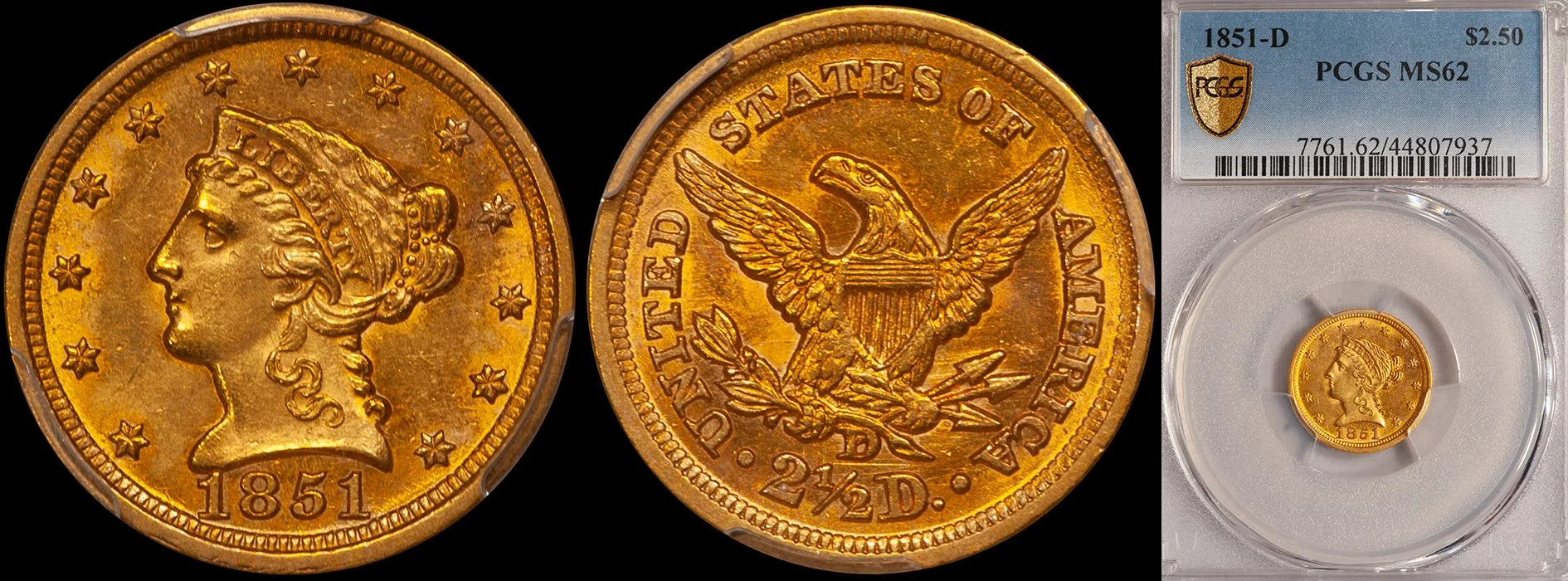
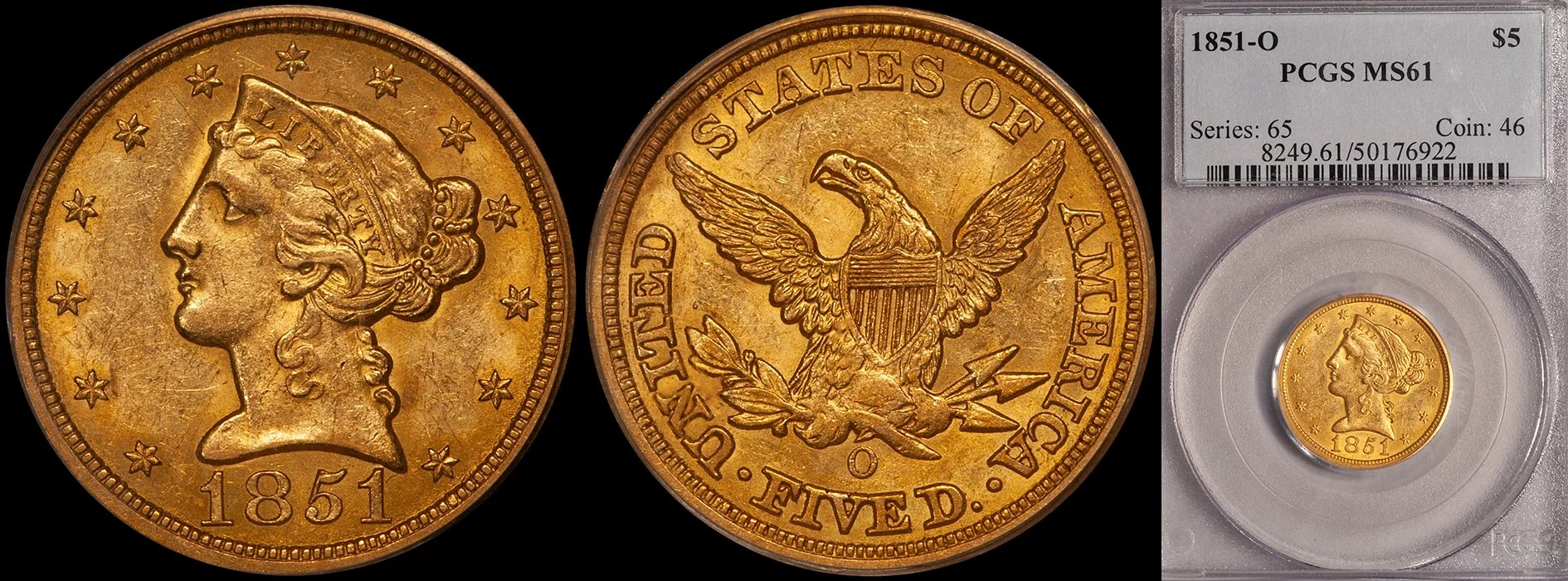
*Coins that have been overpromoted. An example of this is Indian Head quarter eagles. These have been promoted now for well over five years. The promotion has been excellent and prices have risen a lot. At this point, one wonders how much more life this promotion has left.

*Overpriced coins. This is the most subjective category on this list and the hardest to accurately predict. I think most people will agree that High Reliefs are overpriced and that a correction is long overdue. But is a coin like a 1795 eagle overpriced? The market levels for this coin are at an all-time high but who wouldn’t want to own an example of this legendary issue?

What are the types of coins that are safest in a bad market? It doesn’t take a genius to figure out my answer: good coins. During really bad coin markets (like in the early 1990’s), really good coins dropped alot in price. People forget that as recently as 2000-2001, it was very hard to sell expensive coins and I can remember great coins like an 1808 Quarter Eagle in NGC MS63 sitting in my inventory for months and months before I could sell it (and only then at a small loss). But when the market does come back, really good coins come roaring back with a vengeance.

I would suggest that the following types of coins are less likely to get clobbered in a bad market:

*Anything with attractive original surfaces. I predict that in the next market cycle, people will pay huge premiums for gold coins that haven’t been stripped-n-dipped.

*Coins dated in the 1790’s. These coins are now well into their third century of existence and it is hard to not get excited by a gold coin that is this old.

*Key dates in popular series, especially if they are relatively affordable. I recently listed an 1847-O half eagle in PCGS AU50 on my website and was amazed that I got nine orders for the coin in less than a week.

*Coins with great historical backgrounds. A coin made during the Civil War or during the Gold Rush has a great story to tell and one that can be easily told.

*Coins with great pedigrees. In a bad market, the faux collectors and pseudo- dealers get pushed out and the people who really love coins get to have their day in the sun again. These people love the history behind their coins and they are willing to pay extra for a coin that has been owned by a great collector like Harry Bass or Louis Eliasberg.

One last piece of advice. Smart, long-term collectors love weakness (real or perceived) in markets. It’s a chance for them to take advantage of unsophisticated collectors (and dealers) who have no staying power and who panic at the first sign of weakness. I regularly talk to good customers of mine who remind me of certain great coins that we were able to acquire in the early part of this decade at very favorable prices because everyone else was scared to buy them.

Value Compression

An interesting recent trend in the rare gold coin market has been what I refer to as “value compression.” In years past, a small jump in a rare gold coin’s grade could mean an enormous jump in value. But the value jumps between certain grades are not nearly as great as they used to be. Why is this? I think the explanation is relatively simple. In the past, there used to be a lot of visual difference between, say, Extremely Fine-40 and Extremely Fine-45. And the difference between an Extremely Fine-40 and an About Uncirculated-50 coin was quite dramatic.

In today’s world, there often is virtually no aesthetic difference between an EF40 and an EF45 and, often times, an EF40 and an AU50 do not show all that much visual difference. As a result of this, the difference in values between the two levels has shrunken considerably. After all, why pay a premium price for something that does not appear to be tangibly “better?”

A perfect example of this is a common date Charlotte or Dahlonega half eagle in EF40 and AU50. In the past, you could expect to pay at least double—possibly even triple—for an AU50 as opposed to an EF40. As an example, if a nice Extremely Fine 1853-C half eagle was worth around $750-1,000 you could expect to pay around $1,500 to $2,000 for a nice quality AU coin.

Today, the value spread between these two grade ranges has compressed considerably. A nice EF 1853-C half eagle is a $2,500 coin while a solid AU is worth $3,250-3,500. What the market has realized is that there is not enough cosmetic difference between these grade levels to justify paying double or even triple for the higher graded coin.

In many cases I agree with this value compression. But I also think this compression of values has overreacted in some cases, leaving the higher grade coins very undervalued.

Let me give you an example. I recently sold a really nice 1853-C half eagle graded AU58 by NGC to a collector for $4,250. I thought I priced the coin a little on the cheap side but I like this collector a lot and wanted to pass onto him what I thought was a great purchase by me. If I owned a decent but nothing special EF45 example of this date, I would be able to sell it for $2,250 to $2,500. In my opinion, a very nice AU58 coin at around double the price of a decent EF45 is an extremely good value.

I can give you other examples of this but don’t want to beat a dead horse. My point is that with the current compression of values in the rare date gold market, there are some surprisingly good values in the AU55 and AU58 grades.

There are still numerous gold coins where a one point upgrade can mean tens of thousands of dollars in price difference. As an example, the price spread between a 1911-D and a 1915-S half eagle (to name just two) in MS64 to MS65 is well over $100,000. Think about that for a second…a measly one point increase can be the difference between, say, a $50,000 and a $150,000 coin. And the scariest part of that statement is that there are only about three people in the world who can actually tell the difference between an MS64 Indian Head half eagle and an MS65 (actually that’s a bit of an exaggeration…although not by much!).

Because of the demonstrable rarity of coins like a 1911-D or 1914-S half eagle in Gem Uncirculated, it is likely that such coins will always have a large premium over the next grade down. But how about for lower grade Uncirculated coins like MS61 and MS62?

My prediction is that we will see values further compress between the MS60 and MS61 and the MS61 and MS62 range very soon. In most cases, there just isn’t enough visual difference between, say, an MS60 1849-C quarter eagle and the same date in MS62 to justify the current Trends price jump from $25,000 (for an MS60) to $60,000 (for an MS62).

We are already seeing price compression in the AU58 to MS62 price range for small coins like gold dollars. As an example, an 1854-D gold dollar jumps from $15,000 in MS60 to just $20,000 in MS62. Why such a small jump? Because, the vast majority of slabbed MS62 examples of this date aren’t all that much better looking than MS60’s or MS61’s. On bigger coins, like eagles and double eagles, where the visual difference between MS60 and MS62 is more pronounced, it is likely that this price compression will not be as great.

Charlotte Gold Coinage

While doing some research for a new article on the State of the Market of Charlotte Gold (which will be posted on my website on either the 5th or the 6th of September), I thought of an interesting question which applies to any buyer of rare date gold coins. What area of the market has been the best investment in the past decade? As those of you who know me realize, I am not a big advocate of rare coins as an investment. But I am enough of a pragmatist to realize that it is important for any person, no matter how much of a true collector he is, to feel that his rare coin purchases are going to appreciate in value over the course of time.

So, I decided to do a little research project, of which the parameters are as follows: A collector had $10,000 to spend on Charlotte gold coinage in 1996. Would he have done better buying a number of cheaper coins or should he have put all of his eggs in one basket and bought a single big-ticket item? To conduct this project, I’ve decided to use the Redbook as my pricing guide (don’t turn up your nose; the Redbook is actually a surprisingly good pricing source—take a look at the list of contributors and see whose input is being used for gold coinage). I’ve also decided that only PCGS/NGC graded coins can be used in the sample, for the sake of ease and consistency.

Hypothetical collector #1 decided that he was going to purchase coins graded EF40 and EF45 in 1996. According to the 1997 edition of the Redbook (which would have been the most current available edition in 1996), common date Charlotte quarter eagles were valued at $900-1,100 in EF40. So let’s use an average price of $1,000 per coin and say that our collector bought 5 coins with an aggregate cost of $5,000.

This collector also decided to purchase some common date Charlotte half eagles. According to the Redbook, these were valued at $1,200-1,500 in EF40. Let’s use an average price of $1,300 and say that our collector bought four coins with an aggregate cost of $5,200. This would have brought the total cost of his holdings to $10,200.

Hypothetical collector #2 decided to purchase one single “big coin” and focused on a common date Charlotte half eagle in MS60. According to the 1997 Redbook, an 1847-C (the most common date of this denomination in higher grades) had a value of $10,000.

Both collectors put their coins away for a decade and in 2006 decided they were ready to sell. Who did better?

According to the 2007 edition of the Redbook, a common date Charlotte quarter eagle has a value of $2,200 in EF40; a figure which is very accurate in today’s market, in my opinion. This makes our collector’s five coins worth an estimated $11,000. An EF40 common date Charlotte half eagle has a value of $2,500. Our collector owns four of these and the quartet is now worth an estimated $10,000. This brings the total value of his $10,000 investment to an estimated $21,000.

(There is, of course, one other factor to consider. The chances are reasonably good that if he purchased his nine coins in 1996 from a reasonably good dealer, at least half of the coins would upgrade in today’s more liberal grading environment. Factoring in another 30% for these upgrades—a number which might actually be conservative—this collector’s holdings are now valued at around $27,000).

The 2007 Redbook states that the value of an 1847-C half eagle in MS60 has risen to $13,000. But, unlike the Redbook’s EF40 valuations which are quite accurate, this figure seems pretty high to me. I think the actual value of an 1847-C half eagle in MS60 is more like $8,000.

Let’s assume that this collector bought a nice MS60 back in 1996 and he gets his coin upgraded to MS61 when he resubmits it to PCGS or NGC. In my opinion, an MS61 1847-C half eagle is worth $8,500-9,500; possibly a little bit more if it is a nice coin for the grade.

So which collector did better from a financial standpoint? Clearly, it was the person who purchased the group of nine EF coins. His investment of $10,000 at least doubled and possibly tripled if he was lucky with his upgrading. The collector who purchased the one MS60 half eagle did very poorly. In fact, his original investment of $10,000 is probably worth less than this today.

I think that a few conclusions can be reached from this somewhat unscientific price study.

1. In the area of branch mint gold, the best performers in the past decade have been the collector-quality issues. By collector quality, I am referring to affordable coins in the VF and EF grade range. These have the strongest level of demand because they are the most affordable examples of these coins.

2. Not all high grade branch mint gold performed poorly in the past decade but off quality pieces (and most branch mint gold graded MS60 is generally on the low end of the eye appeal spectrum) are actually worth less today than they were in 1997.

3. Making a decision to start an EF set of Charlotte or Dahlonega gold coinage is much more difficult in 2006 than it was a decade ago. The reasons for this are fairly simple. Firstly, most of the “real” EF coins are now in AU50 or AU53 holders. Secondly, many of the nice EF coins are currently owned by active collectors who do not wish to sell them, given the fact that they know such coins are very hard to replace.

Current Market Conditions for Carson City Gold

In honor of the season finale of my favorite TV show “Deadwood”, what better topic for a Monday morning than an examination of current market conditions on Al Swearingen’s favorite coins: Carson City gold. If you read my recent analysis of the Old West collection of Carson City half eagles and eagles which I wrote a few weeks ago, you’ll know that the market for high grade examples of these two denominations seems to be just fine. But what about the more pedestrian material that is generally offered and what about the ever-popular double eagle series?

Half Eagles: I’d have to say that the half eagle denomination is still the weakest of the three gold issues produced at this mint. But the market is clearly stronger now for high grade pieces than it was a month ago. Nice Extremely Fine coins from the 1870’s have become extremely hard to locate; probably because most of the “real” EF45 coins (at least by most standards) are now in AU50 to AU53 holders. It is especially frustrating to try and find half eagles from the 1870’s with original color and surfaces. Most of these have been dipped in an attempt to make them appear more lustrous. There are a few dates from the 1870’s that have become just about impossible to find in EF40 to AU50 and these are worth at least 80-90% of Trends (if not more). Send me an email at dwn@ont.com and I will tell you what these dates are.

The dates from the 1880’s are much more available but most of the pieces I see are overgraded, unoriginal and just plain uninteresting. Any Carson City half eagle from this decade in AU50 and above with a good strike and pleasing original color is scarce and a great value at current levels.

The issues from the 1890’s are fairly plentiful right now but most are in the AU55 to MS62 range. It is still possible to find nice coins from this decade and I’d recommend filling these holes now while the coins still exist.

Eagles: The Carson City eagle market is stronger now than at any time since the mid-1990’s. This is due to the fact that at least three or four very serious buyers have entered the market and most of these collectors are just starting their collections. This means that Finest Known or very high end Condition Census pieces will continue to set record prices when they are offered for sale at public auction. But there are still some good values to be had. The dates from the 1870’s are extremely hard to find with original color and surfaces and any piece grading EF40 or better with really good eye appeal is a great seller right now.

The 1880’s issues are beginning to come into their own, especially in higher grades. In Uncirculated grades, these dates are quite scarce but are still very affordable in comparison to the 1870’s issues. My personal feeling is that any Carson City eagle from the 1880’s in MS60 or better that is priced at under $15,000 is very good value. And nice AU coins priced at $7,500 and under seem to be great value.

The 1890’s issues are becoming more and more popular due to the fact that all four of these can be obtained in Uncirculated for reasonable sums. But prices for finest known or very high end Condition Census examples of these dates have really shot up in the past few months as the new collectors of these coins jockey into the position of putting together sets which contain “unimprovable” examples.

Double Eagles: I was very surprised to see the renewed market strength for virtually all Carson City double eagles at the ANA show. I came to the show with a nice group of common dates in AU55 to MS61 grades and all of the coins I had sold quickly and at very strong prices. I tried to buy other coins at the show and was often quoted as much as 85-95% of Trends from other dealers for coins that were nice but were not “upgrade shots.” I’m not certain if someone is quietly doing a small retail promotion of Carson City double eagles right now but the market certainly seems strong to me.

The early 1870’s dates are, as usual, very strong. The AU50 example of the key 1870-CC in the Heritage Platinum night sale brought well north of $300,000 and I have seen a number of 1871-CC, 1872-CC and 1873-CC double eagles in AU55 and above trade for very strong numbers of late. The scarce, low mintage 1878-CC and 1879-CC are also in very strong demand right now.

The common dates from the 1880’s are still affordable and I think any pretty, original Carson City double eagle from this historic era at under $5,000 is tremendous value. The higher grade coins from this era (in this case MS62 and above) are in great demand right now and these often sell for full Trends or even more to knowledgeable collectors.

The same holds true with the dates from the 1890’s. The low mintage key issue from this decade, the 1891-CC, is in stronger demand that at any time I can remember, even though prices have not yet really shot upwards.

The overall market for Carson City gold coinage, regardless of grade, seems very good right now. The lower priced, lower grade coins have a solid following among collectors while the high grade, one-of-a-kind examples are in extremely strong demand. The only area that seems to be really lagging is ugly, overgraded better date pieces in the $10,000-20,000 range. These are hard to sell because most collectors are being advised to stay away from these and to wait for the right piece for their collection.

The ANA That Would Not End

After a few more days at home and having further decompressed from The ANA That Would Not End, I have some further thoughts/observations on the coin market and on the show itself. * I was very surprised to see almost no significant New Orleans gold coins (with the exception of the double eagles in the Heritage Platinum night sale) in any of the auctions or on the bourse floor. I’ve had a number of people call me and express surprise at the paucity of these coins, especially given the fact that my new book on New Orleans gold was just released, ostensibly spurring the market. I think the absence of these coins is due to three reasons. First, many New Orleans gold coins are genuinely scarce in higher grades. Second, the people who own higher grade New Orleans gold appear to be serious collectors who are in no rush to sell. Third, I would guess that at least a few dealers are quietly buying all of the nice higher grade New Orleans gold they can find in anticipation of successful marketing programs based around my new book.

* Early gold remains very much in demand. I usually buy a decent amount of interesting early gold at a show like the ANA and this year I bought just a few pieces. Despite the fact that prices for early gold have risen considerably in the past few years, the demand for nearly any piece (slabbed or raw, nice or ugly) remains very high and shows no signs of immediate cooling. I can’t recall having seen more than a tiny number of Fat Head (1813-1834 issues) gold at the show and most of what I did see was aggressively priced, to say the least. I think this area of the market will remain strong for the foreseeable future but I would not be surprised to see the more common or the less attractive coins start to show weakness in the next year. Any very rare or very nice early gold remains an excellent long-term hold.

* Although I was at my table or scurrying around buying coins most of the time, I did get a chance to look at some of the exhibits. I was sure glad to know that my tax dollars were going towards paying for an armed SWAT team of US Mint Police to guard the gang of 1933 Double Eagles that were on display. An exhibit that I found much more interesting was a small group of rarities from the Smithsonian including an example of the only Liberty Head gold coin that I have never owned or handled: the 1854-S half eagle. The Mint’s specimen (one of either two or three known) is a lovely slider example that would probably grade MS61 to MS62 was it ever to be slabbed by PCGS or NGC. There were also a few amazing Territorial issues including a superb Wass Molitor $50, a very high grade Mormon $20 and a nice group of Clark Gruber issues.

* In addition to my New Orleans gold book, another reference work that was released at the show was John Dannreuther’s work on die varieties of early gold coins. While the topic of this book sounds a bit esoteric, the book is a wonderful source work on early gold with incredible research from Harry Bass’ notes and superb photography. When you look at most coin books, you can always predict that a better version will come along and outdate the work in question. With the Dannreuther book, I think it is safe to say that the final word on the subject has been written and this book will be to early gold as the Crosby book has been to Colonial coinage. I would also expect that the die variety market for early gold will be stimulated and we may finally see rare early gold varieties get the respect that they deserve among well-heeled collectors.

* I did not attend the pre-show(s) this year but every dealer I spoke with told me that they were duds. Having done very well at the last few pre-shows, I was nervous that my decision to punt this year would backfire and prove expensive. It turned out to be the only thing that kept me sane and allowed me to survive The Show That Would Not End. Wouldn’t it be nice if dealers just said “enough!” and decided to limit their ANA Experience to the coin show and one or two of the auctions which occurred immediately prior to the opening of the convention?

* I’m glad I’m not a big player in the generic gold market because you certainly need very large cojones to actively participate in this market. It always seems that support for certain issues mysteriously erodes whenever supplies increase but that when you need a dozen saints in MS65 (as an example) to fill an order supplies are, mysteriously, as tight as a drum. I appreciated the fact that I was able to make some extra money in the generic gold rally that occurred in the months leading up to ANA. I don’t even mind that I had to give some of that money back when levels dropped at the show. But every time the market drops and rises and then drops and rises again I’m glad that I’m a rare gold specialist.

* The initial reaction to my new Gold Coins of the New Orleans Mint book was very favorable. If you haven’t already seen a copy of this book, it is the first work I’ve done with color plates and these images, if I don’t mind saying so, are superb. Unlike most books that employ useless black and white plates, these color images are so lifelike that you’ll (almost) be able to learn how to grade just from looking at the pictures. I sold quite a few hundred books at the show and my publisher tells me that the book is literally flying off the shelves. Well, maybe not flying off the shelves but it is selling pretty decently. Seriously, it’s a great book and you should buy a copy or two for your library. Visit www.transline.com for ordering information.

Importance of Good Pedigrees

Now, more than ever, people are beginning to realize the importance of a good pedigree when it comes to collecting coins. And the reason why people are paying big premiums for good pedigrees is surprising. Read on and I’ll give you my take on why well-pedigreed coins are suddenly selling for big bucks. As I have pointed out time after time, most of the coins that I see these days are not very nice. They have generally been scrubbed or conserved and very few are original. Which is exactly why people love coins from the great old collections like Bass, Eliasberg or Norweb.

If you know where a coin has been for the last ten or thirty or even fifty+ years (as is the case with most of the coins from the three aforementioned collections) you can state, at least some of the time, that the coin is original and that it has not been doctored. Thus, the Bass or Norweb or Eliasberg pedigree acts as a sort of semi-official “blessing” that the coin is original.

Now, it is obviously not the case that every coin with a Bass, Norweb or Eliasberg pedigree is automatically “good.” I have seen a number of coins with Bass pedigrees that clearly have had their appearance changed since they were originally sold.

If you are offered a coin from one of these sales, one of the most obvious things you should do is look at the original catalog and compare the coin to the photographic image. This may be a problem as far as the Eliasberg gold coins go since the images in this sale (which was held in 1982) are poor-quality halftones that show little detail. But the quality of the images in the Norweb and Bass catalogs are generally good enough to use for comparative purposes.

There is one “dirty little secret” about Bass pedigreed coins that many collectors do not know. When the coins were originally graded and slabbed by PCGS, they were designated as being from the Harry W. Bass Collection. If a Bass coin was broken out of the holder and regraded it would lose this designation at PCGS. That’s why some Bass coins are designated simply as being from the “Bass Collection.” These second-generation Bass coins are generally not viewed with the same enthusiasm as the coins with the original designation. The same holds true for Bass coins in NGC holders that were upgraded from the original Bass sales.

Certain pedigrees may be well known to specialists within certain collecting categories but have little significance outside of these boundaries. As an example, if you collect New Orleans gold coins you are familiar with the Pinnacle collection and would pay a premium for this pedigree. But if you collect 20th century gold, a pedigree that has greater significance to you might be the Duckor or Morse collections. One of the reasons that collectors value the Bass, Norweb and Eliasberg pedigrees so highly is that these are three of the few collections sold during the modern era that had impressive runs of coins across the board.

In the art world, the issue of pedigree has been very significant for years. Smart new collectors realize that if a painting had been in the collection of a prominent collector, it is generally a “safer” purchase that if it has been bouncing around between dealers or auctions. The same is true with coins. If , for example, a 1908-S double eagle with a Duckor pedigree is available for sale, I would generally feel that this is going to be a nicer coin than one with no prior pedigree.

Denver ANA Summary

The Denver ANA Convention can, for me at least, be described in one word: disappointing. I had said, in print, that I thought the 2006 would be a very strong show. What I forgot to factor in when I wrote this was that there would be three pre-show auctions which would siphon off well over $75 million of money that would have ordinarily been spent on the bourse floor. I have already mentioned the ANR sale, so I won’t go into greater detail. I did not attend the Superior sale (I decided to go home for the weekend and this was probably the only reason I was able to make it through a very grueling week of coin trading…) but I heard from a number of participants that coins went fairly cheaply and there were some excellent values to be had, especially on generic issues.

Heritage Platinum night was the final auction before the show began. I thought the selection of rare date gold was one of the weakest in recent Platinum night history. However, there were some interesting pieces that did extremely well. This included a lovely PCGS MS61 1796 No Stars quarter eagle that brought over $350,000. Most of the higher grade Charlotte and Dahlonega coins were bought back by consignors but a superb PCGS MS63 1856-C half eagle brought close to $50,000. Proof gold seemed strong as well which is no surprise given the fact that there was almost no notable Proof gold on the bourse floor.

The most interesting group of coins in the Platinum night sale was a run of Type One and Type Two double eagles from the Wyoming Collection. I purchased many of the higher quality New Orleans double eagles at levels that I felt were not cheap but not ridiculous. I wasn’t shocked by the prices that the 1854-O and the 1856-O brought ($287,500 and $316,250, respectively) as pre-sale Internet bidding was very strong for both of these coins. The highlight of the collection was the 1861 Paquet in PCGS MS61 which is one of just two pieces known. It sold to an Internet bidder for $1,610,000 which is a world record price for any Liberty Head gold coin at public auction.

The show itself began on Tuesday with PNG day. This is usually the slowest day of the show but even by usual standards this year’s edition was tremendously slow. In fact, the convention room was so lackluster and buzz-free that there were times I was very seriously wondering if we weren’t witnessing a Market Meltdown ala the infamous 1980 Central States show in Omaha where a roaring bull market ended with a whimper.

Things picked up somewhat on Wednesday and I thought that Thursday was fairly busy, although not nearly as much so for me as at previous ANA shows. Friday was my best day. I sold a number of expensive coins and met a few very interesting new collectors who are contemplating serious commitments in the arena of 19th and 20th century gold coinage.

For me one of the highlights was getting to see the collection of Bust Quarters formed by the Pogue family. It was on display at a dealer’s table and Brett Pogue showed me the coins individually and discussed their pedigrees. The Pogue collection is probably the single greatest collection of American coins formed during the modern era. I’ve had a chance to see a number of the coins in the collection and I can’t recall having ever seen a piece that was not exquisite. The hallmark of the collection is originality and it was amazing how evenly matched these coins were; with their wonderful coloration and complete originality.

After a week of being at a coin show, I have some observations about the market:

* There is no question whatsoever that the market is now very much a two-tier affair. There are really good coins and there is everything else. If you had really good coins at the ANA, you could ask nearly any price for them and they would sell. If you had boring coins, you had to price them at a good discount to generate any interest.

* This was the hardest buying show I can ever remember. While I did spend well north of $1 million dollars at the auctions, I was amazed at how bone dry the bourse floor was. When it came to deals, this year’s ANA was dry as well. I was offered two very interesting collections. I passed on both; one because I though the price was too high and on the other because it contained too many coins for me to deal with at one time. For better or worse, nearly all of the interesting fresh coins are going into the auctions.

* The quality of the typical Southern branch mint gold coin I saw was atrocious. There are some nice coins out there (I bought a few of them) but most of the Charlotte and Dahlonega coins I saw were overgraded and unoriginal. If you own crusty original C+D coinage, you have something really rare, regardless of date, denomination or grade.

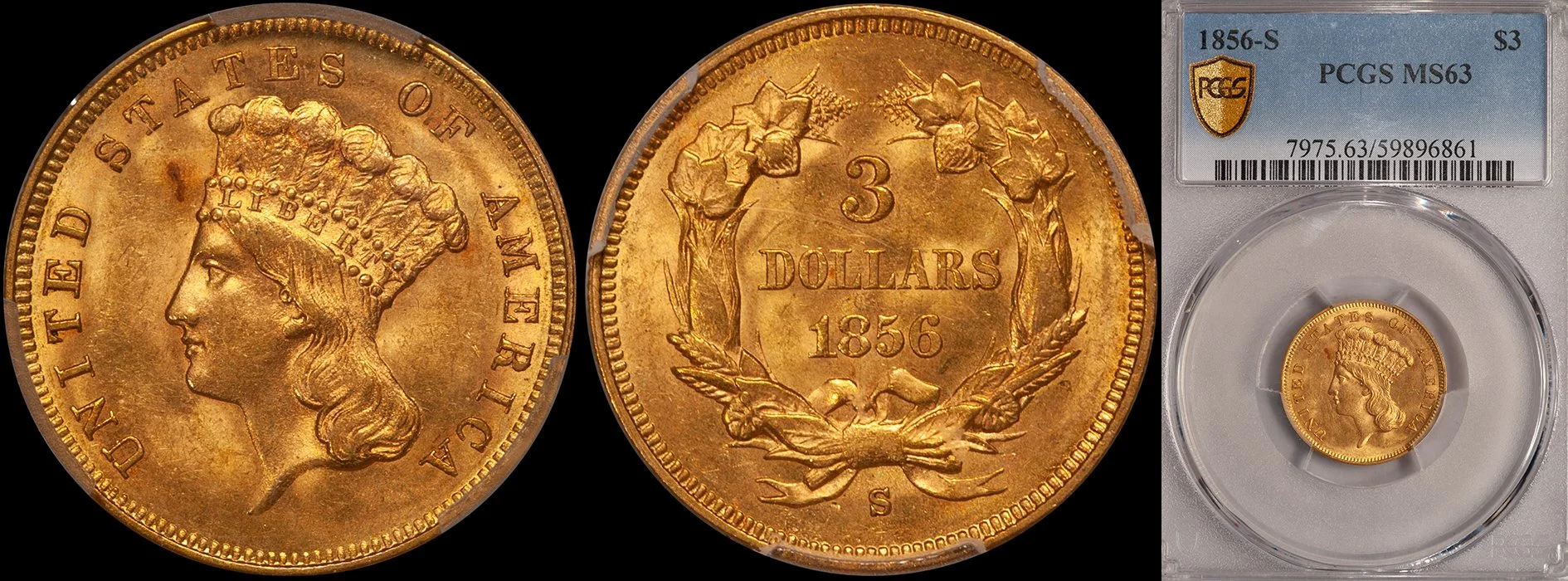
* The market for Three Dollar gold pieces has softened. There were a number of pieces on the market. However, it should be pointed out that many of these were not nice and the really interesting dates in the series (such as the 1858, 1865, 1877 and the low mintage issues from the 1880’s) remained strong. The biggest correction was for higher grade coins (MS64 and better) in the common and semi-common category. MS66 Three Dollar gold pieces have dropped between 20% and 30% in recent weeks but are still worth considerably more than they were two years ago.

* The generic gold market is very soft right now. I would avoid speculating in this area unless you are able to follow pricing on a near-daily basis but it seems like some market areas are pretty good short-term plays right now.

* After getting a little panicky about the market at the beginning of the show, I am able to look at it with better perspective today, especially now that I’ve finally been able to sleep in my own bed for a night. I think we will see some short-term weakness in the market, especially in areas such as generic gold and “uninteresting” coins. But I think the market for really rare and really expensive coins is better now than it’s ever been. As long as the stock market remains flat (and it’s been as flat as a pancake for the last five years) you’ll see a strong market. The clear indicator of a weak coin market will be when stocks rebound and investors pull their money out of coins and go back to stocks.

The Old West Collection of Carson City Half Eagles and Eagles: An Analysis

On August 11, 2006 ANR sold the Old West Collection of Carson City half eagles and eagles. This was the single most important specialized sale of Carson City gold coinage held since the Lang Collection was auctioned by Bowers and Merena in July, 2002. This sale, thus, provided collectors with an excellent opportunity to gauge the current state of the market for high quality Carson City gold issues. On a personal note, this was also an interesting sale for me. The consignor of the Old West collection is a good customer and friend of mine and I sold him all of the eagles and a number of the half eagles in the collection. So I was participating in this sale not only as a bidder but as an interested “friend of the collection” as well.

I. HALF EAGLES

The Old West collection lacked two issues to be complete (the 1873-CC and the 1876-CC) but it did include a number of important condition rarities. My personal observation was that this was a very nice group with some great individual coins but the eagles were better matched, more original and of a generally higher overall quality.

1870-CC PCGS AU58: This was the Bass II: 1170 coin which sold for a strong $69,000 in October, 1999. It is the single best circulated example of this date I have ever seen and it certainly had the appearance of an MS61. My personal feelings about this coin was that it sold for too much in 1999 but that the market had probably risen to the point where it would sell for around the same amount as it had brought seven years ago. It realized $80,500 (note that all prices realized in this article include the 15% buyers premium charged by ANR).

1871-CC PCGS AU58: I purchased this coin out of the Richmond Collection sale in 2004 where it realized $18,400. This is not an easy coin to figure value-wise as there is no Trends above AU50 and very few high grade examples have sold in the past few years. It commanded a winning bid of $27,600 which I thought was a very solid price.

1872-CC NGC AU58: I’m not exactly sure how or why, but high grade examples of this date seem to be everywhere. I’ve seen at least a half dozen AU55 and better 1872-CC half eagles at auction in the past year or so. Some of these are undoubtedly coins that are recycling while others are overgraded examples that were formerly in lower grade holders. Regardless, this date has lost a bit of luster in my eyes but the NGC AU58 in the Old West collection is still among the highest graded. I thought it was nothing special from a quality standpoint and it brought $29,900.

1874-CC PCGS AU58: This is the most common Carson City half eagle struck during the early years of the Mint’s operation but properly graded AU55 and higher pieces are quite rare. I wasn’t all that crazy about this coin but it had a decent commercial appearance and a much better strike than usual. It opened at $12,000 but was bid all the way up to $27,600 which has to be a record price for a circulated example of this date. With AU58 Trends at “only” $25,000 I would assume that the consignor was thrilled with the prices that this coin brought.

1875-CC PCGS AU55: This was a decent coin except for the fact that it had a large, nasty reeding mark right on the jaw of Liberty. It sold for $17,250 which is a little bit more than 70% of Trends. I would assume that the consignor probably broke even on this coin or possibly made a bit of money but it clearly was not one of his best purchases.

1877-CC PCGS AU55: I thought this was a decent, fairly original coin which would bring around $10,000-11,000. But it sold for $17,250 to one of the sharpest “crackout” dealers in the business so I’m assuming that this piece will soon be a bright, shiny AU58.

1878-CC PCGS AU50: This was my least favorite half eagle in the collection. The obverse coloration was artificial and had been applied to cover an old cleaning. Despite this fact, there is no denying the rarity of this date and the Old West coin was bid to a fairly respectable $16,100 which is nearly 75% of Trends. I think if this exact coin had been offered for sale in the regular section of the ANR catalog it would have brought 15% less.

1879-CC PCGS AU58: I had purchased this coin in the Richmond collection sale in an NGC AU58 and paid somewhere in the area of $9,000 thinking it would upgrade to MS61. It never worked for me and I sold it to the Old West collection’s owner for a small profit. This time around, the coin was sold to a savvy collector who paid $12,650. I’m assuming he didn’t buy it to play the upgrade game and if he keeps it in the PCGS AU58 holder he’ll own probably the nicest “slider” example of this date in existence.

1880-CC PCGS MS62: Here was an interesting coin to ponder when considering how the market for high grade Carson City gold has fared since 2000. In May of that year, this lovely example sold in the Bass III auction for a then-reasonable $13,800. In the Old West collection auction, six years later, it sold to the same collector who purchased the 1879-CC for $29,900. While this seems like a stunning increase, I still think this was a good value. It is arguably the second finest known example of the date and it has a superb pedigree (ex: Old West, Bass, Norweb and Melish collections). In today’s market, truly rare coins with great pedigrees such as this are held in high esteem by sophisticated collectors.

1881-CC NGC MS62: I regard this as one of the highlight coins in the Old West collection but it did not meet its reserve and did not sell. Shameless plug: I will have this coin available for sale at my table at the Denver ANA and I would strongly suggest that any serious collector of Carson City gold coinage who wants an unimprovable example of the rarest half eagle from the 1880’s should give this coin careful consideration.

1882-CC PCGS MS62: The 1882-CC is the most common Carson City half eagle from the 1880’s but there are not many pieces out there that compare to this example. It was the second best that I have personally seen and it brought $32,200 which I believe is a record price for this date.

1883-CC PCGS AU58: The rich orange-gold coloration that this coin displayed on the obverse made it uncommonly attractive for the grade but I don’t think anyone looked at this coin as having the potential to upgrade to MS61 if resubmitted. Thus, its price realized of $9,775 is very surprising in my opinion. Trends is $11,000 but I have seen other similar quality examples of this date trade for less money. In an auction environment, however, such considerations are often forgotten.

1884-CC PCGS AU58: Before I sold this coin to the owner of the Old West collection I tried it a number of times to grade higher at both PCGS and NGC. Someone who is better at the crackout game then I am paid $12,650 for this coin and if it works, he’ll have a nice little score. If it doesn’t work, he’ll have a problem on his hands as AU58 Trends is only $10,000.

1890-CC PCGS MS64: This is not a rare coin in this grade but I thought it was an uncommonly nice piece for the grade. It brought $9,775 which I thought was a fairly strong but not ridiculous price given the overall tone of this sale.

1891-CC PCGS MS65: I had sold this coin to the owner of the collection around a year ago for a price somewhere in the mid-$30’s. It was hard to gauge what it would bring in this sale. I thought there was actually a chance it could bring over $50,000 if two deep-pocketed type collectors butted heads, but I also could have seen it bringing in the low $30’s. It opened at $18,000 and there were numerous people bidding until two people remained at $35,000. The final price realized was $43,700 which is certainly a lot of money for an example of this common date but considering it is the only MS65 graded by PCGS I could have seen it selling for more.

1892-CC PCGS MS63: This attractive, original example was a very good value at $5,750. I have seen a few far inferior examples in MS63 holders sell for $5,000 or so and I thought this coin was really PQ for the grade.

1893-CC PCGS MS62: With Trends at $4,000 I expected this coin to sell for around $2,750-3,000. Instead, it brought a very strong $4,600.

II. EAGLES

I had sold the entire group of eagles in the Old West collection intact to its current owner around three years ago. It had formerly been known as the Orange County collection and I had assembled the collection between 1996 and 2002. It included a number of important Condition Census pieces and pre-sale buzz regarding the coins seemed very favorable.

1870-CC PCGS AU55: When I first bought this coin in June 2000, I don’t think more than a handful of people realized its importance. In a nutshell, it is the finest known example of the rarest Carson City eagle. With unattractive Extremely Fine examples of its big brother the 1870-CC double eagle now selling for close to $200,000, this coin seemed to have potential to bring a record price. When the dust cleared, it sold for $115,000; clearly a record price for the issue but still a reasonable level when one considers the big picture. If eagles ever become as popular as double eagles, I could see this coin becoming worth $200,000+ in the near future.

1871-CC PCGS AU55: I always thought this was a fairly mediocre coin for the grade but other people thought it had a shot to come back as an AU58 if it were regraded. It sold for $25,300 which means, basically, that I was wrong and maybe it was actually a pretty decent coin after all.

1872-CC PCGS AU55: I liked the originality of this coin and thought that if it were dipped it would probably windup in an AU58 holder. It sold to a crackout dealer for $34,500 and I would not be shocked to see it offered as a bright AU58 with a $50,000+ price tag in the next few weeks.

1873-CC PCGS AU50: Maybe I’m just too picky but despite this coin’s excellent pedigree, I thought it was not terribly appealing for the grade. I was clearly in the minority as it brought a very healthy $32,200 which is nearly 10% above AU50 Trends.

1874-CC PCGS AU58: Now here was a coin that I did like. A lot. It was fully original with great color and surfaces. I had hoped to place it with a major collector and bid up to $32,000 but was foiled by a dealer who bid $33,000. With its final price realized at a hefty $37,950, this means that the buyer graded this coin at least MS61. It will be curious to see if a “fresh new” MS61 appears on the market soon.

1875-CC PCGS AU53: In the past fifteen years, I’ve bought and sold this coin at least three times. Way back in 1992, I paid $12,000 for it at auction. It brought $32,200 in its most recent sale which is about 15% more than I expected it to.

1876-CC PCGS AU58: This was one of my favorite coins in the collection. I love gold coins with great color and this piece has always appealed to me due to its natural fiery orange-red peripheral hues. I purchased this coin for $39,100 and thought it was one of the better deals in the sale as I expected it to bring 10-15% more.

1877-CC PCGS AU53: I like this date very much and I really liked the coin for the grade (I thought it graded AU55). Apparently, someone else did as well as I was outbid at $27,600.

1878-CC PCGS AU55: No one other than me seemed to find this coin’s price realized of $39,100 to be extremely strong but I think this had to be a record price for a slabbed AU55 example of this date. I didn’t see the coin has having the potential to upgrade so I am assuming it was purchased by a collector as exactly what it was: a nice representative high grade example of a very scarce date.

1879-CC PCGS AU55: It’s funny how market perceptions and values change over time. As recently as five years ago, the 1879-CC sold for more money than nearly any other Carson City eagle. But after a group of really ugly, overgraded AU examples sold at auction in the last few years, Trends dropped and today the 1879-CC is now one of the most undervalued Carson City eagles from the 1870’s. This coin sold for $32,200 which is more than Trends but which still seems to be a good value relative to other less rare CC eagles from this era.

1880-CC NGC MS61: The date run of Carson City eagles from the 1880’s in the Old West collection is probably the best ever assembled. The 1880-CC was a lovely coin with great color and fresh, original surfaces. I thought it had a good shot to grade MS62 and it sold for a strong $18,400.

1881-CC NGC MS64: What a great coin this is. It is the single finest Carson City eagle from the 1880’s, it has a glorious pedigree (ex Eliasberg, Clapp and obtained from a bank by Clapp in 1895) and it is a stunning piece from a visual perspective. I bought it out of the Lang sale in 2002 for $25,300 and upgraded it from MS63 to MS64. I really wanted to buy this coin again and bid up to $60,000 but it sold to a determined phone bidder for $74,750.

1882-CC NGC MS62: Bet you didn’t know that this date is unique in Uncirculated and that the present example, pedigreed to the Lang collection where I bought it in 2002 for $20,700 in an NGC MS61 holder, is one of the most important Carson City eagles in existence. I was able to buy this coin for $41,400 and was thrilled with my purchase as I would have paid considerably more. This great coin now resides in the finest collection of Liberty Head eagles ever assembled.

1883-CC PCGS AU58: I think I charged the owner of the Old West collection something like $6,500 for this coin. It brought $14,950 in the sale. I think he was pretty happy about this…

1884-CC PCGS MS62: Only five or six Uncirculated examples of this date are known and the present example is the second best of these. I thought its grade of MS62 was conservative and I was able to purchase it for $46,000. It, too, will be residing in the finest collection of Liberty Head eagles that has ever been assembled and it certainly will fit in well in this remarkable group of coins.

1890-CC PCGS MS62: While “only” graded an MS62, this coin has sensational color and great eye appeal. Trends is $7000 for an MS62 but this lovely coin brought $10,350 which is almost certainly a record price for the grade. I bought this coin for $3,520 in an August 1995 Bowers and Merena sale and liked it enough that I had kept it for myself for a few years until I sold it to a collector.

1891-CC PCGS MS63: This coin was nothing all that special but it had a nice pedigree (ex Pittman collection) and attractive original color. It brought over $7,000 which is a strong price for a date that typically trades in this grade for $5,000 or so.

1892-CC PCGS MS63: I’m not sure that I’ve ever seen a prettier Carson City eagle of any date or a nicer example graded MS63. Not only did this coin have nearly immaculate surfaces but it had amazing orange-gold color that gave it a “glow” that could only be appreciated if seen in person. I paid $41,400 for it and was obviously buying the coin and not the holder as Trends is all of $10,000.

1893-CC PCGS MS61: Unlike the other Carson City eagles from the 1890’s, this date is very rare in Uncirculated. The example in the Old West collection was among the finest known and I purchased it for $16,100.

The final price realized for the Old West collection was close to $950,000 and this was a significant profit for the owner. It turned out to be a win-win deal for everyone: a happy consignor and many happy collectors who now have outstanding new Carson City gold coins in their collections.

Coin Cleaning

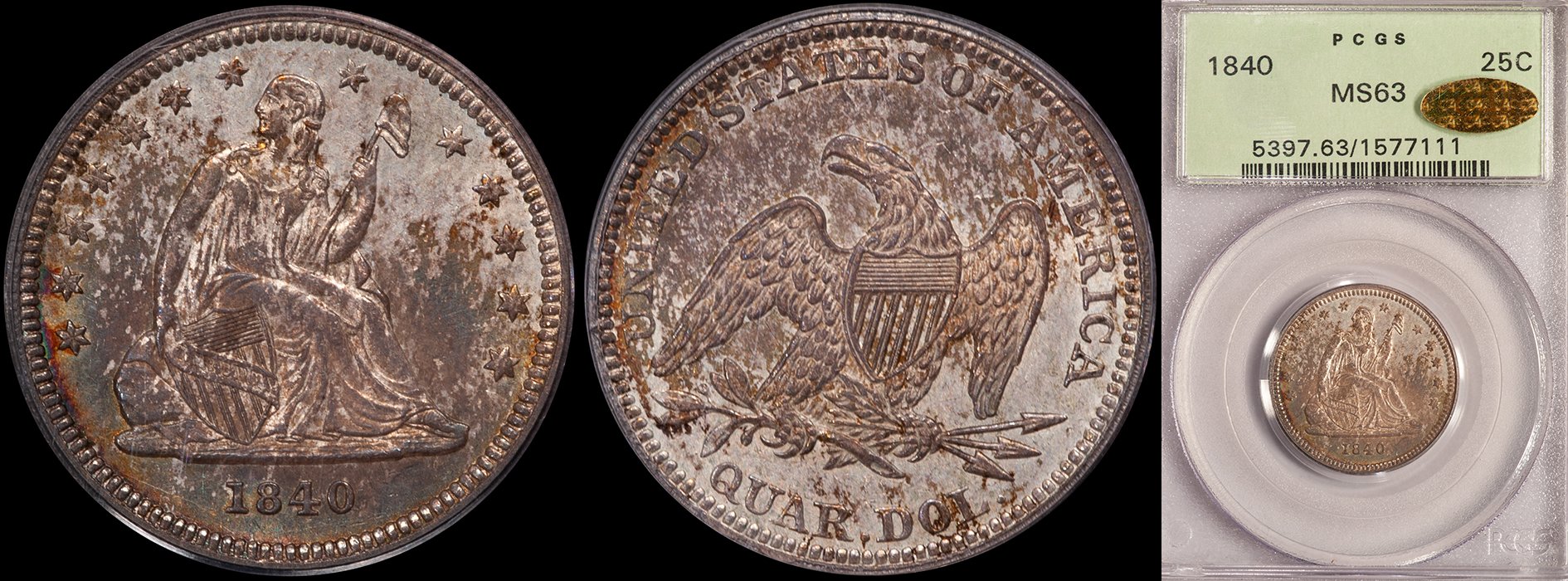
The market’s definition of what is acceptable regarding cleaned coins has evolved considerably over the course of time. When PCGS and NGC were established, the coin market was overrun with problem coins. Whizzing, which involves using a wire brush on the surfaces of a coin to simulate mint luster, had been prevalent in the 1970’s but more sophisticated methods were beginning to emerge. Third-party grading established some basic guidelines regarding cleaning.

In the early days of the two major services, standards regarding cleaning were overly rigorous. Circulated rare date coins with light, unobtrusive hairlines were “body bagged” or were brutally net graded. What the services failed to realize was that a large percentage of circulated rare date gold coins had been lightly cleaned in the past and coins without hairlines were exceptionally hard to find. Standards were changed over the years and today, it is common to see lightly hairlined coins in holders. This does not bother me.

PCGS and NGC’s early decision to be hard on hairlines had an interesting effect on many coins. Certain dealers began using putty or other substances to cover these hairlines so that “no grade” coins could get into holders. As a result, many coins which would be considered gradable by today’s standards were covered with foreign substances. I see coins like this in most every auction and on the bourse floor. In fact, I even buy them on occasion and it is interesting how nice many of them are once the goop on the surfaces has been removed.

I don’t know if there is any scientific formula at PCGS or NGC regarding what is or what is not acceptable regarding hairlines. In my experience, I find that both services tend to be more tolerant of a coin that has light or no hairlines on the obverse coupled with more dense hairlines on the reverse. A coin with noticeable hairlines on both sides is almost certainly not going to be encapsulated unless it is a major rarity (more on this in a second). Deeply toned coins that hide hairlines are far more likely to be encapsulated than light coins on which the hairlines are clearly noted.

There are varying degrees of cleaning and generally speaking, the more harsh the cleaning, the more likely a coin is to be a no-grade. If a coin has been wire brushed or cleaned with a harsh abrasive, this is not considered to be market acceptable. If a coin has been dipped or lightly washed in soap and water, it is considered to be market acceptable and will almost always be encapsulated. (Dipping is a whole story in itself. Is it harmful to a coin’s surfaces? Probably, even if done properly. Do most dealers and collectors do it on occasion? Absolutely.)

There are coins which walk the fine line between being market acceptable and non-acceptable. As an example, many coins have been wiped with jeweler’s cloths over the years. A wiped coin is generally somewhat dull and lifeless but it may not have any actual hairlines—just a “look” that clearly indicates it was wiped. On a common, generic issue, wiping is almost guaranteed to get a coin no-graded. But on a rarer issue or on a piece of early gold, where grading standards may be more relaxed, light wiping may be considered market acceptable.

Cleaning methods have become far more sophisticated in recent years. The gold coins that were in the S.S. Central America and S.S. Republic shipwrecks underwent very sophisticated cleanings in order to make them market acceptable and to remove encrustation caused by a century of exposure to seawater. Many collectors cried foul and complained that these coins should not have been slabbed. I disagree with this. The majority of the coins that I have seen from these shipwrecks have an appearance that is totally market acceptable. And, they are clearly noted on the holder by both PCGS and NGC as coming from a shipwreck.

What I have more trouble with, from an ethical point of view, is when a grading service conserves a coin and does not indicate on the slab that this process has been undertaken. Not everyone is like me who likes dirty, original coins and there is certainly a place in the market for bright, highly reflective pieces. I would just like coins like to be noted as being “restored” so that less sophisticated buyers are made aware of what they are purchasing.

I mentioned earlier that rare dates and types are graded on a different standard than common issues. This has always been the case in the coin market and it will continue to be this way. A 1796 No Stars quarter eagle that has been lightly cleaned at one time but which still has a decent overall appearance is a very desirable coin that will invariably be encapsulated. A 1926 quarter eagle with the same degree of cleaning will most likely not be encapsulated. The former is a $100,000 coin while the latter is worth $200. It makes sense (at least to me…) that the very expensive coin is going to be treated differently than the cheaper coin.

Cleaning and its impact on grading remains one of the most controversial topics in all of numismatics. Clearly, what was acceptable to collectors and the grading services in 1986 changed greatly in 2006 and will, no doubt, be substantially different in 2026.