Guess Who's Back?

Between being sick for a week (and don't think I don't know who you are Mr. Boston Red Sox hoodie in seat 14C) and having web hiccups as the new site was introduced (how do you like it?) the raregoldcoins.com was not its usually chipper self for close to two weeks. But here we are in October and, as I write this, I feel better and I feel that we are going to have a great month. And I'm not even going to brag about the amazing Indian Summer we are having in Portland... So what's upcoming and why should you be as excited as I am? Well, for starters, the Clyde Collection of Charlotte half eagles is coming up for sale and it should be posted and ready to go on Wednesday October 3. There are a number of terrific coins in this set and some of the highlights include:

  • 1838-C $5.00 graded VF35 by PCGS. A pleasing example of the most popular half eagle from this mint.
  • 1843-C $5.00 graded AU55 by PCGS and approved by CAC.  Choice and original!
  • 1844-C $5.00 graded AU58 by PCGS and approved by CAC. A superb example of this rarity.
  • 1852-C $5.00 graded MS62 by PCGS. Lustrous and choice with great color.
  • 1854-C $5.00 graded MS61 by PCGS. Very rare in this grade.
  • 1860-C $5.00 graded AU58 by PCGS and approved by CAC. As nice an example as you are likely to find.
  • 1861-C $5.00 graded AU53 by PCGS. Popular Civil War issue.

In addition to Clydestock, you can look forward to over a dozen interesting new coins that will be added to the site over the next few days.  Whether you collect early gold, branch mint gold, Proof gold or big, rare gold there will be something for you.

The only show I'm going to this month is the Fall ANA in Dallas. Having lived in Big D for many years, I'm looking forward to going back to the Ol' Stompin' Grounds and I hope to see many of the collectors in the Metroplex who I have done business with over the years. I will be sending you emails in the coming days about my table location, when I will be there and how you and I can get together toether to do a little business in Big D.

The spike in gold prices is starting to have an impact in the rare gold market. I have noticed increased demand for interesting coins in the last few weeks, especially in the ten dollar and twenty dollar denominations. Other areas that seem to be strong now include nearly all Civil War issues, traditionally scarce/rare coins and early gold with CAC approval.

If you collect Dahlonega gold, you'll be happy to know that I have finally finished my manuscript for the third edition of Gold Coins of the Dahlonega Mint, 1838-1861 and it is at the printers even as we speak. Its going to be a 225+ page epic chock full of great color photos and a huge improvement over the last edition (which was also way out-of-date, having been published back in 2003. I have some great projects I'm working on right now that involve my books, the website, apps and more and I urge you to check the site on a regular basis for updates.

Thanks for your patience the last few weeks and please feel free to contact me to let me know what we can do the website to make it even better.
Grade Distribution

There are essentially two types of rarity: absolute (a coin that is rare in all grades; an example of this would be an 1842-O half eagle) and conditional (a coin that is rare based mainly on grade; an example of this would be an MS63 1892-O eagle). What can we learn about rarity based on distribution--i.e., if the number of coins known for an issue is 300, in what grade range are these coins found? The answers are interesting. It is fairly obvious why a coin is an absolute rarity. Generally, the best reason for this is low mintage. Obviously, a Proof gold coin from the 1870's with a mintage of 25-35 is going to be rare; even if the survival rate is 50% or so, you are still not talking about many coins. But many issues have an uncommonly low survival rate to to heavy use in commerce and a high degree of meltings. Examples of this include No Motto half eagles and eagles from the Philadelphia mint. It is not uncommon for issues of these types to have fewer than a dozen known in Uncirculated even with original mintages of 200,000 to 500,000 or more coins. Let's use current PCGS population statistics to look at a specific example: the 1849 eagle; an issue with an original mintage that tops out at 653,618.

To date, a total of 361 1849 eagles have been graded by PCGS. The breakdown is as follows:

Mint State= 30 coins About Uncirculated= 128 coins Extremely Fine= 149 coins Very Fine and below= 54 coins

Breaking this down further, we see that around 8% of all 1849 eagles graded by PCGS are Uncirculated while close to 80% grade Extremely Fine and About Uncirculated. Given the fact that the Uncirculated numbers are inflated by resubmissions, the percentage of 1849 eagles that grade MS60 and above is probably less than 5%.

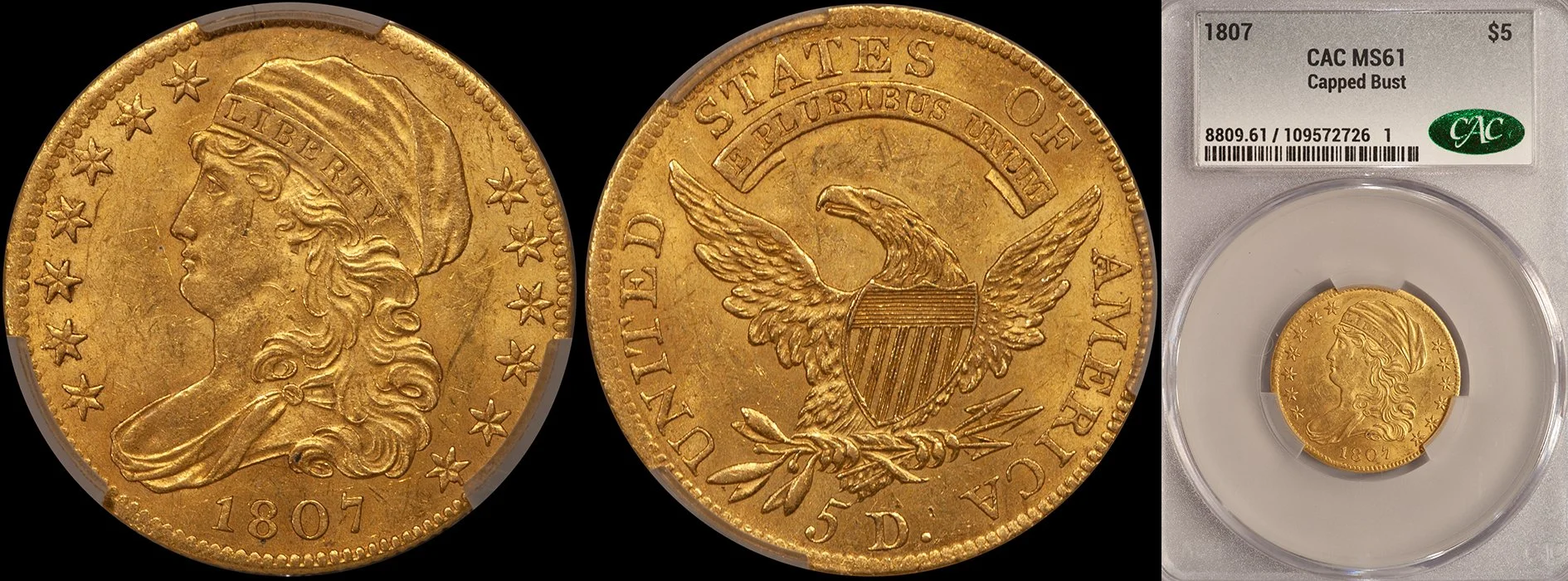
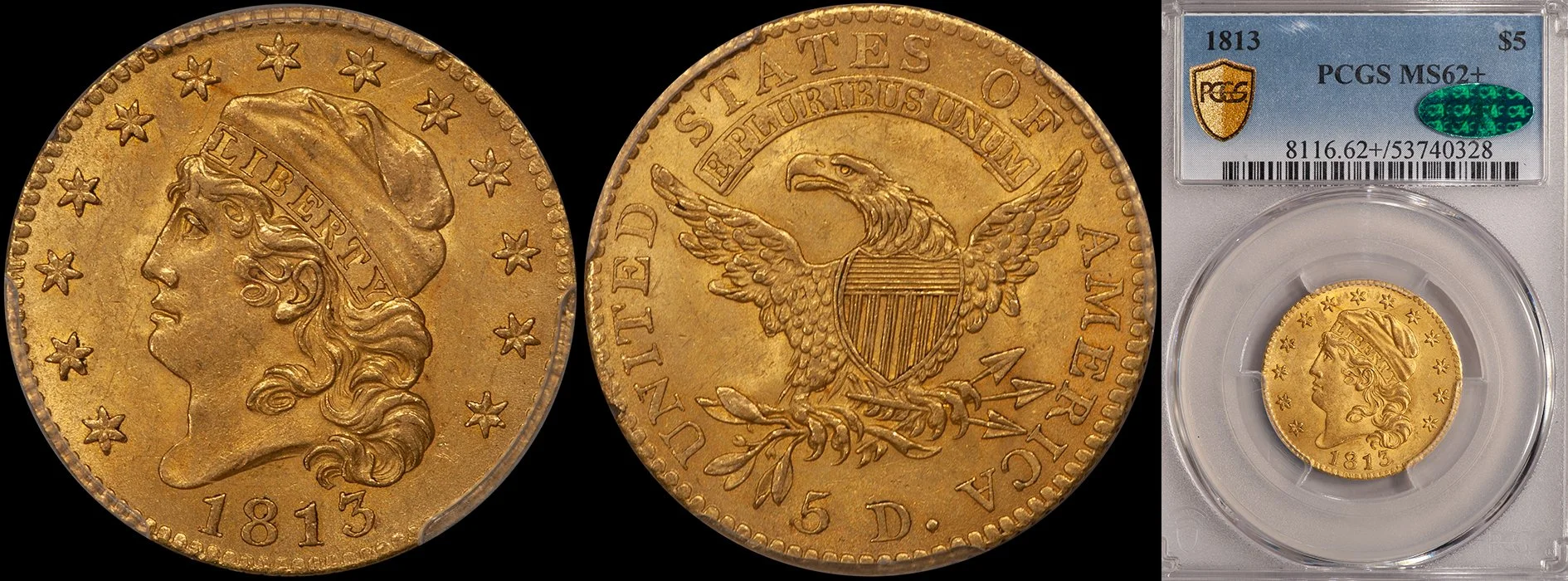
There are, of course, coins with high mintage figures that are actually quite rare due to excessive meltings. A good example of this is the 1819 half eagle. There were 51,723 of these made but nearly all were melted by 1834 due to a change in the weight of gold coins which made these old tenor issues worth more than face value. Today there are, at most, thirty known 1819 half eagles. And the grade distribution of this issue is bizarre with virtually every known example grading MS60 or better.

Why is this the case? In addition to the heavy meltings above, a little history will show that this type barely circulated at all. Five dollars was a lot of money in 1819 and since the half eagle was the largest denomination made in the United States, these coins were basically storehouses of value. For the entire Capped Head Left half eagle type of 1813-1829, only two or three dates are seen with any degree of frequency in circulated grades and only one (the 1813) is more readily available in circulated grades than in higher grades.

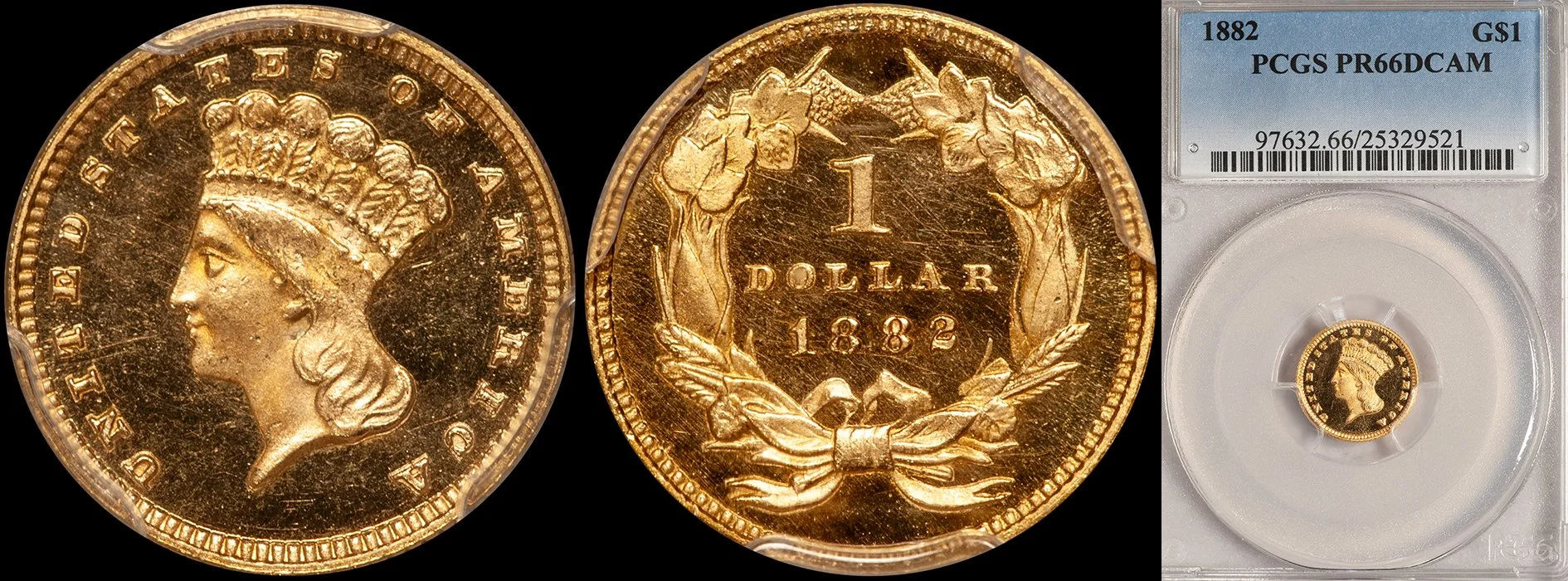
Remember the 1849 eagle that I just mentioned above? There are some coins that are almost exactly the opposite when it comes to grade distribution. There are, for example, many gold dollars from the 1880's that are virtually unknown in circulated grades but common in Uncirculated. Let's look at the 1886 as an example.

A total of 5,000 business strikes were made. The most current PCGS numbers show a total of 354 examples having been graded. Of these, 331 (or 93.5%) have been graded MS60 or better. In theory, an 1886 gold dollar in AU55 is rarer than one in MS65 (although, of course, the MS65 is still worth considerably more).

Why is this the case? A little basic research shows that, by the late 1870's, the gold dollar denomination had been made redundant by the new Morgan dollars. Mintages were small and the demand was even smaller. The gold dollars didn't circulate and there were enough dealers and hoarders saving them that Gems (MS65 and finer) are plentiful.

What this means is that the 1886 gold dollar is a coin that is much less rare than its low mintage would suggest and hundreds are known in high grades (PCGS alone has graded 61 in MS65 or higher). If you were to graph the grade distribution of this issue, it would skew well towards higher grades. If you were to graph the distribution of the 1849 eagle, it would skew towards lower grades with most survivors grading EF-AU and very few in the Uncirculated grades.

1870 $5.00 PCGS AU58

Only 4,000 business strikes were made and this date is very scarce in all grades. In the higher AU grades, it is very rare and I am aware of just a single Uncirculated example (despite a PCGS population of two), the PCGS MS61 that is ex Bass II: 1169 at $14,375 back in 1999. This fresh ecoin has good eye appeal for the date and grade. It shows essentially no wear but there is just a bit too much friction on the high spots to rightfully call it Uncirculated. The semi-prooflike surfaces are touched by soft orange-gold and rose hues and this is one of just a small handful of 1870 half eagles that I have seen that haven't been processed and stripped of their full originality. The only other PCGS AU58 1870 half eagle is ex Heritage 5/05: 8647 and it aold for $8,050 back in a market in which coins like this were mostly met with indifference. A very important With Motto Liberty Head half eagle and a coin that is well up in the Condition Census for the date.

The NGC population figure of "24" in AU58 is clearly vastly inflated by resubmissions.

1848-D $5.00 PCGS AU53

Variety 21-N. The 1848-D is one of the scarcer half eagles from the Dahlonega mint and it is very hard to find well struck and lustrous. This example, which appears to be from an early die state, has no clashmarks and good details even at the centers. There is a considerable amount of luster; enough, in fact, to suggest an AU55 grade were it not for some small scuffs in the fields. Not including this coin, only four PCGS AU53's have been sold at auction since 2000. When I work with collectors assembling sets of Dahlonega half eagles, the 1848-D is always among the toughest to locate.

Ex Stacks Bowers 2012 ANA: 12359 ($3,738), Keystone collection.

1845-O $5.00 NGC MS61

It's always nice when old friends come home and this wonderfully crusty 1845-O half eagle is a coin that I first offered for sale about two years ago. I re-acquired it at the Long Beach show and, if anything, I like it even more than I did then. The 1845-O half eagle remains a very rare issue in Uncirculated with an estimated eight to ten known. The NGC population for MS61's is inflated and at least one or two of the pieces I have seen in said holders have been marginal at best. This example has lovely deep green-gold and russet colors, in slightly different configurations, on the obverse and reverse. The strike is sharp and the surfaces are free of significant marks. For the sake of identification, there is a patch of dirt near the top of star seven on the obverse and a few natural copper spots on the reverse. Since 1995, only five MS61 examples of this date have appeared at auction. The last sale is Heritage 6/11: 4631 (graded by NGC) that realized $10,350; in March 2010, Heritage sold a PCGS graded coin for $12,650. An impressive coin for an advanced collection of New Orleans half eagles.

1884-CC $10.00 PCGS AU55

While this date is only the second scarcest CC eagle from the 1880's, I see nice AU examples less often than I do the 1882-CC. Only 9,925 1884-CC eagles were struck and it is quite elusive in the higher AU grades. This example is very lustrous with yellow-gold color seen on both sides. There are some small surface abrasions, consistent with the grade, in the fields. The "scratches" on the neck of Liberty are, in fact, mint-made and they are seen on all known 1884-CC eagles. The last APR for a PCGS 55 is Heritage 1/11: 7111, which sold for $4,600. Carson City eagles are currently undergoing some strong demand and it has become hard to find interesting, PCGS-graded pieces for less than $7,500.

1855-D Large D $5.00 PCGS EF40

Variety 38-EE. Large D mintmark. There are two mintmark varieties known for the date. The Large D is considerably scarcer although it generally doesn't bring a big premium. As a date, the 1855-D is the third rarest Dahlonega half eagle, trailing only the 1861-D and the 1842-D Large Date. It is greatly undervalued in all grades and it is amazing that it sells for just a small premium over common issues such as the 1853-D and 1854-D. This example is weakly struck at the centers and shows light orange-gold surfaces with a hint of luster in the protected areas. If you collect Dahlonega half eagles by date or variety, you will recognize the importance of this offering.

1853 $20.00 NGC AU58

A very visually impressive example with lightly abraded, slightly Prooflike fields that are accentuated by rich yellow-gold color. The strike is really hammered for the date with many of the hair strands showing full, individual definition. It is likely that this coin never entered circulation and it is terrific eye appeal. The next jump up in quality for the 1853 double eagle will result in at least double the price and it is doubtful that many of the slabbed MS61 examples will have the appearance that this gem slider does.

1854-O $2.50 NGC MS61

Even though the population figures have increased over the years, the 1854-O quarter eagle is still a scarce and undervalued issue in Uncirculated. Of the few dozen accounted for in this range, most grade MS60 to MS61 and few show the rich luster and natural green-gold hues that this piece possesses. A few scuffs can be seen in the fields and the strike is slightly weak at the centers. In the last five years, only seven examples graded MS61 have appeared at auction.