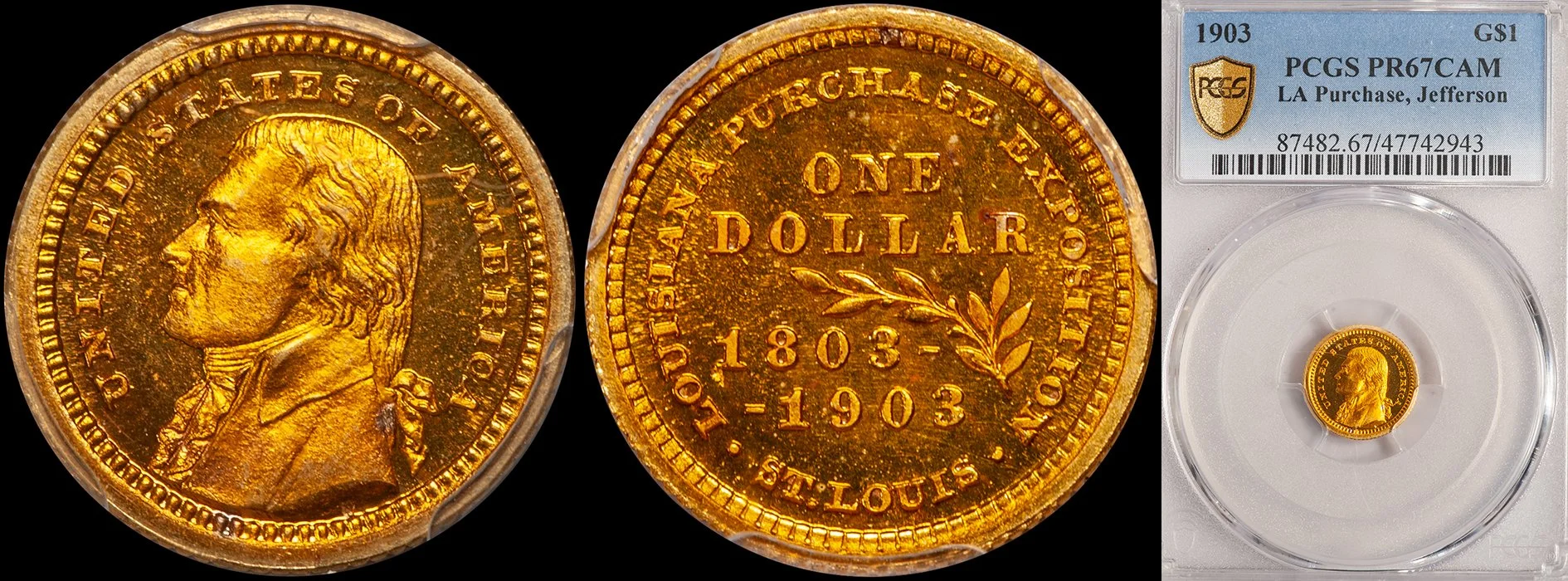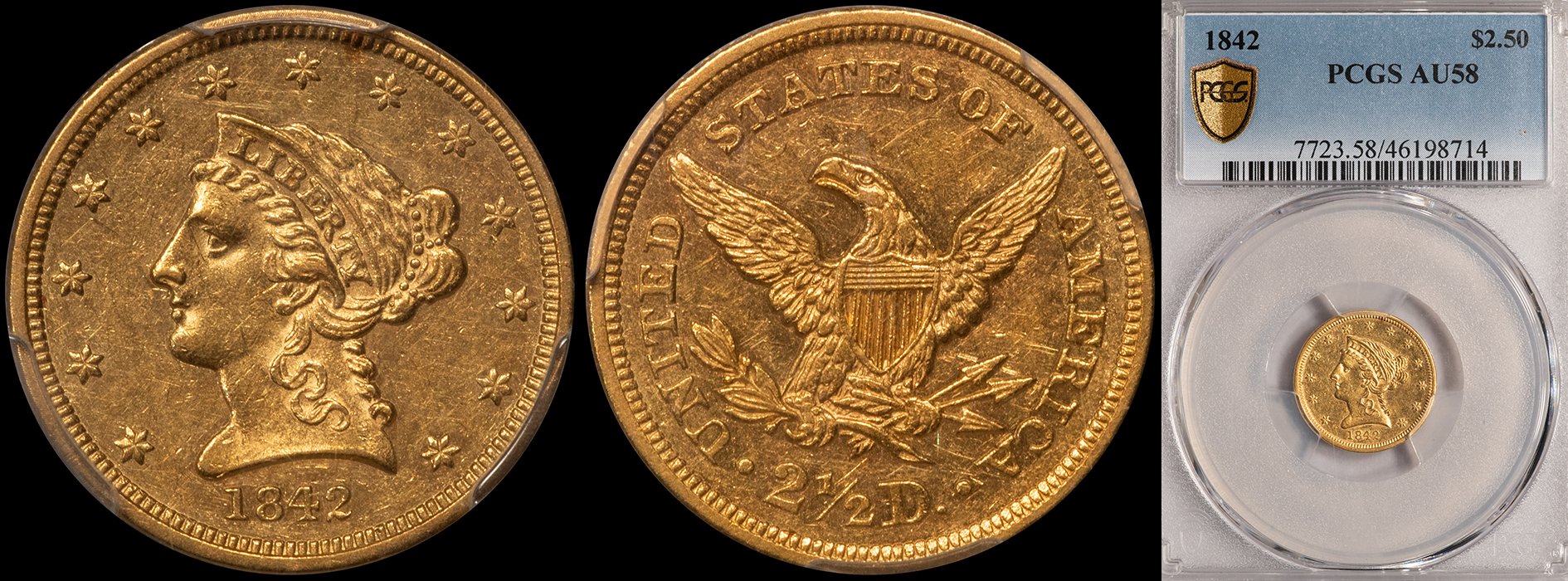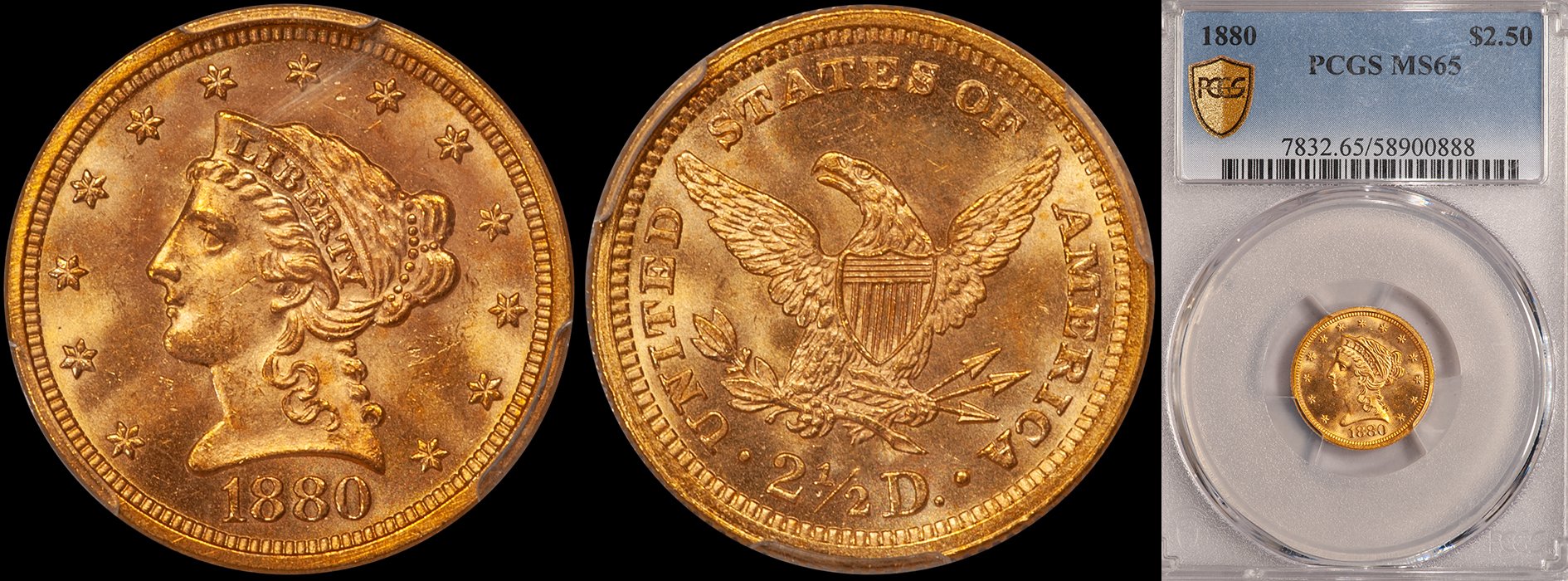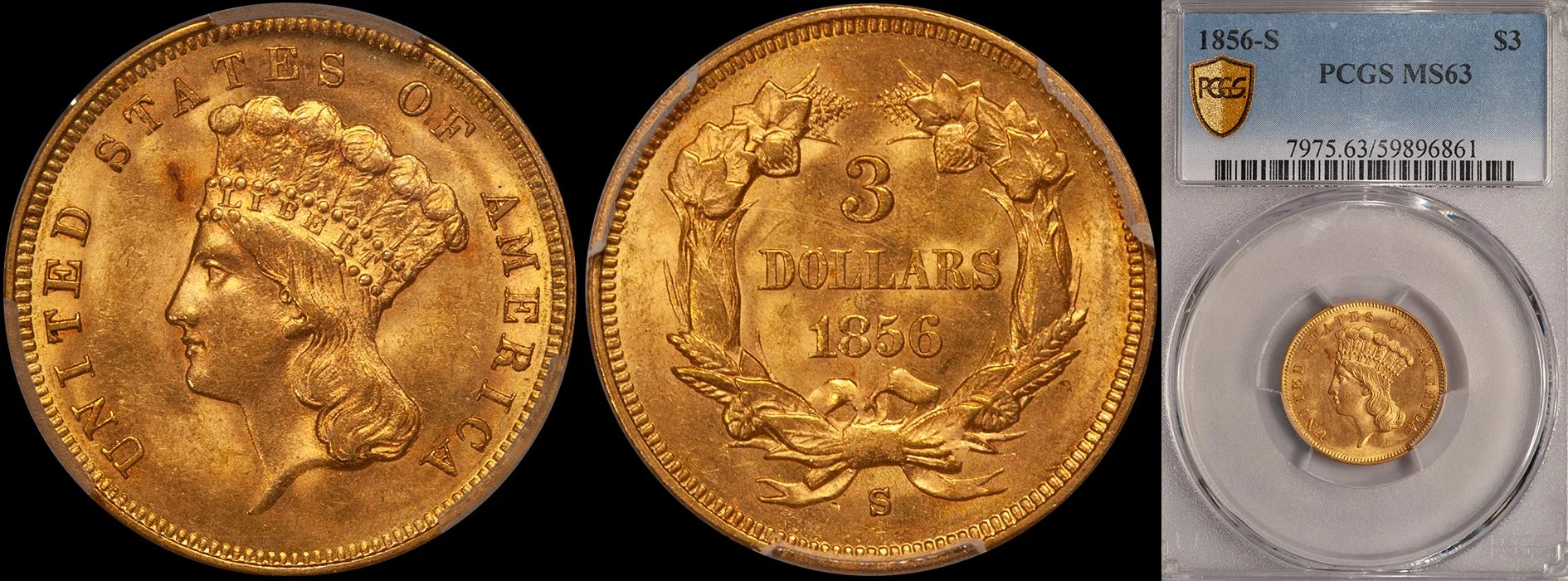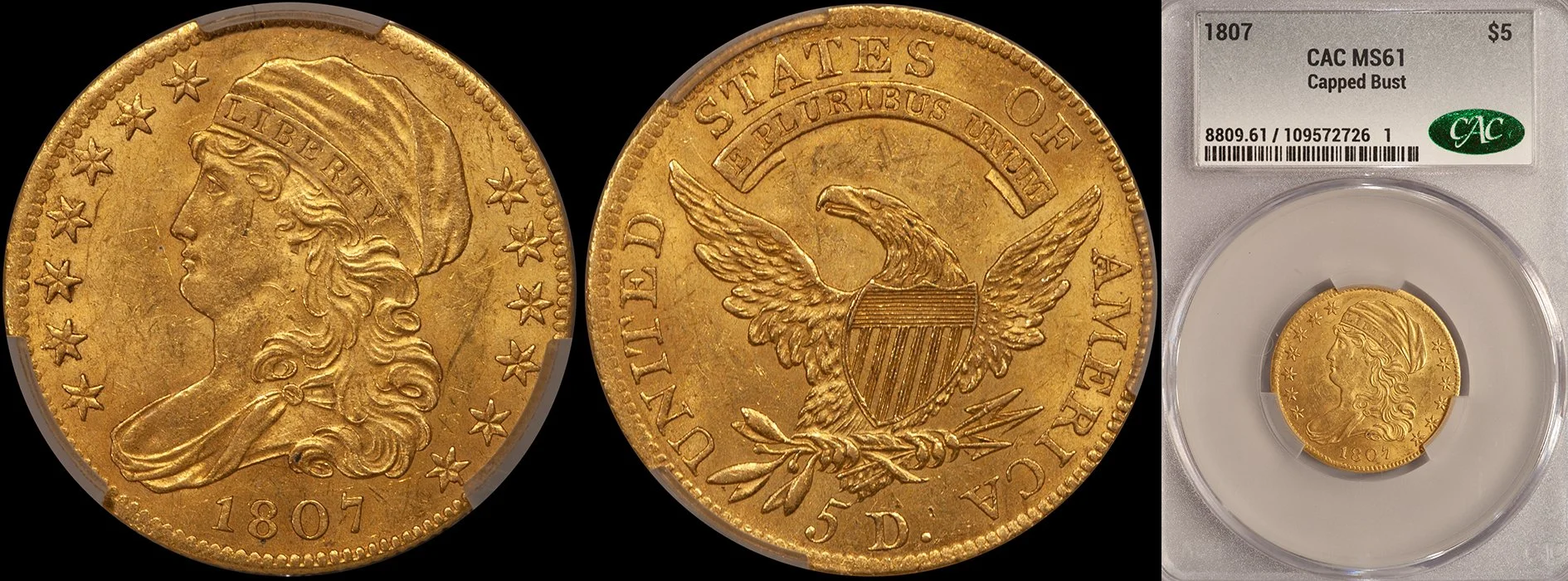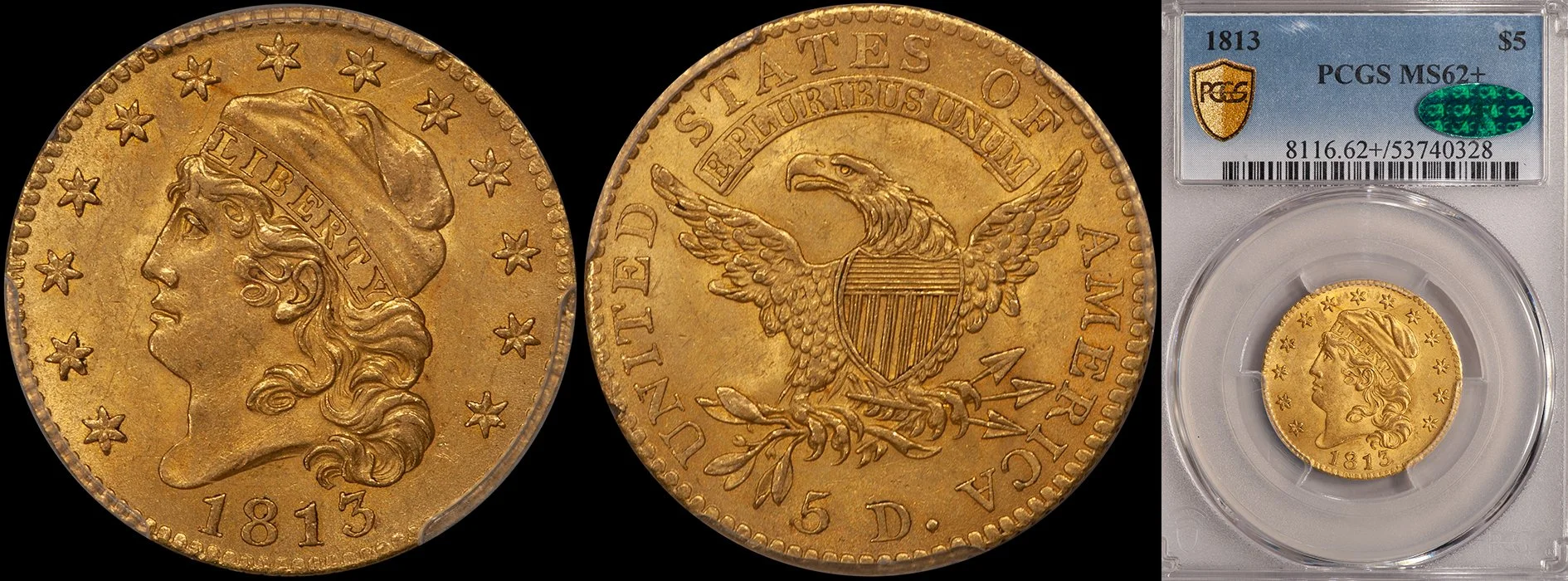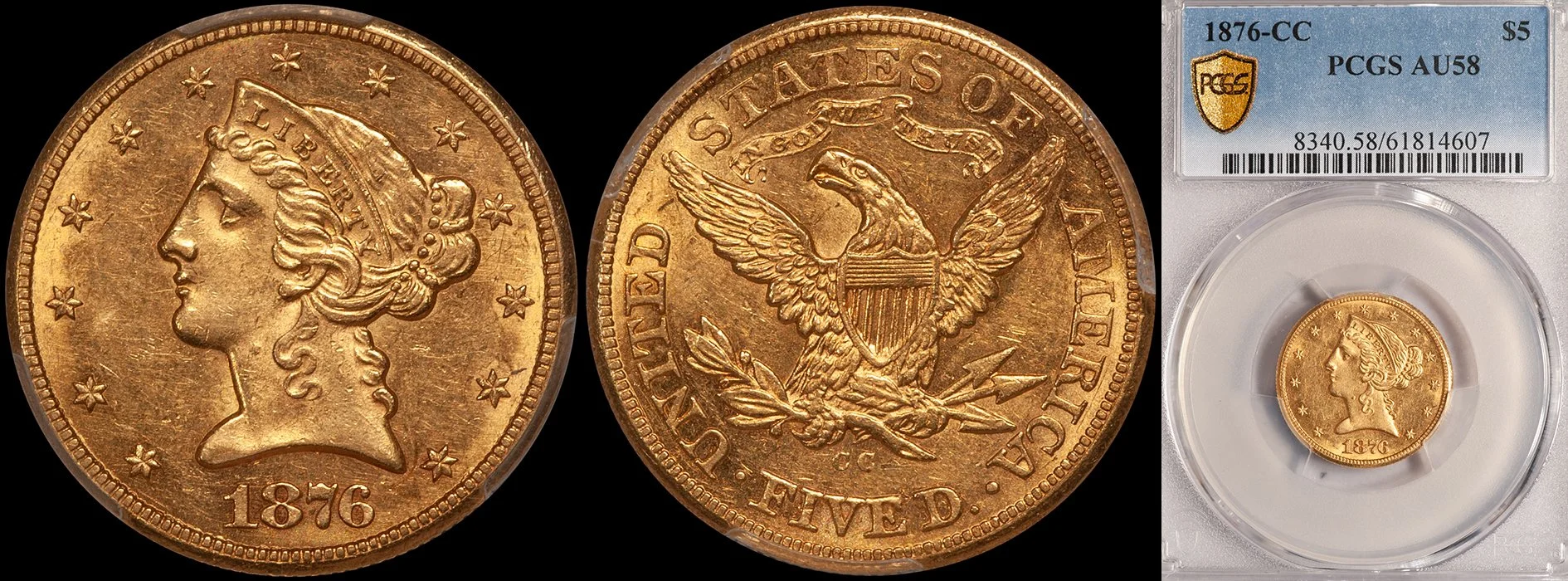
Five Rare Date Gold Coins With Broad Appeal

As I’ve written before, I like coins with what I call “multiple levels of demand.” What this means is a coin that is sought by a number of different sorts of collectors. As an example, the typical Dahlonega half eagle is likely to appeal mostly to a Dahlonega specialist whereas a coin like an 1838-D half eagle might appeal to a broader range of collectors due to its status as a one-year type and a first-year of issue. There are not all that many gold coins that have such widespread appeal that they might be tempting to, say a Lincoln Cent specialist. But the coins that I am going to list below are pieces that in my experience have strong cross-collector appeal. I have sold a High Relief, as an example, to collectors who have never bought another St. Gaudens double eagle and probably never will. But I have never sold a rare date Saint (let’s say a 1929 in MS65) to a collector who specialized in Charlotte gold and wanted a rare date like the 1929 just “for grins.”

There are a number of rare gold coins with multiple levels of demand. For the sake of brevity, I am going to just list five. I can think of another five very easily. I’d like your input in case I decide to write another of these articles, so please feel free to list your five and send them to me by email at dwn@ont.com.

Without further ado, here’s my Fave Five Rare Date Gold Coins with broad levels of demand.

1. 1861-D Gold Dollar: This is a coin that I could probably sell a dozen of if I had them available. The 1861-D gold dollar appeals to a broad number of people for many reasons. It has a great historical perspective as it was issued by the Confederacy. It appeals to Dahlonega collectors as a key issue and to gold dollar specialists as well. It is rare in all grades and it has a crudeness about it that appeals to collectors who like “neat” coins. I’ve never had a hard time selling one and it is a coin that I would buy in nearly any grade, providing it wasn’t damaged or harshly cleaned.

2. 1845-O Quarter Eagle: Every coin dealer (and collector) has a few “pet” dates and, for me, the 1845-O quarter eagle is very high on the list. It probably doesn’t have the high level of demand among non-specialists that the other four coins in this group have but I think this issue is so rare, so undervalued and so historic that it belongs in any favorite’s list that I write. What do I like most? How about the mintage of just 4,000? The fact that this date was essentially unknown until the 1890’s? That a presentable VF to EF can be purchased for less than $5,000 makes it seem even more cool to me.

3. 1854-O Three Dollar: This isn’t a really rare coin and that’s one of the things that appeals to me about the 1854-O. I recently sold a nice, evenly worn EF for less than $3,500 and I’ve sold examples that cost over $50,000. What I like about this issue is the fact that it is the only three dollar gold piece from New Orleans. Unlike the 1854-D (another one-year issue) it is inexpensive enough that a collector who has no interest in Three Dollar gold pieces would buy one; unlike the 1854-D that is expensive and which might cause many collectors to think twice before an impetuous purchase.

4. 1838-C Half Eagle: This is another first-year of issue. It is traditionally linked with the very popular 1838-D half eagle (another first-year issue that is a one-year type as well). What I like more about the 1838-C is while it is probably a bit less scarce than the 1838-D in terms of overall rarity, it is far rarer in high grades. I regard the 1838-C as an extremely scarce coin in properly graded AU50 to AU53 and it is genuinely rare in choice, original AU55 to AU58. In all my years of specializing in Charlotte gold, I’ve only handled two legitimately Uncirculated 1838-C half eagles and only four or five that I regarded as true AU55 to AU58 pieces. Despite this coin’s rarity, it is still affordable in VF and EF grades.

5. 1838 Eagle: Here’s another first-year-of-issue that has gone from mostly unknown to very popular in the past few years. It is the first eagle produced after a thirty-four year hiatus and it is a rare, low mintage date with just 7,200 struck. It isn’t technically a one-year issue (a number of 1839 eagles have the same design) but it is a coin that is held in very high accord by collectors who do not care for the Liberty Head eagle series on the whole. Unlike the other dates listed above, the collector contemplating an 1838 eagle will have to consult various pricing sources as both Trends as the Greysheet do not reflect the levels that this date has brought at auction and via private treaty of late.
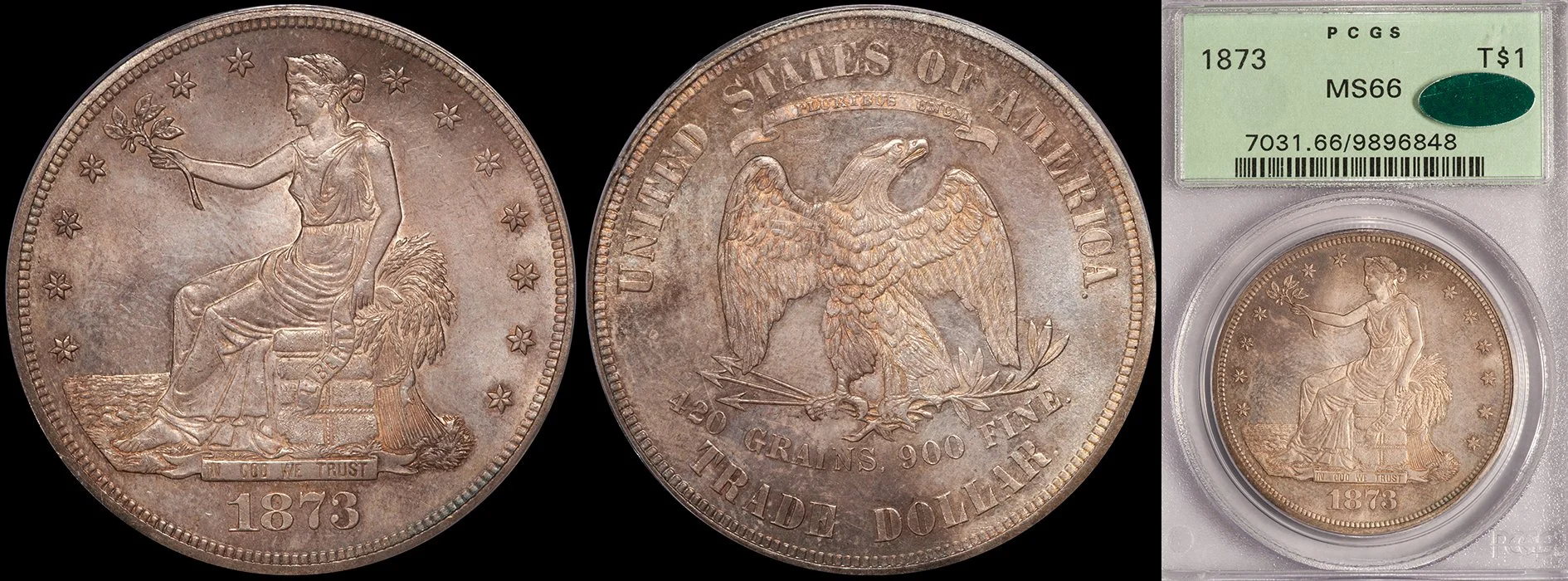
What's Hot/What's Not: The Coin Market As of May 2009

It’s been a longstanding tradition of mine to write a What’s Hot/What’s Not blog a few times a year. The last time I did this was, I believe, around the beginning of 2009. A lot has changed since then and, as we head into the summer, I’d like to share my thoughts about the coin market in general and United States gold coins to be more specific. In the past, it was always very easy to discuss those areas of the market that were “hot.” But with the current economic situation, it probably makes more sense to discuss what’s “not in meltdown mode” instead of what’s doing well.

I’ve been pretty surprised at, all things considered, how well the market has held up. When you consider that most people’s 401k plans are down 50-60% since September 2008 and that many people’s homes have lost 50% or so in value....the losses that we’ve seen in many parts of the coin market aren’t looking quite that bad.

Let’s take a look at a few specific areas and see how they are holding up and what my forecast is for them in the immediate future. The first is early gold. I would have to say that the early gold market has held up far better than most other areas in the coin market. Prices are down around 10-20% for the most part but demand for early gold remains strong and many early gold coins remain quite liquid. The biggest change I’ve noticed in this area of the market is related to quality. If an early gold coin is very nice (nice enough, in this case, to have received a CAC sticker) it is a reasonably easy sale even in this market. I think this is especially true with coins in the $5,000-20,000 range. The more expensive early gold issues are harder to sell right now, even if they are very nice and/or very exotic.

One area of the early gold market that seems to be experiencing a noticeable price correction is the Capped Bust Right Heraldic Eagle ten dollar gold type. I think this is very understandable when you consider that these coins got very pricey in the past few years and that many of the ones in third-party holders are just awful.

I’d have to call the Charlotte and Dahlonega market pretty spotty right now. In their February Long Beach sale, Heritage had a massive amount of C+D gold coins and many prices were very cheap. But unless you really understand the market (and saw the coins in the sale) it is hard to make bold declarations. My take on the C+D market is that there are a lot of truly wretched coins on the market right now and the bottom feeders are either out of money or able to buy the schlock so cheaply that they are dragging prices down for the decent coins. As far as really nice (or really rare) C+D gold goes, this is an entirely different market altogether. Coins like 1855-D gold dollars or 1856-D quarter eagles in wholesome Extremely Fine and better grades are doing just fine and I’m not sure they’ve dropped in value at all since September 2008.

Proof gold is another area that has clearly dropped but I’m not really certain exactly how much. It is clear that the not interesting, bright-n-shiny pieces are off at least 20% or in some cases even more. But it is hard to figure out what really nice Proof gold is worth right now since so little of it has sold in the past six months. My guess is that a high quality, low mintage issue from the 1860’s or 1870’s would bring around 10-15% less than it might of a year ago. The areas that seem hardest hit by the current Numismatic Malaise include Matte Proofs and smaller denomination Proofs from the late 19th century.

20th century gold has been hit harder by the economic downturn than 19th century gold. Expensive coins in the Indian Head series (quarter eagles, half eagles and eagles) are clearly weak. These areas were actually slumping even before September 2008 and for a variety of reasons. The Indian Head quarter eagle series had its major market maker pull way back with purchases, causing a significant drop in demand. Better date Indian Head half eagles and eagles have always been rather thinly traded and, as been the case for as long as I can remember, by happenstance both happened to be at low ebbs in their typical up and down flow. Saints had been very active until early 2007 but the market slowed down after a number of major collectors either sold their coins or cut back on their purchases. Ironically, the generic issues in these four series have been very solid performers in this market.

Two areas that seem to be holding up rather well are New Orleans gold and Type One double eagles. These are markets that are dominated by collectors and there is almost always strong demand for the limited number of choice, interesting coins that are offered for sale. I am noting a softening in the very high end of both of these areas (i.e., issues such as 1866-S No Motto double eagles) but the low to upper-mid price range of both areas seems pretty liquid right now. Coins that are in demand right now include better date New Orleans half eagles and eagles in the EF40 to Uncirculated range, Type One Philadelphia double eagles that are priced in the $2,000-7,000 range and anything in these two areas that is “exotic.” (an example of this would be a No Motto New Orleans eagle in Uncirculated that is one of fewer than four-five known).

From my own personal experience, I am noting a resurgence of interest in the last 45-60 days. I am selling considerably more coins now than I was a few months ago. But, there is a clear difference in the market. Collectors are much more selective than they were before and expensive coins (in my case, $20,000 and above) take longer to sell than they did in the past.

I expect the next few months to be pretty quiet. There are only two significant shows between now and the Summer ANA and at least one (the Baltimore show in June) is likely to have much lower attendance than the other editions of this convention. I think prices will hold firm between now and ANA with occasional spikes up and down that are mostly related to bullion movement.

PCGS Hires a New Grader and Some Thoughts on Third-Party Grading

I’ve used this forum in the past as a venue to criticize the grading services. So, it’s only fair to give credit where credit is due and congratulate PCGS on their new hire as a grader, Charlie Browne. I’ve known Charlie for the better part of two decades. He was last employed by Certified Asset Management, a wholesale firm and market maker of high-end US coins.

Charlie is an old school New England coin dealer; one of the last of the “smart and fair” guys (along with Warren Mills from RCNH and a few others) that used to include such now-retired luminaries as Ed Leventhal, Russ Vaughn, Chris Tracey and Jay Miller.

Here’s what I’ve always admired about Charlie. He’s a guy who gets by with a great eye for coins; not an ability to bake/putty/smoke/laser them. I’ve always liked doing business with Charlie: he’s a square shooter, he paid-up for nice coins and his inventory always had more choice, original pieces than most dealers. He’s going to make a great addition to the PCGS staff.

For the most part, I’m pretty impressed by PCGS and NGC’s ability to get it right when it comes to grading. But I’ve always had two basic complaints when it comes to the whole concept of third-party certification. The first is that graders are continually looking at coins that are out of their comfort zone. I think that I can grade 18th and 19th century gold as well as anyone but I’m pretty clueless when it comes to series like Buffalo Nickels and Walkers. How can PCGS and NGC expect their graders to be experts, simultaneously, in Indian Cents and Pattern silver dollars?

My second issue has to do with real-world experience. I love the fact that in Charlie Browne, PCGS now has a world-class grader on staff who has spent the last few decades buying and selling coins. You can read about grading, you can take grading classes, you can set yourself up as an expert on grading in chat rooms, etc. But there’s only one way to really, truly learn how to grade: you have to buy and sell coins and you have to do it in a situation where mistakes are going to hit you directly in the pocketbook.

Looking back over my two+ decade career as a professional dealer, my most vivid and memorable grading experiences haven’t been the big hits. They’ve been the situations where I made a titanic mistake; one that cost me financially. Trust me, there is nothing more humbling and more experiential than buying an early half eagle, paying MS63 money for it, having it come back a grade or two lower and, after much consternation, regrading and grumbling, selling it for a $10,000 loss. Unless you have absolutely no conscience, these mistakes teach you a lot!

Getting back to Charlie Browne and PCGS, what I really like about this hire is the “fresh eyes” that he will bring to the PCGS grading room. The more I think about it, the more I wish that both PCGS and NGC would bring in “guest graders” every few months. Guys like Charlie know the current market standards for most series, they know when the services are being too tight or too loose and they know that “look” that has the most commercial appeal.

When they coin market was in great shape a few years ago, I would imagine that the pool of potential graders that PCGS and NGC had to pick from was pretty unimpressive (or the impressive guys were probably pricing themselves at levels about two or three times their true market value...). Now that the market has contracted and some of the high-flyers are, shall we say “grounded,” the talent pool is probably a lot more impressive. For a variety of reasons, PCGS can now hire a world-class guy like Charlie Browne and I wouldn’t be surprised if NGC is in negotiation with their own impressive guy(s).

So, here’s to the Charlie Browne/PCGS situation working out well for everyone involved. I know that I’m excited about this announcement and I think Charlie will be a great addition to the PCGS staff.

An Analysis of Values of Gem Three Dollar Gold Pieces: The Heritage 5/09 Sale of the American Princess Collection

In their recent May 2009 Central States auction, Heritage sold a number of very important high grade Three Dollar gold pieces. These were from the American Princess collection which, to the best of my knowledge, was one of the top collections of business strike Three Dollar gold pieces to ever be assembled. By looking at a few of these coins and analyzing the prices they sold for, we can get a better handle on the state-of-the market for very high grade Three Dollar gold.

Full disclosure notice: I sold a number of these to the owner of this collection between 2003 and 2006. I am familiar with the quality of the coins, the prices that he paid for them and their background. In the interest of confidentiality, I won’t mention what the consignor paid but will, instead, focus on what the coins sold for and try to place this within the context of what I expected them to bring in auction and how this relates to the current market.

1855, Graded MS66 by NGC. Sold as Lot 2681 by Heritage, this coin brought $40,250. There are two Superb 1855 Threes known: a PCGS MS66 in the Great Lakes Collection and the coin in the American Princess collection. This is the best 1855 that I have personally seen and I thought it had a good shot to cross as it was very fresh and had great eye appeal. The last auction record for a comparable example was in the 2000 ANA sale where an NGC MS66 (which I don’t think was this piece but am not certain if it isn’t the Great Lakes coin prior to crossing) sold for $25,875. With common date NGC MS66 three dollar gold pieces currently selling in the area of $25,000 I think that the American Princess coin brought a pretty strong price, all things considered.

1861, Graded MS67 by NGC. Sold as Lot 2685 by Heritage, this coin brought $51,750. This is the single highest graded 1861 three dollar seen by either service. It is certainly one of the best two I have seen. I don’t think the coin would have crossed to MS67 at PCGS but not as much because of the quality as the fact that PCGS just doesn’t like to cross MS67 gold coins. The best comparable was the PCGS MS66 sold as Heritage 1/05: 30639 at $46,000. I felt at the time that this MS66 1861 sold cheaply and it was, as I recall, a coin that was sold without reserve at around 3:30 in the morning after a Platinum Night sale that dragged on and on for what seemed an eternity. I thought that the 1861 in the Central States sale would bring in the area of $55,000 so in my opinion the buyer got a pretty good deal. If the coin does wind-up in a PCGS MS67, he got a great deal, as a “population one, none better” example of this scarcer issue could be worth as much as $75,000 to the right buyer.

1871, Graded MS64 by PCGS. Sold as Lot 2687 by Heritage, this example sold for $13,800. I wasn’t wild about this coin from a quality standpoint but I thought it was acceptable for the grade. Trends for the 1871 in MS64 is a very high $30,000 so, from a value perspective, this coin sold very reasonably. As a comparable, Heritage sold a PCGS MS64 back in their June 2004 auction for $13,800. Given the fact that prices for this series appear to have drifted back to their 2004-2005 level, $13,800 is probably exactly the right amount of money for this coin. That said, the buyer (a very smart dealer from the West Coast) is likely to do very well on this piece given the Trends play.

1873 Closed 3, Graded MS63PL by NGC. This coin was offered as Lot 2689 by Heritage but it failed to meet its reserve and did not sell. Interestingly, the only two major pre-1880 Threes in the American Princess collection that didn’t sell were two examples of the rare 1873 Closed 3. I was personally surprised that the MS63PL example did not hit its reserve. This is the single highest graded 1873 with a PL designation at NGC (PCGS, of course, does not designate gold as PL) and it is among the highest graded. My guess as to why it did not sell is that all of the major collectors of this series have a nice example (the Great Lakes coin is a choice PCGS MS64). I also think that there is still a lot of confusion about the origin of the 1873 Closed 3 and Open 3 issues that needs to be clarified. As an aside, this coin is currently available in the Heritage after-sale for $40,250 which seems like a pretty fair deal to me considering that an NGC MS64 brought the same amount all the way back in January 1998 (Heritage 1/98: 7700).

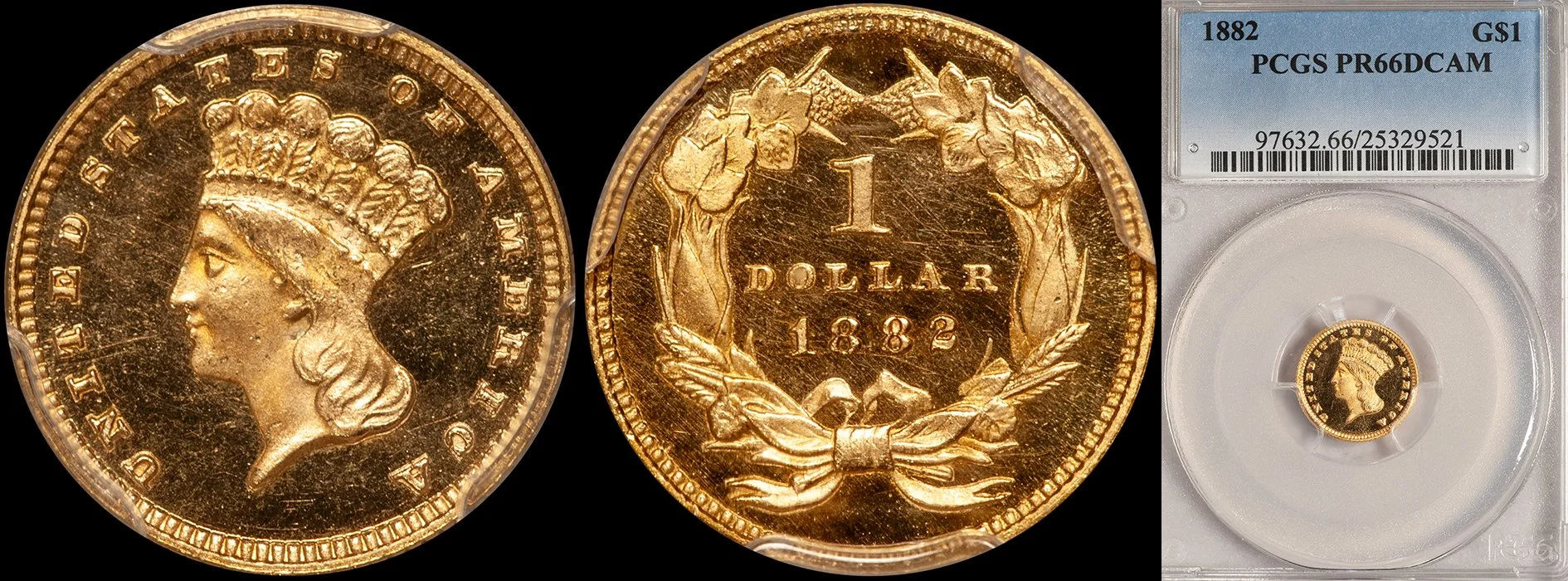
1880 Graded MS65 by NGC, 1882 Graded MS65* by NGC and 1883 Graded MS65 by PCGS. None of these three coins sold, despite being offered with pretty realistic reserves. I wasn’t totally shocked by the 1880 not selling. It was a solid coin for the grade but it’s not all that rare in Gem and most of the buyers of high quality coins in this series are looking for coins in PCGS holders. The 1882 is a coin that’s a pretty hard sell right now. It’s expensive, it’s not that rare and the look of the coin suggested it has visited the NCS lab. The coin that surprised me, though, was the 1883. The coin was really nice and it was in the “right” holder. Unlike the 1880 and the 1882, Gem 1883 Three Dollars are very rare. In fact, the PCGS population is just four in MS65 with two better. The fact that this coin didn’t sell (despite a pretty realistic reserve) indicates to me that there is real weakness in the upper end of this series right now. If this coin had been offered for sale in 2005 or 2006 (when the Three Dollar series was more active) it would have generated considerable interest.

1887 Graded MS66 by PCGS and 1888 Graded MS66 by PCGS. These two coins were offered as Lots 2698 and 2701. They sold for $23,000 and $24,150 respectively. In my opinion, both of these were very nice coins. In fact, when I sold them to the consignor, they were pieces that I had been very careful about selecting and had passed on a number of other examples of these dates. When the market for Gem threes was stronger, these two coins would have probably brought in the area of $30,000-32,500.

So what conclusions can we draw from this small but exceptional group of coins and the Heritage May 2009 CSNS sale? Here are a few things that come to mind:


1. There is no doubt whatsoever that the Three Dollar series is about as cold right now as at any time in the last decade. There are lots and lots of Threes on the market (though not many like the Gems from the American Princess collection) and the supply clearly outstrips the demand. That said, if I were a contrarian collector and I wanted to start a series where I could become King o’ The World it would probably be Threes.

2. In this series, collectors appear to be oriented more towards PCGS coins that NGC, especially very high grade pieces.

3. For most dates in the Three Dollar series, prices for MS65 and better coins appear to be down 20-30% from a year ago. There are exceptions to this rule but these would be for extremely rare and extremely fresh coins.

4. The market premium factor for semi-rare dates in this series is diminishing. As an example, a date like an 1887 or an 1888 in MS66, which is tons scarcer than an 1878, now sells for a much lower premium factor than it did a few years ago. For type collectors, this a great opportunity.

I’d like to dedicate this article to my friend TL. Hang in there, buddy, things will get better soon!

How To "Brand" Your Coin Collection

You’re a serious coin collector. You’ve done all the “right” things. You’ve learned how to grade. You’ve become a knowledgeable specialist. You’ve worked exclusively with one or two exceptional dealers. Your collection is well on the way to being complete but you aren’t ready to sell it. What can you do in the interim to add value to it? I would suggest that proper “branding” of your collection might be the single smartest thing you can do once you’ve learned the right ways to assemble said set.

The American Marketing Association defines a brand as “a name, term, sign, symbol or design or a combination of them intended to identify the goods and services of one seller or group of sellers to differentiate them from those of other sellers.”

Brands play a huge role in our lives whether we choose to admit it or not. You don’t tend to buy a pair of sneakers because of their style or their supposed level of performance; you buy them because you are a Nike person or an Adidas person and you choose to display this symbol to other people; whether to seem “cool” or “informed” or for whatever other reason(s) motivate you. In the case of Nike, you might buy a pair because LeBron James endorses them. What if this was the case with coins?

A small but select group of collectors have figured out that branding, in the era of the Internet, is a way to add considerable prestige and value to their collection. What do I mean by this? Think of certain areas in the numismatic market and certain specific collectors come to mind. Lincoln Cents? Stewart Blay is the Man. Bust Half Dollars? That’s Dale Friend’s Domain. Saints? Steve Duckor is the King.

These three collectors have a number of things in common. First and foremost, they are true “collectors” in the best sense of the word. They are not guys who have barged into the numismatic arena like the proverbial 800 pound gorilla, recklessly bought and then exploded like a supernova with their remains soon consigned to a major auction. No, these are three guys who have been in their respective markets for a long, long time. In most cases, they are specialists who have maintained a fairly narrow focus which has, in turn, allowed them to be formidable buyers. They all know their strengths and limitations and they all have a trusted advisor (or two) to help them make important decisions.

What impresses me most about all three of these collectors are they ways that have branded their collections. I’m not certain that any of them sat down years ago and outlined a cunning master plan to do this; what I think has happened is that all are recognized as good guys and dealers who have clout when it comes to branding have been happy to help them. Plus it hasn’t hurt any of them that they own some really, really nice coins.

Before I discuss some of my own ideas about how to brand a collection, let me state that numismatic branding only works if you’ve got a product that merits branding. If you have a complete set of Saints and the coins aren’t very nice, it really doesn’t matter how well they are branded; they are still a schlocky set of Saints. It also matters what sort of coins you are attempting to brand. It’s still easier to brand the third or fourth finest set of Dahlonega gold coins than the best set of Sacagawea dollars.

So, here are a few ideas of how to brand your collection.

1. Become identified as an expert within your particular field. Even though Messrs. Blay, Friend and Duckor have never written a book on their respective fields, they are recognized as experts. Remember the old TV commercial that said “when E.F. Hutton talks, people listen?” Well, when Stewart Blay talks about Lincoln Cents or when Dale Friend talks about Bust Halves, their fellow collectors pay attention. These guys have put their money where their mouths are and ponied up for some incredible coins at auction or on the bourse floor. None of these guys have made a big deal about becoming an expert but, in their own quiet ways, their opinions have become extremely important in their respective fields.

Something that none of these collectors has done (yet) that I might suggest: either write the definitive book on their field of expertise or work with a knowledgeable dealer/researcher. Not that Blay, Friend or Duckor’s coins need any help but if they were the plate coins for the new standard references on Lincoln Cents or Barber half dollars or Saints this would add even greater mystique to them, in my opinion.

2. Selectively display your collection (but maintain an aura of mystery...) One of the smartest things that Stewart Blay and Dale Friend have done is to display their collection, through the auspices of the PCGS Collector’s Club, at major coin shows. To be honest with you, the Lincoln Cent series is not of great interest to me and I can count on one hand the number of Lincolns that I have bought and sold in two decades of being a professional numismatist. That said I was excited to view the Blay collection when it finally was exhibited last year. Part of the reason was that Blay had cultivated an aura of mystery about his coins over the years. Everyone said how great they were but no one seemed to have actually seen more than a few at a time. When the coins did become available for viewing, this added to their mystique; it was one of the few collections that really lived up to its hype!

Even if you choose to never display your coins in person, you can display them virtually. Let’s say you have put together a great set of Liberty Head quarter eagles. How about buying the domain name www.libertyquartereagles.com and putting together a website that becomes the “go to” source for information and images on this series?

Another thing to consider is, from time to time, displaying a few of your coins. Every year or two, Brent Pogue selectively displays a few of the magnificent coins in his collection. He never shows more than a few and he doesn’t make a big fuss about them. But after I see them, I go back to my bourse table, look at my inventory and wonder if I shouldn’t take all of my coins and toss them into the closest trash can.

3. Let the grading services help you. Both PCGS and NGC LOVE serious collectors and both need good content for their websites. That’s why they are happy to run interviews with Dale Friend (as PCGS now has on their website) or sponsor Stewart Blay’s display. I can assure you that dealers like myself with a strong web presence would love to have Steve Duckor write a detailed article about how to collect Saints or how to put together a great set of coins. What better way for a collector to brand his collection than to have PCGS or NGC write glowing articles or to feature nice interviews!

The 1845-O Quarter Eagle

If I had to list my favorite United States gold coins, the 1845-O quarter eagle would be at the top of the list. This is an issue that I like for a variety of reasons. It’s rare, it’s enigmatic and it has an interesting numismatic background. After striking a comparatively large number of quarter eagles in 1843, the New Orleans mint did not produce any in 1844. None were actually struck in the calendar year of 1845 either; all 4,000 dated 1845-O quarter eagles are known to have been delivered on January 22, 1846. This meant that there was no official record of the 1845-O quarter eagle in the Mint Director’s Annual Report. As a result, this issue was all but unknown to numismatists until the beginning of the 20th century.

The first public record of the 1845-O was in the December 1894 issue of The Numismatist and in 1909, the famous uber-collector Virgil Brand purchased an 1845-O quarter from J.C. Mitchelson for the then-astounding price of $150 (this very coin is traceable today and it is the finest known; see the Condition Census listing below for more information).

Of the 4,000 struck, it is believed that just 65-75 are known. Most are very well worn and the typical 1845-O grades in the VF to EF range. Properly graded About Uncirculated pieces are very rare with fewer than a dozen known to me. I am aware of just three known in Uncirculated. These are as follows:

1. Private collection, ex: Doug Winter, Heritage 1999 ANA: 7836, Bowers and Merena 1987 ANA: 538, Bowers and Merena 10/83: 110, Virgil Brand collection, J.C. Mitchelson. Graded MS63 by PCGS and NGC. 2. Louisiana collection, ex: Doug Winter, Nevada collection, Bowers and Merena 11/90: 477, Paramount Auction ’87: 386, Bowers and Merena 6/86: 149. Graded MS61 by PCGS. 3. Kansas collection. Graded MS60 by NGC.

Most 1845-O quarter eagles show considerable wear and I know of a number that have rim damage or have been cleaned to the point that they would not grade at PCGS or NGC. This issue tends to come with a decent strike. The obverse is typically sharper than the reverse and even lower grade specimens have nicely defined radial lines at the centers of the stars. Nearly every example has a mint-made depression that runs from the area between the curls on the back of Liberty’s head towards the final star. It is the result of a foreign deposit adhering to the die when it was struck. This does not affect the grade of an 1845-O quarter eagle.

There are two other die characteristics seen on 1845-O quarter eagles that are of interest. A series of raised die scratches can be seen inside of the first star. There is also a diagonal bar on the face of Liberty; this can be seen only on higher grade examples. A few 1845-O’s also have a reverse depression from the O in OF down to the back of the eagle’s neck.

As one might expect, it is exceptionally hard to find an 1845-O that has original color and surfaces. The natural color is a deep coppery-orange hue and this can be very attractive. I know of an example in a North Carolina collection (ex: Eliasberg) that has superb original color and this is among the more pleasing examples that I have seen. The finest known is clearly the Brand coin. It is very choice for the grade and has claims to the MS64 level. It would set a record price if it became available in the near future.

This is an issue that has become very popular in recent years. I think it is exceedingly undervalued in VF and EF grades. The current Trends value for an EF45 is just $3,500 and in my opinion, an accurately graded EF45 example is worth more than this. Prices for nice AU coins have risen considerably in recent years but I still think a nice AU55 or AU58 is a good value at the new, higher levels. It is hard to ascribe a value to this date in Uncirculated given its extreme rarity and high level of demand.

Hunting For Value In Today's Rare Coin Market

As we roll towards the mid-way point of the numismatic year, this is a good time to step back for a second and reflect on value. The Numismatic Prognostications of late 2008/early 2009 have not proven as dire as first thought (at least not yet...) but there has still been quite a bit of shake-out in the coin market. For the collector who is a stickler for good value, does this represent a good time to jump into the market and pursue some of the bellwether items that are standards in any collection? Let’s take a look at a few of these and see if they are good values at current levels or if the collector should ride the market out and take a “wait and see” approach.

The first coin I’d like to look at is a 1795 half eagle graded AU55. The 1795 half eagle is a very popular issue due to its status as one of the two first gold coins struck by the United States mint. It is scarce but not unobtainable and it is priced at a level that many collectors can (still) afford. The current value of an average quality 1795 half eagle in AU55 is around $40,000. Last year, examples consistently traded in the $45,000-50,000 and at the peak of the market in 2007 they hit the $50,000-55,000 mark.

Now, let’s look back a few years. What were 1795 half eagles in AU55 worth five or six years ago? As I recall, it was possible to buy a nice, solidly graded example for around $25,000-30,000. My gut feeling tells me that it’s not likely that we’ll see these levels again for this coin but that a dip down to around $35,000 might be possible this year, especially for examples that are low-end and unoriginal.

In my opinion, at current levels (give or take 5-10% on the downside or upside), the 1795 half eagle is a pretty good value in AU55. But I’d be very picky right now. The last three or four examples that I have seen in AU55 holders have been fairly unattractive. A choice, lustrous piece with good eye appeal and nice color is hard to find at the new levels and I think it’s a solid value.

How about the Big Brother of the 1795 half eagle: the eagle from this year? I personally love 1795 eagles. It’s a beautifully designed coin, it’s historic, it’s scarce but not to the point of being esoteric (as are some of the rare date early eagles of this design) and it’s an issue that has been in demand since the early days of coin collecting.

Prices levels for this issue in AU55 have held up a little better than they have for the similarly dated half eagles. I haven’t handled an AU55 in a few months but I’m guessing that they are worth around $50,000-55,000 right now. Last year, examples traded in the $55,000-60,000 range and at the peak of the market in 2007, I traded at least three of them in the $65,000-70,000 range.

Looking back a few years, 1795 eagles in AU55 were trading for around $35,000-40,000. If I had to guess what the current “basal value” for this issue is, I’d say around $45,000. At this level, I have to think there are a lot of dealers who would jump in, even for coins that weren’t especially high end.

In my opinion, a nice, choice 1795 eagle at around $50,000 is very good value. Again, I’d be picky if I were buying one. I’d spend a few extra thousand dollars and wait for an example that was as original as possible.

What about High Reliefs? As you might know, I’m not a huge fan of High Relief double eagles from the standpoint of value. But I do love the design and if I were a collector I can’t imagine not owning a nice MS64 example at least once during my collecting career.

If you shop around, I think you should be able to buy a decent non-CAC quality MS64 for around $26,000-28,000. These were worth around $32,000-34,000 a year ago and at the peak of the market in 2007 I can recall seeing examples trade in the $36,000-38,000 range. Around five or six years ago, as the Great Bull Market in coins was beginning, MS64 High Reliefs were available in the $22,000-24,000 range.

These numbers are sort of surprising to me. Given the near-ubiquity of this coin in this grade (PCGS alone has graded over 1,200 in MS64) I would have personally expected it to have dropped more than it has so far. Many collectors are not aware of the fact that some of the dealers who were the biggest two-way market-makers in High Reliefs have cut back their buying due to cash-flow constraints. Given these factors, I’m impressed that MS64 High Reliefs have only dropped 15-20% since last year. My gut feeling is that they could drop another 10-20% but I don’t see them getting much cheaper than the low 20’s in MS64. At this level, I would have to think that they are a “safe” purchase.

Let’s look at one last item. How about something that straddles the line between “generic” and “rare coin?” I’m thinking Three Dollar Gold and, more specifically, I’m thinking an 1878 $3.00 in MS64.

If you follow the generic market, you probably are aware that Three Dollar Gold is not in demand right now. I would term this series as “cold” and it might even be approaching “glacial.” With a little price shopping and comparing various dealers’ inventories, you should be able to buy an MS64 in the $6,500-7,500 range. These were worth $8,500-9,500 a year ago. The peak of the market for common date MS64 Three Dollar gold was in late 2005/early 2006 when these were being promoted and they got as high as $12,000-14,000 in MS64. Going back to the beginning of the bull market, MS64 Threes were selling for $5,500-6,000.

I’d like to tell you that I thought MS64 Threes were a great value right now because I do think that they are cheap. But the problem with this series is ample supply and almost no current demand. Unless someone starts promoting Threes again, I could see MS64’s drop down to the $5,000-$5,500 range. So unless you really need one for a type set, I’d suggest waiting a while and letting them get cheaper.