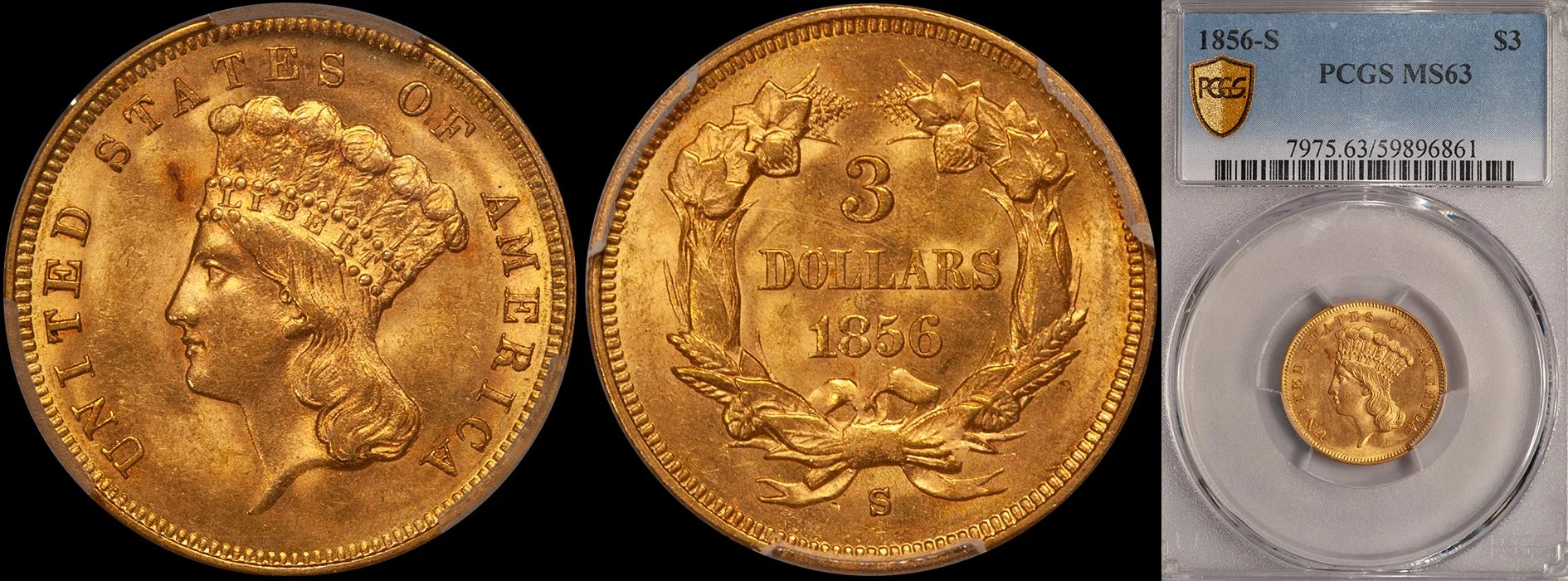
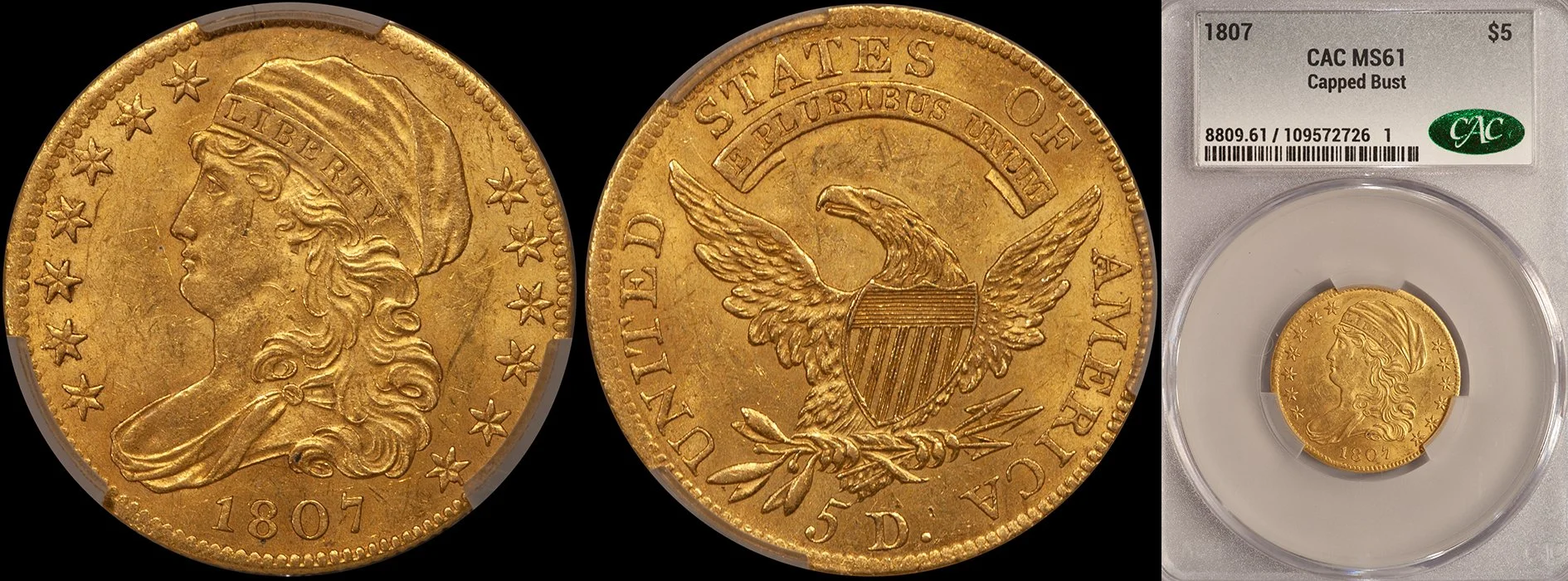
Does Size Matter?

When it comes to collecting United States gold coins, does size matter? For better or worse, I’m afraid it does. Most new collectors of gold coins are immediately attracted to big coins, especially double eagles. The classic entry position for most collectors is to buy some gold bullion, then graduate to something semi-numismatic like a Krugerrand or a Maple Leaf then to St. Gaudens or Liberty Head double eagles. This has been a pattern that many companies have pushed through their marketing.

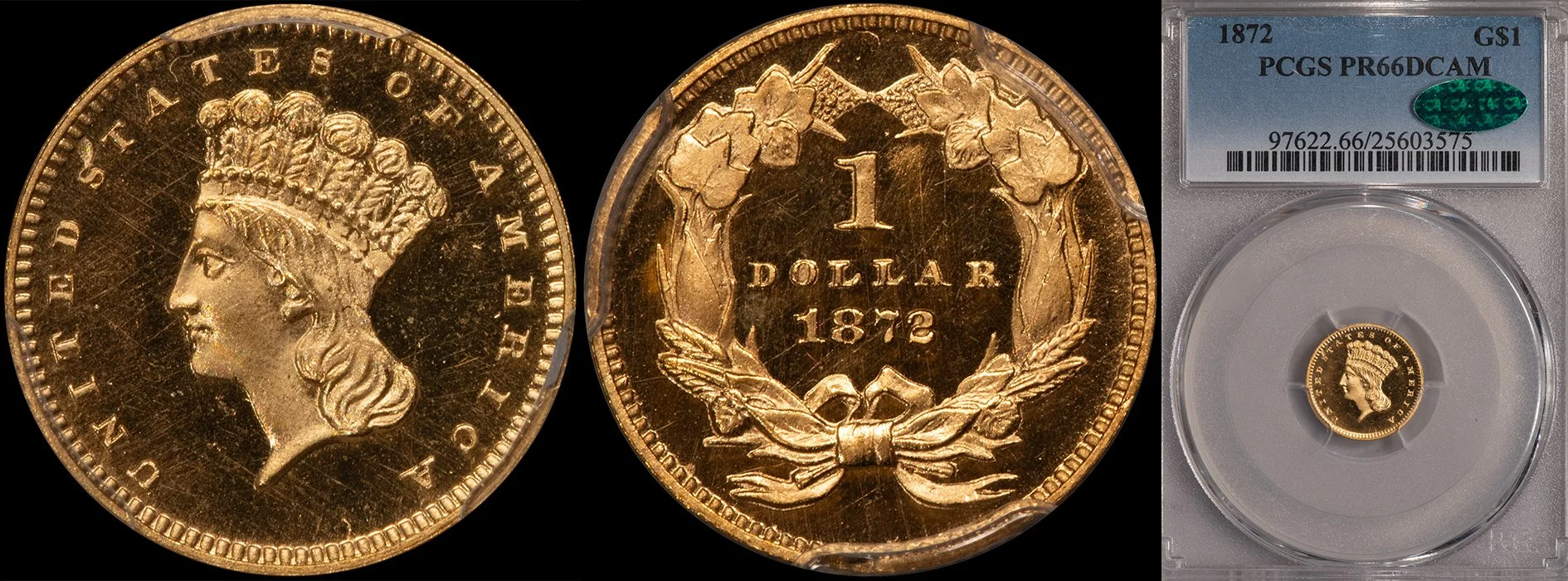
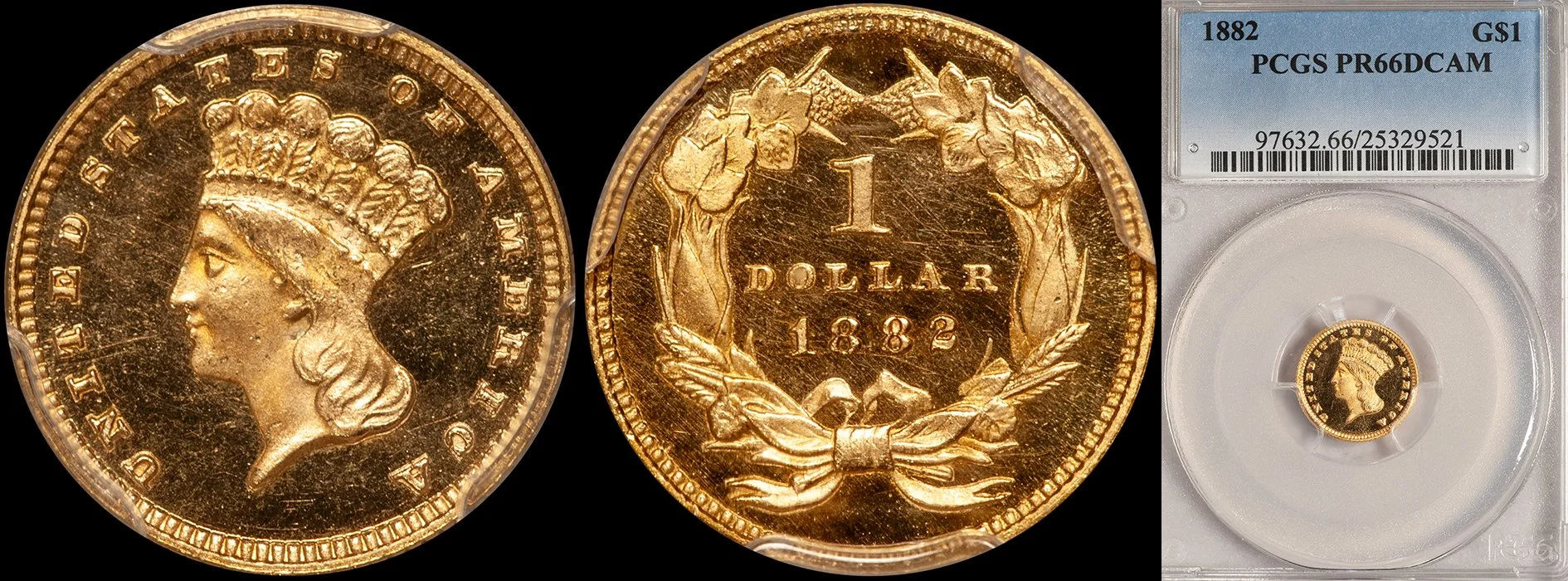
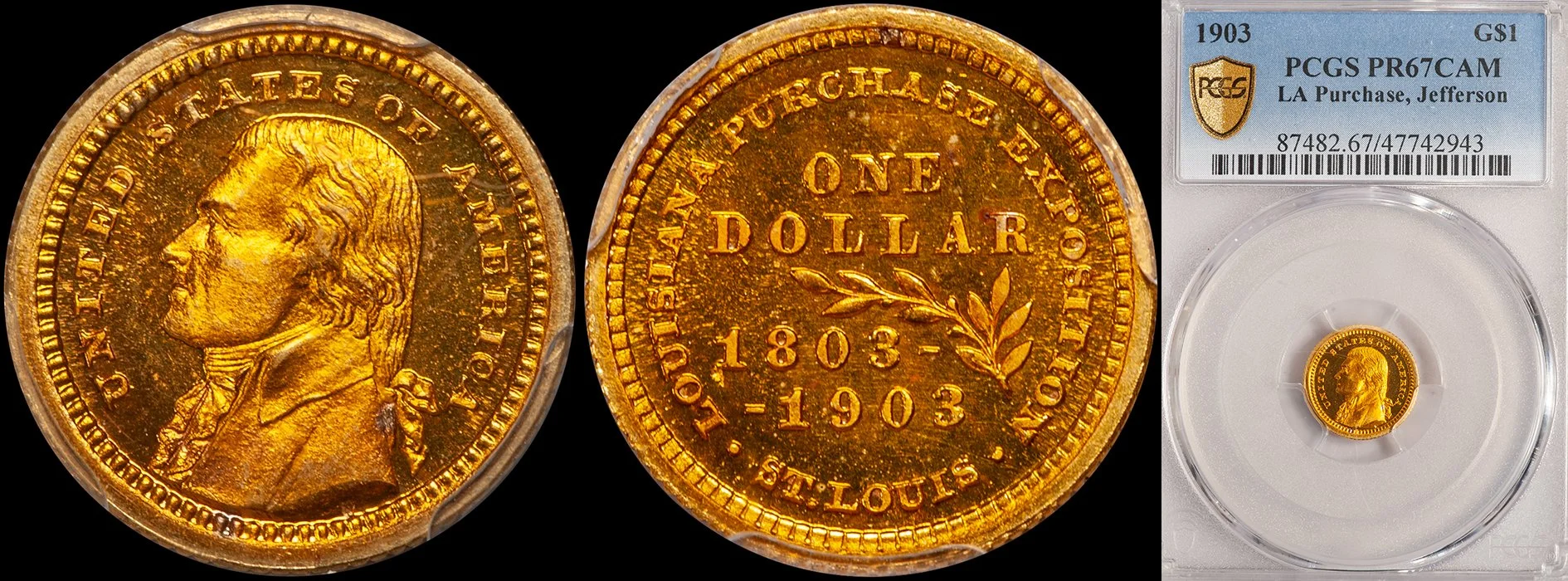
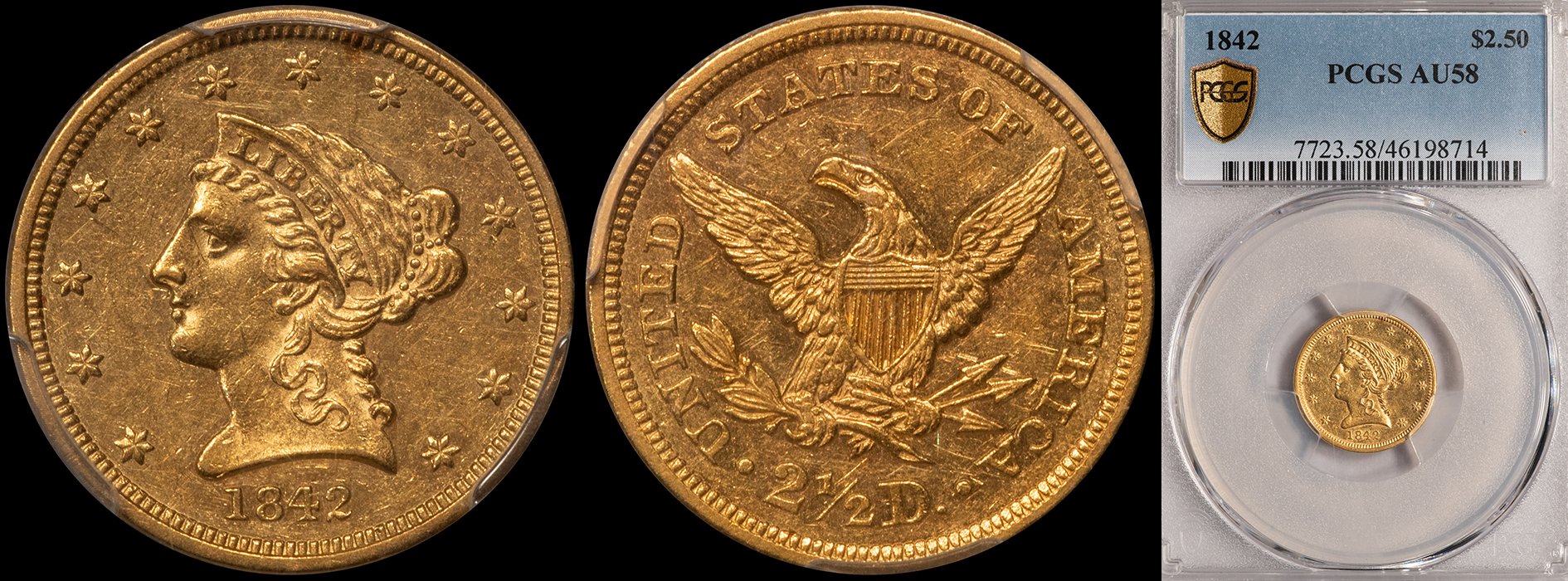
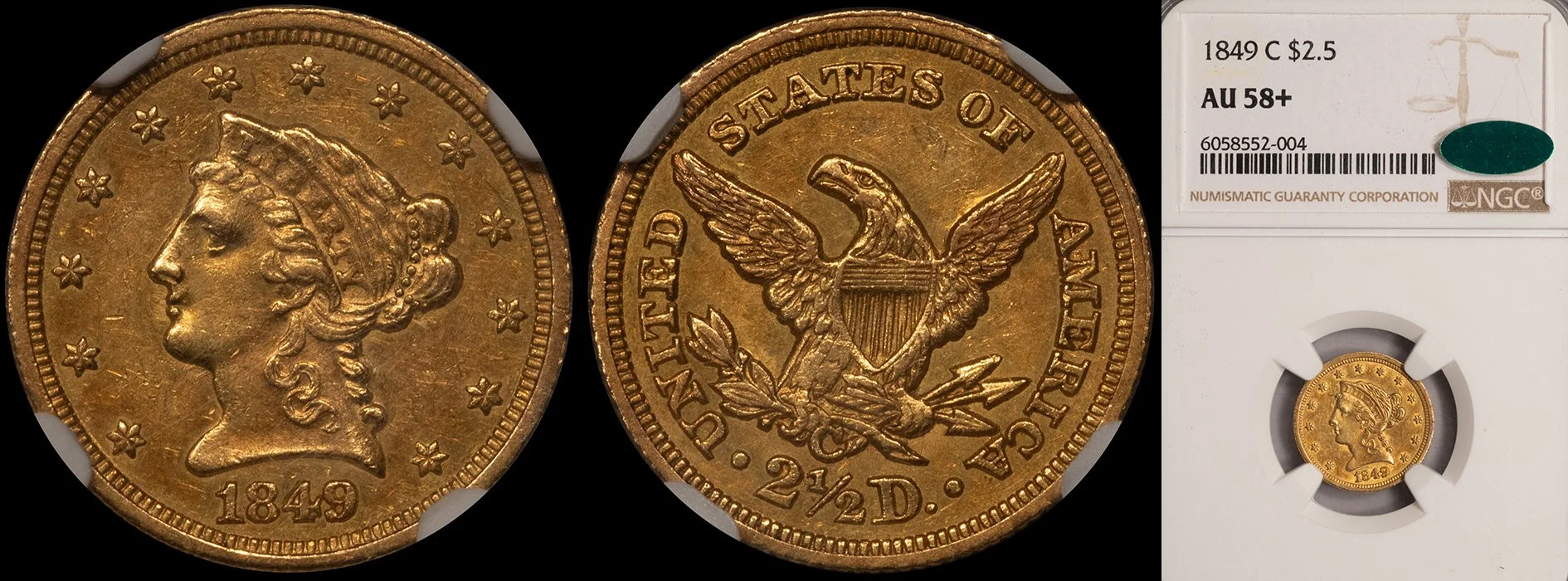
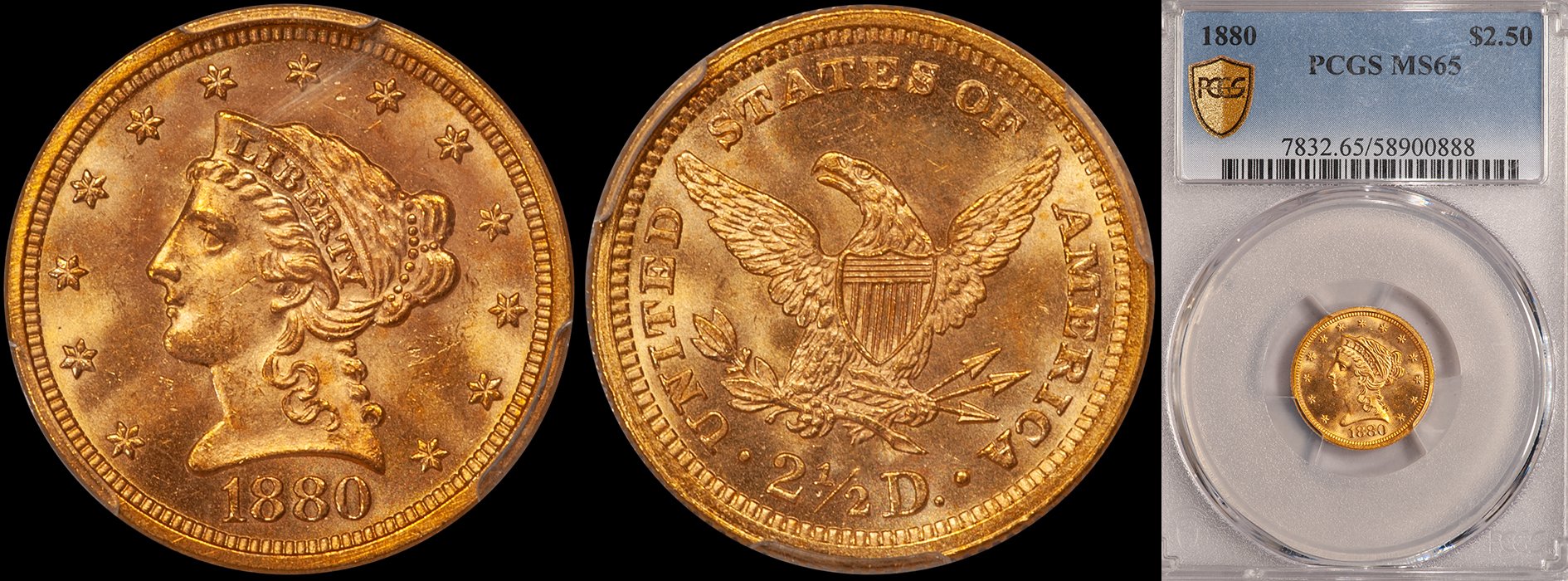
When someone is new to collecting and spending a few thousand dollars on a coin for the first time, it is difficult to understand the concept that intrinsic value has little bearing in the world of rare gold. But this is exactly the reason why most new collectors shudder when they think about spending $5,000 on a small coin like a gold dollar or a quarter eagle.

There is another factor at work that keeps values of smaller coins below their larger counterparts. As most well-heeled collectors approach middle-age (or beyond) their eyesight no longer allows them to carefully view a small coin. Paying $5,000 for a gold dollar that you can’t even see keeps the average 50-60 year old collector away from little coins.

But there is a loyal group of collectors who like little coins. Just like some dog owners prefer mixed breeds to pedigrees (after watching the Westminster Dog Show last night I just had to make a dog reference…) some collectors like little coins for exactly the reasons that others do not: they are irrestible little “rogues” that require a bit more work to love than their bigger brethren.

I think some of the best values in the market are in the smaller-sized denominations. There are many gold dollars and quarter eagles that are superb values (feel free to email me at dwn@ont.com and I’ll provide you with a list of ten undervalued gold dollars and quarter eagles) especially when compared to eagles and double eagles. I will continue to actively buy and sell these smaller denomination coins—as long as I can still see them!

Die Varieties of Gold Coins

Will die varieties of gold coins ever be popular? For years I have tried to drum up interest in what I regard as major varieties of U.S. gold coins. By “major” I mean varieties that are significant and readily visible to the naked eye. Minor varieties do not interest me. The fact that that a mintmark is slightly further to the left on one coin versus another is mundane. But I am interested in an issue that has, say, two distinctly different mintmarks. We are in a golden age of numismatic research. This generation of collectors has access to greater information than ever before. One of the few areas that has not had really fertile die variety research is United States gold. Some upcoming books will change this.

As an example, Harry Bass’ research on early gold coinage has been improved by John Dannreuther and a book about the varieties of early gold is expected to be published soon. It will be interesting to see what effect this has on the market for rare varieties in this area.

Given the high average cost of most gold coins, my guess is that this will never be an area that becomes wildly popular with variety collectors. But certain expensive coins like Bust Dollars and early Large Cents have avid variety followings and perhaps gold will follow suit someday.

At this point I regard Liberty Head gold varieties as an area that really does not merit a premium but which has some potential. I wouldn’t pay a premium for more than a handful of these varieties but it’s nice to know you can buy something with possible added value for essentially no premium.

February 2006 Long Beach Show Report III

Another observation from the Long Beach show: I’d estimate that close to 90% of all United States gold coins, regardless of denomination or price level, have been “messed with” at one time. This degree of messing ranges from light old cleanings to recoloring, to application of putty or other foreign substances to hide hairlines to massive reworking of the coin’s surfaces. What this means to the average buyer of United States gold coins: a caution flag waving in his face every time he makes a purchase. Quite frankly if you are buying coins based on a sight-unseen basis or primarily through Internet-based auctions, it is inevitable that you are buying many problems coins; despite the fact that they are in PCGS or NGC holders. More than ever, it is essential for collectors to purchase coins through a knowledgeable, trustworthy dealer.

I had the chance recently to view two different sets of 20th century gold coins. Both were highly ranked in the PCGS Set Registry within their respective series. And both sets, in all honesty, were full of problem coins; the kind that, if the market stops surging upwards, are destined to show substantial drops in appreciation. I know the owners of both sets. They are nice guys but they have always been the sort of rugged individuals who have eschewed help from other dealers and “done it themselves.” You have to wonder how much better their sets might have been if they had decided to trust a dealer or two and get some help instead of arbitrarily filling holes.

February 2006 Long Beach Show Report II

The Long Beach show is in full swing and I expect that this will be the busiest of the four days of the convention. Here are a few observations I have made:

    Where are all the PCGS coins? With the exception of generic gold and modern coins (plus some Morgan Dollars) there are almost no PCGS coins in dealer’s cases. This means one of three things: PCGS is grading so tightly these days that no one is sending coins there; PCGS coins are so liquid that no one has to display them—they just sell themselves or all the notable PCGS coins wind-up in auction. I’m not sure if I know exactly what the right answer is, but the current disparity between PCGS and NGC product on the market is nothing short of remarkable.

    Baltimore is the new Long Beach. As recently as five years ago, Long Beach was a show that I wouldn’t have missed even if I were on my death bed. Today, the show just seems to lack the sizzle it once had. The Baltimore show (which is coming up in March, by the way) seems to have that old electric feeling and I would now rate it as the #3 show of the year, after FUN and Summer ANA.

    I had a chance to look at the gold coin lots in the Heritage sale and was thoroughly unimpressed. I personally bid on less than twenty coins and was aggressive on only a handful. There were a few Three Dollar gold pieces I liked and the NGC MS62 1799 Small Stars Eagle was lovely. I also liked the NGC MS60 1844-O eagle and some of the lower valued Saints were attractive.

    I spent some time at the ANR table and looked at highlights from their upcoming March sale in Baltimore. Yow!! There are some amazing coins in this sale and I will be discussing them in greater detail in the coming weeks in a series of Raregoldcoins.com Market Reports.

February 2006 Long Beach Show Report I

The February 2006 Long Beach Show opened today. Traditionally, Wednesday is a dealers-only event with trading occuring off the floor in the morning and on the bourse in the afternoon and early evening. Buying activity, in my eyes, could be described in three words: really, really difficult. I looked through dozens of dealer's coins today (including a number whose coins I do not look at until later in the show) and I have to admit that this is one of the harder shows I ever attended in terms of buying. There just isn't alot of material out there and what few nice coins there were have staggering price tags attached. I am hopeful that more coins will turn up later in the week but I am not holding my breath...

This is really par for the course at a Long Beach show. For some reason, this is a very hard show to buy at. It has been for many years. I would assume that part of the reason is that the services are tight at Long Beach shows and not many fresh coins get made. I expect that the upcoming Baltimore show in March will present me with more interesting buying opportunities.

But I am not returning empty-handed. I was able to buy around a dozen interesting New Orleans gold coins including a Condiiton Census 1855-O eagle, a lovely AU58 1845-O half eagle, some very high quality quarter eagles and a pleasing "slider" 1855-O gold dollar. I will have these coins listed and imaged on my website by Monday and would suggest you call me at (214) 675-9897 if anything captures your fancy.

The Ten Most Popular New Orleans Gold Coins

To get you ready for my forthcoming book on New Orleans gold coinage I am planning a series of articles on these coins. Look for these to run between February and May 2006 and look for the new book to be available around June. These ten coins are, in my opinion, the most popular gold coins struck at the New Orleans mint. They are interesting for one or more of the following reasons:

    Low Mintage Figures

    Unique Design

    Interesting historical association

    Collectibility

If a coin possesses more than one of these attributes, it is, obviously, very popular. Simply put, the better the story a coin has to tell, the easier it is to explain to a potential buyer. As a dealer it is much easier for me sell a “self explanatory” coin than one that requires a long, drawn-out story.

Without further adieu, here is the list of the Ten Most Popular New Orleans Gold Coins:

1. 1849-O Gold Dollar: With an original mintage figure of 215,000 the 1849-O gold dollar is probably the most available of the ten coins on this list. It is also one of the most affordable with pleasing AU examples currently selling for well under $1,000. The most obvious reason for the popularity of this issue is that it is the first Gold Dollar produced at the New Orleans mint. Some of the less obvious—but still legitimate—reasons for the popularity of the 1849-O include the fact that it is a very well produced issue and that it can be combined with the 1849-C and 1849-D gold dollars to create a very interesting first-year-of-issue set. We recommend purchasing examples that grade MS62 or better.

2. 1855-O Gold Dollar: Coinage of the Type Two gold dollar began in 1854 and lasted until 1856. During this three year period, the New Orleans mint produced Type Two gold dollars only in 1855. A total of 55,000 examples were struck and survivors are plentiful in lower grades. This issue is scarce in MS60, rare in MS62 and very rare in MS63 or better. In recent years, prices for many high grade Type Two gold dollars have dropped as these coins have proven to be less rare than formerly believed. But prices have risen for the branch mint issues due to their unique design and one-year type status. We strongly recommend purchasing nice original examples in AU50 and above.

3. 1839-O Quarter Eagle: The short-lived Classic Head design was created in 1834 and it lasted until 1839. The only Classic Head quarter eagle was struck in 1839. Coincidentally this happens to be the first year of issue for any New Orleans coin of this denomination. First year of issue, one-year type, unique design…can you say popular coin? Only 17,781 were struck and an estimated 350-400 are known. Most 1839-O quarter eagles are found in VF and EF grades and nice AU’s are scarce. Fewer than two dozen remain in Uncirculated with most of these in the MS60 to MS61 range. We love this date in nearly any grade but recommend examples that grade AU50 and above.

4. 1854-O Three Dollar Gold Piece: Can the story get any better than this: the only Three Dollar gold piece, one of only two Southern issues of this denomination (and the other, the 1854-D is priced out of the range of most collectors) and a coin issued during the first year of this denomination. The 1854-O is common and overvalued in lower grades but it is very scarce in properly graded AU55 and above. This is an issue that is typically overgraded by PCGS and NGC and most pieces in slabs are unoriginal with poor surfaces and unappealing color. Early die state examples which show a full date and mintmark and strong wreath detail deserve to sell for a strong premium over typical later die states.

5. 1893-O and 1894-O Half Eagles: With few exceptions the No Motto New Orleans half eagles produced between 1840 and 1857 are extremely rare in Uncirculated. The With Motto issues produced in 1893 and 1894 are more available in higher grades and more within the budget of most collectors. Of the two, the 1893-O is the more common but this issue is surprisingly scarce in properly graded MS61 or better. The 1894-O is quite rare in Uncirculated and seems undervalued at current price levels. We recommend purchasing nice original pieces graded MS60 and above. Watch out for coins graded MS60 and MS61 that are excessively abraded.

6. 1909-O Half Eagle: After discontinuing production of half eagles in 1894, this denomination was resurrected in 1909. The 1909-O half eagle production was relatively small (just 34,300 pieces) and this issue has an immediate appeal for a number of reasons: it is a one-year type, it is the only 20th century half eagle produced at a Southern branch mint and it was the final gold coin of any denomination produced at the New Orleans mint. In the EF40-AU53 grade range this issue is fairly common and arguably a bit overvalued. But it is a very rare coin in properly graded Uncirculated and examples that grade MS62 or better are among the most coveted 20th century American gold coins. We recommend PCGS graded examples in AU55 and above.

7. 1892-O through 1906-O Eagles: Instead of choosing a specific date from this era, I chose the entire date run of ten coins. These are the most available New Orleans gold coins in higher grades (in this case MS60 or above) due to the fact that substantial numbers of coins were shipped overseas to Europe and did not circulate domestically. The availability of these dates in higher grades is exactly the opposite of the pre-Civil War issues which are nearly unobtainable above MS60. Most of the 1892-O through 1906-O eagles can be found in the lower Uncirculated grades for under $2,000 and these are often attractive coins with good color and luster. Occasionally, dates such as the 1901-O, 1904-O and 1906-O can be found in MS63 or even MS64. Despite the scarcity of these coins they can still be purchased for under $5,000 in some cases. We love the values of all these dates and strongly recommend coins graded MS62 and above.

8. 1850-O Double Eagle: In the past few years, the popularity of New Orleans double eagles has increased tremendously. The formerly-underrated 1850-O has become one of the more popular issues in the series. The major reason for this issue popularity is obvious: it is the first New Orleans double eagle. It is also an issue that is reasonably common in lower grades and has been readily available at auction and via private treaty to new collectors. Most people are still not aware of exactly how scarce the 1850-O is in higher grades. We doubt if more than two or three Uncirculated examples are known and properly graded AU55 to AU58 pieces are very rare. It is still possible to acquire a nice circulated 1850-O in the $5,000-10,000 range but most pieces in PCGS and NGC holders are way overgraded. Minimally abraded pieces with good color are very rare and worth a strong premium over typical examples.

9. 1861-O Double Eagle: There may not be another New Orleans gold coin with the historical significance of the 1861-O double eagle. At various times during 1861, New Orleans double eagles were produced by the Federal mint and by the Confederacy. (Shameless plug: the mystery behind these coins is unraveled in my new book on New Orleans gold due out this summer). Most of the survivors from the original mintage figure of 17,741 are very well worn and this is compounded by the fact that the 1861-O double eagle is a poorly produced issue. In AU, the 1861-O is quite rare and it is extremely rare in Uncirculated with just two to four known. Price levels have increased significantly for the 1861-O double eagle in recent years and we can no longer include this in lists of undervalued issues as we did in the past. However, original EF and AU examples are seldom seen and would make a great addition to any advanced collection of New Orleans gold coins.

10. 1879-O Double Eagle: The 1879-O double eagle is another coin that is desirable for a multitude of reasons: it is the only Type Three issue from this mint, it is the final New Orleans issue of this denomination and it is a very low mintage date with just 2,325 struck (the second lowest figure of any New Orleans double eagle). As with the 1861-O double eagle, the level of popularity (and prices) for this issue have soared in recent years. Any 1879-O with good eye appeal and clean surfaces is very rare and very desirable.

Indian Head Quarter Eagles

In the past few years, Indian Head quarter eagles have been very successfully promoted. A not-as-well-known but equally successful promotion has doubled the price of common date MS65 Indian Head half eagles in the past year. I have recently witnessed an interesting trend that I think might foretell the next price run-up in the 20th century gold coin market. A few dealers are starting to quietly accumulate better date Indian Head eagles, especially issues such as the 1908-D With Motto, 1909-D, 1909-S, 1912-S, 1914-S and 1915-S. The desired grade range for these coins is MS63 to MS65 with most of the activity seen in the MS64 range as this is a “sweet spot” from the standpoint of price (most MS65’s are expensive) and rarity (many of these dates are nearly impossible to find in Gem).

It makes sense to me for a lot of reasons that this series is due for a promotion. The coins are beautiful (I personally like the design even better than the St. Gaudens double eagle), the set is relatively short (only thirty-six coins including the 1907 Wire Edge and Rolled Edge varieties) and, unlike Saints, it can realistically be completed. Most importantly, this series is a sort of final frontier in 20th century gold as it is really the only denomination left that hasn’t been promoted and seen significant price run-ups.

This is a great set for a collector to assemble but it takes deep pockets, especially in MS64 and higher grades. How can the collector of more modest means take advantage of what could become an interesting market play in the coming years? I would suggest purchasing a few slightly better dates in MS64 or MS65. There are only two truly common issues in this series: the 1926 and the 1932. They are currently valued in the $2250-2500 range in MS64 and around $5000-5250 in MS65. I’d suggest the collector look for marginally scarcer dates such as a 1908 With Motto, 1912, 1913, 1914 or 1914-D. These currently sell for modest premiums in MS64 and MS65 despite the fact that they are many times rarer than the 1926 or 1932.

A few buying tips: avoid coins with heavily spotted surfaces as they are hard to sell (a few small, unobtrusive spots are OK), be careful for coins with deep, detracting marks (especially on the face of Liberty) and watch out for coins with funky color (yes, they are even in NGC and PCGS holders).

The United States $3 Gold Pieces 1854-1889

The Three Dollar gold piece is one of the most enigmatic yet collectible United States gold coins. Little has ever been published about this series and most collectors are not aware of the history behind this denomination and how it relates to American history of this era as well. Doug Winter and David Bowers’ “The United States $3 Gold Pieces, 1854-1889” is the first comprehensive guide to collecting Three Dollar gold pieces. Published in 2005, this exciting 176 page guide is superbly illustrated and it has quickly become the standard reference for Three Dollar gold. The combination of Bowers’ ability to relate the history of the denomination and of an American society in transition along with Winter’s unparalleled knowledge of the Three Dollar series has created a book that has become an integral part of the library of all series collectors of United States gold coinage.

Available for sale. Please contact Doug Winter at dwn@ont.com

Why You Should Use An Agent To Bid For You At Auction

If you bid at auction and do not have an agent, you are at a huge disadvantage. There is a possibility the lots you win will not be high quality, desirable coins and that, ultimately, you will not be doing yourself any favors "saving money" by not using an agent. Before we get started, let me disclose that this article is somewhat of a plug for my services as an agent but, I hope, not a shameless one. I consider myself to be an extremely good auction representative but I am also busy enough that I am not beating the bushes looking for many more collectors to bid for.

Let's also get some terminology straight for collectors who might be new or unfamiliar with the world of auctions. Coin auctions are held both live and on-line. Live bidders are able to examine the coins in person and have the advantage of knowing who is bidding on which coins. In my opinion, these two factors are critical. If you collect coins that are very rare or somewhat esoteric, the chances are good that auctions will be a major source of your purchases.

Auction representation generally works as follows. You decide there is a lot (or lots) in auction that interests you. You call your representative as early as possible and discuss them. He views the coin(s) in person. Then you set a limit on what you are willing to pay. Your representative then (hopefully) buys the coin for you. After you pay him the hammer price plus the auction company's 15% bidder's charge, as well as a pre-determined representation fee, your agent sends you the coin. Hopefully, you are happy and repeat the process.

Why should you pay someone to bid for you? This is a good question which requires a multi-stage answer.

1. You Can't Compete With The Professionals: There are only a handful of collectors who are so knowledgeable that they can go to an auction and compete against specialized dealers. Doesn't it make sense to hire your competition to work for you?

2. You Can't Grade Coins Based On Images: While digital photography on coin auction websites has improved dramatically in recent years, do you feel safe bidding on an expensive or important coin based solely on an image? It is my contention that if you or your representative don't view a coin in person then you can't really figure what it's worth.

3. You Have A Real Life: Let's say you are a busy professional who lives in Cleveland and there are coins in an auction in Los Angeles. Are you willing to be away from the office for three days in order to examine and bid on coins? Not to mention the expenses you will incur in getting to the auction, dining out and staying at a nice hotel. Most times, it is cheaper to hire someone to do the work for you!

4. You Should Stay Anonymous: If a dealer sees you bidding on certain items at auction, you might be revealing more about what coins you need than you should. This is another reason it makes sense to hire someone you trust to be your representative.

Assuming that you are now convinced that hiring an auction representative makes sense, the next step is to determine who to hire. There are a few parameters that make sense to follow:

1. Find A Dealer Who Attends All Major Auctions: It doesn't make sense to hire a dealer to bid for you who rarely, if ever, goes to auctions. Even if this person is knowledgeable and trustworthy (see below) he will be of little use to you if he is not "in the loop" as far as coin auctions go.

2. Hire A Dealer Who Is Knowledgeable: Don't hire a Buffalo Nickel specialist to bid on Dahlonega gold dollars and vice-versa. It makes sense to hire the smartest, best-connected person you can find.

3. Hire A Dealer Without Conflicts: How many other people is a dealer bidding for in an auction? How many other people are bidding on a coin you really want? Ask these questions before the sale begins and make certain everything is clear and to your satisfaction.

4. Check The Dealer's Reputation: Ask the auction company if they know the dealer and if they have had any bad experiences with him. Post a message on the PCGS or NGC message boards about a dealer and ask any collectors if they have had good or bad experiences with this dealer as an agent representative.

5. Hire A Dealer Who Can Buy What You Collect: Even if the dealer you buy from is a nice guy, he may be in over his head bidding on expensive coins. Check his website and see what kind of coins he sells. If you are thinking about buying a $50,000 piece of Proof gold, hire a dealer who has experience with coins like this.

There are a few other points to consider in choosing an auction representative that you may wish to consider. The first is what to pay the person. A fairly standard rule is that an agent charges 5% to bid at a coin auction. Don't try to negotiate a better deal unless you are bidding on an extremely expensive coin.

Give the dealer explicit instructions on how much you want to bid. I am aware of at least a few situations where an agent was told "just buy the coin" and he proceeded to pay way, way over market value based on these vague instructions. Be careful that you are not hiring an agent who wants to set record prices to "show off" to his other clients or to the other dealers attending the sale.

Agent sales are not approvals and the collector should realize that he does not have the option of returning a coin to an agent if he does not like it. While this should not scare off any potential bidding, it does demonstrate the need for a relationship with someone whose eye you trust. In twenty years of auction representation, I have never had a problem with my describing a coin. But I have heard my share of horror stories from dealers and collectors alike and would caution anyone involved in this process to approach it with careful consideration.