1847-D $2.50 NGC AU55

If I were looking for an affordable Dahlonega quarter eagle for type purposes, I'd want to own a coin like this 1847-D. It has pleasing natural green-gold color and tons of dirt encrusted in the protected areas that proclaim its originality. As is typical for this issue, the strike is very good with nearly full detail seen at the centers and the borders. The 1847-D is among the more available quarter eagles from this mint but it is scarcer than the 1843-D, 1844-D and 1845-D, making it very sensible for a type set.

1894-O $5.00 PCGS MS61

While seemingly not that scarce in MS61, virtually all of the 1894-O half eagles I have seen in said holders are sliders that do not make the proverbial grade. The present example is strictly "new" and is actually quite choice for the date and grade. It has great luster and nice subtle golden color with a few identifying areas of coppery toning (including a small spot on Liberty's neck) that give it superior eye appeal for the issue. The 1894-O is numismatically significant as the final Liberty Head half eagle from this mint. It is common in circulated grades but rare in the lower Mint State grades and very rare in MS62 and above, as evidenced by the fact that PCGS has graded just seven in this grade or better. The last two PCGS MS61's to appear at auction, in the Heritage 6/11 and Stack's Bowers 7/11 sales, both sold for $2,530 and were both inferior to this example.

1857-S $3.00 NGC AU55

Only 14,000 examples of this date were struck and the 1857-S is one of just four collectable Three Dollar gold pieces from the San Francisco mint. As a date, the 1857-S is generally a scarce issue and it is seen most often in the EF40 to AU50 grade range. It is rare in properly graded AU55, very rare in AU58 and extremely rare in Uncirculated. This pleasing example is totally fresh to the market and it comes from the same source as the lovely AU58 1857-C gold dollar that I purchased at the Baltimore show, It is one of the few 1857-S Threes I have seen that has natural color. The obverse and reverse both show attractive medium russet-gold with mottled underlying reddish hues. The strike is far above average for the date and the surfaces are very clean with none of the marks usually seen on this date. The most recent NGC AU55 example of an 1857-S Three Dollar to sell at auction was Heritage 1/11: 6813 which brought $6,613. The example offered here is far superior due to its color and eye appeal. An important coin and an issue that I personally believed is very undervalued in higher grades.

1890-CC $20.00 NGC AU55 CAC

Extremely lustrous and very nice toned with splashes of subtle coppery-rose color on the obverse; the reverse is more uniform in its appearance. There are a few scattered ticks that limit the grade but this piece compares favorably, in my opinion, to many CC double eagles in AU58 holders. The 1890-CC is one of the more common double eagles from this mint which makes it ideal for type purposes.

1866 $20.00 PCGS AU58 CAC

With Motto variety. In 1866, coinage of the new Type Two double eagles began with the addition of the motto IN GOD WE TRUST to the reverse. Nearly 700,000 examples were made and this is certainly not a rare date in terms of the total number known. However, the 1866 becomes progressively scarcer as the grading scale is climbed and properly graded AU58 examples are far harder to locate than their seemingly high population figures would suggest. This example is a glorious "slider" with superb deep original orange-gold color and a slightly less exaggerated than usual "Euro" appearance with contrasting highlights. There is no real wear to speak of and a considerable amount of natural mint frost below the toning. I was offered an MS61 example of this date recently (for $14,500) that I felt was inferior to this example from the standpoint of eye appeal. CAC has approved nine 1866 With Motto double eagles in AU58 but it is hard to imagine any of them having a better appearance than this coin.

1834 Classic $5.00 PCGS AU55 CAC

Plain 4. This is an extremely attractive, lightly circulated example with an exquisite appearance due to its rich natural deep gold and reddish coloration. There is just the slightest amount of friction visible on the high spots and the luster is very frosty and barely broken. I have seen numerous Classic Head half eagles in AU58, MS60, MS61 and even MS62 holders that couldn't begin to compare to this exceptional piece.

1857-C $1.00 NGC AU58 CAC

There are only two Type Three gold dollars from the Charlotte mint: the 1857-C and the 1859-C. The former is less rare in terms of overall rarity but it is much, much harder to find in higher grades. In fact, the 1857-C is excessively rare in Uncirculated (there are only two or three known to me and none are better than MS61) and very rare in properly graded AU58. NGC shows a current population of 35 in AU58 but this includes numerous coins that I grade no better than AU50 to AU53, not to mention resubmissions. The present example is quite possibly the single most original 1857-C dollar that I have seen. It is well struck on what seems to be a broader planchet than usual and it shows superb deep, original green-gold color on the obverse and reverse. The peripheries are very flat and there is some mint-made buckling of the planchet which is common to the issue. The surfaces themselves are just immaculate with no marks of note and quite a bit of luster. In the last five years there have been four auction records for AU58's of this date (all graded by NGC) and they have realized between $6,038 and $6,600. None of those coins could remotely compare to this fresh-to-the-market example. I have handled virtually every known 1857-C dollar in higher grades and I can't remember one that I liked as much as this. An extremely important coin for the advanced collector of gold dollars.

1858-S $20.00 NGC AU55

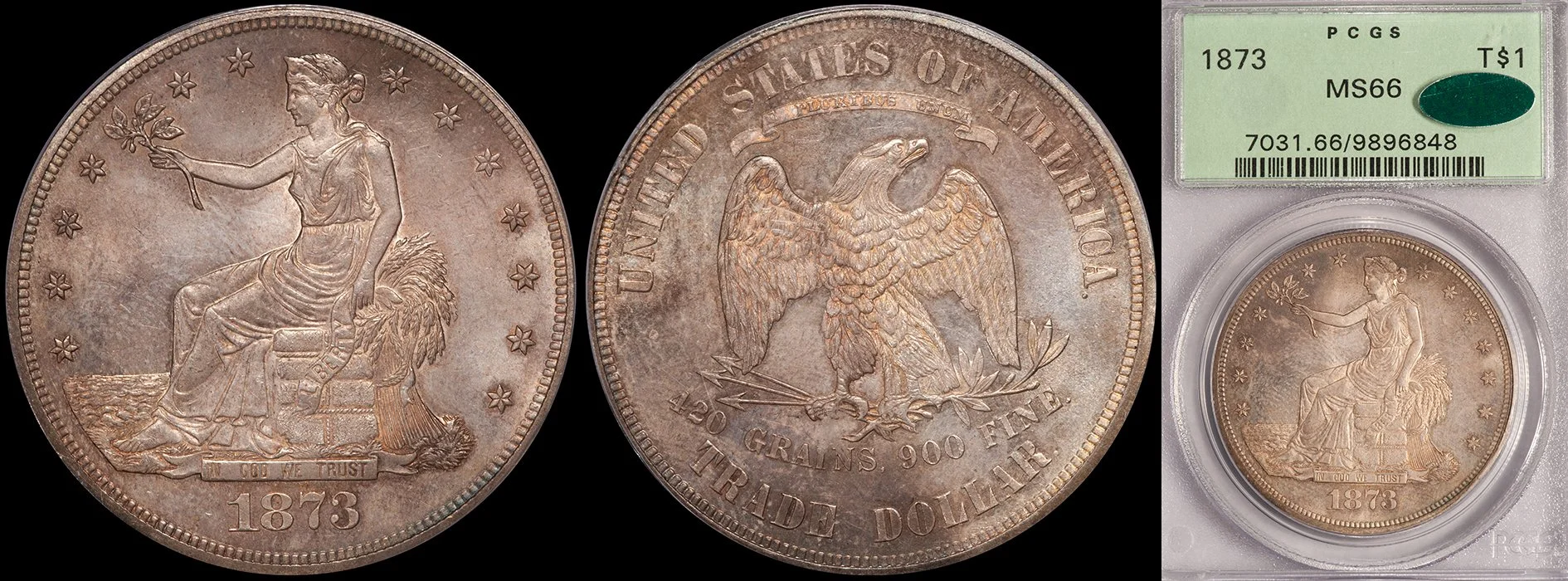
Lustrous with nice light yellow-gold colors that show a tinge of rose on either side. This piece has quite a bit of body remaining and it didn't see a whole lot of circulation. The marks and abrasions on the surfaces appear to be more the results of having spent time loose in a bag with other coins and becoming scuffed as a result. The 1858-S double eagle is a tougher date that doesn't have a large number of higher grade survivors as a result of shipwrecks. In fact, the 1858-S is very rare in Uncirculated and hard to find even in properly graded AU55 to AU58.