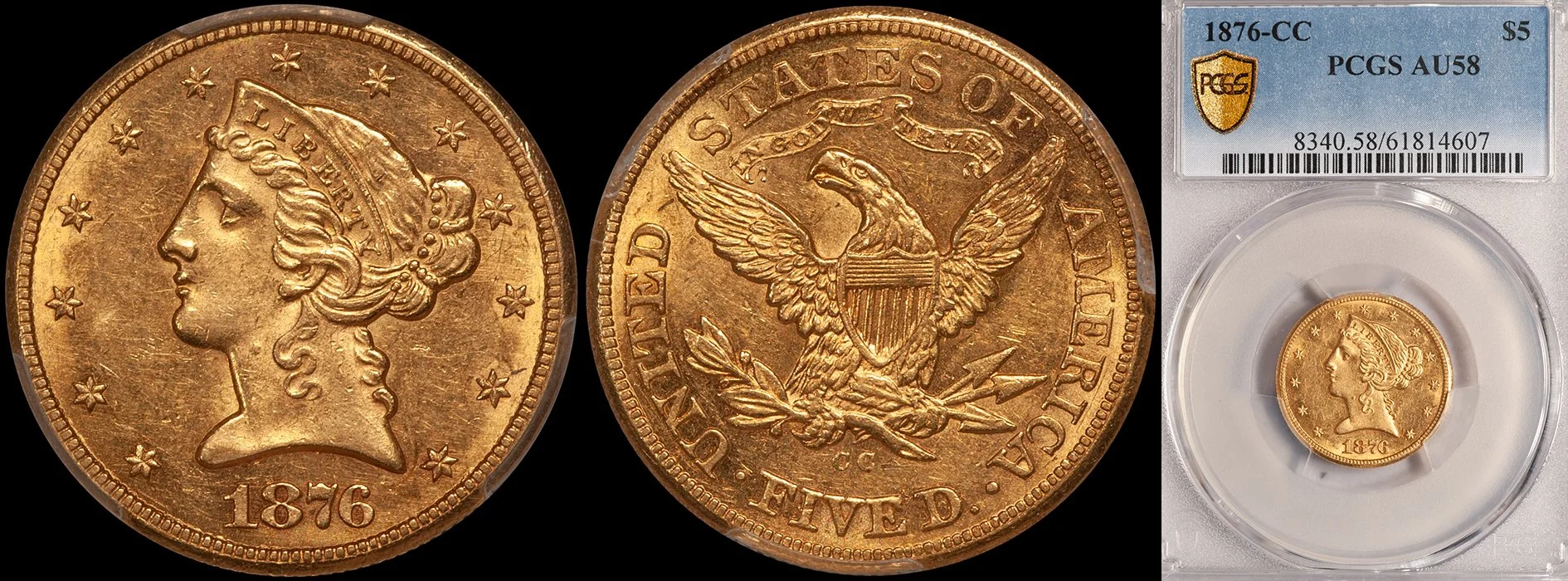
Which New Orleans Gold Issues Are Really Rare?

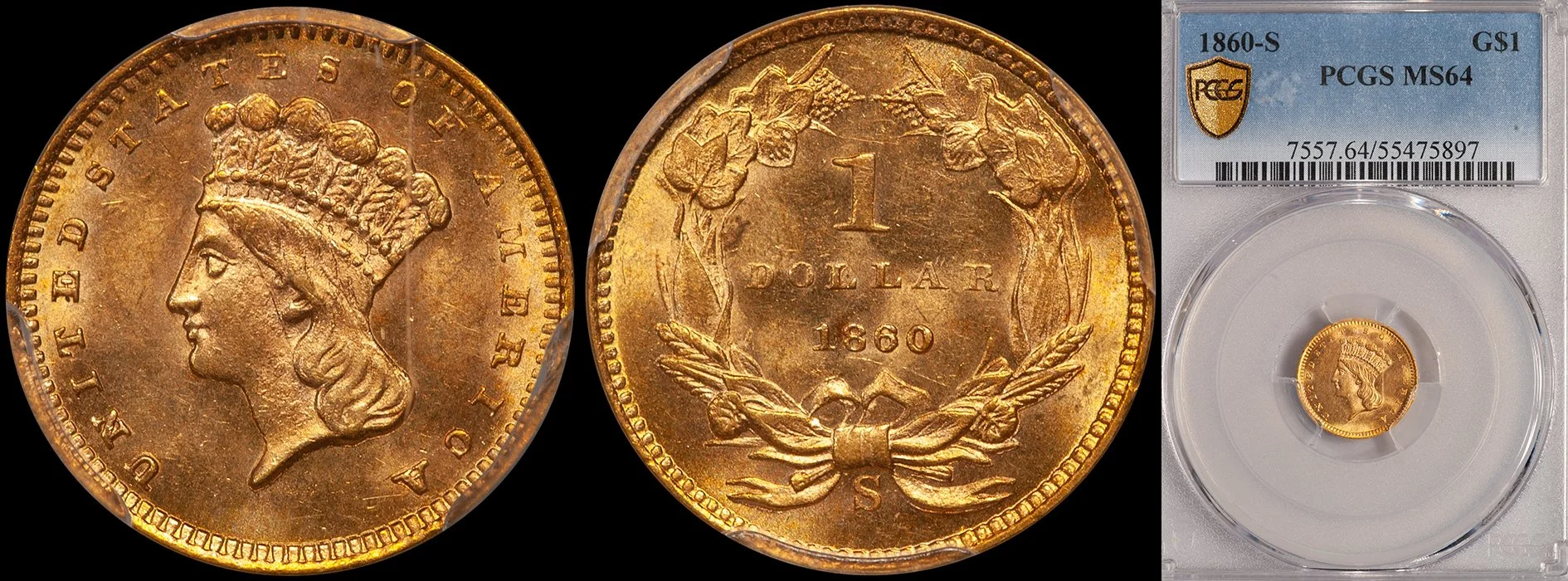
In 1992, my book "New Orleans Mint Gold Coins 1839-1909" was published. A decade later, the information in this reference is considerably out-of-date. Which gold issues from the New Orleans mint have remained rare and which are now more readily available? 1. Gold Dollars: The 1850-O is still the only gold dollar from this mint that can be called scarce in any grade. Properly graded Uncirculated pieces are quite rare, especially above Mint State-62. I have never seen a gem and only one or two at the Mint State-64 level. The 1849-O and 1851-O are more plentiful in the lower Mint State grades than I previously believed but are extremely rare in gem. The 1852-O remains reasonably scarce in the lower Mint State grades, quite rare in Mint State-63 and very rare above this. Price levels for the 1855-O have increased dramatically in the past decade. This issue cannot really be called rare but its status as the only Type Two gold dollar from New Orleans makes it extremely popular. The supply of high-grade examples (Mint State-62 and higher) has dried up in recent years.

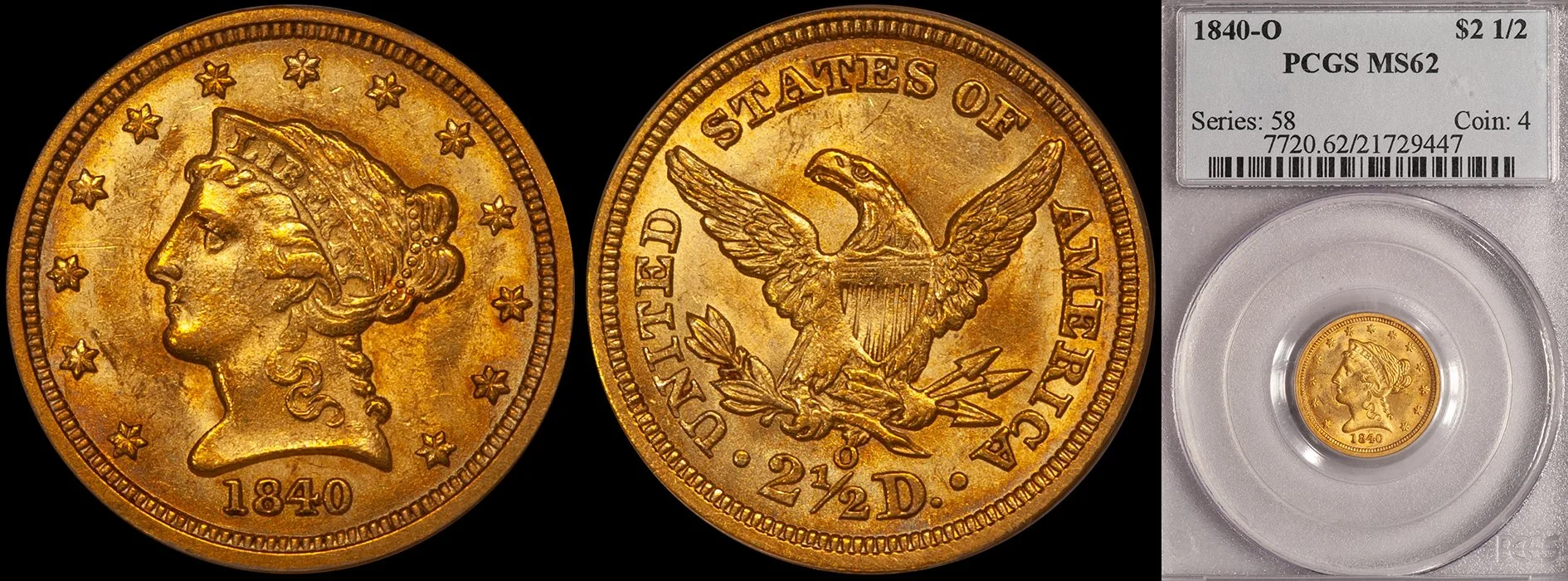
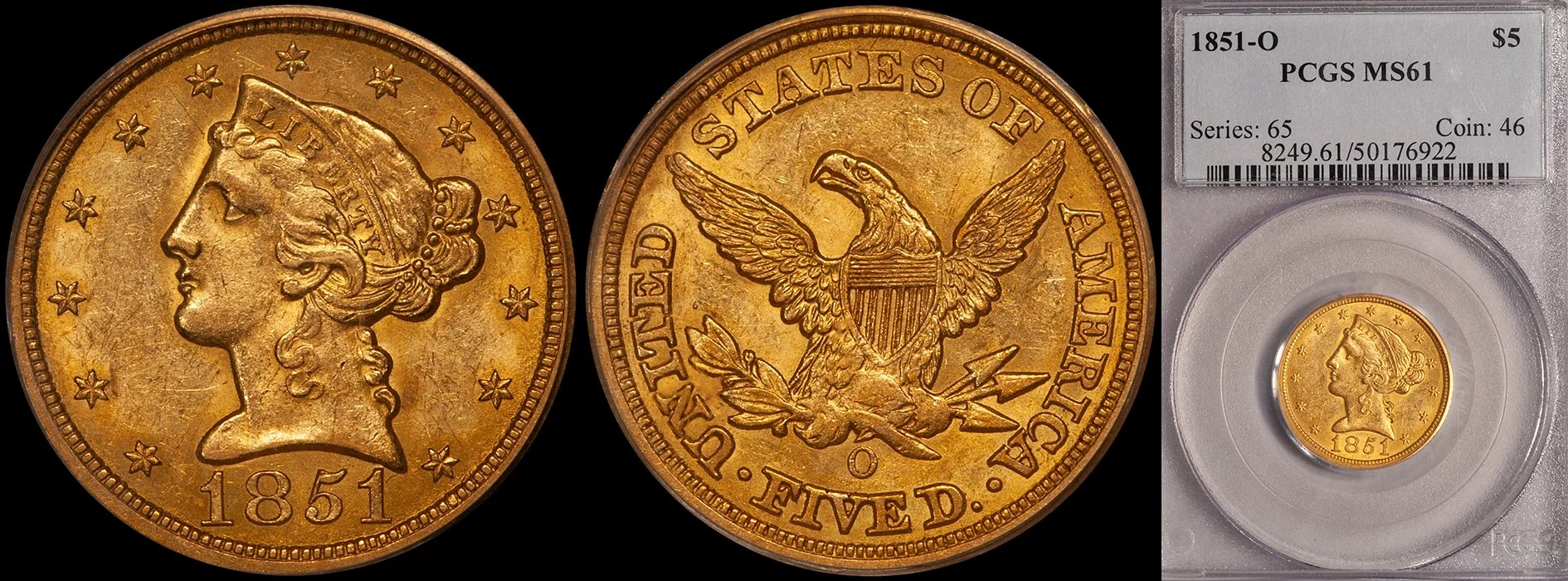
2. Quarter Eagles: The only New Orleans quarter eagle that can rightfully be called rare in circulated grades is the 1845-O. It has proven to be almost impossible to find above About Uncirculated-55 and I still know of just two or three Uncirculated examples. The 1840-O, 1842-O and 1843-O Large Date quarter eagles are very hard to locate in the higher AU grades and all three are very rare in Uncirculated. The 1846-O, 1850-O, 1851-O and 1852-O have proven to be a little more available in Uncirculated than formerly believed but all four are extremely undervalued in comparison to Charlotte and Dahlonega quarter eagles of this era. The 1856-O is still the biggest "sleeper" date of the quarter eagles and I doubt if more than six or seven are known in Uncirculated. The 1854-O, while extremely common in circulated grades, is quite scarce in Mint State-62 and rare in Mint State-63 or better. It remains absurdly undervalued. The 1857-O is more plentiful in high grades than formerly believed but it remains very rare in Mint State-63 and above.

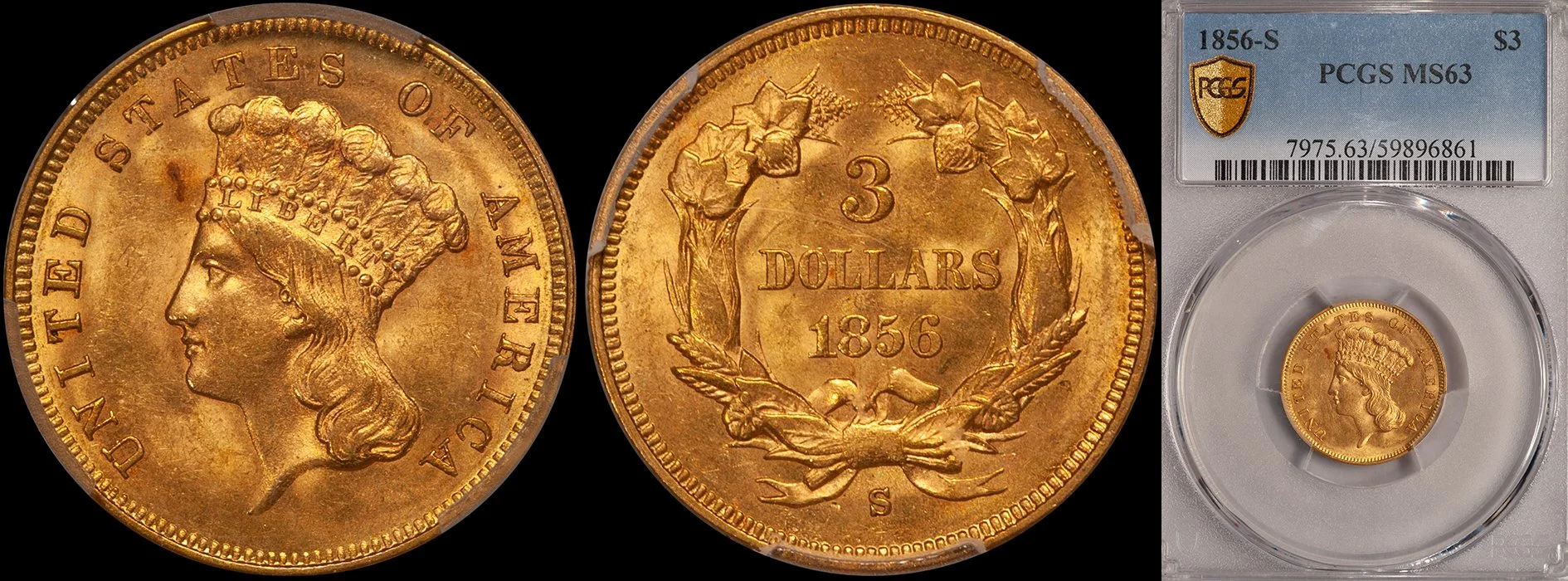
3. Three Dollar Gold Pieces: If one goes strictly by population figures from NGC and PCGS, it seems that the 1854-O Three Dollar gold piece is far more common than once believed in the higher About Uncirculated grades. This is not the case. Properly graded, sharply struck examples with original surfaces are very rare in Mint State and extremely scarce in About Uncirculated-55 and About Uncirculated-58. Many have been submitted to the grading services multiple times and a number I have seen in NGC AU-55 and AU-58 holders have been considerably overgraded.

4. Half Eagles: The 1842-O and the 1847-O half eagles are two of the rarest gold issues from this mint. There are two examples known of the former in Mint State and well under a dozen in properly graded About Uncirculated. The 1847-O remains unknown in Uncirculated and extremely rare in AU. Most of the coins in AU-50 to AU-55 holders are unattractive and considerably overgraded. The 1840-O is still an issue that has not really received its due in Uncirculated. A small group of 1843-O Small Letters (four pieces) was discovered in the late 1990's and these increased the number of high-grade examples known. The 1845-O, 1846-O and 1851-O are very rare in Uncirculated and very scarce in the higher AU grades. The 1854-O has become somewhat more available in high grades and I have seen at least six or seven different Mint State pieces over the last decade. The 1855-O, 1856-O and 1857-O are all very rare in Uncirculated and extremely scarce in the higher AU grades. The only readily obtainable No Motto issue is the 1844-O.

The three With Motto New Orleans half eagles have gained in popularity (and price) since my book was published. The 1892-O is far and away the scarcest of this trio and is still considerably undervalued in Mint State. The 1893-O and 1894-O have become far more available in the lower Uncirculated grades but are unquestionably rare in Mint State-63 and essentially unavailable any finer.

5. Eagles: With the exception of the 1847-O, every New Orleans eagle from the 1840's remains very scarce in the higher About Uncirculated grades and very rare in Uncirculated. There are still no Mint State examples of the 1841-O known while the 1849-O appears to be unique. The 1846-O is extremely rare in high grades with just two or three known in Mint State. Even issues such as the 1842-O, 1844-O and 1845-O, which are relatively easily to locate in lower grades, are very rare in properly graded AU-58 and extremely rare in Mint State.

A number of the issues from the 1850's have proven to be extremely rare in high grades. The 1859-O is a bit more available in lower grades than formerly believed but it is unknown above AU-55. The 1852-O, 1855-O, 1856-O and 1857-O are all very rare in the higher AU grades and all except for the 1855-O appear to be unknown in full Mint State.

The 1879-O eagle seems to be a bit less rare than its original mintage of 1,500 would suggest but the supply of higher grade (AU-50 and better) pieces has dried up in the past few years. Only a single Uncirculated example is known.

The 1883-O remains the rarest of the post-Civil War issues. It is rare in all grades and examples in AU-55 or higher are extremely rare. No strictly Uncirculated piece is known to me although one or two might exist. The 1880-O and 1881-O remain rare and underrated in Uncirculated grades while the 1882-O is slightly more available in higher grades than once believed.

The New Orleans eagles from the 1890's are far more available in the lower Uncirculated grades than they were a decade ago. This is due to a number of sizable hoards having been uncovered in the mid-1990's. However, all of these dates remain rare in Mint State-63 and very rare in Mint State-64 or above.

The eagles from the 1900's are among the most available gold issues from this mint in higher grade. They are very good value in the lower Uncirculated grades.

6. Double Eagles: As this article is being written (April 2003), double eagles have become the most popular issues from New Orleans. There is currently an unprecedented level of demand for these issues and the two classic rarities, the 1854-O and 1856-O, have seen incredible price increases in the past decade. The 1850-O was formerly a sleeper issue in high grades and was very undervalued. High-grade AU's now sell for $15,000-20,000. The 1851-O and 1852-O are a bit less rare in Uncirculated than formerly believed. Nice AU's are only moderately scarce but they have become hard to locate as a result of strong demand. The 1855-O, 1859-O and 1860-O remain very rare in AU-55, extremely rare in AU-58 and unobtainable in Uncirculated. The 1857-O and 1858-O are more available in the lower to middle AU grades than they were a decade ago. But both remain extremely rare in Uncirculated. The 1861-O has gained in popularity and it is now, along with the 1879-O, a coin that appears on more want lists than nearly any other gold coin from this mint.

In the decade since the release of "New Orleans Mint Gold Coins, 1839-1909", these issues have become far more popular with collectors. While still not as actively collected as the branch mint issues from Charlotte and Dahlonega they have developed an active collector base. Prices have risen considerably, particularly on the major rarities, stand alone issues (such as the 1855-O gold dollar and the 1854-O Three Dollar) and finest known and Condition Census issues. The release of a number of hoards in the mid-1990's and the sale of the Pittman and Bass collections in the late 1990's brought a number of important new coins on to the market that were not known to me a decade before. When my next book on New Orleans gold is released, there will be numerous changes, both in the Condition Census listings and in the rarity estimates.

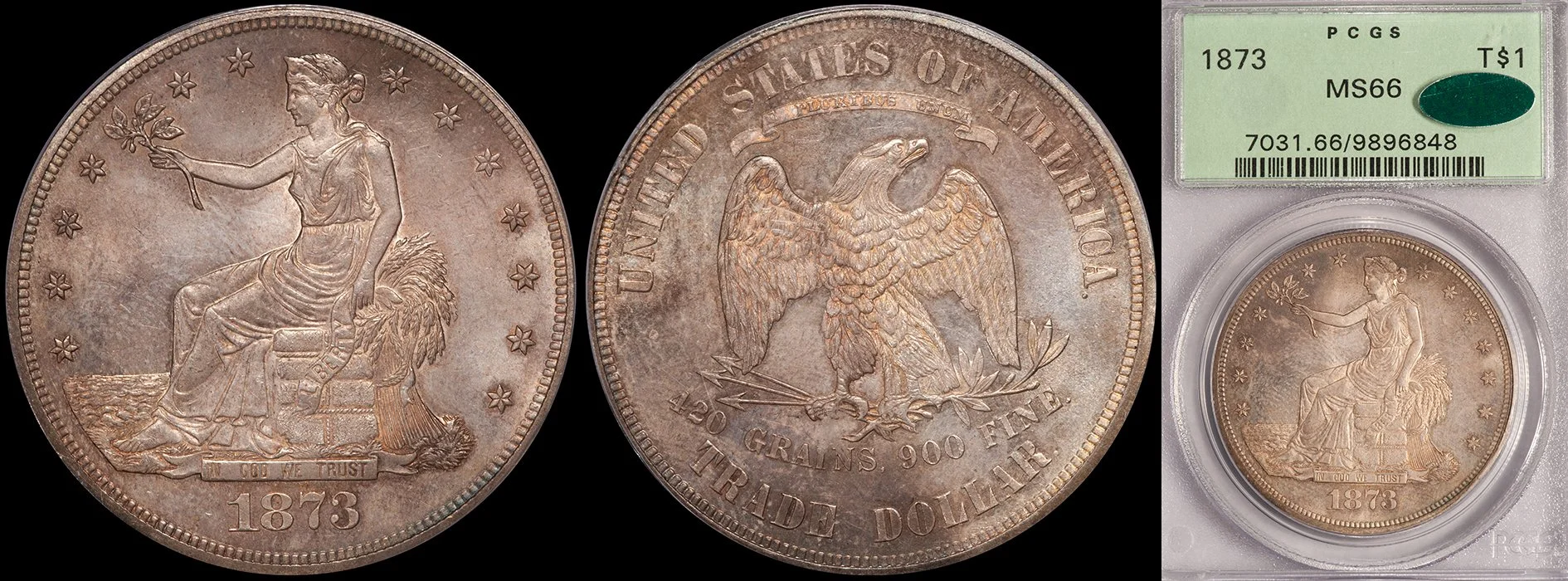
Which Dahlonega Coins Are Really Rare?

In the six years since the publication of my book "Gold Coins of the Dahlonega Mint", I have changed some of my opinions about which Dahlonega issues are really rare. The sale of the Bass collection in a series of auctions from 1999 to 2001 brought many exceptional pieces to market. In addition, I was able to purchase a number of collections that contained fresh, high grade examples of coins that I had never previously seen in very high grades. 1. Gold Dollars: In the Type One series, no single issue has proven to be truly rare; at least in terms of its availability in the Extremely Fine to About Uncirculated grade range. The 1850-D remains the rarest Type One issue in higher grades and it is extremely scarce in properly graded About Uncirculated-55 or better. The 1854-D is another issue that is harder to locate than I previously thought. PCGS claims to have graded nine examples in Uncirculated as of January 2003 but I think this number is inflated by resubmissions and overgraded coins.

The 1855-D gold dollar is even rarer than I formerly believed. It is extremely scarce in the lower About Uncirculated grades, very rare in the higher About Uncirculated grades and exceedingly rare in Mint State. The few nice pieces to have come on the market in the past six years have brought record prices and are now stashed in advanced collections.

Many of the Type Three Dahlonega gold dollars appear to be more available in higher grades than I previously believed. The 1856-D is an exception. It remains exceedingly rare in full Mint State and the current population figures at the grading services (twenty-nine alone at PCGS in AU-55 to AU-58 as of January 2003) are absurdly inflated by resubmissions and overgraded coins. Two other issues I still respect are the 1857-D and the 1860-D. The former is very rare and much undervalued in About Uncirculated-58 and better while the 1860-D, despite a fairly high number certified in higher grades, is truly rare when one takes eye appeal into consideration.

2. Quarter Eagles: I still strongly believe that any attractive, original Dahlonega quarter eagle in About Uncirculated-55 or better is rare. And a number of dates have proven to be harder to locate in high grades than I previously expected. The 1840-D and the 1851-D are two issues that I almost never see in AU-55 or better and when one factors eye appeal into the mix, they are nearly impossible to locate.

The population figures for every single Dahlonega quarter eagle in About Uncirculated-55 to Mint State-62 are heavily inflated as a result of resubmissions and overgraded, low-end coins. As an example, the January 2003 PCGS Population Report shows thirty-one 1850-D's in About Uncirculated-55 to About Uncirculated-58. In my opinion, it is highly unlikely that more than a dozen are known in this grade range and this includes a number that are decidedly unattractive.

In my 1997 book, I stated that the 1855-D was the rarest Dahlonega quarter eagle. I now believe that the 1856-D is the rarest. A few other facts about these dates have become apparent. Nearly all 1855-D quarter eagles have some sort of mint-made planchet damage. Any nearly all of the pieces that I have seen in PCGS and NGC AU-50 to AU-55 holders are very low-end. The 1856-D is an issue that noone in the world, myself included, knows how to grade. This is due to the incredibly primitive appearance of these coins. They look like buttons and this makes them just about impossible to grade with any degree of accuracy.

3. Three Dollar Gold Pieces: The 1854-D Three Dollar gold piece is an issue that I have really come to know and appreciate. I have a few observations I'd like to share.

It's not as rare as most people think. For whatever reason a surprisingly high percentage of the 1,120 originally struck were saved. Probably ten percent or more of the mintage exists today, which is a remarkably high number in comparison to nearly any other Dahlonega coin.

It's the most overgraded issue from this mint. An 1854-D that was graded Extremely Fine-45 in 1997 is almost certainly an About Uncirculated-50 or About Uncirculated-53 in 2003. And nearly all of today's AU-58's are really no better than AU-50 to AU-53 by the "old" standards.

Almost all of the pretty, original 1854-D Three Dollar gold pieces have either been dipped or are put away in strong hands. As a result, examples with good eye appeal are now selling for a significant premium over typical washed-out pieces.

Prices for high-grade 1854-D Three Dollar gold pieces bottomed-out in 2000-2001 and have steadily increased since then. In early 2003, the demand for this coin is extremely strong.

4. Half Eagles: More "fresh" half eagles have come on the market in the past six years than any other denomination from the Dahlonega mint. That said, there are still a number of issues that I feel are underappreciated.

The 1839-D has become very popular due to its status as a one-year type coin. And it has proven to be exceptionally hard to locate in About Uncirculated-55 or better with original color and nice surfaces. The 1840-D is also a major source of frustration for collectors who desire a choice, original example.

The 1842-D Large Date remains a major rarity in About Uncirculated-55 or better. It is quite a bit rarer in choice, original Extremely Fine-45 to About Uncirculated-53 than I formerly believed.

The 1846-D normal mintmark half eagle is now recognized as one of the rarest coins from this mint in About Uncirculated-55 or better. Pieces with original color and nice surfaces are almost unheard-of.

For me, the real surprise in the half eagle series has been the 1848-D. In the past six years, I do not think I have seen more than two or three pieces that were well struck and had original color. PCGS claims to have graded twenty in AU-55 to AU-58 but I doubt if more than a small handful are accurately graded and sharply struck.

Two issues from the 1850's have proven to be harder to locate in high grades than I previously believed: the 1851-D and the 1855-D. Most of the PCGS and NGC examples that I have seen in AU-55 and higher holders have either been very softly struck, are noticeably unoriginal or just plain overgraded. Both dates are really rare and undervalued in higher grades.

In the Spring of 2003, I am planning to publish a fully updated version of "Gold Coins of the Dahlonega Mint." This book will include all new rarity and Condition Census updates, new photographs, extensively revised die variety information and interesting personal observations on each issue. It should prove to be the essential work for any Dahlonega collector and will provide important current information that the 1997 edition is lacking.

The 1854-S Quarter Eagle: A Forgotten American Gold Rarity

In the early part of 2003, an excellent book entitled "The 100 Greatest United States Coins" was published by H.E. Harris. The coins were selected by a panel of experts including myself. The 1854-S quarter eagle was only listed as #87 and was outranked by a number of more common gold issues including the 1915-S Octagonal and Round Pan-Pacific $50 gold pieces, the 1879 Flowing Hair Stella and the 1848 "CAL" quarter eagle. I recently had the pleasure of selling an 1854-S quarter eagle. As I researched this coin, I quickly realized that I was every bit as guilty as most numismatists of overlooking its rarity and historical importance.

The San Francisco mint officially opened in 1854. Its first year was exclusively dedicated to striking gold issues. It issued gold dollars, quarter eagles, half eagles, eagles and double eagles in 1854 and added three dollar gold pieces to its roster in 1855.

Tradition states that the mintage figure for the 1854-S quarter eagle (along with its half eagle counterpart) was extremely limited because of an absence of sufficient parting acids required to remove silver from the impure gold that California was receiving from its local sources. Only 246 1854-S quarter eagles were produced, giving this the lowest mintage figure of any regular issue produced at the San Francisco mint (the 1854-S half eagle, with an original mintage figure of 268 is a close second). Only two Liberty Head issues, the 1875 half eagle and eagle, have lower business strike mintage figures.

Curiously, the mintage figure for 1854-S eagles and double eagles was relatively high with 123,826 of the former and 141,468 of the latter produced. The real reason for the extremely limited mintage figures of the quarter eagle and the half eagle is much more likely due to the fact that the depositors of gold who requested coins in 1854 wanted large-sized denominations such as eagles and double eagles. The quarter eagle denomination was never popular in the West. None were made in 1855 and mintage figures remained small at San Francisco through the discontinuance of this denomination in 1879. The other western branch mint, at Carson City, never struck any quarter eagles.

Despite the very low mintage figure of the 1854-S quarter eagle, it has never achieved much popular acclaim. It is believed that between nine and twelve are known, making it the single rarest Liberty Head issue of this denomination and one of the two rarest quarter eagles of any type, along with the 1804 13 star variety. Unlike the two other great Liberty Head quarter eagles rarities, the 1841 and the 1863, the 1854-S is never seen in high grades. In fact, it is unique above Extremely Fine.

It is believed that the discovery specimen of the 1854-S quarter eagle was located in a western bank sometime around the beginning of the 20th century. It was sent to B. Max Mehl, the flamboyant Ft. Worth dealer who had advertised extensively to purchase individual rarities. Mehl sold it to H.O. Granberg, a prominent Wisconsin collector in the early 1900's. It is believed that Mehl sold it for $500, a fabulous sum at the time for a coin that was both relatively unknown and very low grade. It was then sold by a Massachusetts dealer named Elmer Sears to John H. Clapp for $395 and it became the property of Louis Eliasberg in 1942. It sold in the 1982 Eliasberg auction for $7,150 and was later offered as Lot 587 in Bowers and Merena May 1993 auction where it realized $20,900. It then resided in a Nevada collection until early 2003 when it was purchased by Douglas Winter Numismatics of Dallas.

The Eliasberg specimen, graded Good-6 by PCGS, is illustrated above and was recently sold by Douglas Winter Numismatics to a Pennsylvania collector for a mid five-figure sum.

In 1999, the Harry Bass example was offered for sale. It had been graded AU-50 by PCGS. It was purchased by a midwestern dealer for $135,700 and was later graded AU-55 by NGC. It is easily the finest 1854-S quarter eagle and it represents the high-water mark for this date in terms of its auction price. It is likely that if the Bass 1854-S quarter eagle were offered for sale today, it would bring considerably more.

Of the remaining pieces known, most are very low grade and at least three are damaged. For some reason, the 1854-S is nearly always found with surface impairments such as scratches or noticeable marks. The Eliasberg specimen, despite its extensive wear, is remarkable for its complete lack of detracting marks or damage.

Due to the rarity of this issue, it is likely that forgeries could be made by adding a mintmark to a common 1854 Philadelphia quarter eagle. However, the 1854-S has a noticeably different date position with the 1 placed very high and imbedded in the neck of Liberty. The other three digits slant downwards with the 4 far from the denticles. On the reverse, the right serif of the mintmark touches the arrow feathers while the left serif is nearly joined to the middle loop of the S. The mintmark is positioned to the left of the fraction line. All known examples show some weakness of strike at the curls at the center of the obverse. The reverse is much more weakly struck and appears to be a full grade lower. The wingtips and neck feathers are poorly defined and have a considerably different appearance than a Philadelphia quarter eagle of this era. Any 1854-S quarter eagle that is offered for sale should be certified for authenticity by third-party services such as PCGS or NGC.

As mentioned above, many experts feel that the 1854-S quarter eagle is an underappreciated and, consequently, undervalued issue. I believe that this is most definitely so. There are a number of reasons for this.

No 1854-S quarter eagle was offered at public auction until 1944 and only three have traded in the past decade. When specimens were offered during the Bass and Eliasberg sales, they were overshadowed by a host of other extremely rare issues and did not command the attention they would have in other less comprehensive "name" collections.

Another factor working against the 1854-S is that the survivors tend to be very low grade. The other great rarities of this series, the 1841 and 1863, are seen in higher grade when they are available. There are approximately fourteen to seventeen 1841 quarter eagles and this includes a number of Proofs. The 1863 is a Proof-only issue with an estimated fifteen known. Of these, at least half grade in the Proof-64 to Proof-65 range. The 1854-S has just nine to twelve pieces known and most of these are in the Good-6 to Very Fine-20 range. It is difficult for a low grade coin to sell for a high price, no matter how rare it is.

There are not many collectors who specialize in San Francisco gold coinage and this has also helped to hold down the price of the 1854-S quarter eagle. However, this issue could just as easily be collected along with Territorial and Pioneer issues as it is an important gold rush era relic.

For a number of years, I wondered if the population of the 1854-S quarter eagle and half eagle would increase from discoveries made on the S.S. Central America. With all of the gold coins on this ship, it seemed possible that at least a few would be dated 1854-S. There were no 1854-S quarter eagles or half eagles on this ship so these fears proved to be unfounded.

When one considers that only 246 of the quarter eagles were struck, a surviving population of just nine to twelve pieces is in line with other issues of this era. What remains very curious about the 1854-S quarter eagle is why these few remaining pieces are in such low grade. There are just three 1854-S half eagles known but two are in relatively high grades. How come there aren't a few more 1854-S quarter eagles that exist in the About Uncirculated-50 to Mint State-60 range as with other San Francisco gold issues of this era? This is a mystery that will probably never be solved.

Making Friends With Your Coin Dealer

Most high quality specialized collections are built with strong cooperation between a collector and one or two dealers that form a close, mutually beneficial relationship. What can you as a collector do to earn the trust of a dealer who will be critical in the success of assembling the sort of collection you aspire to form? How do you become the sort of collector that dealers like to do business with? If you look at the roster of great collectors over the course of the past century you will find a number of common traits: they were keen students of numismatics, they had strong financial resources, they were not afraid to "step out" when purchasing important coins and they had intelligent numismatic advisors who were regarded as allies and not adversaries.

In today's numismatic world, too many dealer/collector relationships are based on distrust. While there are certainly dealers who cannot be trusted, there are many specialized dealers who are extremely trustworthy and whose counsel should be eagerly sought by collectors.

Here are some suggestions on behaviors to avoid:

1. Don't Expect Continual Freebies: Imagine what a doctor's reaction would be if you called him up a few times and asked for a free diagnosis. A coin dealer will feel the same way if you call him repeatedly asking for information but never buy from him. By the same token, most dealers will be very happy to provide all sort of free services to good clients. I will sometimes make "courtesy purchases" from dealers who are good guys and who provide me with information that I find helpful. I am also happy to perform a number of free services for good clients including upgrading coins, looking at auction lots, sending detailed write-ups on coins and helping to establish credit with other dealers or auction firms.

2. Don't Be A "Know It All": I greatly respect collectors who admit their shortcomings. Admitting that you do not know everything is, in my opinion, far preferable to pretending that you do. I am a professional numismatist who has intently studied the coin market for over twenty years. I should know more about it than my clients, just like they know more than I do about what they do for a living. Most dealers are pretty adept at spotting a "faker" and it is hard to shed this label once it has been applied to you.

3. Be Accessible: If you are impossible to get in touch with, a dealer is not likely to make an effort to offer you coins. Let a trusted dealer know your "secret" cell phone number or whether you prefer to be called at work or at home.

4. Pay Promptly: Unless you make prior arrangements, send payment on the coins you buy within a few days. Slow payers get a bad reputation and tend to be forgotten when interesting new coins become available. It is very important for a medium to large-sized coin dealer to have good cash flow. If you slow up this cash flow, you make the dealer unhappy. Pay promptly and the dealer is happy.

5. Be Loyal (if the dealer has earned loyalty): There are certain collectors who are known in the business as being price shoppers. They will buy from whoever has the least expensive example of what they are searching for. Most dealers greatly respect loyalty and will reciprocate. A customer who has no sense of loyalty with any dealer will wind-up purchasing lots of low-quality, cheaply priced coins.

In the same vein, do not give your want list to every major dealer in the country. When I learn that a want list I receive is also in the hands of ten other dealers (and I will generally figure this out in a few days since I'll get phone calls from the same dealers looking for coins on the list!) I become much less interested than if the list is "fresh."

6. Let the dealer make a fair profit: In an ideal dealer/collector relationship, there will be as much disclosure as possible. In many cases, I'll tell a collector where I bought a coin, what I paid for, what I am pricing the coin at to dealers and what I have bought and sold other comparable examples. Most collectors will let me make 10-20% on coins that I have assumed all of the risk on and 5-10% on coins that I have assumed no risk on.

Some collectors just can't help themselves and will try and negotiate a reduction in price even after a deal has been struck. Don't get in the habit of taking "shots" at a dealer.

7. Decide whether you are a collector or a dealer: The Internet has created a new hybrid in the numismatic world: the collector who is simultaneously a dealer. If you are a collector, you are "entitled" to certain services which a dealer does not receive. These cost more money but provide a safety net. If you want to act like a dealer, than understand that you have to make quick decisions (see below) and you have little recourse for returning a coin after you've bought it.

8. Make Quick Decisions: No dealer expects a collector to make an immediate decision on any coin, especially one that is expensive. But it is very inconvenient when a collector ties up a coin for a week agonizing over a decision. Let the dealer know up front if it will take a while to make a decision. And if the dealer asks you not to show the coin to other dealers or ask for second (or third) opinions, don't blatantly do this anyway.

9. Understand The Dealer's Terms: Know in advance what a dealer's return policies are. Don't expect to be able to return a coin for a full refund after a month if the return policy of the dealer is stated as ten days. If a coin is purchased on a sight-unseen basis (a bad idea, in my opinion...) than the collector should understand that he has no return privilege.

In my two decades in the rare coin business, I have been very fortunate to meet a number of really nice collectors. Many of these people have become good friends of mine who I see on a social basis. They know that they are being represented in their numismatic transaction by someone who genuinely cares about their best interests. I know that their word is their bond. And that's what I am looking for in a customer: an honest, sincere person who will treat me with as much respect as I will treat him.

The Twelve Piece United States Gold Coin Type Set

In the 1970's and the 1980's, assembling a twelve coin U.S. gold coin type set was an extremely popular challenge for most collectors. Countless twelve coin sets were sold to investors and these dozens coins were often the starting point for in-depth specialized collections. As collecting habits became more focused in the late 1980's and the 1990's, the twelve coin set became less popular. But with the increasing difficulty of collecting by date, the type set is back and is becoming a very popular way to be introduced to numismatics. The basic twelve coin United States gold type set consists of the following issues:

  • Type One Gold Dollar, 1849-1854

    Type Two Gold Dollar, 1854-1856

    Type Three Gold Dollar, 1856-1889

    Liberty Head Quarter Eagle, 1840-1907

    Indian Head Quarter Eagle, 1908-1929

    Three Dollar Gold Piece, 1854-1889

    Liberty Head Half Eagle, 1840-1908

    Indian Head Half Eagle, 1908-1929

    Liberty Head Eagle, 1840-1907

    Indian Head Eagle, 1907-1933

    Liberty Head Double Eagle, 1850-1907

    St. Gaudens Double Eagle, 1908-1933

Generally speaking, a twelve coin type set features coins that grade Mint State-60 or better. The most common issues are typically represented by coins in the Mint State-63 to Mint State-65 range while the scarcer issues grade Mint State-60 to Mint State-63. Since this is a type set, most collectors choose the more common dates of each design.

I have assembled a number of these sets over the years and would like to offer a few suggestions:

1. Type One Gold Dollar: This is an easy issue to locate in any Uncirculated grade up to Mint State-65. Type One gold dollars are currently a very good value and I would suggest purchasing at least a Mint State-64 example. A nice MS-64 is currently priced in the $1,250-1,500 range while an MS-65 can be obtained for $2,750-3,500. The best dates for type purposes are the 1849 and the 1851-1854 Philadelphia issues. Look for a coin that is well struck with clean surfaces and original color. Avoid coins that have spots or black streaks or those with naturally grainy surfaces.

2. Type Two Gold Dollar: The Type Two gold dollar is the shortest-lived issue in the twelve coin type set. There are only two practical dates for type collectors: the 1854 and the 1855. These are equally rare and are priced similarly. Type Two gold dollars are moderately scarce in the lower Uncirculated grades but are still costly due to their extreme popularity. A type collector on a limited budget should look for a piece that grades at least MS-61 to MS-62. Coins of this quality are available in the $3,500-5,500 range. High quality Type Two gold dollars are expensive but are seen in most major auctions or coin shows. A nice Mint State-64 is generally worth $16,000-18,000 while a Mint State-65 is valued in the $30,000-35,000+ range. When purchasing a Type Two gold dollar, eye appeal is crucial. Look for a coin with pretty original color and sharp detail at the centers. Pieces with excellent frosty luster are sometimes available and these are preferable to the typical dull, grainy example.

3. Type Three Gold Dollar: This is a readily obtainable issue with a variety of dates available to the type collector. A high end Mint State-64 is currently available for around $1,000 while an MS-65 can be obtained for $1,500 or so. Unlike the other two gold dollar types, this design is sometimes seen in extremely high grades. A common date from the 1880's can be found in MS-66 for $2,000-2,500 and MS-67's are currently priced at $3,250-4,250. The best Type Three gold dollar issues for type purposes are the lower mintage issues from the 1880's. These are typically well made and are often found with superb coloration and luster. I personally prefer pieces that have rich frosty luster as opposed to the prooflike examples that are often seen.

4. Liberty Head Quarter Eagle: With a duration of over sixty years, there are numerous dates (and price ranges) for the type collector to consider. Liberty Head quarter eagles are quite common in lower Uncirculated grades and a nice Mint State-64 is currently in the $650-850 range. A Mint State-65 can be easily located in the $1,250-1,500 range while a common date in MS-66 can be purchased for $1,750 to 2,000. Most type collectors focus on the issues produced from 1900 to 1907 as these constitute the majority of surviving high grade Liberty Head quarter eagles. They tend to be extremely well manufactured and the collector can expect a piece that is sharply struck with excellent luster. Coins that are heavily spotted or which are unnaturally bright should be avoided.

5. Indian Head Quarter Eagle: This is an attractive and popular issue which is one of just two U.S. gold coins with an incuse design. There are a number of common date Indian Head quarter eagles and type collectors typically pursue such dates as the 1925, 1925-D, 1926, 1927 or 1928. Coins that grade Mint State-64 are currently valued in the $1,000-1,250 range while MS-65's can be located with minimal effort for $2,750-3,000. This is a very hard type to find in grades higher than MS-65. Collectors should look for coins with nice, rich luster and color and avoid those that have obvious scratches or abrasions.

6. Three Dollar Gold Piece: In most twelve coin gold type sets, the Three Dollar gold is among the centerpieces. It is the second rarest issue and certainly among the most unusual. There are only three relatively common dates in this series: 1854, 1874 and 1878. Every other issue is quite hard to locate in higher grades, even though it may not sell for a high premium. For many collectors a Mint State-62 or Mint State-63 will prove suitable. These are currently valued at $2,500-3,000 and $4,000-5,000 respectively. Gems are hard to find although not impossible. A nice Mint State-65 is currently valued at $8,500-9,500+. The type collector should seek a coin that has very good luster, no major spots and pleasing natural coloration.

7. Liberty Head Half Eagle: This long-lived type offers the collector a variety of options. Pieces struck prior to 1866 are known as the No Motto type and are, for the most part, very hard to locate in higher grades. Type collectors generally focus on the With Motto issues, especially those produced from 1880 onwards. A common date Liberty Head half eagle in Mint State-63 is only $500-600 while an MS-64 is $800-1,000. Gems are not very hard to locate. An MS-65 costs $2,500-3,000 while an MS-66 will run in the $4,500-5,500 range. The "perfect" type coin will be one with above-average luster, choice surfaces and a sharp, even strike.

8. Indian Head Half Eagle: This uniquely designed issue is the third hardest gold type coin in this set to find in high grades, trailing only the Type Two gold dollar and the Three Dollar gold piece. It was struck from 1908 to 1929 and at three mints: Philadelphia, Denver and San Francisco. For type purposes, collectors tend to focus on issues such as the 1908, 1909-D, 1910, 1911 and 1912. A Mint State-63 Indian Head half eagle is easily located and generally sells for around $1,000. Mint State-64's are a bit harder to find and are valued at $2,500-3,000. Mint State-65's can prove quite hard to find and are priced in the $10,000-12,000 range. Collectors should pay close attention to the appearance of this type as eye appeal is crucial when evaluating an Indian Head half eagle. Coins should be selected for originality and those with excessive friction on the Indian's cheek should be avoided as should examples with unnaturally bright color or deep, detracting abrasions.

9. Liberty Head Eagles: As with the half eagle of this design, there are two major types: the No Motto (1839-1866) and the With Motto (1866-1907). All No Motto issues are hard to locate in Uncirculated and are very rare in Mint State-63 or above. For type purposes, the post-1879 With Motto coins are more suitable. For the collector on a limited budget, a Mint State-64 is a good option with a number of dates available for around $1,000. A Mint State-65 Liberty Head Eagle can be easily located for $2,500-3,000. The most common Liberty Head eagle in higher grades is the 1901-S and this date will be included in many type sets. The collector might want to consider spending a little more money and purchasing a pre-1900 date to add a little "pizzazz" to his set. Coins with excessive spots or with marks on prime focal points such as Liberty's cheek should be avoided.

10. Indian Head Eagles: Augustus St. Gaudens designed this issue and many collectors consider it to be among the most beautiful gold coins ever issued by this country. Two important types exist: the No Motto issues of 1907-1908 and the With Motto coins struck from 1908 through 1933. There are a number of dates that are available for type collectors seeking an affordable coin in the Mint State-63 to Mint State-64 grade range. These include the 1910, 1910-D, 1911, 1912, 1913 and 1915. But most type collectors will purchase either a 1926 or a 1932 as these are, by far, the most common dates of this type. A Mint State example of either of these two dates is valued at $1,000 or so while an MS-65 is worth around $2,500. Most Indian Head eagles exhibit heavy marks on the surfaces and the collector should seek a coin that does not have these marks in readily visible locations.

11. Liberty Head Double Eagles: The Liberty Head double eagle was produced from 1850 until 1907. There are actually three distinct types but most type collectors focus on the most common: the Type Three that was struck from 1877 through 1907. It is almost a certainty that a type set will include a 1904 as its Liberty Head double eagle selection. This is the only Liberty Head double eagle that is common in higher grades. Mint State-64 examples are priced at $1,000-1,200 while Mint State-65 coins trade for $2,500-3,000. For the collector on a somewhat limited budget, a slightly scarcer pre-1900 issue in Mint State-63 (as opposed to a common 1904 in Mint State-64) might be a good alternative. Many examples of this type are seen with heavily abraded surfaces and the type collector should seek a coin that has reasonably clean fields. It is also important to seek a coin with above-average luster and nice coloration.

12. St. Gaudens Double Eagles: Known to most collectors as the "Saint", this is probably the single most popular United States gold type coin. There are two distinct types known: the No Motto (produced in 1907 and 1908) and the With Motto (made from 1908 until 1933). Most type collectors purchase a common With Motto issue such as a 1924, 1925, 1926, 1927 or 1928. These are extremely common in Mint State-64 and are typically priced around $600 while MS-65 are valued at $900-1,000. In Mint State-66, Saint Gaudens double eagles are easily located and cost $2,500 or so. This is a type that will always be available, so the collector can be picky when deciding which coin to purchase. It is advisable to seek a Saint Gaudens double eagle that has attractive coloration and no major marks in the obverse fields.

Assembling a twelve coin set is an excellent introduction to collecting United States gold coins. Prices for many issues are currently very reasonable and even a collector with a limited budget can complete a set with all twelve of the coins in Uncirculated for $15,000 or less. For more information on assembling a twelve coin set of United States gold coins please contact me at dwn@ont.com.

NOTE: The prices quoted above are based on values as of December 2002 and are for coins that have been graded by either PCGS or NGC.

The Carson City Gold Coinage of 1870

The gold coinage from 1870 is among the rarest and most famous issues from the Carson City mint. It has a number of factors that make it very appealing to collectors: low original mintage figures, very small surviving populations, low average grade and numismatic significance as the very first gold issues from this historic mint. Gold and silver were discovered in Northern Nevada in the late 1850's and the area was experiencing a full-blown gold rush by the early 1860's. In 1863, a mint was authorized in the Territory of Nevada. After experiencing some construction delays, a new branch mint opened in the booming town of Carson City in 1870. It actively produced coins until it was closed in 1893.

In 1870, the Carson City mint struck silver dimes, quarters, half dollars and dollars. Three gold denominations were produced as well: half eagles, eagles and double eagles. All three are interesting and worthy of a closer inspection.

I. 1870-CC Half Eagle

A total of 7,675 1870-CC half eagles were produced. It has been estimated that 50-60 pieces are known today and this number can be broken down as follows:

Uncirculated: 4 About Uncirculated: 7-9 Extremely Fine: 13-15 Very Fine: 26-32

The half eagle is the most available of the three gold denominations produced at the Carson City mint in 1870. It is likely that a few were saved as souvenirs by local residents. Still, this is a rare coin in all grades. The typical piece is likely to show extreme wear, deep marks on the surfaces and poor luster as a result of mishandling. Any 1870-CC half eagle that grades Extremely Fine-45 or better is quite rare and properly graded About Uncirculated pieces are very rare.

Very high-grade 1870-CC half eagles (in this case AU-55 and above) are extremely rare and very desirable. These are the only 1870-CC dated gold issues that are known in this level of preservation (the eagle and the double eagle are essentially unknown above AU-50) which means that a number of condition-oriented collectors are actively seeking to locate a choice 1870-CC half eagle.

Here are some buying tips for collectors who are thinking of purchasing an 1870-CC half eagle:

Many examples show weakness of strike on the eagle's neck feathers. This is not considered a negative when determining the grade of an 1870-CC half eagle. It is likely that, in the future, examples with sharp neck feathers will sell for a premium.

Despite the fact that this is a first year of issue coin, it is actually one of the better produced early date Carson City half eagles. The collector can expect an 1870-CC half eagle that has decent luster and a lack of the planchet problems found on other half eagles from the early-to-mid 1870's.

Very high-grade pieces (AU-50 and better) come on the market and they seem to appear at an average of around one coin per year. If you see an 1870-CC half eagle that you really like, it makes sense to purchase it, as another example may prove frustrating to locate.

Of the dozen or so pieces known that grade AU-50 or better, nearly every piece is off the market in private collections. These are coins that tend to "stay put" once they are acquired by collectors.

II. 1870-CC Eagle

A total of 5,908 1870-CC half eagles were produced. It has been estimated that 35-45 pieces are known today and this number can be broken down as follows:

Uncirculated: O About Uncirculated: 4 Extremely Fine: 9-11 Very Fine: 22-30

The 1870-CC is the rarest Carson City eagle. Very few were saved and it appears that most of this issue went right into circulation and stayed there for many years. Today, the typical survivor is in the Very Fine-20 to Very Fine-35 range and shows extensive marks. An 1870-CC eagle that grades Extremely Fine-40 is well above-average and an Extremely Fine-45 coin is very rare. In About Uncirculated, this is an extremely rare coin with just four or so currently accounted for. There are no 1870-CC eagles known (or rumored to exist) in any grade approaching Uncirculated.

Many experts feel that this is an extremely undervalued coin. It is nearly as rare as the 1870-CC double eagle in higher grades but it sells for a fraction of the price. As an example, a PCGS AU-50 1870-CC double eagle was recently offered for sale by a dealer for $225,000. At the same time, an 1870-CC eagle in PCGS AU-50 was offered in the $40,000 range. When one considers the fact that the eagle is one of approximately four known in AU (with none better) while the double eagle is one of three or four known in AU (with none better), it would seem that the eagle is an extremely good value at one-fifth the price of its more famous "big brother."

Here are some buying tips for collectors who are thinking of purchasing an 1870-CC eagle:

As of late 2002, PCGS or NGC certified Extremely Fine-40 and 45 examples of the 1870-CC eagle could be purchased be for $20,000-30,000 per coin. When compared to other important branch mint rarities of comparable value, this is very reasonable and it is easy to conclude that the 1870-CC eagle is extremely undervalued.

Nearly every known 1870-CC eagle shows extensive abrasions on the surfaces. A piece with only moderate marks is extremely desirable and will sell for a large premium in the future.

The finest known example of this date is a PCGS AU-55 that is currently off the market in a private collection. No other examples are currently known that grade better, in my opinion, than AU-50.

An investor with $250,000 or so to spend could quietly buy a large number of the higher grade 1870-CC eagles that exist and literally "corner" the market.

III. 1870-CC Double Eagle

A total of 3,789 1870-CC double eagles were produced. It has been estimated that 30-40 pieces are known today and this number can be broken down as follows:

Uncirculated: 0 About Uncirculated: 3-4 Extremely Fine: 9-11 Very Fine: 18-25

The 1870-CC is the rarest Carson City gold coin and is easily the most popular (and highly priced) gold issue from this mint. In the past decade, it has assumed an almost legendary status among collectors. There are a number of reasons for this. The most obvious is its size: this is the biggest coin ever produced at the Carson City mint and people like big coins. Another reason is the popularity of this denomination. Double eagles have become the mostly avidly collected gold coin and there are a number of well-heeled collectors who are actively seeking an 1870-CC to complete their set. Another less obvious reason is the fact that the 1870-CC double eagle is a coin with multiple levels of demand. It is considered desirable not only by Carson City specialists and double eagle collectors but by investors who seek to purchase big, "sexy" coins with a great story.

There are fewer than three dozen known and most are in very low grade. Less than a dozen 1870-CC double eagles exist in Extremely Fine grades with most of these being low-end EF-40's. This date is extremely rare in EF-45 and excessively rare in About Uncirculated with just three or four known. There are none graded higher than AU-50 and none of this tiny number is regarded as being choice for the grade. Most 1870-CC double eagles are seen with very heavily abraded surfaces, a lack of luster and softly struck peripheries.

This is an issue that has risen dramatically in price over the years. A decade ago, an average quality 1870-CC double eagle traded in the $40,000-50,000 range. Today, any problem-free piece is worth at least $90,000-100,000 and a relatively nice coin will sell quickly in the $125,000-150,000+ range. Given its extreme popularity (and a limited supply), prices are likely to continue their rapid climb.

Here are some buying tips for collectors who are thinking of purchasing an 1870-CC double eagle:

There is no such thing as a "pretty" 1870-CC double eagle so the traditional standards of eye appeal need to be relaxed when discussing this issue.

A few lower grade "problem" pieces exist. These have not been encapsulated by PCGS or NGC. Such coins should be avoided by the collector.

If an Uncirculated 1870-CC double eagle were to ever surface (which is unlikely but certainly not impossible) it would probably be the first $1 million+ Carson City coin.

All genuine 1870-CC double eagles show noticeable weakness of strike on the left obverse stars and Liberty's hair. These are regarded as hallmarks of authenticity for the issue.

Conclusion

The three 1870 gold coins that were struck at the Carson City mint are a rare and extremely interesting trio. A very compelling case can be made for calling these coins undervalued as there are very few United States gold coins that have as compelling a story as these three issues. In addition to having a great story, they are legitimately rare and already have a solid collector base.

I strongly recommend the purchase of these coins in Extremely Fine-40 and higher grades. In the case of the 1870-CC eagle, I would even recommend purchasing nice Very Fine-30 to Very Fine-35 coins, given their current favorable price level of $10,000-12,500.

Collecting Three Dollar Gold Pieces

Three Dollar gold pieces were produced from 1854 to 1889. This relatively short-lived type contains a number of very rare issues but is surprisingly collectible as well. While forming a complete set will exceed the budget of most people, there are a number of ways to actively purchase these popular odd denomination issues. Before examining some of the interesting "subsets" within the Three Dollar gold piece denomination, a bit of background information is in order. The origin of this issue is shrouded in controversy. It is generally believed that the Three Dollar gold piece was adopted as a direct result of the postal rate dropping from five cents to three cents in 1851. A three dollar gold issue allowed purchasers to buy large quantities of the new stamps without having to use the then-unpopular copper Large Cents or the new, tiny silver Three Cent pieces.

The Three dollar gold piece was designed by James Longacre. It features an Indian Princess on the obverse and a wreath of corn and cotton on the reverse which surrounds the date, denomination and, when appropriate, the mintmark.

Three dollar gold pieces were struck at four mints: Philadelphia, San Francisco, New Orleans and Dahlonega. There are two major types: the small letters reverse which was made only in 1854 and the large letters which was produced from 1855 until the denomination was abolished in 1889. In both cases the size of the lettering refers to the word DOLLARS.

This was not a popular denomination when it was struck and mintages were, for the most part, extremely limited. Only one date, the 1854, had a mintage figure greater than 100,000 and only four more exceeded 25,000. There are seven issues that had original mintages of fewer than 1,000.

As mentioned above, this is an essentially impossible denomination to complete. The 1870-S is unique (it is in the Bass collection and is currently on display at the ANA museum in Colorado Springs) while the 1875 and 1876 were produced in very limited quantities and only as Proofs.

Here are some suggestions on how to collect some Three Dollar gold pieces without "breaking the bank" and with the satisfaction of knowing that completion is possible.

The Two Coin Type Set

As mentioned above, there are two naked-eye types of Three Dollar gold piece. Many collectors like to assemble a basic type set that contains one of each. The first type was made only in 1854 but, fortunately, this is a common date that is easily obtainable in any grade up to and including Mint State-64. For their second coin most collectors select an 1874 or an 1878. Both are easy to find in nearly any grade and are affordable as well.

For $4,000-6,000, a collector can assemble a very nice two coin type set with both pieces grading Mint State-62 to Mint State-63.

The Four Coin Mint Set

This is a challenging and interesting set. The easiest issue to obtain is one from Philadelphia. Most collectors will select a common date such as an 1854, 1874 or 1878. The New Orleans mint produced this denomination only in 1854. The 1854-O is quite common (and very affordable) in lower grades but it becomes quite scarce in the higher About Uncirculated grades and it is extremely rare in Uncirculated. The 1854-D is another one-year type issue. Only 1,120 were struck and it is exceptionally popular. This is an issue that is a bit more available than its low mintage would suggest but it is expensive due to great demand. The collector should expect to pay at least $15,000-20,000+ for a nice 1854-D. The San Francisco mint produced Three Dollar gold pieces in 1855, 1856, 1857, 1860 and 1870. The 1856-S is the most available of these but it is very hard to find in high grades. The other dates are extremely rare in AU-55 or better.

The collector can expect to spend at least $30,000-35,000 for a nice four coin mint set of Three Dollar gold pieces. This figure could easily double (or triple) if the collector pursues higher grade examples.

The Six Coin Branch Mint Set

Not including the unique 1870-S, there are a total of six branch mint Three Dollar gold pieces: four from San Francisco and one each from New Orleans and Dahlonega. This is an extremely interesting set to collect. None of these issues is impossible to locate but all are generally seen in lower grades.

A six coin branch mint set that included coins in the Extremely Fine grade range would cost $30,000 or so. A set that included nice About Uncirculated coins would cost at least $60,000-70,000. A set that had all of the coins in Uncirculated would be a remarkable accomplishment and one that required considerable patience. It would require a commitment of at least $150,000-200,000.

The Low Mintage Set

In this era of billion+ mintage figures, it is amazing to look at the original mintages of most Three Dollar gold pieces. As mentioned above, seven had mintages of below 1,000 while another nine had mintages that were less than 2,500. Despite the low mintage figures of these issues, many are surprisingly affordable. As an example, a nice About Uncirculated 1885 (original mintage figure: 910) typically trades in the $2,000-4,000 range.

In my opinion, these low mintage coins are extremely undervalued and represent excellent value. The dates that I feel offer especially good value include 1877 (1,488 struck), 1881 (534 struck), 1883 (989 struck) and 1885 (910 struck).

The Five Coin Civil War Set

Civil War-related issues are extremely popular in all areas of American numismatics. The five Three Dollar gold pieces struck during the Civil War years are low mintage coins. The rarest of these is the 1865. The 1861 through 1864 are all reasonably available and are moderately priced in About Uncirculated grades.

A five coin Civil War set would be hard to assemble in Extremely Fine grades as some of these dates are not often seen with this amount of wear. A nice About Uncirculated set would cost $12,500-17,500. Depending on quality, an Uncirculated set would cost $25,000 to $100,000+.

The value spreads between, say, About Uncirculated-55 and Mint State-61 Three Dollar gold pieces is not as pronounced as on comparable Liberty Head gold issues. The collector should carefully study price levels in Coin World Trends and CDN Quarterly to determine which issues are undervalued in high grades.

"Generic" common date high grade Three Dollar gold pieces are currently very reasonably priced compared to previous market highs. As of November 2002, common date Three Dollar gold pieces in Mint State-64 are worth $4,500-5,000 while Mint State-65 coins are worth $7,000-8,000+.

A good source for determining price levels for the rarer issues is auction records. It is a good idea for the collector to maintain a database of pertinent sales.

Many of the low mintage issues are found with highly reflective prooflike fields. This tends to enhance abrasions or hairlines. Any Three Dollar gold piece that is prooflike with clean, choice surfaces is worth a strong premium over a typical heavily abraded example.

PCGS and NGC population figures for most rare date and/or high grade Three Dollar gold pieces are inflated by resubmissions. A better test of rarity for rare date (or high grade) coins is the number of appearances at auction of a five year period.

Fifteen Philly Faves: Underrated 19th Century Gold Coinage From The Philadelphia Mint

To older generations of gold coin collectors, the Philadelphia mint was the prime area of focus. Very few collectors had an interest in items from the branch mints. This can be seen when looking back at the auction sales conducted by such hall-of-fame names as the Chapman Brothers, B. Max Mehl and Wayte Raymond. This situation changed in the 1950's when collectors were first alerted to the rarity and great value of the branch mint issues. Today, it is interesting note that the coins from Charlotte, Carson City, New Orleans and Dahlonega are very popular while the rare issues from the "mother mint" of Philadelphia lack a strong collector base. There are a number of Philadelphia gold coins that are, in my opinion, extremely undervalued in comparison to their branch mint counterparts. For the sake of convenience (and space limitations) I am going to focus on fifteen of my favorite Philadelphia gold issues. I could have easily added fifteen more coins to this list and would still, no doubt, be reminded of more by readers.

1. 1863 Gold Dollar

Despite comparatively low original mintage figures, most post-Civil War gold dollars are relatively common due to hoarding. The 1863 is the second rarest gold dollar from the Philadelphia mint (trailing only the ultra low mintage 1875) and I feel it is an underappreciated issue. It is almost never seen in grades below About Uncirculated-55, which suggests that most pieces did not reach general circulation. The overall survival rate is quite low with an estimated 60-80 known from the original of 6,200 business strikes. There are some really superb pieces known including a PCGS MS-68 but this is a truly hard issue to find and, like all Philadelphia gold coinage dated 1863, it is undervalued in all grades.

2. 1865 Gold Dollar

The 1865 gold dollar has a lower original mintage figure than the 1863 (only 3,700 business strikes were produced) but is more available in all grades. I still regard it as an undervalued date as current price levels for a nice Mint State-60 to Mint State-62 are in the $1,250-2,500 range, which is very reasonable for a coin which is as scarce as this. The 1865 gold dollar has a grade distribution pattern which is similar to 1863. It is almost never seen in circulated grades and over half of the known survivors are gems. I have seen a superb PCGS MS-68 and a few others that were nearly as choice, including a PCGS MS-67 that sold for $15,238 in the Heritage March 1999 auction.

3. 1839 Quarter Eagle

In the Classic Head quarter eagle series, it's the mintmarked issues that get all of the attention. Ironically, it's the humble 1839 Philadelphia quarter eagle that is probably the rarest single issue. This date is seen from time to time in low grades. Properly graded About Uncirculated pieces, especially those with original color, are very rare. I've only seen two or three Uncirculated examples with the best of these being the PCGS MS-62 that realized $10,925 in the Bass II sale in October 1999. When available, About Uncirculated 1839 quarter eagles trade for $2,000-4,000. When you compare the rarity of this issue to the 1839-C and the 1839-D, it is easy to see just how significantly undervalued the 1839 quarter eagle truly is.

4. 1843 Quarter Eagle This date has always been a complete mystery to me. The original mintage figure is reported to be over 100,000 coins, meaning that it should be very common. In fact, the 1843 quarter eagle is very scarce in all grades and very rare in full Mint State. Nice circulated examples, when available, trade for below $1,000 which seems incredibly low for a coin with this degree of overall scarcity. The finest piece I have seen was Lot 345 in the October 1999 Bass II sale. This coin, which was graded Mint State-64 by PCGS, sold for $12,650 and is now in a prominent midwestern collection.

5. 1844 Quarter Eagle

A number of Philadelphia quarter eagles from the mid to late 1840's are very scarce and undervalued. I chose the 1844 from this group but could have just as easily selected the 1846, 1847 or 1848. Only 6,784 examples of the 1844 were produced and an estimated 50-60 are known today. Most are in the Extremely Fine-40 to About Uncirculated-50 range. This date becomes very rare in About Uncirculated-55 and it is extremely rare in About Uncirculated-58. I have seen two pieces in Mint State-61 holders but am not aware of a single 1844 quarter eagle that is unequivocally Uncirculated. At current price levels ($3,000-4,000 for an AU-55), high end examples of this date are grossly undervalued.

6. 1865 Three Dollar Gold

The enigmatic Three Dollar series contains a number of rare and desirable issues. The 1865 is one of my absolute favorites and it is an issue that I feel is very undervalued. There were just 1,140 pieces struck and an estimated 50-75 are known today. The majority grade About Uncirculated-50 to About Uncirculated-58 and are characterized by fully reflective prooflike fields. In Uncirculated, the 1865 is very rare with around a dozen known. There are two or three in Mint State-66 and another two or three gem MS-65's. None has been available for a number of years and the best I can recall having seen was a very high end NGC MS-65 (now in an MS-66 holder) that David Akers sold for $44,000 in his May 1998 auction.

7. 1877 Three Dollar Gold

The mid to late 1870's is an extremely interesting era for the three dollar gold piece. The 1874 and the 1878 are the two most common dates of this entire type while the 1875 and the 1876 are extremely rare Proof-only issues. The 1877 is an issue that is similar in rarity to a number of the popular issues from the 1860's but it tends to be overlooked by many collectors. There were only 1,468 business strikes produced of which an estimated four to five dozen are known today. Unlike some of the issues from the 1860's, there are no gems and with the exception of the PCGS MS-64 that was sold in October 1999 by Bowers and Merena as part of the Bass collection, none have surfaced in many years that I felt were unquestionably Mint State. Nice About Uncirculated coins are quite rare and, in my opinion, excellent values in the $6,000-9,000 range.

8. 1842 Large Letters Half Eagle

There were two varieties of half eagle produced at the Philadelphia mint in 1842: the Small Letters and the Large Letters. The Large Letters is far and away the scarcer of the two and it is among the rarest No Motto half eagles. The population data from PCGS and NGC is inaccurate for this variety as it was only recognized a few years ago. In my opinion, there are around 35-45 pieces known with most in the Extremely Fine-40 to About Uncirculated-50 range. Nice AU's are quite rare and very undervalued with a few certified About Uncirculated-55 to 58 coins having sold at auction in recent years in the $4,000-8,000 range. The best 1842 Large Letters half eagle I have seen by a huge margin was the Pittman I coin which sold for $17,6000 in October 1997. This coin is now in a PCGS Mint State-63 holder.

9. 1850 Half Eagle

The Philadelphia No Motto half eagles from 1843 to 1857 are considerably more available in all grades that their counterparts from 1858 through the end of the Civil War. These dates have comparatively high original mintages figures and some very choice pieces are sometimes available. The one exception is the 1850, which has proven to be elusive in all grades and very rare in Mint State. This issue is actually harder to locate than either the 1850-C or 1850-D half eagle but is priced at a fraction of the two branch mint issues. I recently sold a very nice PCGS AU-58 for under $2,000 and have seen Mint State-61 to Mint State-62 examples bring in the $3,500-4,500 range. I am aware of only one gem 1850 half eagle, an NGC MS-65 which brought an incredible $63,250 when Stack's auctioned it in the May 1995 Milas sale.

10. 1863 Half Eagle

The Philadelphia half eagles produced from 1862 to 1872 are all very rare, low mintage issues. The 1865 is probably the best known of these but it is already an expensive coin in higher grades. In my experience, the ultra low mintage 1863 is nearly as rare and its current price level is significantly lower than the 1865. There were only 2,442 1863 half eagles struck and many were melted or otherwise lost. Today, just 25-35 pieces are known with most in the Very Fine-30 to Extremely Fine-40 range. In About Uncirculated, this is an extremely rare coin with six to eight accounted for. I have never seen or heard of an Uncirculated 1863 half eagle and the finest I know of is the PCGS AU-58 Bass II coin that brought a very reasonable $13,800 in October 1999.

11. 1843 Eagle

The 1843 eagle is an issue that receives almost no attention from non-specialists. It has a relatively high original mintage figure and is not especially scarce in the Very Fine and Extremely Fine grade range. But this date is far from common in the lower About Uncirculated grades and it is very rare in About Uncirculated-55. I have only seen two pieces that I would grade About Uncirculated-58 and have never seen or heard of a fully Mint State example. There are a number of interesting varieties known including a noticeably doubled date and a triple punched date which is very rare. If available, a nice AU would trade for $3,000-5,000. There are not many other No Motto eagle issue which still offer Condition Census opportunities in this price range.

12. 1864 Eagle

All of the Civil War and Reconstruction era Philadelphia eagles are very rare, low mintage coins. I chose the 1864 due to its overall rarity and the fact that a very presentable example is currently priced in the $2,500-5,000 range; considerably less than other rare eagles of this era. Of the 3,530 1864 eagles originally made, an estimated 35-45 are known today. This includes seven to nine that grade About Uncirculated plus another two or three Mint State examples. I recently sold a very nice PCGS About Uncirculated-50 example in the $5,000 range. The collector who purchased the coin stated that in comparison to the overheated modern coin market, this 1864 eagle seemed like great value. I was quick to agree.

13. 1856 Double Eagle

The 1856 double eagle is usually lumped with the 1851-1855 Philadelphia issue when discussing the rarity of Type One issues from this mint. It is actually a much scarcer date than these others, especially in About Uncirculated-58 and higher grades. The typical 1856 is very heavily abraded with poor color and inferior luster. I have actively searched for high grade 1856 double eagles for a number of years and have generally paid well over published price level for the few coins that I have been offered. But I am convinced that this is a truly hard coin to find with good eye appeal and that it is due for a sharp price correction upwards. I am aware of just one Uncirculated coin, a PCGS Mint State-62, that has traded hands in recent years. It was sold as Lot 787 in the May 2000 Bass III auction and it brought $10,350.

14. 1862 Double Eagle

The 1862 is the rarest Type One double eagle from this mint. It is quite scarce in all grades and it becomes rare in About Uncirculated. While the demand for this issue has risen dramatically in recent years (the same can be said for all Type One double eagles), published price levels have not changed. This means that knowledgeable collectors and dealers will readily pay considerable more than Coin Dealer Newsletter levels for nearly any 1862 double eagle. As an example, I recently sold a PCGS Mint State-62 (formerly Lot 809 from the Bass III sale) for more than the current CDN Quarterly Bid for a Mint State-63. This is one of the most popular mid-19th century gold coins as indicated by the fact that most dealers who specialize in rare gold have multiple want lists for 1862 double eagles.

15. 1863 Double Eagle

If the 1862 is the most undervalued Type One double eagle, the 1863 is a close second. This is another date that had most of its mintage lost to melting and there are now just a few hundred pieces remaining out of the original 142,790 that were struck. The 1863 is more available in About Uncirculated than the 1862 but it is still very scarce. In Uncirculated, it is extremely rare with just five to seven pieces known. The Dallas Bank and Bass collections did not contain an 1863 double eagle that graded higher than Extremely Fine; the Eagle collection had an NGC About Uncirculated-58 that was very enthusiastically graded. I have not personally seen a coin that I graded better than About Uncirculated-53 in a number of years.

Runners Up

Gold Dollars: 1856 Upright 5, 1873 Closed 3 Quarter Eagles: 1842, 1846, 1847, 1848, 1849, 1867, 1872, 1883, 1884 Three Dollars: 1858, 1881, 1884 Half Eagles: 1858, 1860, 1869 Eagles: 1839 Head of 1840, 1844, 1845, 1846, 1889 Double Eagles: 1854 Large Date, 1859

Dahlonega Gold Coins: An Overall And Comparative Analysis

Using the revised estimated populations of specific issues in the second edition of my book, it is possible to make some interesting observations and conclusions regarding Dahlonega coinage. As an example, it is possible to estimate an average number of survivors for each denomination, a percentage of survivors by grade and an overall percentage of survival for a entire denomination. I. GOLD DOLLARS

ESTIMATED TOTAL POPULATION/NUMBER EXTANT: 1,295 - 1,435 TOTAL NUMBER OF ISSUES STRUCK: 13 AVERAGE EXTANT PER ISSUE: 115 - 131

TOTAL EXTANT BY GRADE:

Very Fine and Below: 291 - 346 Extremely Fine: 601 - 672 About Uncirculated: 483 - 538 Uncirculated: 120 - 154

PERCENTAGE OF TOTAL POPULATION BY GRADE:

Very Fine and Below: 19.46 - 20.23 Extremely Fine: 39.29 - 40.20 About Uncirculated: 31.46 - 32.30 Uncirculated: 8.02 - 9.00

ORIGINAL MINTAGE FIGURE, ALL ISSUES: 73,529 - 74,029

(NOTE: The original mintage figure for the gold dollar series as a whole is expressed as a range due to the fact that the exact original mintage figure for the 1861-D is not known).

ESTIMATED SURVIVAL RATE: 2.03 - 2.30%

(NOTE: This range of survival rates is, again, based on the fact that the original mintage figure for the 1861-D is unknown but it is believed to be 1,000-1,500 coins).

ANALYSIS: This data clearly shows that gold dollars are easier to locate in higher grades than their quarter eagle and half eagle counterparts (see below). The average number of coins known per issue is a bit lower than one might expect. But, given the small size of these coins, it is a wonder that as many have survived as are known today.

It is interesting to note the survival rate for other gold dollars. For branch mint coins struck in the pre-Civil War era, we can generally assume that only one to two percent of the original mintage figures still exists. The range of estimates which are listed above fit in nicely within these parameters.

Dahlonega gold dollars are more available in higher grades (i.e. About Uncirculated and Uncirculated) than the quarter eagles and half eagles from this mint. Approximately 40% of all known Dahlonega gold dollars grade About Uncirculated or Uncirculated and approximately 80% grade Extremely Fine or better. This is considerably higher than for the other denominations. This suggests at least two things: that Dahlonega gold dollars did not circulate as long and as "hard" as the other denominations and that relatively substantial quantities of Dahlonega gold dollars have become available to collectors as the result of hoards and/or accumulations. Another possible explanation for the high survival rate in higher grades might be that their small size did not make them as attractive to melters as the large-sized gold issues and they were more likely to survive.

The overall populations of many dates in the gold dollar series have been underestimated for many years. As an example, in the 1960's and the 1970's it had been written that "fewer than a dozen" 1856-D gold dollars were known. We now know that the actual number of 1856-D gold dollars in existence is more like 80-90. One of the reasons for the overstating of the rarity of the 1856-D (along with the 1854-D, 1855-D, 1860-D and 1861-D) is that these issues had tiny original mintage figures. The 1856-D is a good choice to illustrate this. Only 1,460 pieces were struck. Using the assumption that between 0.27 and 1.14% of these pieces should exist (the estimated survival rates for Dahlonega quarter eagles and half eagles from this mint; see below) one can see how an estimate of "fewer than a dozen" might have come about. Dahlonega gold dollars are a good example of the adage that you can't judge the rarity of a specific issue solely by its original mintage figure.

II. QUARTER EAGLES

ESTIMATED TOTAL POPULATION/NUMBER EXTANT: 2,345 - 2,715 TOTAL NUMBER OF ISSUES STRUCK: 20 AVERAGE EXTANT PER ISSUE: 117.25 - 135.75

TOTAL EXTANT BY GRADE:

Very Fine and Below: 832 - 901 Extremely Fine: 862 - 975 About Uncirculated: 561 - 653 Uncirculated: 90 - 106

PERCENTAGE OF TOTAL POPULATION BY GRADE:

Very Fine and Below: 33.18 - 35.47 Extremely Fine: 35.91 - 36.75 About Uncirculated: 23.92 - 24.05 Uncirculated: 3.83 - 3.90

ORIGINAL MINTAGE FIGURE, ALL ISSUES: 197,850

ESTIMATED SURVIVAL RATE: 1.18 - 1.37%

ANALYSIS: Quarter eagles are the rarest of the three primary Dahlonega gold denominations, both in terms of their overall rarity and their rarity in high grades. Around 70% of all known Dahlonega quarter eagles are in lower grades - i.e. Extremely Fine and below. This shows that quarter eagles saw greater circulation than gold dollars and that fewer were saved.

With only 4% or so of all the known Dahlonega quarter eagles grading Uncirculated, one can properly assume that any date is very rare in this grade. With the exception of a small handful of issues (such as the 1839-D, 1844-D, 1847-D, 1848-D and 1857-D), Dahlonega quarter eagles have Uncirculated populations which generally number from one to five pieces. Since the demand for very high grade examples is far greater than the supply, it can be assumed that values for such pieces should rise.

According to the estimates above, it is possible that fewer than 1.4% of all the Dahlonega quarter eagles originally struck have survived. If these numbers are correct, the survival rate for these coins is below the average for American gold coins struck prior to the Civil War.

III. HALF EAGLES

ESTIMATED TOTAL POPULATION/NUMBER EXTANT: 3,940 - 4,560 TOTAL NUMBER OF ISSUES STRUCK: 25 (NOTE: The 1846-D Normal Mintmark and the 1846 D over D Mintmark are included as one issue) AVERAGE EXTANT PER ISSUE: 157.60 - 182.40

TOTAL EXTANT BY GRADE:

Very Fine and Below: 1,623 - 1,841 Extremely Fine: 1,389 - 1,611 About Uncirculated: 759 - 892 Uncirculated: 167 - 214

PERCENTAGE OF TOTAL POPULATION BY GRADE:

Very Fine and Below: 40.37 - 41.19 Extremely Fine: 35.25 - 35.32 About Uncirculated: 19.26 - 19.56 Uncirculated: 4.23 - 4.69

ORIGINAL MINTAGE FIGURE, ALL ISSUES: 1,096,544

ESTIMATED SURVIVAL RATE: 0.35 - 0.41%

ANALYSIS: Half eagles are the most plentiful denomination from the Dahlonega in terms of the total number of coins which exist. This makes sense since the original mintage figure is six times greater for half eagles than for quarter eagles and over sixty times greater than for gold dollars.

In terms of relative rarity, half eagles are also the most common Dahlonega denomination. An average of 157-182 examples exist per issue; a figure which is significantly greater than either the quarter eagles or gold dollars from this mint.

What is surprising is the survival rate of half eagles when viewed as a whole. According to the numbers above, around four-tenths of one per cent of all Dahlonega half eagles have survived. If these figures are correct (and there is certainly the possibility that my population estimates are too low), then the survival rate for this denomination is significantly lower than for gold dollars and half eagles.

There are some plausible explanations for this. Half eagles were "workhorse" coins and saw longer periods of circulation. Due to their greater intrinsic value, they were more likely to have been melted. Their greater face value (and intrinsic worth) made it less likely that quantities would have been put away or "lost."

In terms of actual numbers, there are a fairly significant amount of higher grade (About Uncirculated and better) Dahlonega half eagles in existence. But taken as a percentage of the total number of known coins--approximately 23 to 24%-- the number of high grade coins is actually lower than for gold dollars and quarter eagles. It is my opinion, however, that high grade quarter eagles are still the most difficult coins from the Dahlonega Mint to locate.

There is little difference in comparative rarity between Very Fine and Extremely Fine Dahlonega half eagles. The price levels between choice Very Fine coins and lower quality Extremely Fine coins are greater than they should be and it is likely that these levels will grow closer over the course of time. Conversely, the supply of truly choice half eagles is more limited than generally believed and as the demand for these increases, such coins will show strong price appreciation.

IV. OVERALL ANALYSIS OF DAHLONEGA GOLD COINAGE

By taking the numbers above, we can get a more comprehensive analysis of the various Dahlonega issues.

DENOM. GRADES TOTAL VF EF AU MS

$1.00 291-346 601-672 483-538 120-154 1295-1435

$2.50 832-901 862-975 561-653 90-106 2345-2715

$3.00 47-54 29-40 22-27 2-4 100-125

$5.00 1623-1841 1389-1611 759-892 167-214 3940-4560

TOTALS: 2793-3142 2881-2110 1825-2110 379-478 7680-8835

These numbers prove a number of interesting things about Dahlonega gold coinage. Some of the more important points are as follows:

The total number of Dahlonega gold coins that exists is probably under 10,000 pieces. Since fewer than 1.5 million coins were originally struck at this mint, this means that the overall survival rate is around two-thirds of one per cent.

Dahlonega gold coins are of nearly similar rarity in Very Fine and Extremely Fine grades. They are about 50% scarcer in About Uncirculated than Extremely Fine and they are very rare in Uncirculated.

Around five percent of the surviving Dahlonega gold coins grade Mint State. However, when one omits the few issues that are common in high grades, such as the 1849-D and 1859-D gold dollars and the 1853-D and 1856-D half eagles, this percentage drops appreciably.

Gold dollars are much more available in high grades than the other denominations. From a percentage standpoint, the rarest denomination in high grades is the quarter eagle.

The market capitalization for high grade Dahlonega gold coinage is much lower than one might think. As an example, let's assume that the median value of all Uncirculated issues from this mint is $15,000. There are approximately 379-478 Uncirculated Dahlonega coins known. An investor could buy all the known coins for $5.685 to 7.170 million. It is not likely that this person would be able to acquire every known Uncirculated Dahlonega coin but it is interesting to note that the dollar value of these coins is not absurdly high.