Some Thoughts on Rarity
/I can’t think of another area in numismatics which is as miscategorized as “rarity.” I constantly refer to the rarity of specific coins when I describe them for sale on my website, and many of the hundreds of articles and blogs written for my site deal specifically with the rarity of individual issues or design types. Yet even I am guilty of obfuscating the concept of numismatic rarity—without malice but done often enough to make me cringe when I re-read old online coin descriptions written five or ten years ago.
Let’s examine some of these rarity categories.
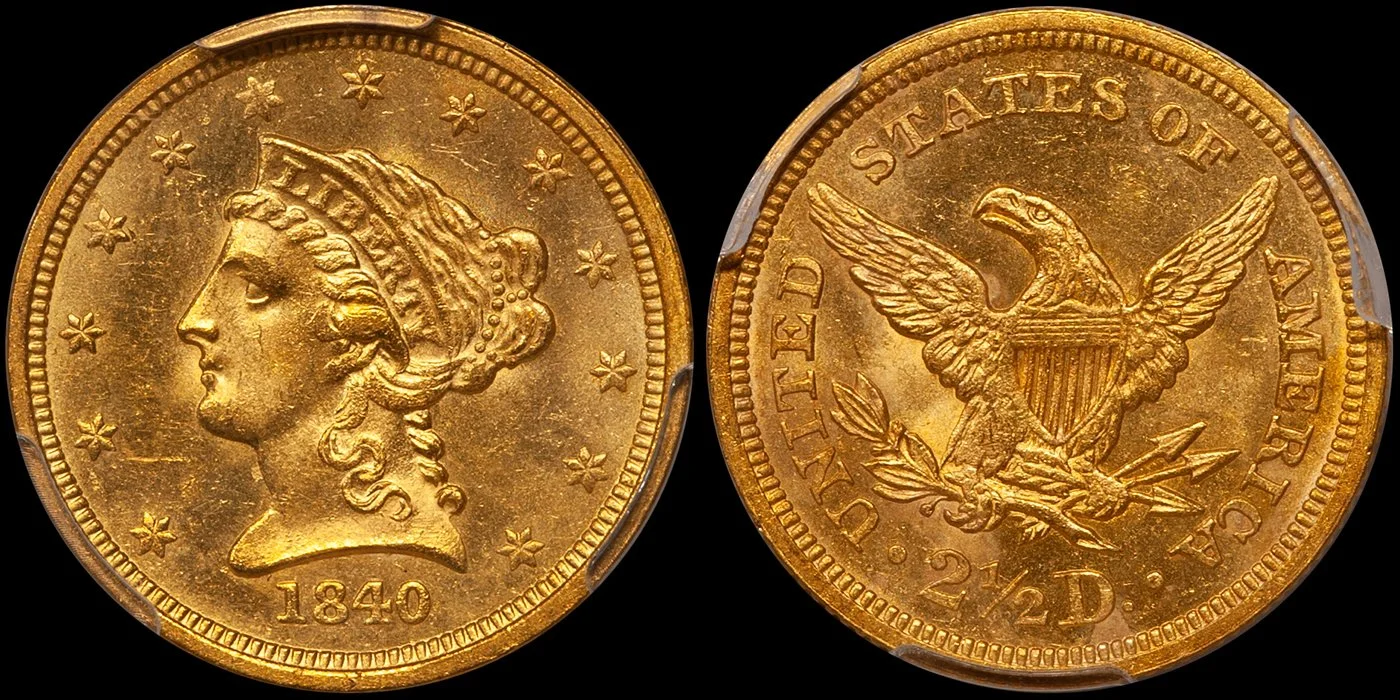
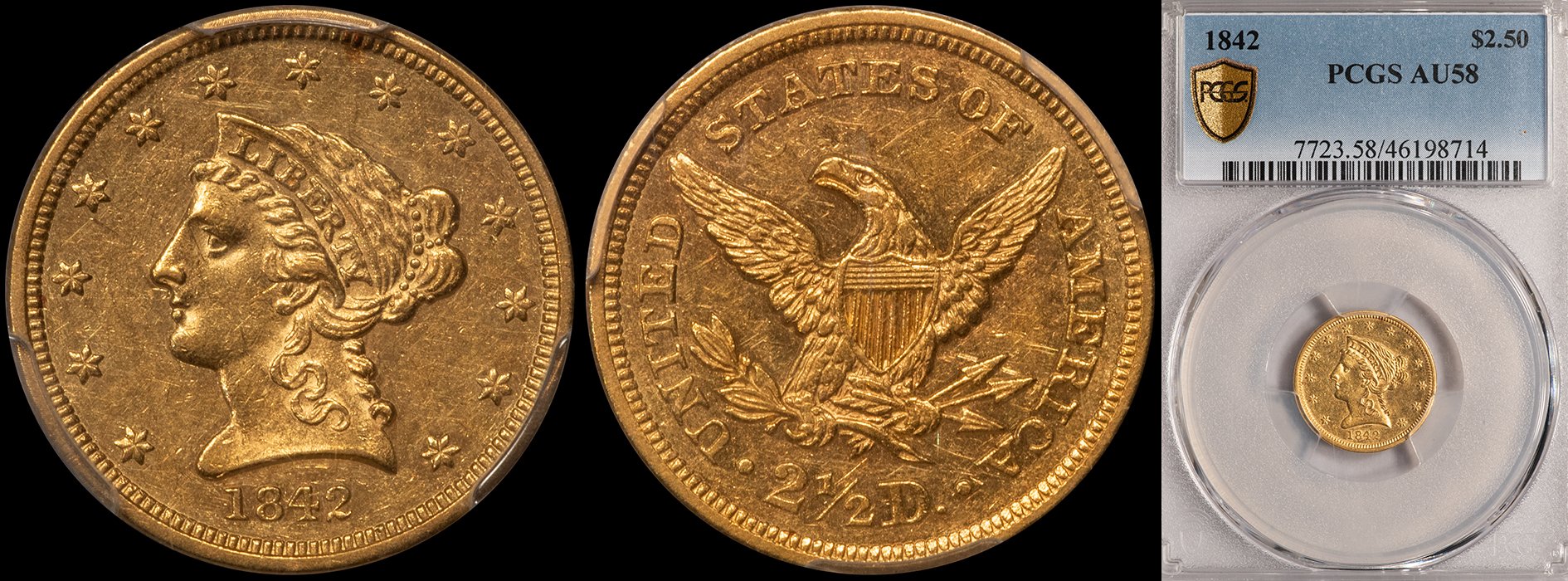
1840 $2.50 PCGS MS64, ex DWN
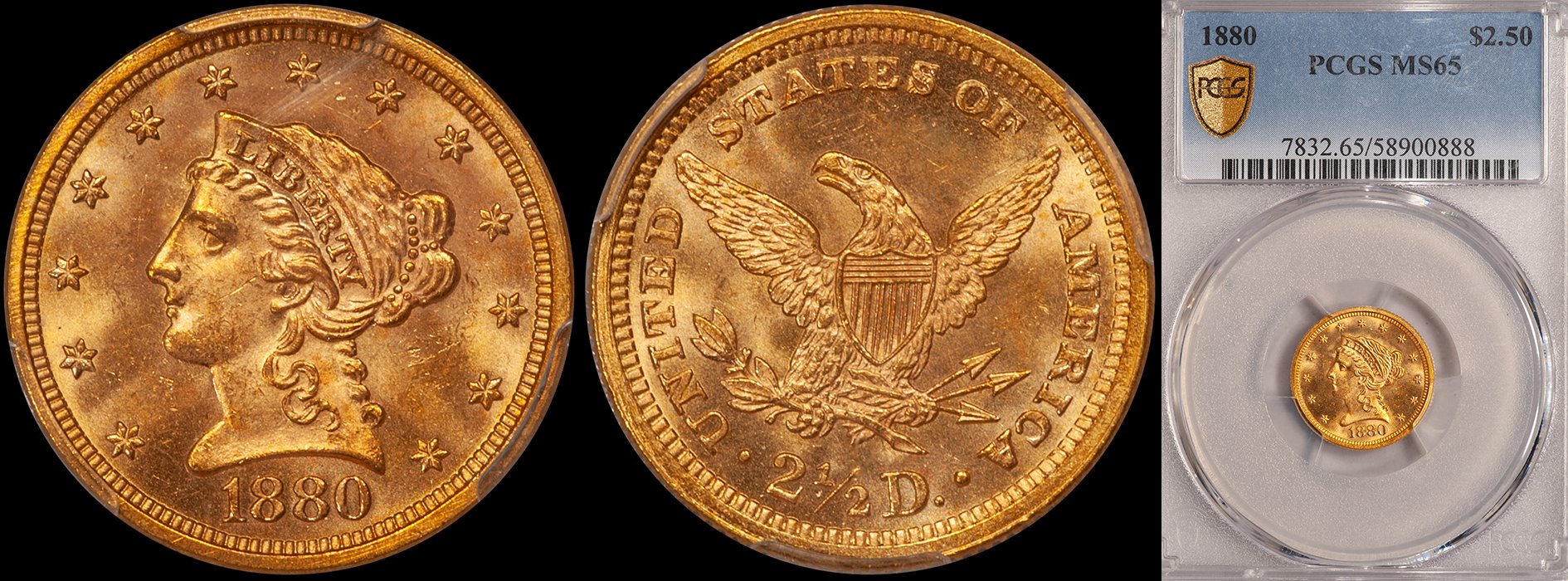
OVERALL RARITY: The overall rarity of a coin or a design type represents its existence in all grades combined. With pre-1907 US gold coins, an issue is typically believed to be rare if it has a total of 100-125 or fewer known. However, a coin with less than 100-125 known in total might have little collector interest, making it somewhat affordable. In the Liberty Head series, there are a few specific areas that I feel are under-appreciated. These include the following:
Philadelphia quarter eagles, 1840-1849
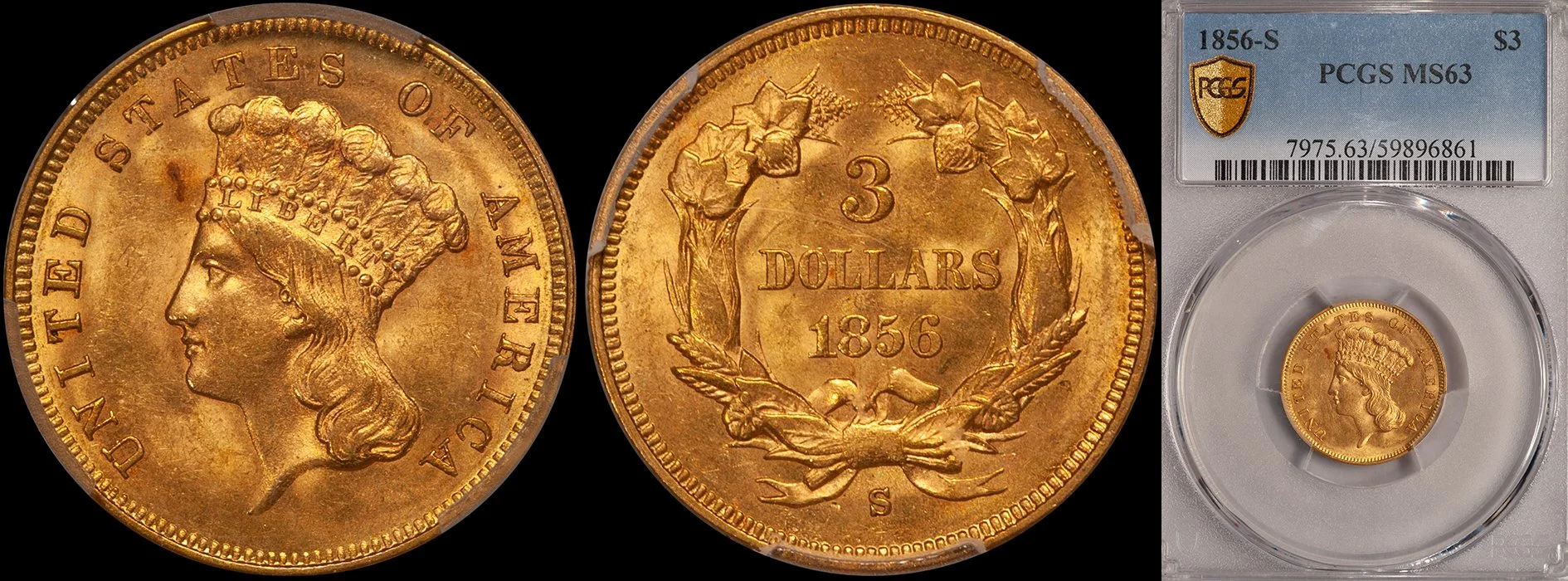
Low mintage P mint three dollars, ca. 1870-1886
Choice AU Classic Head half eagles (quarter eagles too!)
Choice AU55 to MS63 Philadelphia No Motto half eagles
Higher grade San Francisco half eagles and eagles, circa 1879 through 1906
Southern gold has a unique status among the mints that produced gold dollars, quarter eagles, and half eagles. Even the most common issues from Charlotte and Dahlonega—which may have as many as 500-600++ survivors in all grades—still command a higher collector premium versus their spot price than virtually all other post-1834 gold issues. This is due to heavy collector demand.
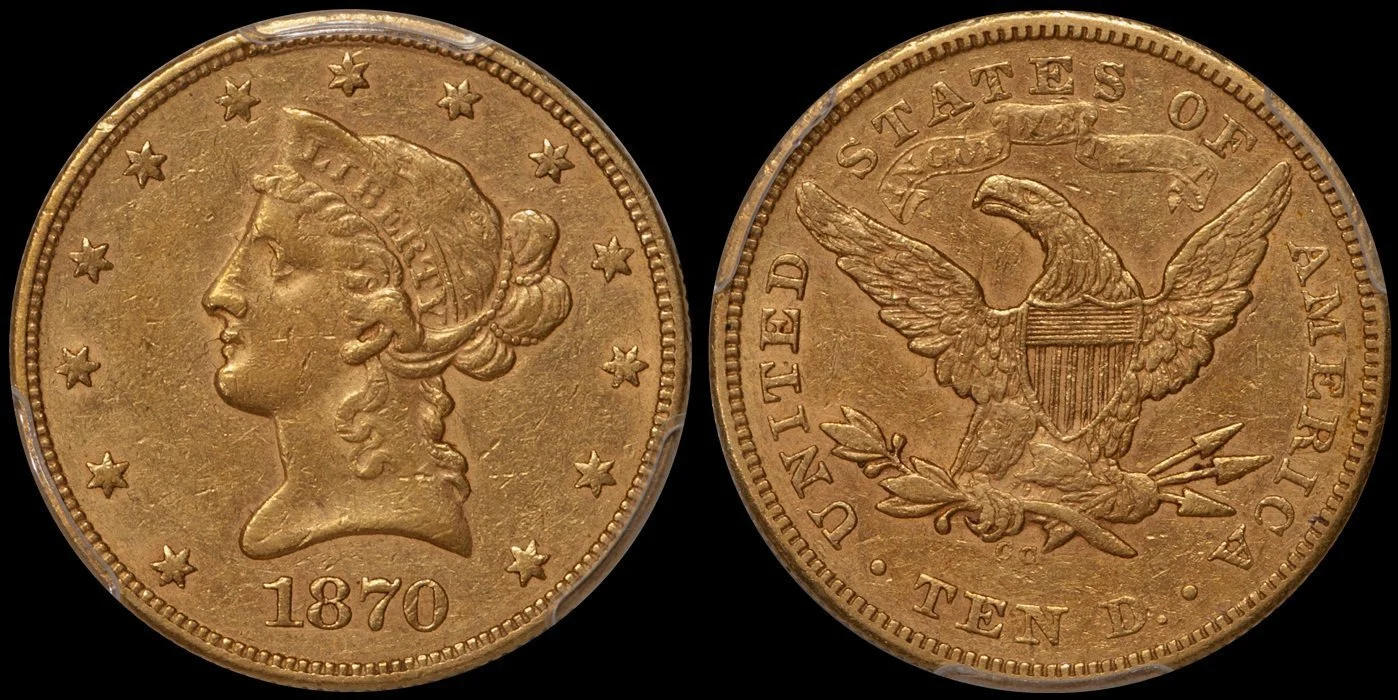
1870-CC $10.00 PCGS AU50 CAC, ex DWN
Carson City gold is also a category unto itself when it comes to rarity. Of the three denominations produced, eagles are the rarest. This is due to low original mintages; for the entire decade of the 1870s only 60,652 were made with nearly a third dated 1874-CC. Many of these early issues are exceedingly scarce in choice original AU55, and a sizable number are either unknown or unique in any MS grade. However, some of these dates exist in grades as low as VG to Fine, with a reasonably high percentage of said coins actually somewhat choice.
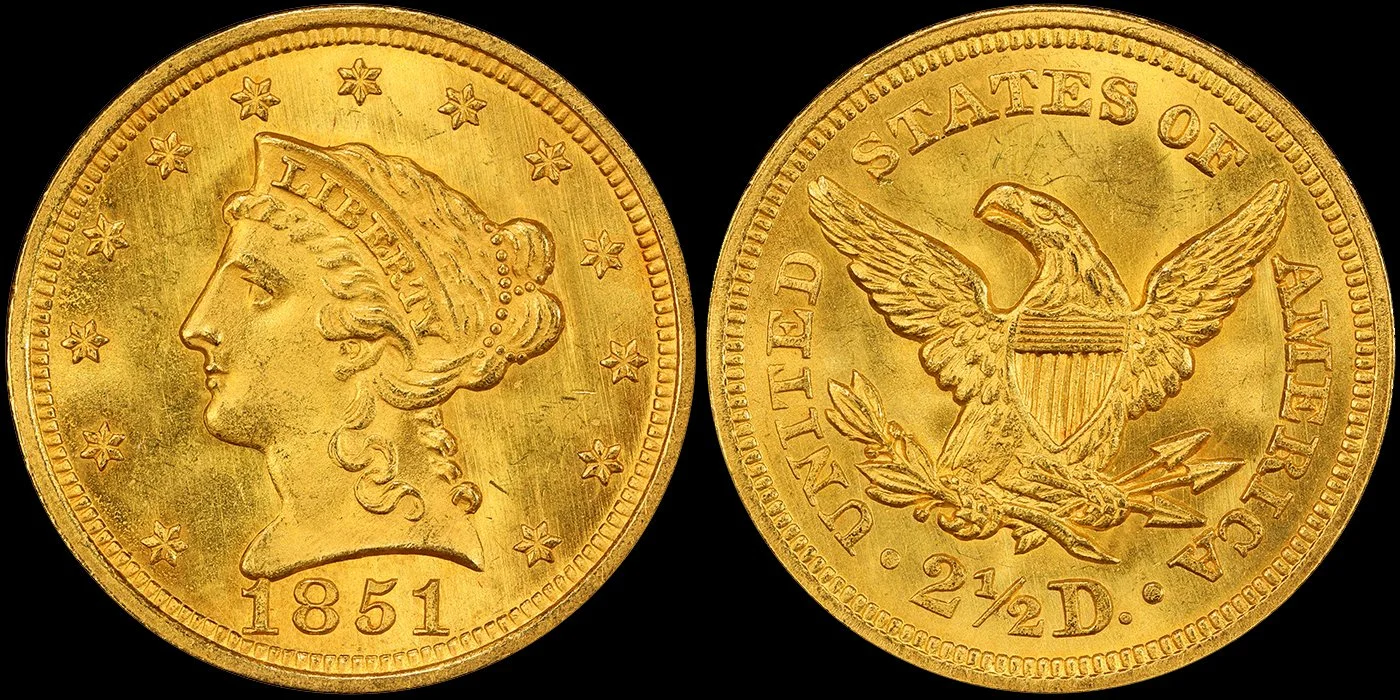
1851 $2.50 PCGS MS66, courtesy of PCGS
HIGH GRADE/CONDITION RARITY: A coin that is highly prized (and which fetches a high price) primarily as a result of its grade is said to be a condition rarity. An example of this would be an 1851 quarter eagle in PCGS MS66/67. There are more than enough 1851 quarter eagles known in MS60 through MS64 that anybody who wants one will be able to find and purchase a nice MS63 for a little over $1,000, and a solid MS64 for around $3,000. Gems are another story with just six graded MS65 by PCGS and only two in MS66. The PCGS MS67 is clearly the finest known and it can be referred to as a “common coin in an uncommon grade.”
A coin can simultaneously be both an overall and a condition rarity. A textbook example of this dual status is the famous NGC MS67 1864 quarter eagle that came out of the woodwork when it was sold by Spink’s and Sotheby’s in 1996 for $132,000.
In my opinion, coins such as this—which combine exceptional preservation and eye appeal along with legitimate overall rarity—are the best coins to pursue if you are mainly concerned with the ROI on your numismatic purchases. You can double or even triple my level of enthusiasm if the coin is from a popular series.
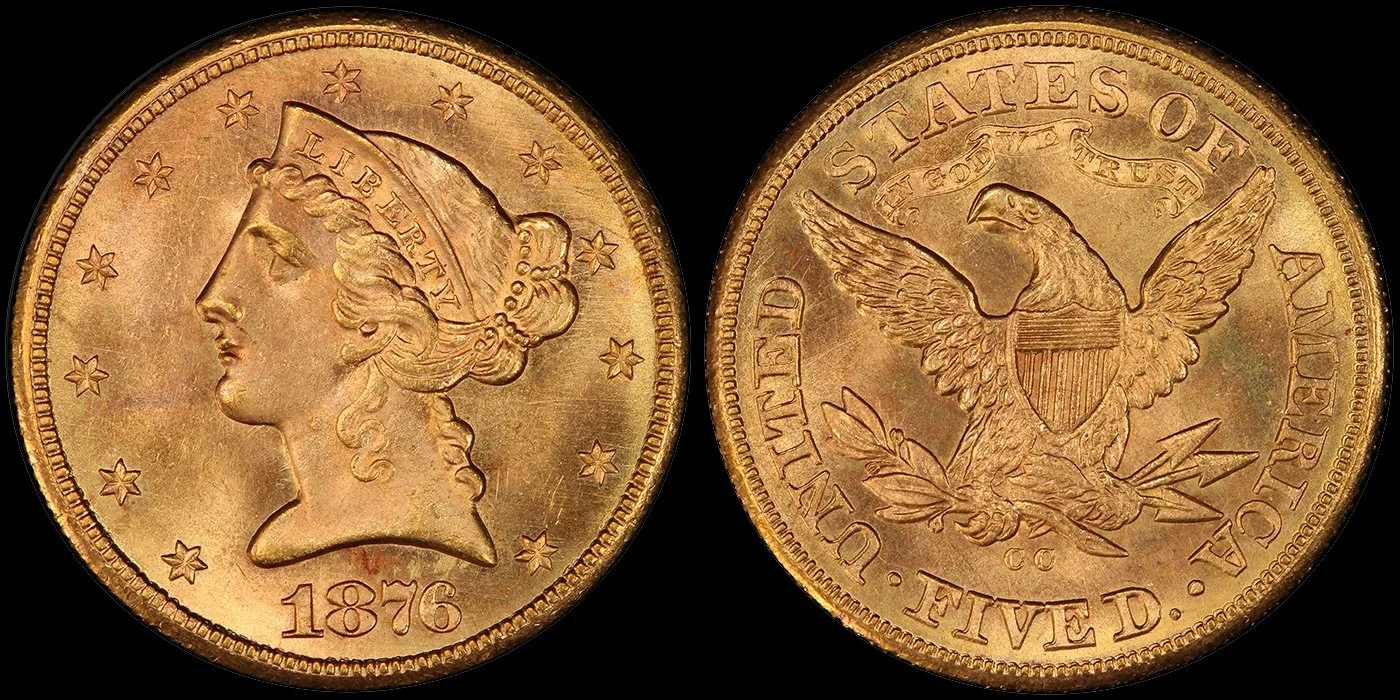
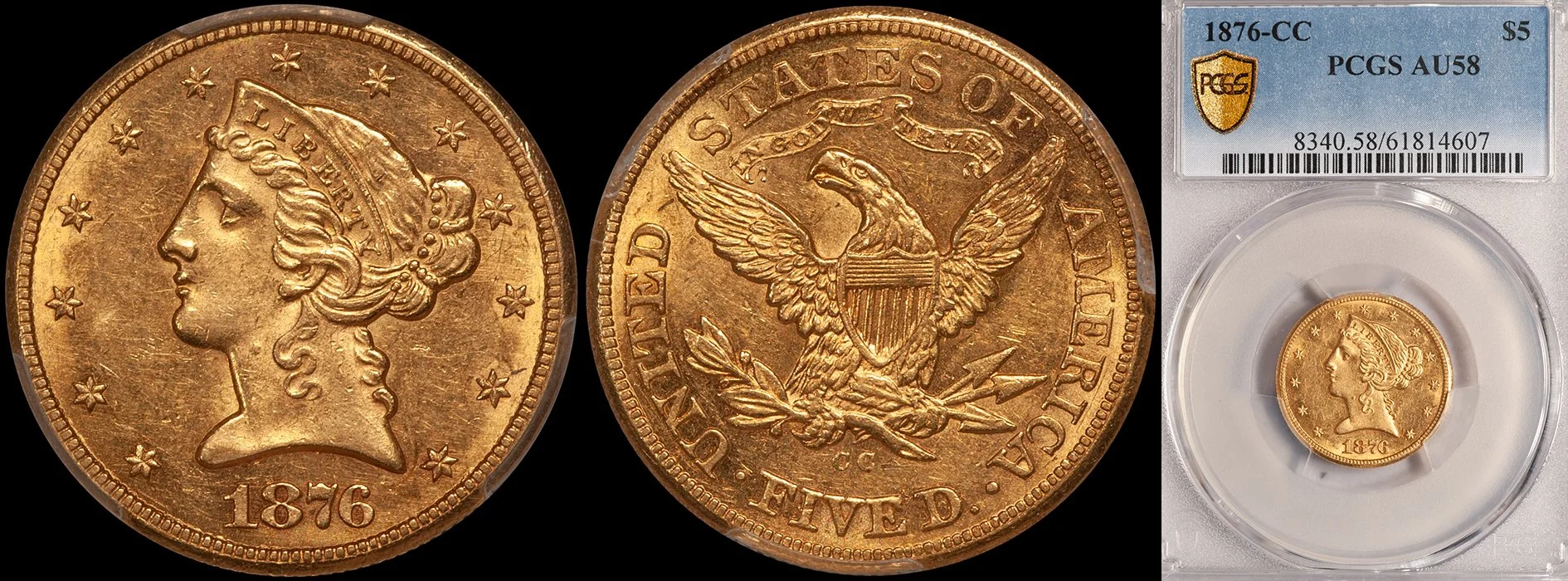
1876-CC $5.00 PCGS MS66, Eliasberg, courtesy of PCGS
A specific coin that checks all the boxes—and which is a popular issue as well—is the famous Eliasberg 1876-CC half eagle, graded MS66 by PCGS and approved by CAC. It last sold at auction for $780,000.
But not every US gold coin which has the Coveted Combo of overall and condition rarity, as well as being from a popular series, is a 780k coin and really outstanding quarter eagles, half eagles and eagles are available on my site almost all the time for $25,000 to $50,000.
COMPARATIVE RARITY: An unintended consequence from the establishment of third-party grading is that—with caveats—it allows us to make informed statements regarding comparative rarity. By using the total number of coins graded by PCGS, we can quickly determine what the three scarcest half eagles from Charlotte are.
| DATE | TOTAL # GRADED BY PCGS |
|---|---|
| 1842-C SD | 51 |
| 1846-C | 85 |
| 1841-C | 124 |
It is important to note that 85 grading events for the 1846-C does not mean 85 separate and distinct coins. It means that on at least 85 different occasions, PCGS has encapsulated and straight graded an 1846-C half eagle. It doesn’t take into account the number of coins for this date that have been removed from the original holder by the submitter. In some US gold series, as many as one-third of all the submission figures for scarcer issues—especially those with a hefty price spread between, say, an EF45 and an AU53—are coins still on the population report—but which have been cracked-out.
Let’s now select another category for a head-to-head comparative rarity chart. I vote that we look at No Motto New Orleans half eagles.
| DATE | TOTAL # GRADED BY PCGS |
|---|---|
| 1842-O | 65 |
| 1847-O | 51 |
| 1855-O | 69 |
With three issues at fewer than 100 grading events (compared to just two from Charlotte), a quick conclusion can be drawn: the No Motto half eagles from New Orleans are clearly scarcer than those from Charlotte.
Going further, the following No Motto New Orleans half eagles also have current PCGS populations of fewer than 100:
| DATE | TOTAL # GRADED BY PCGS |
|---|---|
| 1843-O Small Letters | 70 |
| 1856-O | 74 |
| 1857-O | 84 |
This gives us a total of six New Orleans issues with 85 or fewer coins listed on the PCGS population database versus just two from Charlotte.
APPEARANCE RARITY: The CAC population database enables collectors an opportunity to look at a considerable amount of data which they are unable to determine from the population figures provided by PCGS. This only works if you believe—as I do—that around 85% of the time, a CAC approved coin is going to be wholesome and reasonably choice for the issue.
The CAC-sourced data we can look at is the same concept that I have studied for the past 20+ years. I refer to it as “appearance rarity.” This concept can best be described as follows: every US gold coin has a typical appearance. On some coins, the surfaces are invariably heavily abraded. A small number might not be as bagmarked and this coin—assuming it is reasonably original and it sports above-average eye appeal—and it is in the top 5 to 10% of the surviving examples. I refer to such coins as “appearance rarities”
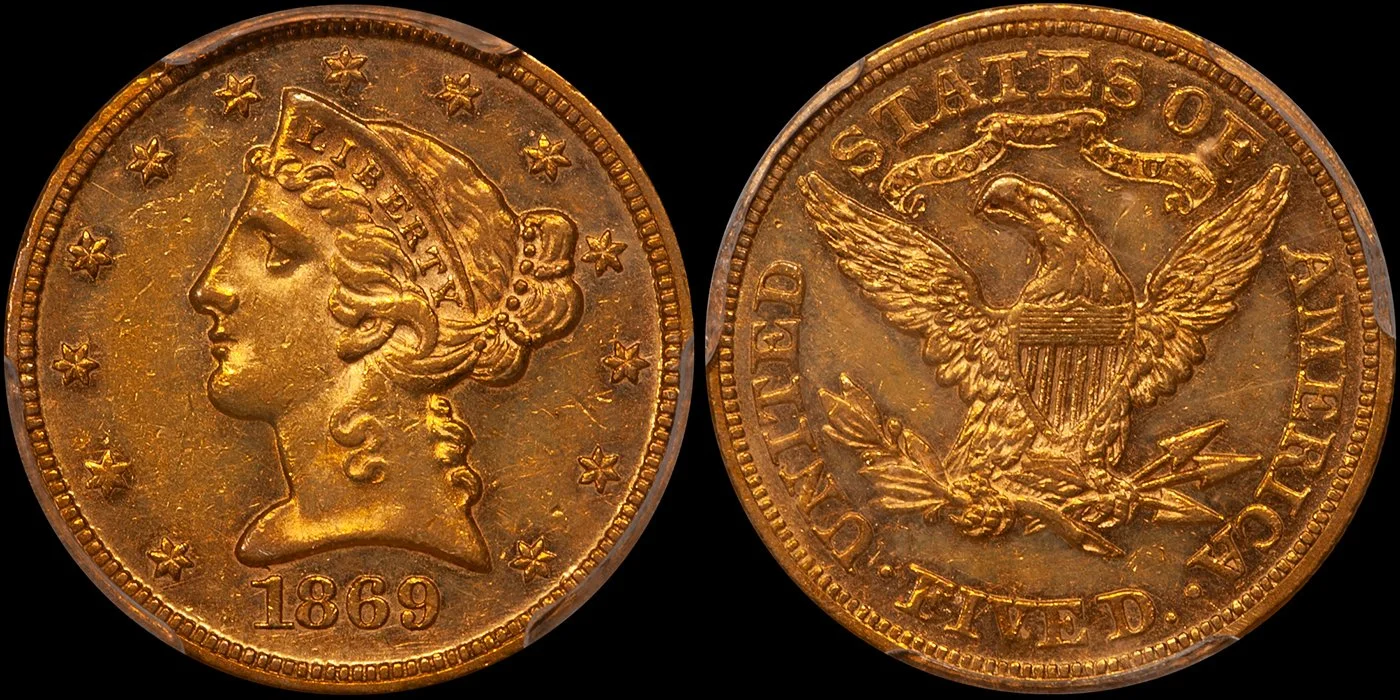
1869 $5.00 PCGS AU58, ex DWN
An example of an appearance rarity is this PCGS AU58 1869 half eagle. Although it lacks a CAC sticker, it still is choice for the date and grade.
Let’s go back to the two mints and one denomination we used earlier: No Motto New Orleans and Charlotte half eagles. This time, I will list the three dates with the fewest number approved by CAC in all graded.
Heeeeerrrrees Charlotte…
| DATE | TOTAL # GRADED BY PCGS |
|---|---|
| 1839-C | 7 |
| 1842-C SD | 11 |
| 1842-C LD | 18 |
| 1846-C | 18 |
The list for New Orleans is very surprising, to say the least!
| DATE | TOTAL # GRADED BY PCGS |
|---|---|
| 1843-O SL | 17 |
| 1855-O | 16 |
| 1856-O | 9 |
| 1857-O | 18 |
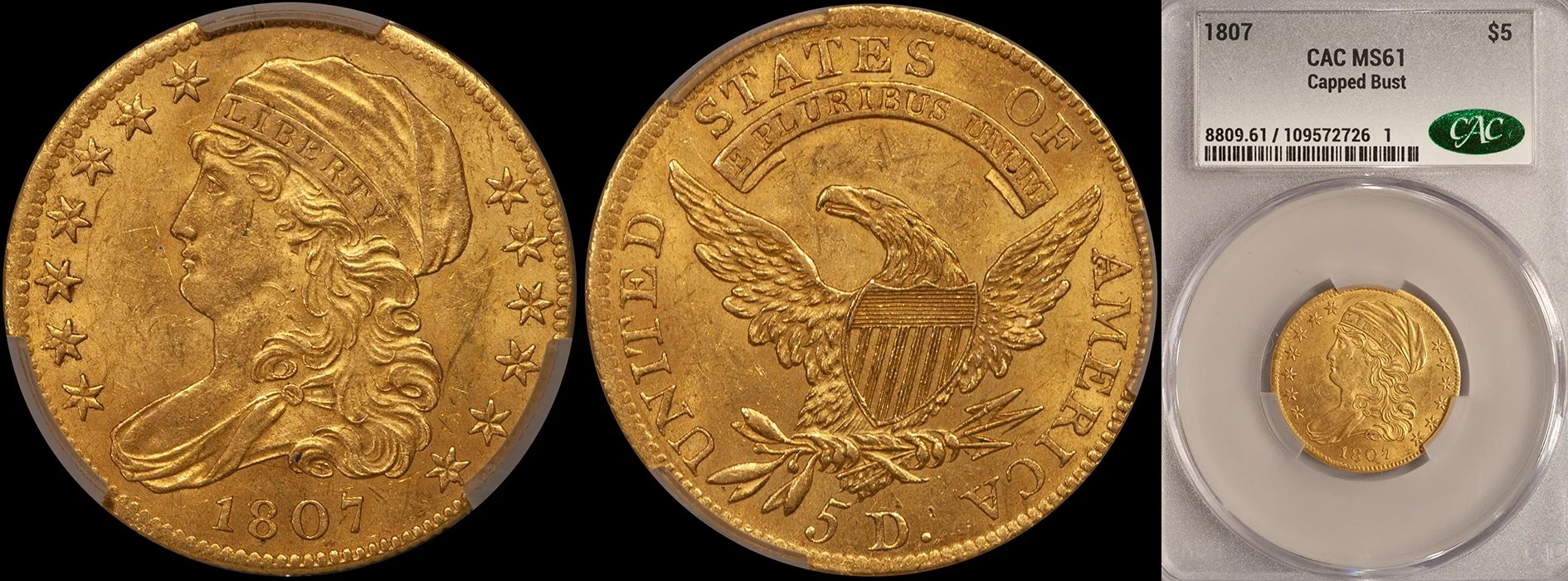
MELT RARITY: A melt rarity is a coin that is rare as the result of comprehensive melting(s). Because of the fact that a spike in gold prices in 1834 made contemporary quarter eagles and half eagles worth more than their face value, sizable portions of the known issues of this era had 95+% of all the coins melted. The same aggressive melting all-but-obliterated the 1929 to 1932 double eagles.
LOW MINTAGE RARITY: Some gold coins are rare simply by virtue of low original mintage figures. An 1875 eagle was a rarity the day it was struck, as its total mintage was just 120 coins; this includes 100 business strikes.
Not all low mintage coins are rarities. Just 500 business strike 1881 three dollar gold pieces were made, but over 50% still exist due to contemporary hoarding by dealers and collectors who were motivated by the tiny number of coins made for circulation.
In closing, here are a few personal observations about rarity:
Popularity is a huge factor in determining price. An MS64 High Relief $20 is a common coin but it is relatively expensive due to high demand.
Comparing the rarity of a series such as Morgan Dollars to P mint half eagles from the late 1860s will always frustrate the value buyer. A Gem 1893-S dollar is a $2 million dollar coin despite there being around seven-nine known. A single Gem 1869 half eagle is known, and it is worth around $125,000.