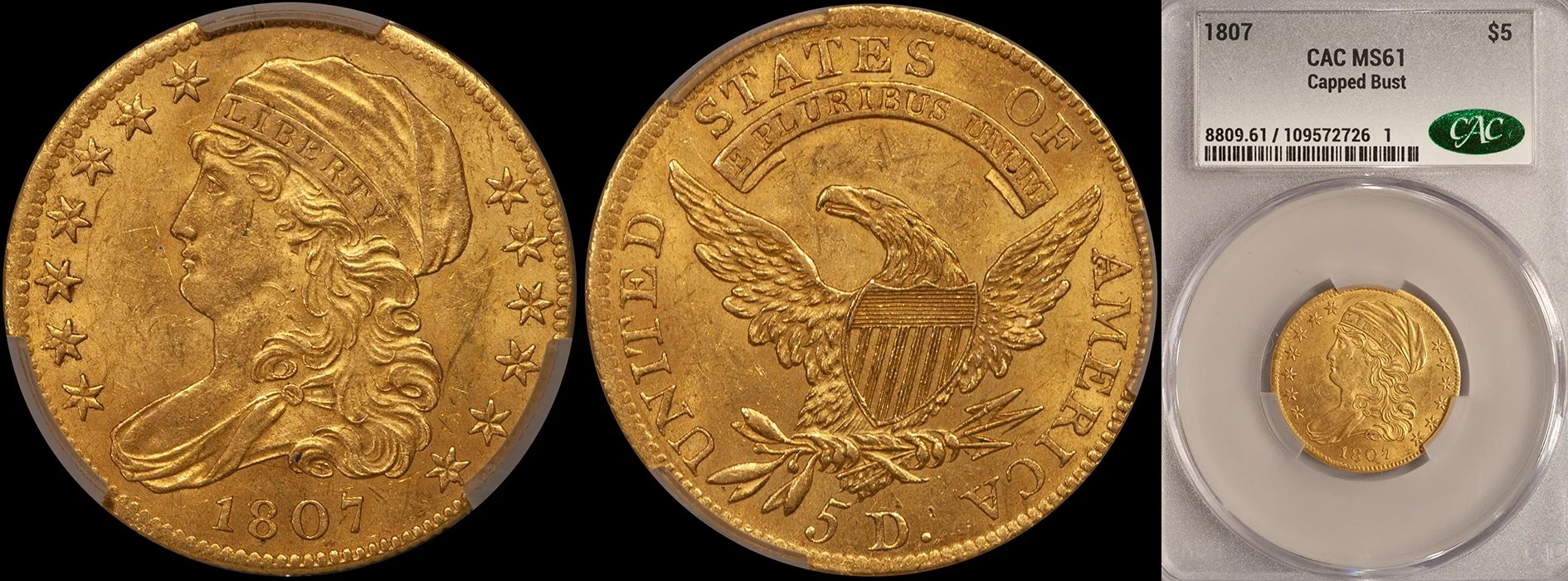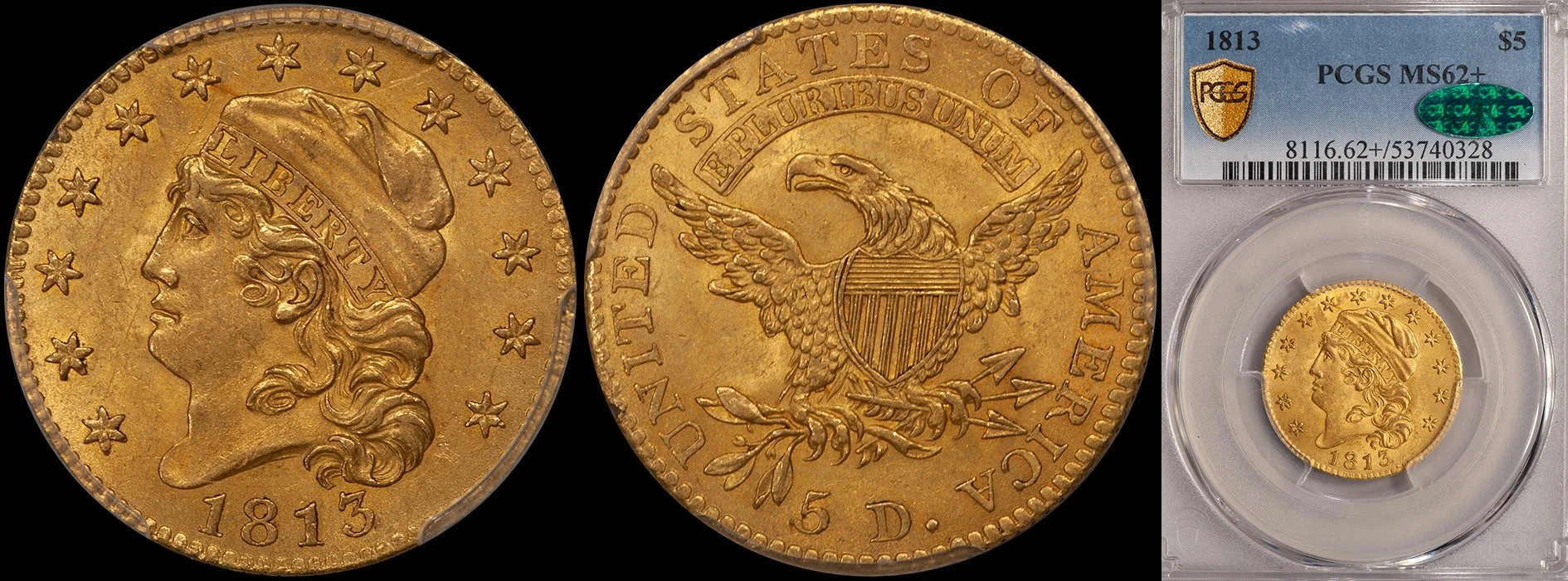
10 Inexpensive US Gold Types to Buy
/Let’s begin by stating that buying nicer quality pre-1933 US gold coins is probably not going to work for you if you have a budget of around $500 per coin. Your money will go a lot further if you focus on silver types from the 1820s through the 1920s.
We are going to focus primarily on gold types in the $1,000 to $5,000 range.
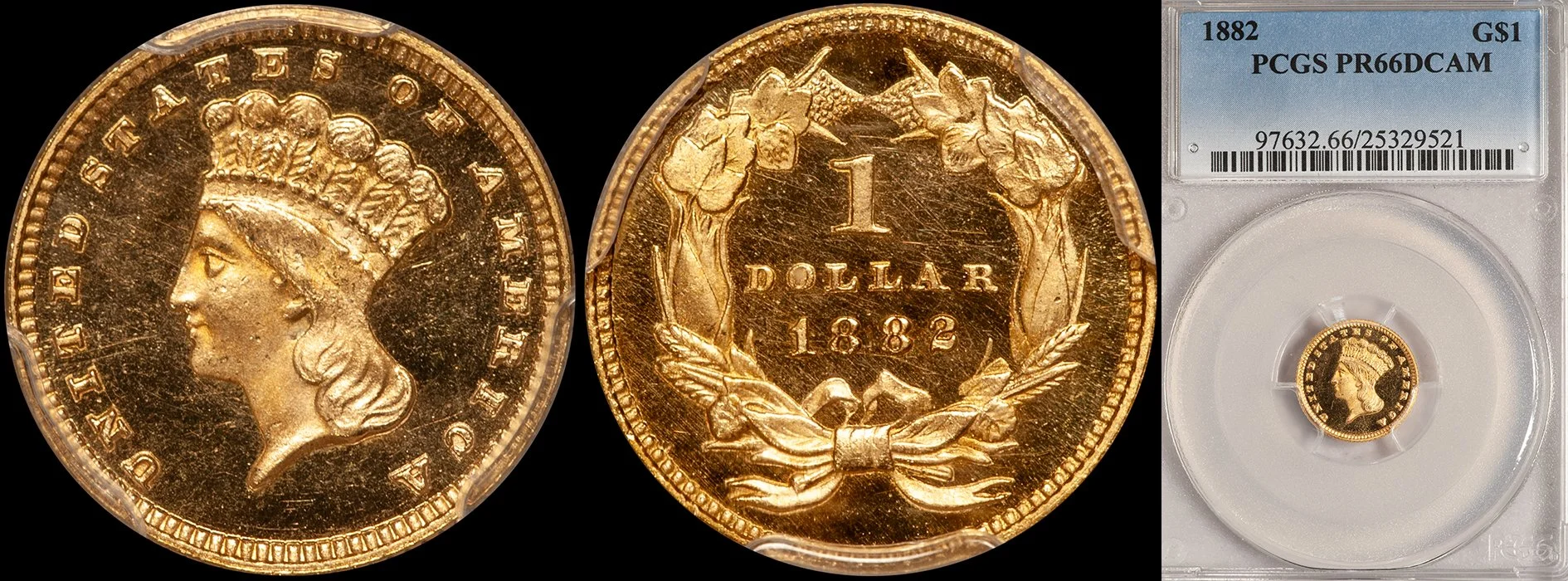
1. Type Two Gold Dollars
In the 1960s and through the mid-1980s, assembling a 12-coin type set of US gold was a popular collecting pastime. Along with the Three Dollar, Type Two gold dollars were the hardest coins to find nice.

1854 Type 2 Gold Dollar
Fast forward to 2026, and the two common dates of this design—the 1854 and 1855—have dropped significantly in price over the last 10+ years. In 2016, a PCGS MS62 example of either date would have run you around $3,000. Today, you can buy a decent MS62 for around $2,000.
At its current level of $4,000+ for an MS63, I think these are a great value. In most cases, an MS63 Type Two gold dollar should be appreciably more attractive than a typical MS62. With MS64 coins valued at a 2x multiple over their counterparts in MS63, I like the value of the MS63 coins more.
BUYERS TIP: Due to a flawed design, most Type Two gold dollars are found with clashmarks. I personally don’t mind them, but some buyers may not care for them. If you are patient, you should be able to find an 1854 or 1855 with light, unobtrusive clashes.
2. Type Three Gold Dollars
There are a number of that can be bought in MS65 for around $1,000. If you are not familiar with this type in high grades, it tends to be extremely nice.
There are a number of ways to collect this series. You can purchase a single coin as a standalone for a type set. You could also purchase one from each of the four decades in which these coins were produced: the 1850s, 1860s, 1870s, and 1880s.
If you like this denomination enough to work on a set, I’d suggest a date run from 1880 through 1889. A really great-looking set in MS66 and even some in MS67 can be assembled for around $20,000.

1888 Type 3 Gold Dollar
BUYERS TIP: If you are patient, you can buy Type Three gold dollars with wonderful natural color. These sell for little—if any—premium, and seem to have some upside in the future as “color coins.”
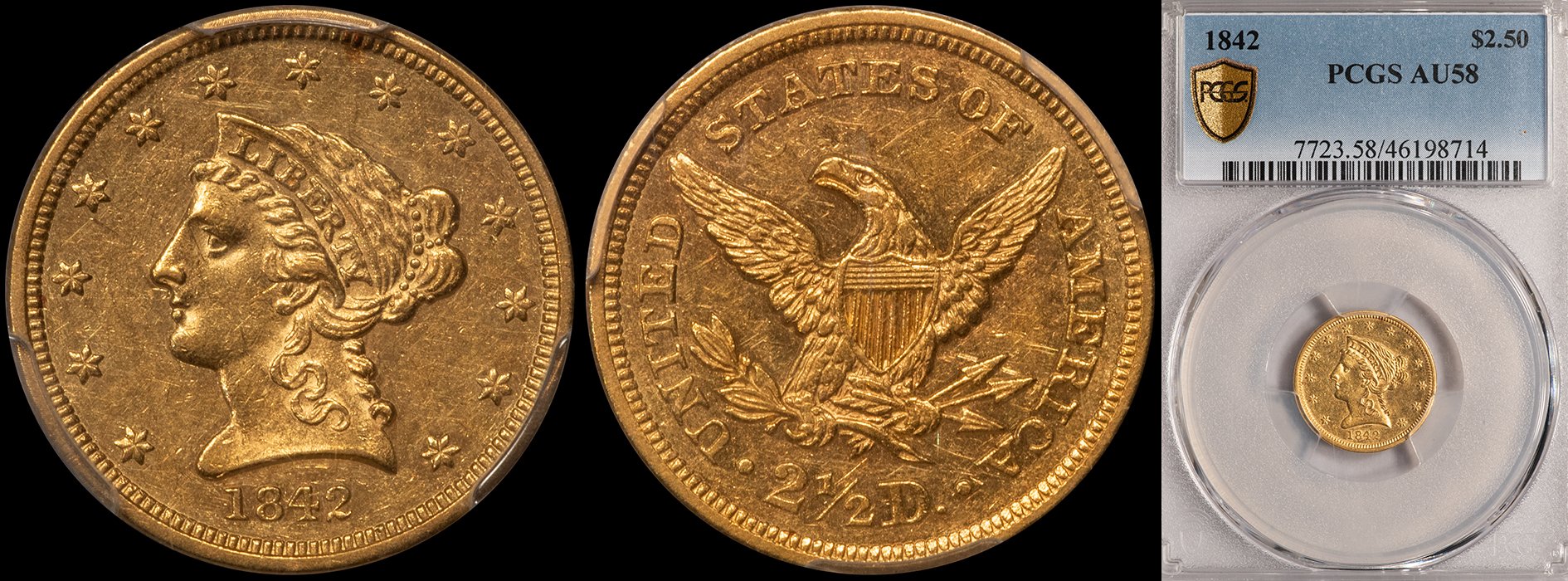
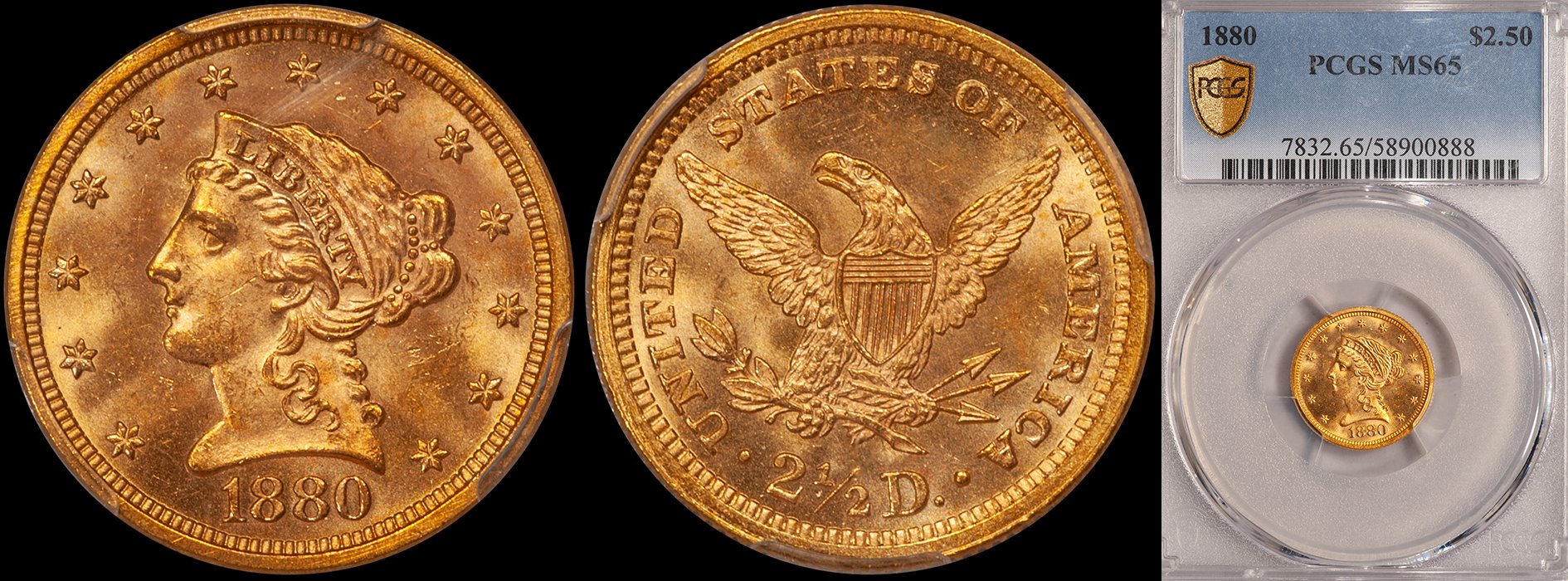
3. Late Date $2.50 Libs
When I refer to “late dates” within the Liberty Head quarter eagle series, I’m typically speaking about coins dated from around 1896 until the end of this design in 1907. These 12 issues form a set that a collector on a limited budget (less than $1,500 per coin) can assemble in a few years for less than a total expenditure of $25,000-$30,000. And virtually every coin in the set can grade MS66!
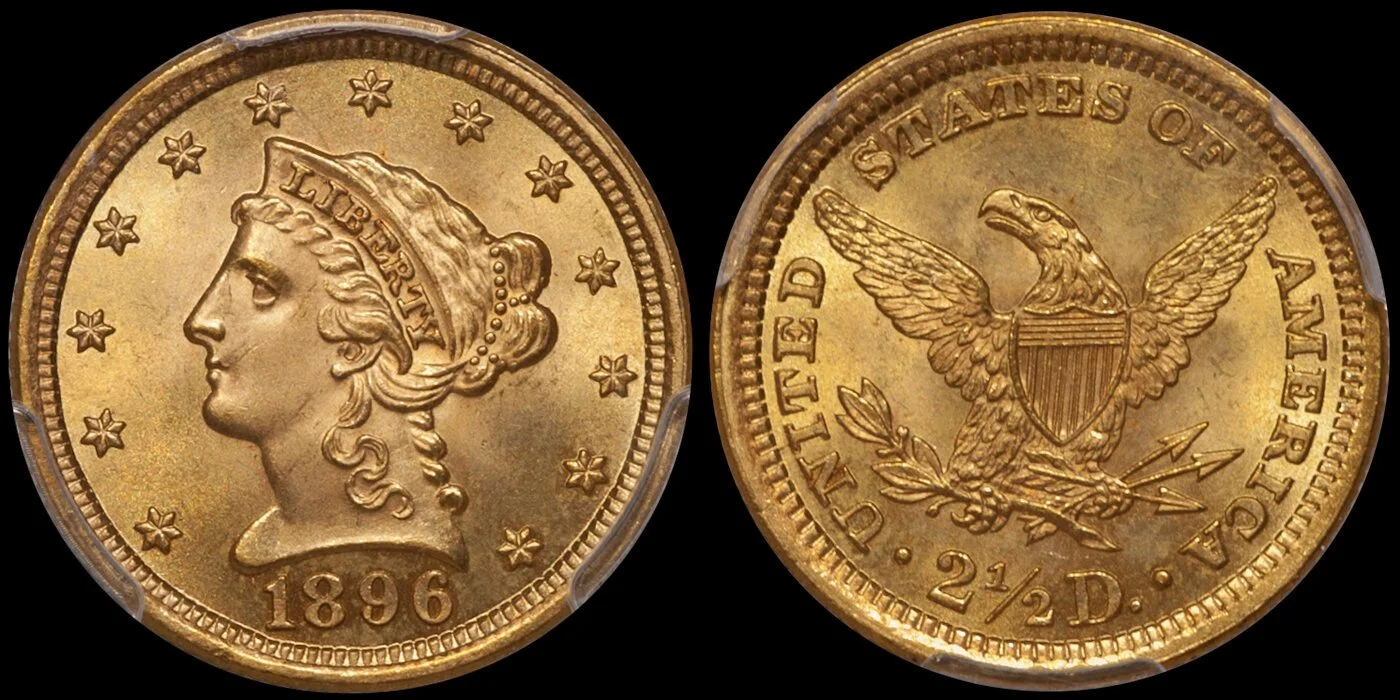
1896 $2.50, PCGS MS66 CAC
Common late date Liberty quarter eagles typically can be found with booming luster and excellent eye appeal. You can be picky on the 20th century dates, while the four 19th century issues are a tad harder to find nice.
BUYERS TIP: I’d personally suggest you avoid coins with large mint-made copper spots. While I personally like these spots as long as they aren’t too detracting, many new collectors don’t like them and spotted coins are commonly rejected by buyers or sold at a discount.
4. Nice Quality $2.50 Indians
I recently found a large group of MS62 Indian Head quarter eagles that had been purchased by the owner for $1,020 per coin about a decade ago; back when gold spot was around $1,300 per ounce. Sounds hard to believe but with melt value for this denomination at a bit more than $520 (based on $4,350 spot), you can buy MS64 coins today at around $825. Contrarian alert!
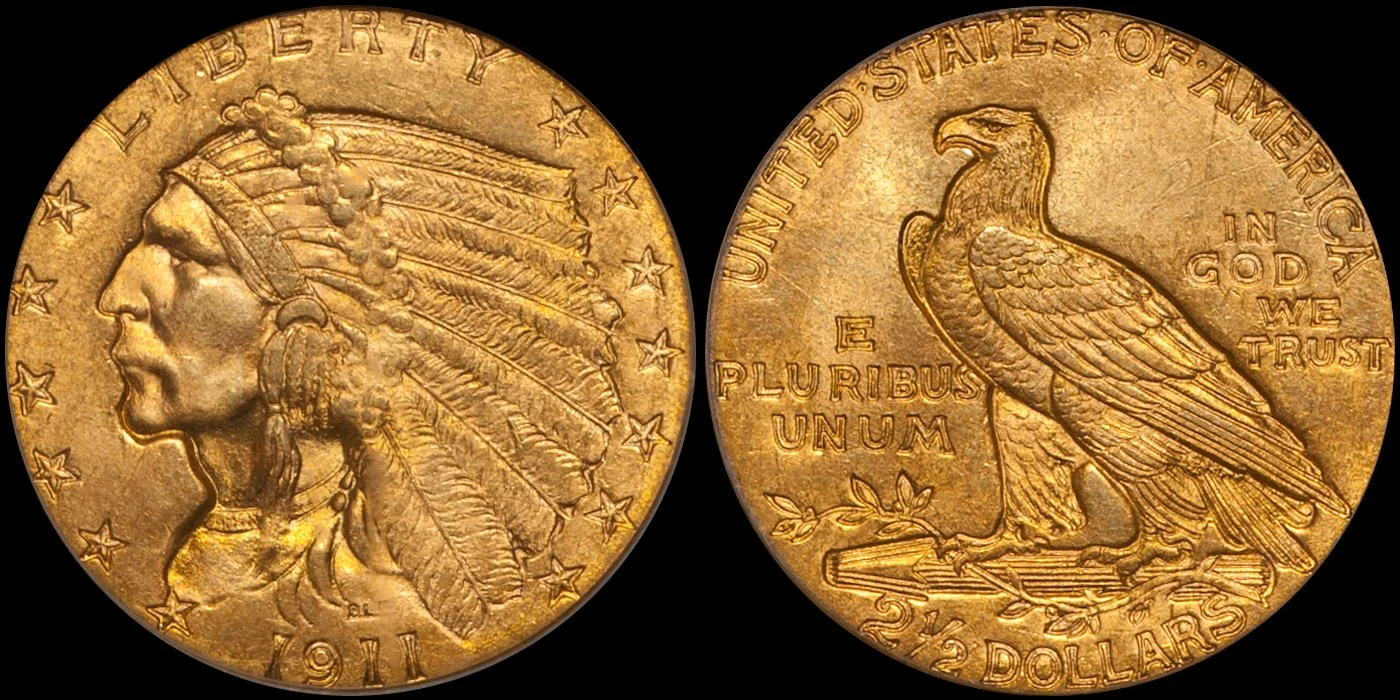
1911 $2.50 PCGS MS65 CAC
BUYERS TIP: I personally like PCGS MS65s more than MS64s, as long as they have been hand-selected by a knowledgeable grader and are actually noticeably nicer than an MS64. These are currently available at around $1,400-1,500. While I don’t suggest paying the market premium for CAC MS64s, I do think that a nice PCGS/CAC MS65 is a better option if you are able to afford them.
5. Three Dollar Gold
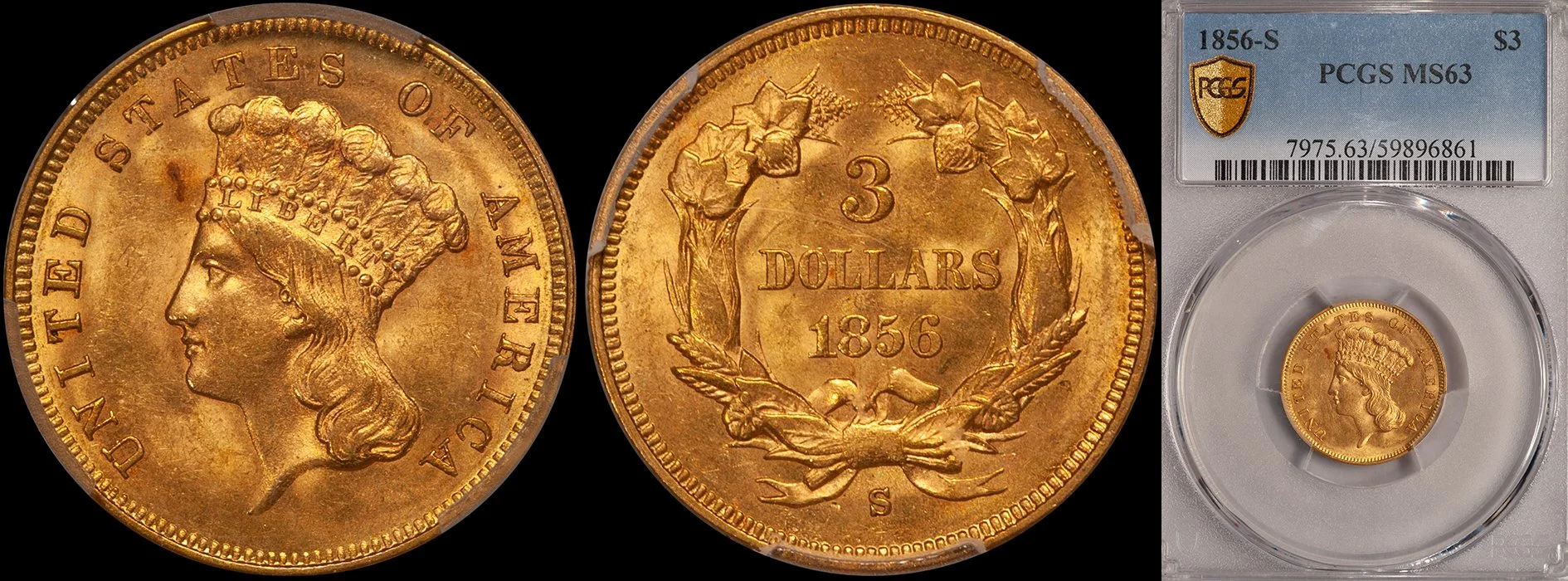
My experience with this denomination is that if you show one to a new collector or a non-collector, the chances are good that they will respond favorably.
While there are a number of scarce and expensive issues within this series, there are also a number of reasonably common issues. If you are able to spend $2,500 on a Three Dollar gold piece, you can buy a very presentable AU55 example of a more available issue such as an 1854, 1874, 1878, 1888, or an 1889. $5,000 will buy you a nice MS63 common date or, perhaps more intriguingly, an AU55 to AU58 example of a scarcer date; even one with a mintage of 2,000 or fewer business strikes.
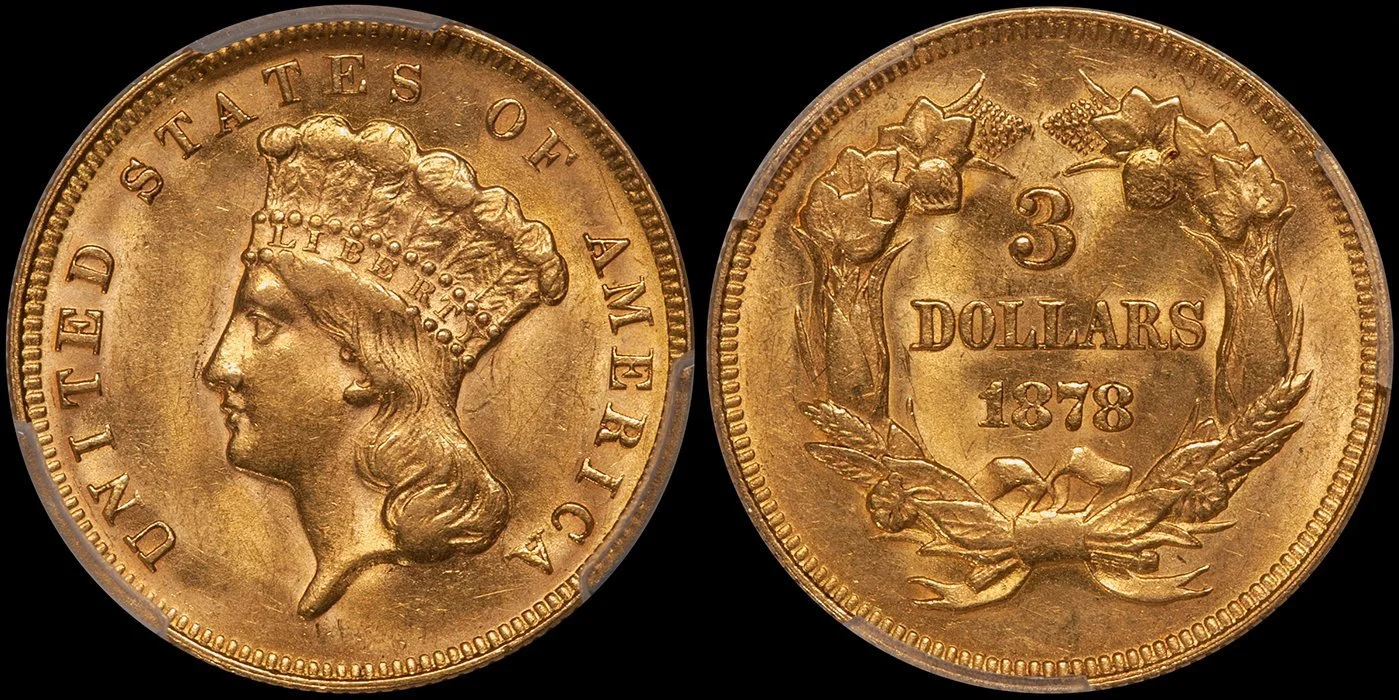
1878 $3.00 PCGS AU58+ CAC
Of the 44 different dates produced, I’d estimate that around two thirds of these can be bought in EF45 to MS63 for less than $10,000 per coin.
BUYERS TIP: This is one series where CAC premiums are not crazy (they are typically in the 20-40% range over a non-CAC coin), and I feel that a significant portion of the Threes that you purchase should be CAC approved.
6. Classic Head Gold
If you asked me “which of the 10 categories you’ve listed in this article is your single favorite,” I wouldn’t hesitate to name Classic Head gold. This design was used to make quarter eagles and half eagles from 1834 through 1838. There are branch mint issues known for both denominations, and they are likely out of the average collector’s price reach pricewise. However, this still leaves the collector with at least five different quarter eagles and six different half eagles.
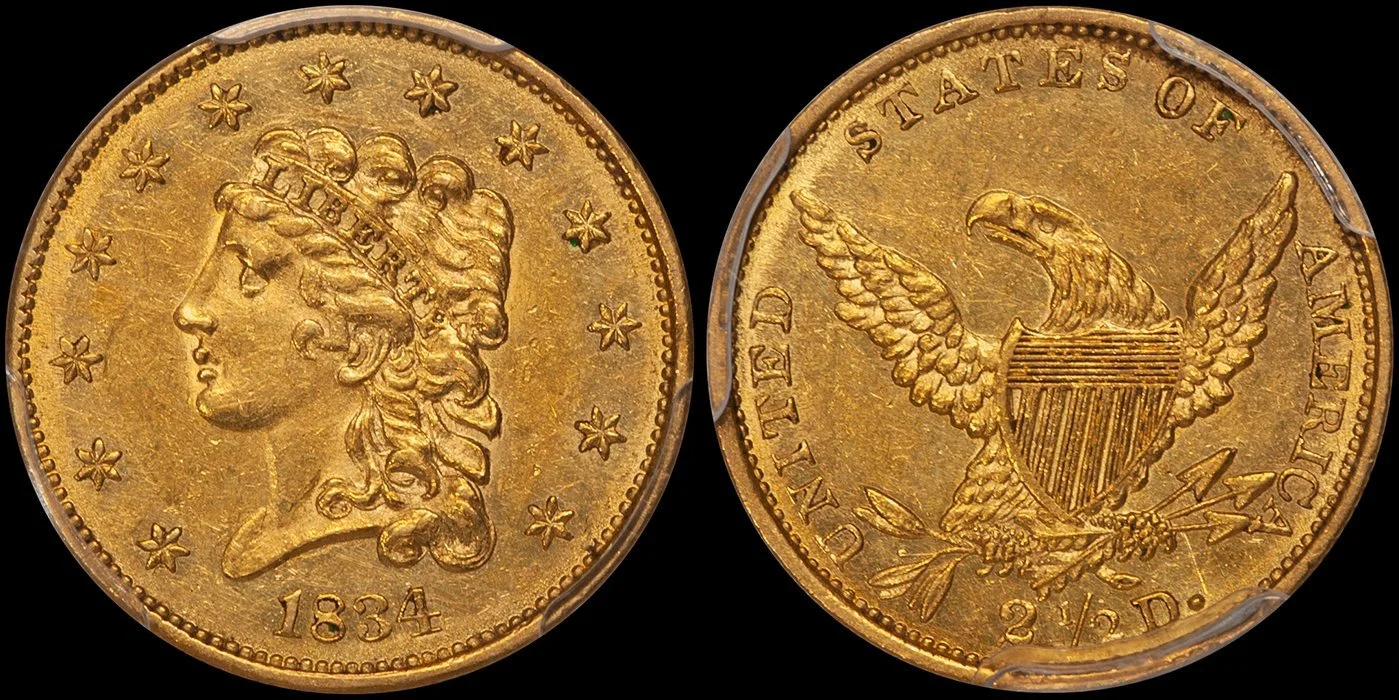
1834 $2.50 Classic PCGS AU58 CAC
In my opinion, the target grades for Classic Head gold should be either AU58 (where you can buy nice, frosty coins which look “new: for $3,000 to $5,000), or MS62 where you’ll be able to choose from a smallish number of coins in the $5,000 to $10,000 range. If this is out of your range, don’t despair, as EF coins for virtually all the quarter eagles and half eagles from Philadelphia can be had for $1,750-2,500.
To make your life easier, there is a terrific reference book on this series by Daryl Haynor which I highly recommend. And if you are so inclined, there are some interesting die varieties available which can be cherrypicked for no premium over the commonest Classic Head quarter eagles and half eagles.
BUYERS TIP: Certain issues of both Classic Head quarter eagles and half eagles ALWAYS come with notable weakness at the centers. Don’t hold out waiting for a sharply struck 1836 quarter eagle or an 1835 half eagle, as these simply do not exist.
7. Philadelphia No Motto Half Eagles
The Classic Head half eagle was scrapped in 1839 and replaced by the familiar Liberty Head design (it was modified in 1840 and again in 1843).
In my opinion, the date run of Philadelphia half eagles from 1839 through 1861 is very collectable and much undervalued. (Note; the 1862 through 1865 issues are rare and expensive, but make a great addition to the pre-Civil War dates).
The three stoppers in this set are the 1841 and the 1842 Large Letters and Small Letters. The good news is that none of these three issues is impossibly difficult to locate to locate and for around $15,000 to $20,000, you can own all three in the lower AU grades.
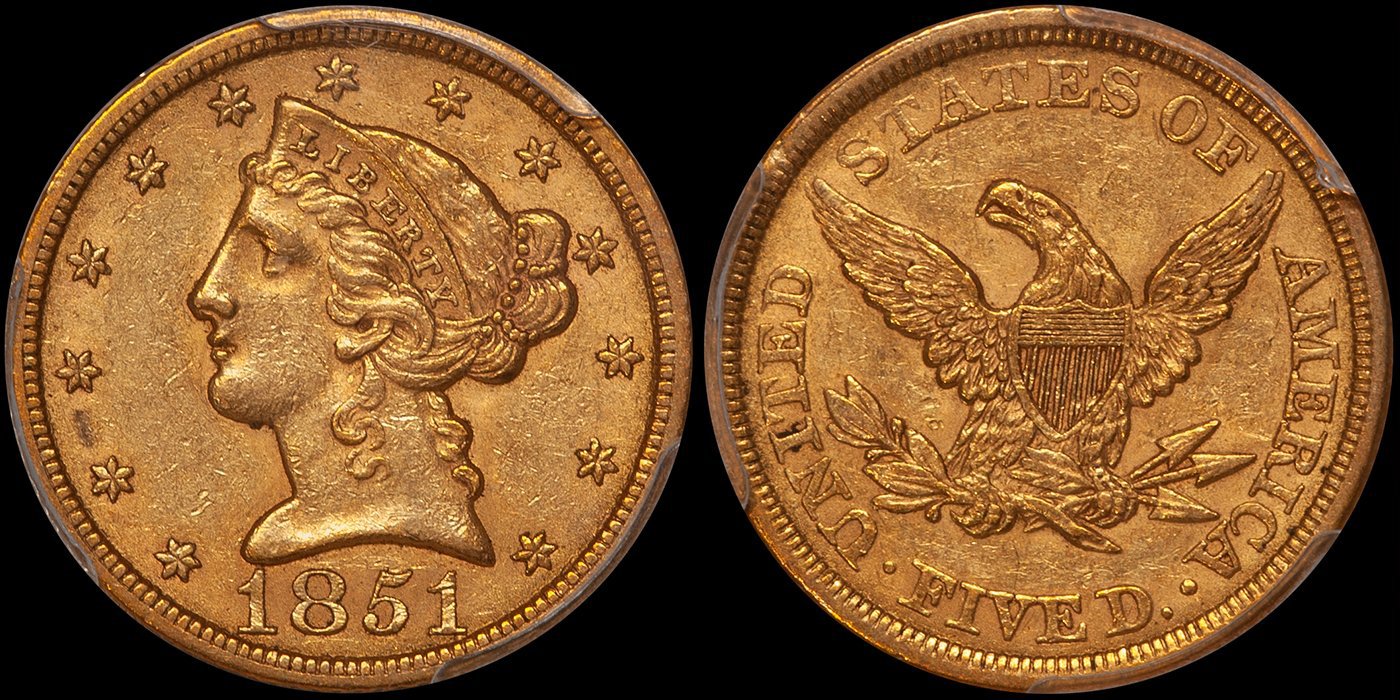
1851 $5.00 PCGS AU58 CAC
The other two dozen or so issues should be locatable with patience and a well-connected dealer assisting you at around $1,500 to $3,000 per coin. You should be able to acquire every coin in this group in AU55 to AU58 except for the 1850, 1859, and 1860 which are going to be around 50% more.
BUYERS TIP: There were oodles of these in Fairmont and many were exceptional for the grade. If these are available, buy them. If not, study images of them online to learn what a Dirty Original Gold coin is supposed to look like.
8. Philadelphia No Motto Eagles
If you prefer larger coins from the same time period, why not collect Philadelphia Liberty Head eagles from 1840 through 1861 (again, I’m skipping over the 1862 through 1865 dates due to rarity and price point, but if you have a larger budget they are highly recommended).
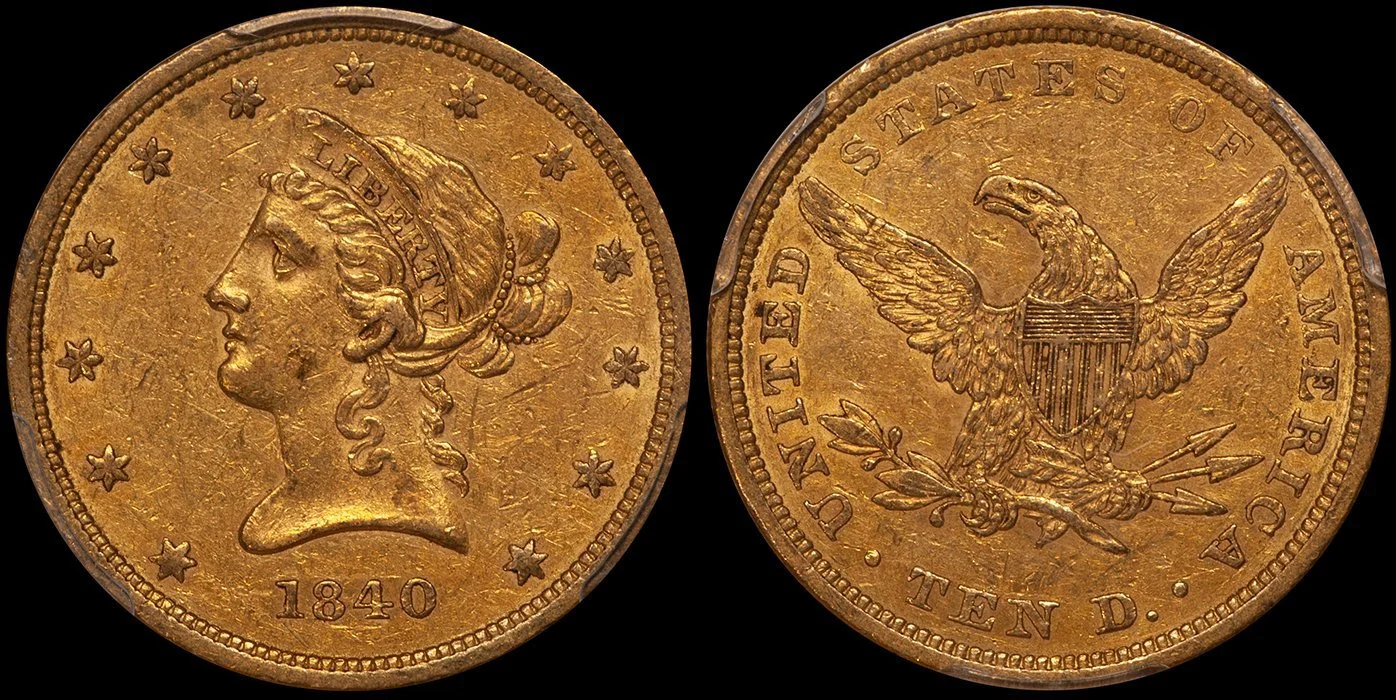
1840 $10.00 PCGS AU55 CAC
A few years ago, before gold soared up to its current $4,500 price, you could buy nice EF examples of common date issues such as the 1847, 1852, 1853, and 1856 for less than $1,500. Now that these melt for around $2,200 per coin, those levels are no more. But if you can budget around $3,500 to $4,500 per coin, a number of dates will be available in grades up to AU55.
The unquestioned stoppers of this set are the 1844 and the 1858. This date is rare and hugely undervalued even in EF40, but if you can find a decent coin in the $5,000-7,000 level, jump on it. The low-mintage 1858 used to be considered a legitimate rarity but it now flies largely under-the-radar. Still, a not-so-nice one is a $10,000++ coin.
Other dates that are scarce and are likely to run you more than $5,000 each are the 1840, 1841, 1843, 1846, 1846, and the 1858.
Of the 10 series listed here, this is the most challenging and I think it’s the most fun.
BUYERS TIP: Even a common date No Motto $10 lib from Philadelphia is legitimately scarce in properly graded AU58. Learn what a real AU58 (or an AU55) looks like, and buy any properly graded date you need even if it is 10-15% “overpriced” as you might have to wait a looooong time to buy another!
9. Choice AU Type One Liberty Head Double Eagles
Five or so years ago when the spot price of gold was around $1770 per ounce, a decent PCGS AU55 1851 $20 was worth around $3,000. Today, it is worth around melt or $4,350.
So how did a numismatic coin become a bullion coin with a cool backstory in five years?
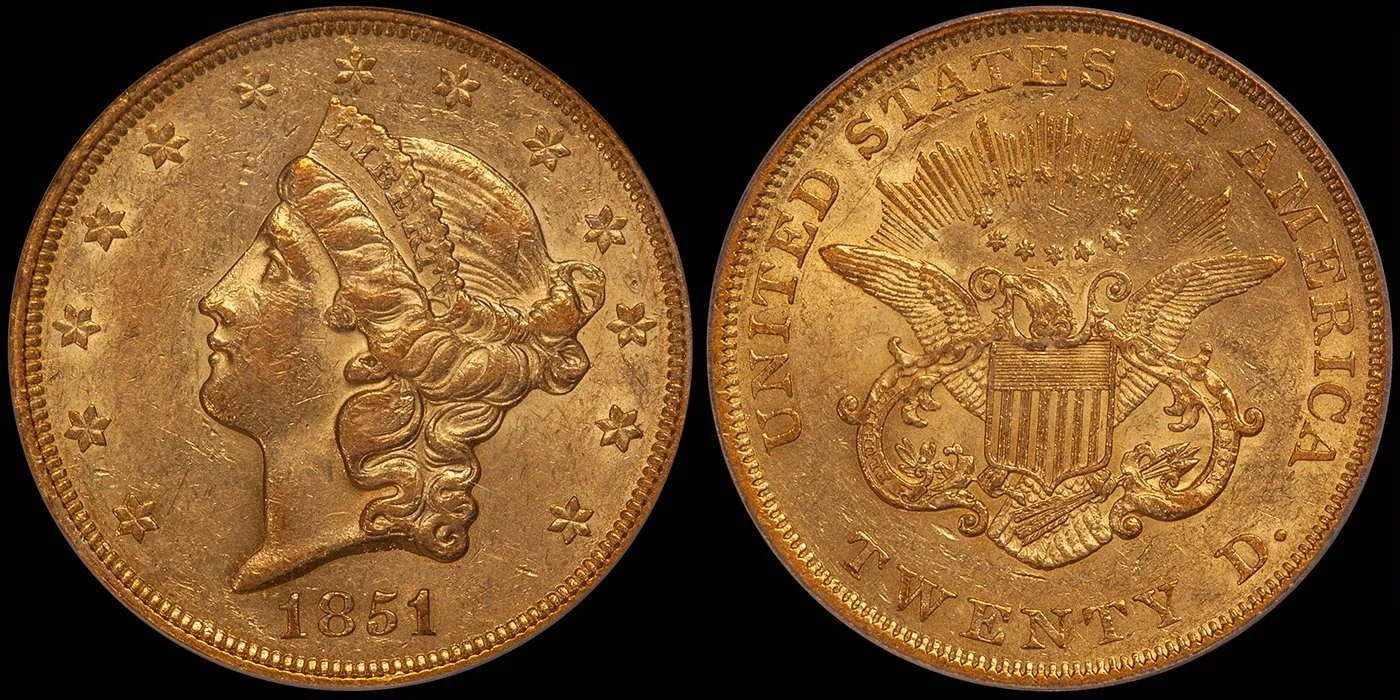
1851 $20.00 PCGS AU55 CAC
It’s simple economics, really. When coins of this design type were affordable, they were popular. But when a common date $20 Lib in AU55 is worth close to five grand, it is no longer “affordable.” With this diminished demand came a seemingly endless supply of common date Type Ones, pouring in from overseas sources.
And this is the exact reason why I feel that nice AU Type One double eagles are a good play in 2026. You are buying an ounce of gold at near spot price, but you are getting a collectible coin that has never before traded at anywhere near this close to its melt value.
BUYERS TIP: Pay the small rarity premium and focus on dates such as the 1854 Small Date, 1855, 1856, and 1857 Philadelphia issues.
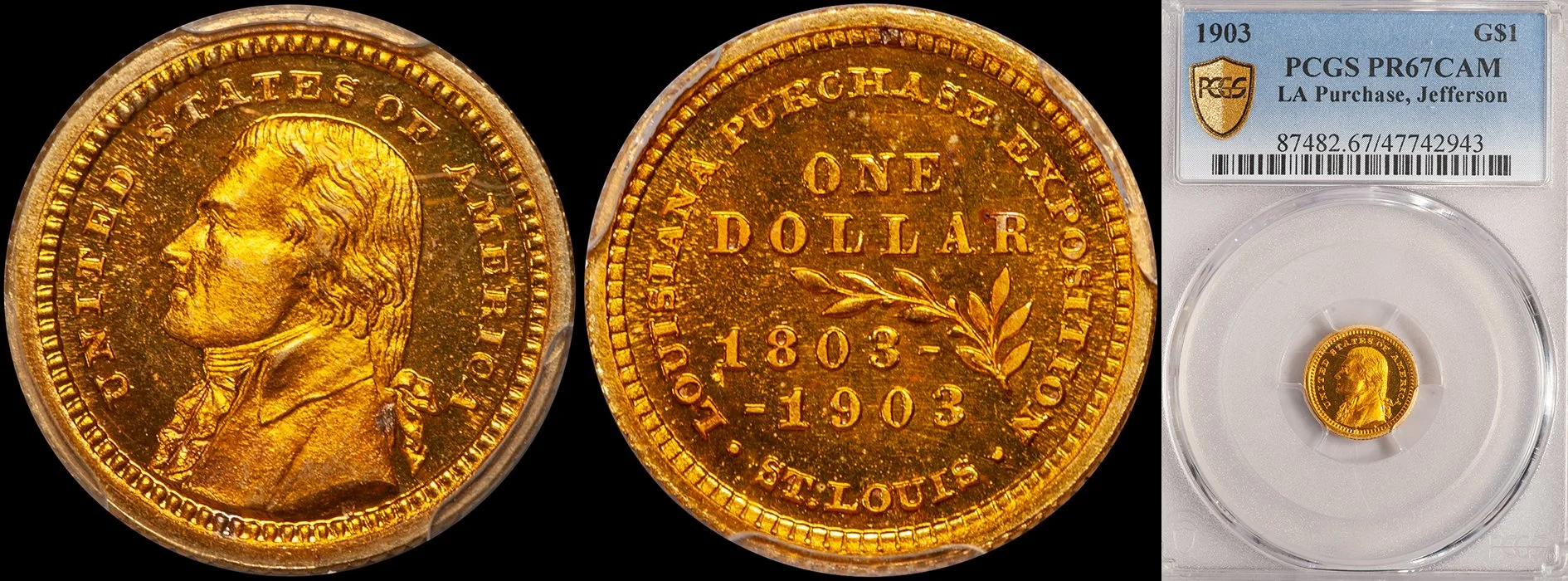
10. Commemorative Gold Dollars
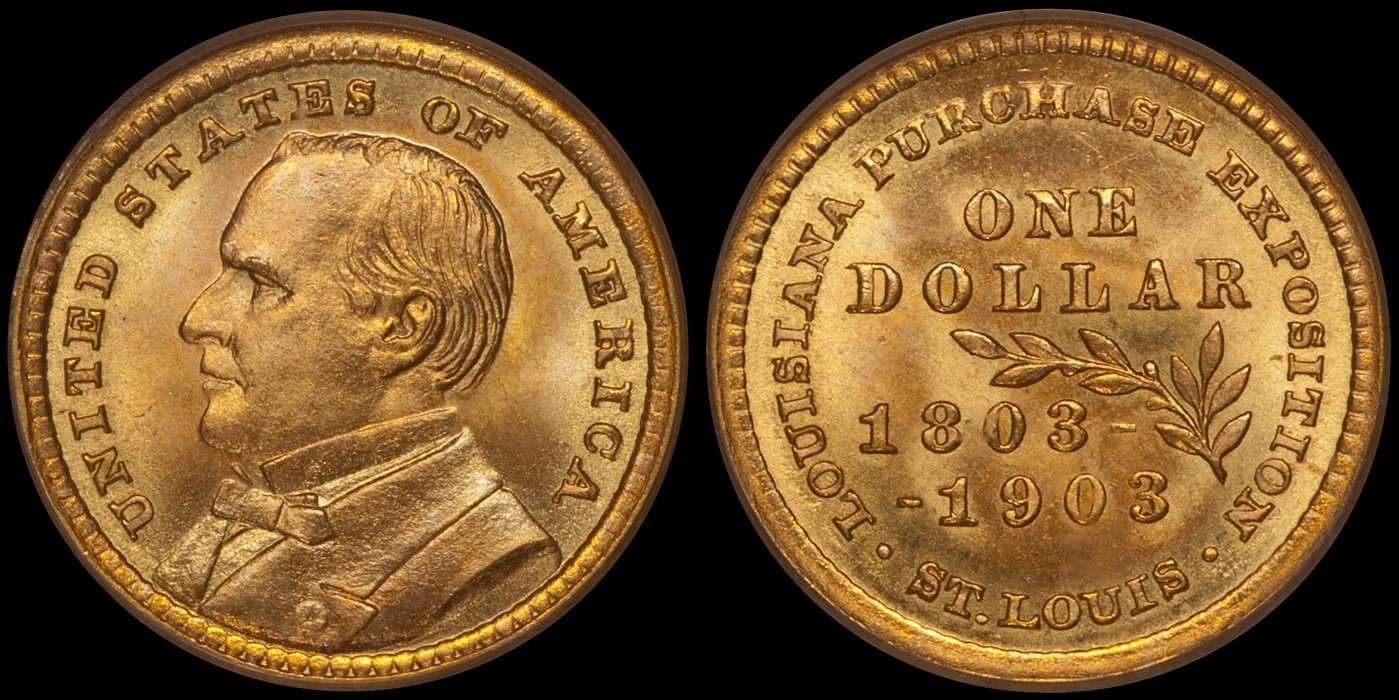
1903 McKinley Commemorative Gold $1.00
Yes, I know they are small.
Yes, I know they are common.
Yes, I know that they are still a fraction of their 1989 market highs.
But hear me out. I think commemorative gold dollars are a fun series to collect and with just nine gold dollars plus two quarter eagles, putting together a great set of Gem MS65s is presently inexpensive and easy to do.
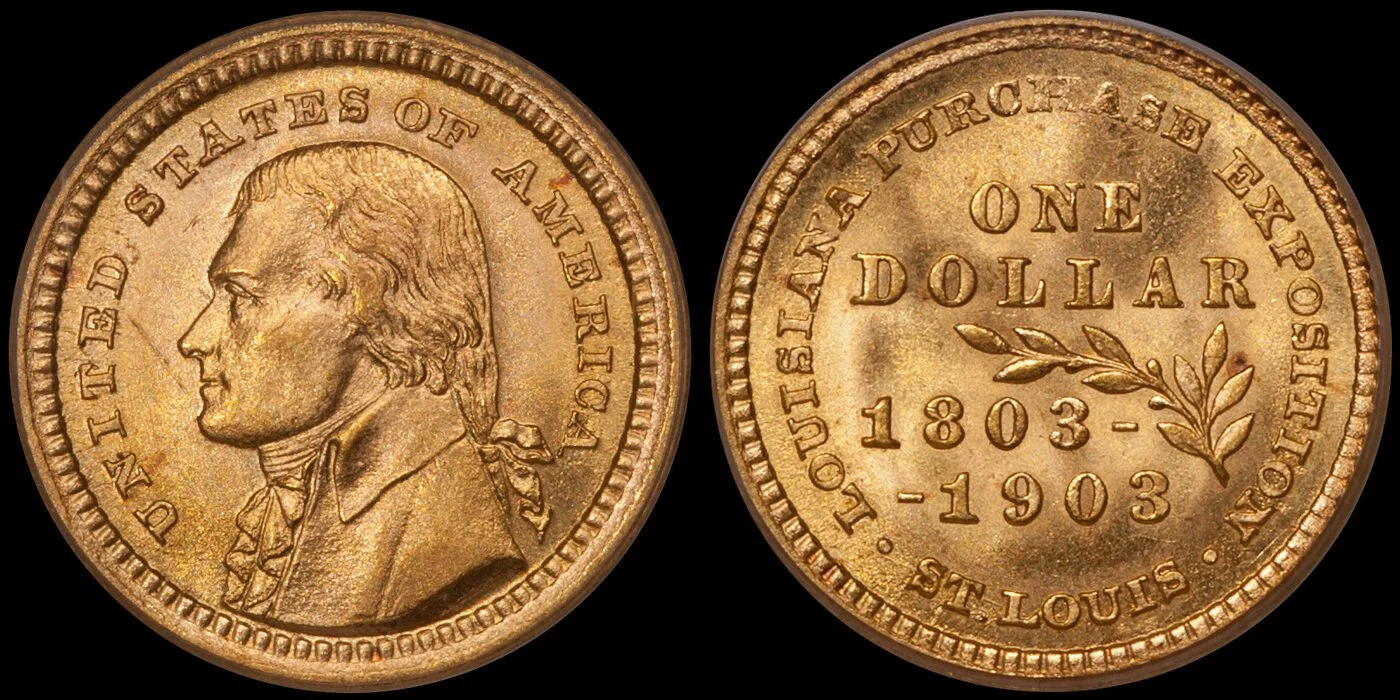
1903 Jefferson Commemorative Gold $1.00
BUYERS TIP: I am aware of at least two large marketing firms getting ready to promote gold commems in 2026, so don’t be surprised if supplies become tighter as the year progresses.