Five Quick Observations About the Recent James Stack Part Two Sale
/On February 3, Stacks Bowers held the second of a planned four sales featuring the James A. Stack Collection. This sale, which featured just 69 coins (as well as another 59 coins which would have been of very little interest had they not been from this collection).
I had predicted before the sale that it would be a “bloodbath.” It was all that and more. Here are a few quick observations.
THIS WAS A “PERFECT STORM” SCENARIO
If you were selling, you couldn’t have asked for a better scenario.
A: The market is craving fresh coins right now, and you couldn’t ask for a fresher deal than James Stack. Most of these coins had been off the market for 75++ years.
B: Trophy coins—in the mid-six figures and low seven-figures—are red-hot right now as very wealthy people look to park their money into better performing assets than the US Dollar.
C: Indian Head eagles and Pioneer gold—both of which were featured in James Stack II—are currently very strong, and very few great coins in either category have been available.
D: The sale was shrewdly marketed by Stack’s Bowers. The collection is wonderful, but it’s not especially big, and Stack’s Bowers is teasing buyers by splitting a few hundred good to great coin into two sales. The coins were not pushed by PCGS—unlike the Bass Core Collection sales—and they were for the most part extremely retail-friendly.
A + B + C + D = bloodbath
SOME COINS THAT BROUGHT ALLLLLLLL THE MONEY
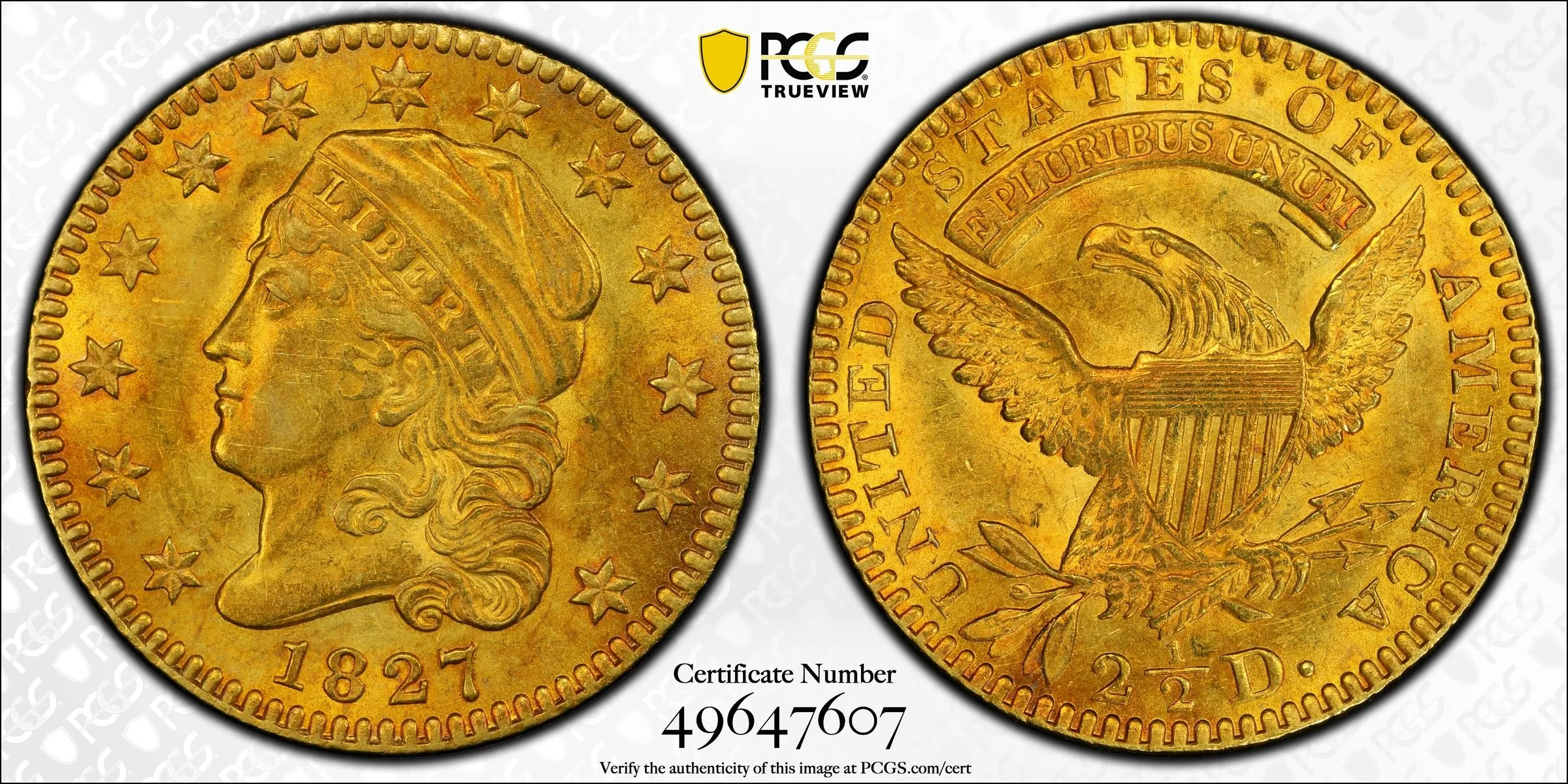
Lot 23006, 1827 $2.50 PCGS/CAC MS62+, sold for $138,000.
I LOVED this coin from an aesthetic point-of-view and was prepared to spend around $100k. I never got my hand up, as it opened and closed at $115,000 ($138,000 with the 20% buyer’s premium). This was just $6,000 less than what the PCGS/CAC MS64+ example of this same date brought in the Stack’s Bowers 11/2024 sale. The color on the James Stack coin was breathtaking, but this coin brought a ton for what it was.
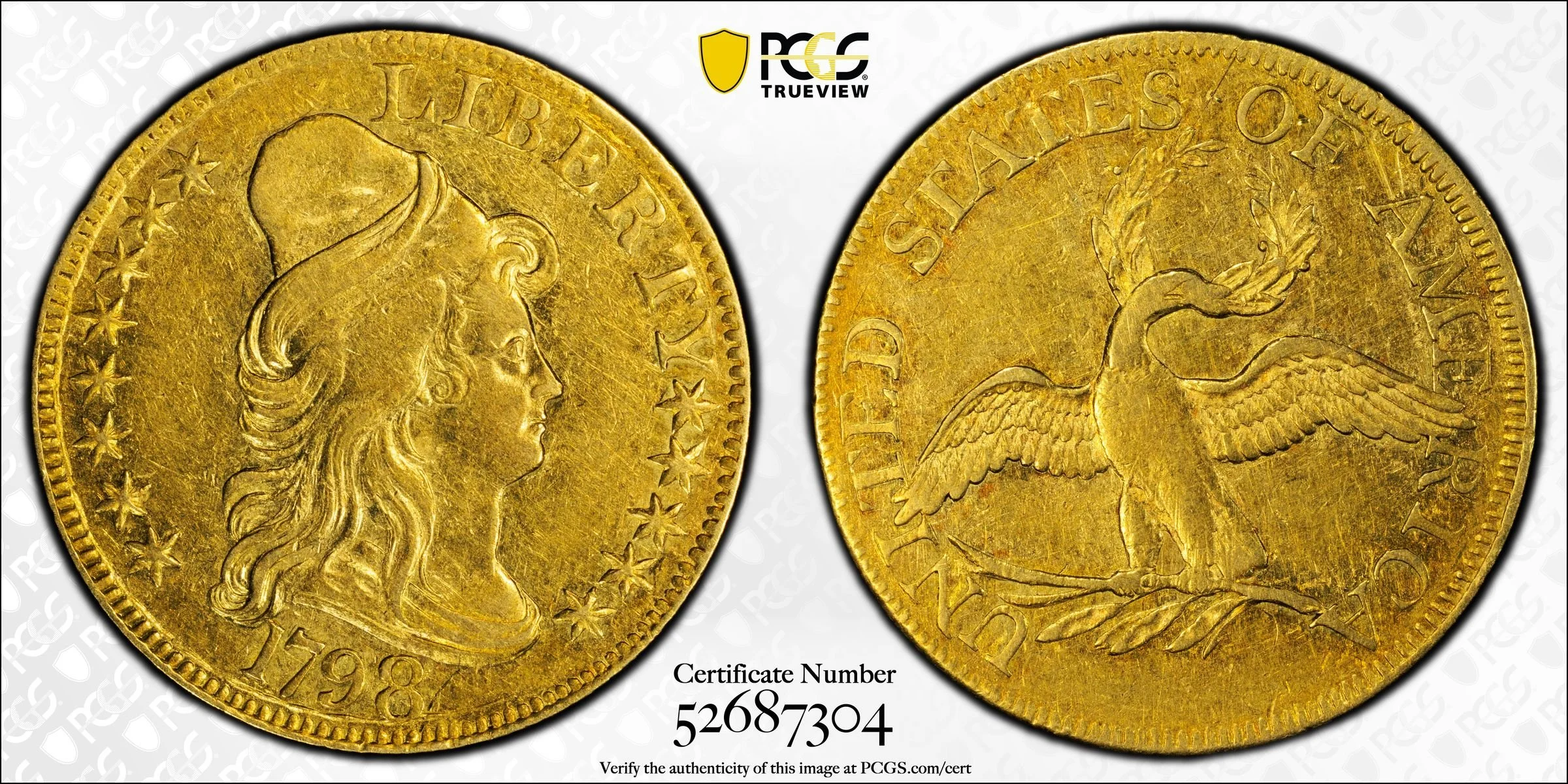
LOT 23012, 1798 SMALL EAGLE $5 PCGS/CAC AU53, sold for $2,820,000
In this market, I find a coin like this to be very puzzling. Sure, it is an excessively rare variety. There are just seven known with two of these impounded in the Smithsonian. But it is extremely esoteric and not pretty enough to be a seven-figure trophy coin. As recently as the sale for $1, 175,000 as the Pogue 2: 2034 coin, I considered it to be somewhat undervalued. But someone with sophisticated taste and deep pockets paid $3,000,000 for the Eliasberg/Bass coin in early 2025. It’s hard to imagine that the James Stack coin could have approached the APR for the issue, but it sold for $2,820,000.
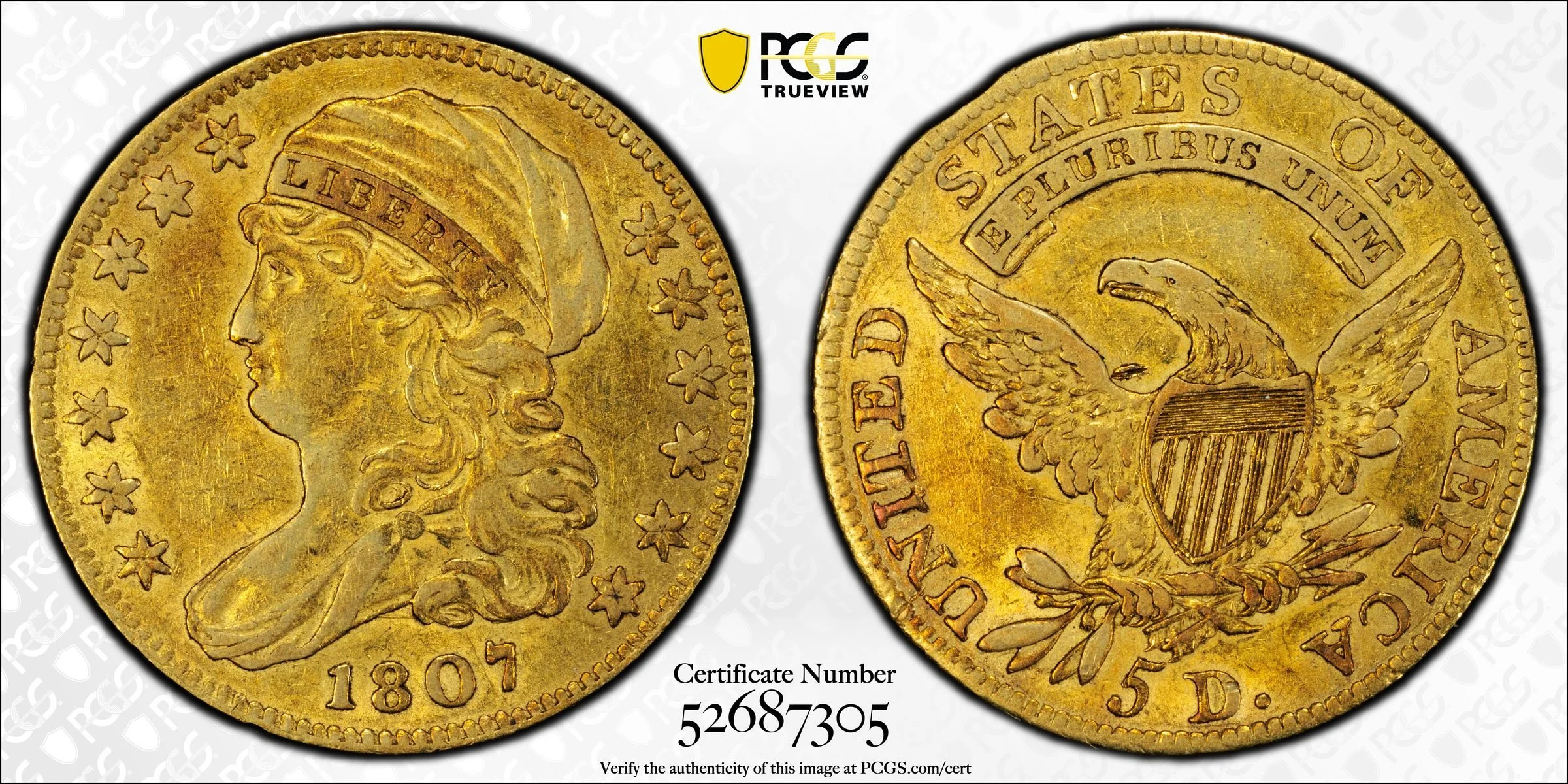
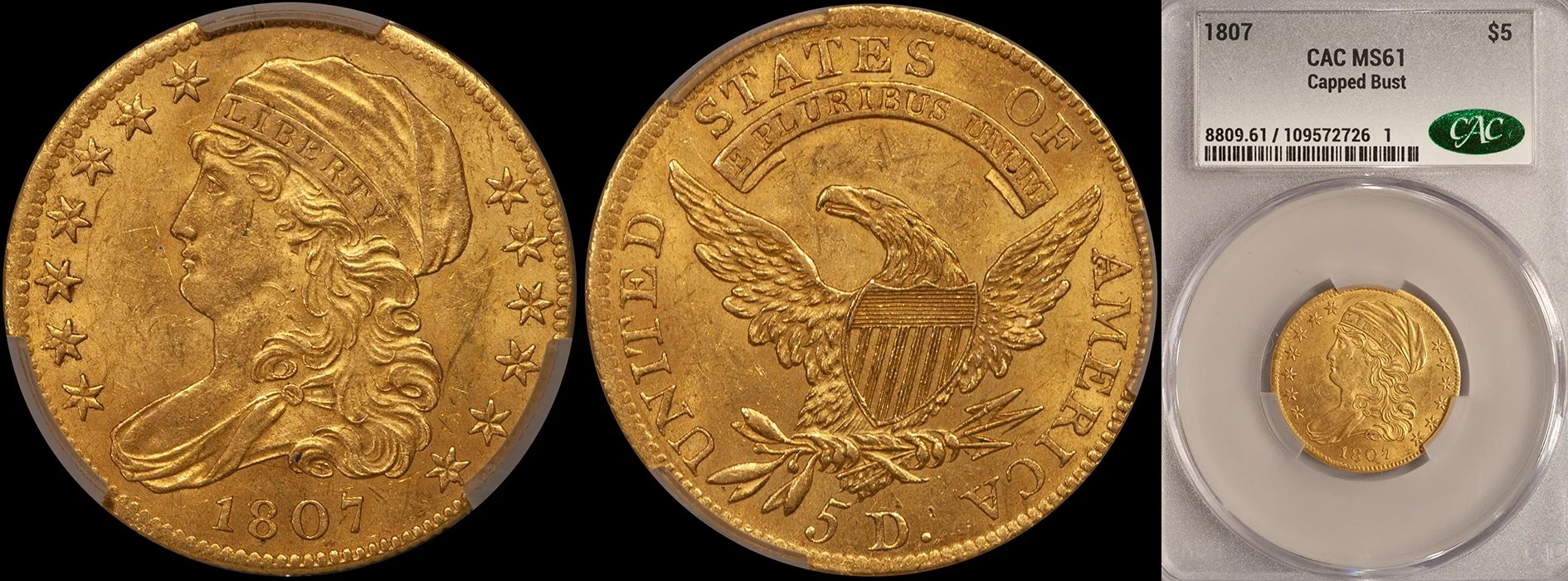
LOT 23013, 1807 $5.00 PCGS/CAC EF45, sold for $12,000
Apparently, neither PCGS, CAC or the buyer cared that this coin had a massive reverse gouge. Not a big deal, but in any other sale, this coin would have sold for $9,000-10,000.
Lots 23016 and 23017, 1839-C $5 in PCGS AU50 and 1848-C $5 in PCGS/CAC AU53
The former was ugly+++ yet it still sold for an extremely strong $25,200. Had this exact coin walked up to my table at a show and it was priced at $17,500, I would have passed without a second thought. The 1848-C half eagle should have sold for around $7,000 all in but it was pushed up to $9,600. Again, not a big deal but a 30-40% premium for the pedigree as well as the uber-fresh appearance.
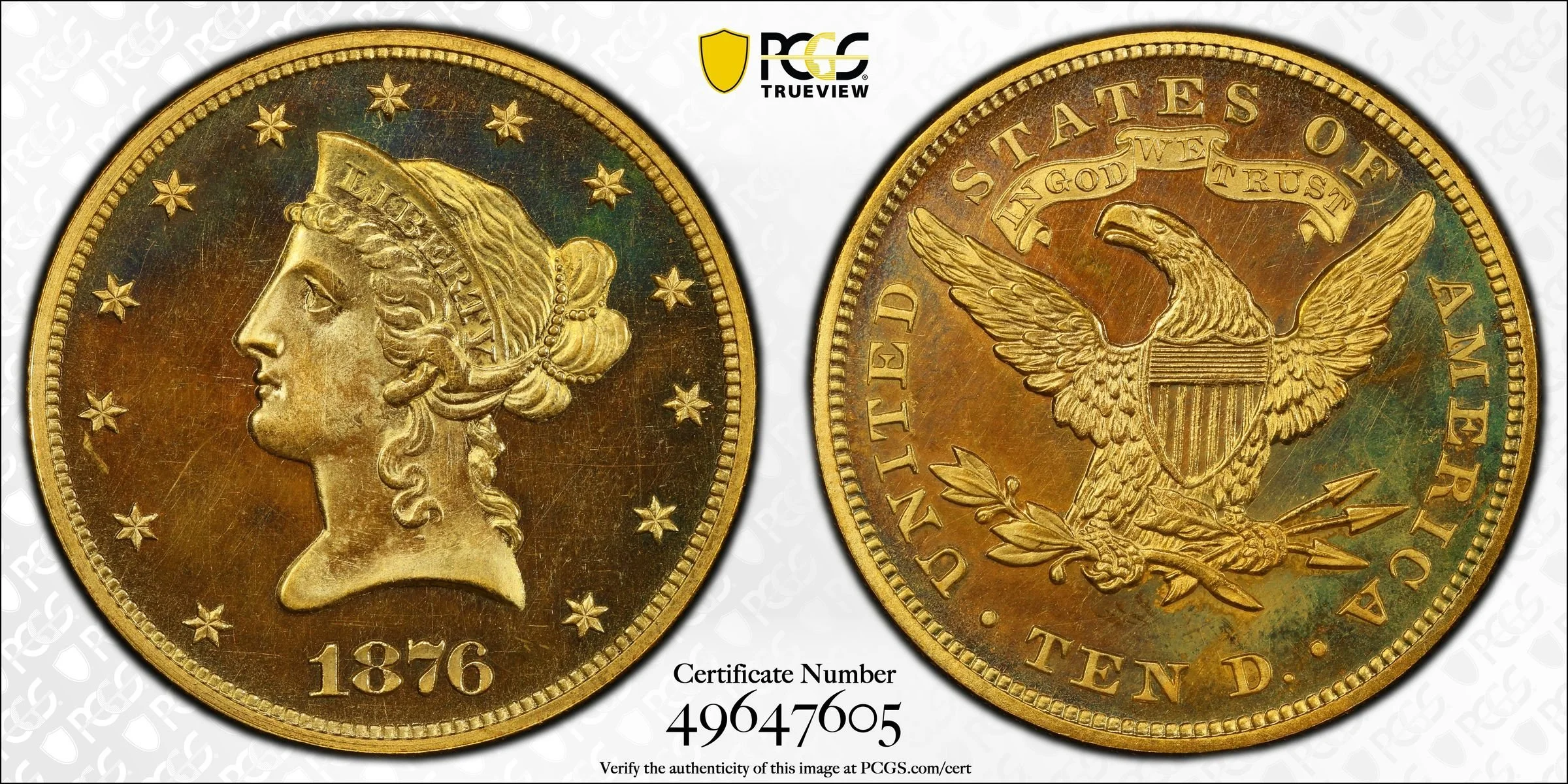
LOT 23028, 1876 $10 PCGS PR64 CAM, sold for $156,000
Other than the Tyrant Collection’s owner, there are no date collectors of Proof $10 Libs; at least as far as I am aware. Thus, this coin shouldn’t get a big premium for its date. I liked its originality but felt it was pretty liney in the left obverse field. I had 70k to pay and perhaps I would have stretched to 80k (which would have put me into this coin at a robust $96,000), but I never raised my bidder card as it opened at $90,000 and closed at a very strong $156,000.
TWO COINS THAT I THOUGHT WERE VERY REASONABLE
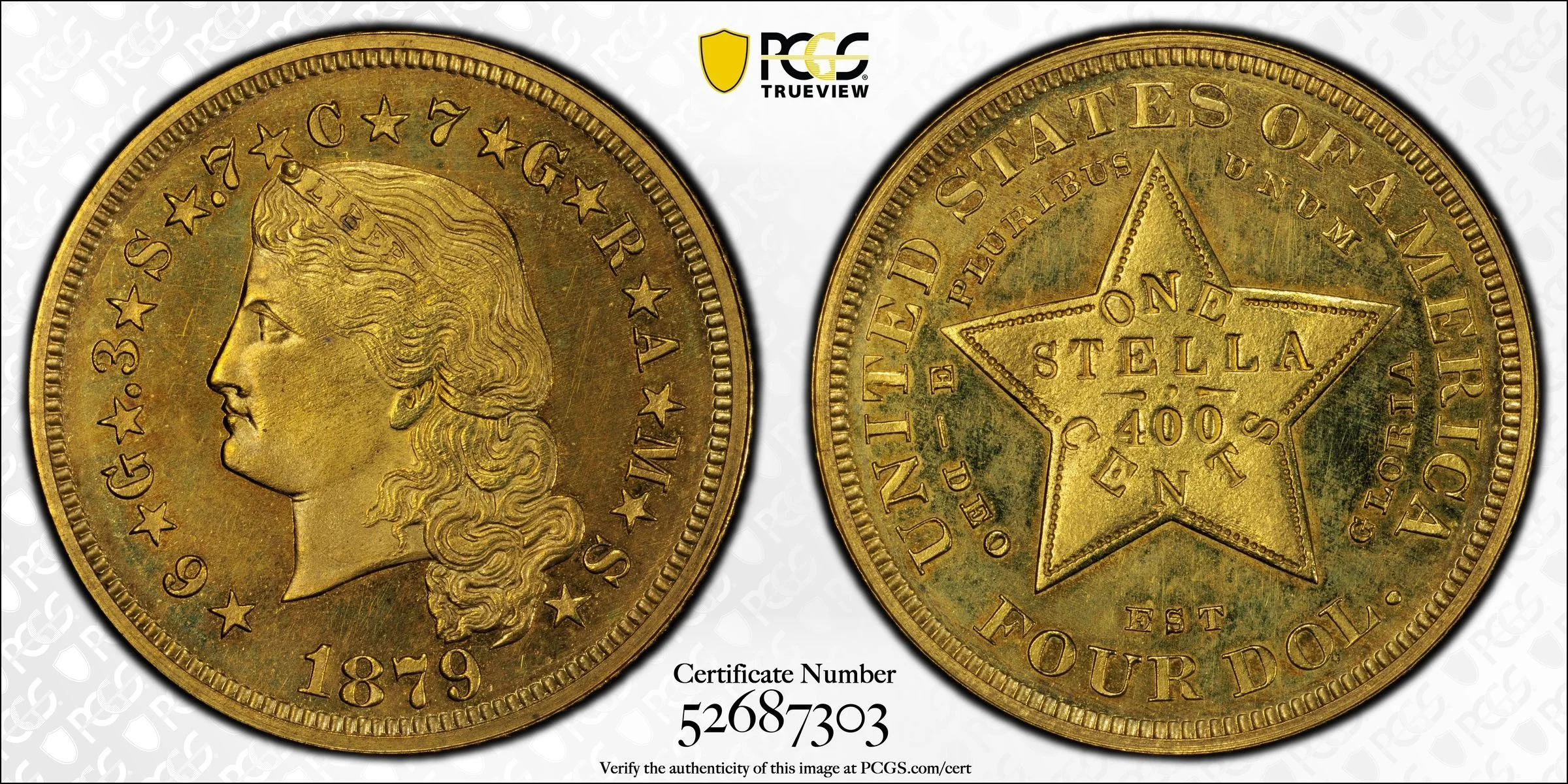
LOT 23011, 1879 Flowing Hair Stella, PCGS PR65, sold for $228,000.
Perhaps overlooked by buyers as it is really just an expensive widget, this Stella was a good value at $228,000. It was in the top 10 %of all the Gem Stellas I have seen with attractive dusky russet-gold colors on both sides. The new owner can likely sell this coin for a quick 15,000-25,000 profit. In a sale such as James Stacks 2, you can’t say this about more than a tiny number of coins.
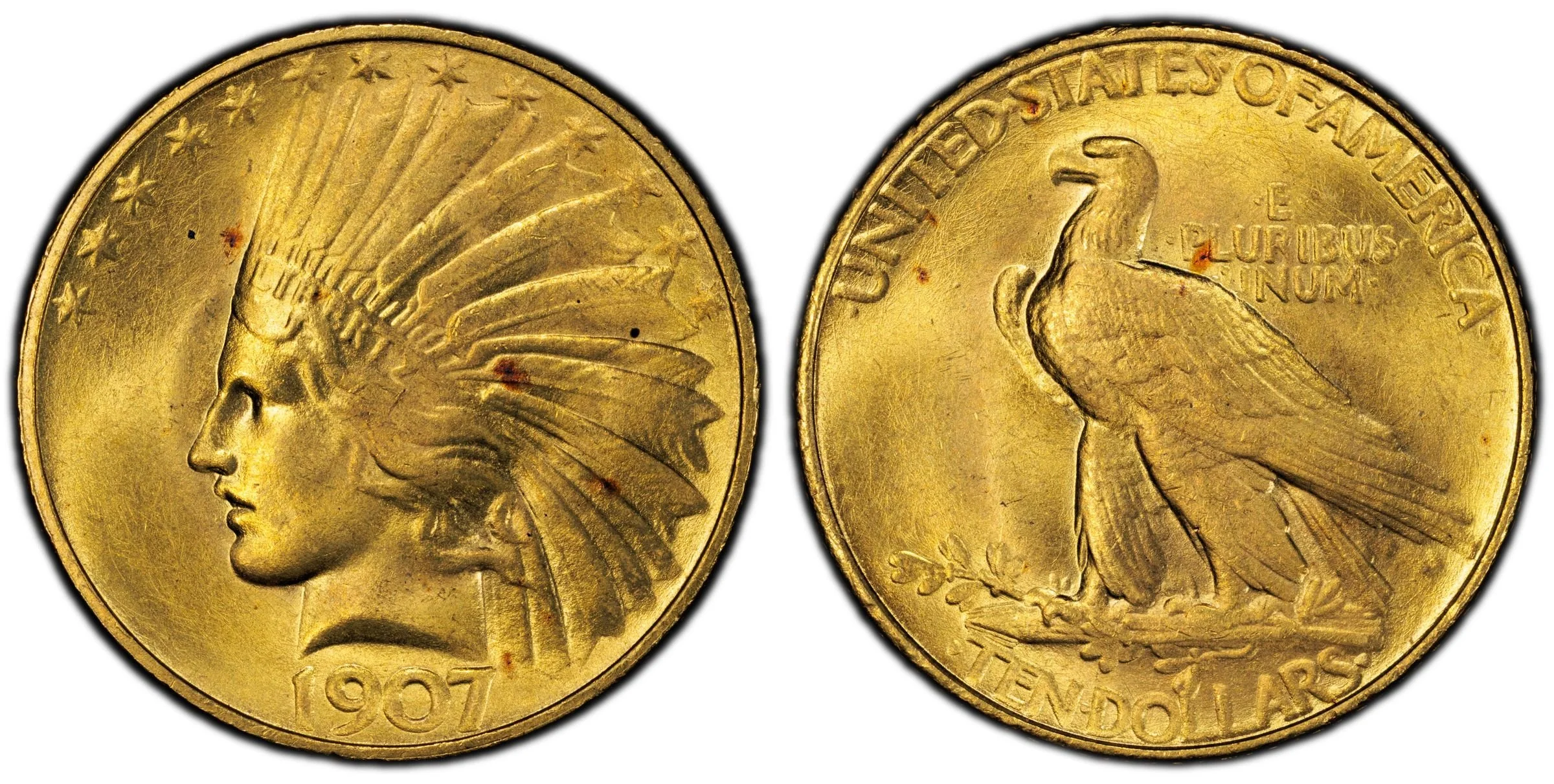
LOT 23031, 1907 Rolled Edge $10, PCGS/CAC MS67, sold for $900,000.
If you had asked me prior to the sale what chance this coin had to bring a million dollars plus, I would have said it was a “lock.” I base this on the 4/2022 sale of the similarly-graded Zito coin at $1,140,000.
The coin itself had a number of prominent mint-made copper spots on both sides. There are enough non-spotted Rolled Edge $10 Indians extant that a collector who just couldn’t deal with a coin this spotty has other potential options. These may not be in PCGS/CAC MS67, but certainly in M65 or MS66.
THE TERRITORIAL GOLD MARKET GETS A RESET
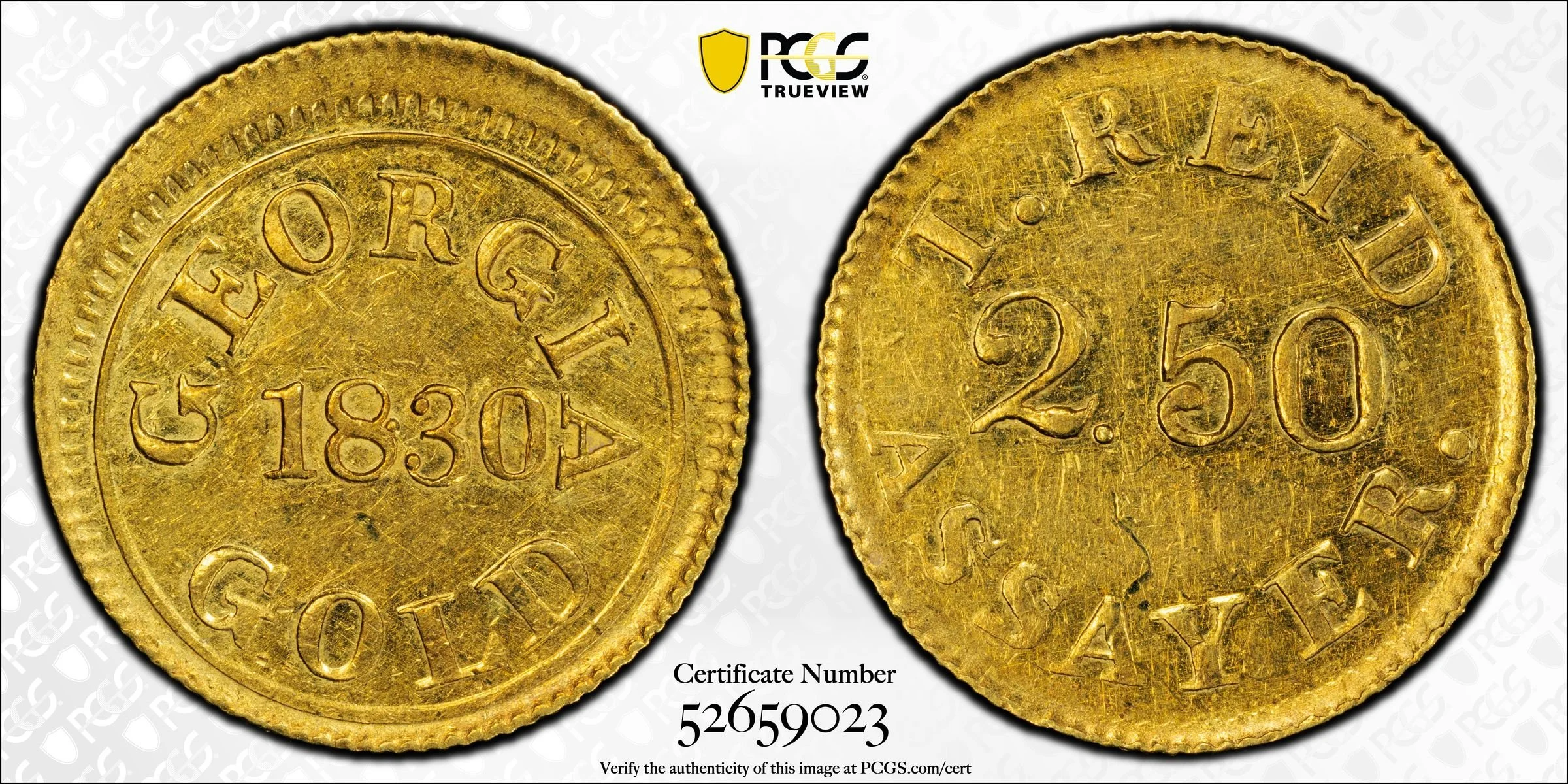
With a total of 27 different coins on offer—including some important rarities—James Stack 2 would almost certainly give collectors and dealers alike the most accurate update on current market pricing since the sale of the Buffalo Bayou Collection by Heritage in early 2022. Here are a few of the prices realized that I feel are the most significant:
| LOT # | COIN/GRADE | PRICE | PREVIOUS APR |
|---|---|---|---|
| 23042 | 1830 T. Reid $2.50, PCGS AU58 | $504,000 | $480,000 (P61) |
| 23049 | 1849 Moffat $5, PCGS MS63 CAC | $114,000 | $109,200 (N67) |
| 23053 | 1849 Moffat $10, PCGS MS63 CAC | $78,000 | $66,000 (P58) |
| 23054 | 1851 Humbert LE $50, PCGS AU55 CAC | $360,000 | $120,000 (P58) |
| 23056 | 1852/1 Humbert $10, PCGS MS62 CAC | $204,000 | $43,200 (P58) |
| 23059 | 1853 USAOG $20, PCGS MS63 | $222,000 | $176,250 (N63) |
| 23061 | (1849) Miners Bank $10, PCGS MS62 CAC | $432,000 | $230,000 (N63) |
| 23063 | 1851 Baldwin $10, PCGS AU58 | $240,0000 | $235,000 (P61) |
| 23068 | 1849 Oregon $5, PCGS EF45 CAC | $156,000 | $102,000 (N50) |
| 23069 | 1849 Mormon $2.50, PCGS EF45+ CAC | $90,000 | $86,250 (P55) |
Why the high prices?
The coins were very fresh, and many were very choice as evidenced by the high percentage of coins with CAC approval (15 of 28 which, for Pioneer gold, is like 26 of 28 for virtually any other series).
The demand for nice Pioneer gold is stronger now than at any time in the last decade+, and price guides tend to be pretty clueless about this difficult-to-price area in this currently-strong coin market.
With these factors looming, prices were understandably strong for what might well be the only offering of this magnitude for the rest of this decade.
WHEN TWO WHALES COLLIDE: THE BATTLE FOR THE 1911-D $10
Everyone knew that the 1911-D $10 in James Stack 2 was a special coin. Before the sale began, I told a small cadre of clients that it would be a million dollar plus item.
The 1911-D is arguably the single rarest 20th century gold coin in Gem. The best I had ever seen before the Stack coin became known was a PCGS MS65 from the Kutasi Collection that sold for $195,000 in early 2007. As with many of the coins from this collection, this piece was overgraded and showed signs of surface alterations. The Stack coin was graded MS66 by PCGS/CAC and it was incredible.
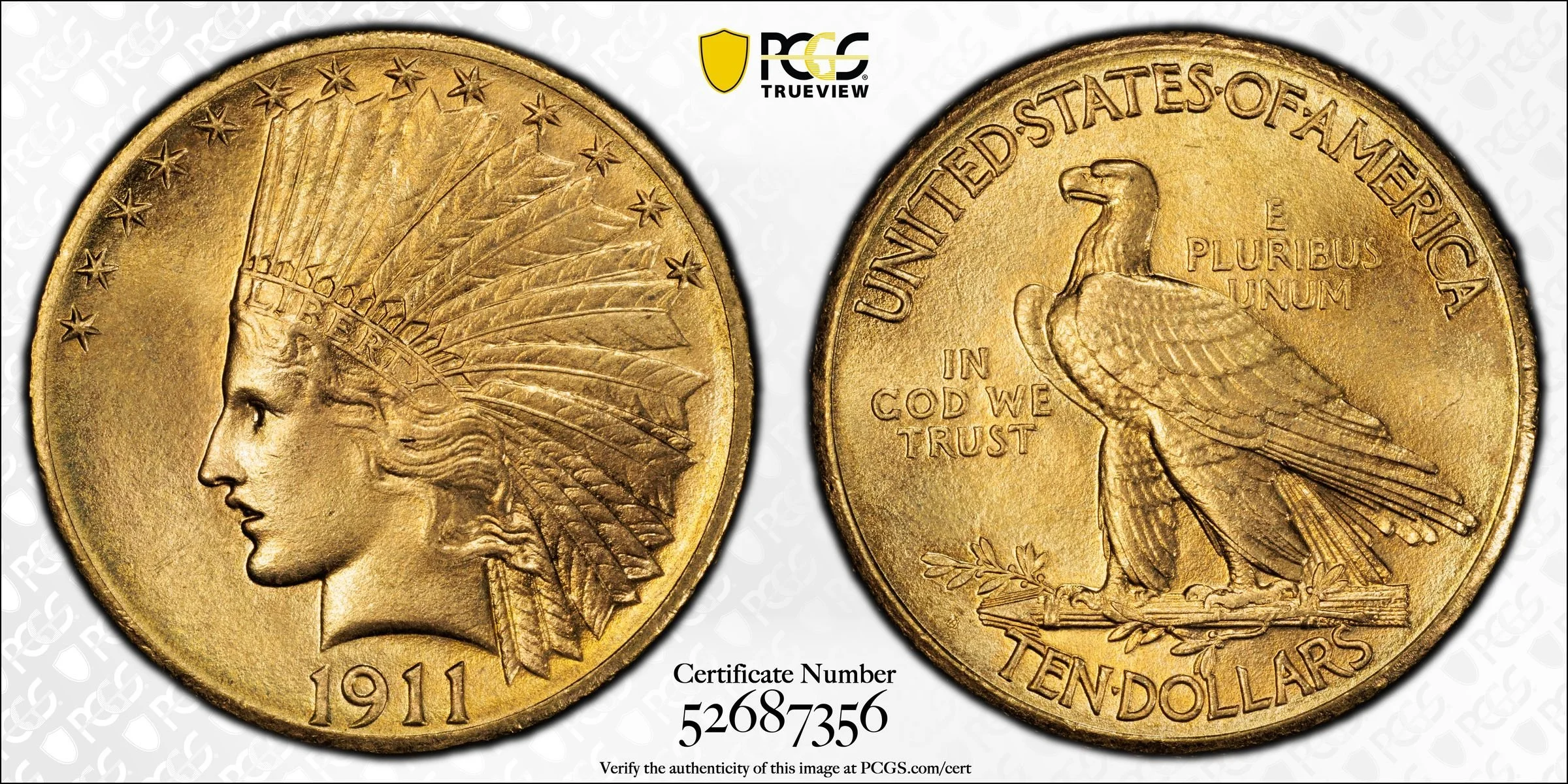
The coin opened at $700,000. and from the very first bid until the last, it was just two phone bidders going toe-to-toe like two heavyweight boxers. I found it ironic that the two Stack’s Bowers reps handling the phones were seated less than three feet from each other.
They slugged it out until $1,500,000 when one bidder finally dropped out. The final bill—including the 20% buyers charge? A staggering $1.8 million. Which is a record price for the issue by a factor of nearly 10x.
The auction was short and sweet. Prices were stronger across the board than at the James Stack 1 sale held in December, 2025.