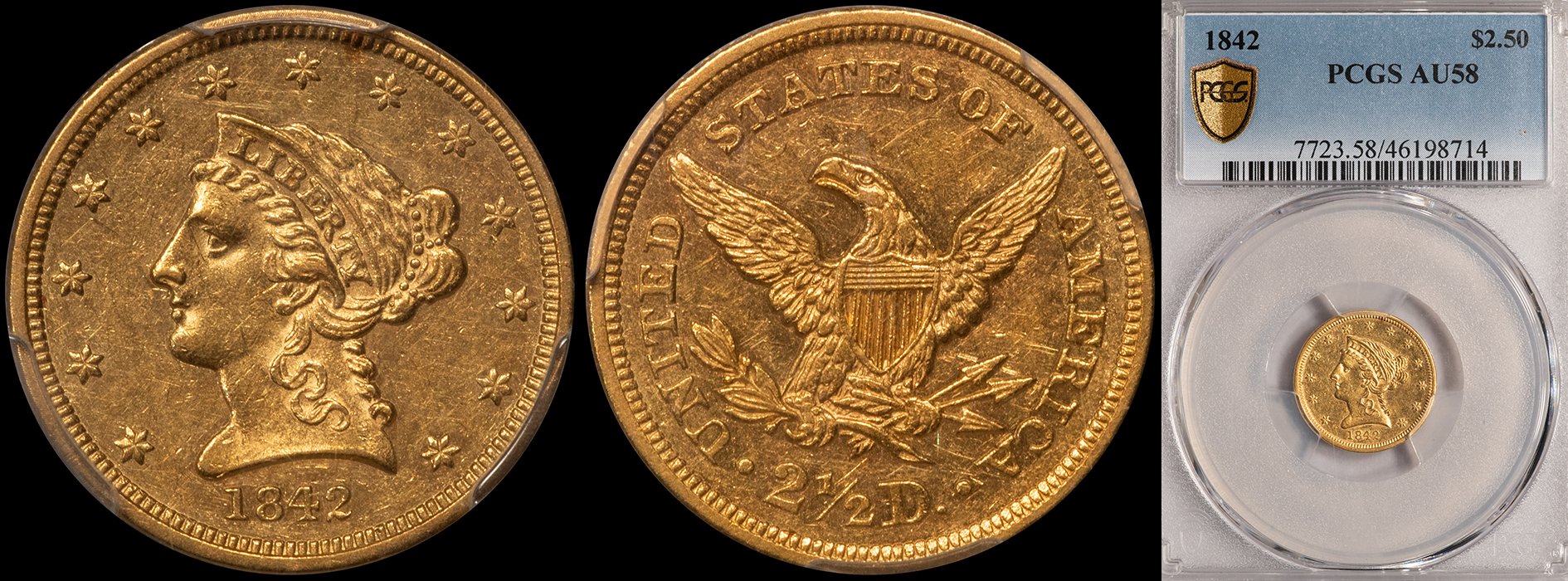
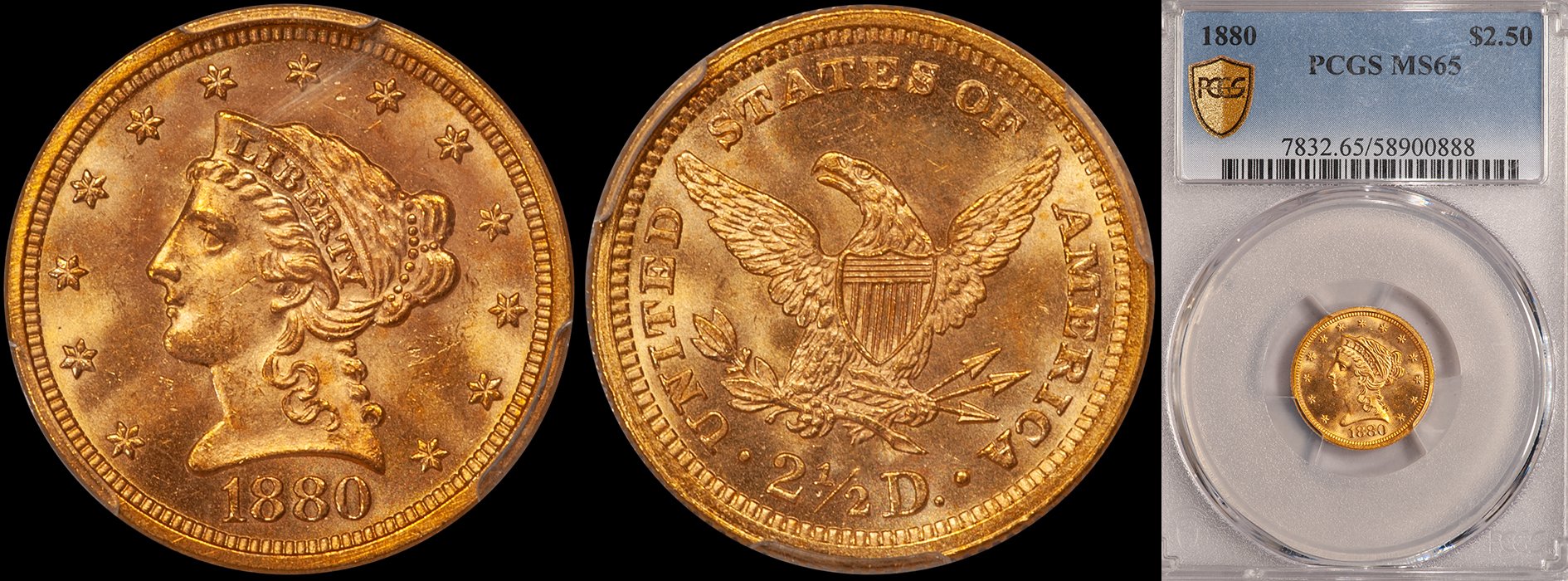
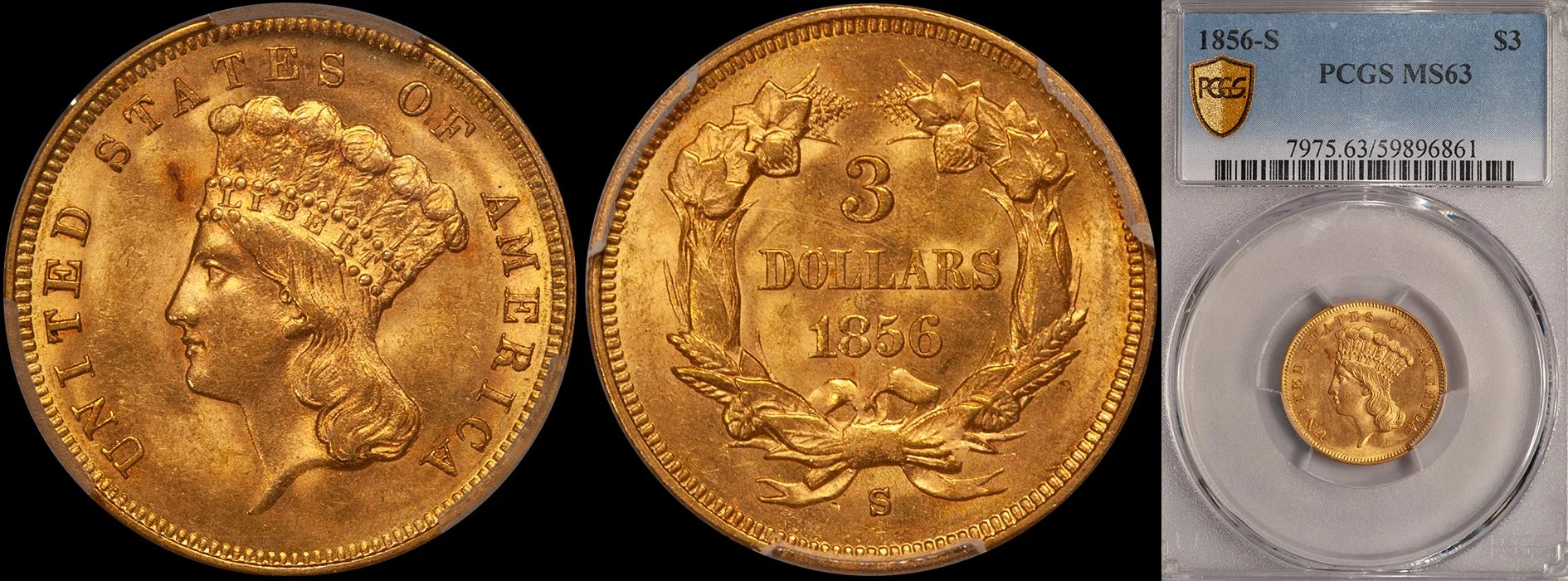
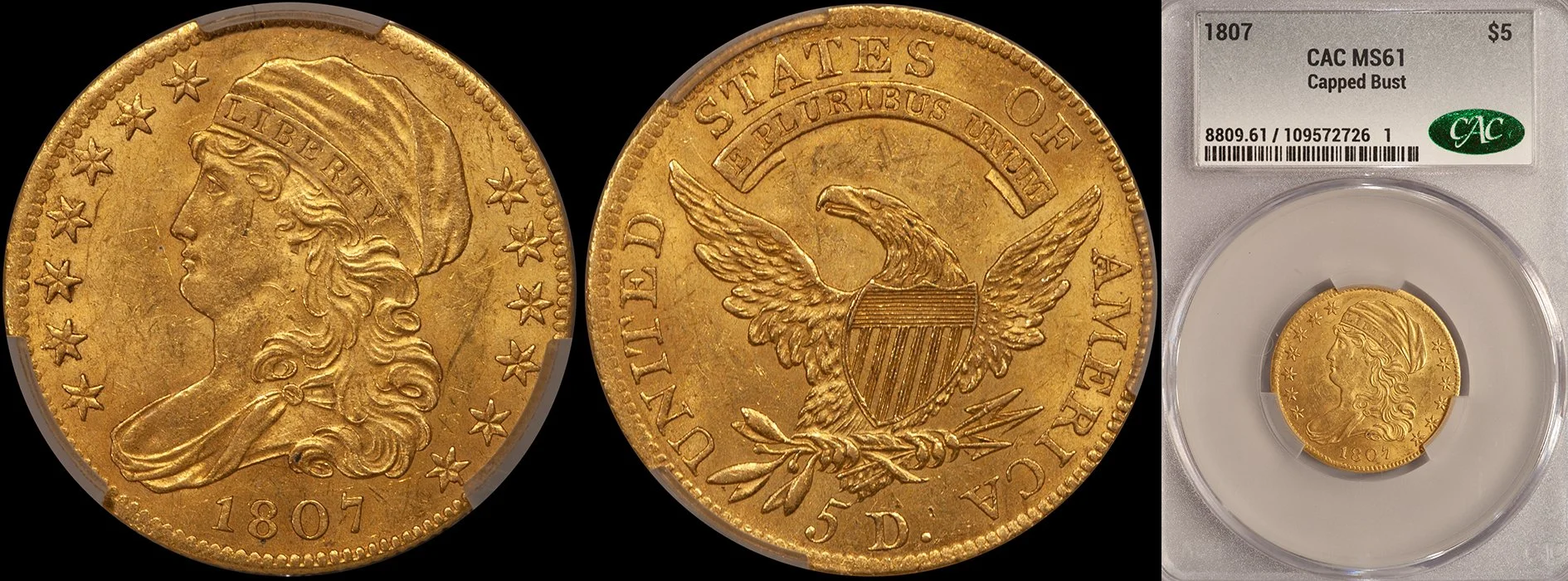
Should You Buy Very Rare Coins in Low(er) Grades?

As recently as a few years ago, if you asked me "should I buy very rare United States gold coins in low(er) grades" I would have resoundingly answered "no!"  But, as with so many things in life, perspectives change and my answer to this question has as well.

A piece of advice I had often given new collectors is that you shouldn't buy gold coins that grade lower than EF40. That is still a cut-off grade for me and, for many issues, I still recommend sticking with EF and finer coins. But I now will sometimes buy certain very rare issues in grades as low as Good to Very Good. What exactly made me change my mind?

I came to a conclusion a few years ago that just because someone doesn't have a $5,000 or $10,000 per coin budget doesn't mean that they don't appreciate truly rare coins. Nor should they be shut out from the potential of buying a few coins, now and then, that can be genuinely tagged as "rare" or even "very rare." I'm a coin snob who is trying to become more inclusive, I guess...

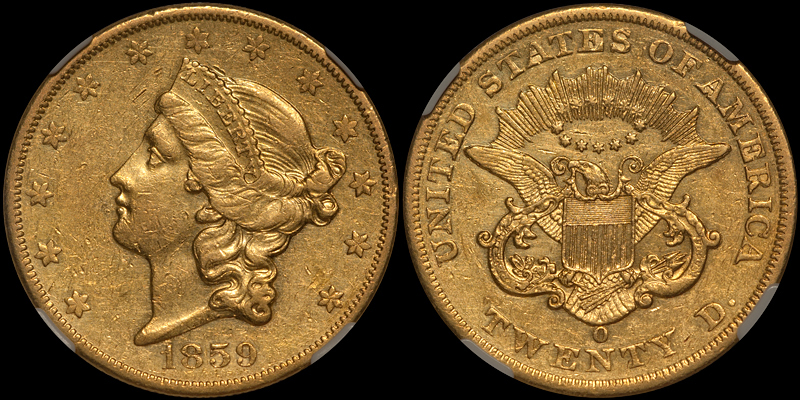
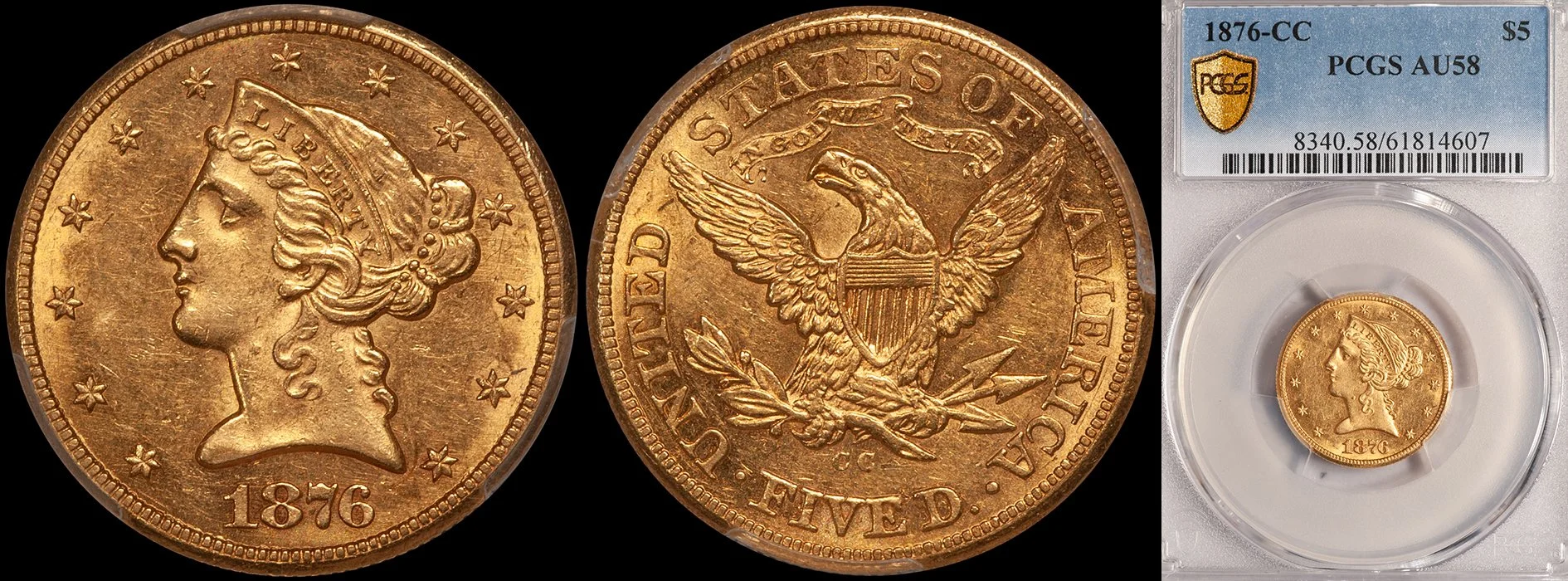
A few coins that I recently sold on my website raregoldcoins.com illustrate this belief. In the past two months, I handled a pair of 1870-CC half eagles, graded Good 6; one encapsulated by PCGS and the other by NGC. These were coins that I probably wouldn't have bought a few years ago but the New Doug Winter bought them and was pleasantly surprised at how quickly they sold; not to mention how much attention they generated.

Here's my way of thinking about a coin like an 1870-CC half eagle in very low grades. This is an issue with strong Multiple Levels of Demand. It is rare in all grades, it is the rarest half eagle from this mint, it is a first year of issue and it is the only quasi-affordable gold coin dated 1870-CC. In other words, it is a coin that's "got it all." But it is very expensive in EF and AU grades and not every collector who is sophisticated enough to want one can plunk down the $25,000-50,000+ it takes to buy a nice one.

So what's wrong with a well-worn but very problem-free example of this date in a Good 6 holder? Actually nothing; a fact that was lost on me until recently.

When you think about it, a Good 6 1870-CC half eagle is a pretty darn cool coin; certainly one of those "if it could only talk imagine the stories it could tell" kind of coins and probably more so, in some ways, than the same date in EF45 or AU50.

By the same token, I don't automatically think every CC half eagle from the early 1870's in lower grades is a cool coin. In fact, the chances are good that if I were offered a decent quality 1872-CC half eagle in Good or Very Good I would pass. Why? It is clearly a rare coin but it doesn't have nearly the cool factor that the 1870-CC not does it have the strong multiple level of demand. My grade cut-off for the 1872-CC half eagle is more like EF40.

What are some of the parameters that I would employ when choosing to purchase a very rare coin in low(er) grades?

First, just as with a very rare coin in higher grades, I would avoid any piece which has been harshly cleaned or which has poor eye appeal. A coin in Good 6 doesn't necessarily have to be CAC-quality but make sure it has reasonably good overall eye appeal.

Second, I would look for coins which are not only very rare but whose high price point in higher grades eliminates a large pool of potential buyers. As an example, I recently sold a VG8 example of the very rare 1865-S/186 Inverted Date eagle. Not only was it a decent looking coin, it was priced at less than $3,000 which is tons cheaper than the next semi-available grade point (VF/EF) for this issue. From an economic standpoint, this coin made a lot of sense to me.

Third, I wouldn't go overboard with buying very low grade gold coins. In other words, you don't want a collection which features nothing but coins like 1870-CC half eagles in Good 6. A few coins like this are cool pieces to sprinkle in your set. A lot of coins like this are, well, a collection of very low grade coins...

Fourth and final, my sudden admiration for lower grade coins is, as I've tried to make clear, highly selective. Remember: 1870-CC half eagle in Good 6, si....  1872-CC half eagle in Very Good 8, non.....

For more information on how to put together a great collection of United States gold coins, with or without very rare coins in low(er) grades, please feel free to contact me by email at dwn@ont.com.


United States Gold Coins with Multiple Levels of Demand

A trend that I have noted in recent years is that a subset of gold issues which have what I refer to as Multiple Levels of Demand (MLD). These are coins with more than one potential set of buyers competing for them. As an example, a coin such as an 1838-D half eagle is sought not only by Dahlonega specialists but by Classic Head half eagle collectors, first-year-of-issue collectors, one-year type collectors and collectors who just appreciate cool coins.

1838-D $5.00 NGC MS62 CAC

An 1844-D half eagle, in contrast, has a smaller pool of potential buyers which includes Dahlonega specialists and type collectors looking for a single nice half eagle for their set. MLD coins have increased significantly in value in the last five to ten years and this makes sense. Coin values are largely the result of a basic supply and demand relationship: the greater the demand, the more prices increase.

In this blog, let’s take a look at coins which are already stellar MLD’s and also at issues which might be the next wave of multiple level of demand coins.

GOLD DOLLARS:

1861-D $1.00 PCGS MS61

If I had to choose the one single issue in this denomination which had the highest overall level of demand among collectors it would be hands-down the 1861-D. This scarce, low mintage issue is popular for a host of reasons: it is a coin with verifiable provenance from the Confederacy, it is the final issue from this mint (along with the similarly-dated half eagle) and the rarest gold dollar from any source. These facts (and others) have made it extremely popular and prices have soared as a result.

1855-D $1.00 PCGS MS61, Full Date

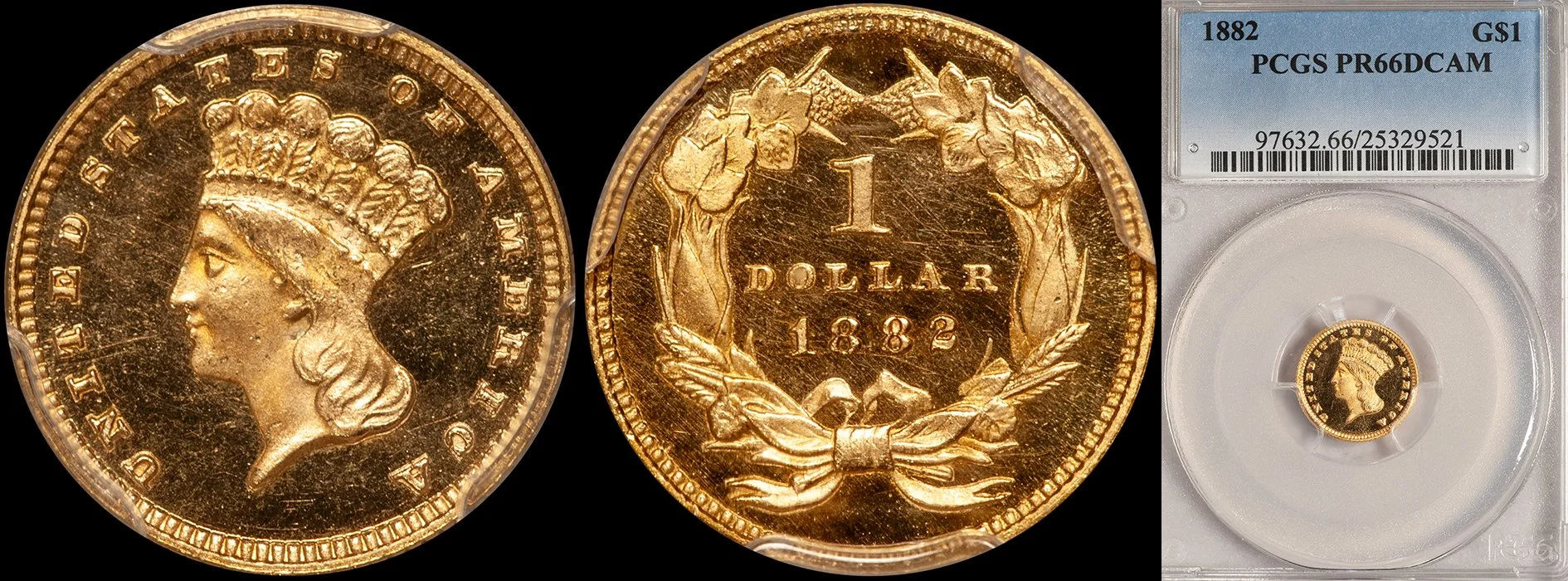
Other gold dollars which have a high degree of MLD include the Type Two issues: 1855-C, 1855-O, 1855-D and 1856-S. These four coins range from rare (1855-D) to relatively common (1855-O and 1856-S) but they have interesting stories attached to them and, in most cases, they are relatively affordable in circulated grades.

1849-D $1.00 PCGS MS62 CAC

What are the gold dollars which are most likely to become MLD issues in the future? I would suggest that the 1849-C, 1849-D and 1849-O will due to their status as first-year-of-issue from their respective branch mints (side thought: this would make a great three coin set in AU for the collector of average means). I could see the 1870-S becoming an MLD due to it being the final year of issue from the SF mint for gold dollars, its low mintage and the sexiness of this date in general. The 1875, due to its mintage figure of just 400 business strikes, is another possibility as well.

QUARTER EAGLES:

1839-D $2.50 PCGS VF35 CAC

As with many of the multiple level of demand coins, the list is dominated by Classic Head issues. The 1838-C and 1839-C have proven popular with collectors in the last decade as has the 1839-D. Of the three, the 1839-C tends to have the least MLD but this is partly due to the fact that many of the EF and AU examples which appear for sale are grossly overgraded and have problems. The 1838-C and 1839-D are both first year of issue with comparably low mintages and the latter is a one-year type.

A coin which is probably better classified as a Classic Rarity but which is also an MLD issue is the 1854-S. It has a tiny original mintage (246 pieces), very low survival rate and it is the first quarter eagle produced at the San Francisco mint. But this is already a solid six-figure coin and, thus, is not a realistic purchase for most collectors.

1808 $2.50 PCGS AU53 CAC

Other quarter eagles I regard as having a high MLD include the 1796 No Stars and the 1808; both are popular one-year types. The 1848 CAL is another obvious choice due to its status as a Gold Rush issue and as the first American commemorative issue.

1864 $2.50 PCGS EF45 CAC

What are the quarter eagles most likely to become MLD issues in the future?  I’d look at the four 1840 issues (P, C, D and O) as they would make a fun set to assemble, the 1845-O due to its status as the rarest issue of this denomination from New Orleans, and the rare Civil War issues from 1864 and 1865.

THREE DOLLAR GOLD PIECES:

1854-D $3.00 PCGS AU55

I think there are really only two dates in this series right now that have MLD status: the 1854-O and the 1854-D and one of these (the 1854-O) has had a lot of its appeal ruined by blatant overgrading by the services.

The 1854-D is the clear MLD favorite right now. It is scarce in all grades but available enough to be a target for Dahlonega specialists, Three Dollar collectors, low mintage fans, and people who just like great coins with a real story to tell.

1855-S $3.00 PCGS MS61

If I had to choose the dates most likely to have MLD status in the future, they would be the 1855-S (due to its status as the first Three Dollar from the San Francisco mint), the Civil War issues from 1861-1865 (all are collectible and could be turned into interesting subsets) and maybe the 1873 Closed 3 (very low mintage).

HALF EAGLES:

There are more issues of this denomination with high multiple levels of demand than nearly any other and this includes coins from the 18th, 19th and 20th century.

1795 Small Eagle $5.00 PCGS AU58

The first issue I’d place in the MLD category would be the 1795 Small Eagle. It’s available enough to be realistically obtainable by advanced collectors and it has a high “cool factor” as a first-year-of-issue with a great design.

Nearly any sub-$10,000 early half eagle has a high MLD factor, especially if the coin is choice and original. The reasons are obvious: old, gold, semi-affordable and very appealing from an aesthetic standpoint.

1838-D $5.00 PCGS AU53 CAC

The 1838-C and 1838-D have oodles of demand due to their first-year and one-year type status. The 1839-C and 1839-D do as well but to a slightly lesser extent; both have, however, shown nice price increases in collector grades over the last decade.

1861-D $5.00 PCGS AU55

The 1861-D certainly receives consideration as an issue with lots and lots of MLD and its counterpart the 1861-C has suddenly become quite popular as well. Both of these issues have demand that far exceeds the Southern branch mint box which other C and D half eagles are trapped within.

1909-O $5.00 PCGS MS61 CAC

The 1870-CC, desirable as the first half eagle from this mint, is a coin with a high MLD. The same is true for the 1909-O as it is the only half eagle from New Orleans with the Indian Head design and it is a final year of issue. The 1929 Indian Head half eagle has become very popular in recent years due to its being the very last half eagle made.

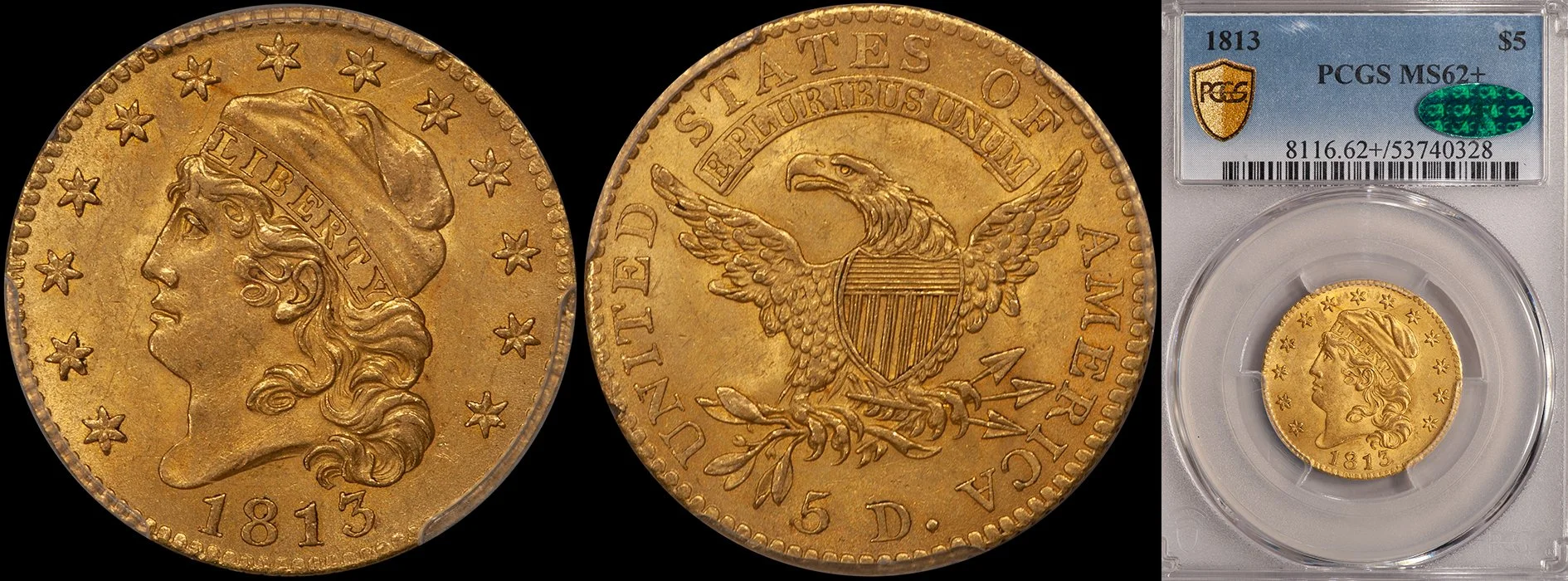
1813 $5.00 PCGS MS64

Which half eagles have a good shot as showing high MLD in the next few years?  A few of my choices might surprise you. Due to its status as the only semi-affordable date of its type, the 1813 could have MLD. The same goes with the 1834 Crosslet 4 which is the key issue in the Classic Head half eagles; a set which is beginning to see appreciation by date collectors. The 1839-P is a neat, affordable one-year type coin which has lagged the market as has the first-year-of-issue 1840-O. The rare to very rare Civil War era half eagles from Philadelphia and San Francisco have new-found, widespread appeal and increased price levels to match.

EAGLES:

1795 $10.00 NGC MS61

The first-year-of-issue 1795 has to be considered one of the most desirable eagles of any date or design. As with the similarly dated half eagle, it isn’t a really rare coin but it is an issue which “checks the boxes” for a host of collectors and has strong MLD as such. To a lesser extent, this is true with the 1799 as it is an 18th century-dated “big coin” which is still within reach of many advanced collector’s budgets.

1838 $10.00 PCGS EF40

The 1838 eagle has become exceptionally popular in recent years and it has soared in price. It is a first-year-of-issue with a low mintage and a very cool design which appeals to many different collectors. To an extent, the 1839 Head of 1838 has a degree of MLD but not as much as its earlier counterpart.

Many of the rare Civil War Liberty Head eagles have a high degree of appeal might they are probably not quite yet what I would consider MLD coins. An issue that clearly does have multiple levels of demand, though, is the 1870-CC which is desirable for a number of reasons. There are a few Indian Head eagles which have a strong MLD profile. The first is the 1907 Wire Edge, a coin of unparalleled beauty which has a great back story and which is rare but not impossibly so. The second is the rare and high valued 1933 which is the only American gold coin of this date which is legal to own.

1841-O $10.00 PCGS AU58 CAC

I can think of numerous eagles which could have expanded levels of demand in the coming years. The key New Orleans issues, 1841-O, 1859-O, 1879-O and 1883-O, are beginning to show demand which exceeds the specialist community. The ultra-low mintage Philadelphia issues from 1873, 1876 and 1877 are becoming very popular as is the 1879-CC which has the lowest mintage of any Carson City gold coin.

DOUBLE EAGLES:

1861-S $20.00, Paquet Reverse, NGC AU53

You can make a case that many Type One Liberty Head double eagles have some degree of MLD as they are pursued by general collectors, specialists and “double play” investors. If I had to select one specific Type One issue as having the most widespread appeal, my experience would suggest the 1861-S Paquet Reverse. The Philadelphia issues from the Civil War years (1861-1865) are quite popular as well.

1870-CC $20.00 PCGS EF45

The rarest Type Two double eagle is the 1870-CC but this doesn’t have the widespread appeal that the similarly dated half eagle and eagle do because it is very expensive and tends to be found with poor eye appeal.

You can also make a good case that virtually all Carson City doubles eagles, from both the Type Two and Type Three series, have multiple levels of demand. This is especially true with the more common dates in collector grades.

MCMVII (1907) High Relief, Wire Rim, PCGS MS63

An obvious MLD issue is the 1907 High Relief. Yes, it’s probably overvalued but there are few American gold coins which have a higher level of demand from a more varied group of potential buyers.

Which double eagles have the potential to be added to this list in the coming years? Two which come to mind (and some observers might state that they already have MLD) are the 1861-O and 1879-O. The same probably holds true for the low mintage Philadelphia issues from 1881-1887 and 1891.

As coins become more expensive and harder to locate, buyers want an item which is special and which justifies what they are spending money on. Coins which have a nice design, a fascinating back-story, a very low mintage figure or some association with an historic event are the exact sort of piece(s) which people are now seeking and this is likely to continue in the coming years.

Do you want to purchase coins with multiple levels of demand? I specialize in such coins. Please contact me via email at dwn@ont.com and we can discuss how you can become a collector of these coins.

Advice to a Young Coin Dealer

The Professional Numismatist Guild (PNG) recently announced the establishment of the Edward Milas Memorial Fund which creates internships at established firms for as many as four qualified dealers/aspiring dealers aged 21-32. These internships are scheduled to be available by next summer.

I applaud the PNG for the creation of this program. I have written before that perhaps the biggest problem facing the professional side of the coin business is the aging of its dealers. Formerly young dealers like myself are now middle-aged, and when I go to shows, I can't help but notice the small number of dealers who will be factors in the market come 2023 or 2033.

The pool of dealers now basically consists of three groups: the guys in their 60's (and older) who became interested in coins during the roll craze of the 1960's, the guys in their 50's who became interested because of the gold and silver booms in the late 1970's, and the guys in their 40's who became interested after third-party grading became entrenched in the mid-1980's. There are not many dealers in their 30's, and even fewer in their 20's.

There are many reasons for this lack of young dealers. It is very expensive to run a business and this discourages young people. Interesting coins can't be found in circulation any more - and this means fewer people become collectors. The industry lacks the panache of wall Street or hedge funds and doesn't attract many of the best young financial minds; even though the chances to make an excellent income are probably better at an A-level rare coin company than at a B-level bank or hedge fund. And, for a long list of reasons, coins just aren't viewed as being "cool" like they might have been to my generation.

I love being a coin dealer and I am thankful for having the opportunity to do something I enjoy and get well paid for it. The Milas internships might add five or ten potentially good dealers to the bourse floor and I hope that I can mentor at least one or two of them once they get their foot in the door. I have a few pieces of advice for any of these potential interns (or any other young person reading this blog who is thinking of becoming or already is a coin a dealer) and I'd like to share them.

1.  Try Not to Ruin Original Coins Unless You Absolutely Have To.  

I'm not proud to admit this but my generation (and the Roll Craze dealers who came of age in the 1960's and early 1970's) has probably ruined more nice, original coins in the name of profit than all other generations combined. All I have to do to remind myself this is to go to a show and look at case after case of dipped, processed coins or attend an auction and reject a large percentage of the non-fresh coins for quality issues. I'm a purist but I'm not naive; I understand that there are circumstances where the temptation to dip a coin to make $5,000 is so strong that its foolish not to. But remember this: as a dealer you have an obligation not to ravage every coin which passes through your hands in attempt to maximize your profit. And this means, in particular, not to do anything much worse than dipping: no puttying, no carving full heads, no lasers, nothing which can be considered deception. The next time you, as a dealer, have a gorgeous MS64 No Motto half eagle with great color, think twice about dipping it and turning it into a bright and shiny MS65.

2.  Leave Some Money on the Table.  

There are essentially two types of dealers: those who let you make money when you buy from them and those who fight you for every penny.

My favorite sources for coins are the dealers who leave a little on the table in every deal. As an example, one of my best sources for buying coins is very savvy about pricing, but he understands that I would like to make 10% on the coins I buy from him. He is smart enough to realize that if I spend $75,000 with him at a show and he makes a fair margin it will work out much better for him in the long run than if he makes it hard to buy from him.

There is a dealer who I used to do a ton of business with who has a reputation as someone who squeezes you for every last penny on every coin he sells. Let's say he's got a decent quality common date Dahlonega half eagle in stock and the last three APR's for this issue are $2,600, $2,800 and $3,000. This is a coin I'd like to be in at $2,750-2,800 and sell for $3,000. But this dealer is not content to sell it for $2,750; he has to charge $3,000 even if he's making a good deal of money on the coin or it's not special and doesn't deserve PQ money. After becoming frustrated with him for squeezing and squeezing, I gave up buying from him and don't even look at his coins anymore.

3.  Give Back to the Hobby.  

As the PNG Internship program shows, it is critical to give back to the hobby.  This means writing books, teaching classes at the ANA Summer Seminar, contributing money to the Smithsonian and the ANS pledge drives, helping out at a local coin club, or just being there for a young(er) dealer. Some of the most successful coin dealers do nothing but take from the hobby and I have little admiration for them. Others give purely out of selfish motivation (to get a better ANA table or to have access to wealthy, powerful collectors) but whatever their motive, at least they are making positive contributions to the hobby.

If you ask the typical coin dealer, what is his stance on education, he is going to answer "I am pro-education! Let's do this for the kids!" I don't totally agree with this. I'd personally rather help an aspiring 25 year old further his career in numismatics than a 15 year old because the latter is unlikely to become a professional. That's one reason I really like the PNG internship program: it targets younger people who are ready to enter the coin business today not those who might possibly enter it in five or ten years.

4.  Learn to Do At Least One Thing Really Well and Embrace That Skill.

When the market was less complex than it is today, it was possible to be really good at a number of things. There are some dealers whose knowledge runs the gamut of United States coinage and they are also competent when it comes to paper money and foreign coins. Today, it is harder and harder to be really good at a lot of things. This is not only true with numismatic knowledge, it is true with business skill sets as well.

In rare coin dealing, people often aspire to be something they are not. Someone might be a great salesperson but might have only mediocre skills when it comes to grading. Typically, this sort of person fails to embrace his very important skill set (selling) and, instead, tries to convince himself (and others) that he can grade as well as a dealer who makes a living cracking coins out. It's not easy to admit that you aren't a great grader or that you can't sell well. But the sooner you learn to play to your strengths and get help with your weaknesses, the better a coin dealer you will become.

5.  Your Reputation Precedes You. 

Nearly every coin dealer I know has some sort of reputation (good or bad) and they earned this when they were in their 20's: bad check writer, hard partier, untrustworthy, always in debt...not exactly what you want to have to live down in your 30's and 40's.

You can salvage a bad reputation but it's not easy. I can remember seeing a bounced check in the case of a once-powerful dealer about 15 years ago. It was displayed along with a handwritten sign that said something to the effect of "don't do business with Dealer X." Today, the dealer who displayed the sign is essentially out of the business and bankrupt while the dealer who wrote the bad check is highly regarded and does tens of millions in business each year.  Dealers have long memories but they become curiously short, in terms of common sense, when it comes to money. I've heard it said on more than one occasion that a known serial killer could come to a coin show and many dealers would be happy to take his check so long as they thought there was a decent chance it wouldn't bounce.

6.  Turnover Your Inventory

At nearly every show I go to, there are a few dealers who have reasonably nice coins but are impossible to buy from. I can think of three dealers, in particular, who have had literally the exact same inventory for five years. This includes coins priced at under $1,000 and it also includes generic gold coins whose value has dropped appreciably in the last six months. It also includes coins which these dealers disagree with the grade which PCGS or NGC has assigned and they'll price their MS64 Bust Half Dollar as an MS65 or MS66; never lowering the price even after crackout dealers have had their chance to buy the "misgraded" coins.

I try and turn my inventory over at least once every month to six weeks. As a dealer whose coins are  exposed on a well-browsed website, I know how important it is to have fresh coins. In the World of Internet Retail sales, anything which is more than a month or two old is considered stale and stale inventory is hard to sell, even if it is fairly priced. This isn't necessarily as true for dealers who sell primarily on a wholesale basis, but I can tell you that most sharp dealers remember the good coins in other dealers' inventories. Remember what I said above about earning a reputation? You don't want the reputation as someone whose inventory is as stale as year-old bread.

7.  Don't Be Afraid to Sell Coins For Losses. 

Which brings us to the next point. Young dealers are often afraid to sell coins for losses. When you are working with a small budget, you can't afford to make many really bad decisions but you have to understand the value of money. Tying up money on bad purchases and let them stack up is going to ultimately poison your inventory. After you sell off the good deals, you will be left with a growing pile of bad deals and sooner or later they will really add up.

Let's say you bought an MS64 $10 Liberty for $2,000 because you thought it was a "lock" to grade MS65 and you could then sell it for $3,500. You've tried it six times for grading at PCGS and its graded MS64 every time. Your actual cost in the coin is now close to $2,500 with the PCGS fees, shipping and the value of your money being tied up for months. At this point, the best thing to do might be to sell it for as close to your original cost as you can and move on. It's a poor use of your money at this point and you stand a better chance to make it back on the next deal you do with the original $2,000.

Some dealers refuse to sell coins for losses. Others will stick with a coin which makes sense. Let me give you two quick examples. I might have a nice Dahlonega quarter eagle in stock for a month. Its a fresh, pleasing coin which I feel is fairly priced but its not selling because it doesn't have a CAC sticker. Assuming it won't sticker even if resubmitted, I might still believe in this coin even though it hasn't yet sold. In this case I might hang on to it another month or two before I give up on it and sell it wholesale or consign it to a Heritage auction.

Or, I might have a $10 Lib in an AU55 holder which I paid $6,000 for and which I truly believe grades AU58. It's worth $12,000 in a 58 holder. The value spread is enough that I might try this coin ten times at PCGS and NGC (over the course of six months) if I really believe in it.

As you become more experienced, you'll learn when to hold 'em and when to fold 'em but just remember that sometimes its better business to sell your losses and just move on...

8.  Find Someone You Trust to Split Deals With. 

When you are just starting out as a dealer and your money is likely to be tight, it can make a big difference to find someone to split deals with you. By this, I mean finding a partner who will put up half the money and share in your profit or loss. I did this for many years, back when my budget was more limited than it is now, and had mostly positive experiences.

It is important to choose someone you trust to split a deal with and it is important that this person has something to offer that you don't. As an example, if you are a dealer who is knowledgeable about 20th century gold and you offered a nice deal of early gold, it makes sense to split this with someone who knows more about these coins than you do. If you are going to enter into a full 50/50 split with another dealer, try and choose someone whose skill set doesn't overlap yours. If you are primarily a wholesaler, it's great to choose a partner who can sell the coins to end-users; or vice-versa.

9.  You Can't Get Collector Privileges If You Are a Dealer. 

As a collector, you are entitled to certain privileges in transactions. You can, from time to time, put coins on hold for a few hours or even days to "think" about purchasing them, show them to a collector or dealer for another opinion, send them to PCGS for crossover or CAC for approval, and even, in certain circumstances, renege on a "done deal." You don't get to do this, with rare exceptions, as a dealer.

If you are a young(ish) numismatists making the transition from collector to dealer, you have to be ready to swim with the sharks; typically with no repellent at hand.  It also means that you have to be more decisive as a dealer than you were as a collector.

10. Embrace Your Inner Accountant. 

As much as I'd like to tell you that most of my time as a professional numismatist is spent buying and selling coins, quite a bit of it entails doing paperwork. I don't necessarily like this part of my job but its something I have become fairly good at and its something that I choose to do myself as opposed to turning it over to someone else.

Some of the best coin dealers I know are terrible businessmen. They are unorganized and too impatient to do their own grading submissions, accounting, correspondence and basic record-keeping. As a result, they work for larger firms where they often give away significant amount of their profits in order to stay organized.

I was an English major in college and never took a business class so I pretty much had to learn how to keep track of my inventory and my finances on the fly. But I'm glad I've learned to do a reasonably competent job of this and haven't had to give up my freedom as a dealer in order to be properly "managed."

I look forward to meeting and eventually doing business with the winners of the Milas/PNG Internships. And if you are a young person thinking of becoming a full-time coin dealer, I encourage you to find a mentor who can help you grow and prosper in what I think is a fantastic field. I would be happy to answer any questions you might have and encourage you to email me at dwn@ont.com.


Collecting United States Gold Coins by Type

In the world of rare American gold coins there tends to be two distinct camps: date collectors and type collectors. I have traditionally been a date collector and tend to value scarce/rare issues as opposed to more common issues in higher grades. But I'm beginning to become more interested in the type collecting option and can see how, for a collector without the desire to become a date collector/specialist, collecting by type can be rewarding. Basically, a type collector buys one higher grade example of a specific design or variety as opposed to a date collectors who tries to complete a set of a specific design. There are some interesting ways to collect by type and I thought I would share a few with a particular emphasis on United States gold.

The most basic--and inexpensive--way to collect by type is to assemble a denomination set. This set would include one example of a gold dollar, quarter eagle, three dollar gold piece, half eagle, eagle and double eagle. Many of these denominations contain multiple types, which range from common to very rare. A basic denominational type set would focus on the most common types in a grade range which makes sense to the collector.

In this set, I would choose a Type Three gold dollar (struck from 1856 to 1889), a Liberty Head quarter eagle (struck from 1840 to 1907), a Three Dollar gold piece (struck from 1854 to 1889), a With Motto Liberty Head half eagle (struck from 1866 to 1908), a With Motto Liberty Head eagle (struck from 1866 to 1907) and a St. Gaudens double eagle (struck from 1907 to 1932). With the exception of the Three Dollar, all of these types are reasonably affordable in MS64 to MS65 grades and some are even available in MS66.  At the MS64 level, such a set could be completed for around $15,000; certainly within reach of most collectors. In MS65, the cost doubles.

A standard six coin gold type set is a bit boring, though. What are some of the things that can be done to spice up such a set? In many of these types, it is possible to purchase dates which are scarcer for little or no premium. When the market for MS64 and MS65 gold type is strong (which it currently is not) there are dates which can bring a 10%-30% premium. When the market cools off, many of these issues lose their market premium factor and can be bought for little or no premium. They may or may not regain this market premium factor in the future but when they can be bought as common dates, why not?

Or better yet, consider a legitimately scarcer date which makes sense. As an example, in the Type Three gold dollar series, all of the 1879-1889 issues are available in MS65 for around $2,000. For $3,500 or $4,000 you might be able to buy a very scarce gold dollar from the 1868-1878 range in this grade.

How important is it for all the coins in this set to have been graded by one service (NGC or PCGS) and to have CAC verification?

I believe that both NGC and PCGS do a good job grading MS64 and MS65 gold type. One service might be a little tighter than the other on small coins but, for the most part, there is not much value differential between the two when it comes to coins like a 1901-S Liberty Head eagle in MS65.

I would recommend CAC approved coins for most gold types. In the case of certain series like Type Three gold dollars in MS65, the premium is very small but probably worth it. In the case of a popular coin like a St. Gaudens double eagle in MS66, the premium is significant from a percentage basis but from what I've seen, a CAC-approved MS66 Saint tends to be a very high. By the same token, the standard of quality for CAC approved MS66 Saints is very high and these coins are generally far nicer than "standard" MS66 coins.

The standard gold type set consist of twelve coins: the Type One, Type Two and Type Three dollars, the Liberty Head and Indian Head quarter eagle, the Three Dollar, the Liberty Head and Indian Head half eagle, the Liberty Head and Indian Head eagle and the Liberty Head and St. Gaudens double eagle.

In this set, the key issue is the Type Two dollar and, for most collectors, this is usually the lowest grade coin included in a gold type set. As an example, the typical twelve piece type set contains coins in the MS63 to MS65 range (sometimes higher and sometimes lower) but due to cost prohibitions, the Type two tends to be at the lowest end of this range. I have always thought that this was an overvalued type in MS64 and MS65 as these pieces always seem to be available yet are priced in five figures. When gold type set collecting was more popular, Gem Type Two gold dollars traded (infrequently) for $50,000 and up. Today, coins graded MS65 tend to bring closer to $30,000. This is due partially to a diluting of grading standards but mostly due to reduced demand.

The other two coins in this 12 piece type set which are elusive in MS65 are the Three Dollar gold piece and the Indian Head half eagle. The former sells for $12,500-15,000 today, well off its former high of $20,000+. In MS64, the price drops to $7,500 or so, making a nice example within reach of most budgets.

The Indian Head half eagle is probably my single favorite individual type in the 12 coin set from the standpoint of potential appreciation. These have dropped in price in recent years down to $12,000 or so for a non-CAC coin and $15,000 or so for one with CAC approval. Not that many years ago, these coins were selling wholesale for $17,500-20,000. If a large marketing firm were to quietly buy 50 or 75 MS65 Indian Head half eagles and then run up prices, we could easily see levels back where they were a few years ago.

If you are assembling a 12 piece type set of U.S. gold, I think it is worth the premium you will have to pay to acquire high end CAC coins. In many cases, you are looking at paying an extra 25-35% but this appears to be money well spent when it is time to sell the coins.

Should you pay extra money for slightly scarcer dates? In this market, as I mentioned above, you can buy a scarcer coin in many series for little or no premium. I wouldn't suggest paying a small premium for a marginally interesting date. What I would suggest is doing the full 12 piece set with significantly better dates. Instead of choosing an 1878 in MS65 as your Three Dollar gold piece, choose an ultra-low mintage date from the 1880's. Study the population figures for Indian Head half eagles and you will quickly see which dates are far scarcer than the 1908 or 1909-D yet do not command a huge premium.

You can add a few more basic types to make the 12 piece set more complete and more challenging. Five which come to mind are the No Motto half eagle, the No Motto eagle and the Type One and Type Two Liberty Head and High Relief double eagles. These are quite rare and expensive in MS64 to MS65 but can be found in the MS60 to MS63 grades for less than $10,000 in many cases.

What if you have a limited budget and can only spend $2,000-2,500 at most. Is a type set a good option?

I think the collector on a limited budget has some great options. Let's take gold dollars as an example. I would suggest buying a nice MS63 or MS64 Type One  which will cost $1,000 to $1,500. For the Type Two, the smartest option might be a "super slider" AU58 which will cost $1,000 or so. For the Type Three, I'd go with an MS64 which will cost $1,000 to $1,250 depending on the date and the quality for the assigned grade.

The thing I like most about collecting by type is that every purchase you make for the set brings a whole new design and a whole new series to explore and research. If you are a true collector, you like to learn about new coins and the thought of studying about a new coin such as a Three Dollar gold piece is, in my opinion, pretty interesting.

It's funny how tastes change among coin collectors. In the 1980's and early 1990's, everyone wanted Gem Type. Today, people prefer rarity. Perhaps a combination of the two--type sets which contain scarce to rare issues--might be the collecting wave of the future.

Gold Coins of the Dahlonega Mint: 1838-1861 – Third Edition

Sarah Moon

Sarah Moon is a marketing and business strategist based in Portland, Oregon and is an expert in the nuances of leveraging the search engine for service providers and other experts. Using her signature Alignthority® System, she helps entrepreneurs get found, own their voices, and grow their businesses.

Ready to collaborate? The best first step is a 1:1 consulting session.

Type One Double Eagles: 2013 Market Update, New Orleans

Last month, I looked at the current market for Type One Philadelphia double eagles and compared it to the market(s) of five and ten years ago. In this month’s installment, I’m going to look at the popular New Orleans double eagles struck between 1850 and 1861 and analyze current market conditions with those seen a decade ago.

In 2003, the market for New Orleans double eagles was much different than it was today. There were many more nice coins available and the demand level was a fraction of what it is today. Looking back a decade ago, it seemed that coins like 1855-O doubles eagles or 1859-O double eagles were readily available and I can remember pleading with clients to buy them because they seemed liked such good values compared to other double eagles of lesser rarity.

Would a collector be making a mistake to decide to begin a set of New Orleans double eagles in 2013? It depends at how you look at it. Obviously, it was a “better” market for buyers of these coins ten years ago; they were cheap and relatively plentiful. But a decade ago, if you were collecting these coins you were a bit of a contrarian. I’d like to say that I foresaw the halcyon days that lay ahead for this area of the market but even I didn’t anticipate some of the prices that we see in 2013. That said, given the popularity and depth in the market for New Orleans double eagles, this is a market area that I remain enthusiastic about.

Let’s take a look at market trends for each specific date, comparing prices and availability of coins in 2003 versus today. The two grades I am going to focus on are EF45 (a popular collector grade) and AU58 (the highest available grade for many of these New Orleans issues).

1850-O $20.00 NGC EF45 CAC

1850-O:  Ten years ago, this was considered a common date and it received little fanfare except on the rare occasion that a relatively high-grade piece was available. Today, it is recognized as a condition rarity which is not easy to locate in properly graded EF45 and which is very rare in AU58.

In 2003, it was possible to buy an EF45 1850-O in the $2,500-3,500 and I can recall that it was hard to get collectors to pay a 25-50% for these over the more common 1851-O and 1852-O. Today, a solid-for-the-grade EF45 is an $8,000-10,000 coin with a comparative valuation which is around 50% greater than the 1851-O and the 1852-O.

An AU58 1850-O was very hard to locate in 2003 and was available maybe once or twice a year in the $22,000-25,000 range. Today, such a coin will cost at least $30,000-35,000 and generally the quality seems, at least to me, to be much lower end for the grade than for other issues from this mint.

1851-O $20.00 PCGS EF45

1851-O:  This has long been recognized as one of the two easy dates in the series to acquire. Back in 2003, it seemed like decent quality 1851-O double eagles were everywhere and they were cheap. Today, they seem harder to find, especially in higher grades. And they aren’t so cheap anymore.

If I recall correctly, a collector could buy a solid EF45 1851-O double eagle for $1,500-2,000 back in 2003. If he were patient, he would be rewarded with a sharply struck, reasonably mark-free example with good color and some remaining luster. Today, an EF45 which is likely to be less lustrous, less original and more “marky” will run in the $4,500-5,500 range.

1851-O $20.00 PCGS AU58 CAC

Properly graded AU58 1851-O double eagles were never easy to find and in 2003 it might take a while for a collector to locate a satisfactory example. Such a coin would cost between $5,000 and 7,000 back then, depending on quality. Today, an AU58 will run in the $14,000-18,000 range.

1852-O $20.00 NGC AU58

1852-O:  As mentioned above, the 1852-O is one of the two most available New Orleans double eagles. I have always found it easier to find than its counterpart but other dealers/collectors may have a different perspective.

In 2003, an EF45 1852-O double eagle was priced similarly to an 1851-O and a collector could expect to buy a nice one for $1,750-2,000.  Today, an example in this grade will cost around $4,500-5,500.

Properly graded AU58 1852-O double eagles have always seemed to me to be a bit easier to find than the 1851-O. In 2003, a collector could buy one for $6,000-8,000 and I can remember handling some really pretty pieces with great color and comparatively choice surfaces. In 2013, such coins seem non-existent (or in MS60/61 holders). When available, a decent quality AU58 costs $15,000-19,000 and they are popular with non-specialists as type examples of this design/mint.

1853-O $20.00 NGC AU58

1853-O:  The 1853-O was probably the least-understood Type One double eagle a decade ago. It was still lumped with the 1851-O and 1852-O as a common issue but specialists realized it was uncommon in EF45 and very rare in AU58. Today, it is more widely appreciated and prices reflect this.

You could buy a decent EF45 1853-O for around $2,000 in 2003. Today, a similarly graded coin will cost in the $6,000-8,000 range and it is far less available.

Surprisingly, AU58’s of this date have not shown as much price appreciation. A decade ago, I would have been happy to pay $12,500-15,000 for a nice, original example. Today, an AU58 would sell for $17,500-22,500.

1854-O $20.00 NGC AU58, image courtesy of Heritage

1854-O:  For as long as I can recall, people have regarded this date as a classic rarity. It wasn’t necessarily always priced as such and back in 2003 I think I could still write that this was a very undervalued date without grimacing. As collecting Type One double eagles as become more and more popular and big money has entered this niche, prices have risen accordingly. That said, I’m still not certain if this issue is “fully priced,” especially given its limited supply and how even a small uptick in demand could make this a million dollar coin in higher grades.

This date was never really available in EF45 as the few “real” 45’s which exist(ed) were always gradeflated into AU holders. If an EF45 were available back in 2003 it would have sold for $75,000-100,000+ and it probably would not have exactly “flown off the shelf” in my inventory. It is hard to estimate the value of an EF45 in today’s market but I have to think a decent looking example priced at $250,000-300,000 would sell with no trouble.

Instead of looking at the market for AU58’s, I’m going to focus on AU55 for this issue and the 1856-O due to their rarity. A decade ago, an AU55 1854-O double eagle was a $125,000-150,000 and I can remember buying a beautiful PCGS AU53 (which later upgraded) in the Bass III sale a few years before this for $103,500. Today, an average quality AU55 would sell for $450,000-475,000 and a PQ example with CAC approval might bring over $500,000.

1855-O $20.00 NGC AU58

1855-O:  Back in 2003, I was still touting the 1855-O as an undervalued “sleeper” date but a funny thing happened around this time. Out of the blue, this date became very available and I can remember owning three examples (all nice AU50ish coins) at the same time. This has clearly changed in the ensuing years and now it is hard to find this date in any grade. Finding it with good eye appeal and a natural appearance? You can just about forget this happening although I did see a beautiful original AU55 in a complete set shown in the non-competitive exhibits at the New Orleans ANA convention a few weeks ago.

1855-O $20.00 NGC EF45 CAC

In 2003, an EF45 1855-O double eagle was around a $20,000 coin. Today, t is worth $30,000-35,000.

As this date is almost unavailable in AU58, let’s use the AU55 grade as our high end. In 2003, an AU55 would have been worth $25,000-30,000 and it might not have been an easy coin to sell. Today, I would value one in the $55,000-65,000 range.

1856-O $20.00 NGC AU58, image courtesy of Heritage

1856-O:  Along with the 1854-O, the 1856-O is recognized as the key issue in the New Orleans Liberty Head double eagle set and it is one of the truly rare 19th century gold issues. Its price has long been linked with the 1854-O and it is interesting to compare the two now and a decade ago.

As with the 1854-O, the 1856-O is an issue which is not often seen in EF45. If available in today’s market, a nice example would certainly bring $275,000 and possibly more. A decade ago, a similarly graded piece would have sold for $100,000 or so.

For most deep-pocketed collectors, an AU55 example of the 1856-O will be one of the highlights of their New Orleans double eagle set. If available, you are looking at $450,000-500,000 for the chance to own one. In 2003, this coin might have brought $100,000-125,000; I am basing this on the approximate value of a similarly graded 1854-O and the fact that the 1856-O has always seemed to have a value pegged at about 25% higher than its counterpart the 1854-O.

1857-O $20.00 NGC AU58

1857-O:  Just as the 1854-O and the 1856-O have long been linked together, the 1857-O and the 1858-O double eagles have commonly been joined in terms of price and perceived rarity. Interestingly, the prices have flip-flopped on these as the 1857-O used to be a more expensive coin than the 1858-O but now the trend has gone towards the 1858-O.

In EF45, the 1857-O is now valued in the $7,000-9,000 range. A decade ago, it was possible to buy an EF45 for $4,000-5,000. I didn’t used to think this date was great value; now I do think it is fairly priced, especially when one considers it is less than double the price of an 1851-O or 1852-O in this grade.

In the last decade, the value of this date in AU58 has basically doubled. Today, an example costs $25,000-30,000. Ten years ago, the same coin was valued in the $12,500-15,000 range.

1858-O $20.00 PCGS EF45, image courtesy of Heritage

1858-O:  A decade ago, I regarded the 1858-O as possibly the most undervalued double eagle from this mint. You could buy a nice example in EF45 for $3,000-4,000 and this seemed way to cheap for a coin which is noticeably scarcer than the common 1850-O through 1853-O issues. Today, an EF45 costs in the $10,000-12,000 range and I can no longer state this is an “undervalued” issue.

A decade ago, the 1858-O was somewhat less expensive than the 1857-O in AU58. A nice example in this grade was priced at $10,000-13,000. Today, an AU58 might cost $35,000-40,000. It is interesting to compare this with the 1857-O.

Clearly, from an investment standpoint, the 1857-O and 1858-O were excellent performers with the latter issue tripling in AU58.

1859-O $20.00 NGC EF45

1859-O:  For most collectors, the 1854-O and 1856-O are priced out of their range, which makes the 1859-O (and the 1860-O) the most expensive New Orleans double eagles that they are likely to buy.

In studying auction records (and reviewing my own purchases) one thing becomes clear about the New Orleans double eagle series: this market seems to have literally caught fire in 2004-2005. Prices were very reasonable through the 1990’s and even up to the first few years of the 2000’s. The price jump even from the small window of 2002 to 2004 is interesting to note and the savvy collector/investor could have done amazingly well in the short term just by purchasing nice O mint double eagles in, say 2002 and “flopping” them in 2005.

In 2013, an EF45 1859-O is going to run the collector at least $27,500-32,500. A decade earlier, this date was still not completely recognized as the rarity it is today and it was possible to purchase an example for $7,500-12,500.

The price of this date in AU58 has increased considerably in the last decade. In 2003, an AU58 was valued at $30,000-40,000. Today, a coin will cost $70,000-90,000. Why, you ask, is there such a wide disparity in prices for this date in AU58? This has to do with quality. Some of the slabbed AU58 1859-O double eagles are atrocious; others are nice or at least solid for the grade. I believe that the premium for a very nice example versus a not-very-nice example is very significant for both this date and the 1860-O.

1860-O $20.00 NGC AU58

1860-O:  The 1860-O has always been priced a bit higher than the 1859-O even though it is, in my opinion, a slightly more available coin.

As with the 1859-O, this is a date where good eye appeal is almost unknown and that’s why the price range(s) I provide are quite broad. I, for one, would pay a strong premium for an EF45 example which was choice and original versus an EF45 which was processed and unappealing.

The current value range for an EF45 is $30,000-35,000 and I could see a choice PCGS/CAC example bringing over this. In 2003, an EF45 was valued at $10,000-15,000.

An AU58 would be priced in 2013 at anywhere from $65,000 to $85,000 based on its appearance. In 2003, the range was more likely to be $20,000-30,000.

1861-O $20.00 NGC AU58

1861-O:  As I began to write this article, my guess was that the 1861-O saw a greater jump in price, on a percentage basis, than any other Type One New Orleans double eagle in the last decade. To me, there were a few obvious reasons: it was hugely undervalued back in 2003, it is really the only Type One double eagle from this mint with multiple levels of demand and it has a Civil War-related issuance which has made it a “fashionable” coin in the last few years.

In 2003, the 1861-O was a $7,500 coin in EF45. You didn’t see a ton off them back then but they were available from time to time and not that easy to sell; even when I would tell collectors: “this coin is a tremendous value!” Today, this coin is worth $25,000-30,000 in EF45 and I could sell as many as I could get my hands on in this price range.

The real price increase for the 1861-O, though, is in higher grades. In 2013, a nice AU58 is valued in the $70,000-90,000. A decade ago, this was a $20,000-30,000 coin.

There are few areas in the 19th century United States gold coin market which have seen price increases and increased demand like the Type One double eagles from New Orleans. It seems unlikely that these coins can sustain the increase they have shown but, hey, I couldn’t have guessed in 2003 that we’d be seeing today’s prices in 2013.

This is an area which requires care and guidance for the new collector and if you have an interest in assembling a set of New Orleans double eagles, I would love to work with you. I can be reached via email at dwn@ont.com.

Some Recent Trends in the Rare Coin Market

If you are a reasonably long-term participant in the rare coin market, you may not have recognized the fact that the market has changed in a huge way in the last five to ten years. Walking around the  floor at a show, you may not notice this (many of the same dealers are buying and selling coins) but the collectors and dealers who are really "in the know" are aware that things are irrefutably different.

How so?

Let's take a look at a few of the ways the rare coin market is far, far different in 2013 than it was in 2008 or 2003.

1.  CAC becomes a force. Five or ten years ago, CAC didn't exist and the major services didn't have someone "checking their work." This led to some sloppy grading and clearly the existence of CAC has tightened standards. Does this mean the services (or CAC) are perfect? Most clearly not but I think grading is more consistent now than in the past and this is evidenced that fewer dealers are making a living solely as "breakout" specialists.

I see a big change in the market from another CAC-related perspective as well. In some series, if a coin doesn't have a CAC sticker, this can mean the kiss of death. I think this is an unfortunate circumstance and I'm guessing this wasn't something that John Albanese had in mind when he established CAC. But as of the middle of 2013, we can look at auction prices and dealer sales and gauge that a CAC sticker clearly increases liquidity and in some cases it increases prices by a significant amount.

2.  Interesting coins outperform all others.  In the rare date gold market, the coins which are clearly in the highest level of demand are those which are interesting to multiple groups of collectors. As an example, a coin like an 1855-O gold dollar has multiple levels of demand because it is a distinct one-year type coin while an 1850-O gold dollar (which is three times as rare in Uncirculated but priced at about one-third to one-half as much) is of interest mostly to a smaller group of specialists.

This isn't to say that people deliberately sought "boring" coins before. But in 2013 (and beyond) it seems clear to me that people want coins with an interesting story behind them.

Some examples of interesting branch mint gold coins include 1855-D gold dollars, 1861-D gold dollars and half eagles, 1839-O quarter eagles, 1854-D three dollars, 1838-C and 1838-D half eagles, 1838 eagles, 1861-S Paquet double eagles. Coins like this have at least a few things in common: they are either one-year types or first year of issues or they have very interesting back stories which appeal to a wide variety of collectors. I call these coins "multiple level of demand" issues and they are clearly in vogue right now.

3.  Pricing Becomes Complicated.  A decade ago, rare coin pricing was fairly simple. You had a coin--let's say an 1885-CC double eagle--and it was graded AU58 by PCGS. You looked at the Greysheet and saw that Bid was $10,000. The coin was pretty decent, it was a popular, low-mintage CC issue and, therefore, it was worth 10% over Bid. You priced it at $11,000 and if it didn't sell quickly, you lowered the price to $10,500. Simple.

But today, there are countless variations of 1885-CC double eagles. It could be a PCGS coin or an NGC coin. It could have a CAC sticker or not have a sticker. It could have a "+" designation or a "*" designation (or even both). It could be in an old green label holder. The possibilities are literally endless.

Suddenly, many significant coins have four, five, six or even more potential variations and just as many possibilities when it comes to pricing. The 1885-CC double eagle in AU58 could be worth $20,000 or it could be worth $25,000 or it could even be worth $30,000. And that's not taking into consideration the possibility that it's an upgradable coin and it is worth $35,000 or more.

Unfortunately, the Greysheet has not kept up with this widening range of prices. Today's collector has to be very nimble or very well-connected to know the price differences between a PCGS/CAC and an NGC/non-CAC coin in his series; especially if he specializes in something like St. Gaudens double eagleswhere the variation(s) in prices can be dramatic.

4.  Every Picture Tells a Story.  As I have written about before, the advent of the internet has made numismatics an increasingly visual hobby. With most collectors making their purchases solely based on images from dealer or auction websites, the visual appeal of a coin has become paramount. Unless a coin is very rare, in today's market it is visual appeal which sells a coin more than almost anything else.

This tends to be less true in the branch mint gold area than in silver coins where superb color can mean staggering premiums. But, as I have noted in the past, how a coin will look on my website once it has been imaged is a major consideration in the process I use to determine if I will or won't buy a coin.

Which brings us to the next point.

5.  In Crust We Trust.  After years and years of beating the "buy original coins" drum, it looks like many collectors of branch mint and early gold have begun to listen to me. This has been reinforced by the emergence of CAC (see above) who tends to appreciate originality and rewards coins which have not been dipped or processed.

The change of taste towards "dirty original gold" has no been without consequence(s). The first I've noticed is that both PCGS and NGC now sometimes over-reward originality. How ironic is this? For years, the services tacitly endorsed the dipping of coins to make them bright so that they would achieve the highest possible grade. By now, so many coins have been ruined by this that when a nice original AU50 is sent in, the chances are good that it will grade AU55 or even AU58 just because it has original skin.

Another consequence is that collectors who want original surfaced coins typically mistake so-so or ugly coins with some color for nice coins with really nice color. This is understandable. Let me give you example. At a recent show, a collector showed me a group of coins which he had purchased through auctions in the last three years. He wanted me to verify that they were all "crusty and original." The coins ranged from not even remotely original to reasonably original but were not attractive. I thought they were clearly nicer than the bright, dipped out junque which he might have bought a few years ago but he still didn't fully "get" the concept of crust. And I'm not sure many collectors--or dealers--do. And this is what, in my opinion, makes the whole 'dirty original gold" craze somewhat ironic.

6.  True Rarity Becomes Appreciated.  Because of the preponderance of numismatic information, collectors are a lot smarter in 2013 than they were in 2003. Many collectors have access to information which, a decade ago, was only accessible to real students of the hobby.

One consequence of this is that you don't have to "convince" collectors that a certain issue is rare. You can prove how rare a coin is by how often it does--or doesn't-- appear at auction and how high--or low--the populations are at PCGS and NGC.

This has made tastes change in recent years. As an example, I just sold a very, very cool San Francisco eagle which was one of the two or three finest known for the date. Ten years ago, I would have bought this coin and my reaction would have been "cool item but who the heck am I going to sell this to?" Cut forward to 2013 and not only did I pay a very strong price for the coin with no hesitation but my reaction was "cool item; I better not put it on my website because so many people will want this that I'm going to anger the collectors I don't call about it."

I see this trend intensifying in the coin market in the coming years. Whether you are spending $1,500 or $15,000 do you want to own a coin  which is hard to find or one which is rare? And what if rarity can now be quantified due to the number of coins which have been graded by PCGS and NGC and the auction archives which Heritage and PCGS make readily available?

What are some of the recent trends in the coin market which you find interesting? Feel free to leave your comments about this topic in the space below or email me at dwn@ont.com to continue this discussion.


"Why Can't I Find Coins to Buy at a Coin Show?"

"Why can't I find coins to buy at a coin show?"

That was the exact question Collector X asked me, in a somewhat whiny manner, at the recent Central States coin show.  But you know something?  I can understand his disappointment. He had taken three days off from work, spent thousands of dollars on a plane ticket, hotel and meals, only to come home from the show empty-handed. He's a coin junkie and I'm sure he won't be boycotting this summer's ANA convention but his question got me to thinking...

Why has it become so hard to find the coins you want to buy at coin shows?

As I told Collector X as we spoke at CSNS, he's not the only one who is having this problem. I've been going to coin shows for three decades and I've noticed them becoming more and more dry in the last few years. Here are some theories of mine as to why.

1. Heritage: The 900 Pound Gorilla In The Room

All you have to do to see the reach of Heritage is to look and the size and scope of their major auctions. With thousands and thousands of lots worth tens of millions of dollars, these auctions are like vacuums that pull a tremendous amount of material of the bourse floor. Some of the coins in the Central States sale(s) were dealer retreads and some of the coins were low end but there were hundreds and hundreds of choice, high end pieces. This includes many fresh coins that, in the past, might have wound up entering the market through dealer's inventories instead of through auction.

You know that zombie movie when an army of hungry, brain eatin' dudes keeps coming and coming at the heroes? That's sort of like Heritage. Last time I checked they employed just a few zombies but they are extremely formidable competition for small dealers like me and a lot of the coins that formerly would be offered directly to me show up in Heritage sales. And I don't think I'm the only small dealer who has this perspective.

As Heritage has grown and grown it has created a strange reality in the market. At this point, the coin market is essentially a duopoly (Heritage and the various Spectrum organizations) with a huge degree of separation between the Big Two and nearly everyone else. Since neither of these firms is retail friendly, they use auctions as a way to sell coins directly to collectors.

2. The Coin Show Circuit is Diluted

There are way too many coin shows. I go to between 15 and 20 per year and this is nothing compared to the really hardcore wholesale guys who go to 30 or 40. At this point in my life, I'd rather be going to fewer shows and doing the bulk of my work in my office where its more comfortable and I'm three times more productive.

But its a Catch-22 situation for me. If I don't go to all of these shows, I become less competitive with the five or six sharp guys who I know are going to be in on every single coin that I'm not going to get offered if I'm not going to be at a show.

But I'm not writing this to gain sympathy from you. You want to know how this dilution of shows affects your ability to buy. Here's one way which I bet you don't know.

3. The Shadow Coin Show

Collector X was one of the first hundred people through the door when Central States opened to the public. Yet, unknown to him, a "shadow coin show" had been going on for at least two days before where many of the nicest, freshest coins traded hands.

Not only is the coin show circuit diluted, it puts unrealistic expectations on dealers. Let's take my schedule at Central States as an example. I arrived on Tuesday and started a frantic search for coins literally as soon as I arrived. But this was already a day later than some dealers. So if I had arrived on Monday (ugghhh...) it meant a full-week commitment to Central States. I'm OK with this amount of time for FUN and Summer ANA when there are fresh coins available to buy, but it's impossible for me to commit this much time ten to twelve times per year.

Back to the Shadow Coin Show theory. There are now many dealers who arrive two days before a show opens to the public and leave Thursday morning; just when many collectors are arriving. With these two different schedules going on, everyone in the long run suffers.

4.  Many Dealers Don't Show New Coins at Shows

Before I had an effective website, I would show many of my new purchases at a show. Today, I almost never show them. There are many reasons, good and bad, for this. I'm not alone in doing this.

  • I spend a lot of time and money on my site and I find it to be a good way for me to sell.

  • I have very limited amounts of time available at shows and it is more effective for me to use them to buy than it is to sell.

  • I like Collector X and I value his business. A lot. I feel better knowing that he was able to buy a few coins as soon as I listed my new purchases.

One more thought. Many of the dealers who had tables at CSNS are not really "retailers" per se. They may have some coins laid out in their cases but they are primarily wholesalers who lack: a) time b) couth c) desire to sell to people like Collector X. As I walked around the floor at CSNS, a thought hit me: there really aren't a lot of tables at the show with nice coins on display.

Which brings me to my final point...

5.  If You Don't have a Relationship With a Dealer You Might Be Wasting Your Time at a Show

I must have seen Collector X walk by my table ten times during his time at CSNS and he must have stopped by three or four times asking me if I had anything new to show him. I felt kind of sorry for him as making the endless shuffle up and down the concrete floors (the Coin Walk of Shame?) couldn't have been all that much fun. And he was there to have fun, right?

If you don't have a tight relationship with a few dealers, you aren't going to see squat in the way of good coins at a show. There. I said it.

1861-D $5.00 PCGS EF45 CAC

Let's say I buy an 1861-D half eagle in Extremely Fine. Unless Collector X is specifically looking for this coin (or it's one of the few shows in the year that I commit the time and resources to being able to invoice, process, and price my new coins) it's going to be hidden in a box in my safe or in my back case, and I'm not going to show it. To Collector X or Dealer Y. And I think this is the case with most other dealers.

Hopefully Central States wasn't a total waste for Collector X. He got to see the Newman coins (I told him to carefully study the patterns if only to see what true originality looked like), he schmoozed with a few of his numis-buddies, he got to breathe coins for a few days, and he probably learned that next year he'll skip Central States and keep his powder dry to the Summer ANA show. Or better yet, he'll let me do the heavy lifting and he'll find a few new items for his collection from my post-CSNS new purchase listings. (Shameless plug, I know...)

The Type One Double Eagle Market, An Update: Part One, Philadelphia

It's been a few years since I've written in depth about the Type One double eagle market. But in double eagle time "a few years" is equal to a considerable amount of time when compared to other less popular series. This is a changing, dynamic market which continues to impress me with its demand for coins and its ability to attract collectors with budgets ranging from medium to jumbo.

Let's take a look at the 18 Philadelphia issues and see what's happened to the market in the last three to five years, where it is headed and what my feelings are about the pros and cons of each issue. I'm going to focus on two grades in this article: AU58, due to the relative affordability of these coins versus Uncirculated examples and MS62, due to the fact that this is usually the "best available grade" for Philadelphia Type One issues.

Type One Double Eagle Book Now Available - Free

1850: This numismatically significant issue is the first double eagle from the Philadelphia mint. Many years ago, I strongly pushed this date and felt it was well undervalued. In 2013, I think it is actually sort of pricey in comparison to other comparable Type One issues, particularly in AU58 and higher grades.

The 1850 has been readily available of late in EF45 to AU55 grades and I wonder if some sort of hoard hasn't hit the market as I don't recall this issue being this easy to locate in the past. Two grades that I find interesting for this date are AU58 and MS62.

1850 $20.00 NGC MS62 CAC

Around three to five years ago, it was possible to buy a decent-looking 1850 double eagle in AU58 for $6,000-7,000. Today, the same coin will cost $8,000-10,000 and I think a really choice PCGS coin with CAC approval could bring $11,000+. To me, this seems like a lot of money for such a coin.

Three to five years ago, an MS62 1850 double eagle would be a $22,000-25,000 coin. Today, if you can even find one, an 1850 in this grade will run $32,500-35,000. Given the relative unavailability of this date in grades higher than this, a nice MS62 actually seems like better value than an AU58 (!)

I continue to buy this date but I am very selective. I avoid any 1850 which is not choice and original and tend to purchase coins which grade EF45 to AU50 (as good introductory pieces for new collectors) or great quality MS62's (for deep-pocketed date or type collectors).

1851: The 1851 is actually a harder coin to find than the 1850 but it doesn't get the recognition that its predecessor does. It remains very easy to find in grades up to AU55 but it has becomes harder to locate in AU58. As with nearly any non-shipwreck Type One, properly graded Mint State coins are rare.

Three to five years ago, it was possible to buy quantities of AU58 1851 double eagles for around $2,500 per coin. Today, so-so AU58's sell in the $4,000-4,250 range and nice CAC-quality piece can run as high as $5,000-5,500. A wholesome, original "slider" at five thousand bucks still seems to me to be comparatively good value and I will buy anyone one I see for my inventory.

1851 $20.00 NGC MS61

MS62 and finer examples of the 1851 have all but disappeared. None have sold at auction since November 2011 and I think a fresh, original PCGS example with CAC approval could bring $16,000 or more if offered today. Given that the market for this coin was in the $11,000-13,000 three to five years ago, I think this remains an excellent value.

1852: The 1852 is now probably the single most available Type One Philadelphia double eagle. It used to be similar in availability to the 1851 but I see it more often.

In Heritage's 8/12 sale, an auction record was set for this date when a PCGS MS64 with CAC approval brought a robust $82,250. What's really impressive about this price is the fact that the exact same coin sold for $35,650 in a Bowers and Merena auction for $35,650 in 9/08. Nice return on investment for a four year hold, no?

1852 $20.00 NGC AU58 CAC

AU58 examples of this date have shown the same price growth as described above for the 1851. You are now looking at $4,000-5,000 for an AU58 depending on quality (still a fair number, in my opinion) against a former value of $2,500-3,000 around three to five years ago. I'm still fine with buying these.

1853: While inevitably lumped with the 1851 and 1852, I find this date to be harder to locate than the 1852 but easier to locate than the 1851. It is clearly the rarest of the three in higher grades and it is nearly impossible to find above MS62.

1853 $20.00 NGC AU58

In AU58, the 1853 is currently selling in the $4,000-5,000 range as compared to $2,250-2,750 five years ago. An MS62 would bring $14,000-16,000 if available and this is not much more than what a comparable coin would have sold for five years ago. Given this fact, I'd personally look for a nice Uncirculated example, especially given the fact that this date is all but unknown in MS63 and above.

1853/"2": You'll note that I placed italics around the 2 in the date; PCGS does this as well and this is because many researchers question whether this variety is actually an overdate. I personally do not and here's why: the major diagnostic on this variety (a die dot below the RT in LIBERTY) is seen on at least one other obverse which is clearly not an overdate...or even a recut date for that matter.

1853/'2' $20.00 PCGS AU50 CAC

AU58 examples of this date may been relatively flat over the last three to five years although the last two or three that I have seen have garnered prices around $17,000; three to five years ago the same coins might have sold in the $13,000-15,000 range.

Despite this variety's low population in MS61, prices have stayed flat since 2005. In June 2010, a PCGS MS61 sold at auction for $34,500 while in February 2007, a coin in the same grade/same holder realized $37,950. To me, this is the market basically stating that $35,000 is a lot of money for a coin which might not even be an overdate. And I agree.

1854 Small Date: This is the more common of the two varieties of double eagle made at the Philadelphia mint in 1854. It is significantly scarcer than the 1851, 1852 or 1853.

1854 Small Date $20.00 NGC AU58

Nice AU58's used to be available with some degree of regularity but they have become harder to find, especially if they are CAC-quality. You are looking at a $4,500-5,500 coin, depending on holder and appearance. I think these are great values. Three to five years ago they were 2,500-3,000.

In MS62, this is an extremely scarce date and prices have remained surprisingly static. In the current market, an average quality MS62 is worth $15,000-17,500; not all that much more than the same coin would have sold for three to five years ago.

Time to interject an observation. For the most part, Type Ones from Philadelphia have performed really well over the last three to five years in AU58. They haven't done that well in MS62; a grade that represents true rarity for most of these issues. I think this has to do with the fact that 58 coins have traded with some regularity while 62's are rare enough that they don't trade often. This may continue to be the case in the future but I think the MS62 coins are a great investment for the collector with a large budget.

1854 Large Date: As recently as a decade ago, there was some question as to whether this variety would be accepted by serious collectors but it clearly has and today the 1854 Large Date is ranked as the third rarest Type One from this mint after the 1859 and the 1862.

The 1854 Large Date is virtually unknown in Uncirculated but it is offered for sale from time to time in AU58. An example in this grade now trades in the $20,000-25,000 range. Five years ago, the same coin might have fetched $16,000-18,000.

1854 Large Date $20.00 NGC AU55

I think this variety has a good amount of growth potential in the AU53 to AU55 range. Three to five years ago, a nice quality example might have been available for $7,000-9,000; today this coin is $9,000-11,000. But one must remember that the price spread between a 53 and a 58 is now close to 2.5x which means that the typical collector will shy away from the 58 and seek a nice 53.

1855: The 1855 and the three issues which follow it (1856, 1857 and 1858) are all what I would describe as "slightly scarce" issues. The 1856 is the rarest, followed by the 1855, 1858 and 1857. Of these four, the 1855 is by far the hardest to find in high grades.

Three to five years ago, the 1855 double eagle was not recognized as a scarce issue in AU58 and I can recall buying decent examples for $3,500. Today, an average quality AU58 will cost in excess of $5,000 and a PCGS/CAC example could bring over $6,000. In my opinion, these are still good values and I would buy everyone I could find.

1855 $20.00 PCGS MS61

In MS62, this date is extremely rare and none have sold at auction since early 2005. So, MS61 is about as nice as this date comes. In 2013, a nice quality 1855 in this grade would sell for $16,000-18,000+. Five years ago, this coin might only bring $10,000-12,000.. I would not be surprised to see a similar increase in price for MS61's over the next five years as this date is in strong demand.

1856: I'd sort of like to take credit for "discovering" this date but there were other people looking for nice quality 1856 double eagles as far back as a decade or two ago. It remains a very hard issue to find in the higher AU grades and a rare coin in Uncirculated. The population figure shown by PCGS seem to me to be inflated as there are 14 in MS61 and 8 in MS62 but far fewer auction records than one might assume for a date with a population as high as suggested by PCGS.

1856 $20.00 NGC AU58 CAC

A nice quality AU58 will cost in the $5,500-6,000 range and a PCGS coin with CAC approval could bring more. Five years ago, a high end 58 was worth around $4,000-4,500. Given how popular this date has become, it seems to me to be good value at current levels.

No nice Uncirculated 1856-P double eagle has sold at auction since a PCGS MS61 appeared in April 2011. Given the paucity of appearances and given the potentially strong demand for a nice piece if it became available, I'd be ready to pay a record-setting price for any 1856 double eagle graded MS61 or better should one become available.

1857: As I mentioned above, the 1857 is the most available of the 1855-1858 Philadelphia double eagles. It remains fairly affordable, even in higher grades, but it has performed well over the last five years.

1857 $20.00 NGC AU58 CAC

I have sold a number of 1857 double eagles in AU58 over the past few months and I can't recall having ever priced a PCGS/CAC example at more than $4,250-4,500. Five years ago, I would have priced a similar quality example for $2,500-3,000. I think this date remains a good value in properly graded AU58.

No 1857-P double eagle graded MS62 has sold at auction since early 2006 and I haven't handled one in close to three years. An MS61 is still worth less than $10,000 and I would personally have no problem recommending a nice MS61 at, say, $8,500 or $9,000 to a collector.

1858: This date seems to have become a bit more available in circulated grades than I recall it being three to five years ago. That said, nice AU58 coins are harder to locate than before and Mint State pieces are rarely offered any more.

The price performance seen for this date has actually been better than that for the 1855 and 1856, despite it being far less scarce. In today's market, a nice AU58 example will sell for $4,750-5,250. Five years ago, it was possible to find AU58's for $2,750-3,000.

1858 $20.00 NGC MS62, from the SS Republic

Remember the comments I made above on the population figures for the 1857 in MS61 and MS62? The same holds true for the 1858. The PCGS figures make this date appear to be somewhat available but it is actually almost never offered. No MS62's have been sold since 2005 and just a handful of MS61's. An average quality MS61, if available, would sell in the $13,000-16,000 range; five years ago it would bring $9,000-11,000. For the money, I'd personally rather have a nice 1855 or 1856.

1859: This is my favorite sleeper date in the Philadelphia Type One series and I have watched demand for this issue soar in the last few years. Despite significant price increases, I still think a nice mid-range AU 1859 is a good value.

In AU55, an 1859 double eagle is a $10,000 coin, give or take a few bucks. This isn't actually that much more than this date was bringing in this grade five years ago. The difference is that I could sell ten of these in AU55 for $10,000 today; five years ago this would have been a big stretch for most collectors.

1859 $20.00 PCGS AU58

I just set a record price for the 1859 in AU58 when I paid $23,500 for a PCGS/CAC AU58 in the March 2013 Stacks Bowers auction. This was by far the best AU58 I'd seen and I though the coin had better eye appeal than most of the MS60 to MS61's of this date. An average quality AU58 would sell for $15,000 or so today; five years ago it might bring $11,000-13,000 to a savvy collector.

I still love this date and I will continue to support it at higher price points.

1860: This date has performed well in AU58. Today, a nice example will sell for $3,750-4,250. Five years ago, you could find similar quality pieces for $2,750-3,000.

1860 $20.00 NGC AU58 CAC

In MS62, the 1860 remains a very scarce date although it is more available than the 1855-1858 issues. If you can find one, an MS62 is going to cost $10,000-12,000. Five years ago, this would have been an $8,000-9,000 coin.

1861: Before the SSCA shipwreck made the 1857-S so common, the 1861 was the most available Type One from any mint. It remains available in AU58 but it seems to have come one of those "when you really need one you can't find them" issues.

1861 $20.00 NGC AU58 CAC

Five years ago, you could find nice AU58's for $2,000-2,500 and they weren't easy to sell. Today, these coins are sold to a more enthusiastic Type One market and to Civil War date collectors for $3,500-4,000. I don't necessarily love the value of these at $4,000 a pop but hats off to the smart collectors who put these away at $2,250.

This date hasn't done as well in MS62 but it has certainly appreciated in the last three to five years. Today, it is a $7,000-9,000 coin. Five years ago it was a $5,000-6,000 coin. While I don't love the value of an AU58 at $4,000 I really think a properly graded MS61 at, say $8,000 seems like a good deal.

1862: This remains the rarest Type One from this mint and the level of demand for the 1862 has soared. I used to handle one every month or two; now I'm lucky to buy one or two each years.

1862 $20.00 NGC AU58

As you might expect, this date has performed really well over the last few years. If you want to own a nice AU55, you are going to have to step up and pay in the $17,500-20,000 range. Five years ago, I was still buying this date in AU55 for $10,000-12,500. AU58's have risen in price to $25,000; five years ago if I paid $17,500 for one most people would have thought I was crazy.

With no Uncirculated examples having sold at auction since December 2009 (and whoever bought this coin for $32,200 should take a bow because you ripped it...) I shudder to think what a nice, fresh MS62 would bring today. Loved this date ten years ago, love it today.

1863: After some nice 1863 double eagles were found in the SS Republic shipwreck, I though the price of this date would get wrecked. Wrong. The 1863, which remains a scarce, popular Civil war issue, has done very well in the last few years.

1863 $20.00 PCGS AU58

I've handled three nice AU58 1863 double eagles in the last year and my average cost has been around $15,000 each. Five years ago, I was able to buy comparable examples for $11,000-12,000.

Collecting Type 1 Double Eagles

The 1863 has remained strangely unavailable in MS62 and higher grades. For even the most advanced collector, a nice MS61 would be a great find. If one were to become available, I think it would bring at least $32,500-35,000. Five years ago, an 1863 in MS61 was probably a $25,000 coin.

1864: The 1864 is more available than the 1862 and 1863 Philly issues but far more scarce than the 1865. I have some serious questions about the PCGS/NGC population figures for higher grade coins as this date does not seem to appear at auction with the frequency that one might expect. As an example, PCGS shows that 15 have been graded in MS61 but none have appeared since June 2008.

1864 $20.00 PCGS MS61

This date seems a little pricey to me in AU58 at its current value of $7,500-8,500+ but a little research reveals that pieces were bringing $6,000-7,000 at auction as far back as 2006.

Uncirculated examples of this date have no recent records. A small group of nice MS62 from the S.S. Republic sold for $25,000+ in April 2005 and it would be interesting to see what they would fetch today.

1865: This is a date which was clearly affected by the discovery of numerous nice, high grade pieces in the S.S. Republic. Five years ago, high grade 1865 double eagles were virtually unknown; in the last year I have owned at least a half dozen grading MS62 to MS64.

1865 $20.00 NGC MS64

In AU58, the price performance of this date has not been impacted as much as I would have expected. Today, a nice AU58 1865 trades in the $4,500-5,500 range. Five years ago, the same coin was trading for $2,500-3,000.

Before I did some price research for this article, I expected that levels had dropped on MS62's of this date due to the many newly graded pieces which have entered the market. This hasn't been the case. Today, an MS62 sells for $15,000-17,000. Five years ago, a similar coin would have brought in the area of $12,000-14,000.

This is actually one of the few Type One dates I'd caution buyers against in MS62. The current NGC population is 57 in this grade with 211 higher (!) and, for the money, I'd rather have a  date like an 1857 or an 1858 in MS61 to MS62.

The overall state of the market for Philadelphia Type One double eagles is better in early 2013 than at nearly any point which I can recall. Prices have shown a nice amount of appreciation, the number of new collectors has increased and the rosier economic picture means that people are less hesitant to buy expensive coins than they might have been in 2008-2009. Despite this, I think a compelling point can be made for calling many of the Philadelphia issues undervalued in nearly all grades, especially AU58 and MS62.

Do you want more information on Type One double eagles? I would be happy to answer your specific questions, and maybe even sell you a coin or two. Contact me via email at dwn@ont.com.