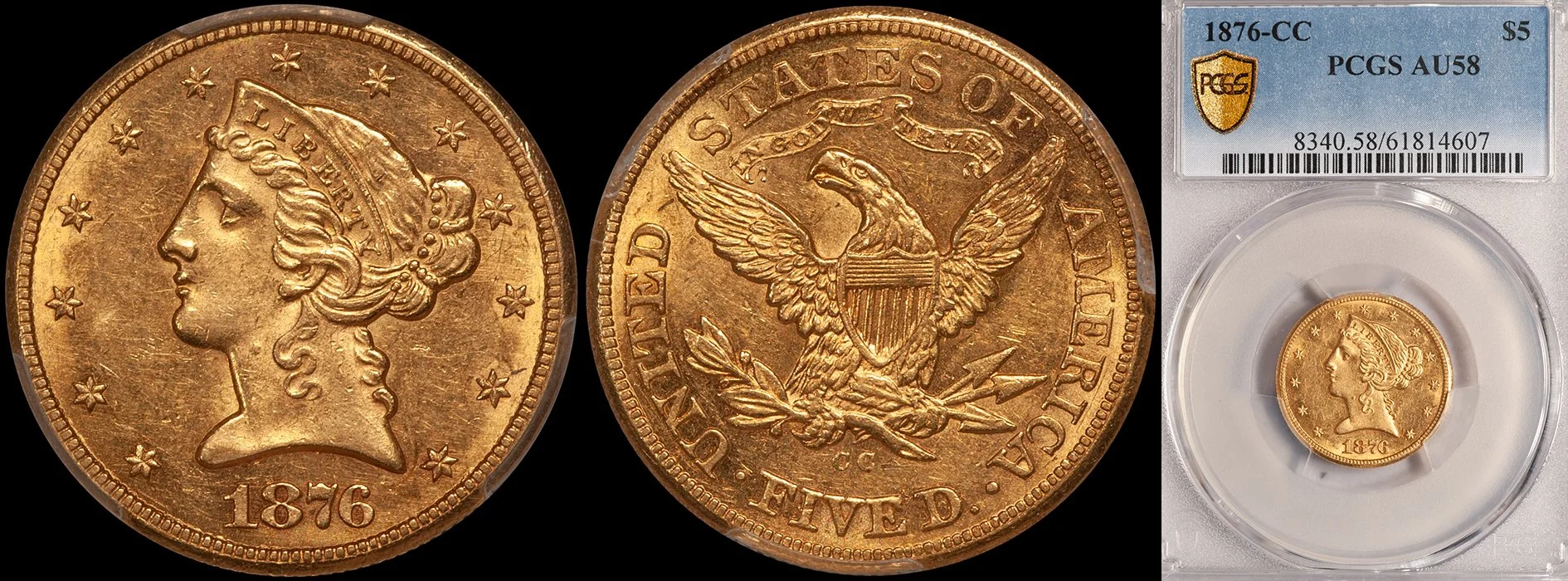
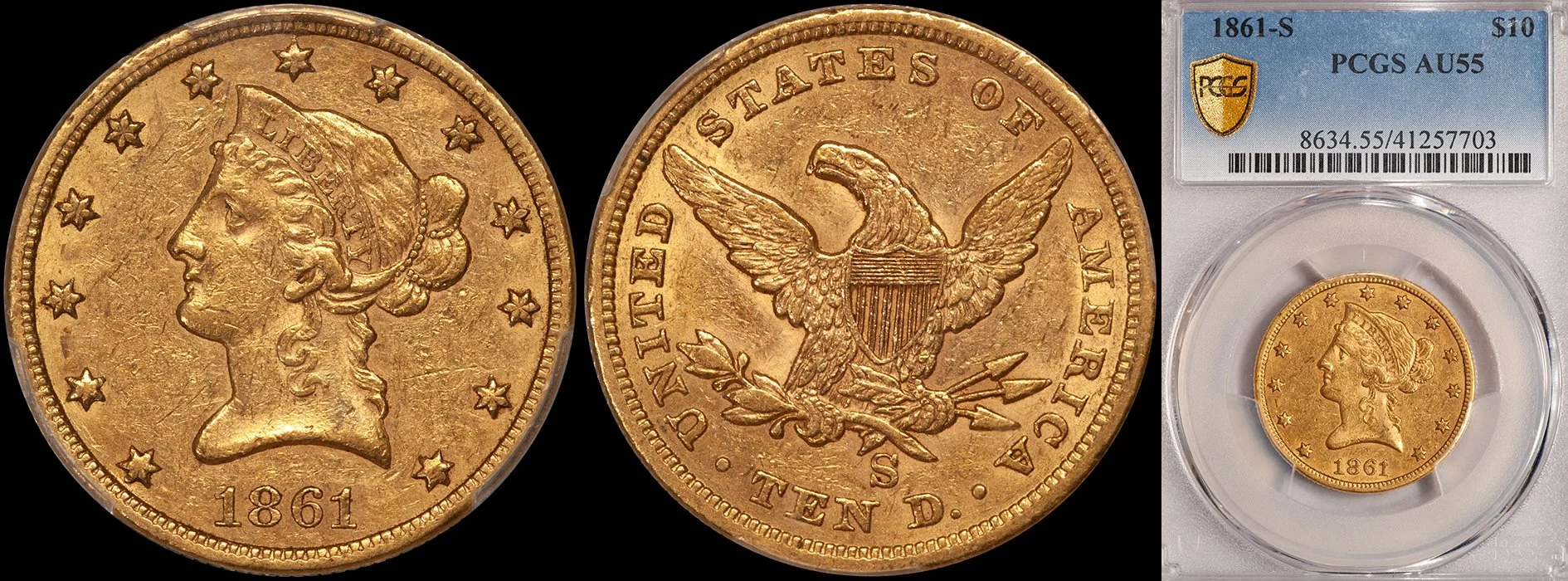
Deciding what to collect can often be a case of deciding what not to collect. This zen-like statement actually makes a lot of sense once you get over the initial "huh?" Let me explain.
Anyone with a more-than-casual interest in coins wants to be a force within the series he collects. By this, I mean he wants to be known as "the CC half eagle guy," or "the face of the Ten Indian market." So how do you get to be "the man" or, better yet, "the kingpin" of the area that you have chosen to specialize in? I think the answers aren't necessarily as intuitive as you might think they are.
1. Suss Out the Competition: Let's say that you've decided to collect Carson City eagles in very high grade. You research the market and determine that these coins are very rare and even though they are expensive they seem within your budget. You still need to find out who your competition is and how far along they are.
Let's say that your major competition in this series is a Texas billionaire with a virtually insatiable demand for the finest known. And he still needs many coins in the set. In this case, you have a problem unless you, yourself, are a billionaire and you are content with knowing that every coin you purchase is probably going to break a record for the date/series. This is discouraging.
But let's say that your major competition--said Texas billionaire--is virtually complete with this particular series and he has shown that he isn't likely to upgrade his Carson City eagles unless they are very, very special coins. In this case, you might not be as discouraged.
Or, you can be creative and look at it this way...
2. Be Adaptable: Just because the series you want to collect has a roadblock like a super-wealthy collector at the top end of the market, this doesn't have to stop you. Instead of buying the finest known Dahlonega half eagles or Charlotte gold dollars, what about a "gem slider" set of choice, original AU58 coins? Or what about putting together a set that features pedigreed coins? Or a set with nicely matched colors? Or a "sharp strike set" in which every coin represents as sharp a strike as possible for a specific issue? The options can be nearly limitless.
3. Timing is Everything: I'm not a huge fan of Gem Saint Gaudens double eagles as I don't think that they necessarily offer the same degree of value as much rarer 19th century gold issues do. But they are currently a comparably good value because of a unique set of circumstances. As recently as five years ago, there were a number of wealthy collectors in this arena and many of them needed the same six or seven rare coins in order to finish their set. When any of these coins came up for sale, it was going to be a Clash of the Titans and a bidding war was certain to erupt.
But just like magic, nearly all of these collectors went poof at the same time. Some lost interest, some completed their set, and some were hurt by the Financial Meltdown of 2008 and had to sell their coins. What this means, a few years later, is that there is now an excellent opportunity for a new collector to become a Kingpin of Saints.
Let me give you two examples. In the Saint series, the 1921 is recognized as one of the ultimate condition rarities. In November 2005, a beautiful PCGS MS66 example sold at auction for $1,092,500. The same coin sold for $747,500 in January 2012. In September 2007, a PCGS MS65 example of this same date sold at auction for $1,012,000. In August 2012, another PCGS MS65 sold for $587,500. Why did these coins--both were very rare and all were very nice--sell for such discounts? Because the top of the Saint Gaudens double eagle market lacked the multiple buyers that it had in 2005 and in 2007. But if you add two or three big players into the mix, I can just about guarantee you that the next nice quality PCGS MS65 or MS66 1921 double eagle that is offered will sell at levels close to--if not at--previous market highs. It has happened before and it is inevitable that it will happen again.
4. It's All About the Relationships. Unless you are willing to devote almost all of your free time to studying about coins and pursuing what you need, you are going to have to establish a relationship with a dealer (or two) who is a well-connected specialist within your intended field of Kingpin-dom.
Let me give you a pertinent example. I recently handled an extremely rare No Motto New Orleans half eagle. This is a coin that I could have sold to a number of collectors. But I chose to sell it to a collector who has nurtured a close relationship with me over the years. He's a terrific guy; sophisticated, well-read on the subject of New Orleans gold, and always ready to buy an important coin that will improve his collection. Because he has been such a pleasure to deal with over the years he was able to purchase a coin which gave him a complete set of New Orleans half eagles in Uncirculated; quite possibly the first such set ever completed.
There's something else about our relationship, though, that transcends coins. A few years ago, someone very close to me was sick and needed immediate care. I called this collector for a reference and within a few minutes I was able to make an appointment with a specialist who was very difficult to see due to his busy schedule. Like I said, it's all about relationships...
5. What's Old is New Again. If you want to be the Kingpin of your series or collecting area(s) you can focus on coins that are traditionally obscure and lack collector interest as a result. Or you can focus on coins that have traditionally been popular but for some reason are currently out of favor. (And, yes, this point is fairly closely related to point #3, above).
For many years, Charlotte gold was as popular as Dahlonega gold and it was certainly far more popular than New Orleans. But Charlotte gold has become the least popular of the three southern branch mints. Lower prices and availability of some great coins in the past five to ten years have meant that at least one or two collectors could have put together fantastic, world-class set; and at comparably reasonable prices as well.
My point here is this: just like with the Gem rare date Saints that I discussed above, Charlotte gold is a proven area of the market with a good reference book and a long collecting history. Values peaked for these coins around 1999-2000 and, in some cases, Condition Census coins are selling for less than they were nearly a decade and a half ago. These seem to be a surer bet than something like high grade With Motto San Francisco eagles from the 1880's and 1890's that have never really been popular and possibly never will be.
What are some areas of the numismatic market in which it is still possible to be a kingpin? A few of my suggestions are as follows:
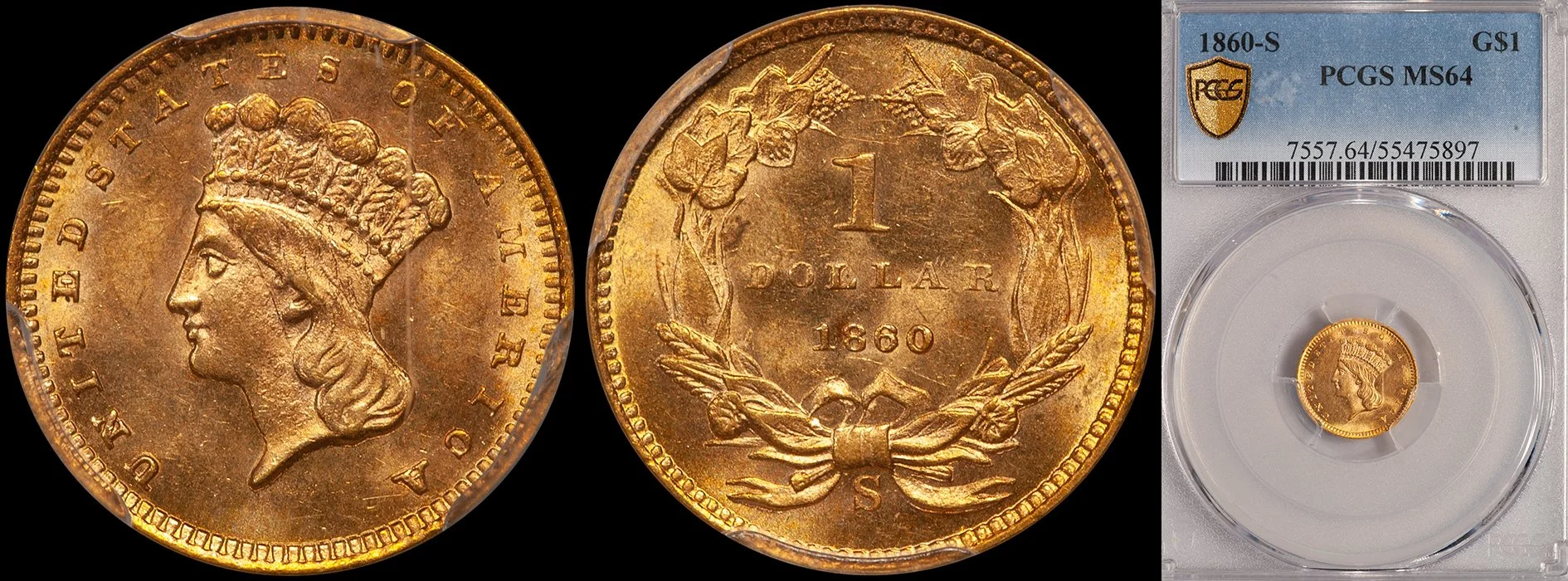
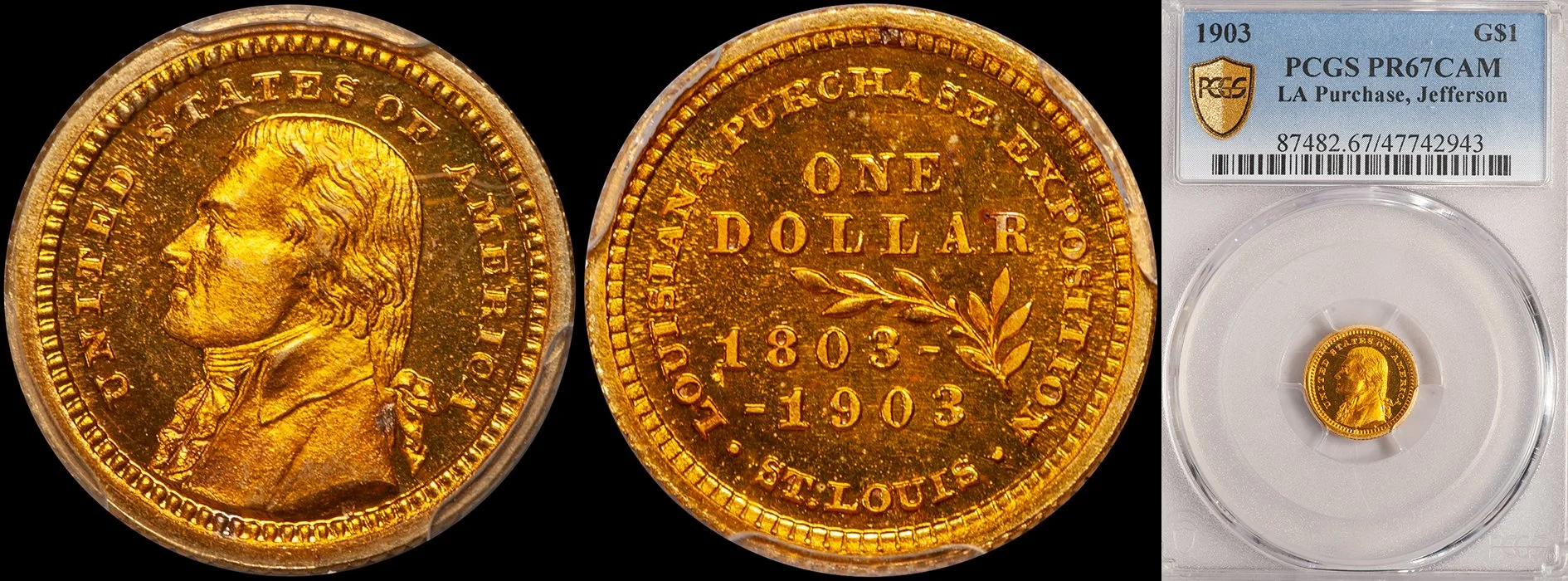
1. Gold Dollars: There are two or three collectors competing for finest known coins at the very top end of the market but this series offers a lot of opportunity for the kingpin-in-training.
2. Better Date San Francisco Gold Coins, 1854-1878: There are pockets of strength in this market but there is no one collector who I'd consider The Man when it comes to very high end SF gold.
3. Type Two Liberty Head Double Eagles: This is an area of the market that remains pretty calm after being in the spotlight for much of the 1990's and early 2000's. When really special coins become available (which is not all that often) they seem to bring considerably less than I think the are ultimately worth.
4. Indian Head Half Eagles: This is a series that tends to have periodic flares in popularity but then it grows dim for years. There is currently some rumbling in the higher end but The King of Five Indians seems to still be waiting to claim his crown.
Do you need help to become a Coin Kingpin? If so, please contact Doug Winter by email at dwn@ont.com.