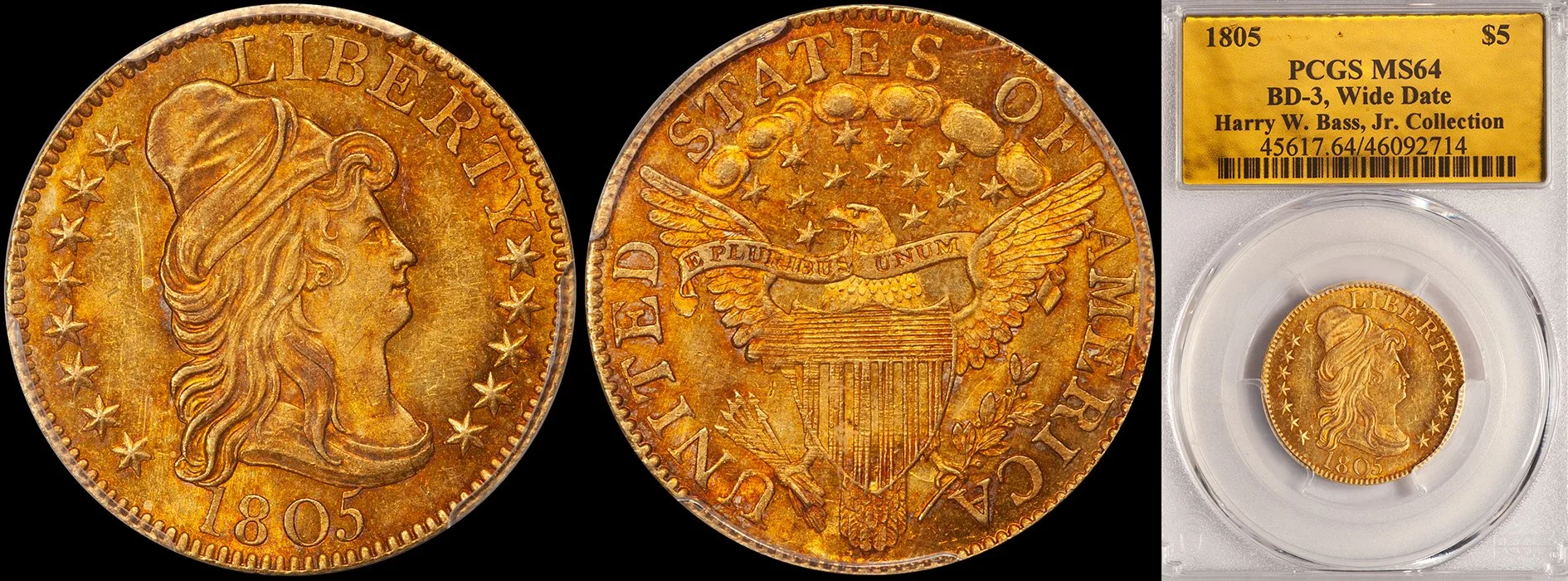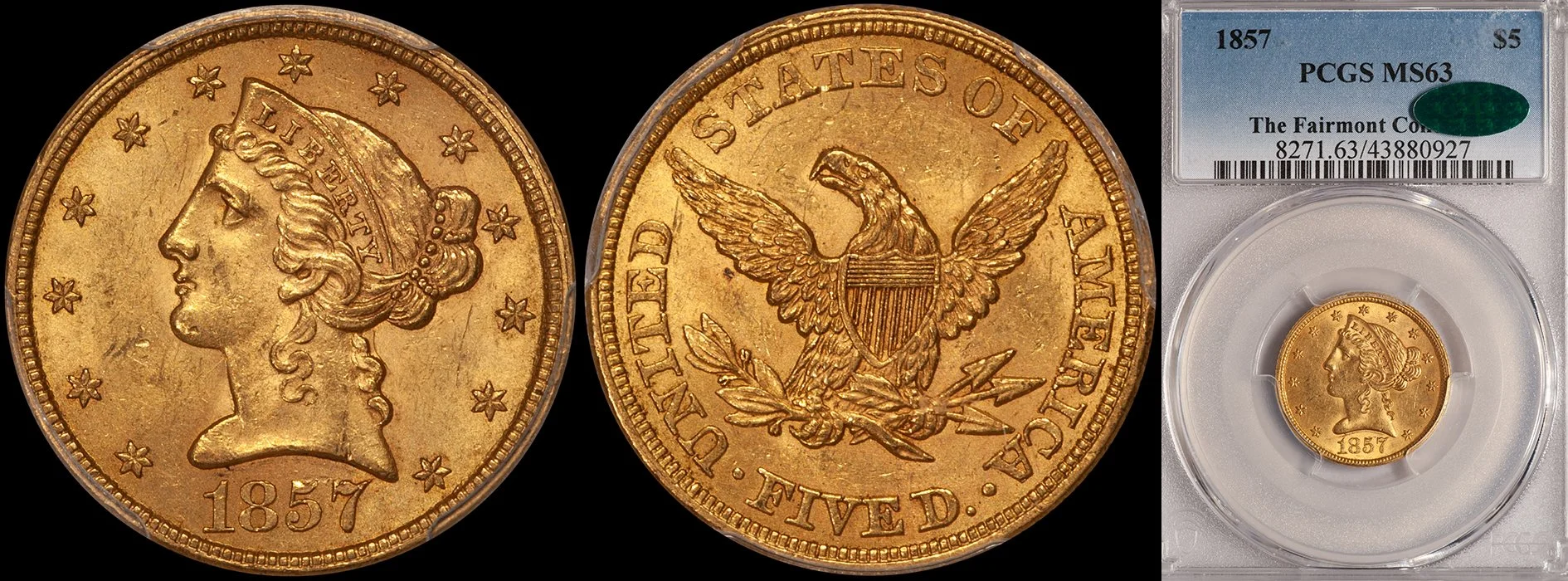
1853-D $5.00 NGC MS63

Large D. Winter Variety 29-V. 1853-D half eagles are generally seen with two "looks." On most coins, the strike is soft and the rims are beveled. On a smaller number, the strike is sharp and the rims are fully formed. The present example is clearly one of the sharpest 1853-D half eagles that I have seen and it is as sharp as you would expect a Philadelphia half eagle of this era to be. The coin is very frosty with nice medium yellow-gold and orange color. There are a few small marks near the bridge of Liberty's nose; what appears to be a scratch from star two to star four on the left side of the obverse is mint-made. This is among the three or four most common dates in the Dahlonega half eagle series but it is rare in Uncirculated and very rare in MS63. There have been six auction records since 2000 in this grade but at least three are for the same coin. The last record of note is Superior 8/07: 953 (at $15,525) which was graded MS63 by PCGS. A word or two on value: in the recent Stack's Bowers November auction, an 1854-D half eagle in MS64+ (admittedly a nicer coin than this 1853-D but a comparable date) sold for a strong $49,450 while a pair of 1852-C half eagles (which are similar in rarity to the 1853-D) graded MS63 and MS63+ by PCGS both brought between $18,000 and $19,000. After years of neglect, the market for very high grade C+D half eagles is finally turning around and collectors are beginning to recognize the great values that these coins represent.
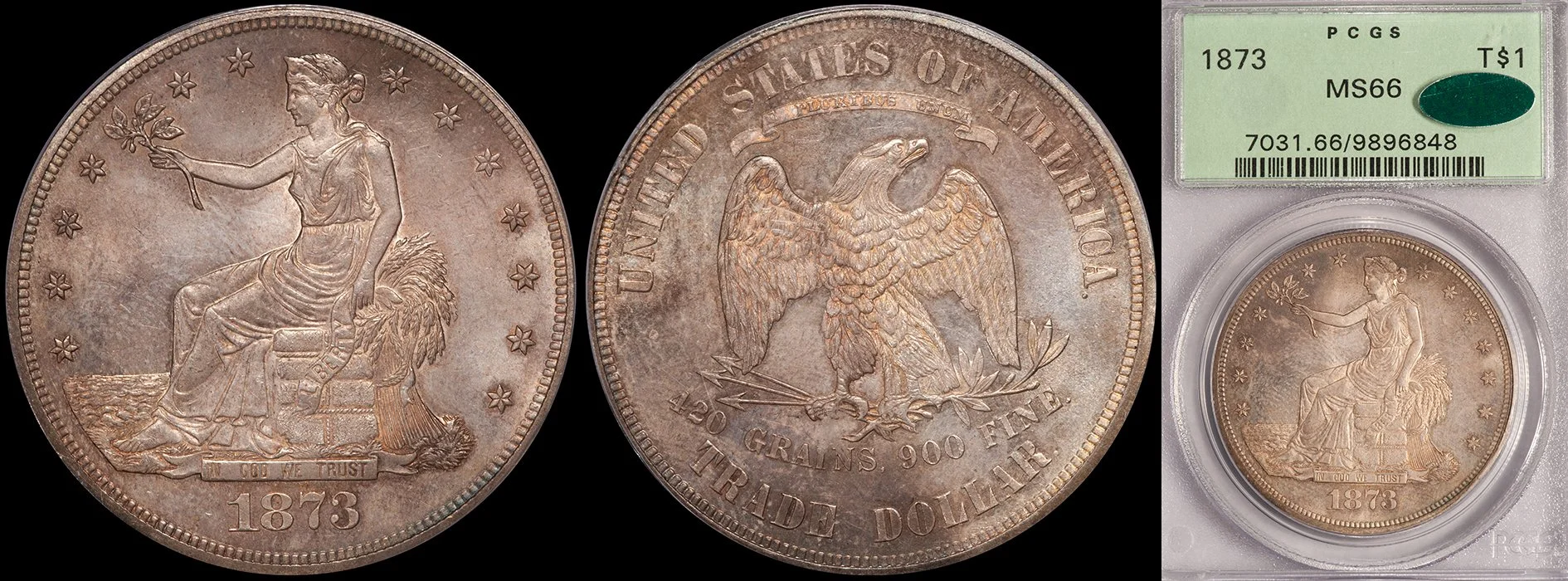
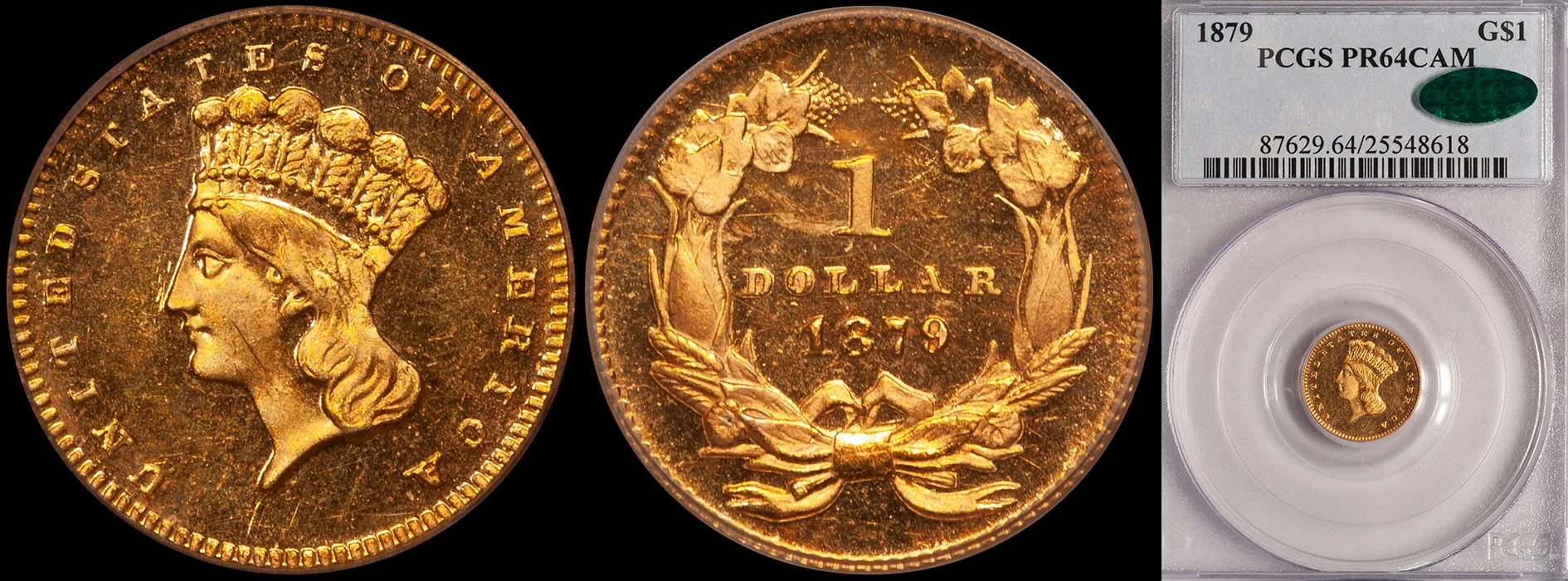
1892-O $10.00 NGC MS62

Clean for the date and grade with fewer abrasions in the fields than usual. The luster is frosty and the color is a nice blend of orange-gold at the centers and green-golod at the borders. Trends on this issue in MS62 recently shot up to $4,250 which makes no sense to me. The 1892-O eagle is almost impossible to find in grades above MS62.

1850-O $2.50 PCGS MS61 CAC

Very fresh and lustrous with nice natural light yellow-gold color that deepens slightly at the borders. This is a late die state with evidence of die sinking as well as some heavy clashmarks that are not often seen on this date. This has given the coin a lack of detail at the centers but the body and appearance is suggestive of a higher grade. What appears to be a circular scratch below STATES on the reverse is a clashmark. The 1850-O remains a rare coin in properly graded Uncirculated, despite evidence of the contrary from third-party grading populations. I believe that under fifteen are known with almost all in the MS60 to MS62 range. In fact, I have only handled one example of this date in MS63 and none better. This coin seems like very good value to me at its current price level.

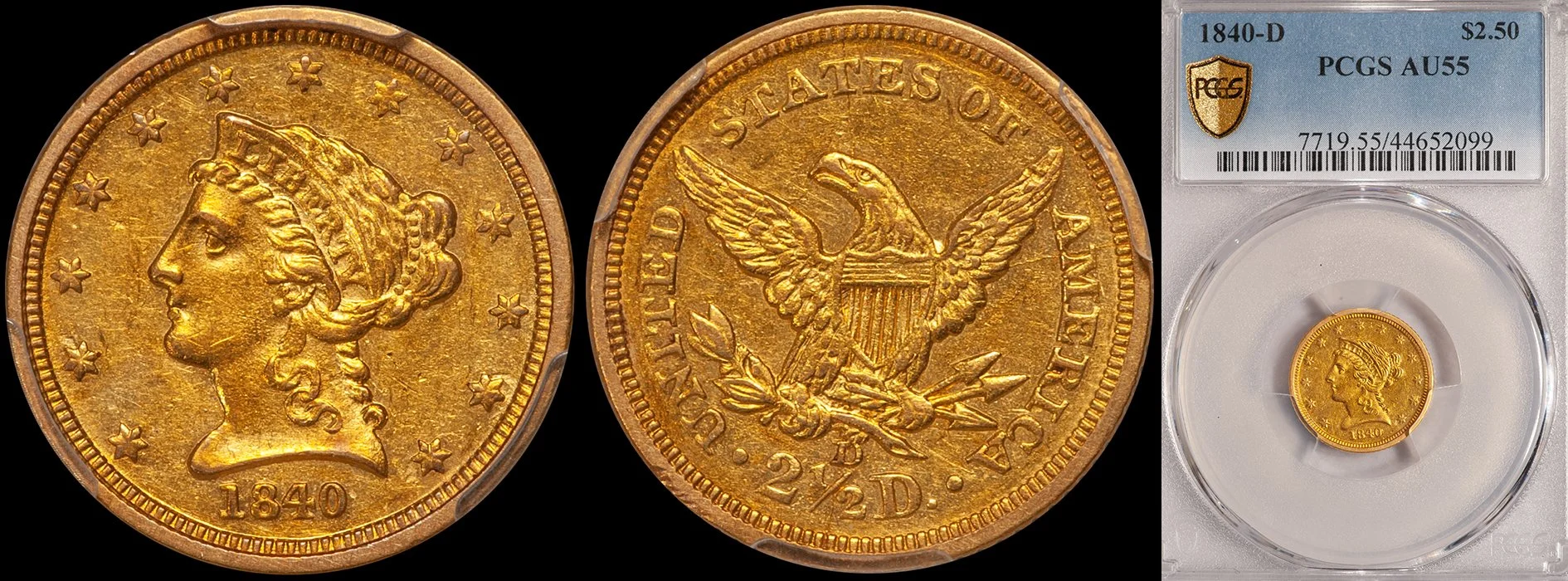
1847-D $2.50 PCGS AU53

This well struck example shows nice light green-gold clolor and has plenty of dirt encrusted in the protected areas of the obverse and reverse. The eye appeal is excellent for the date and grade and to the naked eye, this coin has the appearance of an AU55 to AU58. The 1847-D is among the more common quarter eagles from this mint, making it an ideal choice for the type collector seeking a single example.

1869 $20.00 PCGS AU58

The 1868-1871 Philadelphia double eagles have some similarities in rarity as all are tough issues in AU grades and very scarce to rare in Uncirculated. The 1869 is probably the most available of these four dates in AU58 but this choice "slider" has the sort of eye appeal that is almost never found on this date. There is a slight amount of rub on the obverse while the reverse is choice and it grades at least MS61 to MS62 on its own. The color is a pleasing orange-gold hue with some rose shadings while there are almost none of the deep marks often seen on this issue. Trends jumps to $9,000 in MS60 and it is hard to find an attractive, legitimately "new" 1869 for less than $10,000-12,500.

1883-O $10.00 NGC AU53

For years, I literally begged clients of mine who collected New Orleans gold to buy an 1883-O eagle. Here was a coin, I would say, that had everything going for it: a mintage of just 800 coins, a total population of around three dozen in all grades and a status as not only the rarest eagle from this mint but a coin that rivaled the 1854-O and 1856-O double eagles as the rarest gold coins of any denomination from New Orleans. For once, I was right and prices for this date has really exploded in the last two or three years. That said, I still think the 1883-O eagle is a good value and the supply of this issue is in no way able to keep up with the fervent demand. This remarkable coin was just discovered in Europe and it has lovely "Euro" color with deep green-gold and orange hues on the obverse and reverse. I have handled virtually every 1883-O eagle that has come onto the market in the last decade and I can only remember two others that were fully original like this. Even more incredible about this coin is its very clean surfaces. Most 1883-O eagles are excessively abraded and they tend to have the marks accentuated by their reflective, semi-PL fields. This coin has a few old ticks visible below the color but absolutely none of these deserve to be mentioned individually. The overall level of eye appeal for the date is really off-the-charts and this is the best example of this date I have seen in at least two years. Amongst recent offerings, the best comparable was Stacks Bowers 2011 ANA: 6741. Graded AU53 by NGC, it sold for $67,333. The Heritage 2011 FUN: 5209 coin, graded AU55 by NGC, brought $63,250 and it was both unattractive and recolored. This is one of the most important New Orleans eagles that I have offered all year.

1839 $5.00 NGC AU55

The 1839 is a one-year type that is finally gaining the recognition it deserves. Interestingly, I saw not one but two (!) PCGS MS63 CAC examples of this date at the recent Baltimore show, both priced in the $30,000's. Yes, it would be great to own one or both of these but not every collector has a spare 30K lying around. For those of you that do not, how about a nice, choice example at under $2,000?

1858-S $20.00 PCGS AU58 CAC

This is exactly the sort of coin I am describing when I write about "super sliders" and I have a special fondness for Type One Liberty Head double eagles with this sort of visual appeal. This coin really has no wear of any consequence on its surfaces but there is just a hair too much friction to call it an MS61. That said, it is lovely with nearly full luster, razor sharp detail and surfaces that are almost totally free of the severe abrasions which are almost always seen on this date. The 1858-S double eagle is quite scarce in properly graded AU58 and it is very rare in Uncirculated. If you could find one, a PCGS MS61 example of this date will cost in excess of $12,500 (probably more with a CAC sticker) and I seriously doubt you would see enough difference between this high-end slider and an MS61 to merit the doubling in price. CAC has approved only three examples of this date in AU58 and just a single example better than this.

1810 Large Date, Large 5 $5.00 PCGS AU58 CAC

BD-4. R-2. Well struck in green-gold with pronounced clashmarks on the obverse and some roughness in the die as struck. This piece is as original an example as one could hope for with deep, even green-gold color on the obverse and the reverse. There are a few light vertical and horizontal adjustment marks on the obverse that are very hard to see without magnifcation and I feel that they are not detracting. This piece probably never entered circualtion but it does show some very light rub on the high spots meriting the assigned grade. The 1810 Large Date, Large 5 is the most available of the four major varieties of half eagle produced during this year. Since it gets no date premium for its rarity, it is an ideal coin to use for type purposes. This coin isn't priced at a level much higher than a schlocky, processed Capped Bust Left half eagle in AU58 and, as such, it represents a very good value for the connoiseur.