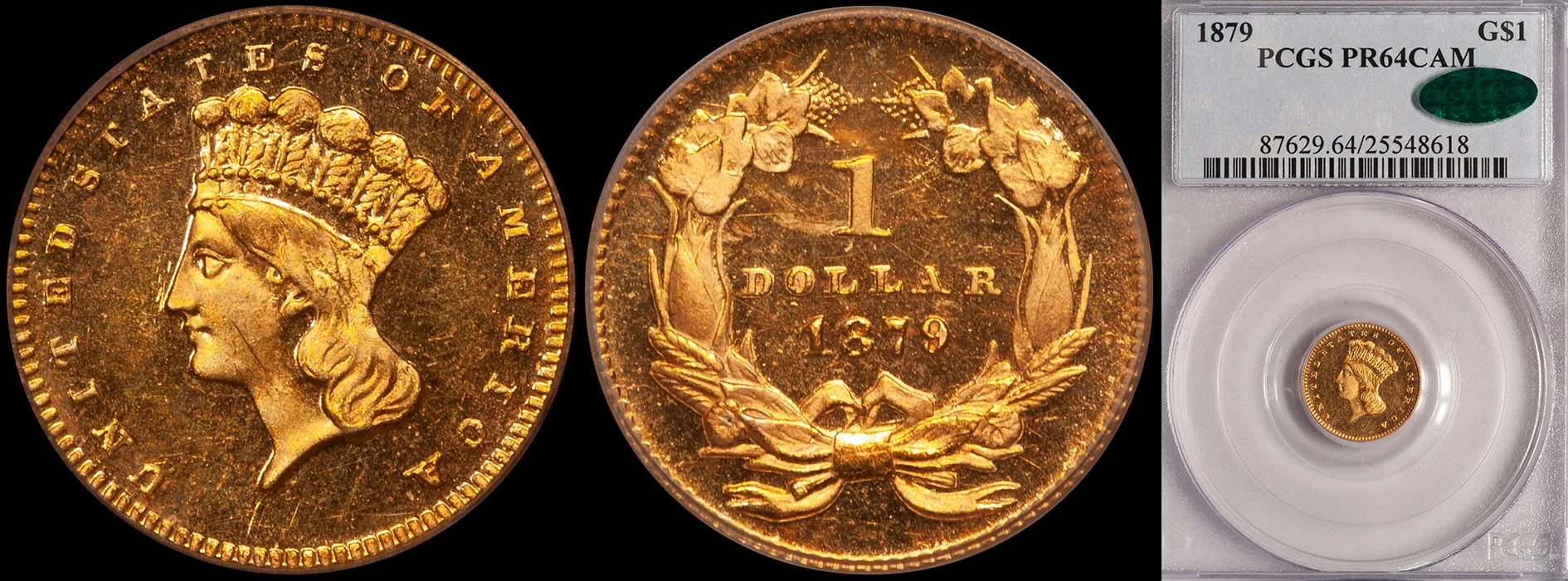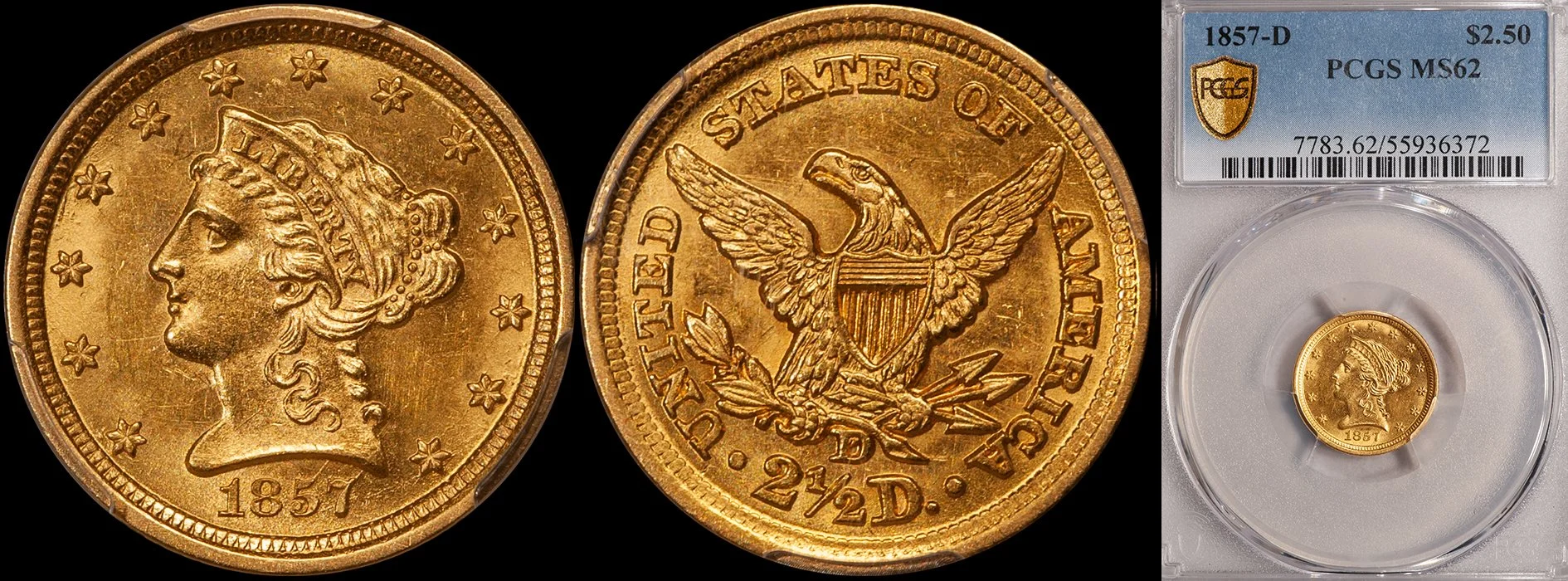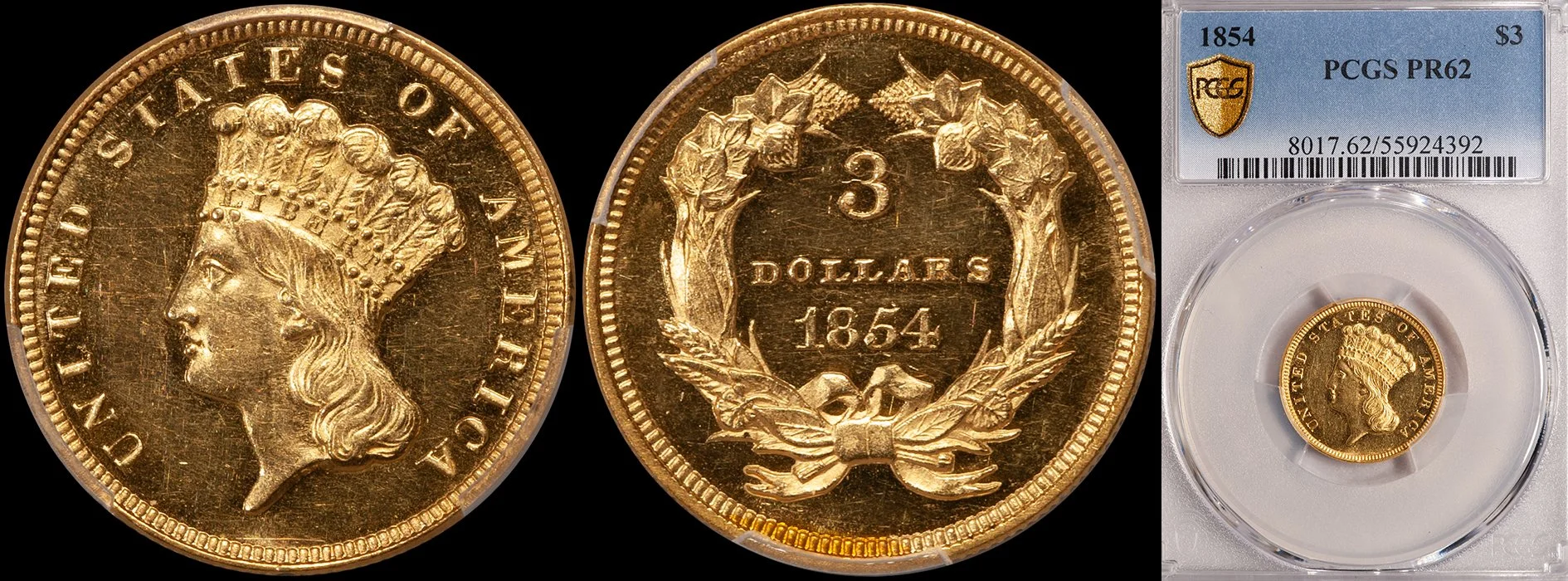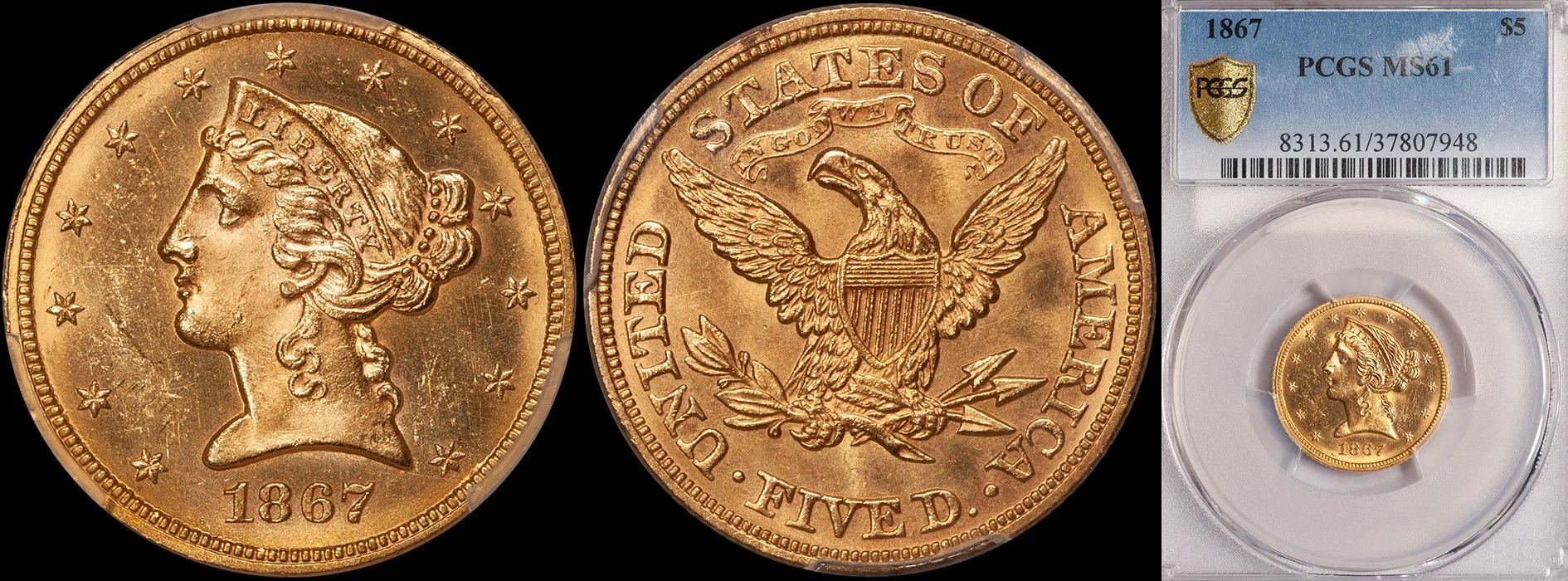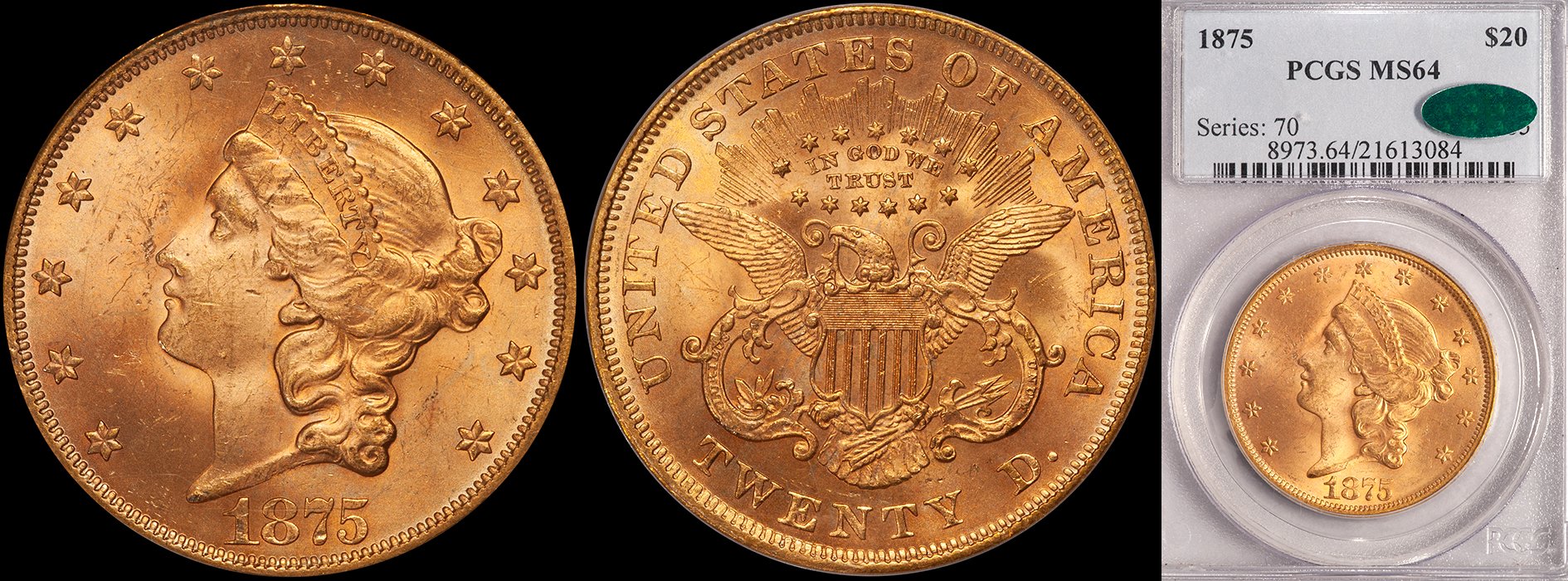
Eye Appeal in the Age of the Internet

I've recently read articles on other websites about how the coin market has changed in the last few decades. Surprisingly, few of these articles mentioned the internet; the single biggest game-changer of the past decade, certainly, and along with third-party grading probably the most important development with numismatic applications since the 1950's. There are a few really important ways that the internet has changed the market. Harnessing the power of the web was what catapulted Heritage to the position of unrivaled leadership it now holds. But in addition to being a vehicle to sell and market coins, the internet has changed the way that I personally look at each and every coin that I buy.

As recently as a few years ago, I just bought and sold coins. When I purchased a coin I bought it for a number of reasons: its rarity, its level of value, its beauty, its historic significance, etc. Now, there is another point I must take into consideration: will it image well and look good on my website? In the internet age, a coin that is not photogenic is a coin that won't sell.

Before I go further, let me explain what I mean. A few years back, I sold coins two ways: in person at coin shows and via the mail through printed catalogs (something I stopped doing in the late 1990's, in case you're interested). The coins that I sold through the mail were purchased mostly because I liked them; not necessarily how I thought someone else would. Today, this has changed totally.

Most coins that are sold in 2011 are sold over the internet. I've never met many of my best customers. A number of these collectors have never gone to a show nor do they have any interest in going. They have learned to make their buying decisions based on what coins look like in images.

What this means is that many gold coins that I might have purchased in the past I won't purchase today because of factors that make them non-photogenic. Some examples would include an early gold coin that is nice except for adjustment marks on the central obverse or a coin that is totally original but very dark and unappealing as a result.

The decisions that I make and the decisions that many collectors now make as well are based on the combination of factors that we call "eye appeal" in numismatics.

As I've explained in other blogs, eye appeal is phrase that refers to how the overall appearance of a coin is to the naked eye. Eye appeal is a component of factors that include but are not limited to: strike, luster, color and surface preservation. Let's take a look at how each of these individual components has been affected by the internet and the rise of coin buying via computer images.

When it comes to gold coins, I think strike is the least important factor of the four that I mentioned above. I will certainly always buy an average quality strike of any gold coin and even a slightly below average struck example of a rarer issue that is otherwise market acceptable. But while I might have bought a weakly struck, high grade New Orleans quarter eagle a few years ago, it is probable that I wouldn't today because it won't image well. There are exceptions to this rule, of course. For an issue that always comes weakly struck, I would buy a flat example. And for an exceedingly rare coin, strike remains relatively unimportant.

Luster has grown dramatically in importance with the advent of the internet. A coin that is dull and lackluster does not image well and is hard to sell as a result. A coin that has booming luster images (usually) images well and, as a result, it is easier to sell. In the early days of internet imaging, it was hard to capture luster. As the equipment and the imagers both improve, capturing luster is no longer so difficult.

Breaking this down even further, the type of luster a coin shows has an impact on how it will sell in the age of the internet. Coins with thick, billowy mint frost look great in images while coins with hard, grainy satiny luster typically do not. Semi-prooflike coins are very hard to image while deeply prooflike coins can image well provided that lighting conditions are ideal. I think the difficulty in imaging their "finish" is one of the reasons why Matte Proof gold has fallen out of favor with collectors while bright, two-tone Deep Cameo/Ultra Cameo coins sell for a strong premium.

Color has gained in importance as well. In the pre-internet days, you could write in a description that a coin had "great color" but that was basically a subjective statement. Color is, of course, the most visual of the four eye appeal components and unless a collector is color-blind (don't laugh; I know of a number of major collectors who are either color-blind or incapable of seeing subtle color gradations) he will probably be greatly affected by seeing a gold coin with beautiful color.

In the past, I might have ignored a coin like an AU58 1843 half eagle in Uncirculated with great color. Today, I would be far more interested in having a coin like this in my inventory because my guess is that it would image well and sell quickly as a result.

The preservation of a coin's surface is probably the most subjective of the four components of eye appeal. There is no set formula that states how many marks are "allowable' on an MS65 or how much more significant a mark is on the obverse than on the reverse.

As a coin buyer, I have become far more sensitive to marks in the internet era. If an otherwise nice coin has a major mark on the cheek of Liberty, I'm inclined not to buy it because it will not look good in an image. The same holds true for a coin that has clusters of deep marks in the fields.

How does the internet impact you as a collector? I mentioned that most collectors are buying many--if not all--of their coins based on images that see on websites like www.raregoldcoins.com. When you go to sell your coins, the same considerations that I mentioned will apply to you as well.

Let's say that you decide to put your coins in an auction. If the quality of the images are not good, that isn't going to help your bottom line one bit. But even if the images are great, if your coins are not photogenic, you are likely to lose the on-line bidders that now represent the lion's share of coin auctions. And this is only going to increase down the road.

We are already seeing a market that is growing increasingly bifurcated between pretty coins and ugly coins. Why is one AU58 Charlotte half eagle worth $6,000 while another similarly graded example of the same date worth $4,000? Because one is a nice coin and the other isn't; that's obvious. But what's not so obvious is that the concept of "nice" has changed. The nice AU58 might not necessarily be the dark, crusty one in the future; it could be the more photogenic coin with booming luster or the coin with subtle color that just happens to image well.

Some Interesting Results From the Recent Heritage Spring ANA Auction

The recently concluded Heritage sale was not really a stellar offering from this firm. Falling after the outstanding array of coins sold at the 2011 FUN auction and occurring before what is likely to be a solid group at the Central States sale in late April/early May, the Sacramento auction did, however, contain a few really interesting coins. While I don't pretend to make comprehensive market assessments based on four pieces, I'd like to focus on these and present some thoughts. The first coin of interest was an 1850-D quarter eagle graded MS62 by PCGS. Sold as lot 4637, this piece brought $27,600 which is a record-setting price for this date. This exact coin was last offered as lot 1113 in the ANR 9/05 sale where it brought $21,850.

While I personally liked this coin quite a bit, its appearance was a bit on the "too crusty" side. Its color was real in my opinion but it was a tad splotchy and I could see some knowledgeable specialists thinking it might not have been attractive. The coin didn't have a CAC sticker and I have to assume that given the fact that Heritage sends many of the high end coins in their sales to CAC for approval that it flunked its test in Far Hills.

What I find interesting about this price realized is that the coin is not necessarily the finest known (there is a PCGS population of three in this grade but I think there are just two specimens graded as such) and it is in a series (Liberty Head quarter eagles) that isn't exactly "hot" right now.

My pre-sale estimate for the coin was in the $17,500-20,000 range. I was assuming it would bring around the middle of this range and that it would be resold at around the figure it sold for in 2005.

The next coin was an 1879 quarter eagle graded MS66+ by PCGS. This was an exceptional coin; probably the best of this date that I have seen. But the 1879 is a pretty common issue in MS63 and MS64 and not even that big a deal in MS65. In other words, this was a semi-common date in a (very) uncommon state of preservation.

As I researched the valuation of this coin, I thought about a few things. The population for this date in PCGS MS66 is just four and, as far as I can tell, this example was the only piece to have received a "plus" designation for PCGS. A "normal" MS66 1879 seemed like it was a $5,000-7,000 coin so I guessed that this one might sell for as much as $8,000-9,000.

Wrong, Mr. Rare Date Gold "Expert!" The coin brought a stunning $17,250 which I find to be a pretty perplexing number. The previous auction record for this date was set back in January 1990 when an MS65 (probably now a 66 or even a 66+ by today's standards) sold for $6,875 in a Superior auction. In the Heritage 9/03 sale, a PCGS MS66 (without a plus designation but a pretty nice coin from my recollection) sold for just $4,600.

I have to assume that either two people saw this coin as a "lock" to upgrade to MS67 (and I'm not sure that as a population 1/none better coin in MS67 that its worth much more than what it sold for in the current 66+ holder) or two serious collectors got involved in a titanic ego battle.

The third coin is one that I doubt if more than a small handful of people thought was special. The coin in question was an 1844 eagle graded AU53 by PCGS. It was offered as lot 4805 and it sold for $8,625.

Compared to the last two coins I discussed, the price of this coin wasn't shocking. I was the under-bidder and I kind of regret not going a bit higher in an attempt to purchase this coin.

The Heritage cataloger didn't realize that this coin was from the Bass collection (ex Bass III: 588 where it brought $5,290). The PCGS holder didn't note this either but the coin was obviously ex Bass and it was unchanged since its last appearance in 2000.

The 1844 eagle is an under-appreciated rarity. Only 40 or so are known from an original mintage of 6,361. I doubt if more than six or seven real AU coins are known and the Heritage coin was unusual from the standpoint that it hadn't been cleaned or processed as most 1844 eagles are. It wasn't a really attractive coin (it had numerous deep abrasions on the obverse and reverse) but this date never comes nice and I though it was actually pretty solid for the grade.

One quick, interesting side note. Heritage 1/11: 7017 was graded AU58 by NGC and it was really, really ugly. It went cheaply at $7,475. The coin in the Heritage March sale was graded five points lower (even though it was nicer) yet it sold for nearly 20% more. This was clearly a case of someone buying a "real" AU53 coin versus someone buying a coin that wasn't an "AU58" despite what the holder said.

The fourth and final coin was an 1862-S double eagle graded MS63 by NGC. This piece had been approved by CAC and it was extremely attractive for both the date and grade.

The Heritage catalog hinted at the fact that this coin may have had a shipwreck provenance. I'm almost certain it was one of the best coins from the S.S. Brother Jonathan that had, after its original sale in a PCGS holder, been broken out, sent to NGC and upgraded. The coin had luster that, for lack of a better term, just seemed a little too "shipwrecky" to have not been from this source. Instead of being frosty like the typical high grade 1862-S double eagle, this one was a bit satiny with a semi-grainy texture and pronounced rose-gold color.

The coin sold for $57,500. The previous auction record for this date was $29,555 which was set by another NGC MS63 that was sold by Bowers and Merena in their May 2004 auction.

I was surprised but not shocked by the price that this coin brought. It is tied with one coin at PCGS and two at NGC as the highest graded and I have only seen one other MS63 (the coin that sold in the May 2004 sale that I referenced above). It was beautiful, its a condition rarity and its a Type One double eagle. With these three factors in play you had to assume it was going to smash the previous auction record to smithereens.

One final note. Heritage's market penetration as a result of their internet presence never ceases to amaze me. Even at a small, "minor" sale like the Spring ANA, no great coins fall through the cracks as they did even as recently as a few years ago. Heritage could sell a high quality U.S. gold coin at the Tripoli Airport coin show in May and still get a strong price.

How Many High Grade Dahlonega Gold Dollars Exist?

As the research I am doing for the third edition of my book "Gold Coins of the Dahlonega Mint, 1838-1861" comes together, I am learning some interesting things about the availability of each issue, especially in higher grades. I thought it might be interesting to share some of what I've learned about high grade gold dollars from this mint. It appears that Dahlonega gold dollars circulated less than their quarter eagle and half eagle counterparts. as a result, they tend to be found in higher grades. As example, if an issue has a surviving population in the area of 150-200 pieces, it is not uncommon for at least half of these to have been graded About Uncirculated and Uncirculated by the two major services. Even though I believe that these figures are inflated by resubmissions and also include a number of over-graded coins, it is clear that Dahlonega gold dollars have a greater percentage of availability than Dahlonega quarter eagles and half eagles. Let's take a look at each issue.

1849-D: My current estimate is that at least 600-700 (and possibly more) examples of this common, popular date are known. Of these, around 40-60 exist in Uncirculated. This is easily the most common Dahlonega gold dollars in high grades. It is relatively easy to find in MS60 to MS62 but it is rare in MS63 and extremely rare in MS64. Enough exist to satisfy date and type collectors alike.

1850-D: This date is one of the rarer Type One Dahlonega dollars in high grades. There are an estimated 100-150 known in all grades with just six to eight in Uncirculated. I have never seen one better than MS63 and just a few that I would unquestionably consider to be Mint State. The rarity of this date in high grades has changed little in the last decade.

1851-D: The 1851-D is the second most common dollar from this mint. There are at least 300-400 known in all grades including as many as fifteen to twenty in Uncirculated. The 1851-D is clearly a far scarcer date than the 1849-D in high grades but it is actually seen as much (if not more) in very high grades; i.e MS63 and above.

1852-D: The 1852-D is a bit more available than the 1850-D, both in terms of overall and high grade rarity. There are around 125-175 known of which seven to ten exist in Uncirculated. as with the 1850-D, the few Uncirculated 1852-D dollars known tend to be at the lower end of the grade range and are seen in MS61 and MS62 grades. I know of two that grade MS63 and none finer.

1853-D: The number of 1853-D dollars known in all grades has risen to at least 150-200 while the number of Uncirculated examples now numbers around seven to ten. This date tends to come in higher grades than the 1850-D and 1852-D and there are at least three superb Gem examples known, making it the most available Type One dollar from this mint in MS65 and higher. It is likely that the number of high grade pieces will increase over the next few years.

1854-D: The final Type One dollar from this mint is also the rarest from an overall standpoint. There are 100-125 known with seven to ten in Uncirculated. Nearly all of the Uncirculated coins are similar in quality and appearance: a bit lackluster, flatly struck and no better than MS61 to MS62.

1855-D: This is one of the two rarest Dahlonega gold dollars along with the 1861-D. There are an estimated 75-100 known and this number is quite a bit more than what I thought existed a decade or two ago. In Uncirculated, the 1855-D has gone from "impossible" to merely "extremely rare." There are four or five known including two in the MS63 to MS64 range.

1856-D: The 1856-D is actually very similar in rarity to the 1855-D but it is less highly valued since it is not a one-year type like its counterpart. There are around 75-100 known including six or seven in Uncirculated. All of the Uncirculated coins grade MS61 to MS62 but a few are clearly nicer than the others. The rarity of this date in high grades has changed very little since the publication of my second edition Dahlonega book back in 2003.

1857-D: The availability of this date has changed in the last decade but not so much so in higher grades. There are 150-200+ known in total but only seven to ten grade Uncirculated. The 1857-D remains unknown above MS62 and it is very rare at this level with just three to five known. I feel that high grade 1857-D dollars remain overlooked and undervalued.

1858-D: Both the 1858-D and 1859-D have become more available in higher grades over the years. There are 250-300 (if not more) known for this issue of which fifteen to twenty exist in Uncirculated. There are three superb Gems known and a case can be made for calling this date more available in higher grades than any other dollar from Dahlonega except for the 1853-D.

1859-D: As many as 300-350 pieces are known and this is the third most available dollar from Dahlonega, after the 1849-D and the 1851-D. I have personally seen at least a dozen pieces that I felt were Uncirculated and it is likely that fifteen to twenty-five exist. There are no Gems but a number in the MS62 to MS63 range.

1860-D: The 1860-D is one of the rarest Dahlonega gold dollars but it tends to be overlooked. There are as many as 100-125 known but most are in lower grades and even properly graded About Uncirculated pieces are rare. I believe that there are five or six in Uncirculated which makes this the second rarest issue (after the 1855-D) in Mint State.

1861-D: The grade distribution of the 1861-D is different than any other dollar from this mint. The 1861-D didn't see widespread circulation and the typical survivor tends to come in the AU50 to MS60 range. Of the 65-75 known, as many as ten to fifteen grade MS60 and finer and there are a relatively high percentage of coins that grade About Uncirculated. That said, this is still the most desirable and highest priced dollar from Dahlonega due to its great background story and historic connotations.

Unlike the other denominations from Dahlonega, the gold dollars are both short-lived and reasonably available in higher grades. The collector with a relatively modest budget and some patience should be able to assemble a nice set of About Uncirculated and Uncirculated pieces.

The Great Coin Drought

There’s an ebb and flow to the coin market cycle. When it is in perfect, Zen-like harmony, the market works well. When it’s disrupted, the market sputters as is the case of what we are seeing in the beginning of 2011. I call it the Great Coin Drought and it’s been happening for at least two years; maybe more. The coin market is based on a classic supply and demand relationship. When there is more demand than supply, prices rise. Simple, no? But what if there is strong demand but a backlog of supply due to reasons that aren’t that obvious?

(Before we get started, let me interject one quick point. There are zillions of coins for sale right now, ranging in value from a few dollars up to hundreds of thousands of dollars. If you aren’t selective, you can plow through a giant wad of cash in a matter of days. I’m referring to choice, rare and interesting coins; the sort that are reasonably hard to find in a “natural” market but which are incredibly challenging to locate in a constricted market like what we are seeing now.) People sell coins for a number of reasons. A collector might sell a coin because he has found a better example of a specific date and doesn’t want to have cash tied up in a duplicate. An investor sells for different reasons. In a nutshell, if prices rise he sells.

Let’s take a look at some of the things that are disrupting the flow of rare coins right now and why this so-called Coin Drought exists.

1. There are still too many low end, crappy coins in both NGC and PCGS holders on the market. Let’s face it, it’s really easy to sell nice coins right now. If I have, say, a beautiful piece of Proof gold or a fresh, crusty Dahlonega half eagle I can list it on my website on Monday and by Tuesday its almost a certainty that it’ll be gone; assuming that it is priced fairly. But the bottom feeders who you could count on in the past to buy the overgraded, puttied piece of Proof gold or the bright, processed marginally AU Dahlonega half eagle in the AU58 holder are no longer active. What happens with these crappy coins is that they either get stuck in a dealer’s inventory where they jam up cashflow or they are placed in an auction where they invariably sell cheaply and hurt the market.

In the rare date gold market, until more of this “swill” disappears from the market, the supply and demand ratio will remain broken.

2. As I have said a number of times before, the price reporting mechanism in the rare coin market is broken and needs to be fixed. How many times have you seen the Greysheet or Trends whack prices for a rare date or entire type because of one sale? Let me give you an example. Let’s say that a certain rare date San Francisco Liberty Head eagle has a Trends value of $6,000. Over the course of two years, three appear for sale and all bring in the range of $5,000-5,500. But then a real pig-in-a-holder appears at auction and it brings $3,500. Instead of looking at this coin on a case-by-case basis and interpreting the data, what tends to happen is that the price for this date gets chopped down to $4,000 to reflect this one trade. Suddenly the three people who purchased the nice AU’s of this date at auction are upside down and have no motivation to sell their coins.

If price reporting could become more accurate and reliable (and I realize that this is a monumental project) then the Coin Drought wouldn’t be as much of a problem as it currently is.

3. The economy is still shaky (although it is clearly better now than it was two years ago) and many collectors would just as soon own some nice quality extra coins than they would sell them. I often have this conversation with collectors:

Me: Would you be interested in selling that nice Carson City eagle that you bought from me in 2008? Collector: Well, I don’t really need the money, there’s no coins around right now that interest me and I can’t make anything if I sell it. Remind me again what my motivation is?

When collectors just don’t want to sell coins, this leads to a further drought. And can you blame them? Smart collectors are aware of the fact that nice coins are very hard to find and that by selling them, they may find themselves in the position of not being able to replace them. Couple this with the taxes they have to pay on profits and you can see why so many high end, neat coins are staying put.

4. Many dealers who were previously major players in the rare coin market are preoccupied with moderns and/or bullion. I can think of a number of dealers who are doing so well with moderns and generics that they are not participating in the rare coin market. This, too, interrupts the flow of coins.

5. Another point that I’ve made in the past bears repeating. The number of nice coins in any given 19th century series is fewer than most people realize due to rampant coin doctoring over the past few decades. There are a number of major submitters to PCGS and NGC who doctor virtually every coin that they own (be it a light dip, a small pinch of nose grease or a major “rebuild” with putty). For certain series, like C+D mint gold, I’m guessing that the percentage of original coins is now well less than 5-10% of the surviving population. This means that while there might be, say, three 1838-C quarter eagles on the market in AU50, none of these is choice or original and it is likely that they will choke the coin flow due to the difficulty in selling them.

It will be interesting to see how long the Coin Drought lasts. I’m thinking it will be for quite a while and may even become a semi-permanent condition. As I stated above, there aren’t that many nice coins around to begin with and as long as the demand stays constant or increases, collectors who are fussy and sophisticated will have their work cut out for them.

Is There an Upward Trend in the CC Half Eagle Market?

While I hate to make bold pronouncements based on a small number of auction results, it looks like an interesting trend may be occuring in the Carson City half eagle market. Within two months, three important CC half eagles have sold at auction and brought tremendous prices. Let's take a look at the three coins in question, analyze the results, and try to make some sense of this market. The first of these coins is a PCGS graded Mint State-62 1873-CC half eagle. This is a coin that I am very familiar with, having sold it twice via private treaty within the last five years. In fact, I sold it a few years ago to the collector who consigned it directly to the Heritage 2011 FUN sale, where it became Lot 5118 in the Platinum Night session.

This was a coin I always thought I was a little ahead of the curve on. When I sold it to a good client around five years ago, I told him, "this is going to be a six figure coin someday." But it seemed that "someday" was going to be quite far in the future.

Here's why I've always loved this coin. The 1873-CC is the rarest Carson City half eagle in higher grades. It doesn't have the cachet of the 1870-CC but it is rarer and, in Uncirculated, the 1870-CC, if available, would sell for a minimum of $125,000++. There are two 1873-CC half eagles known in Uncirculated: this example and an NGC MS62. The PCGS MS62 is not only nicer, it has a wonderful pedigree (ex Bass) and it is a solid coin for the grade with good luster and attractive, natural coloration. Unlike the 1870-CC, the 1873-CC is nearly unobtaianble in AU55 or AU58 grades, so if a collector wants to obtain a high quality piece he has very few options. I expected it to bring around $80,000 to $90,000 in the auction.

The 1873-CC sold for $161,000. This was an all-time auction record for this date (by a factor of around three) and it was significantly more than I expected.

Another interesting Carson City half eagle in the Heritage FUN sale was an 1878-CC graded AU58 by PCGS.

This is a very rare date and an issue that is extremely hard to locate in About Uncirculated and Uncirculated grades. I have never seen or heard of a Mint State piece so, for all intents and purposes, an AU58 is as nice an example of this date as you are likely to find.

The 1878-CC sold by Heritage was offered at Lot 5120. To be honest, I wasn't crazy about the coin. While sharply struck, it had color that I felt was questionable and it appeared to have been recently processed. But it was one of just five so graded by PCGS with none better.

It sold for $63,250. This is the exact same price that Heritage 5/08: 4235, the previous record holder for the date, brought a few years ago. The difference between the two coins is that, in my opinion, the piece that sold in 2008 was considerably nicer. The 2011 FUN sale price was extremely strong given the quality of the coin.

The third interesting Carson City half eagle to sell at a Heritage auction was an 1879-CC in a PCGS MS62 holder. This coin was not entirely fresh as it had been placed in a Heritage sale back in October 2010 where it failed to meet its reserve. It was reconsigned by the owner into the February 2011 auction and this time it brought $69,000; by far a record price for this date and considerably more than it would have brought in its earlier appearance had it hit the reserve.

This coin was different than the 1873-CC and 1878-CC. Unlike these other two dates, the 1879-CC half eagle is common in most circulated grades and it can even be found, with just a bit of effort, in nice AU55 to AU58. In Mint State, the 1879-CC has around six to eight survivors but nearly all grade MS60 to MS61. The MS62 in the Heritage sale was the best that I'd ever seen and I'm reasonably certain it was the finest known.

So, three different coins and three strong auction results. What can we deduce from these sales? I think the first thing we can determine is that there are at least two new individuals putting together sets of Carson City half eagles. I'm not certain if they are doing other CC gold coins or Liberty head half eagles from other mints, but they are clearly gaga for CC's. The second thing is that these collectors want coins that are the highest graded. And if they are "pop 1/0" coins, that's even better. The third thing is that they want the coins to be in PCGS holders. I'm not sure if the 1873-CC half eagle mentioned above would have brought anywhere near $161,000 if it had been the exact same coin but in an NGC holder. The fourth and final thing is that these buyers seem to like to purchase their coins at auction. But something tells me that if the right item came up for sale, and it were on a dealer's website, it would find its way into one of these collections.

One thing I've learned from nearly three decades of specializing in branch mint coins: the high end of these markets is very thinly traded and when just one or two new "mega collectors" start a collection of, say, finest known Carson City half eagles then prices can jump upwards in a hurry. And this seems to be exactly what's happening right now with this area of the market. It will be interesting to see if more important coin become available in the next few months and, if they do, what sort of record prices they will bring.

Dahlonega Gold Quiz

I'm busy updating my Dahlonega gold book (I hope to be finished with the manuscript in 45 days or so) and in honor of My Dahlonega Obsession, I thought it would be fun, or at least moderately amusing, to share some of my recent findings in the form of a Dahlonega Quiz. Here's how I would interpret your score on the quiz, should you decide to play along:

10 of 10: You are A Dahlonega Guru. Consider becoming a full-time specialist in this area; if you aren't already.

7/8/9 of 10: You are pretty good. Maybe not a Guru but you know your coins.

6 of 10 or below: You are a Dahlona-newb. You need to buy the upcoming third edition of my book, read it carefully, and then read it some more.

OK, are you totally excited and ready to take the quiz? Here we go!

1. What is the most common Dahlonega gold coin in terms of the total number known?

a) 1849-D gold dollar b) 1852-D quarter eagle c) 1854-D half eagle d) 1861-D eagle

2. What Dahlonega gold coin has the most known individual coins in Gem condition (i.e., MS65 and above?)

a) 1858-D gold dollar b) 1847-D quarter eagle c) 1855-D quarter eagle d) 1854-D half eagle

3. Which Dahlonega quarter eagle has an odd grade distribution where more survivors are high grade (AU55 and above) than low grade (EF40 and below)?

a) 1839-D b) 1843-D c) 1857-D d) All the above

4. What Dahlonega coin has the lowest mintage? (And you get extra credit if you know the mintage figure?)

a) 1854-D three dollar b) 1856-D quarter eagle c) 1854-D quarter eagle d) 1841-D quarter dollar

5. What is the rarest Dahlonega coin in terms of overall rarity (i.e., fewest known in all grades combined?

a) 1861-D gold dollar b) 1854-D three dollar c) 1840-D quarter eagle d) 1856-D quarter eagle

6. What is the rarest Dahlonega coin in Uncirculated? (Not the number graded by the services but the number of coins that specialists agree are really, truly "new?")

a) 1859-D gold dollar b) 1840-D quarter eagle c) 1856-D half eagle d) 1842-D Large Date half eagle

7. Which of the following is not a recognized Dahlonega variety?

a) 1842-D Small Date half eagle b) 1843-D Small Mintmark quarter eagle c) 1859/8-D gold dollar d) 1846-D/D quarter eagle

8. Which Dahlonega coin is known to have been produced exclusively by the Confederacy?

a) 1860-D half eagle b) 1861-D gold dollar c) 1861-D half eagle d) 1861-D three dollar

9. What coin holds the all-time auction record for a Dahlonega mint product? (Extra credit if you can name the sale and amount. A lot of extra credit, in fact....)

a) 1838-D half eagle b) 1861-D gold dollar c) 1861-D half eagle d) 1854-D three dollar

10. What collection of Dahlonega gold coinage, sold by Heritage in April 2006, contained many finest-knowns and set many price records?

a) Black and Gold b) Green Pond c) Ashland City d) Duke's Creek

11. Extra Credit: Name every one-year type of Dahlonega coin

So, did that frazzle you or did you find it fun? Here are the answers to the Dahlonega Quiz.

1= A. The 1849-D dollar is easily the most common coin made at the Dahlonega mint. There are as many as 750-1000 known and it is readily available in all grades.

2= A and B. Both of these are acceptable as correct answers. There are at least three Gem 1858-D gold dollars known. There are two or possibly three 1847-D quarter eagles known in Gem.

3= C. There is speculation that a hoard of 1857-D quarter eagles may have existed at one time. This date is almost never seen in lower grades but tends to be available in the AU50 to MS61 range.

4= B. The 1856-D has a mintage of just 874, which is the lowest of any issue from this mint and the only D mint coin with fewer than 1,000 made.

5= D. Again, the correct answer is the 1856-D.

6= D. This is a tough one but most specialists agree that the 1842-D Large Date half eagle is unknown in strict Uncirculated. The same could be said for the 1856-D quarter eagle but I'm tired of giving props to this date...

7= C. There is no such thing as an overdated Dahlonega coin. Of any date. Or denomination.

8= B. If you chose "D" and thought it was the 1861-D Three Dollar, you immediately fail this quiz and aren't allowed to buy any Dahlonega coins until you study my book!

9= C. Heritage 1/08: 3198, graded MS63 by PCGS, sold for a record-braking $207,000. When I sold the coin a number of years earlier, it was the first Dahloenga coin to have ever cracked the $100,000 mark.

10= D. The Duke's Creek collection of gold dollars and quarter eagles was sold in April 2006. The half eagles have yet to hit the market.

11= The one year types are 1855-D gold dollar, 1839-D quarter eagle, 1854-D three dollar, 1838-D half eagle and 1839-D half eagle.

So how did you do on the quiz? You can email me your result and comments at dwn@ont.com

The Two Varieties of 1840-C Half Eagle

Two newly discovered high grade 1840-C half eagles in the Heritage 2011 Platinum Night session of the FUN auction give interesting insight to the emission sequence and striking characteristics of the rare and popular 1840-C half eagle. Prior to the discovery of these two coins, which were graded MS63 and MS64+ by PCGS, there were an estimated three to five known in Uncirculated. The previous finest known, pedigreed to the Pittman sale, is graded MS64. Ironically, that coin was in the sale also (and how thrilled was the consignor of the Pittman coin when he opened the catalog?) and this gave students of Charlotte half eagles an unprecedented opportunity to study the three finest known examples of the 1840-C in one fell swoop.

The two varieties are designated as Variety 1 and Variety 2. The varieties share a common obverse and one that is characterized by a rather amazing mispunched date with one appears to be the tops of a 1 and an 8 coming up from the denticles. The reverse of Variety 1 has a large mintmark placed closed to the stem that is slightly tilted to the right. On the second variety, the mintmark is tilted more towards the left.

1840-C $5.00 PCGS MS63, image courtesy of Heritage

Here's a photo of Lot 5108 which is a Variety 1 coin in PCGS MS63. There are a couple of interesting things to note about this coin. The first is the poor overall quality of strike. Look at the weakness on the stars, the hair around the ear of Liberty, the neck feathers and the horizontal lines in the shield. Note as well the roughness at the peripheries. This is a characteristic of this variety: considerable roughness at the borders which is, of course, mint-made.

Even more interesting on the reverse are the extensive die cracks that can be seen at 4:00 and 9:00. This is a very late die state and, clearly, there were very few more coins produced before the reverse literally fell apart and was discarded.

Now let's take a look at Variety 2.

1840-C $5.00 PCGS MS64+, image courtesy of Heritage

This Variety 2 coin is graded MS64+ by PCGS and it is easily the finest known. In fact, the coin is really "as struck" but probably didn't grade MS65 because of the roughness at the obverse center, as made.

The first thing you will probably gauge is how sharp the strike is in comparison to Variety 1. The stars have full radial lines, the denticles are complete and separated and the roughness seen at the inner border on the previous coin is lacking. Note, as well, how sharp the details are on the eagle in comparison to the previous coin.

But the most intruguing thing about this coin is the lack of reverse die cracks, except for a small one at the eagle's right wingtip.

Perhaps the most interesting thing about the two coins is, in some ways, one of the most subtle. You probably won't be able to tell from these photos but on the earlier use of this obverse (lot 5110) there are small die lines that run in from the border. On the second coin (lot 5108) these lines do not exist and they have been removed by the mint (this process is known as "lapping.")

What does this prove? That the sequence of these coins, as proposed by me, is incorrect and Variety 2 was actually made first. The reason that Variety 1 coins look so worn and weak is that they were made later in the production run, probably after the obverse die was lapped.

Ironically, neither of the two newly discovered 1840-C half eagles sold at the auction. This wasn't the result of a lack of bidder interest (I would have been thrilled to buy both coins) but because the reserves placed on both lots by the consignor were too high.

I can't imagine there will be many other times that collectors will be able to see such fresh, high grade Charlotte half eagles in one place and that each coin will not only be a different die variety but will have an entirely different "look" as a result.

Thanks to Heritage Auctions for allowing me to use the images of the two 1840-C half eagles above.

Overall Rarity Versus Grade Rarity

Even the most available pre-1933 United States gold coin has some degree of "rarity." A coin like a 1924 or 1927 St. Gaudens double eagle might have a total population in the 10,000's and this certainly does not mean it is rare but in comparison to, say, a modern coin, it does have a degree of scarcity. But when we are discussing the sort of coins that DWN buys and sells, we are generally talking about true numismatic rarity. There are a number of different degrees of rarity. The Sheldon Rarity scale, as an example, attempts to distinguish the rarity of copper coins (specifically early Large Cents) from "common" (R-1 or more than 1500 known) to R-8 (two or three known).

I think there are two interesting and important fundamental concepts of rarity that the gold coin collector needs to understand. These are overall rarity (or what I sometimes refer to as "fundamental" rarity) and grade rarity. Let's take a look at both concepts with some specific examples that help to explain them.

In my opinion, a coin that is fundamentally rare is superior to a grade rarity. An example of a fundamental rarity is an 1864 quarter eagle. Only 2,824 business strikes were made and probably no more than three dozen pieces are known in all grades. This means that, even in low grades, the 1864 quarter eagle is a rare coin. By the same token, a very high grade example of this date is rare as well. Thus, a fundamentally rare coin in a high grade is especially desirable.

An example of a grade rarity would be an 1854 Three Dollar gold piece in MS67. This is a very common issue in all grades up to an including MS65 and it is rare in MS67 solely as a result of its grade. While I think a coin like this is very interesting (and it is certainly desirable to a type collector specializing in great, high grade coins) as a collector I would rather own a coin that is rare and desirable in all grades; just not in "super-grades."

A few coins are very unusual in that they combine overall and grade rarity simultaneously. Getting back to the 1864 quarter eagle I mentioned above, a perfect example of this is the Byron Reed 1864 quarter eagle graded MS67 by NGC. Not only is this among the finest pre-1890 business strike quarter eagles of any date that I've seen, its also one of the rarest collectible dates. There aren't many coins that combine these two elements in one neat package but those that do are amongst the creme de la creme of American numismatics.

Is one type of rarity "better" than the other? That's hard to say and, of course, it depends who you talk to. If you listen to a dealer that specializes in Gem coins, he'll tell you to steer clear of "lowly" coins like an 1847-C quarter eagle in Extremely Fine. Other dealers will tell you to avoid the same date in a super-grade for that issue (in this case, an MS64).

The correct answer often depends on the state of the market. When coins are doing very well, something like an 1854 Three Dollar gold piece in MS67 may show exceptional performance and may even double in price in a short period of time. But this is also the exact sort of coin that traditionally drops like a stone in water when the market gets cold. Coins that are fundamentally rare, like the 1864 quarter eagle I mentioned above, seem to show more consistent valuation. If the market for rare gold were to crash tomorrow, I'm sure that this issue would drop in value but it would remain far more liquid than something like a 1903 quarter eagle in MS68.

Most 19th century U.S. gold coins show a progression of rarity. Take, for instance, a typical Dahlonega half eagle. Let's say that the original mintage figure is 50,000 pieces. Given the typical survival rate for this denomination, we can assume that maybe 300-400 exist in all grades. This makes our hypothetical half eagle at least marginally scarce in all grades. Of the 300-400 that exist, at least three quarters of them grade Extremely Fine or lower. There may be as many as 50 or 60 that grade About Uncirculated but most are in the AU50 to AU53 range. So, we can see that this date is relatively scarce in the lower AU grades and probably rare in the upper range; especially with original color and surfaces. In Uncirculated, there are probably around ten or so known. Our D mint half eagle, thus is very rare in Uncirculated. And this progression continues through Mint State with the "cut off" point for extreme rarity tending to be around MS62 to MS63.

What this ultimately means is that this date progresses from being scarce in EF40 to rare in AU55, to very rare in MS62 to excessively rare (or even unknown) in MS64. The only factor that might change this progression, of course, is the discovery of a hoard of high grade pieces that skews the distribution.

Many collectors ask me for advice when it comes to purchasing rare gold coins. One thing that I really stress is avoiding common coins in uncommon grades. Let me give you an example of this. An 1881 eagle is a common coin in grades up to and including MS63. In this grade, PCGS has recorded 235 examples of of 2/11 and we're looking at $1,600-1,800 for a presentable example. In MS64, this date becomes scarcer with a current PCGS population of fourteen. This coin would cost you around $3,000; probably not a bad value although not a coin that I'd jump on. In MS65, there is but one PCGS MS65. If this coin became available, it would likely sell in excess of $12,500.

Here's why I think this coin is not great value for most collectors. This coin is readily available in MS63 and there are not enough specialists in this series demanding the highest possible grade. The MS64 might make some sense to these collectors but unless there are two "must have the best graded at PCGS" collectors competing at the same time, this coin seems to me to be the sort of coin that I think "cool piece but what exactly am I going to do with it?" if and when it is offered for sale to me.

I'd like to hear your comments on rarity. Please either add to the comments section below or email me directly at dwn@ont.com

Eight Tips on Buying United States Gold Coins

As a specialist in the area of United States gold coins, I often find myself giving "tips" to buyers. Some of these seem pretty obvious to me while others are kind of clever and maybe not so obvious. Here are some of these tips along with a bot of pertinent commentary. 1. If you are a gold coin specialist who is worried about potential hoard coins hurting the value of pieces in your collection, there are a few things you can do as a safeguard. First, stick with coins struck prior to 1890. Most of the gold coins expatriated from overseas appear to be dated from 1890 onwards. Coins struck earlier, especially those before 1878, seem a lot "safer." Second, limit your exposure by not buying very high grade coins. The collectors who owned high grade 1857-S double eagles before the S.S. Central America was discovered got killed afterwards. But if you owned a nice AU example, your downside was limited. Third, you could stick with lower denomination coins. Hoards of gold dollars, quarter eagles and half eagles seem less frequent and dramatic than those with eagles and double eagles. But to those collectors who live in fear of hoards, I'd tell them to get over this and just buy what appeals to you.

2. By the grade before the big price jump. What I mean by this, if you have a choice between an MS64 double eagle priced at $3,500 and an MS65 priced at $25,000 I would always buy the lower priced example, especially if the population is high in the lower grades. As an example, if there are seventy five examples of the $3,500 MS64 with just five better doesn't it seem like that at least a few of the high end 64's could gradeflate to MS65?

3. Nearly every collector who works on a series builds it the wrong way. It seems to me that all collections should have the keys be the best coins in the series while the common dates should be nice but not overblown. Instead, most collections skimp on the keys but overdo it on the commons. Let me give you an example. If you are working on a set of Dahlonega quarter eagles the coins you should "overdo" are the legitimate rarities like the 1854-D, 1855-D and 1856-D. I would stretch on all three and buy the nicest ones I could find. On the other hand, I would be content to purchase nice, original AU55 or AU58 examples of the common dates like the 1843-D, 1844-D and 1847-D and sink maybe $5,000 per coin into these three issues.

4. Always use a 5x glass when you are making a buying decision. Just recently, I bought a Charlotte half eagle at a coin show. It was in an old green label PCGS holder and it looked great to the naked eye. I made an accepted offer and never used a glass to look at it. When I got home and was ready to break the coin out to regrade it I put a glass on the obverse and noticed a deep, detracting scratch that had naturally blended into the surfaces. Yes, you may have great vision and you may be a really macho guy but use a glass whenever possible.

5. Buy coins with good eye appeal. Unless we are talking about an amazingly rare issue like an 1854-S quarter eagle, there is no reason to buy an ugly coin. And I would include damaged coins when I am talking about coins that lack eye appeal. As time goes by, I am noticing that fewer and fewer 18th and 19th century United States gold coins have good eye appeal. By "eye appeal" I mean a coin that is pretty; one that makes you stop in your tracks, look at it carefully and maybe even take a deep sigh. I can pretty much assure you that when you go to sell your coins, the ones with good to great eye appeal are going to be the ones that cause the greatest commotion.

6. First impressions are usually correct. If you get a coin shipped to you by a dealer and your first reaction is "yuck" or "um...I don't really like that" you should pass. Nearly every major mistake that I have ever made as a buyer has been convincing myself that I "liked" a coin when, in fact, I really did not.

7. Price buyers wind up with mediocre collections. Really nice coins with good eye appeal are really hard to buy right now for a number of reasons. If you are a buyer whose is driven by price alone I'm guessing you either buy modern coins or you haven't had much luck lately buying. And if you are a cheap buyer who puts in low bids at auction, I'm guessing the only coins you are buying are the dark, ugly, low-end pieces that those of us who like nice coins wouldn't buy no matter how cheap they are. You aren't going to have fun when you go to sell your coins. But don't take it from me; as an experiment post a few of your "good deals" on a message board to try to sell them to the local dealer....

8. If you are buying coins as an investment and expect to turn them over quickly to make a profit, there are a few things you should know. Rare coins have a fairly sizable entry/exit fee. If you are buying from a typical retailer, you are probably paying at least a 15-20% markup. And when you go to sell your coins, whether it be to a dealer or through auction, you are probably paying in the area of 10-20%. So even if you are buying and selling through good sources, you are talking about values having to go up 25-40% just to break even. That's why I don't personally tout coins as an investment and when someone does ask me about coins in this regard, I stress that they really need to be held at least a full market cycle (or five to eight+ years).

Like these buying tips? Want to read another blog with more tips? Leave a comment at the end of this blog or drop me an email at dwn@ont.com