Tips on Selling Your Coins Via Dealer Consignment

Many retail dealers, myself included, welcome consignments from collectors. It's a great way to increase the size of a dealer's inventory without laying out cash and it is often an excellent source for dealers to place useful, fresh attractive coins to new or existing clients. As a potential consignor, what are some of the questions you should be asking a dealer and what are some of the expectations you should have? 1. What rate should you be paying a dealer? I can't speak for every dealer, so I'll share this from a DWN perspective. I generally charge between 5 and 10% to sell a coin on consignment. I've heard of dealers charging more than 10% and that seems a bit on the gouge-y side. On the other hand, to expect a dealer to sell your coins for less than 5% is unreasonable unless you are talking about a very low spread item like bullion or generics (which probably shouldn't be consigned to dealers in the first place).

2. What should my expectations be as a consignor? Obviously, your first expectation is for the coin to sell. But there should be other expectations as well. You should expect a dealer to work hard at selling your coins. This means listing them promptly on his website, imaging them, giving them good descriptions and offering them directly (via phone or email) to existing clients. You should expect clear, concise paperwork from the dealer including a receipt stating the terms and conditions of the consignment. You should expect prompt payment with good funds. And you should expect honesty and integrity. No games, no "funny stuff."

3. What sort of payment terms should I expect? There is no set answer to this so, once again, I'll share with you how I take care of payment. First of all, I am very careful to sell consigned coins to collectors or dealers who I know will pay me. There are certain dealers, for instance, whose check I absolutely will not take. I wouldn't sell these guys any of my own coins so why would I subject a collector to the risk of "will I or won't I get paid?" I generally pay clients for coins within a few days of being paid myself; a few days usually meaning two or three. In the case of having multiple coins on consignment from one collector, I pay them as they sell. I never wait until the end of a deal to pay the consignor and I don't think that's fair, unless that's what the consignor requests.

4. How long should the consigning process take? This depends on the coins that your are consigning. If you have very esoteric coins, the consignment process is going to take a while (in this case maybe three months or so). If you have very liquid coins, the process should be short (in this case just a few weeks). I would suggest that you ask the dealer how long that you think it will take him to sell each coin in the consignment. You don't want to let the consignment process go on forever. If your coins are appearing on a dealer's website they will be "stale" after a few months and will be very hard to sell in the near future should you decide to put them in auction or with another dealer.

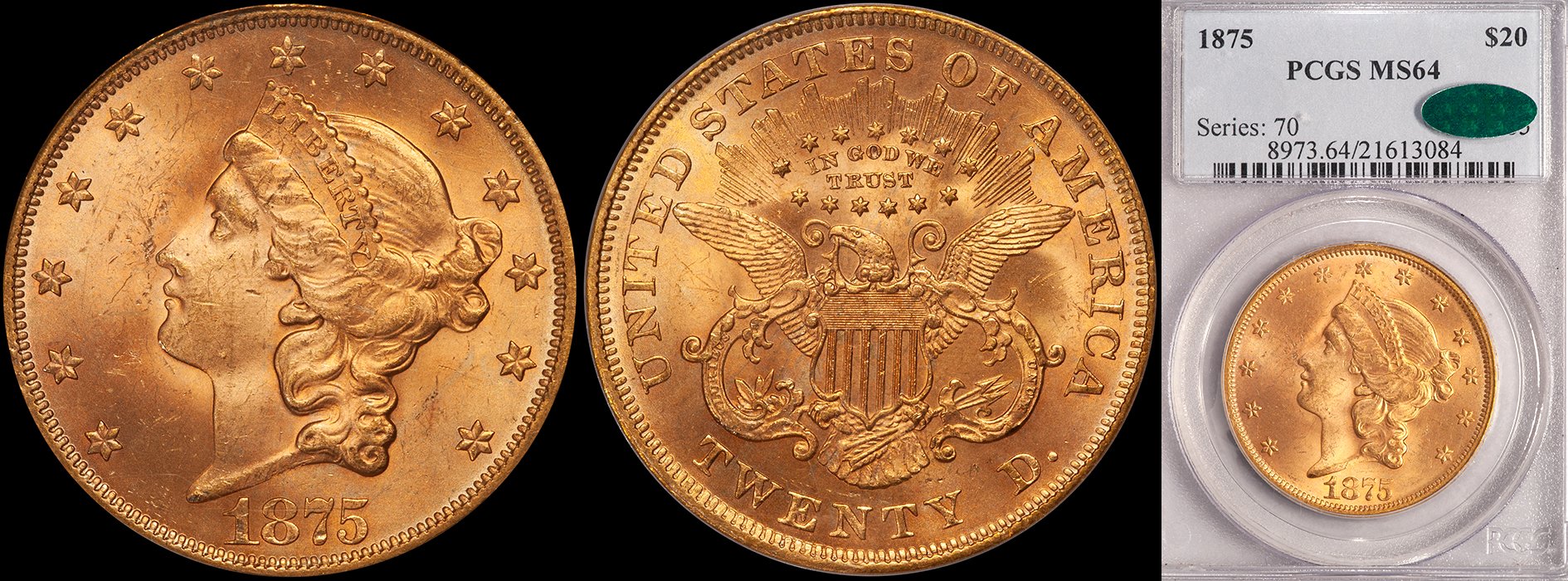
5. How should I price the coins I am consigning? It is important to price your coins realistically or they are not likely to sell. Some dealers will take any coin that you offer them at any price. Other dealers, myself included, will probably pass on coins that are not priced in line with the current market. I would suggest you price your coins the same way that I do: look to see if there are recent comparables at auction and use these as a base line. There are, of course, exceptions to this rule. An extremely rare coin, a coin in an old green label PCGS holder or something that is currently very "hot" might deserve premium pricing. As a seller, you need to ask yourself, how badly do you want to move your coin(s)? If you price a $5,000 coin at $8,000 it is likely to taint it and potential buyers may be skeptical when the price is suddenly--and dramatically--reduced.

6. What about consigning special collections? Over the years I have had a number of in-depth specialized collections consigned to me for sale. For these collections, I've created special "websites within my website" that feature these coins and they are not intermixed with my regular inventory. I would suggest that you request this when selling. It is smart marketing, it should help to sell your coins and it's a nice, lasting memorial for your collection that you can keep record of. If the dealer you are using to sell your coins is web-oriented and he is incapable of providing this service, I'd suggest you question whether he is the right person to sell the coins. If the dealer is just going to sell them wholesale, then this process is, of course, not needed.

7. What should you not expect? Just as you should have expectations of what to expect from the dealer you select, there are a few things you should not expect. One of these is for the dealer to have an obligation to tell you who your coins were sold to. You certainly have every right to tell the dealer not to sell your crusty original coins to an "upgrader" who is likely to strip and ruin them. You probably shouldn't expect daily updates on how your consignment is doing but it isn't asking too much of your dealer to hear, from time to time, how the consignment is faring.

8. How should I choose the dealer I consign to? If you've made it this far, you are probably waiting for the answers to this important question. I'd say the two most important things to consider are the relationship you already have with the dealer and his ability to understand (and get good prices) for your coins. If you have been dealing exclusively or semi-exclusively with a dealer for a few years and you like/trust this person it seems obvious to select him to sell your coins. The second point seems obvious but is worth reiterating. I think my firm is a great choice to sell branch mint gold or early gold but I'd be a poor person to sell a high grade set of Buffalo Nickels. I could probably do a decent job of presenting Buffalo Nickels but I don't know the series well and have zero clients for these coins. In this increasingly specialized market, it makes sense to choose someone who is a specialist himself, providing that you have a collection with a reasonably specific focus.

I think dealer consignments are a good way to sell your high quality, rare United States coins. Hopefully this short blog answered a few questions. If you have more, please feel free to contact me via email at dwn@ont.com

Set Premiums: Fact or Fiction?

One of the things that new collectors are often told is that if they build a set, the collective value of the coins will be greater than the individual value when it is time to sell. Is this correct or is it just clever marketing hype? I believe that the answer to this question is yes, no and maybe. Let's take a random example of a set--Charlotte quarter eagles--and look at instances where there would or would not be a premium factor established upon completion.

There is, in theory, a clear-cut instance of when a set of Charlotte quarter eagles would gain value if it were complete. This would occur if all the coins were very high high grade and the set would be almost impossible to duplicate at any price. But what if the coins themselves are not as impressive as the plastic they reside in? I have seen sets of Charlotte quarter eagles in which all the coins were accorded very high grades by PCGS and NGC but the coins themselves were unimpressive; some were recolored while others were puttied. Among well-informed collectors of Charlotte quarter eagles there are high grade sets that are famous for having great coins and there are sets that are (in)famous for having coins that are "maxed out" and unappealing despite impressive grades.

A set of Charlotte quarter eagles might not have to be high grade to be impressive and to gain value on a completed basis. I have seen sets where all of the coins were "only" in the EF to AU range but the individual coins were gorgeous with matched natural color, nice surfaces and strikes and strong overall eye appeal. In this instance, I think a set could gain as much as 10-15% premium. The reason it would gain value is that a potential buyer would realize that in today's market--where most Charlotte quarter eagles are stripped-n-dipped--the opportunity to acquire high quality coins is rare; and the opportunity to acquire a complete set of them is even more rare.

An instance where a "maybe" answer might have to be given is with a clearly mixed quality set. I know of a few sets of Charlotte quarter eagles where the quality is wildly uneven. There might be a common date in EF45 which isn't very nice alongside a rare date in MS63 that is spectacular. This lends itself to a sort of numismatic version of "which came first, the chicken or the egg?" Would you pay a premium for a set that had some great coins but which you knew that you would be forced to do significant upgrades on others? I think the answer has to be made on a case-by-case basis. If the highlights off the set were enough to offset the low-lights than I think a premium factor would be in order; just maybe not the 10-15% that I mentioned above.

There are other instances where I think that a set premium would be in order. I would pay a healthy premium for a set that all the coins had good pedigrees (not necessarily famous pedigrees but they may have come from good retail dealers or not-so-famous auctions that have a high regard among specialists). I would pay a premium for a set of coins that were original. And I would probably pay a premium for a set of early gold coins in which each piece was better produced than usual.

Here's the rub on set premiums. Most collectors enjoy the thrill of the hunt and putting together a set. But the concept of long-time collecting has becoming somewhat antiquated in the Internet age and today's faster-paced lifestyle has shortened the attention span of everyone; even middle-aged coin collectors. Not everyone has the patience to wait five or ten years to assemble a nice set of Extremely Fine Charlotte quarter eagles. The chance to knock out the whole set with one punch is appealing to certain collectors who can afford to write a one-time check.

In the very high end of the market, opportunity costs have to be considered. If you are a serious collector of Charlotte quarter eagles (or anything else for that matter...) the chance to buy an incredible one-of-a-kind set may truly be a once in a lifetime opportunity. In this instance, the chance to buy a great set for a 10% premium seems to me to be a great value.

Over the years I have purchased a number of superb specialized collections. There has never been a time that I didn't want to sell the collection intact, preferably to a loyal collector who, I hoped, would sell it back to me at a later date. I've even been willing to sell it at a discount price, as an intact set, knowing that there was a chance I could handle it again in the future. But in virtually every case I have had to break the set up and sell it two coins here and three coins there. Why? In the case of million-dollar and higher sets I think price has been as issue. There are not many collectors who can (or would) write a check for a million-plus dollar specialized collection.

As I mentioned above, the "set premium factor" is a term often used by marketers when selling coins to new collectors. This concept is typically negated by the fact that these marketers are selling lower end coins or they are in the midst of promoting material that is common and isn't ever worthy of some sort of premium factor down the road. But I do believe that set premium factors do exist and that savvy collectors can create their own mystique when it comes times to sell.

If you don't believe this, study the results of the recently-concluded Steve Duckor collection of Barber half dollars. Yes, the coins were great. Yes, the selling venue for them was ideal. And, yes, Heritage did a fine job cataloging and presenting them. But I honestly believe that many of the buyers, consciously or not, paid a strong premium factor because they believed (rightfully, in this case...) that "if the coin had a Duckor pedigree, it had to be good." This was a case where there was a set premium factor; in some cases a remarkably strong one.

The Garrett 1808 Quarter Eagle

I handled some very interesting coins at this year's Boston ANA show. One of the ones that I thought was the most interesting was the Garrett specimen of the 1808 quarter eagle; a coin that was both very rare from a numismatic standpoint and historic from the standpoint of its pedigree.

The 1808 quarter eagle is a one-year type with a mintage of only 2,710. It is actually a less rare coin that other quarter eagles of this era but it is famous due to its status as a one-year type and, along with the 1796 No Stars, it is probably the most famous and desirable issue.

I would estimate that there are around 100-125 examples known in all grades. When available, the 1808 quarter eagle tends to be in lower grades and examples with nice, original coloration are really rare. There are a few very choice pieces known, the finest of which is the ex Dr. Judd coin owned by a Dallas family and graded MS65 by PCGS. The second finest is a PCGS MS63 that was most recently sold as Stack's 11/08: 4176 (at $517,500). A few other Uncirculated pieces are known as well.

The Garrett 1808 quarter eagle has a great background. It was sold as Lot 742 in Bowers and Ruddy's famous Garrett I auction, held in March 1980, where it was graded "Extremely Fine-40." It sold for $30,000 which was a strong price for a circulated 1808 quarter eagle at the time. The Garrett family had obtained it from the collection of Dr. Edward Maris who was far more famous for his study of New Jersey copper coins than for his gold issues.

This coin next appears at auction as Bowers and Merena 10/04: 606 where it brought $80,500. It then sold for $94,875 as ANR 3/06: 1421. Two years later, it went for $103,500 as Lot 1894 in Heritage's 2008 ANA sale. I purchased it at the ANA at a private sealed bid sale.

The Garrett 1808 quarter eagle is now owned by a specialist in early quarter eagles who appreciates its originality and pedigree. My thanks to him for allowing me to handle this wonderful coin and for being able to share it with you.

Some Observations About the 2010 Boston ANA Show

To be perfectly frank, I hate coin show reports. I hate to write them. I hate to read them. I don't care what restaurants a dealer went to and what they ate and I don't really care that Dealer X spent this much money on those coins at the show. That said, I also know that the ANA is the show that everyone who didn't attend wants to know about. So, with these people in mind, I thought I'd share a few random observations about the ANA. On a scale of 1-10, I'd rate this show as a solid 6; possibly a 7. Overall, I'd say a was a tiny bit disappointed. I was expecting the show to be an 8 or a 9 because of the fact that it was the first ANA in Boston since 1982 and the fact that Boston is within a few hours of huge numbers of serious collectors.

I go to coin shows primarily to buy and from a buying standpoint I was reasonably pleased. I bought some great coins. These include an 1854-O double eagle in PCGS AU55, the Garrett specimen of the 1808 quarter eagle (graded AU53 by PCGS) and over fifty crusty original 19th century gold pieces, most of which have already found their way onto my website. I would have liked to buy more but, hey, that's what I say at every show; even when I'm wondering how I'm going to sell all the great coins I just bought. And, yes, this paragraph is self-promotion.

Attendance seemed good and the mood among dealers and collectors seemed upbeat and positive. I didn't have any little old ladies walk up to my table with a New England shilling in a cigar box (a fella can dream, can't he?) but I was fairly pleased at the number of fresh coins that I was able to purchase on the floor.

I participated in three auctions. The Stack's sale contained an interesting fresh deal of Liberty Head eagles and prices were amazing (more on this in a future blog). The Bowers and Merena sale was reasonably strong but prices were mainly reflective on the quality of the coins. In other words, nice coins brought good prices while schlock sold cheaply, if at all. The Heritage sale was strong although prices didn't seem as off the charts as in years past. With the exception of the eagles in the Stack's sale the coins brought basically what they were worth. That sounds trite but, in past ANA sales, many coins brought a lot (stress a lot) more than they were worth. A lot.

In the area of rare gold, I noticed some definite market trends. Early date (i.e., pre-1834) gold was almost non-existent. Even the low end, overpriced stragglers that had been overhanging the market seemed to have disappeared. I can't remember an ANA at which I saw fewer early gold coins nor a major show that I purchased fewer.

There was extremely strong demand for Type One double eagles. The coins that nearly everyone seemed to want were common and somewhat better dates in AU50 and up, especially in the $2,000-7,500 price range. Demand was also strong for interesting Type Ones in the $10,000-20,000 range. Its hard to say what demand was like for expensive, really great Type Ones as there were almost none to be seen at the show.

Branch mint gold also was in demand. I bought and sold a few interesting pieces of Dahlonega at the show and had quite a few people come to my table with specific wants. I searched through dozens of dealers' inventories in a Quest for Crust and was unable to find more than a handful of truly DWN-worthy coins.

Another area that suddenly seems strong is Carson City double eagles. I sold a number of interesting CC Twenties and was pleased at the prices they bought. I tried to buy an amazing 1872-CC in NGC MS62+ that was far and away the finest known for the date but was outbid despite figuring it for nearly six figures. Congratulations to whoever purchased this coin; it was sensational.

Off the subject of coins for a second. I hadn't been to Boston in about a decade and it was great to return. What a fantastic city. Great places to shop, small and compact with wonderful walking, fantastic architecture; my kind of place. I was able to leave the show early one day and went to the Gardner Museum. The Rembrandt self-portrait and the two Botticellis were breathtaking, to say the least.

So, another ANA show has come and gone. After nearly 30 years of ANA's, I don't feel the excitement that I used to but this is clearly THE show of the year and the 2010 edition was memorable.

Aging Baby Boomers and Rare Gold Coin Prices

I recently received an email from a collector who asked what I thought were an extremely intelligent group of questions. In a nutshell, he asked the following. As boomers age, are we nearing a bubble in coin prices? At some point will the number of collectors with the financial means to collect rare gold decrease and will prices suffer accordingly? Go to any coin show and you will see a disturbing trend. The buyers of most “serious” coins (i.e., coins priced at $1,000 and above) are in their 50’s or 60’s and the dealers selling them these coins tend to be at least the same age, if not older. There are not many young collectors at shows and the number of “A” level dealers in their 20’s and 30’s can be counted on one hand. This spells trouble for the coin market, right?

I contend that the answer is not as obvious or as clear-cut as it would seem to be. I am a keen student of the history of the numismatic marketplace and, as far as I can tell, ever since coin collecting became popular in the United States (in the late 1850’s/early 1860’s) it’s been a hobby that mainly attracts older people. Think about it: coins are expensive and people in their 20’s and 30’s have never had enough discretionary income to be making impulsive non-essential purchase. When you are 27 years old, you are thinking about buying a house and saving money for your child’s education; not deciding what series of 19th century gold coin to specialize in.

But the world has changed in the last generation or two and wealth is no longer the exclusive province of the middle-aged and the mature. For the first time that I can remember I have a few good clients who are younger than I am and these collectors tend to be self-made entrepreneurs.

In the 1950’s, many collectors grew old at around the same time and the hobby was in a precarious spot. Lots of great collections were coming on the market at the same time and it seemed unlikely that these coins would be absorbed. For a while, prices were depressed and the short-term outlook of the market was gloomy. But along came the roll craze of the early to mid-1960’s and the market was suddenly reinvigorated by young collectors; some of who became famous dealers who are active to this day.

In the mid to late-1970’s the same trend was occurring. Collectors were graying and lots of coins were coming on the market. All of a sudden, precious metals prices began to boom and lots of new blood came into the market. Two decades later it was the State Quarter program that jumpstarted a moribund market. Again and again, we have seen cycles of demand in the coin market and when things appeared gloomy, something would happen that infused youth into the hobby.

The X factor in today’s market—and the future coin market(s)--is, of course, the Internet. Unlike in 1960 or 1980 or in 1990, it will be easier to replace this generation of graying numismatists with younger buyers due to the accessibility of information and the ease of purchasing rare coins on-line. And there is another factor that I believe will come into play as well: foreign buyers.

As is well-known, huge middle-class and upper-class populations are being created in China and India. These are countries with an interest in American culture and cultures that greatly prize gold. It is possible (not likely, but possible) that new markets for American gold coins could develop in these countries and this, of course, would greatly change the dynamic of the future coin market.

My guess is that some time in the next decade or so, we will see a significant change in the demographics of the coin market. Many of today’s “super-collectors” are going to be net sellers in a decade or so and it is certainly possible that prices at some point could drop in the short-term. But if this scenario occurs, I think it is highly possible that this dip will be short-lived and that a new generation of eager collectors will fill the void.

Revisiting The 1841 Quarter Eagle

A few years ago, I wrote a blog about 1841 quarter eagles that basically stated that the currently-accepted belief that all of the known examples were Proofs was wrong. After recently being able to examine no less than four 1841 quarter eagles at one time, I am now totally convinced that this issue exists in two distinct formats. Numismatic tradition states that the 1841 quarter eagle was struck only as a Proof. This has never made sense to me. With as many as 15-17 pieces known, why would the Mint have made so many Proofs in 1841 when virtually none were struck in any other year between 1842 and 1853? And why would most of the survivors be in such low grades (EF40 to AU50) when most of the Proof gold coins from the 1840's that still exist tend to be in reasonably high grades?

This enigma has become a semi-obsession of David Hall's and when you are the head of Collector's Universe/PCGS you can get things done. David was able to wrangle four different examples of the 1841 quarter eagle including a PR60 illustrated below. A few weeks ago, one of his security detail flew the four coins up to my office in Portland and I am now more convinced than ever that 1841 quarter eagles exist in two formats.

1841 $2.50 PCGS PR60

First, a few words about the Proofs. One of the main reasons that you can determine that a Proof 1841 quarter eagle actually is a Proof is that is “looks like one.” These coins are not weakly struck, nor is there any question about whether they have squared edges or incomplete reflectiveness to the fields. These coins look just like other Proof gold coins from the 1840's. They may have some mint-made flaws such as pits in the planchet or lintmarks but their appearance is not much different than Proofs from the latter part of the 19th century either.

There appear to be just three or four Proofs known. The finest is a PCGS PR64 owned by a prominent Texas collector that is ex Heritage 6/04: 6204 where it brought $253,000; it was earlier in the Eliasberg sale and it sold for $82,500 in October 1982. The second Proof is owned by a customer of mine and it is graded PR60 by PCGS. I purchased it out of Bass II in October 1999 and paid $110,000 for it. A third Proof is in the Smithsonian. I have not seen the coin in person but it has been confirmed by Jeff Garrett whose opinion I respect. A possible fourth Proof is the ex Davis-Graves coin that was last sold as Superior 2/91: 2664 at $66,000. This coin might be the piece that appears in the PCGS population report as a PR62.

When I recently examined the Eliasberg and Bass Proofs, I made the following observations about them. I’m certain they apply to the other one or two Proofs as well.

*Proof 1841 quarter eagles have fully reflective fields that look like Proofs should. They are not "semi-prooflike" or "mostly prooflike." They are Proofs, no ifs and or buts.

*On Proof 1841 quarter eagles, there is sharpness of strike on the curls below the ear of Liberty. This sharpness does not appear on business strikes.

*The texture on the face of Liberty is different on Proofs. This may be attributable to the fact that the luster pattern on the cheek has not yet been worn off as it has on circulated business strikes.

*The curls on the back of the neck have a bold, almost three-dimensional look on Proofs. On business strikes they are not as sharp.

*On the Proofs the edges are sharp and fully squared. They are not as sharp and clearly not fully squared on business strikes.

I can quickly summarize why I think the lower grade 1841 "proofs" are not proofs at all and were clearly produced as business strikes (but using the same dies as the Proofs).

First of all, logic dictates that there are just too many 1841 quarter eagles known for all these coins to be Proofs. The number of coins that I feel are real Proofs (three or four) is consistent with the number known for other Proof quarter eagles from the 1840's. It just doesn’t make sense that the Mint would have made 30 or so Proofs in 1841 but five or so (if that) in every other year during the 1840's. Could they have been struck for a special occasion? It's possible but I have always doubted this reason and until documentation is found that states that they were made to commemorate an event or to give to VIP's, I am skeptical at best.

Secondly, many of the surviving 1841 quarter eagles are very low grade; in the Fine to Extremely Fine range. I have never seen or heard of another Proof quarter eagle from the 1840's that was this impaired.

Thirdly—and I believe most importantly—the business strikes, while Prooflike, just don’t "look" like Proofs. The marks on them don't fall in the same pattern that you see on Impaired Proofs; i.e., they look like circulated business strikes. As I stated above, they are not as well struck as the unquestionable Proofs and lack the squared rims and bold central details that are found on the true Proofs. They just don’t look or "feel" like Proofs.

In my opinion, David Hall and PCGS are to be credited for bringing this issue out into the opinion. It will be interesting to see if PCGS starts categorizing 1841 quarter eagles as Proofs and circulation strikes/business strikes and it will be interesting to see if the market starts according a premium to the Proofs as there should be, given their greater rarity.

What Makes Certain Coins Popular--and Others Unpopular?

I often make buying decisions based on a coin's popularity. As an example, I will buy a coin like an 1839-O quarter eagle for stock because it is popular and I know it will sell. But I might pass on a rarer coin like an 1862-S quarter eagle because it is not a popular issue and it will be a harder coin to sell. This got me to to thinking: what makes one coin popular and another unpopular? Certain 20th century series are popular with collectors because of a strong nostalgia factor. I would imagine most of the collectors who focus on Lincoln Cents or Mercury Dimes remember collecting them as a kid and the sense of accomplishment that they get from completing a set is an act of closure that extinguishes the nightmares they felt as kids about filling those pesky 1909-S VDB Cent and 1916-D Dime holes.

The nostalgia factor does not really apply to gold given the fact that circulation for these coins ended in the early 1930's. There are certainly some collectors who can remember being given an Indian Head quarter eagle for the holidays by their grandparents or aunt and uncle. But I'm willing to bet that the majority of gold coin collectors are not working on a set of Charlotte half eagles because it rekindles pleasant childhood memories.

The word "promotion" gets a bad rap in numismatics. Yes, there are naughty promotions where worthless modern trinkets get hyped and sold to unsuspecting people for multiples of their true value. But in the better sense of the word, coin promotions can turn formerly unpopular series--like Type One Liberty Head double eagles--into popular ones. The key to a coin promotion is that it has to be sustained and it needs more market participants than the first wave to regenerate its initial success(es).

I mentioned the Type One double eagles series in the last paragraph. One of the most brilliant coin promotions of all time was the S.S. Central America.. The marketing group that owned the coins not only was able to sell them, they were able to generate enough new interest in this denomination that it impacted all Type Ones, not just the few dates that were included in the hoard.

A coin that is historic is always going to be popular. What represents "history" to be may not be what represents history to you. But I'm almost certain we can both agree that a gold coin produed in the 18th century--the first decade of the operations of the new U.S. Mint--is clearly historic. This is one reason why a coin like a 1795 half eagle or a 1799 eagle, while not truly "rare," is still always going to have a very high level of demand among collectors.

Other coins are historic due to numismatically significant factors. In the first paragraph I mentioned the 1839-O quarter eagle. This is a coin that is fairly common in lower grades yet I still really like the issue and will buy nearly any problem free example I can find. Why? It is a first year of issue coin, it is a one year type and it is a visually interesting issue in that it has the short-lived Classic Head design paired with the obverse placement of the mintmark. These factors give it broad appeal and it is one of the few New Orleans quarter eagles that would be of interest to a non-specialist.

Another factor that makes a coin popular or unpopular is its design. A coin like a High Relief is extremely popular because it is beautiful and its design appeals to virtually all collectors. "Plain Jane" coins like three cent nickels and liberty head nickels get little respect from collectors because, to be frank, they are not especially attractive designs.

There is an element of geography with certain types of coins that makes them popular. Dahlonega gold coinage has a large following in the Atlanta and North Georgia area due to having been produced in this part of the country. This isn't to say that a collector from New York City might not become a major collector of Dahlonega gold but the majority of interest in these coins tends to be in the south.

A factor in determining the popularity of a coin has to do with the availability of good reference material. Without tooting my own horn too loudly (OK, at least not blaring it...) I'd like to think that part of the reason that Southern branch mint gold is popular has to do with the fact that I have written easy to use basic reference guides that are updated every few years, inexpensive to purchase, readily available and easy to transport to coin shows and auctions. This might be a coincidence, but the two least popular 19th and early 20th century gold issues (Philadelphia and San Francisco mints) are the ones that I just happened to not have written books about. At least yet...

Size has become an important factor in making gold coins popular or unpopular. Double eagles are more popular than gold dollars mostly because they are much bigger. People like bigger coins and new collectors feel more justified in spending $3,000 for a big, hefty double eagle than they do for a small gold dollar. As the age of collectors continues to climb, it seems inevitable that even more people will shy away from small coins; if only because they will have trouble seeing them.

These popularity factors are just a few of the reasons why certain coins are popular and others are not. If you ask many collectors why they specialize in a certain area, the reason may be hard to determine. Often, these individuals collect "what they like" and there is no clearly definable reason; it's just a gut instinct that, say, tells them that they should focus on Proof gold dollars or Gem Saints. And that's the beauty of rare coin collecting.

How the Internet Has Changed the Rare Coin Market

The year was 1995. I can remember my wife Mary telling me that it was really important to establish a presence on the Internet; that it would be the future of the coin business. No way, I thought, people are still going to want to read print ads and receive mailed price lists. The Internet was slow and bulky and you could basically die of old age waiting for each coin image to come up on screen. Sixteen years later, it seems that, as usual, she was right and I was wrong. The Internet has, along with third party grading, changed the coin market like nothing else in history. Why has the Internet been so good for the coin market and what are some of the changes that it has wrought?

The best thing about the Internet for all hobbies has been the dissemination of information. 10 to 15 years ago, if you wanted information about rare coins you had to dig for it. You could open a Redbook and get mintage figures and you could find information about die varieties in various specialized books. But like the man behind the curtain in the Wizard of Oz, in the past, information was strictly controlled. If you were lucky, you were invited into the secret circle and given some of the information you needed. If you didn't know the secret handshake, you were pretty much on your own.

The impact of the Internet can be felt in a numbers of distinct ways. One is the newest phenomenon of the Internet (better known as Internet 3.0): social networking. Back in the pre-web days if you wanted to meet and talk with other collectors, you had to join a local coin club or, if you were lucky and lived in a town with a good coin shop, you met at the bid board on Saturday and talked coins with other interested locals. Now, it is reasonably easy to connect with fellow collectors and share information, buy and sell coins, talk about which dealers are good or bad, etc. I would expect that Facebook will become a much more important platform for coin collectors in the coming year.

As I mentioned above, the Internet has given collectors access to information that was formerly difficult to acquire. Pricing information from auctions is easier to source than ever before. A decade ago, the only place that compiled annual auction data was Krause Publications' annual auction prices realized book(s). These were expensive, not always complete and only provided a one-year window into specific series of coins. Today, sites such as Heritage.com and PCGS.com enable collectors to see 10 or even 20 years of auction results for a specific coin in a specific grade. This is critical information for determining what to pay for a coin or what to price a coin at when you are ready to sell. I would expect that better, more sophisticated coin pricing sites will be introduced in the coming years as well.

As recently as ten years ago, many dealers did not have a website and many of the ones that did featured clunky, slow moving sites. Today, coin websites are considerably more sophisticated and offer much better quality images and descriptions than before. The fact that collectors now feel comfortable enough to buy coins sight-unseen is a result of better technology (hello cable modems!) and it has greatly broadened the size and scope of the market.

One of the biggest changes we have seen in the last decade as a result of the Internet is a restructuring of the auction market. One coin auction firm responded better to technological advances in the last ten years and as a result they have basically decimated their competition. Ten years ago, the vast majority of coins sold at auction were purchased by dealers who were sitting in the room. Today, most lots sell to Internet bidders. Its a little unnerving for a new collector to walk into a coin auction and see it basically empty (with the notable exceptions being the FUN and ANA sales which still attract good crowds or very important specialized collections) but to be told that the auction is in fact a rousing success and that there are hundreds of active bidders participating.

I would expect that we will see similar changes with coin shows in the next ten years. I'm not certain we will have an actual "virtual bourse" but with coin dealers and collectors getting older, travel becoming harder and more expensive, and the number of shows simply too great to be sustainable, I'd think we'll see very different types of shows than what we have now and that they will be far more Internet-based.

How has the rise of the Internet changed the way that I do business? I can think of numerous ways in which it has and there are a few that stand out in particular. I have always sought to purchase pretty, high end coins but now a major consideration for me is if the coin is "photogenic." I might pass on a very dark or somewhat splotchy piece because it won't image well on my website and will be hard to sell as a result. It is very important for me to get my new purchases listed online as soon as I can after I return from a show. Instead of spending the weekend following a show relaxing and decompressing from an intense two or three days of trading coins, I know spend the next few days writing descriptions and having my new coins imaged.

The Internet has improved my cash-flow as it has sped up the amount of time it takes to sell a coin. In the pre-Internet days, I would create price lists and mail them out or put my new coins in print ads. The process would take weeks. Now, I put new coins on my website and often they are sold within hours and shipped within a day to their new owner. By the same token, it's made my concept of what's "fresh" change. I can have a coin on my website for thirty days and if it hasn't sold, it's no longer fresh and I have to rethink the pricing and selling process(es). The Internet has sped up the business cycle in ways which can be great but which can be a little scary as well.

I can foresee some exciting changes to the coin market as a result of the Internet. I would expect that dealer websites will become more interactive in the near future and that there will be more video and customization. If 3-D imaging ever becomes a reality, the inclusion of such images on coin website would be fantastic. I would expect there to be more social networking, more specialized auction sites and, as I mentioned above, more and better access to pricing.

I'd love to hear your input about the Web and its impact on your collecting habits in the past decade.

Smart Collecting 101: Is It Ever Right to Buy the Wrong Coin?

In the first installment of Smart Collecting 101 I discussed the "coin churn" and how to avoid it. One reader made a great suggestion for the second topic and I'm going to discuss it at length here. The topic involves buying the "wrong" coin and if there is ever a right time to buy a coin that you clearly know is not optimal for your collection. The brief answer is yes. It depends on what sort of coins that you collect and what your ultimate goals as a coin collector are. Let's look at a few scenarios.

If you are a die variety collector there will probably be a number of instances that you'll be offered a coin that is a major rarity but which is either ugly or damaged or harshly cleaned or maybe even a combination of all three. But you may still have to buy the coin. Let's say you collect die varieties of early quarter eagles. There are a few varieties that are exceedingly rare and might literally be available once per decade; even once in a generation. In this case, if you aspire to have a truly complete collection, you'll buy whatever becomes available for the extreme rarities; even if the coin is damaged. And you'll probably be thrilled just to have the chance.

Let's say that you are a date collector and you are focusing on a series with major rarities in it. If the series that you are pursuing has some incredibly rare issues (say Fat Head half eagles) it certainly wouldn't be "wrong" to purchase a decent looking but cleaned example of a coin that you know might not be available again for years or which may exist in decent condition but which might be ungodly expensive if ever offered. My feeling here is that if you are someone who likes high grade coins you should avoid specializing in a series that has certain issues that almost never come in high grades.

This leads me to another scenario. Let's say you are a person who hates flatly struck coins. You have waited many years to fill a hole in your set and the date in question finally becomes available. The only problem with the coin, and let's say it's fairly decent in terms of overall quality, is that it is flat as a pancake at the centers. What should you do?

I'd suggest that you research the series and learn what percentage of the issue in question comes with this sort of strike. If every known example is weakly struck, then you just need to buy it. If some examples do exist with decent strikes, I'd say that you pass and wait for a sharper example.

There are some issues that are just so rare or so popular that I will compromise my standards and purchase problem coins now and then. As an example, if I saw a decent looking but cleaned 1870-CC eagle for sale I think I'd buy it; as long as it were priced fairly. It's rare, its in demand and its a cool first-year-of-issue. Plus I think its undervalued in comparison to other high profile Carson City issues. But I wouldn't buy most of the other CC eagles with problems. The reasons for this are simple: they would be hard to sell, they aren't in great demand and nice examples are available with enough frequency that the wrong coin makes no sense. I would take this even further with scarce but not overly rare issues. I'd be patient and wait for the exact coin I wanted.

My high degree of standards would also slacken on great rarities (notice I didn't say "expensive coins." I said "great rarities.") I would have no interest in a damaged ex-jewelry Stella but I would consider an 1864-S half eagle or an 1875 eagle if it were cleaned, very well worn or heavily abraded. In fact, these two issues are rare AND undervalued so I would probably not only buy one "wrong" example, I'd buy as many as I could find.

In the case of truly rare coins like the 1841 quarter eagle or the 1854-S quarter eagle, appearance is almost not an issue. Take the case of the 1854-S. There are around a dozen known with three of these actually being "nice." But in this case, "nice" means EF or AU. The others range from very heavily worn (the discovery coin, ex Eliasberg, is a Good 4) to "not as worn but very messed up from scratches or other non-mint damage." You don't get to be fussy with an 1854-S. You see one, you don't hate and you can afford it...you buy it.

Let's say you are one of those collectors who doesn't really have a super narrow focus and your strategy is "best available coin." You don't aspire to finish any series although you might have a preference for San Francisco half eagles or Philadelphia eagles. In such an instance there is really no reason to buy coins that are not right. If a specific issue is too expensive, just pretend it doesn't exist; you aren't completing a set of Liberty Head quarter eagles so don't sweat it if an ugly but rare 1842 Phildelphia becomes available. Sure, it's rare but another will come along and wouldn't you rather pay $8,000 for a really nice example than $3,000 for one that looks like it was gnawed on by numismatic rats?

The "best available" collector may just want to focus on branch mint issues that grade MS60 and above. This might eliminate a host of issues that do not exit in Uncircuated. It might take other issues that are exceedingly rare in Uncircuated and make "compromise coins" very important. Let say there is an issue like the 1859-S half eagle of which just two or three are known In Uncirculated. If the one nice Uncirculated example is sold (which it was, last year, by DWN) this leaves one or two marginal MS60 to MS61 coins in NGC holders that are the best out there. They may not be "new" in the strictest sense but are a good degree better than the coins that exist in AU55 or even AU 58 grades.

In series like the gold coinage from Charlotte, Dahlenega and New Orleans, there are very, very few coins that are rare enough or ones that come ugly enough that a major compromise must be made. The 1849-C Open Wreath dollar is extremely rare with just five known and I would be happy to own one of the two lower grade pieces at the right price. There is really no Dahlonega issue that is so rare that buying the wrong coin might be right although I'd lower my standards on the 1861-D dollar, the 1854-D three dollar and the 1861-D half eagle given their great demand. In the New Orleans eagle series, I would be willing to buy "wrong" examples of the 1841-O and 1883-O because they are relatively inexpensive and because even the "right" coins have eye appeal related problems. Two others that would cause me to compromise would be the 1854-O and 1856-O double eagles. Sure, I'd want my set to contain lovely Choice AU examples and if you have the $1,000,000 to $1,500,000 it will cost to purchase Condition Census or Finest Knowns of this pair than I'd say go for it. If you have budget constraints a lower grade coin or an example that is genuine but cleaned might make sense. But not for the more common 1857-O and 1858-O. Catch my drift?

So, in summary, I'd say that buying the right or the wrong coin is not necessarily set in stone but is, rather, dictated by the collectors needs and circumstances. Just remember that if you buy an expensive problem coin for your set at some point down the road you'll need to convince another collector that he, too, can't wait for the right coin and that he needs to pull the trigger on this "coin with an asterisk."