My Deepest Appreciation to All

The outpouring of support that I have received from my friends and clients in the numismatic community over the past several days has been both humbling and gratifying. Your thoughtfulness and kindness has provided me with a source of strength that I desperately needed during my darkest hour. Right now, I can only say ”thank you” from the bottom of my heart for this wonderful gift...my appreciation is deeper than words can ever convey. Since I was a boy of seven, numismatics has been a major component of my life. At various times, rare coins have been a hobby, a passion, an intellectual pursuit and a career. Through my numismatic endeavors, I have studied history, formed wonderful relationships, traveled the world, authored books, developed a website and so much more.

Now, I’m turning to numismatics yet again as a source of stability and empowerment in my life. It is my sincere hope that starting today, you will continue to turn to me as your source to buy, sell and learn about Rare Gold Coins. I’m dedicated to helping you succeed in this wonderful field that has given me so much.

The Pre-ANA Show and the Heritage Los Angeles Platinum Night Sale

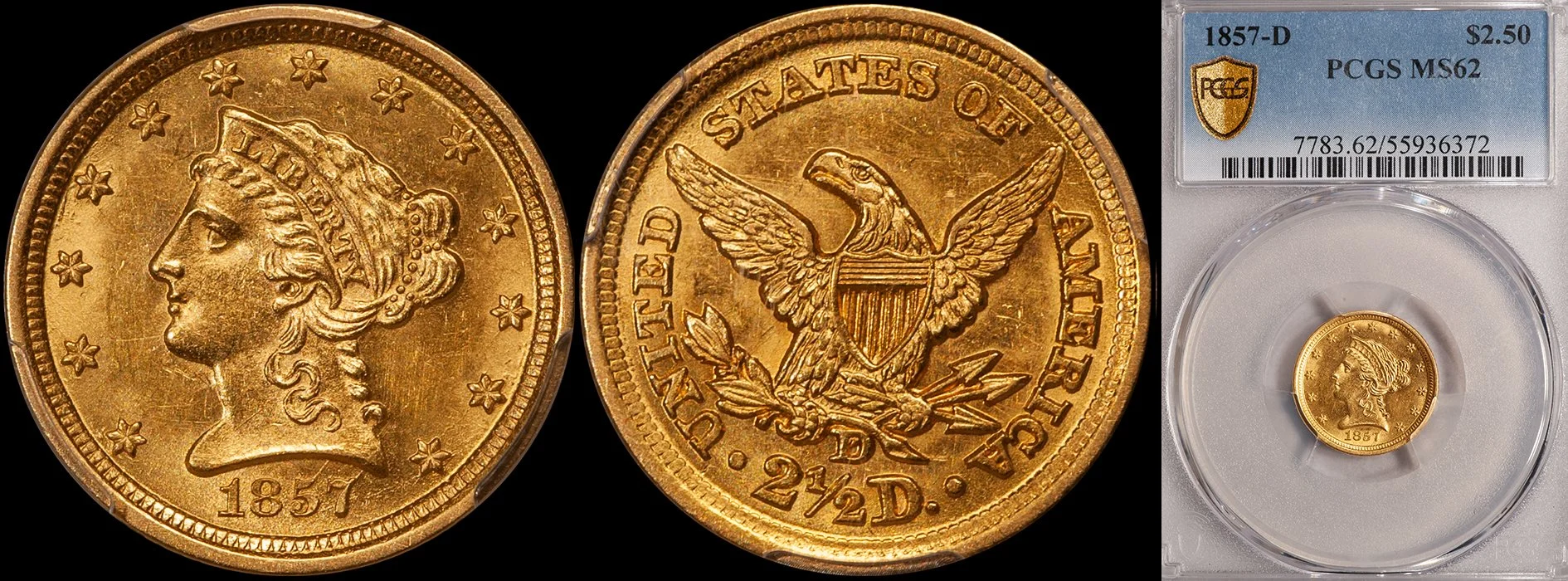
I recently attended a dealer-only pre-ANA show in Beverly Hills. I’m not usually a big fan of these pre-shows but I made an exception for this one as it was held in a location that was easy enough for me to get to and still go home for a weekend rest before the Big Show begins next week. Also, for better or worse these shows are an excellent opportunity for me to get an early shot as some major dealer’s coins. I was able to buy a few very interesting pieces (all of which are now imaged and described on my website, www.raregoldcoins.com) These pre-shows don’t really give a great indication as to how the “real” show is going to turn out. My take on the market right now is that it is harder than ever to buy interesting coins and when nice stuff does show up, price levels are a bit stronger than they were a few months ago.

I sold quite a few coins at the pre-show. I noted demand for nice early gold, CAC-approved issues, Proof gold and anything that was “special.” No surprise there, of course...

On Friday, I attended the Heritage Platinum Night sale. The auction contained some very interesting early gold, quarter eagles and eagles and some of the results are worth a quick analysis.

Lot 1199 was an 1861-D gold dollar that was in an NCS “Uncirculated details” holder. This was a really intriguing coin. It had the look of an MS62 but it had been lightly wiped on the reverse years ago. I had thought the coin would bring around $20,000 but it was bid all the way up to $29,900. I’m guessing a dealer bought it and he thinks that with a little “improvement” it will be in an NGC or PCGS holder in the near future.

A group of early quarter eagles ran the gamut from truly exceptional to downright ugly. The ugliest of the ugly was a holed and plugged 1796 No Stars that brought just $19,550; probably the cheapest example of this celebrated issue to sell in a decade or more. The highlight was what is likely the finest known example of the exceptionally rare 1804 13 star reverse, graded AU58 by PCGS. I purchased it for $322,000 which is exactly the same amount as the Price coin, graded AU55 by NGC, sold for last year.

Prices for the Capped Head issues were strong. A nice NGC AU58* 1825 (which was accompanied by an old PCGS MS61 tag!) sold for $23,500 and a pleasing NGC AU53* 1827 realized $21,850. Even though I usually steer clear of cleaned coins, I did buy an NCS “AU details” example of the extremely rare 1834. This coin showed the detail of an AU53 to AU55 and, despite the cleaning, it was a presentable example of this great rarity. It sold for $25,300.

My favorite coin in the sale was an NGC VF35 1854-S quarter eagle. This coin had been off the market since 1991 and it was probably the nicest VF Liberty Head quarter eagle of any date I can recall seeing; let alone a great rarity like the 1854-S. Only a dozen or so are known and all of the pieces graded higher are off the market in private collections or museums. This one brought $253,000 which is exactly the same price that I paid for an NGC 45 example back in 2005. This price seems a bit on the high side but I would contend that the 1854-S remains one of the most undervalued of the Classic Rarities and, when compared to issues like the 1894-S Dime and the 1876-CC Twenty Cent Piece, it is a great value. My hats off to the new owner of this coin...you bought a great 1854-S!

One coin that surprised me was the 1864 graded AU53 by PCGS. This was a solid coin for the grade and the 1864 has finally been recognized as a major rarity. But this piece sold for $32,200 which has to be a record price for a circulated 1864 quarter eagle.

Another notable quarter eagle was an NGC AU58 1841. This very rare Proof-only issue has just 15-18 known and the example in the Platinum Night session was exceptional with lovely original color and just a touch of rub on the high spots; in other words it was a real 58 and not some ugly processed “faux-slider.” It sold for $132,250 which I think is a pretty strong price but I thought it could have brought as much as $150,000.

The extremely rare 1880 Coiled Hair Stella was offered as Lot 1246. One of just eight or nine known, it was in an NGC PR62 holder and it had brought $618,125 back in 2005. At the Heritage sale it $546,250 which I actually think is a pretty strong price.

A run of early half eagles tended to bring prices commensurate with the quality. Low end coins were a bit on the cheap side while nice higher end CAC coins were stronger.

The sale also featured a run of damaged or cleaned early eagles which, I’m sorry to say, was one of the less impressive early gold collections I have seen. The prices realized were on the (very) cheap side and I think this was an example of the “you get what you pay for” philosophy of coin pricing.

Two 1799 eagles, lots 1289 and 1290, offered a good example of the intricacies of the early gold market. Lot 1289 was a 1799 eagle in PCGS AU58. It was original and gorgeous with lovely color and the “look” that I strive for when buying early gold. It brought $20,700. The next lot was a 1799 in NGC AU58 that was low-end with zero originality. It brought $18,400. Here was an instance when spending a few thousand dollars more would have meant a huge difference in quality.

The last coin I had interest in was a lovely 1873-CC eagle in NGC AU55*. This was probably the second finest known example of the second rarest eagle from this mint. It brought $63,250 which is far and away a record auction price for the date. Here’s proof that in a popular series like CC eagles, a great coin can still bring a great price.

I left soon afterwards, happy to be done with an auction by 9PM and ready to go home for a weekend of relaxation before the Big Show.

The 1796 No Stars Quarter Eagle

Dually popular as a one-year type and a first-year-of-issue, the 1796 No Stars is among the most desirable early United States gold coins. It is actually less rare than its With Stars counterpart but it is traditionally valued more highly and is certainly held in greater esteem by most collectors. Its low mintage, unique design and numismatic significance combine to make it an issue that is considered a cornerstone of any collection of early United States gold coins. STRIKE: Virtually all known examples are weak at the centers. On the obverse, this weakness is seen on the ear, the hair above and below the ear and the curls surrounding the face. About half of the 1796 No Stars that I have seen are weak on the E in LIBERTY. Some have detail on the obverse border while others show little or no definition on the denticles in this area. The obverse generally appears weaker than the reverse. This is not so much a function of strike is it is the design of the coin. The openness of the No Stars obverse causes this side to wear easily. The reverse is often weak on both the top and the base of the eagle’s neck. On some, the tip of the tail is weak; on others it is sharper. The tip of the left wing is always flat and the entire left wing appears less detailed than that on the right. The right claw is usually weak as well. The reverse denticles are typically visible from around 7:00 to 2:00 and hard to see or invisible from 3:00 to 7:00.

SURFACES: The surfaces often show numerous small marks in the fields but this issue tends to be a bit less abraded than the 1796 With Stars. Many have adjustment marks that range from light and unobtrusive to heavy and detracting.

LUSTER: This issue has a very distinctive type of luster. It is typically frosty with a somewhat subdued appearance. The fields are usually semi-prooflike and this is in contrast to the frosty texture of the devices. Many 1796 No Stars quarter eagles have been cleaned and show impaired luster as a result. There are some higher grade pieces that have a majority of the luster present and the one Gem that is known has magnificent thick, frosty luster.

COLORATION: The typical color for this issue is medium to deep yellow gold with a prominent olive undertone. A number show (or at least showed this before they were dipped) a nice coppery hue that was somewhat iridescent when tilted into a light source. As recently as a decade ago, it was possible to find a nice original Extremely Fine or About Uncirculated example with fully or nearly full original hues. Today, most of these have been processed or conserved and attractive 1796 No Stars quarter eagles with natural color are very rare.

EYE APPEAL: The typical 1796 No Stars quarter eagle actually has better overall eye appeal than many of the other early dates of this denomination. At one point, there were enough nice middle grade pieces to satisfy most collectors. Now, many of these coins have been conserved and rest in third-party slabs where they are enthusiastically graded, to say the least. That said, it is still possible for the patient collector to locate a reasonably attractive example for his type set or date set.

DIE CHARACTERISTICS: The left sides of the LI in LIBERTY are lightly recut. Most examples have a number of die cracks on the obverse with the most prominent located at the obverse rim around 9:00 extending crookedly into the field. On the reverse, there is an intermittent die engraver’s line from the top of the right wing through the tops of AMERI in AMERICA.

DIE VARIETIES: There are two varieties known.

Variety 1 (BD-1): The arrows reach to the foot of the I in UNITED. This variety is extremely rare with just four to six pieces.

Variety 2 (BD-2): The arrows reach to the end of the N in UNITED. This is by far the more common of the two varieties.

RARITY: Total Known: 90-110 By Grade: Very Fine: 10-15 Extremely Fine: 42-45 About Uncirculated: 33-43 Uncirculated: 5-7

AUCTION RECORD: The auction record for this issue was set by Heritage 1/08: 3058. This coin brought $1,725,000 which is the highest price ever paid at auction for any early United States gold coin. Higher prices have been paid, of course, via private treaty.

SIGNIFICANT PIECES: There are an estimated five to seven known that qualify, in my opinion, as being truly Uncirculated. These include the following:

1. Private collection via John Albanese, ex Heritage 1/08: 3058 ($1,725,000), Madison Collection via Heritage Galleries, ANR 6/05: 1002 ($1,380,000), Midwestern collection, Stack’s 11/95: 1498 ($605,000), Lelan Rogers collection, Stack’s 5/64: 1660, Phillip Ward collection, University of Pennsylvania, R.C. Brock collection, NY Coin and Stamp 6/1890: 719, Lorin Parmelee collection. Graded MS65 by PCGS.

2. Pogue collection, ex Stack’s 5/99: 1787 ($276,000), John Whitney Walter collection, Bowers and Ruddy 3/80: 732 ($125,000), obtained via private treaty from Harold Newlin in 1884. MS62 to MS63.

3. Stack’s 7/08: 2324 ($488,750), ex ANR 7/04: 82 ($345,000), Oliver Jung collection via Midwestern dealer, James Swan collection. Graded MS62 by PCGS.

4. Heritage 8/06: 5417 ($322,000). Graded MS61 by PCGS.

5. Heritage 7/08: 1451 ($276,000), ex Ed Price collection. Graded MS61 by PCGS.

As of July 2009, PCGS has graded three in MS61, three in MS62 and one in MS65 for a total of seven in Uncirculated. NGC has graded two in MS60, five in MS61, three in MS62, one in MS63 and one in MS65 for a total of twelve in Uncirculated.

The 1796 No Stars is probably the best known and most desired early quarter eagle. It is not as rare as the With Stars issue but its status as a one-year type and a first-year-of-issue leave it in heavy demand. There are approximately 100 known in all grades with the typical piece being in the Extremely Fine-40 to About Uncirculated-50 range. Properly graded high end AU coins are quite rare and the 1796 No Stars is very rare in Uncirculated with fewer than ten known. There is one Gem known.

The New Orleans With Motto Eagle "Short Set"

One of the most interesting and completable sets for the beginning branch mint gold collector is the short set of With Motto New Orleans eagles. This set features the New Orleans eagles produced from 1888 through 1906. In all, there eleven issues in this set. A set in the lower Uncirculated grades could be assembled for less than $10,000. Unlike the No Motto eagles produced at the New Orleans mint from 1841 through 1860, the With Motto issues tended not to readily circulate. This is especially true with the issues from 1888 onwards. Many dates are virtually unknown in grades below AU55 and significant numbers have been located in Europe where they were sent a century ago to pay down foreign trade debts. These “Euro” coins have a distinctive dirty-gold appearance (if they haven’t been dipped) and are typically in the MS60 to MS62 range as a result of rough handling and subsequent abrasions on the surfaces.

In the AU55 to MS60 range, many issues sell for just a very small premium over generic With Motto eagles from this era. This makes these dates very good value, in my opinion, as they are many, many times scarcer than generics and have the added advantage of coming from the highly collectible and historically significant New Orleans mint.

What appeals to many collectors is the fact that the Short Set With Motto New Orleans eagles are legitimately scarce but they are not “too rare” like their No Motto counterparts. The No Motto eagles from New Orleans include a number of rare and expensive issues and even the most common dates are quite rare (and highly priced) in any Uncirculated grade. Even the two hardest Short Set dates (the 1897-O and the 1899-O) can be found in the lowest Uncirculated grades for less than $1,000-1,500.

A few of the Short Set dates can be found in grades up to and including MS63 and these dates (namely the 1901-O, 1903-O and 1904-O) are reasonably affordable even in this comparatively high grade. All eagles from New Orleans become rare in MS64 and Gems (MS65 and above) are very rare. Some of the dates in this series are virtually unknown above MS63; see the date-by-date listings below for more information.

Let’s take a brief look at each of the eleven dates in the Short Set:

1888-O: Until a few decades ago the 1888-O was quite rare in Uncirculated but today it is easily located in grades up to and including MS62. Properly graded MS63’s are scarce and I am not aware of an example finer than this.

1892-O: This is one of the more available New Orleans eagles from the 1890’s. It is usually seen in AU55 to MS61 and it is somewhat scarce in MS62. Properly graded MS63 examples are extremely rare and I only know of one or two.

1893-O: A formerly scarce date that has become the most available New Orleans eagle from the 19th century due to overseas hoards. It is common in grades up to and including MS62 but properly graded MS63’s are quite scarce. I have never seen or heard of one above MS63.

1894-O: Despite a mintage that is greater than the previous three issues combined, the 1894-O is much scarcer. It is a reasonably scarce coin in properly graded MS62 and it is rare in MS63. There are a few very choice pieces known including at least one Gem (ex ANR 9/05: 1319 @ $21,850).

1895-O: The 1895-O is similar to the 1892-O in terms of rarity and availability. It is sometimes available in MS62 but it is very scarce in MS63. I only know of one with claims to a higher grade (ex Heritage 8/06: 2038 @ $18,400).

1897-O: This is the second scarcest date in the set although it is far more available in very high grades (MS64 and above) than the 1888-O, 1892-O, 1893-O and 1895-O. The “look” of the 1897-O tends to be different from the early dates as well and examples can be found without abundant marks. I know of at least three Gems including the Eliasberg coin which is graded MS67 by PCGS.

1899-O: The 1899-O has proven to be the scarcest date in the Short Set and after years of neglect, prices have risen accordingly. It is scarce in properly graded MS62, rare in MS63 and very rare above this. There is an amazing PCGS MS68 that is ex Eliasberg and it is the single finest New Orleans gold coin of any date or denomination.

1901-O: Beginning with this issue, the next few New Orleans eagles are comparatively common. The 1901-O can be found in grades up to and including MS63. It is very scarce in MS64 and extremely rare in Gem. In my experience, nice examples of the 1901-O are much harder to locate than the 1903-O and the 1904-O.

1903-O: This is the most common New Orleans and it has the highest mintage figure (112,771) of any With Motto eagle from this mint. It can be found in grades up to and including MS63 without much difficulty and MS64’s are sometimes available. In MS 65 and above it is very rare.

1904-O: The 1904-O is the second most available date in this set. Like the 1903-O, it is reasonably available in grades as high as MS63. In MS64 it is very scarce and Gems are very rare with around six to eight accounted for. This includes one graded MS68 by NGC (ex Eliasberg and later sold in Auction ’89 where it brought $104,500) and another graded MS67 by PCGS (last sold as Heritage 1/05: 30059 @ $63,250).

1906-O: This last year of issue has proven to be a real “sleeper” in the Short Set. It has often been lumped with the other 20th century issues but it is quite a bit scarcer, especially in MS63 and above. I know of six or seven Gems including at least two graded MS66 by PCGS.

As I mentioned above, I think this set is perfect for beginning collectors. It is challenging without being overwhelming and it allows collectors on a somewhat limited budget to buy relatively high grade, interesting large-sized U.S. gold coins at reasonable levels.

Preparing for the 2009 ANA Convention

Amazingly, it’s time for yet another Summer ANA Convention. This year’s edition is going to be held on August 5th through August 9th at the Convention Center in downtown Los Angeles and if past shows are any indication, this will be one of the best coins shows of the year. If you’ve never been to a major coin show before, attending your first ANA can be pretty intimidating. The display area is enormous and there are hundreds of dealers from all over the world. What things should you absolutely not miss at the ANA?

The first thing I’d make sure to do at this year’s show is to view the exhibits. The competitive exhibits are always fun but it’s the Smithsonian’s display that has me very interested. This year’s star coin is the unique 1849 Double Eagle; a coin that, if it were to come to market, would set a record for the most valuable United States issue. There will be other amazing rarities on display as well but the chance to see the 1849 double eagle is just about enough to make any serious gold collector get on the plane and go to L.A.

The next thing I’d do is hit the Whitman Publishing display, buy copies of all their wonderful books and try to get as many as possible autographed by the author(s). Whitman is planning on having many of the authors attend the show and they will be signing their books throughout the show. I certainly wouldn’t miss any of the specialty club meetings in the area(s) that were of interest to me. As an example, the Liberty Seated Collectors Club will be holding a major meeting during the show and if I were a collector of Seated coins this would be an event I absolutely wouldn’t want to miss.

And, of course, I’d be going to look for coins. Even if you don’t plan on making any purchases, you’ll be amazed at what you see at an ANA show. Some dealers will have incredible rarities that they will be happy to let you hold and examine. Other dealers will have deep inventories of coins that you collect. If there was ever a place to find the proverbial “needle in the haystack” it’s at an ANA show.

I would suggest that as far as looking for coins go, you come prepared. Most dealers at an ANA are going to be reasonably busy (it gets more and more relaxed as the show draws to a close) and it won’t be quite the Mon-n-Pop atmosphere that you might be used to at a small, local show. Bring the pricing information that you rely on with you, don’t forget to bring a good glass (or even a lamp if you can ) and be ready to pull the trigger quickly if the coin(s) you have been searching for just happen to be at a dealer’s table.

The Mystery of the Proof 1875 Gold Dollar

As I have mentioned before, certified population figures can be helpful but they can also be confusing. Take, for instance, the 1875 gold dollar in Proof. This is a coin with a reported original mintage of 20. But it has a combined PCGS/NGC population of 24 (twelve at each service). Something is obviously not right here. But, for once, the fault does not lie with the population reports. Despite being created with the best of intentions, the PCGS and NGC population figures are full of inaccurate information which can be misleading to collectors. This isn’t necessarily the fault of the grading services. It is the fault of dealers (and collectors) who resubmit coins and do not send in their extra inserts. I’ve rambled on (and on) about this in the past and do not plan to offer my two cents this time on how I think that dealers who do this are doing themselves and the coin market a major disservice.

In the case of the Proof 1875 gold dollar the disconnect between the number struck and the number graded has to do with information from the Mint which is not necessarily accurate.

We know for a fact that 20 Proof gold dollars were struck on February 13 as parts of complete gold proof sets. For a number of reasons (some of which will be discussed below), the demand for Proof 1875 gold dollars was higher than expected and it is likely that another 20 or perhaps even a few more were made later in the year and sold to collectors. These appear to have been struck from the exact same dies and cannot be distinguished.

Looking at auction records for Proof 1875 gold dollars over the last few decades, it looks like the actual number known to exist might be as high as 20-25 pieces. Given the fact that survival rates for small denomination Proof gold coins of this era is typically around 50%, this is in line with an original mintage figure of around 40-50 coins.

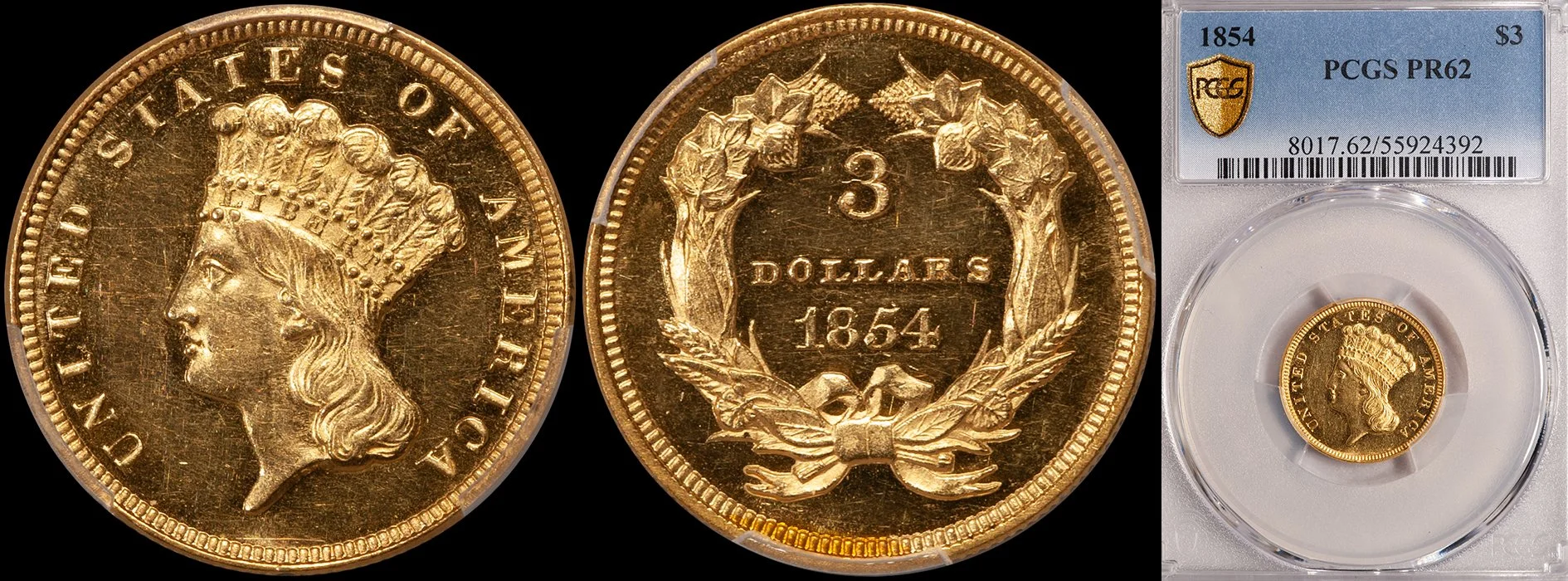
Striking additional Proof gold coins to satisfy demand is not without precedent. It was clearly done in 1875 and 1876 for the Three Dollar gold piece.

There were a number of times that the Mint engaged in “questionable” practices in order to produce coins as special favors for VIPS or to use as trade bait to acquire coins for their collection. And there were also times that clandestine strikings of certain coins occurred in order for certain Mint employees to make extra money on the side. But in the case of the Proof 1875 gold dollars I don’t think that anything sleazy occurred.

By the mid-1870’s, collecting proof gold coins by date was fairly popular with collectors. This was not necessarily the case with the higher denominations as ten dollars or twenty dollars was an excessive amount of money for all but the wealthiest individual collectors. But the gold dollar, quarter eagle and three dollar denominations were within the range of many contemporary collectors.

My guess is that once the Mint reported that the total number of gold dollars struck in 1875 was so low (only 400 business strikes were made), a certain number of collectors were intrigued enough to buy an example. There were probably also dealers who were willing to speculate on a low mintage issue like an 1875 gold dollar, especially given the fact that a Proof could be obtained from the Mint for a relatively small premium above face value. Since few collectors differentiated between Proofs and business strikes in 1875 and the business strikes may have already been unavailable from the Mint, it seems likely that there was enough demand for the Mint to decide to have a second run of Proofs.

So why then was done in 1875 but not, say, 1876 or 1877 when Proof mintages were also tiny? My guess is that there were enough business strikes made this year to fulfill the demand. Or, maybe the speculators who bought Proof 1875 dollars didn’t make the “killing” they thought they would.

The story of the Proof 1875 gold dollar is an interesting one and one that is likely not yet fully known. It is these little mysteries that make numismatics such an interesting hobby and keep me compelled to learn more about a subject that I have found compelling for the better part of my life.

Douglas Winter Numismatics To Sell the Tri-Star Collection of Proof Gold Dollars

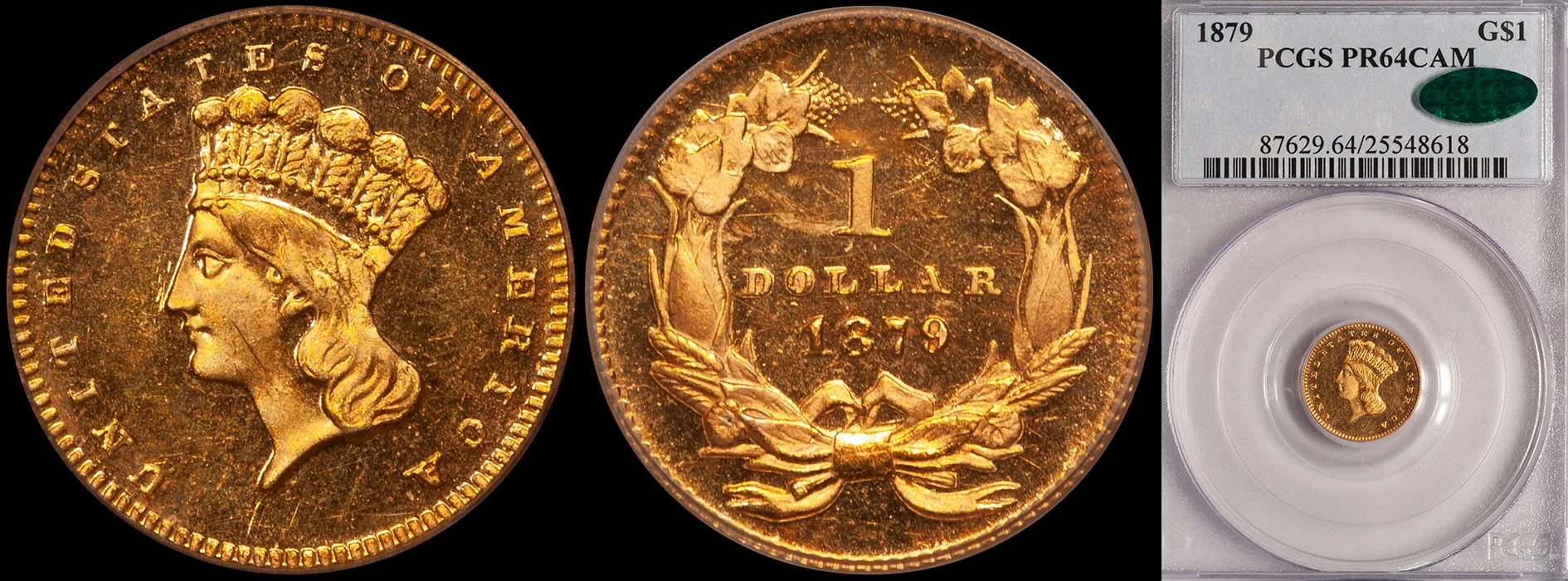
Douglas Winter Numismatics has been chosen to sell the Tri-Star Collection of Proof gold dollars. This collection, which was formed by one of the savviest collectors of gold coins in today’s numismatic market, includes a dozen very rare Type Three Proof gold dollars dated between 1856 and 1878. In a conversation with the former owner of the coins, he stated the following: “My original goal was to assemble a complete set of Proof gold dollars in high grades. Instead of focusing on the dates from the 1880’s which I thought would be easy to acquire, I was more focused on the very rare Type Three coins struck from 1856 to 1879. These dates typically had mintage figures of fifty coins or fewer and many have as few as ten to fifteen survivors.”

This collector added another couple of interesting comments about his collection. ”I tried whenever possible to buy coins that were original and which had not been recently conserved. I also tried to add a few coins that had particularly good pedigrees. The reason that I gave up on the set was that I found it too frustrating to find the dates I needed with the eye appeal that I wanted.”

What this collector did accomplish is still nothing short of amazing. The undisputed highlight of the coins being offered for sale by DWN is an 1856 gold dollar graded PR67 Ultra Cameo by NGC. It is the earliest dated gold dollar graded this high by NGC and it is the finest known of an estimated six or seven that exist.

Remarkably, the collection continues with a nice date run of Proofs dated 1857-1863. The 1857 is an NGC PR65 Cameo, while the 1858 is a stunning NGC PR66 Cameo that is tied with one other coin as the finest known. The 1859, graded PR66 Deep Cameo by PCGS, has amazing eye appeal and is a coin that is notable for its rich original coloration. The 1860 is graded PR65 Cameo and has a pedigree from the famous Harry Bass collection while the popular 1861 is a very high end PR65 that has also been graded by PCGS. The 1862 is an NGC PR66 Ultra Cameo which is among the finest known while the 1863, while “only” graded PR64 Deep Cameo by PCGS, has the eye appeal and appearance of a Gem.

The collector who assembled this set of gold dollars was very interested in coinage from the Civil War and the only issue from this era that was missing was the 1864. His 1865 is a Gem NGC PR65 that has a Cameo designation.

There are just three coins from the 1870’s present in the Tri-Star collection but they are all remarkable and desirable pieces. The extremely rare and much underrated 1874, with an original mintage of just 20 pieces, is represented by a lovely PCGS PR64 Cameo. The extremely rare 1875 is a PR66 Cameo with an incredible pedigree. The coin was last sold as part of the Bass collection and it had been obtained from the Stack’s 1976 Garrett sale where it was part of an original 1875 gold proof set that had been obtained by the Garrett family back in 1883. The other issue from this decade is a PCGS PR65 Cameo 1878. This is another date with an original mintage of only 20 pieces and the present example is clearly among the finest known.

A number of the coins in the collection have been sent to CAC and have received a “green sticker” that indicates that they are acceptable quality for the grade.

It is my feeling that these low mintage Type Three gold dollars represent the best value in the Proof gold market. To wit, there are a host of coins in the collection that are extremely rare as based on their original mintage figure and survival rate but which are priced at a fraction of the amount of less rare large denomination Proofs from the 1880’s and 1890’s in the same grade. Clearly, size does matter when it comes to Proof gold but the dollar denomination has traditionally been popular among collectors and, unlike the larger coins, this set could be completed with patience and a deep pocketbook. If a collector wants to buy a single extremely rare Proof gold coin but he doesn’t have unlimited funds, the gold dollar denomination will prove fruitful.

It is anticipated that the Tri-Star collection will be posted on the DWN website (www.raregoldcoins.com) within the next week. Subscribers to Winter’s newsletter will be given early notification of the exact date that the coins will go “live.” Each coin will be accurately described and superbly imaged with large views of the obverse and the reverse. For more information about the Tri-Star Collection of Proof Gold Dollars, please contact Doug Winter via email at dwn@ont.com.

A User's Guide to the Inventory Pages on my Website

If you are new to coin collecting or you haven’t spent much time on my website (www.raregoldcoins.com) you might not understand some of the nomenclature that appears on the inventory pages. Let’s take a look at a typical listing and let me guide you through the information and the symbols that appear with each coin. I’m going to choose a coin that is currently for sale in my inventory, an 1844-O eagle graded AU55 by NGC. The listing for this coin appears as follows:

1844-O $10.00 NGC AU55CAC 10/9 91/62 5000 $3,500

This seemingly innocuous line actually contains quite a bit of information and if you are not familiar with the terminology I use, it is going to seem like so much numerical babble.

The first and most obvious fact is that the coin is an 1844-O eagle. All of the coins on my website are listed chronologically and they are listed in denomination order from lowest to highest. Mintmarks are listed in alphabetical order.

The next piece of information is that the coin is graded AU55 by NGC. I only sell coins graded by PCGS or NGC on my website. There are no exceptions to this rule. Ever.

The “CAC” designation means the coin has been sent to CAC and it has been given a green sticker that designates it as being acceptable for the grade by CAC’s standards. If a coin does not have a CAC sticker there are a few possible explanations. It may be right after a coin show and I have not yet sent it to CAC. Or, it may be a coin that I do not feel is necessary to send to CAC. Or, it might be a very expensive coin that I do not feel comfortable mailing to CAC. I like CAC and agree with its standards and objectives but I am not “locked into” selling only CAC coins. I would suggest that if you have a question about why one of my coins isn’t CAC-stickered, ask me. I’m happy to give you an honest answer.

The next two pieces of information have to do with certified populations. In this case, “10/9” means that the population at PCGS for the 1844-O eagle is ten in AU55 and nine in higher grades while NGC has graded ninety-one in this grade and sixty better.

Certified populations are something that I think are important but there is a downside to this level of transparency. For the most part, these numbers are inflated by resubmissions and, in the case of the 1844-O in NGC AU55, they are inflated to the point of irrelevancy.

In many instances, when I disagree with a certified population I will note this in the description of the coin. And whenever possible I will state what I believe to be a more accurate population.

The next number, in this case “5,000” is the price given in the most recent copy of Coin World’s “Coin Values.” This figure is better known to collector as “Trends” and it represents a suggested retail price for a coin. In most cases, I sell coins in the 60-80% range of Trends. There are clear exceptions to this rule and if I think that Trends is too low for a certain issue (a perfect example would be an 1883-O eagle in any grade) I will note this in the description and explain why my price is greater than the Trends valuation.

There are times when I use the designation “Q” for pricing and this refers to the Quarterly Bid listed in the current Coin Dealer Newsletter or Greysheet. This tends to be for coins such as Proof gold where Trends is not used or for higher grade listings (MS64 and up) that are not addressed by Trends.

After this comes my price; in this case $3,500. I try and price coins fairly and I try to price them at levels that discourage excessive negotiation. I never list coins as “POR” (Price On Request). If I have a new coin priced at $3,500 the chances are very good that I will not sell it for $3,000 but I might sell it for a small discount. As with most businesses, I tend to price coins most favorably to repeat clients or to those collectors that I have established a good rapport.

After the price is listed, I have a modifier that explains the status of a coin. If a coin has been in my inventory for two weeks or less it is designated as “new.” If I have had the coin for more than 30 days and I realize the original price might have been too high, I will mark the coin as being “reduced.” If someone has ordered the coin but I have not yet received payment for it, it is designated as being “on hold.” If you see a coin that interests you but it is marked as being on hold, I would suggest you still contact me. From time to time, deals fall through or people who order a coin return it and if you are next in line you might still have a chance to buy it. A coin that has been paid for is marked “sold.” I might leave it out on the website for a few more days to brag or just because it was a cool coin and I think visitors to my website would like to see the photo.

Last but not least is an icon that shows if a coin has an image or not. Generally it takes a day or two for images to get done and they are all shot in house by my talented wife Mary Winter. None of the images are “juiced” or manipulated in Photoshop and I think they give an extremely good representation of what the coin will look like in hand. I will say this: most of my clients tell me that Mary’s images are among the best on the web and that if the coin looks good on the computer screen, it almost always looks even better in person.

I try to be as candid and transparent as possible with my descriptions. If a coin has a noticeable mark on the obverse near star three, I will mention this because I think it is important. My descriptions tend to focus on the appearance of a coin and since originality and color are so important to me, these tend to be described in greater detail than luster or strike.

The bottom line is that I think I’ve created a website that is easy to use and that operates in the fashion that I would like the “ideal site” to if I were a collector. I am always looking to fine tune or improve my site and would welcome your creative input.