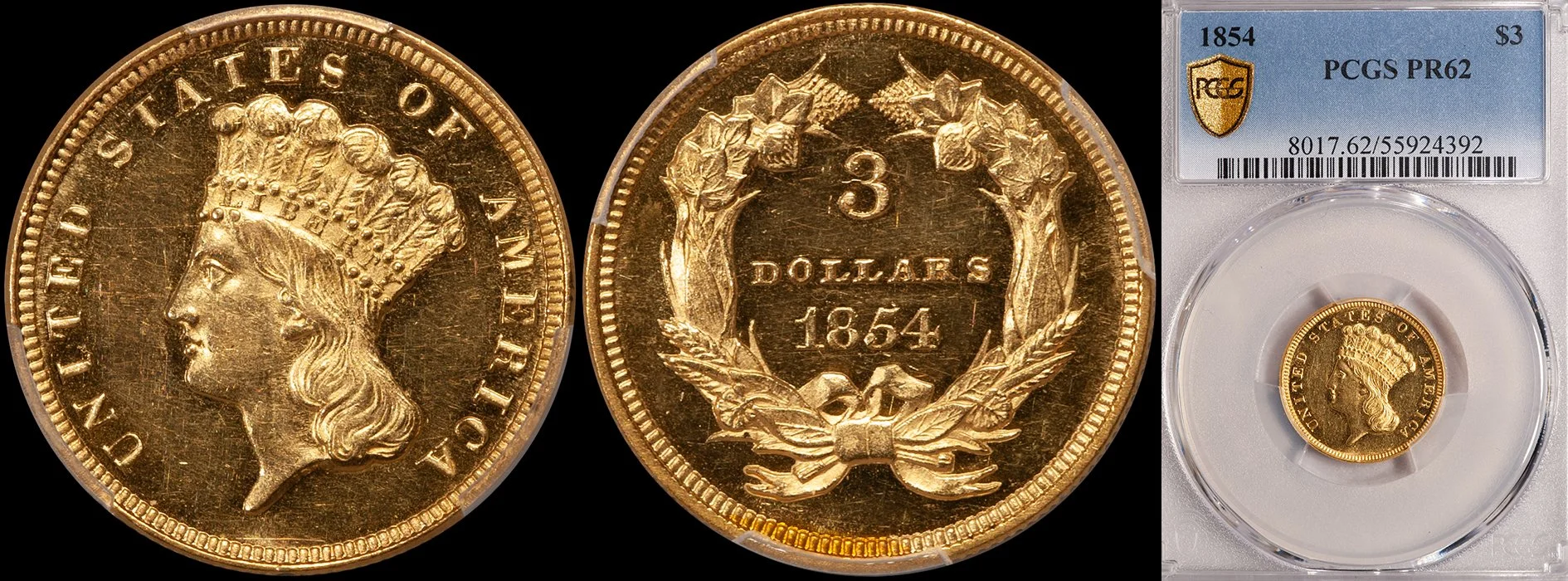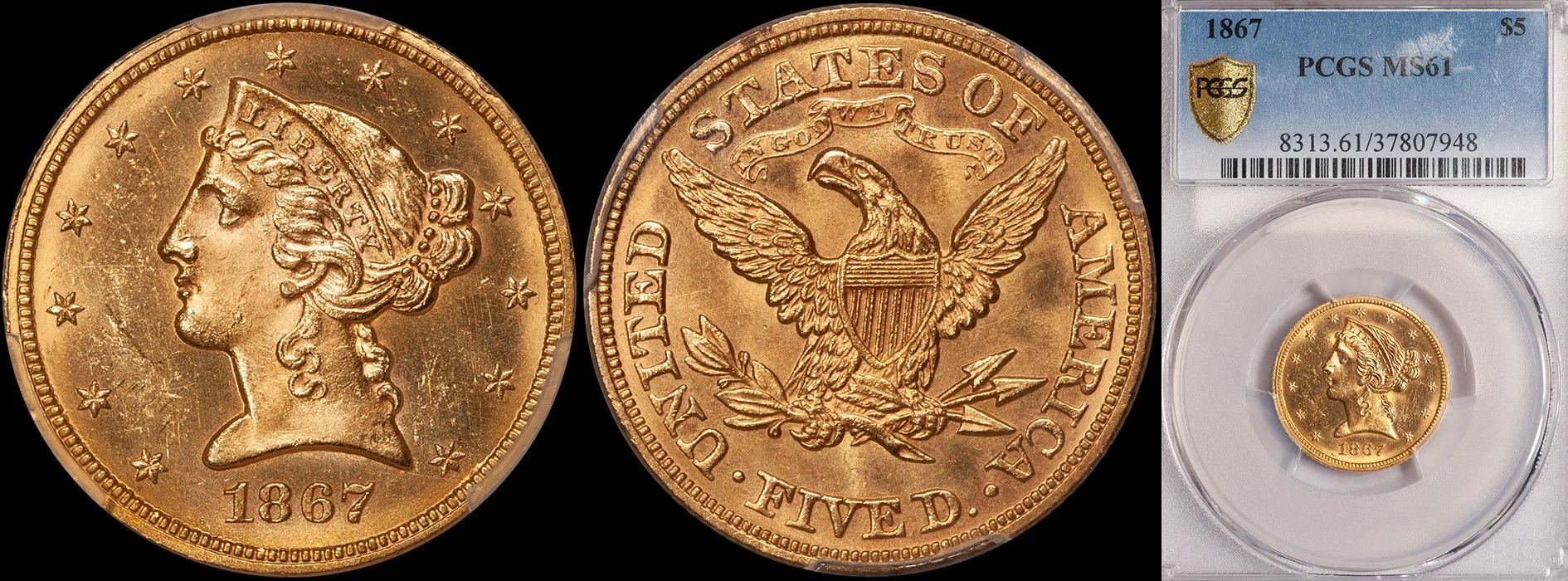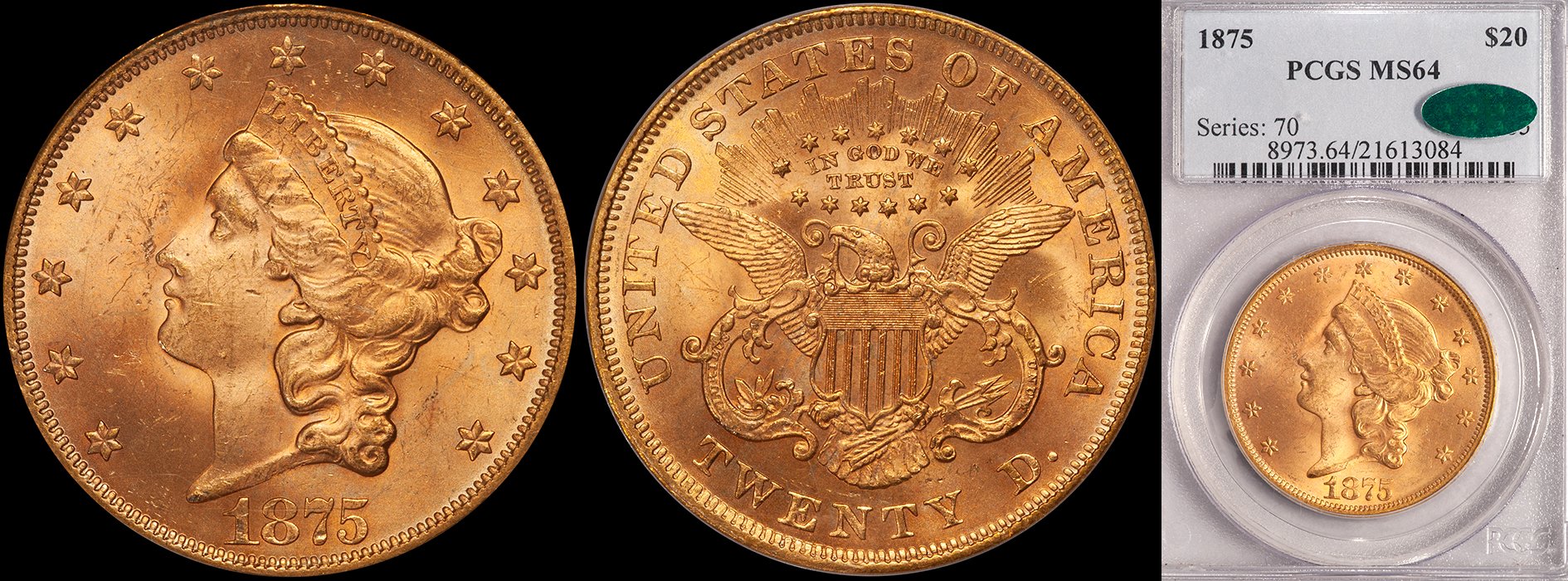
How Does DWN Prices Rare Coins?

I’ve been asked a few times recently how I price the coins that appear for sale on my website. No, the answer does not involve dart boards, a small man behind a curtain or invoking the spirits of coin dealers past. I have a system that is partially observational/deductive and partially intuitive that allows me, I think, to price coins in a consistent, coherent fashion. Obviously, my cost basis is a factor in pricing. But I don’t just apply a standardized mark-up to every coin I purchase. And don’t giggle when you read that last remark because I know a number of dealers who simply apply a 15%, 20% or 25% mark-up (or more) to virtually any coin they purchase, whether it’s a 1911 quarter eagle in MS62 or a 1911 quarter eagle in PR68.

When I am pricing my new purchases from a coin show, I generally take a few factors into consideration. The first is current auction prices realized. In some cases, auction prices are really helpful. Let’s say I have a certain Charlotte half eagle in AU58. There have been four separate auction transactions this year and they have ranged in price from $4,250 to $4,750. If my coin is average quality for the grade, I’m probably going to price it at the lower part of this range. If it’s what I regard as a high end coin for the grade, I’m going to price it at the high end of the price range.

I also check to see what I’ve sold the last example(s) of a certain coin for. If it’s something like an 1855-O gold dollar in AU58 (a coin that I handle on regular basis) I’m going to use my last sale(s) as a guidepost. If it’s a really rare coin like an 1855-O half eagle in MS61 (a coin that I have handled only twice in the last decade) than I will have to take other considerations into account: have other 1855-O half eagles in MS61 been graded since I sold my last coin? How is the overall strength of the New Orleans half eagle market? How many collectors are actively looking for this coin at this point in time?

What about a coin that is rare enough that none have appeared at auction since, say 2005? Or a coin that only one or two auction appearances have occurred but at least one of them is considerably higher than the other? This is where my knowledge of the coin market and coin pricing comes into play.

Let’s say the coin in question is a PR65 gold dollar with an extremely low mintage. The coin is attractive for the grade and truly rare. I would use a few criteria in this instance. First, I’d look to see if there were auction records for other Proof gold dollars with comparable mintages and comparable survivors. Second, I’d try to figure what percentage over “basal value” this coin was worth (in this case, “basal value” means what is the most common date of the type worth in this grade). Thirdly, I use the “gut check” theory of pricing. I’d ask myself, “if this coin walked-up to my table at a major coin show and I was thinking of buying it purely ‘on spec’ what would I pay?”

The two published guides for coin prices that I use most often for pricing remain Coin World’s Trends and the CDN or “Greysheet.” However, due to the fact that they are not updated as much as they should be, these two guides are beginning to become less relevant to me and the PCGS on-line guide, which is updated on a much more regular basis (and by a pretty knowledgeable dealer named David Hall) is now more of a factor in influencing my pricing of certain coins.

The knowledge part of pricing comes into play as far as coins that are undervalued by published price guides. Let me give an example. If I were to price an 1838 eagle in EF45 at 75% of Trends (which is a pretty standard pricing percentage of this series by DWN) I would be offering it around $3,100. I’m guessing if I did this, I’d have twenty orders for the coin in a day. Why? Because the coin is worth over $10,000 and all the published pricing guides (except for PCGS’, I should note) fail to reflect an accurate value. As someone who knows the Liberty Head eagle series very well, I know that the 1838 is worth far in excess of published values and will price it accordingly.

There are a few other pricing questions that I get asked frequently. Here are a few of them:

1. How do I price PCGS coins vs. NGC coins? I am a pretty strong believer in the old “look at the coin and not the holder” argument. If an NGC EF45 Dahlonega half eagle is very choice and original and I agree with the grade, I’m going to price it at the same level as a nice, original PCGS example. If an NGC AU55 Dahlonega half eagle seems overgraded to me and I think it’s really an AU53, I am going to price it at a lower percentage relative to Trends than a coin that I think is solid for the grade. But the exact same statement is true with a PCGS coin. One instance where a so-so PCGS coin might get an unfair price advantage versus a nicer NGC coin is where the PCGS population for the coin is decidedly lower. As an example, let’s look at an 1844-O eagle in AU58. The PCGS population is six in this grade with three better while the NGC population is forty-nine with thirteen better. By virtue of its much lower population, I’d price a PCGS coin at a 10-20% premium by virtue of its significantly lower population.

2. How much of a premium do CAC coins get? In the generic market(s), this is a pretty easy question to answer. John Albanese typically posts his bids for CAC-stickered Morgans, Walkers, higher grade 20th century gold, etc. and they are at premium prices over non-stickered coins. In the rare date gold arena this is a harder question to answer. When I offer a Dahlonega quarter eagle in AU55 with a CAC sticker I don’t (yet) ask any premium for it. But if I have an early half eagle in MS63 or a Proof quarter eagle in 66CAM, I charge at least a 10% premium for a CAC coin. This is due to the fact that John himself is willing to pay premiums in these markets for coins that meet his standards.

3. How do I price OOG coins? I define an OOG coin as “original but overgraded.” An example would be a nice, dirty 1838-C half eagle in an EF45 holder that faces-up well but, in my opinion, is really just a nice VF coin. My typical solution to this problem is to offer a coin like this wholesale at fair market value and to offer the coins that I have that I agree with the grades to my retail clients.

Coin pricing remains difficult, especially in a market such as this but I believe that well-informed coin dealers (and collectors) can apply published information and their personal knowledge to establish reasonably accurate levels.
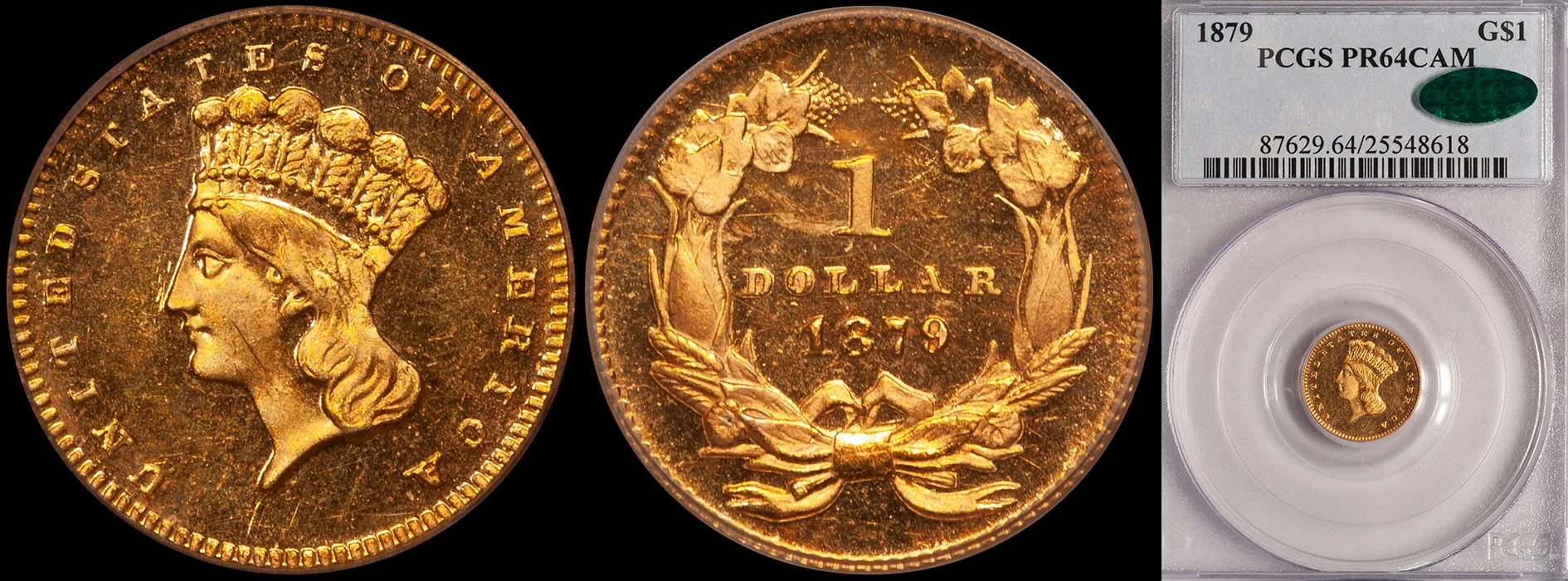
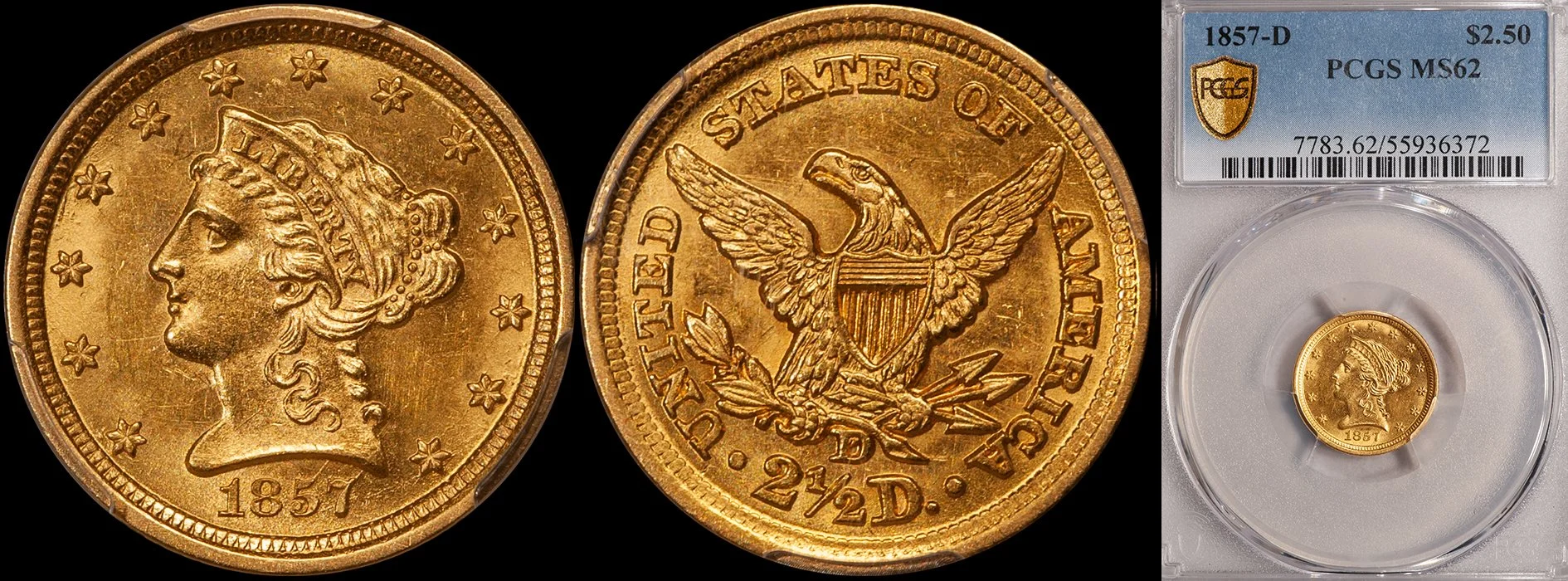
The Availability of Rare Coins

One thing that I’ve always found interesting about the coin market is the ebb and flow of coins that are (or aren’t) available. If you actively buy and sell coins for any period of time, you learn that certain “rare” issues or series always seem available. Other supposedly available coins can, with no good reason, go through fallow periods where they become very hard to find. I was having a conversation with a client yesterday and he raised a good point: in the last year or so, it seems that interesting New Orleans half eagles have not been offered for sale with much frequency. As we began discussing this statement, my mind raced back through the last year and I asked myself what were some of the interesting New Orleans half eagles that I have recently handled. The answer was pretty illuminating...

Over the years, I think I’ve owned more interesting New Orleans half eagles than just about anyone. I was one of the first dealers to recognize how rare these coins are and I’ve tried to make a market in high quality New Orleans half eagles for close to two decades.

As recently as a few years ago, I was handling ultra-cool New Orleans half eagles on a regular basis. Coins like the Pittman MS63 1840-O, two of the three known Uncirculated 1842-O, two extremely high grade 1843-O Small Letters, the MS63 Bass 1845-O, two nice Uncirculated 1851-O, the two finest known 1854-O, etc. Often, I had two or three Finest Known or Condition Census coins at one time.

But since last summer I’ve noted a major slow down in the New Orleans half eagles I’ve handled. I don’t think I’ve owned a single 1842-O or 1847-O this year and the only Uncirculated pieces of note that I’ve handled have been the more available dates like the 1840-O, 1844-O, 1845-O, 1846-O and 1854-O. So where are the coins?

My guess is that what we are seeing here a classic case of a Real Collector’s Market. Let me explain. My enthusiasm for New Orleans half eagles has probably rubbed-off on a few people and my guess is, at this point in time, there are at least six to ten serious collectors of New Orleans half eagles. Assuming this is the case, this has removed most of the nicer New Orleans half eagles from the market. Let’s quickly do the math.

Say we’re looking at a coin like the 1851-O half eagle in Uncirculated. My best estimate is that a half dozen or so are known in Uncirculated. With at least six to nine collectors out there for this series in high grades, that means that the demand clearly exceeds the supply. Given the fact that most of the serious collectors for this series seem to be in buy mode right now as opposed to sell mode, this means that the supply has dried-up for a coin like an Uncirculated 1851-O half eagle. A high grade example won’t come on the market unless a current owner is forced to sell, a new coin is discovered or prices rise to the point that current owners are motivated to sell.

But the ebb and flow of coin supply isn’t always so cut and dry. Look at something like Large Cents. Years went by with no major collections selling and now, within the last two years, you have the Husak, Naftzger and Holmes collections becoming available. I don’t think any serious Cent collectors expected so many great coins to come on the market in such a short time. It was, instead, a series of circumstances that occurred in an almost random fashion.

Back to New Orleans half eagles. When will the dearth of choice, interesting coins end? It’s hard to say. This article could spur a few coins coming onto the market (and if you are planning to sell any, please call me first!). Or, we could go another year or two before any interesting coins come on the market. It’s hard to say and I think this degree of uncertainty is one of the things that make a truly rare segment of the market like this much more interesting than Morgan Dollars or Buffalo Nickels.

Collecting U.S. Gold Coins On A Limited Budget

Of course everyone would like to not think twice about buying all sorts of cool, expensive gold coins. But most of us have a coin collecting budget that we have to hold to. Is it possible for the collector of average means to seriously collect US gold? I would contend that even with a reasonably small budget, a collector can have lots of fun in this area of the market and over the course of time put together a pretty neat collection. I’d say that you really need a minimum budget of $1,000-2,000 to buy reasonably interesting pre-1933 gold coins. You can buy coins in the $250-500 range but you are going to have to make compromises in quality or collect very esoteric areas like Period Two California Fractional gold. If you can live with the idea of quality over quantity and buy a bit less frequently, you’ll be pleasantly surprised how much damage a thousand-dollar bill can do in the US gold coin market.

So, what can you do with a budget of $1,000-2,000 per coin?

Let’s say you a relative newbie to the coin market and you don’t have a high degree of comfort regarding your knowledge. An area like St. Gaudens double eagles might be a good place to start. You get the comfort of buying an ounce of gold with every purchase and you will own a coin that is incredibly liquid. A quick perusal of the most recent CDN Monthly Summary shows no less than twenty-five Saints that have a current wholesale bid of less than $2,000 per coin. Assuming that prices for these issues stay in this range (and my gut feeling tells me that MS63 Saints will be dropping in price in the near future) this means that a pretty significant collection could be built on a reasonable budget.

Another series that a collector without a huge budget can have a lot of fun with is Type Three gold dollars. I’ve recently sold coins like 1857 and 1858 gold dollars in PCGS MS64 (with CAC stickers!) for not much more than $1,000 and for just a bit less, you can buy many of the popular low-mintage dates from the 1880’s in the same grade. If you purchase coins graded MS63, many are $750 per coin or in some cases less. Yes, gold dollars are small. But you have to like the value of a 125-150 year old American gold coin in Choice Uncirculated (or better) for $750-1,250.

For overall value, it is hard to beat the Liberty Head quarter eagle series. Even though many of the branch mint issues from the 1840’s, 1850’s and 1860’s are rare and fairly expensive, the Philadelphia coins from all decades are mostly affordable. The post-1875 issues are especially reasonable from a price standpoint and it is possible to purchase some legitimately scarce coins for $1,000 or less. I am a very big fan of the 1840’s dates from Philadelphia and many can be bought in AU50 for less than $1,000; despite their obvious scarcity.

I’ve mentioned a number of times in the past year that I think No Motto half eagles and eagles from the Philadelphia mint are a very good value. To give you an idea, I sold a really choice NGC AU58 CAC approved 1852 half eagle this morning for $625. This is a 150+ year old gold coin with a basal value of $300. At $625, how can you go wrong? There are many other Philadelphia half eagles from the 1840’s and 1850’s that can be found in AU55 and AU58 grades for $1,000 and less. The eagles from this era are more expensive but choice, original AU55 coins are sometimes available for less than $1,000. A collector on a limited budget could put together a very nice date run of No Motto half eagles and eagles without breaking the bank.

Another area that still offers good value is the Liberty Head Type One series. There are, of course, many extremely expensive dates in this series and even the common issues tend to be expensive in higher grades. But nice EF45 to AU55 coins are available from time to time and many can be purchased for $1,500-2,000. As an example, I sold a pleasing 1855-S in PCGS AU50 the other day for $1,700. It’s not a really rare coin but it’s the second year of issue from this mint and it’s a date that jumps up in price appreciably once you hit the MS60 level.

If you don’t have a huge numismatic budget, don’t necessarily rule out pre-1933 gold coins. As I mentioned above, there are a lot of very interesting coins available for less than $1,000 and if you can get your budget up to $2,000 per coin, you have some seriously interesting options to choose from.

If I Collected Coins What Would I Collect?

I often (OK, not “often” but at least “occasionally...”) get asked the question “what kind of coins do you collect?” I don’t currently collect coins because I think that, as a dealer, being a collector is an inherent conflict; I don’t ever want to have an internal debate with myself about whether or not I should sell a coin that I buy. But I do have a pretty good idea about what I would collect if I were actually collecting. When I was younger and not yet a full-time dealer, my first love was Colonial coinage. I specialized in Connecticut coinage and specifically collected 1787 Draped Bust Left coppers. In retrospect, this was pretty ambitious for a ten year old kid. There are something like 350 varieties of 1787 DBL coppers and not only was I collecting them by variety, I was typically doing it without a reference guide as I had memorized many of the important varieties.

Connecticut coppers appealed to me for a number of reasons. First off, they were cheap. My budget was pretty small back in the day and for $25 to $75 per coin, I could buy very presentable examples (the kind of coins that are worth $500 or so each today). Secondly, the age and history of these coins appealed to me. I was always a history buff and the Colonial era was of particular interest to me. Thirdly, I grew up in New York City and there were some friendly, knowledgeable dealers in the area such as Richard Picker, David Sonderman, Bob Vlack and Jim King. The fact that the coins were readily available for trustworthy local sources appealed to me. Finally, I liked the crudeness of the designs and the complexity of the series.

After my Connecticut obsession, I moved onto Liberty Seated quarters. I chose this series for one really glaring reason: the coins seemed hugely undervalued to me. Obviously, I couldn’t afford Gem coins, so I tended to focus on choice, original pieces in the Fine to Extremely Fine range. I never did finish the set (I could never afford the rare Carson City issues from 1870 to 1873) but I was able to buy some pretty awesome coins at what seemed like pretty reasonable prices.

So, using my experiences from the collecting days of yore, how would they apply to the market of today? To answer the “what would I collect” question let me start by deducing what I wouldn’t collect. I know that I would avoid coins made during the 20th century. For whatever reason, 20th century coins have just never really appealed to me (with the exception of Saints but that is a set that I could never afford to collect in the way that I want to). I am pretty sure that I would also avoid collecting Proof coins. I like very low mintage Proofs struck prior to 1880 but, for the most part, I like coins that were made to circulate. In the same vein, I think I would focus on coins that were in lightly circulated grades as opposed to high end Uncirculated coins. I like a Gem coin as much as the next guy but there is something about an evenly worn, dirty EF45 to AU55 coin that really appeals to me. I know I would also focus on an era of history that was appealing to me. I also know that after all these years of focusing on gold coins, I’m going to have a pretty hard time not specializing in some sort of gold coinage.

So, at this point we are looking at business strike gold coins from the 19th century in circulated grades as the parameter of WWDC (What Would Doug Collect). For a variety of reasons, I have always been partial to coins struck prior to the Civil War, especially those produced from 1834 through the mid-to-late 1840’s. I don’t really have any preferences as to coin size, so I wouldn’t naturally be attracted to quarter eagles as opposed to half eagles or eagles. I know you are assuming that I’d select branch mint coins over Philadelphia and this is probably true although I do find the Philadelphia coins from this era to be very interesting and a really good value.

As someone who has long been an advocate of specializing and having a fairly narrow focus for a collection I’m going to actually listen to myself. I would also want to choose a series that doesn’t have any very expensive coins that I know I could never buy. I’d want coins that were scarce to rare but not impossible to find. And I’d want to be in a series where the coins were actually decent looking.

Given all of these parameters, I think that I would be a collector of No Motto New Orleans half eagles and eagles. I would want to collect both denominations and I’d try to have choice, original EF and AU coins that were evenly matched.

But I think I would also have a secondary, “cheap coin” collection as well. There would be points in time when I might not have the money for a good New Orleans gold coin or couldn’t find anything but I still had an itchy trigger finger and wanted to buy something. During these times, I’d focus on Liberty Seated half dollars (both Philadelphia and New Orleans) from the 1839-1852 era in EF and AU grades (with the occasional MS62 or MS63 thrown in for good measure).

To those of you who actually do collect New Orleans half eagles and eagles: don’t worry, I’m not going to suddenly become your competitor. But if these are your series of choice, give yourself a pat on the back and smugly tell yourself that you’ve made a choice that meets with my total approval!

Why a Motley Coin Collection Just Might Make Sense...

Numismatics is, in many ways, the Land of the Anal Retentive and collectors (and dealers) sometimes make decisions that are based more on personal obsessiveness that on sound business principles. Let me illustrate what I mean. Yesterday, I was talking to a good client about a coin that I sent him on approval. He liked the coin very much but he was worried about the fact that since it was in one of the brand new “with prong” NGC holders that it would destroy the consistency of his collection.

Being a bit AR myself, I could understand where this gentleman was coming from. If I had a specialized collection of, say, New Orleans half eagles, I could see the point of having all the coins in the same service’s holder. I could also see the point of having the coins all pedigreed, of having them in consecutive serial numbered holders, in making certain all the holders were free of blemishes, etc.

But as we were talking, I had what I thought was a Lightbulb Atop Head realization. As someone who looks a lot of collections and buys a lot of coins, I realized that for better or worse the presentation of coins is important to me.

If I see a collection where every coin is in a consecutively numbered NGC or PCGS slab, my impression (right or wrong...) is that this is a deal where someone just sent all the pieces in for grading and there is no “juice” left. Fair or not, I suddenly might become a bit concerned about the freshness of the coins and might not figure them as aggressively as I should.

If the exactly same coins were in a more random array of slabs (some NGC, some PCGS, some old holders, some new holders, etc.) I would probably be more impressed with their “freshness” and figure them more aggressively.

If you are a sensible collector, you probably just read the last two paragraphs and thought “that’s totally insane. The coins are what they are and what the #@$%^ does it matter what holders they are in?”

Good question. But until you’ve been around the coin business a while, you don’t realize how odd this market is. When you come right down to it, think how strange the whole concept of the coin business/hobby actually is. Ponder this: you are paying thousands or even tens of thousands of dollars for a small disc of metal, often with minimal intrinsic worth. The market can be thin and quirky (to say the least) and it is to your advantage to know as many of the little tricks as possible to maintain the integrity of your collection.

So before you send your New Orleans half eagle in the old PCGS green label holder or your Dahlonega quarter eagle in the slightly scuffed-up NGC holder, think twice and ask yourself it just might impact the integrity of your collection when it is time to sell.

The May Long Beach Show: A Report

I have generally sworn off writing show reports as, to be honest, they are as boring for me to write as they are for you to read. At this point, I figured I’d do reports on the Big Two shows (FUN and ANA) and leave the other reports to my fellow Bloggin’ Numismatists. The recent Long Beach show, however, was interesting enough that I thought it required a little bit of ink.

As you may or may not know, Long Beach is a show that I’ve come to dislike in recent years. It’s become very slow from a business standpoint, I’m not crazy about the way its run and, quite frankly, if I hear them playing the Oldies soundtrack one more time I think I will rip out my inner ear canals.

But this Long Beach seemed a little bit different. Dare I say it actually had a bit of a buzz (?!?) and I think the crowd at the show, at least on Thursday when it opened to the public, was as large as any Long Beach that I can recall going back to the 1990’s.

Why was this Long Beach different from the last edition(s)? My guesses would be three fold. The first had to do with the fact that gold has risen around $50 in the past few weeks. There are a lot of bullion/generic buyers in Southern California and a strong gold market always seems to bring out these buyers. The second is better publicity. I don’t know this for a fact but I would assume that the show promoters tried something new to get buyers through the doors and it worked. Attendance was reported to be up by at least 30%. The third is renewed interest among collectors who have been on the sidelines for the last few years.

If you are a serious collector who has been in the market for at least a decade the last few years was the classic good news/bad news scenario. The good news was that the coins you bought in the early 1990’s probably increased in value. The bad news is that your market niche was probably flooded by deep-pocketed new collectors who trusted their advisors (be they auction firms, dealers or other collectors) but often got poor coins at inflated prices. Now that many of these new deep-pocketed collectors have fled the market, serious collectors can, once, again, buy coins without Nimrod Competition. This fact is, I believe, responsible in getting some of the collectors who had been on the sidelines for a while back in the coin game.

I’m not saying that the coin market has suddenly turned around and that the Good Ol’ Days are back. There is one major issue in the market that needs to be addressed before things become all warm and fuzzy again. There are a lot of truly awful coins overhanging the market. By this, I mean coins that are severely overgraded or coins that have really poor eye appeal or coins that have been laughably processed. Right now, it is hard to find anyone to buy these even at a major discount. This has created the sort of exaggerated two-tiered market that we haven’t seen in a while.

Let me give you an example. I saw Charlotte and Dahlonega gold coins at Long Beach in AU55 and AU58 holders that, in my opinion, are worth less than coins that are choice, original EF45 or AU50. This scenario is certainly not limited to the dated gold market. My point is, until some of the crappy low-end coins that seemed to be everywhere at Long Beach are taken off the market, they will act as artery cloggers that continue to make the coin market unhealthy.

That said, I thought it was a very pleasant surprise that the recent Long Beach show turned out to be as strong as it did. True, I came to the show with absolutely zero in the way of expectations, but it was nice to stay busy for a few days and sell a few coins.

It’s always been tough to buy at Long Beach and this show was no exception. After a few days of slogging and grinding, I was able to purchase a few neat items, including the following:

*One of the finest known 1854-O Quarter Eagles, graded MS63 by PCGS *A rare and choice 1798 half eagle in an NGC MS62 holder *A lovely, fresh 1840-D half eagle graded MS60 by NGC *The nicest 1884-CC double eagle I have owned in years, graded MS62 by PCGS *An interesting selection of affordable C+D mint coinage in EF and AU grades

All of these coins have been described and imaged and are on my website just waiting to go to nice new homes. Please visit me at www.raregoldcoins.com and look for the inventory that is marked “new.”

Five Rare Date Gold Coins With Broad Appeal

As I’ve written before, I like coins with what I call “multiple levels of demand.” What this means is a coin that is sought by a number of different sorts of collectors. As an example, the typical Dahlonega half eagle is likely to appeal mostly to a Dahlonega specialist whereas a coin like an 1838-D half eagle might appeal to a broader range of collectors due to its status as a one-year type and a first-year of issue. There are not all that many gold coins that have such widespread appeal that they might be tempting to, say a Lincoln Cent specialist. But the coins that I am going to list below are pieces that in my experience have strong cross-collector appeal. I have sold a High Relief, as an example, to collectors who have never bought another St. Gaudens double eagle and probably never will. But I have never sold a rare date Saint (let’s say a 1929 in MS65) to a collector who specialized in Charlotte gold and wanted a rare date like the 1929 just “for grins.”

There are a number of rare gold coins with multiple levels of demand. For the sake of brevity, I am going to just list five. I can think of another five very easily. I’d like your input in case I decide to write another of these articles, so please feel free to list your five and send them to me by email at dwn@ont.com.

Without further ado, here’s my Fave Five Rare Date Gold Coins with broad levels of demand.

1. 1861-D Gold Dollar: This is a coin that I could probably sell a dozen of if I had them available. The 1861-D gold dollar appeals to a broad number of people for many reasons. It has a great historical perspective as it was issued by the Confederacy. It appeals to Dahlonega collectors as a key issue and to gold dollar specialists as well. It is rare in all grades and it has a crudeness about it that appeals to collectors who like “neat” coins. I’ve never had a hard time selling one and it is a coin that I would buy in nearly any grade, providing it wasn’t damaged or harshly cleaned.

2. 1845-O Quarter Eagle: Every coin dealer (and collector) has a few “pet” dates and, for me, the 1845-O quarter eagle is very high on the list. It probably doesn’t have the high level of demand among non-specialists that the other four coins in this group have but I think this issue is so rare, so undervalued and so historic that it belongs in any favorite’s list that I write. What do I like most? How about the mintage of just 4,000? The fact that this date was essentially unknown until the 1890’s? That a presentable VF to EF can be purchased for less than $5,000 makes it seem even more cool to me.

3. 1854-O Three Dollar: This isn’t a really rare coin and that’s one of the things that appeals to me about the 1854-O. I recently sold a nice, evenly worn EF for less than $3,500 and I’ve sold examples that cost over $50,000. What I like about this issue is the fact that it is the only three dollar gold piece from New Orleans. Unlike the 1854-D (another one-year issue) it is inexpensive enough that a collector who has no interest in Three Dollar gold pieces would buy one; unlike the 1854-D that is expensive and which might cause many collectors to think twice before an impetuous purchase.

4. 1838-C Half Eagle: This is another first-year of issue. It is traditionally linked with the very popular 1838-D half eagle (another first-year issue that is a one-year type as well). What I like more about the 1838-C is while it is probably a bit less scarce than the 1838-D in terms of overall rarity, it is far rarer in high grades. I regard the 1838-C as an extremely scarce coin in properly graded AU50 to AU53 and it is genuinely rare in choice, original AU55 to AU58. In all my years of specializing in Charlotte gold, I’ve only handled two legitimately Uncirculated 1838-C half eagles and only four or five that I regarded as true AU55 to AU58 pieces. Despite this coin’s rarity, it is still affordable in VF and EF grades.

5. 1838 Eagle: Here’s another first-year-of-issue that has gone from mostly unknown to very popular in the past few years. It is the first eagle produced after a thirty-four year hiatus and it is a rare, low mintage date with just 7,200 struck. It isn’t technically a one-year issue (a number of 1839 eagles have the same design) but it is a coin that is held in very high accord by collectors who do not care for the Liberty Head eagle series on the whole. Unlike the other dates listed above, the collector contemplating an 1838 eagle will have to consult various pricing sources as both Trends as the Greysheet do not reflect the levels that this date has brought at auction and via private treaty of late.

What's Hot/What's Not: The Coin Market As of May 2009

It’s been a longstanding tradition of mine to write a What’s Hot/What’s Not blog a few times a year. The last time I did this was, I believe, around the beginning of 2009. A lot has changed since then and, as we head into the summer, I’d like to share my thoughts about the coin market in general and United States gold coins to be more specific. In the past, it was always very easy to discuss those areas of the market that were “hot.” But with the current economic situation, it probably makes more sense to discuss what’s “not in meltdown mode” instead of what’s doing well.

I’ve been pretty surprised at, all things considered, how well the market has held up. When you consider that most people’s 401k plans are down 50-60% since September 2008 and that many people’s homes have lost 50% or so in value....the losses that we’ve seen in many parts of the coin market aren’t looking quite that bad.

Let’s take a look at a few specific areas and see how they are holding up and what my forecast is for them in the immediate future. The first is early gold. I would have to say that the early gold market has held up far better than most other areas in the coin market. Prices are down around 10-20% for the most part but demand for early gold remains strong and many early gold coins remain quite liquid. The biggest change I’ve noticed in this area of the market is related to quality. If an early gold coin is very nice (nice enough, in this case, to have received a CAC sticker) it is a reasonably easy sale even in this market. I think this is especially true with coins in the $5,000-20,000 range. The more expensive early gold issues are harder to sell right now, even if they are very nice and/or very exotic.

One area of the early gold market that seems to be experiencing a noticeable price correction is the Capped Bust Right Heraldic Eagle ten dollar gold type. I think this is very understandable when you consider that these coins got very pricey in the past few years and that many of the ones in third-party holders are just awful.

I’d have to call the Charlotte and Dahlonega market pretty spotty right now. In their February Long Beach sale, Heritage had a massive amount of C+D gold coins and many prices were very cheap. But unless you really understand the market (and saw the coins in the sale) it is hard to make bold declarations. My take on the C+D market is that there are a lot of truly wretched coins on the market right now and the bottom feeders are either out of money or able to buy the schlock so cheaply that they are dragging prices down for the decent coins. As far as really nice (or really rare) C+D gold goes, this is an entirely different market altogether. Coins like 1855-D gold dollars or 1856-D quarter eagles in wholesome Extremely Fine and better grades are doing just fine and I’m not sure they’ve dropped in value at all since September 2008.

Proof gold is another area that has clearly dropped but I’m not really certain exactly how much. It is clear that the not interesting, bright-n-shiny pieces are off at least 20% or in some cases even more. But it is hard to figure out what really nice Proof gold is worth right now since so little of it has sold in the past six months. My guess is that a high quality, low mintage issue from the 1860’s or 1870’s would bring around 10-15% less than it might of a year ago. The areas that seem hardest hit by the current Numismatic Malaise include Matte Proofs and smaller denomination Proofs from the late 19th century.

20th century gold has been hit harder by the economic downturn than 19th century gold. Expensive coins in the Indian Head series (quarter eagles, half eagles and eagles) are clearly weak. These areas were actually slumping even before September 2008 and for a variety of reasons. The Indian Head quarter eagle series had its major market maker pull way back with purchases, causing a significant drop in demand. Better date Indian Head half eagles and eagles have always been rather thinly traded and, as been the case for as long as I can remember, by happenstance both happened to be at low ebbs in their typical up and down flow. Saints had been very active until early 2007 but the market slowed down after a number of major collectors either sold their coins or cut back on their purchases. Ironically, the generic issues in these four series have been very solid performers in this market.

Two areas that seem to be holding up rather well are New Orleans gold and Type One double eagles. These are markets that are dominated by collectors and there is almost always strong demand for the limited number of choice, interesting coins that are offered for sale. I am noting a softening in the very high end of both of these areas (i.e., issues such as 1866-S No Motto double eagles) but the low to upper-mid price range of both areas seems pretty liquid right now. Coins that are in demand right now include better date New Orleans half eagles and eagles in the EF40 to Uncirculated range, Type One Philadelphia double eagles that are priced in the $2,000-7,000 range and anything in these two areas that is “exotic.” (an example of this would be a No Motto New Orleans eagle in Uncirculated that is one of fewer than four-five known).

From my own personal experience, I am noting a resurgence of interest in the last 45-60 days. I am selling considerably more coins now than I was a few months ago. But, there is a clear difference in the market. Collectors are much more selective than they were before and expensive coins (in my case, $20,000 and above) take longer to sell than they did in the past.

I expect the next few months to be pretty quiet. There are only two significant shows between now and the Summer ANA and at least one (the Baltimore show in June) is likely to have much lower attendance than the other editions of this convention. I think prices will hold firm between now and ANA with occasional spikes up and down that are mostly related to bullion movement.

PCGS Hires a New Grader and Some Thoughts on Third-Party Grading

I’ve used this forum in the past as a venue to criticize the grading services. So, it’s only fair to give credit where credit is due and congratulate PCGS on their new hire as a grader, Charlie Browne. I’ve known Charlie for the better part of two decades. He was last employed by Certified Asset Management, a wholesale firm and market maker of high-end US coins.

Charlie is an old school New England coin dealer; one of the last of the “smart and fair” guys (along with Warren Mills from RCNH and a few others) that used to include such now-retired luminaries as Ed Leventhal, Russ Vaughn, Chris Tracey and Jay Miller.

Here’s what I’ve always admired about Charlie. He’s a guy who gets by with a great eye for coins; not an ability to bake/putty/smoke/laser them. I’ve always liked doing business with Charlie: he’s a square shooter, he paid-up for nice coins and his inventory always had more choice, original pieces than most dealers. He’s going to make a great addition to the PCGS staff.

For the most part, I’m pretty impressed by PCGS and NGC’s ability to get it right when it comes to grading. But I’ve always had two basic complaints when it comes to the whole concept of third-party certification. The first is that graders are continually looking at coins that are out of their comfort zone. I think that I can grade 18th and 19th century gold as well as anyone but I’m pretty clueless when it comes to series like Buffalo Nickels and Walkers. How can PCGS and NGC expect their graders to be experts, simultaneously, in Indian Cents and Pattern silver dollars?

My second issue has to do with real-world experience. I love the fact that in Charlie Browne, PCGS now has a world-class grader on staff who has spent the last few decades buying and selling coins. You can read about grading, you can take grading classes, you can set yourself up as an expert on grading in chat rooms, etc. But there’s only one way to really, truly learn how to grade: you have to buy and sell coins and you have to do it in a situation where mistakes are going to hit you directly in the pocketbook.

Looking back over my two+ decade career as a professional dealer, my most vivid and memorable grading experiences haven’t been the big hits. They’ve been the situations where I made a titanic mistake; one that cost me financially. Trust me, there is nothing more humbling and more experiential than buying an early half eagle, paying MS63 money for it, having it come back a grade or two lower and, after much consternation, regrading and grumbling, selling it for a $10,000 loss. Unless you have absolutely no conscience, these mistakes teach you a lot!

Getting back to Charlie Browne and PCGS, what I really like about this hire is the “fresh eyes” that he will bring to the PCGS grading room. The more I think about it, the more I wish that both PCGS and NGC would bring in “guest graders” every few months. Guys like Charlie know the current market standards for most series, they know when the services are being too tight or too loose and they know that “look” that has the most commercial appeal.

When they coin market was in great shape a few years ago, I would imagine that the pool of potential graders that PCGS and NGC had to pick from was pretty unimpressive (or the impressive guys were probably pricing themselves at levels about two or three times their true market value...). Now that the market has contracted and some of the high-flyers are, shall we say “grounded,” the talent pool is probably a lot more impressive. For a variety of reasons, PCGS can now hire a world-class guy like Charlie Browne and I wouldn’t be surprised if NGC is in negotiation with their own impressive guy(s).

So, here’s to the Charlie Browne/PCGS situation working out well for everyone involved. I know that I’m excited about this announcement and I think Charlie will be a great addition to the PCGS staff.