How To "Brand" Your Coin Collection

You’re a serious coin collector. You’ve done all the “right” things. You’ve learned how to grade. You’ve become a knowledgeable specialist. You’ve worked exclusively with one or two exceptional dealers. Your collection is well on the way to being complete but you aren’t ready to sell it. What can you do in the interim to add value to it? I would suggest that proper “branding” of your collection might be the single smartest thing you can do once you’ve learned the right ways to assemble said set.

The American Marketing Association defines a brand as “a name, term, sign, symbol or design or a combination of them intended to identify the goods and services of one seller or group of sellers to differentiate them from those of other sellers.”

Brands play a huge role in our lives whether we choose to admit it or not. You don’t tend to buy a pair of sneakers because of their style or their supposed level of performance; you buy them because you are a Nike person or an Adidas person and you choose to display this symbol to other people; whether to seem “cool” or “informed” or for whatever other reason(s) motivate you. In the case of Nike, you might buy a pair because LeBron James endorses them. What if this was the case with coins?

A small but select group of collectors have figured out that branding, in the era of the Internet, is a way to add considerable prestige and value to their collection. What do I mean by this? Think of certain areas in the numismatic market and certain specific collectors come to mind. Lincoln Cents? Stewart Blay is the Man. Bust Half Dollars? That’s Dale Friend’s Domain. Saints? Steve Duckor is the King.

These three collectors have a number of things in common. First and foremost, they are true “collectors” in the best sense of the word. They are not guys who have barged into the numismatic arena like the proverbial 800 pound gorilla, recklessly bought and then exploded like a supernova with their remains soon consigned to a major auction. No, these are three guys who have been in their respective markets for a long, long time. In most cases, they are specialists who have maintained a fairly narrow focus which has, in turn, allowed them to be formidable buyers. They all know their strengths and limitations and they all have a trusted advisor (or two) to help them make important decisions.

What impresses me most about all three of these collectors are they ways that have branded their collections. I’m not certain that any of them sat down years ago and outlined a cunning master plan to do this; what I think has happened is that all are recognized as good guys and dealers who have clout when it comes to branding have been happy to help them. Plus it hasn’t hurt any of them that they own some really, really nice coins.

Before I discuss some of my own ideas about how to brand a collection, let me state that numismatic branding only works if you’ve got a product that merits branding. If you have a complete set of Saints and the coins aren’t very nice, it really doesn’t matter how well they are branded; they are still a schlocky set of Saints. It also matters what sort of coins you are attempting to brand. It’s still easier to brand the third or fourth finest set of Dahlonega gold coins than the best set of Sacagawea dollars.

So, here are a few ideas of how to brand your collection.

1. Become identified as an expert within your particular field. Even though Messrs. Blay, Friend and Duckor have never written a book on their respective fields, they are recognized as experts. Remember the old TV commercial that said “when E.F. Hutton talks, people listen?” Well, when Stewart Blay talks about Lincoln Cents or when Dale Friend talks about Bust Halves, their fellow collectors pay attention. These guys have put their money where their mouths are and ponied up for some incredible coins at auction or on the bourse floor. None of these guys have made a big deal about becoming an expert but, in their own quiet ways, their opinions have become extremely important in their respective fields.

Something that none of these collectors has done (yet) that I might suggest: either write the definitive book on their field of expertise or work with a knowledgeable dealer/researcher. Not that Blay, Friend or Duckor’s coins need any help but if they were the plate coins for the new standard references on Lincoln Cents or Barber half dollars or Saints this would add even greater mystique to them, in my opinion.

2. Selectively display your collection (but maintain an aura of mystery...) One of the smartest things that Stewart Blay and Dale Friend have done is to display their collection, through the auspices of the PCGS Collector’s Club, at major coin shows. To be honest with you, the Lincoln Cent series is not of great interest to me and I can count on one hand the number of Lincolns that I have bought and sold in two decades of being a professional numismatist. That said I was excited to view the Blay collection when it finally was exhibited last year. Part of the reason was that Blay had cultivated an aura of mystery about his coins over the years. Everyone said how great they were but no one seemed to have actually seen more than a few at a time. When the coins did become available for viewing, this added to their mystique; it was one of the few collections that really lived up to its hype!

Even if you choose to never display your coins in person, you can display them virtually. Let’s say you have put together a great set of Liberty Head quarter eagles. How about buying the domain name www.libertyquartereagles.com and putting together a website that becomes the “go to” source for information and images on this series?

Another thing to consider is, from time to time, displaying a few of your coins. Every year or two, Brent Pogue selectively displays a few of the magnificent coins in his collection. He never shows more than a few and he doesn’t make a big fuss about them. But after I see them, I go back to my bourse table, look at my inventory and wonder if I shouldn’t take all of my coins and toss them into the closest trash can.

3. Let the grading services help you. Both PCGS and NGC LOVE serious collectors and both need good content for their websites. That’s why they are happy to run interviews with Dale Friend (as PCGS now has on their website) or sponsor Stewart Blay’s display. I can assure you that dealers like myself with a strong web presence would love to have Steve Duckor write a detailed article about how to collect Saints or how to put together a great set of coins. What better way for a collector to brand his collection than to have PCGS or NGC write glowing articles or to feature nice interviews!

The 1845-O Quarter Eagle

If I had to list my favorite United States gold coins, the 1845-O quarter eagle would be at the top of the list. This is an issue that I like for a variety of reasons. It’s rare, it’s enigmatic and it has an interesting numismatic background. After striking a comparatively large number of quarter eagles in 1843, the New Orleans mint did not produce any in 1844. None were actually struck in the calendar year of 1845 either; all 4,000 dated 1845-O quarter eagles are known to have been delivered on January 22, 1846. This meant that there was no official record of the 1845-O quarter eagle in the Mint Director’s Annual Report. As a result, this issue was all but unknown to numismatists until the beginning of the 20th century.

The first public record of the 1845-O was in the December 1894 issue of The Numismatist and in 1909, the famous uber-collector Virgil Brand purchased an 1845-O quarter from J.C. Mitchelson for the then-astounding price of $150 (this very coin is traceable today and it is the finest known; see the Condition Census listing below for more information).

Of the 4,000 struck, it is believed that just 65-75 are known. Most are very well worn and the typical 1845-O grades in the VF to EF range. Properly graded About Uncirculated pieces are very rare with fewer than a dozen known to me. I am aware of just three known in Uncirculated. These are as follows:

1. Private collection, ex: Doug Winter, Heritage 1999 ANA: 7836, Bowers and Merena 1987 ANA: 538, Bowers and Merena 10/83: 110, Virgil Brand collection, J.C. Mitchelson. Graded MS63 by PCGS and NGC. 2. Louisiana collection, ex: Doug Winter, Nevada collection, Bowers and Merena 11/90: 477, Paramount Auction ’87: 386, Bowers and Merena 6/86: 149. Graded MS61 by PCGS. 3. Kansas collection. Graded MS60 by NGC.

Most 1845-O quarter eagles show considerable wear and I know of a number that have rim damage or have been cleaned to the point that they would not grade at PCGS or NGC. This issue tends to come with a decent strike. The obverse is typically sharper than the reverse and even lower grade specimens have nicely defined radial lines at the centers of the stars. Nearly every example has a mint-made depression that runs from the area between the curls on the back of Liberty’s head towards the final star. It is the result of a foreign deposit adhering to the die when it was struck. This does not affect the grade of an 1845-O quarter eagle.

There are two other die characteristics seen on 1845-O quarter eagles that are of interest. A series of raised die scratches can be seen inside of the first star. There is also a diagonal bar on the face of Liberty; this can be seen only on higher grade examples. A few 1845-O’s also have a reverse depression from the O in OF down to the back of the eagle’s neck.

As one might expect, it is exceptionally hard to find an 1845-O that has original color and surfaces. The natural color is a deep coppery-orange hue and this can be very attractive. I know of an example in a North Carolina collection (ex: Eliasberg) that has superb original color and this is among the more pleasing examples that I have seen. The finest known is clearly the Brand coin. It is very choice for the grade and has claims to the MS64 level. It would set a record price if it became available in the near future.

This is an issue that has become very popular in recent years. I think it is exceedingly undervalued in VF and EF grades. The current Trends value for an EF45 is just $3,500 and in my opinion, an accurately graded EF45 example is worth more than this. Prices for nice AU coins have risen considerably in recent years but I still think a nice AU55 or AU58 is a good value at the new, higher levels. It is hard to ascribe a value to this date in Uncirculated given its extreme rarity and high level of demand.

Hunting For Value In Today's Rare Coin Market

As we roll towards the mid-way point of the numismatic year, this is a good time to step back for a second and reflect on value. The Numismatic Prognostications of late 2008/early 2009 have not proven as dire as first thought (at least not yet...) but there has still been quite a bit of shake-out in the coin market. For the collector who is a stickler for good value, does this represent a good time to jump into the market and pursue some of the bellwether items that are standards in any collection? Let’s take a look at a few of these and see if they are good values at current levels or if the collector should ride the market out and take a “wait and see” approach.

The first coin I’d like to look at is a 1795 half eagle graded AU55. The 1795 half eagle is a very popular issue due to its status as one of the two first gold coins struck by the United States mint. It is scarce but not unobtainable and it is priced at a level that many collectors can (still) afford. The current value of an average quality 1795 half eagle in AU55 is around $40,000. Last year, examples consistently traded in the $45,000-50,000 and at the peak of the market in 2007 they hit the $50,000-55,000 mark.

Now, let’s look back a few years. What were 1795 half eagles in AU55 worth five or six years ago? As I recall, it was possible to buy a nice, solidly graded example for around $25,000-30,000. My gut feeling tells me that it’s not likely that we’ll see these levels again for this coin but that a dip down to around $35,000 might be possible this year, especially for examples that are low-end and unoriginal.

In my opinion, at current levels (give or take 5-10% on the downside or upside), the 1795 half eagle is a pretty good value in AU55. But I’d be very picky right now. The last three or four examples that I have seen in AU55 holders have been fairly unattractive. A choice, lustrous piece with good eye appeal and nice color is hard to find at the new levels and I think it’s a solid value.

How about the Big Brother of the 1795 half eagle: the eagle from this year? I personally love 1795 eagles. It’s a beautifully designed coin, it’s historic, it’s scarce but not to the point of being esoteric (as are some of the rare date early eagles of this design) and it’s an issue that has been in demand since the early days of coin collecting.

Prices levels for this issue in AU55 have held up a little better than they have for the similarly dated half eagles. I haven’t handled an AU55 in a few months but I’m guessing that they are worth around $50,000-55,000 right now. Last year, examples traded in the $55,000-60,000 range and at the peak of the market in 2007, I traded at least three of them in the $65,000-70,000 range.

Looking back a few years, 1795 eagles in AU55 were trading for around $35,000-40,000. If I had to guess what the current “basal value” for this issue is, I’d say around $45,000. At this level, I have to think there are a lot of dealers who would jump in, even for coins that weren’t especially high end.

In my opinion, a nice, choice 1795 eagle at around $50,000 is very good value. Again, I’d be picky if I were buying one. I’d spend a few extra thousand dollars and wait for an example that was as original as possible.

What about High Reliefs? As you might know, I’m not a huge fan of High Relief double eagles from the standpoint of value. But I do love the design and if I were a collector I can’t imagine not owning a nice MS64 example at least once during my collecting career.

If you shop around, I think you should be able to buy a decent non-CAC quality MS64 for around $26,000-28,000. These were worth around $32,000-34,000 a year ago and at the peak of the market in 2007 I can recall seeing examples trade in the $36,000-38,000 range. Around five or six years ago, as the Great Bull Market in coins was beginning, MS64 High Reliefs were available in the $22,000-24,000 range.

These numbers are sort of surprising to me. Given the near-ubiquity of this coin in this grade (PCGS alone has graded over 1,200 in MS64) I would have personally expected it to have dropped more than it has so far. Many collectors are not aware of the fact that some of the dealers who were the biggest two-way market-makers in High Reliefs have cut back their buying due to cash-flow constraints. Given these factors, I’m impressed that MS64 High Reliefs have only dropped 15-20% since last year. My gut feeling is that they could drop another 10-20% but I don’t see them getting much cheaper than the low 20’s in MS64. At this level, I would have to think that they are a “safe” purchase.

Let’s look at one last item. How about something that straddles the line between “generic” and “rare coin?” I’m thinking Three Dollar Gold and, more specifically, I’m thinking an 1878 $3.00 in MS64.

If you follow the generic market, you probably are aware that Three Dollar Gold is not in demand right now. I would term this series as “cold” and it might even be approaching “glacial.” With a little price shopping and comparing various dealers’ inventories, you should be able to buy an MS64 in the $6,500-7,500 range. These were worth $8,500-9,500 a year ago. The peak of the market for common date MS64 Three Dollar gold was in late 2005/early 2006 when these were being promoted and they got as high as $12,000-14,000 in MS64. Going back to the beginning of the bull market, MS64 Threes were selling for $5,500-6,000.

I’d like to tell you that I thought MS64 Threes were a great value right now because I do think that they are cheap. But the problem with this series is ample supply and almost no current demand. Unless someone starts promoting Threes again, I could see MS64’s drop down to the $5,000-$5,500 range. So unless you really need one for a type set, I’d suggest waiting a while and letting them get cheaper.

Gem Charlotte Half Eagles: The Elite Eight

In my last blog, I wrote about a Gem 1855-C half eagle that I was fortunate to recently handle. A number of readers asked me about some of the other Gem half eagles from this mint and I thought it would be interesting to take a look at each of these. There are a total of eight Charlotte half eagles that have been graded MS65 or better by either PCGS or NGC (or by both services in some cases). Many are very famous coins within the Charlotte gold collecting community. A few are not quite as famous and are not given the full "props" that the others have received in the past. Let's take a quick peek at each of the eight Gem Charlotte half eagles.

1842-C Large Date Graded MS65 by NGC, ex Milas/Eliasberg. This coin has a pedigree dating back to 1920 when John Clapp Jr. purchased it from Elmer Sears. It was later in the Eliasberg collection and it brought $17,600 (a comparably high price) when it was sold at auction in 1982. The coin was later owned by Chicago dealer Ed Milas and was offered in the Stack's May 1995 sale of his superb collection of No Motto half eagles. It is now owned by a North Carolina collector and it has been off the market for close to a decade.

1846-C Graded NS65 by NGC, ex Elrod/Eliasberg. This is one of my all-time favorite Charlotte half eagles. It was purchased by John Clapp Sr. out of the David Wilson sale conducted by S.H. Chapman in March 1907. It was later owned by Louis Eliasberg and it brought a reasonable $13,200 in October 1982. The famous specialist Stanley Elrod then owned the coin and I bought it in the late 1980's/early 1990's when the Elrod collection was being dispersed. I then sold the coin to Paul Dingler and bought it back in 2005. It is now owned by a West Coast collector. Funny story: when I was selling this coin to Paul Dingler, I had a hard time convincing him that this coin was as great as I believed. It turned out that Paul was color-blind and the dark, crusty color that this coin exhibited (at the time) was hard for him to appreciate. He did take my word for it and this 1846-C half eagle became a centerpiece of his fantastic collection.

1847-C Graded MS65 by PCGS, ex: Pittman/Farouk. As far as I know, this is one of only two of the Elite Eight that is currently in a PCGS holder. It has a wonderful pedigree that goes back to the Col. Green collection and it was later in the King Farouk and John Pittman sales. I first saw the coin in the Akers 10/97 Pittman Part One auction where it brought $44,000. It was last sold as Heritage 4/02: 6986 where it brought $47,150. I do not know the current location of this impressive Gem.

1849-C Graded MS66 by NGC. This coin was discovered by Avena Numismatics back around 1997 and was first offered for sale as Bowers and Merena 8/98: 330 where it did not meet its reserve. It finally found a home after appearing in the Bowers and Merena 3/04 auction realizing $70,150. It is clearly the finest known 1849-C half eagle. I am not aware of the current location of this coin.

1852-C Graded MS65 by NGC, ex: Silvertowne Hoard. In 1984 or 1985, a group of five remarkable 1852-C half eagles from a family in Southern Indiana was sold to Silvertowne Numismatics. One of the five (I'm not certain which) was later graded MS65 by NGC after having been graded MS64 by PCGS. Interestingly, the second part of this hoard came on the market in December 2007 when a Florida firm offered them for sale. The 1852-C half eagles from this hoard are notable for their superb original color, great luster and high overall level of eye appeal.

1855-C Graded MS65 by NGC, ex: Elrod. Having just written extensively about this coin, I'd prefer not to be reptetitive and suggest you read my blog dated April 8, 2009 for more information.

1857-C Graded MS65 by NGC, ex Elrod. This coin is from the famous Elrod collection and it was first sold at auction in February 1999 as part of the Heritage William Miller auction where it failed to meet its reserve. It reappeared as Heritage 1/03: 4797, in an NGC MS64 holder, where it sold for $33,350. I saw this coin within the last year in a dealer's inventory.

1859-C Graded MS66 by PCGS, ex Milas/Eliasberg. While not widely-known outside of the specialist community, this incredible coin gets my vote for the single finest Charlotte half eagle in existence. It was purchased by John Clapp, Sr. in 1910 from Elmer Sears and was later in the Eliasberg collection. It sold for just $8,800 in October 1982 and this cheap price can be attributed to the relative unsophistication of the branch mint market at that time. After appearing in a number of auctions in the mid-1980's it wound-up in Ed Milas' set of Gem No Motto half eagles where it sold for $104,500. I haven't seen this coin for many years but I remember it being superb and hope that it has retained its superb original color and luster.

It is remarkable to think that only eight Gem Charlotte half eagles exist, considering that close to 900,000 pieces were struck between 1838 and 1861. The collectors who own any of the Elite Eight have coins that, in my opinion, are truly worthy of the overused designation "world-class."

The Elrod 1855-C Half Eagle, Graded MS65 by NGC

In my February 25, 2009 blog I wrote about (and showed pictures of) the fabulous Bass 1855-C quarter eagle in NGC MS65. I recently handled the Big Brother of this coin, the Elrod 1855-C half eagle also graded MS65 by NGC and I thought I’d share some information and images of this amazing coin. First, a little background. The Elrod 1855-C half eagle has been off the market for close to a decade and has been in the collection of a North Carolina businessman. I can trace the pedigree of this coin back to at least the mid-1970’s when it was obtained by the pioneering collector Stanley Elrod of Matthews, N.C. After trading hands a few times, it was obtained by William Miller, a collector from Michigan. It remained in the Miller collection until it was sold as Lot 6284 in the Heritage February 1999 auction. At this sale, it realized $67,725 which remains a record for the date. The new owner of this coin is an anonymous specialist who is working on one of the finest collections of Charlotte gold ever assembled.

1855-C $5.00 NGC MS65 Elrod

The 1855-C half eagle is the twelfth rarest of twenty-four half eagles struck at the Charlotte mint and it is the eleventh rarest in high grades. I estimate that between 175 and 225 are known with just four or five in Uncirculated. The Elrod coin is, of course, the finest. The other two notable 1855-C half eagles are the Bass/Garrett coin (graded MS63 by PCGS) and the Milas coin (graded MS64 by NGC). Only one die variety is known but there are three die states. The first has a perfect reverse. The second has a light crack joining the base of the letters in FIVE and D. The third, which is rare and distinctive, has a full cud below these letters. The Elrod coin is Die State I.

What makes this coin an unabashed Gem? I personally believe that the two best things about the Elrod 1855-C half eagle is its coloration and its fresh, almost glowing appearance. The coin has amazing rich, frosty luster that is accentuated by sensational medium to deep orange-gold and maize color. The surfaces are almost entirely free of marks with the exception of some mint-made roughness in the planchet which is as struck.

How rare are Charlotte half eagles in Gem Uncirculated? I am aware of eight distinct half eagles from this mint that are regarded within the specialist community as Gems. They are as follows:

1. 1842-C Large Date graded MS65 by NGC

2. 1846-C graded MS65 by NGC (ex: Eliasberg)

3. 1847-C graded MS65 by PCGS (ex: Pittman)

4. 1849-C graded MS66 by NGC

5. 1852-C graded MS65 by NGC

6. 1855-C graded MS65 by NGC (ex: Elrod)

7. 1857-C graded MS65 by NGC (ex: Elrod)

8. 1859-C graded MS66 by PCGS (ex: Milas)

If I had to choose one of the coins above as the single finest known Charlotte half eagle, it would be the Milas 1859-C. But that’s another story that we’ll cover in a future blog. As far as I know the sale of the Elrod 1855-C is the first Gem Charlotte half eagle to occur in a number of years. The other Gem half eagles from this mint are off the market in tightly-held collections and may not be available for quite some time in the future.

Douglas Winter Numismatics (DWN) specializes in choice and rare branch mint gold and handles many finest known and Condition Census pieces from these mints. For more information regarding the Elrod 1855-C half eagle or any other gold coins from the branch mints, please contact Doug Winter at dwn@ont.com.

Why Are Some Rare Coins Undervalued?

Why are some coins clearly undervalued? I could answer this question existentially and say “because some have to be.” But the answer to this question is worth a little more exploration. Here are some things to consider about the valuations of coins. First and foremost, many of the areas of the rare coin market are thinly traded. In some cases, published prices for coins are speculative due to no examples having ever traded or they represent older price levels that have not been updated in many years. There are times when I am trying to figure what to bid for a very special rare coin at auction and I’m not sure I can scientifically pinpoint the exact price level. This can even be the case with coins that aren’t all that special but which haven’t traded in a long enough period of time to make their current value baffling.

Coin values are predicated by a supply and demand ratio. I have used this scenario enough times that it is now a semi-cliché but consider the following. If there are ten examples known of a certain coin but only three people care, it has an oversupply and its value is probably not very high despite its rarity. But if the same coin has thirty avid collectors than it will probably have a strong level of value.

This supply vs. demand situation is why some truly rare coins remain undervalued. As an example, look at a coin like the 1867 quarter eagle. Only 3,200 were struck and the most recent PCGS population figures show that just twenty-four have been graded. Despite this fact, the current value in AU55 is a whopping $1,500 or so. Shouldn’t this be a $3,000 or even a $5,000 coin? In theory, yes it should. But practical experience dictates that the level of demand for 1867 quarter eagles, which is virtually non-existent, keeps the price low. Advocates of the 1867 quarter eagle will counter with the argument “well, if this were an Indian quarter eagle with a population of twenty-four in all grades, it would be worth 10x in AU55.” In theory, this argument has merit. My counter-argument would be that the Indian Quarter Eagle series is many times more popular with collectors and that this is essentially an apples to oranges comparison.

The coin market is clearly becoming more and more researched-based as time goes by but I think the entire pricing system we have is antiquated. Let’s get back to the point I made in the second paragraph, about the market having thinly traded areas. These infrequently traded series are often compounded by a lack of good pricing information. I am always impressed by collector-dominated series like early Large Cents or Bust half dollars that have databases of pricing information available to collectors. The rare gold coin market doesn’t have this (yet) and I think it would be a real shot in the arm if someone were able to produce a price guide that helped dealers and collectors accurately determine values.

What I’d like to see even more is for an appearance-specific price guide to exist for these coins. Collectors of early Large Cents classify coins by three categories: choice, average and “scudzy.” Let’s say collectors are offered a certain die variety of 1796 Large Cent. A choice coin may be worth $5,000, an average coin $3,500 and a very low-end coin might only be worth $2,000. I’m not certain that these variations would be as extreme for, say, an 1854-C quarter eagle in slabbed AU55 but I do personally think a nice coin for the grade is already worth considerably more than an ugly one.

Getting back to my original point: why are certain coins undervalued? As I stated earlier, the major reason for this is that they are just not that popular. Another reason--one that is harder to give an explanation to--is that in any long series, it is inevitable that a percentage of the coins are “sleepers.” I previously mentioned that the lack of accurate pricing information in the market means that it is always going to be inevitable that a number of coins fall through the cracks. The value of being a specialist is that you will learn what coins are the sleepers before they become more widely known.

Opportunities for Collectors in a Generic-Oriented Market

After I left what was, for me, a very productive Baltimore coin show, I was sitting in a restaurant at BWI airport, eating a crab cake. As I was finishing up, a dealer who I don’t know that well but who I respect for his knowledge and his connections came up and asked if he could join me before our respective flights left. As you can no doubt guess, our conversation almost immediately turned to the market. As this dealer was quick to point out, as far as gold coins go, we are currently in one of the more confusing market segments that either of us could remember. He made a comment that I thought was really profound. He said something along the lines of “the market is so strange right now, that if I had a fresh deal of Saints or $20 Libs it would probably get other dealers more excited than if I had a group of fresh Proof gold coins.”

At first, I thought this comment was sort of odd. But the more I thought about, the more it made sense. The market is so oriented right now towards generics and “stuff” that many dealers have all but overlooked rare coins. And I think this presents a few really interesting opportunities for buyers who have some extra cash.

Generic gold is on fire for a number of reasons. The “guns and gold” crowd is buying gold because they have a fundamental distrust of the dollar and don’t like the direction that the U.S. economy is headed. Investors are buying American Eagles and other issues to put into their IRA’s in the hope that this year’s contribution outperforms last year’s stock purchase. And large-scale telemarketers are selling the heck out of double eagles to new buyers who have left more traditional investments and like the idea of owning some physical gold.

As is always the case when an area of the coin market gets hot, other areas are forgotten. When you go to a coin show now, it is very interesting to observe what some of the very savvy major buyers are doing. I know of at least two very smart, A-level dealers who have virtually stopped buying anything numismatic and are focusing almost exclusively on ten dollar and twenty dollar gold pieces. As I mentioned above, I think this has created some great opportunities for more numismatically-oriented dealers like me and for serious collectors.

One opportunity for rare coin buyers right now is for PQ coins. With so many traditional buyers of PQ rare gold coins focused on generics I have noticed that many really nice coins are bringing almost no premium over many really schlocky coins. This is especially the case with Charlotte and Dahlonega gold. At the Baltimore show I was able to purchase a few exceptional PQ coins for literally no more than a 5% premium over the usual crappy dipped-n-stripped stuff that I saw all over the bourse floor and in the auctions.

Another opportunity right now for a more select group of buyers is expensive coins. Most dealers (myself included...) are having a hard time selling coins priced at $10,000 and up. If you follow my website you will probably note that while, as recently as last year, I might have had ten or even twenty coins priced at $10,000 or more, right now I have very few.

If you have the money and you are a collector of five and six figure coins, I think you call the shots. Unlike in 2006 or 2007 when dealers had an easy time selling big coins, dealers are far more aware today of the difficulty inherent in selling these coins. My guess is that if your favorite dealer has a $15,000 coin in stock that you’ve had your eye on since December he’s probably more willing to sell it for $13,000 now than he was a few months ago. (And if he’s not, this is a good sign that your favorite dealer may be doing something else besides selling coins in the near future).

As I mentioned before “real coins” are currently out-of-favor with many dealers and some collectors as well. What does this mean for the serious collector? It may not translate to saving money on the coins you want (although it is likely that this is true). More likely, it means that you will actually get a chance to buy some of those hard-to-find issues that might have been causing you grief in years past. Let me give you an example. At the Baltimore show, I was able to get second shot at a group of interesting double eagles. The dealer who got first shot would have ordinarily bought every coin as they were interesting, not unreasonably priced and pretty choice. Instead, he passed on about half the coins and I bought everything that was left over. Why did he pass? My guess is that some of the coins were above the price level that he is currently selling well and that much of his focus is on generics as opposed to rare coins.

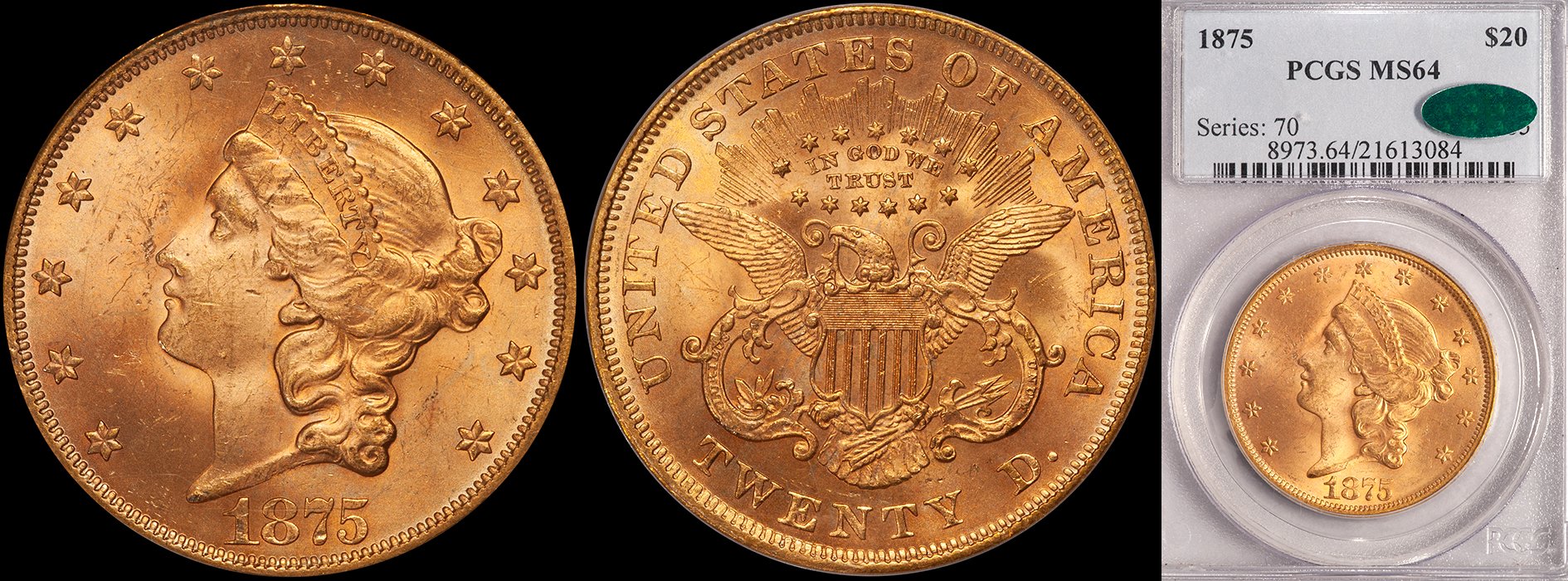
There is one other opportunity for collectors right now that I think deserves a quick discussion and that is selling some of the generics that everyone seems so focused on right now. If you bought Saints or Libs more than a year ago you are probably in a good profit position right now. Let’s say you have a bunch of MS65 Saints that your average cost is $1,200 and you can sell them today for around $2,000. It seems like a smart move to me to sell your position at an $800 per coin profit (not a shabby rate of return for a one-year investment during an economic meltdown...) and use the profits to buy a rare coin or two that you have your eye on.

Varities of Type One Double Eagles

In my opinion, Type One double eagles have become popular enough with collectors that it is time for some of the more interesting varieties in this series to come into their own. I am beginning to notice that these varieties are growing in popularity and that prices are beginning to appreciate as well. What are the most significant varieties in the series, how rare are they and what sort of price premium do they merit? 1852/1852 Double Date: This variety is one of the most obvious double dates that I have seen on a United States gold coin. It can easily be detected with the naked eye due to the heaviness of the date. The original date was punched slightly too high and then corrected with a second full punch placed slightly below.

In the last three years I have looked at over one hundred 1852 double eagles and fewer than ten have been of this variety. Nearly all have been in lower grades (EF45 and below) and I do not believe that I have ever seen an 1852 double date double eagle in Uncirculated.

This variety is recognized by NGC but it is not currently recognized by PCGS. I think it should sell for a 25-50% premium over a normal date 1852 and the premium in AU55 and higher grades should be even more than this.

1854 Large Date: This variety uses a date logotype from the silver dollar. The same anomaly occurs on 1854-O eagles. The 1854 Large Date is easy to recognize as the date is significantly larger than on the Small Date. I have spoken with collectors who have been confused by these varieties and I think it might be a bit easier to think of the Small Date as a Medium Date. In addition, remember that on the Large Date the 1 in the date in the date nearly touches the truncation; on the Small Date it is distant.

This variety has become widely accepted with collectors in the last five years and it is recognized by both PCGS and NGC. Prices have risen considerably and a nice AU now sells for close to $10,000 when available. The finest that I am aware of was the NGC MS64 sold by Heritage as Lot 2010 in their 2007 ANA auction. It brought an impressive $80,500.

It is still possible to cherrypick this variety despite its relative popularity. I have seen at least five or six in older NGC or PCGS holders without designations.

1858-O Blundered Die: This is probably the least well known of the varieties listed in this article but it is among the more visually impressive. Under magnification it is possible to see another 8 protruding from the bottom of the left part of the lowest curl into the field below. One of the reasons that people do not know about this variety is that it was not well-described by Breen when he mentioned it on page 565 in his Encyclopedia. Another reason is that yours truly has not done a good job publicizing this variety in his New Orleans books and his Type One book.

To view a nice blow-up image of the 1858-O Blundered Die double eagle, I suggest going onto Heritage’s website and looking at the close-up that provided for the example they sold as 12/08: 2256.

There are probably fewer than ten 1858-O Blundered Die double eagles known and the Heritage cataloger was able to account for just four. The finest appears to be Heritage 12/04: 6843, graded MS61 by NGC.

This variety is very high on the coolness scale of Type One double eagle varieties but the rarity and current high price of the 1858-O make it the least likely of the varieties that I’ve mentioned so far to begin to sell for a premium. It is not currently designated by either PCGS or NGC.

1859-S Double LIBERTY. This variety has been known for at least a few decades but it remains reasonably unheralded. It is among my favorite Type One varieties and it is very easy to see with light magnification. The final five letters in the word LIBERY show pronounced doubling.

NGC designates this variety while PCGS does not. The current NGC population includes five coins (the finest of which grades MS60) and another six from the S.S. Republic.

I have personally looked at close to two hundred 1859-S double eagles and I’ve seen around five or six with the double LIBERTY. I think this variety is very impressive visually and it should command a significant premium in all grades. I would suggest around 50% in EF40 to AU55 grades and as much as a 100% premium in AU58. It is hard to figure what this coin is worth in Uncirculated given its rarity.

San Francisco Mintmark Variations: The final group of Type One varieties is less likely to catch on with collectors given the fact that these varieties are not as impressive. This could change if either NGC or PCGS were to start designating them but even if this were to happen, I doubt if they will catch fire collectors.

The 1857-S is known with a Medium S mintmark and with a Large S. The latter is much scarcer.

The 1863-S is known with a Medium S mintmark and a Small mintmark.

It is possible that other mintmark varieties will be discovered as time progresses.

As I’ve mentioned in other blogs, collecting gold coins by variety remains a reasonably obscure area of focus for most numismatists. But I could really see some of these Type One varieties becoming readily accepted in the coming years (as the 1854 Large Date already has) and their values rising accordingly.

The Warehouse Theory of Coin Collecting/Investing Revisited

A few years ago, I wrote an article entitled “The Warehouse Theory of Coin Investing.” The gist of this article was that there are certain coins that remain in such demand with collectors that a sound investment theory might be to stockpile attractive examples of these and work with a specialized dealer who could then, over the course of time, resell them to other collectors. A coin that I used as the Poster Child for this was the 1854-D $3.00. If you had listened to this advice, you probably outperformed the market. There are clearly a small but definable group of coins that have been in strong demand over the last few years and their price levels have risen accordingly. Even in the now-weaker market of early 2009, I think many of these remain in demand and their overall level of value has stayed higher than other, “non-essential” coins.

What are some of the coins that I would suggest collectors put away multiples of in 2009?

I remain a big fan of any coin that has multiple levels of demand. What I mean by this, is a coin that is sought-after by collectors who might not normally be interested in this series. An example is the 1861-D gold dollar. Because of this issue’s association with the Confederacy, there is demand for it from collectors who are likely to never buy another Dahlonega coin of any date or denomination. But this coin is also sought by gold dollar specialists, last-year-of-issue collectors, Dahlonega specialists and collectors who like cool, historic coins, regardless of when or where they were produced.

What are some of the other coins that I would suggest collectors might be clever if they owned a few decent examples? Let’s look at this on a mint-by-mint basis. (Please note that this assumes that any duplicate coins purchased for “warehousing” meet the following criteria: choice for the grade, fairly priced and good overall eye appeal).

Carson City: Any 1870-CC gold coin is desirable and they always sell quickly for me when I have them in stock. Because of its currently high price I might not want to own two or three 1870-CC double eagles. I would be most likely to want multiple examples of the 1870-CC eagle in VF and EF grades as this issue remains a good value at current levels. I wouldn’t be opposed to owning multiple examples of any relatively affordable half eagle or eagle from the 1870’s that was totally original with great color and choice surfaces, especially if it were priced below $15,000.

Charlotte: The one Charlotte issue that comes to mind as being a great warehousing candidate would be the 1838-C half eagle in Very Fine to About Uncirculated grades. This issue’s status as a one-year type and a first-year-of-issue makes it extremely popular with collectors. My other two choices would be an 1838-C quarter eagle and an 1839-C half eagle. I might also suggest stockpiling any $3,000 or lower coin from this mint that was 100% virgin original.

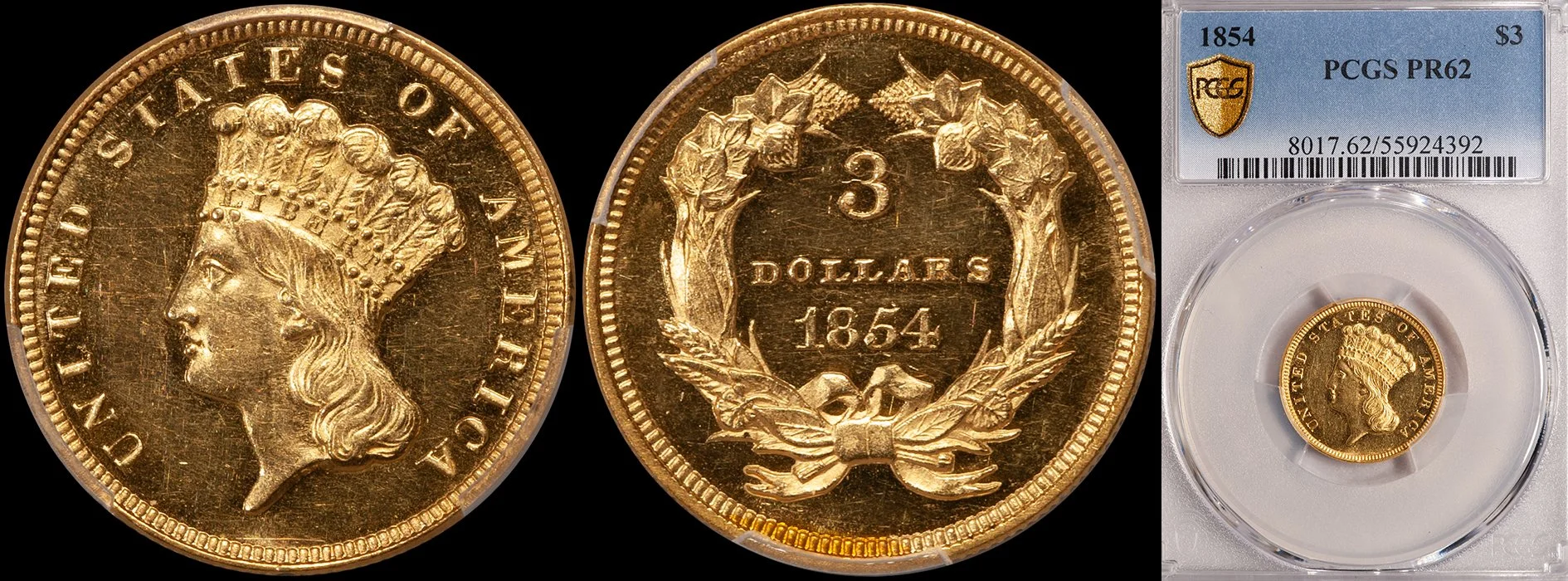
Dahlonega: There are five very obvious warehouse choices from this mint: the 1855-D and 1861-D gold dollars, the 1854-D three dollar and the 1838-D and 1861-D half eagles. The first, third and fifth coins are one-year types while the second and the fourth have Confederate association(s). Another issue that I would give consideration to is the 1855-D quarter eagle. This has the lowest mintage of any Dahlonega coin and it is the single rarest issue produced at this mint. I would remind the potential warehouser of any or all of these coins that damaged or low-end examples need not apply. The same comment that I made for sub-$3,000 Charlotte coins applies to those made in Dahlonega as well.

Denver: Your basketball team is doing well this year but I don’t see many warehouse possibilities. With the possible exception of the scarce 1911-D eagle. Oh, and I like LoDo a lot...

New Orleans: There are five distinct one-year types from this mint: 1855-O gold dollar, 1839-O quarter eagle, 1854-O three dollar, 1909-O half eagle and 1879-O double eagle. I find all five of these to be popular and liquid, although I’m not sure that I consider all of them to be warehousing candidates. As an example, I wouldn’t suggest that anyone own multiple examples of the 1909-O in Extremely Fine. But I like this date in properly graded AU55 and above and I certainly would encourage a warehouser to salt away a few.

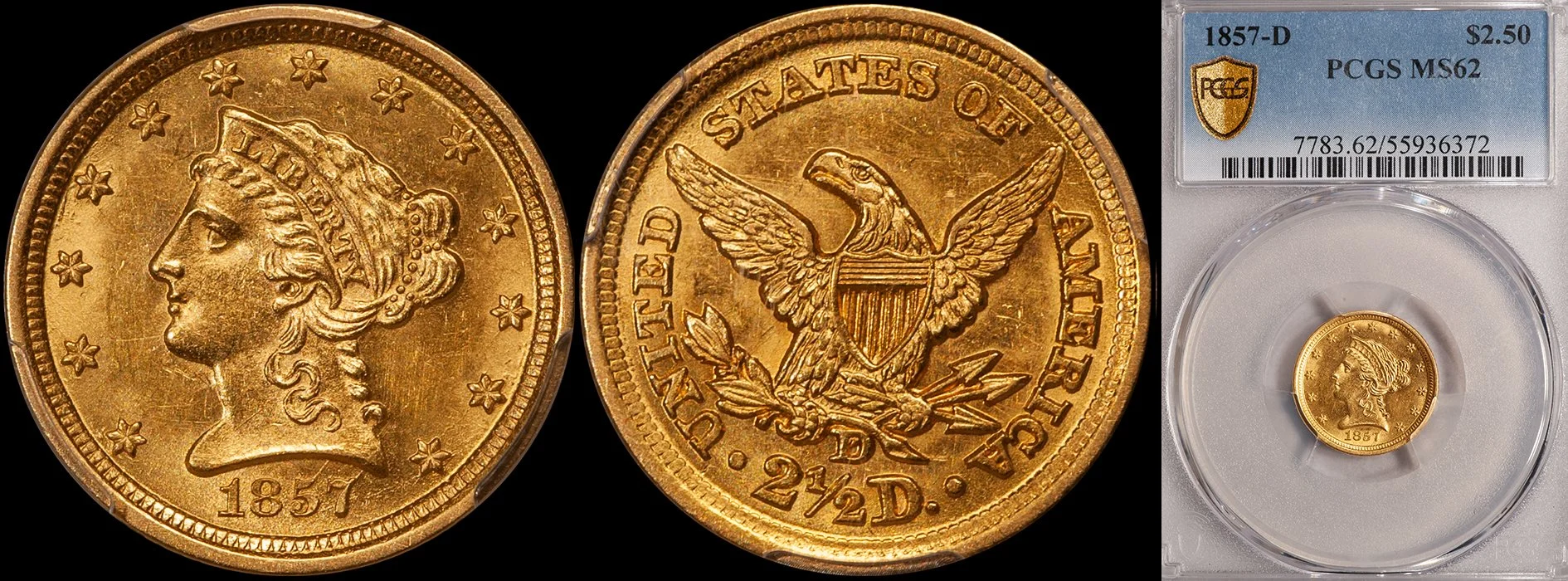
The New Orleans issues that I would be most inclined to suggest that someone own multiples of are the key issues that are still not fully valued. Some of these include the 1845-O quarter eagle, the 1847-O half eagle, the 1841-O, 1879-O and 1883-O eagles and the 1855-O double eagle.

Choice, original No Motto coins from New Orleans that are priced at below $3,000 seem like a good area to warehouse as well; especially half eagles.

Philadelphia: One of the problems about discussing gold coins from this mint is that you are looking at a lot of denominations (gold dollars through double eagles) and a long, long time of issuance (1795-1933). For the sake of this article, we’ll focus briefly on the early issues (pre-1834) and the Liberty Head issues (1840-1908).

There are lots of early gold coins that make sense as warehouse candidates. Most people are going to guess that I suggest famous issues like the 1796 No Stars quarter eagle. Actually, the coins I’d be more likely to want to warehouse are the Fat Head half eagles from the late 1820’s/early 1830’s. These coins are expensive and could certainly decline in value if the economy gets more uncertain but they are incredibly rare and, after many years of neglect, are now appreciated by many levels of collectors.

The Liberty Head issues that would make interesting warehouse candidates include the classic rarities from this mint: the 1841 and 1863 quarter eagles, the 1875 and 1876 three dollars, the 1887 half eagle and the 1875 eagle. I would also suggest a small number of very rare issues that, while not extremely popular (at least yet...) appear to represent good value relative to their rarity. These include the 1863 gold dollar, 1864 and 1865 quarter eagles, the 1863 and 1865 half eagles and the 1863, 1873, 1876 and 1877 eagles.

San Francisco: The obvious issues to warehouse from San Francisco would be the mega-rarities: 1854-S quarter eagle, 1864-S half eagle and 1864-S eagle. Even though there are a lot of undervalued and very rare issues from San Francisco, this mint’s comparative unpopularity leads me to believe that warehousing coins from the Barbary Coast might not be a stellar idea.

If you do decide to warehouse a specific issue (or more) my advice is to be under the radar. Let one dealer with who you have a good relationship know about it. I wouldn’t suggest you broadcast to the world that you own five 1838-D half eagles. If you are discrete about what you own, it will be to your advantage when it comes time to sell.

I currently know a number of collectors who warehouse certain gold issues and it is enjoyable for me to work with them. If this is something that intrigues you, please feel free to contact me via email at dwn@ont.com.