The 2009 Portland Spring ANA Show

I’m guessing it’s been close to twenty years since there was a major coin show in a city in which I lived. That’s why I was really excited about this year’s Mid-Winter ANA being held in my home town of Portland, Oregon. Even if the show was crummy, I’d be able to sleep in my own bed. Plus, I could show off my Portland Expert status to friends and acquaintances and rattle off a list of obscure restaurants (Peruvian? Check. Malaysian? Do you want Northern or Southern?) without having to pull out a Zagat’s. Portland doesn’t have a reputation as a Great Coin Town and to be honest I had very little in the way of expectations for this show, other than it being well run. That’s why I was so pleasantly surprised that it turned out to be quite good.

I have to give some kudos to the ANA. There were articles in the paper about the show, ads on TV; even my neighbors knew there was a coin show in town. This excellent publicity meant that the attendance would probably be good and it was. More on this in a second.

The first day of the show was devoted to wholesale trading and, for me, the action was a little less than my last few shows. The main reason for this was that I didn’t have much generic gold and generic gold remains incredibly hot.

This is a good time to go off on a mini-tangent. With the almost total focus of the gold market on generics right now, this seems like a good time for people who care about legitimately scarce and rare coins to be buying. I had a few dealers comment to me at the show that they are so focused on generics that they are slowing down their “real coin” business. That means less competition for me when I buy and I can focus on coins like New Orleans half eagles and Dahlonega quarter eagles when many of my usual competitors are busy making MS63 Liberty Head double eagles.

The second day of the show was when the public was let in and I was amazed at the stampede of collectors that came through the door around 10AM. Yes, there were sixteen hundred Boy Scouts and Brownies playing the Numismatic Trivia game but there were also real collectors with real want lists looking for real coins. Unlike the recent Long Beach show where I don’t think I could have sold a collector a Saint Gaudens double eagle for $16, I was able to sell a number of coins in Portland. More importantly, I met a lot of collectors from the Northwest who I either didn’t know or who I knew only through emailing.

The weekend was a bit less active but there were still collectors at the show on Saturday. For the first time since I had a fade haircut and wore a jacket with big shoulders, I stayed until closing on Sunday and was able to do some business until the bitter end.

I’d like to thank everyone who stopped by and chatted and everyone who bought coins. And, no, I will not recommend any more places to eat in Portland.

So, how does the market look now that we are in mid-March?

In my opinion, things continue to be better than I would have expected. No, the market isn’t “hot” (with the exception of generic gold). But nice coins are definitely selling, albeit at new levels. I would expect that with all the money dealers are making right now with their generic gold business, some of this will spill into rare coins. I also think that some of the new people buying MS62 and MS63 Saints and $20 Libs could possibly start buying rare coins in the coming weeks or months. I’m not extremely optimistic right now but I am less pessimistic than I was as recently as mid-January.

The end of March will see an interesting test of the market with the Baltimore show and a number of auctions all occurring. My guess is that Baltimore should be pretty active. I will be very curious to see how the auctions do.

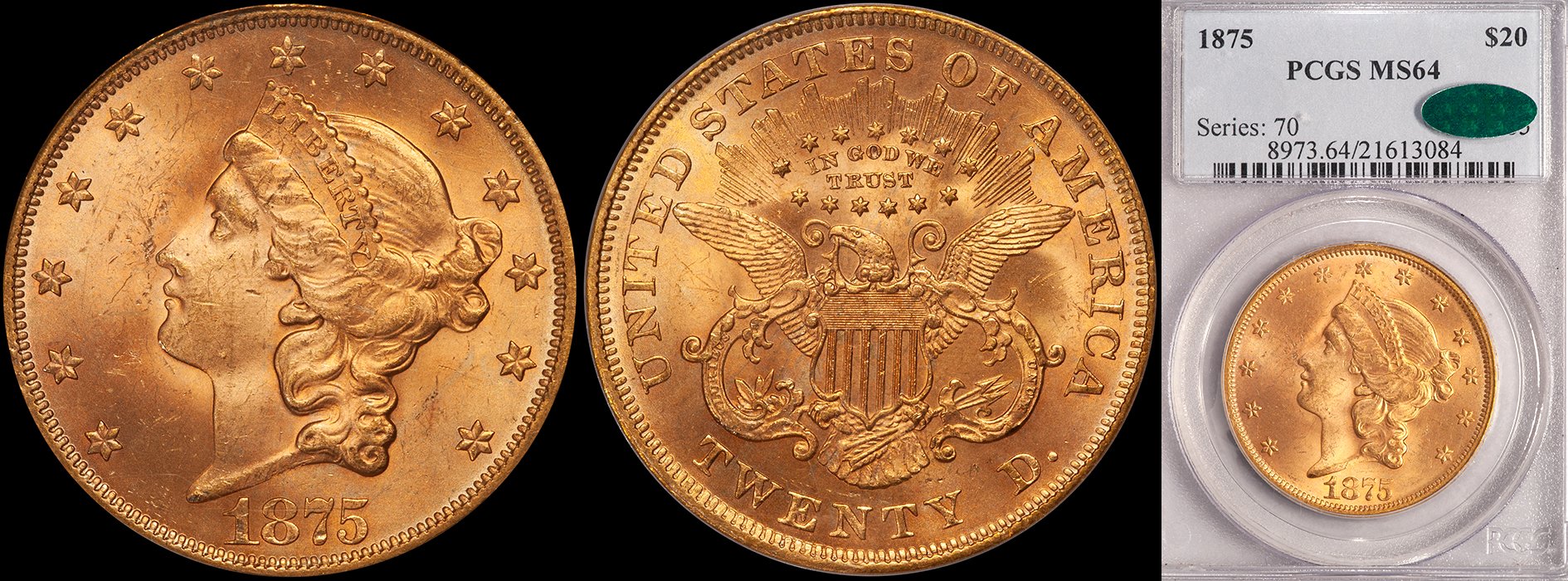
I’ve mentioned generic gold a few times and before I close, I’d like to strongly suggest that if you own any, you might take some profits and sell out of a part of your position now; especially if you own double eagles. The premiums for these right now are as high as I can ever recall seeing. As an example, MS64 Liberty Head double eagles are now selling for $2,700-2,800 (or more, in some cases). Last year you had to beg people to buy them for $1,500. If I had a bunch of these put away right now (and I wish I had been smart enough to do so...) I would take some of my profits and move onto more undervalued areas.

If you do want to sell any generic gold, I would be happy to assist you. Please email me at DWN@ONT.COM and I can make offers on your coins and suggest a strategy for the coming months.

Cleaning Up Your Collection

As I write this, there is a real disconnect in the coin market. Simply put, despite what is very probably the worst economic year since the height of the Depression, the coin market remains comparatively vibrant. I think this represents something that many collectors are overlooking: this could be a great opportunity to clean up some of the messes in your collection and come out without taking a nasty financial hit.

This statement is making a big assumption: that the financial mess we are in now will impact the coin market more intensely than it has so far. Who knows; maybe it won’t. But my guess is that we will see a further drop in prices on coins that aren’t really exciting, either off-quality, not rare or a combination of the two.

If you are like most collectors, you’ve probably made some mistakes over the years. And if you are like most collectors you may have hidden your mistakes in the back of your safety deposit box and figured “out of sight, out of mind.” As I mentioned above, this might be a really good time to consider trimming the fat.

I have long been an advocate of the “quality trumps quantity” school of numismatics. In my experience, most collectors own too many coins. Some collectors own way too many coins and they have a considerable amount of money tied-up in “stuff” that has little relevance to their current collection. I think it’s a great idea every few years to weed out some of the stuff that has accumulated in your collection.

The coins that are most likely to lose value in the coming year are coins that have either gone up too much in value in the last few years to sustain their market or coins that have a limited amount of demand. You might want to include these along with the “what was I thinking when I bought that...” coins.

When you look through your collection, you should use what I called the “ahhh.... test.” Coins that you like are going to make you go “ahhh...” when you view them and you can probably remember the exact circumstances in which you purchased them. Coins that don’t speak to you or which don’t tweak your memory haven’t passed this test and they might be candidates for a purge.

You might own coins that you don’t really care much about but which are still strong. A great example of this is generic gold. Many collectors have salted away a few St. Gaudens double eagles or Liberty Head eagles over the years. They might not care at all about these but they might also be able to make a nice profit if they sell them at the currently-high premiums in the market. If I had a decent position of generics in my collection, I’d seriously consider taking a few and selling them right now.

I’d be even more interested in selling these Misfit Coins in my collection if I had an alternative coin coming down the pike that seemed like it was too good a deal to pass up...and I didn’t necessarily have the ready cash to make this deal happen.

Here’s another circumstance where you might have coins that are no longer useful to your collection. Let’s say you started a collection but lost interest and now you have a 50% complete set lying around. If the coins are nice quality and price levels aren’t way off on the series in question, it might not be a bad idea to sell the coins you have and use the money on coins in the set(s) you are actively collecting.

What is the best way to clean up your collection? You have a number of options and these options depend, at least in part, on the type(s) of coins that you own. If you live in a town with a reputable brick and mortar coin shop and you have pounds and pounds of “stuff” then selling this material outright or on consignment might be a good idea.

If what you have fits more into the specialist category, choose a specialist dealer to make an outright offer or to take the coin(s) on consignment.

And, of course, you can always go the auction route if you are thinking of selling very high-powered or highly specialized material.

In conclusion, this might be a good time to get rid of some of your less-exciting material at levels that aren’t going to insult your sensibilities. For what’s its worth, this is exactly what I’ve been doing with my own inventory for the last four to six months and even though I’ve had to make a few decisions that were painful at first, I’m very glad that I sold some of the coins I did at the prices they went away at.

The Bass 1855-C Quarter Eagle

2009 isn’t even two months old and I’ve already had the good fortune to handle some pretty special coins. I’d have to say that one of the very best that I’ve handled so far is the Bass 1855-C quarter eagle, graded MS65 by NGC, which is shown below. Let’s take an in-depth look at this specific coin and analyze where it fits into the Pantheon of Great Charlotte Quarter Eagles.


I regard the 1855-C as the second rarest Charlotte quarter eagle, trailing only the 1843-C Small Date. Of the 3,677 coins originally produced, an estimated 85-105 are known. This date tends to be found in the EF-AU grade range and it does not appear to have circulated with the intensity of other dates from this era which are more often found with considerable wear. At one time, the 1855-C was exceedingly rare in Uncirculated and when I wrote the first edition of my Charlotte book back in the 1980’s I was not aware of a single Mint State piece.

Due to gradeflation and new discoveries, the 1855-C has become a more available coin in Uncirculated and today there are as many as six or seven known. There are two really great pieces accounted for: the Bass coin and an example in a private collection graded MS64 by NGC and owned by dealer Harry Laibstain back around 2000-2001.

The Bass 1855-C is unquestionably the finest known 1855-C quarter eagle and it is one of just a handful of Gem quarter eagles from this mint (more on this later...). I had no idea that this coin even existed until I saw it when I viewed the Bass III sale in October 1999. Bass had supposedly obtained the coin via private treaty on August 31, 1977. When it made its initial auction appearance it was graded MS64 by PCGS but, according to my comments in the catalog, I graded it MS65 and described it as follows: “GEM!!!” After the sale, the owner cracked it out of its PCGS holder and sent it to NGC where it, rightfully, was upgraded to its current MS65 holder.

When viewing this coin, there are a few things that really stand out. The first is this coin’s amazing luster. I doubt that the image above will capture the subtleties of this coin’s incredible hybrid frosty/reflective texture. This issue is sometimes seen with good luster but on this example it is so dynamic that it gives the coin a unique “crisp” appearance that very, very few branch mint coins of any era possess.

There is some weakness of strike seen on the stars at the top and on the eagle’s right leg. This weakness is typical for the issue and, in fact, the overall detail seen is better than average. The surfaces are exceptionally clean with a virtual absence of marks. There are some raised die striations in the obverse fields and some mint-made roughness around the eagle on the reverse that add character to the overall appearance. Both sides have some light to medium rose and orange-gold color that is attractive as well.

When this coin was last sold at public auction in October 1999, it realized $41,400. It was later sold to a North Carolina collector and it has been off the market for close to a decade. I just sold it to an anonymous collector who specializes in Charlotte coins and it is regarded as one of the current highlights of his collection.

There are four Charlotte quarter eagles known to me that are decidedly better than all the other surviving examples from this mint. These are the only four Charlotte Liberty Head quarter eagles that I regard as Gems and it is pretty remarkable to think that out of the 217,833 pieces produced between 1840 and 1860 that only three Gems exist.

The Charlotte quarter eagle that I regard as the unquestionable finest known of any date is the Elrod 1842-C, graded MS65 by PCGS. This piece sold for $90,850 back in February 1999 and it is now owned by a Southern collector who is well-known for his discerning eye. The coin has also been graded MS65 by NGC. What is even more impressive about this coin is the fact that the 1842-C is an extremely rare coin in high grades and the Elrod coin is the finest of just three known in Uncirculated.

The 1843-C Large Date is among the more available Charlotte quarter eagles in Uncirculated and there are two Gems known. The first is currently graded MS66 by NGC and it was earlier in a PCGS MS65 holder. What is remarkable about this coin (besides its grade) is the fact that it was once in an ANACS MS64 holder and it sold at auction for a paltry $5,500 back in September 1997. The second Gem 1843-C Large Date is a PCGS MS65 that is currently owned by a North Carolina specialist. I have had the chance to view this coin and it is a bona-fide Gem with superb luster, color and surfaces. The fourth and final Gem Charlotte quarter eagle is, of course, the Bass 1855-C.

Are there other Gem Charlotte quarter eagles known? It is possible that a few pieces might exist in shipwrecks, hoards or old collections but I would be surprised if many turn up in the coming years. It is more likely that one or two of the very nice MS64’s will “morph” into MS65’s.

View our inventory.

The Half Eagles of 1818

There are just a handful of Capped Bust Large Diameter half eagles produced from 1813 through 1829 that are not very rare. This type includes some of the rarest United States gold issues ever produced so the type collector is left with essentially four dates that are sometimes available: 1813, 1814/3, 1818 and 1820. In my opinion, the 1818 is one of the most interesting of these four issues and it is certainly one of the most misunderstood.

The original mintage for this year is believed to have been 48,588. As with all of the half eagles produced during this decade, a significant percentage of these coins were melted between the year they were produced and the mid-1830’s. This is, of course, due to the fact that the half eagle denomination had its weight reduced in 1834, making the “old style” pieces worth more than face value. For most dates, well over 95% were melted and in the case of the 1818 there are probably no more than 200-250 examples known.

Given the fact that this issue saw little circulation domestically, the majority of the surviving 1818 half eagles tend to be in Uncirculated grades. The small number of circulated examples that do exist are often in the AU53 to AU58 range and these may not have much in the way of wear but tend to show light cabinet friction or signs of numismatic mishandling.

There are three distinct varieties of 1818 half eagle known. All are recognized by PCGS and NGC and each is considered to be an integral part of a date set of Capped Bust half eagles. Let’s take a quick look at each of the three varieties.

1. Normal Dies (Bass Dannreuther-1). The obverse of this variety has a unique feature that is not seen on any other 1818 half eagle. Each star shows a “notch” which is believed to be a signature used by John Reich to indicate that this die was his work. But the obverse is not the side of this coin that specialists use to determine its BD number. This is the only one of the three varieties of half eagle for this year that has a “normal” reverse. The words STATES OF are properly spaced and there is no recutting on the value.

Bass and Dannreuther estimate that between 10,000 and 15,000 examples of this variety were struck and that 50-65 exist. I tend to agree with these estimates. This variety is generally seen in the AU55 to MS61 range and is often characterized by softness of strike at the centers. The coloration is typically a distinctive orange-gold and most have been lightened or processed. The finest I am aware of is Goldberg 2/01: 4009 ($51,750), ex: Superior 2/99: 3184 ($52,900) which has been graded MS65 by PCGS.

The 1818 Normal Dies is the second scarcest of the three varieties known for this year and I think it is an underappreciated issue.


2. STATESOF variety (BD-2). This variety has a different obverse than the Normal Dies but it is immediately recognizable by having virtually no spacing between the words STATES and OF.

Bass and Dannreuther estimate that between 25,000 and 35,000 examples of this variety were produced and that 100 to 125 survive. I think this estimate may be a touch on the low side but the actual number known is almost certainly less than 150.

This variety is the least scarce of the three 1818 half eagles and it is typically seen in Uncirculated grades. I can’t recall having seen more than a handful that graded lower than AU55 and this suggests that the 1818 STATESOF saw little use in circulation. Most examples are better struck than the other varieties for this year and original, untampered with pieces may show excellent frosty luster that is complimented by light to medium lemon-gold hues.

The finest known 1818 STATESOF half eagle is a remarkable PCGS MS66 that was once part of the Norman Stack type set. It is one of the finest half eagles of this type that I have ever seen or am aware of. The current auction record for this variety is held by Heritage 5/07: 2289 that brought $109,250. It is graded MS64 by PCGS.


3. 5D/50 variety (BD-3). The obverse of this third and final variety is different than that seen on BD-1 or BD-2. But it is the blunder on the reverse that gives this variety its notoriety. The D in the denomination was originally cut over a zero; not because the engraver thought this was a half dollar. This reverse was reused in 1819 with the Wide Date obverse.

Bass and Dannreuther believe that between 7,500 and 10,000 were struck and that there are 35-45 survivors. Given the rarity of this issue, these figures seem accurate. This is a rare coin in all grades and most are in the lower Uncirculated grades. There are a few Gems known including a PCGS MS66 and a PCGS MS65 that was last sold as Goldberg 5/01: 1351, where it realized $71,875.


I’ve had the good fortune to handle all three varieties in the past few months and was able to quickly sell each. These 1818 half eagles are some of the more interesting early half eagles and it would be a fun but not overly-ambitious challenge to acquire all three in reasonably comparable grades.

Classic Head Gold: An Update

I frequently write about the state of the market as it pertains to early gold and Liberty Head issues but I haven’t commented on Classic Head gold in quite a while. So how is the market for Classic Head quarter eagles and half eagles and what do I expect the coming months to look like for these coins? To answer these questions, we need to turn the clock back a few years. Classic Head gold was dormant for what seemed like an eternity. Everyone thought these coins had “potential” but there was never much demand for Classic Heads and they snoozed away in their own little niche-like corner of the market.

This began to change around 2004-2005. A dealer in the Southeast had been quietly building a large position of coins (primarily in the EF-AU grade range) and he carefully began to raise his buy prices. Within a year or two, he had accumulated an impressive number of coins and, on paper, the value of the position had increased.

I never really understood what he did next. Instead of slowly marketing these coins, one day they showed up in another dealer’s inventory (apparently on a consignment) and for many months, the secondary dealer toted hundreds and hundreds of Classic Head gold coins to every major show. It was hard to get excited about this deal when it seemed like every Classic Head gold coin that had ever been slabbed was for sale. At once.

So now you had coins that doubled in price and were readily available. Would the market be able to sustain the new levels? The answer was “no, not really” but in some isolated cases yes.

Had the market for Classic Heads been properly developed, there would have been collectors lined-up for all the EF and AU common dates that were available. As I’ve written before, I think this series is begging for a collecting guidebook. Most dates have a number of very interesting varieties, the sets are completable by collectors on a relatively limited budget, the designs are great and the number of pieces that make up a set are not overwhelming (as with Liberty Head issues).

At the height of the Classic Head market run-up, it wasn’t unusual to see a common date quarter eagle in AU55 trade for $1,750 or so. Today, these same coins have dropped down to $1,250. That’s still a relatively strong level considering that these were $750-1,000 in the earlier part of the decade. How have the common dates in higher grades done? The current market for a common Classic Head quarter eagle in MS63 is around $7,000-8,000. These had been as high as $9,000-10,000 but only if the coin in question was exceedingly nice for the grade. Considering that common dates MS63’s had been around $4,000-5,000 for many years at the earlier part of the decade, I think they’ve held their value reasonably well.

The part of the Classic Head market that has always been the most interesting for me has been the branch mint issues: namely the 1838-C and 1839-C quarter eagles, the 1839-O quarter eagle and the 1838-C and 1838-D half eagles. Unlike the Philadelphia Classic Head issues these five dates have the added demand level caused by branch mint specialists, first-year-of-issue collectors and individuals who just like “neat” coins.

Values for the 1838-C and 1839-C quarter eagles jumped to what I believe were unsustainable levels. This is especially so for the 1839-C. There were suddenly oodles of AU55 and AU58 examples available for sale in the $10,000-20,000 range but the demand for such coins couldn’t keep up with the prices. I think you’ll see levels for these two dates in AU continue to drop but they will remain strong in the “collector grades” (i.e., VF and EF).

The two Classic Head issues that continue to exhibit very strong demand in all grades are the 1838-C and 1838-D half eagles. In the last thirty days, I owned three (!) 1838-C half eagles graded between EF40 and AU50 and, remarkably, every one of them sold within a week of being listed on my website. If I were able to purchase three nice 1838-D half eagles I believe the results would be the same. These are coins where the demand exceeds the supply and I won’t hesitate to continue to buy nice examples whenever they become available.

What are my expectations of the Classic Head market in the coming months? I think you’ll see some continued drops in prices for common date coins graded AU55 to MS63 with the exception of pieces that have nice original color and choice surfaces. I wouldn’t be surprised if the schlocky, processed shiny examples drop another 10-20%.

At new, lower levels I think choice, original common date Classic Head quarter eagles and half eagles are a good value. If you can buy a nice AU55 1834 quarter eagle in the $1,250-1,450 range that seems like a good deal to me. Same goes with a nice AU55 1834 half eagle at, say, $1,500 or so. As I mentioned above, I still love the 1838-C and 1838-D half eagles and I think both of these issues have real upside at current levels.

I think the “secret” dates in the quarter eagle and half eagle series are probably worth exploring right now. I like the 1837 quarter eagle and have always thought that nice 1839 quarter eagles were highly undervalued. In the half eagle series, I think that the 1837 is a good value.

One final thing before I end this article. I’m not going to be the person who does this, but I’d sure like to see someone properly promote the Classic Head series the next time around. By this I don’t mean manipulate prices and demand, but help take a slightly chaotic market and make sense of it. Write a good book, get collectors interested in these coins and gently “push” the market in the right direction by actively buying and selling. That would be a beautiful thing...

The Proof 1878 Quarter Eagle

When viewing mintage figures, most numismatists exclaim that a coin is “rare” because only 10,000 or so were produced. But this figure seems almost laughable in comparison to the mintages for Proof gold coins struck prior to 1900. In fact, many of these issues have mintages that were lower than 100 coins. Proof gold was struck for collectors every year from 1858 until 1915. From the 1850’s until the early 1880’s, mintages were incredibly low. In fact, a few issues have mintages as low as twenty coins. A number of these issues are well-known and highly prized by collectors but a few have fallen through the cracks and their true rarity remains unknown even today. One of these overlooked issues is the Proof 1878 quarter eagle.

I recently sold an NGC PR65 Ultra Cameo example of this rarity to an Eastern collector. In searching through my records I realized that this was the first Proof 1878 quarter eagle that I have handled. And the more I studied this issue, the more I realized just how rare it truly is.


With an original production figure of only 20 Proofs, the 1878 is tied with three other issues (1874, 1875 and 1877) as the lowest mintage Proof date of this denomination from 1859 onwards. The rarity of this was known by numismatists as early as the 1910’s/1920’s. As recently as 1975, David Akers wrote the following about this date:

“Proofs are extremely rare and the 1878 is, in fact, the rarest post-1859 quarter eagle in Proof. At least I know of fewer examples of this date than of any other Proof after 1859. I would estimate that only a half dozen or so remain in unimpaired condition, most of which are impounded in museums or prominent collections.”

Despite this praise from Akers, the rarity of the 1878 seems to have been forgotten by this generation of collectors and other Proofs of this type, namely the 1875, are more highly regarded.

As a rule, Proof gold of this era has a survival rate of approximately half of the original mintage. This typically holds true in the quarter eagle series but the 1878 appears to be an exception. Akers believed that some of the 1878 Proof gold coinage may have been melted after it went unsold and given the extreme rarity of all Proof gold denominations from this year, I feel that this may well be correct.

Unfortunately, the population reports for Proof 1878 quarter eagles include a number of resubmissions and this has further obfuscated the true rarity of this issue. PCGS has graded three: one example each in PR64, PR64 Deep Cameo and PR65 Deep Cameo. NGC shows ten submissions but I can all but guarantee you this number is severely inflated. These include one each in PR63, PR64 and PR65 plus four (!) in PR64 Ultra Cameo and three in PR65 Ultra Cameo.

In the last decade or so, I am aware of only two distinct examples of this date being available for sale at public auction. The most recent of these was a PCGS PR65 that was offered as Superior 8/06: 639. It brought $32,570.

My best estimate is that there are seven or eight examples known. This includes at least two that are impounded (ANS and Smithsonian). Breen wrote that “at least three” are impaired but I have never seen or heard of one of these.

As someone who has specialized in rare United States gold for over two decades, it isn’t often that I handle a coin that is so rare that it causes me to write a blog about it. But this was clearly the case with the Proof 1878 quarter eagle that I just sold. It was an exciting piece for me to handle and I greatly appreciate being able to buy and sell it.

Long Beach Show Report Feb. 2009

Even in the best of markets, I go to Long Beach with limited expectations. I love the convenience factor (it’s one of my few sub-two hour flights) but this show has, in my experience, really lost its luster. Keep on reading for my thoughts on the Decline of Long Beach and a recap of the show. I think there are two significant reasons why Long Beach has gone from a great coin show to a so-so one. The first is the high price of the tables. Back when tables were more competitively priced, there were tons of small coin shops, Mom-n-Pop dealers and vest pocket dealers who had their own tables or shared them. This was a great source for fresh coins and it meant that there was a lot of coin trading as items went up the numismatic food chain. Now, these dealers no longer attend and this means that there is very little fresh material.

The other reason that Long Beach has suffered has to do with the draconian California tax laws. I’m not going to address these at length but let’s just say that Baltimore has become a great show in large part because Maryland’s tax laws are not quite as “zealous” as our friends in California.

As I said, I went to Long Beach with low expectations. I actually think the show was a bit better than I would have expected. The crowds were decent and my sales were not bad. I was happy with the limited number of coins that I bought and virtually everyone who I spoke with had a good—if not great—show. I think a lot of a dealer’s success right now has to do with what he deals in and his or her desire to sell older inventory at new levels. Simply put, if you have nice quality collector-oriented coins in your inventory, they sell. If you have a bunch of expensive, esoteric coins or boring widgets in stock, you aren’t selling much. If you have coins in stock that have been sitting around since June and you haven’t adjusted the prices downwards, you aren’t selling anything.

I have already posted descriptions and images of many of my new purchases. Some of the highlights are as follows:

-A superb 1897-O eagle graded MS64 by PCGS -A choice NGC MS63 1839 half eagle -A rare and popular PCGS AU50 1838-C half eagle -A very rare PCGS MS61 1846-O half eagle -An underrated and high end 1846-D Normal Mintmark half eagle graded AU58 by NGC

I still don’t think I have a really accurate handle on the coin market but given the awful state of the economy, I think things are holding up far better than I would have expected. Trust me, I have experienced some truly dreadful coin markets and we aren’t even close to any of these. Every dealer is feeling the effects of the economy and everyone is reducing (or wants to reduce) their inventory. But all things considered I am pleasantly surprised. At least so far...

The Heritage auction contained a boatload of rare date gold and I figured it would be an interesting test of the market. Some of the coins were not especially high end for the grade and there were certain dates that were represented by multiple examples. Given the fact that the traditional bottom-feeder buyers for coins like this are either saddled with large inventories, large debt, large headaches or all three I figured that there would be some very cheap prices. I was proven correct.

Many of the not-so-nice Charlotte and Dahlonega coins in the $5,000 to $10,000 range sold for the lowest prices I can recall in quite a while. There were instances where coins sold for less than half of Trends. But (and this is a BIG but) there is a good reason for this. Buyers of these coins have become sophisticated enough that they will not pay good money for a bad coin. If a coin is in an AU58 holder and it is a bright-n-shiny piece with the eye appeal of an AU50, that’s what it is going to trade for, regardless of the holder. That’s the beauty of knowledge. If you learn what a coin is supposed to look like you do not have to use the grading services as a crutch.

The irony of the sale was that some nice coins got dragged down with the not-so-nice ones. There were some exceptional Charlotte quarter eagles that were pedigreed to important collections such as Dingler, Elrod and Eliasberg and they sold for 15-25% less than what I would have thought. As I had expected, this sale represented a great opportunity for a savvy collector to get a great head start on a world-class Charlotte quarter eagle collection at prices that haven’t been seen since the mid-1990’s.

Not everything in the sale went cheaply. The New Orleans eagles were strong. An 1841-O graded AU55 by PCGS brought $25,300, the Bass 1847-O eagle graded MS64 by PCGS sold for a record-setting $51,750, an NGC MS60 1856-O set a record for this date when it sold for $15,525 and a PCGS EF45 1883-O brought an amazing $29,388 - far and away a record price for this date in this grade.

The affordable, collector quality coins in the auction that were nice did pretty well. There were a number of instances where a solid-for-the grade EF45 or AU50 brought nearly as much (or as much) as not-solid-for the-grade pieces in AU50 or AU53 holders. The market for solid $1,500 to $3,000 Charlotte and Dahlonega gold, in fact, seems much stronger right now than it does for the more expensive coins. The one exception is when the more expensive coins are popular, rare or just plain old spectacular.

Prooflike Gold Coinage: A Look at an Evolving Market

One of the newer promotions in the rare gold coin marketplace are coins that are Prooflike. NGC began designating Prooflike gold a few years ago (PCGS has yet to add this designation) and enough have been graded for a collector to get an appreciation of the relative rarity of these issues. What is a Prooflike gold coin, what is the market for these coins like and what does the future hold for Prooflike gold? Generally speaking, when a pair of new dies is used to strike coins, they are highly polished. The first few hundred examples from this die pair (this number can be significantly less or more, depending on the type of design and the mint that produces the coin) are reflective. This degree of reflectivity can range from subtle to intense. Obviously, the more intense the degree of reflectiveness, the more desirable a coin is.

There are basically two tiers of “Prooflikeness” that gold coin collectors are concerned with. The first is the blanket term of “Prooflike” which means that a coin has a certain degree of reflectiveness on both the obverse and reverse. While there is no absolute standard of what constitutes a Prooflike gold coin (at least in terms of the depth of reflection) it is essential that a true P/L coin be reflective on both sides. A coin that is “deep mirror Prooflike” shows considerably more reflectiveness on both sides than one that is merely Prooflike. It resembles a Proof in appearance and it may have an attractive “black and white” appearance that is the result of contrast between the frosted devices and the mirror-like fields.

There is a very strong market for Prooflike Morgan silver dollars. Collectors began paying premiums for these coins as far back as the 1960’s and, today, deep mirror Prooflike (DMPL) dollars can sell for huge premiums over “normal” frosty or satiny coins. Interestingly, there is not much of a market for Prooflike silver coins above and beyond Morgan dollars.

I think the market for Prooflike dollars is as strong as it is for three significant reasons. The first is that a number of dealers back in the 1960’s and 1970’s did a good job of promoting these coins and getting the market jumpstarted. The second is that there are more Prooflike coins in the Morgan dollars series than in all other silver coins combined. Lots of coins equals the ability to promote these as a collectible. The third reason is the appearance of these coins. A high quality DMPL coin can be extremely attractive and a collector can easily appreciate why he should be paying a premium for such a coin.

The market for Prooflike gold coins remains in its infancy. Is there a possibility that Prooflike gold could become as popular as the market for Prooflike dollars? I think this is a small possibility that this could happen but in small, selective increments.

I feel that the one area of Prooflike gold that is likely to see the most “play” with collectors in the next few years is Liberty Head double eagles. I think this is going to happen for a number of reasons. The first is that Liberty Head double eagles are already popular, so it isn’t a big stretch for a collector to jump from “normal” examples to ones that are Prooflike. The second is that these coins are available enough to be actively traded but they are, at the same time, relatively scarce. The third and probably most important fact is that a high quality DMPL double eagle is extremely impressive from a visual standpoint.

As I mentioned at the beginning of this article, NGC has been grading Prooflike gold coins for long enough that a few conclusions can be reached.

Taking a look at double eagles, I note that NGC has designated 1,287 $20 Libs as Prooflike. But what is most interesting is the fact that only twenty-eight examples of this series have been designated as DMPL and of these just five have been graded higher than MS62. The conclusion that is most easily reached about DMPL examples is that they are quite scarce and pieces above MS62 are genuinely rare. This is especially true for any date other than the ultra-common 1904.

The current price record for a DMPL gold coin is, as far as I know, the $126,500 that was attained by an NGC MS64* 1866 double eagle that was sold by Heritage in their 2008 ANA auction.

From examining auction prices, it seems that predictable price levels for DMPL $20 Libs are starting to be recognizable. MS61 and MS62 examples of non-1904 dates seem to be bringing in the $2,000-3,000 range. The few MS63 examples that have traded have brought in the $4,000-6,000 range. Coins in MS64 and higher are rare enough that it is hard to establish price levels.

In closing, I have a few personal thoughts about Prooflike gold coinage.

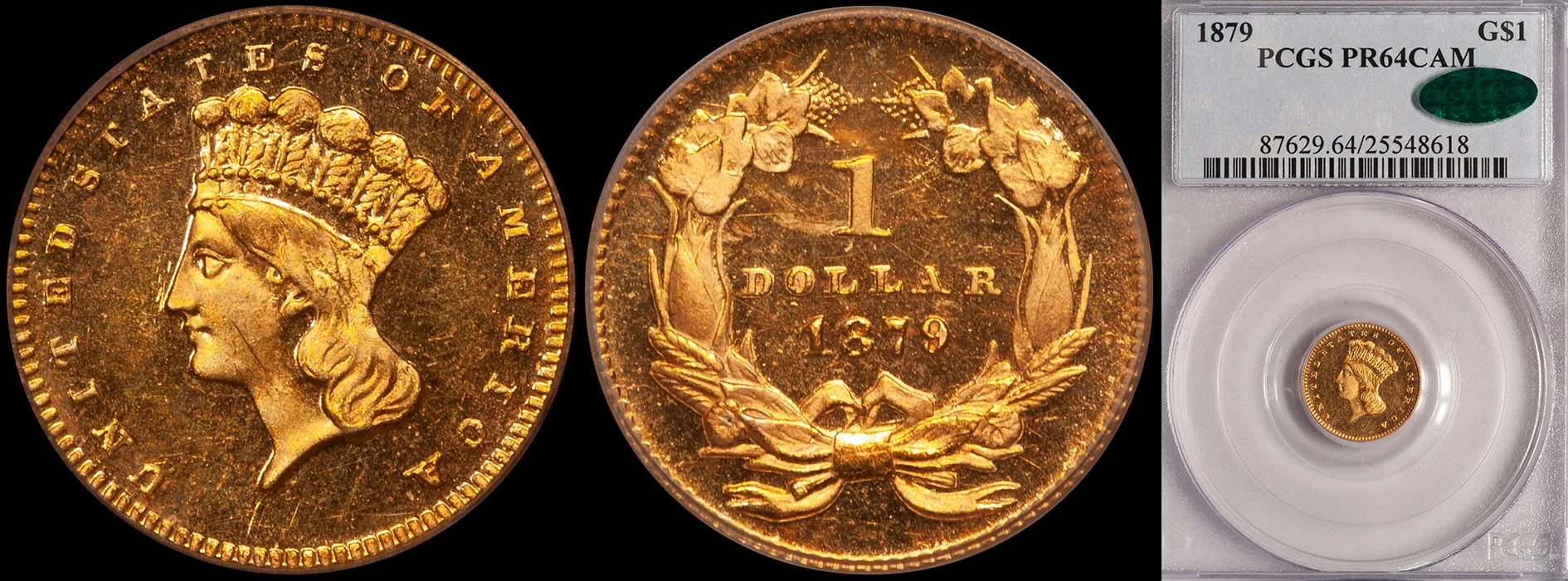
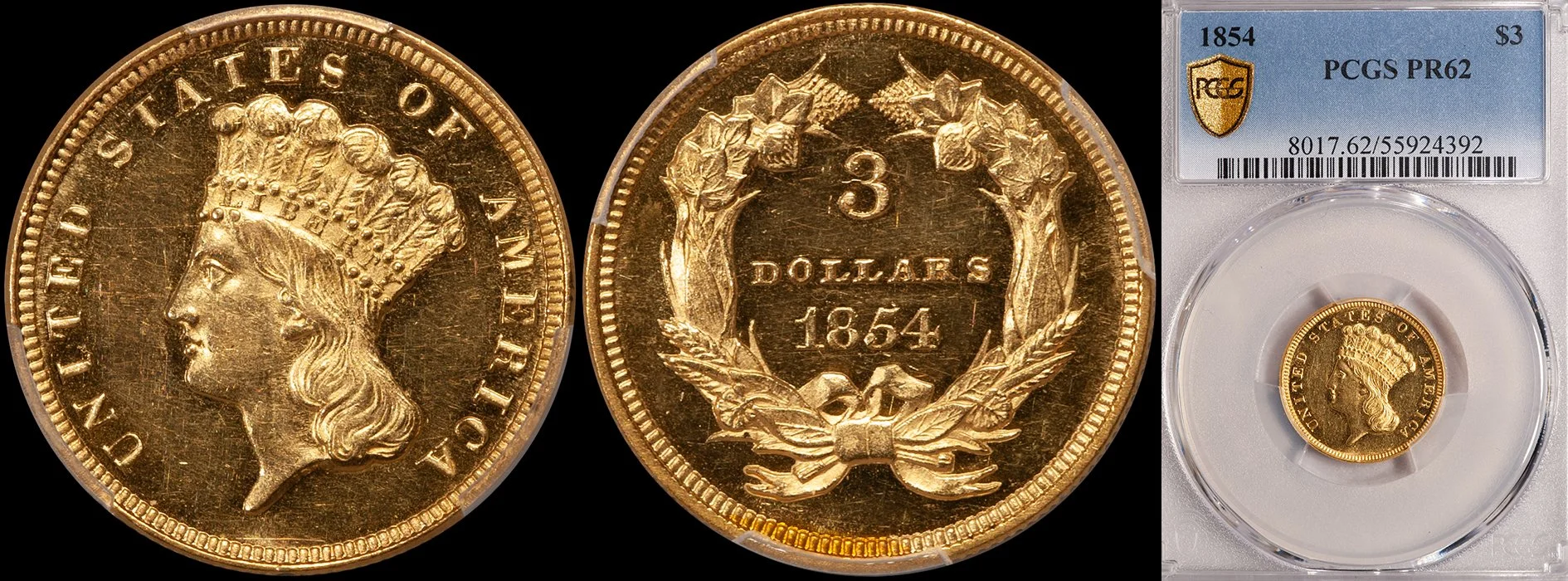
A number of 19th century gold coins are easily found with Prooflike or even deep mirror Prooflike surfaces. The most prominent of these include gold dollars from the 1880’s and three dollar gold pieces from this era. I do not think that collectors should, in most cases, pay a premium for these. The exception would be for a DMPL coin that had really great eye appeal.

Many DMPL gold coins have poor eye appeal due to the fact that the reflectiveness of their surfaces accentuates marks or abrasions. I would be careful paying a large premium for an ugly DMPL coin, even if it is a rare issue.

I mentioned above that I think that Liberty Head double eagles are likely to be the only series that collectors will pay close attention to PL and DMPL issues. My second choice for the series most likely to have some degree of date-by-date popularity would be Liberty Head eagles. The PL and DMPL issues that I would suspect collectors would like most would be the New Orleans coins from the 1890’s.

"I Know What I'm Going to Collect. What's Next?"

So you've made the decision that you are going to collect a specific series. What are the next step(s) that you should take? If you are going to form a serious, high-end collection one of the first things that you need to do is to examine comparable collections. As an example, if you have decided to assemble a set of Liberty Head eagles, it would make sense to know the grades of other sets that have been put together.

When it comes to 19th century gold, some of the old stand-bys are the Norweb, Eliasberg and Bass collections. It is very instructive to compile lists of the coins in these three collections as they pertain to what you are planning to collect yourself. For example, if you have decided to assemble a set of high grade New Orleans half eagles, you can make a spreadhseet of the relavent coins in these three collections.

Luckily, this information is reasonably easy to access. (Thank you, Internet...) On the PCGS website, the Set Registry pages list the "probable" grades of the Eliasberg and Bass gold coins (not to mention another pretty decent set, that found in the Smithsonian). The grades of the coins in the Norweb collection can be found in the three sales of this collection that were conducted by Bowers and Merena back in the mid-1980's.

Knowing what quality coins were owned by a great collection is important informantion for a new collector. As an example, let's sat you are being offered an MS63 example of a specific Liberty Head eagle. If the best piece Bass owned was an MS61 and Eliasberg only had an AU55, then the chances are good that this is a significant coin.

There are exceptions to this rule, however. Let's say that the MS63 Liberty Head eagle mentioned above is from a small hoard that was discovered after Bass or Eliasberg stopped actively buying coins. In this situation, the significance of the Bass and Eliasberg holdings are not as great. An example of this would be an 1894-O eagle in MS63. This date was essentially unknown in Uncirculated when Eliasberg was buying and very few examples better than MS60 were available to Bass. Today, because of hoards found overseas, this issue is scarce but not impossible to find in MS63.

If the series that you are goping to collect has a number of active Set Registry collectors, it is important to study the top sets that are on both the PCGS and NGC websites. Let's say that you are focusing on St. Gaudens Double Eagles. Without being congnizant of the best active sets in the Registries, you won't have a good idea of what grades you'll need to make your set competitive.

But there is much more to assembling a high-quality set than checking out Set Registry information. I'd strongly suggest that before you buy any coins for your new set that you invest a few hundred dollars in books and auction catalogs. There is no more important guide for the new collector than important specialized auction catalogs. I have written articles on which catalogs are important for the gold coin specialist to own and won't be redundant be listing them again; use the search function on my website to look for these.

One other thing you need to decide is just how high-end you want your set to be. If you have deep pockets and lots of patience, you will probably want to purchase coins that are either the finest known or which rate high in the Condition Census. If you are have a more modest budget, you will want to stick with coins that are above-average for the issue but not necessarily in Uncirculated grades. Learning the quality of other specialized sets will give you a good idea what the best grades for each specific issue are.