2008 Baltimore ANA Show Preview

Am I the only person who finds it astonishing that another ANA is upon us? Jeez, it seems like I just got back from last year’s Marathon in Milwaukee. But here we are already in late July and it’s time for the Battle in Baltimore. What can we expect from this bellwether show? If you are of a certain age, you remember when ANA was THE coin show of the year. It still is a critical event on the coin circuit despite being somewhat watered down; with pre-shows and a zillion auctions held before, during and after. This is my 26th consecutive ANA (I have attended every one since the 1982 Boston show) and I still feel a tinge of excitement as the days countdown.

My gut feeling is that this year’s ANA is going to be very strong from a wholesale standpoint and decent but not great from a collector standpoint.

With the uncertainty in the economy (and that’s putting it a bit mildly with today’s headlines...) I have the feeling that some would-be buyers are either going to avoid the temptation of the ANA or, if they do attend, it will be more for social and educational purposes than for buying.

Does that mean that there won’t be any action on the bourse floor? Hardly. Really good coins sell very well if the economy is soaring or circling the drain. The pool of potential buyers may not be as great in a bad economy but the number of great coins is much smaller now than in the past. Any dealer who has a case full of interesting coins at the ANA will certainly do retail business. Just not as much, I think, as two or three years ago.

Remember when I mentioned above that I think the show will be good from a wholesale perspective? Coin dealers making a living dealing coins and, at this point in time, nearly all dealers are short of useful inventory. Whether they can pay for these coins is an entirely different kettle o’ fish but I think the wholesale demand for coins right now remains strong.

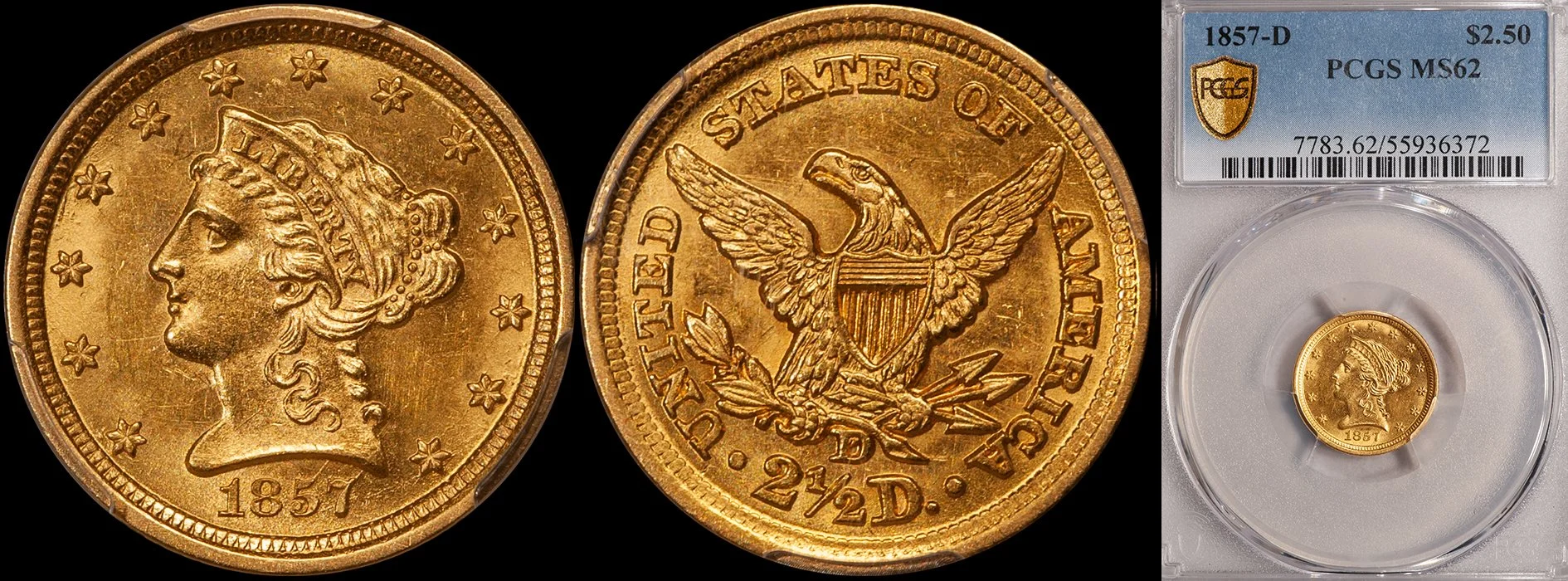
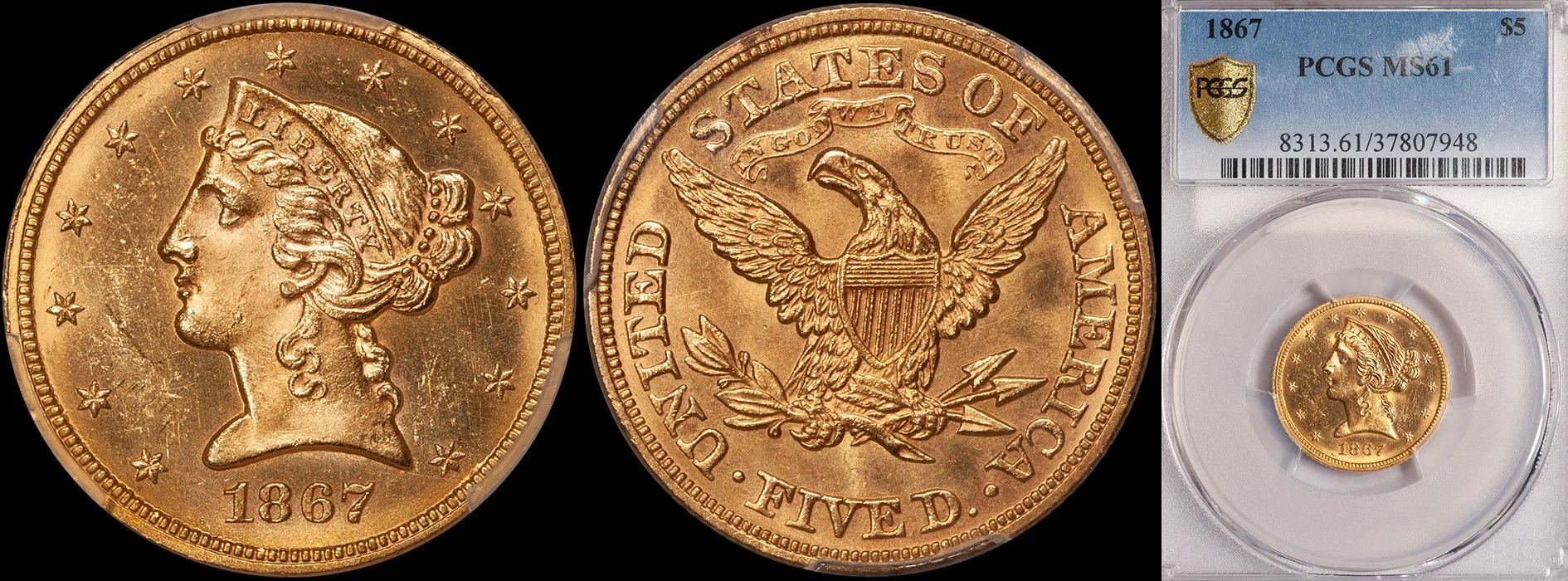
What will sell at ANA? The Usual Suspects. Very high quality, choice original coins in nearly all categories will be easy sellers, as will key dates and rarities. Early gold and Proof gold continue to be in demand and examples for sale on the bourse should be very actively sought since the auctions do not contain as much of this material as usual. CAC certified coins appear to be readily gaining in acceptance and popularity and many dealers will have long want lists for CAC’d material.

What will sell at ANA? The Usual Suspects. Very high quality, choice original coins in nearly all categories will be easy sellers, as will key dates and rarities. Early gold and Proof gold continue to be in demand and examples for sale on the bourse should be very actively sought since the auctions do not contain as much of this material as usual. CAC certified coins appear to be readily gaining in acceptance and popularity and many dealers will have long want lists for CAC’d material.

For a number of reasons, I am not nearly as focused on the various pre-show and during-show auctions this year. The sales are not without interesting material. Stack’s is selling the S.S. New York shipwreck gold coins which include some great branch mint pieces and they have a Hard Times Token collection that—if I collected this series—would excite me greatly.

Heritage has their usual high value sale with a seemingly unlimited number of rarities. I found a few things of interest among the pages and pages of lots. Someone has been hoarding 1834 Crosslet Half Eagles and 1863 Double Eagles over the years and they have decided to sell their holdings. There are five 1834 Crosslet 4 Half Eagles ranging from VF30 to AU55 and I personally can’t recall having ever seen more than two examples in any one auction. Even more remarkable is the hoard of thirteen 1863 double eagles ranging from EF45 to AU58. I’m not sure if these all belong to one collector but even if they don’t, this is a remarkable aggregation.

If you are coming to the coin show, one thing I would urge you to do is look at this year’s Smithsonian exhibit on Proof coinage. Having just read about the coins in this exhibit even I am excited and look forward to seeing some of these priceless Gems.

1841-D Quarter Eagle Graded MS63 by PCGS

As a leader in the area of rare United States gold, I get to handle some pretty interesting coins on a regular basis. But every now and then there is a piece that comes into my inventory that is so truly exceptional that it gives me pause and makes consider keeping it instead of selling it. The most recent of these was an 1841-D quarter eagle graded MS63 by PCGS that is not only the finest known example of the date but one of the most aesthetically attractive Dahlonega gold coins of any date or denomination that I have seen. I rank the 1841-D as the fifth rarest of the twenty quarter eagles produced at this mint. There were a total of 4,164 struck of which an estimated 75-100 exist. When available, the typical 1841-D grades VF to EF and is characterized by poor eye appeal and extensively abraded surfaces. There are probably fewer than fifteen properly graded AU’s known as well as four in Uncirculated.

The four Uncirculated examples are as follows:

1. Kansas Collection, ex: Doug Winter, Wexford Collection, Doug Winter, Heritage 1/04: 1017 ($40,250), Green Pond Collection, Doug Winter, Bowers and Merena 11/98: 2076 ($46,000; as PCGS MS62), Heritage 2/90: 1264 ($15,000), Vintage Auctions 8/89: 286 (unsold), David Akers’ session of Auction ’89: 859 ($22,000). Graded MS63 by PCGS.

2. Private collection, ex: Heritage 4/06: 1496 ($46,000), Duke’s Creek Collection (as PCGS MS62), Hancock and Harwell, William Miller collection, Heritage 1993 ANA: 5508 ($25,300). Graded MS63 by NGC.

3. Georgia Collection, ex: Larry Jackson, David Akers 5/98: 1735 ($35,200), John Pittman collection, Stack’s 10/60: 3192 ($270), Milton Holmes collection. Graded MS61 by NGC.

4. Kansas Collection (duplicate), ex: Doug Winter 4/00, Mark Hurst collection, Heritage 1999 FUN: 7627 ($21,850; as PCGS AU58), North Georgia Collection, Stack’s 10/94: 867 ($22,000), James Stack Collection. Graded MS60 by NGC.

As you can tell from this list, I have had the good fortune to handle two of the four Uncirculated 1841-D quarter eagles and I have handled the finest known on three different occasions.

Let’s take a look at the coin itself. Here is a superb quality photo of the finest known 1841-D quarter eagle. Study the obverse and reverse for a few moments and then let me take you on a “tour” of it and explain why I think it is such a great piece.

1841D 2.5 P63

What grabs me first about this coin is its coloration. You will note that the obverse and reverse both show deep brownish-gold coloration. If you ever wondered what exactly does a 160+ year old gold coin with completely original color look like, the answer is “like this.”

You will also note a bit of light haze on the surfaces. “Haze” often has the connotation of a coin having had a chemical applied to its surfaces in order to hide hairlines but on this coin, the haze comes from the way that it had been stored in the past; probably in an old coin cabinet or in a manila coin envelope. Before the era of extensive coin doctoring it was not uncommon to see choice, high quality gold coins with this sort of natural haze on the surfaces.

Next, look at the strike. The 1841-D quarter eagle is generally seen with a pretty good strike but this example was absolutely hammered with complete details on both the obverse and the reverse. If anyone doubts that the Dahlonega mint was capable of producing a product on the par with the Philadelphia mint from time to time, take a look at this coin and re-think your answer.

You will probably also note a thin, winding die crack on the obverse and a major bisecting crack on the reverse. This is the late die state of Winter Variety 2-C.

The depth of the coloration makes it hard to see the luster in its entirety but it is abundant. The texture is frosty and semi-prooflike, the blending of which creates a really unique look that I have not seen on more than a handful of Dahlonega gold coins.

The surfaces show a few light marks (mostly in the right obverse field) but they are very clean. When comparing this coin to the few MS63 and better Dahlonega quarter eagles that exist, I would certainly call this 1841-D a very high end example and I think it has claims to an MS64 grade.

In my experience, quarter eagles are among the hardest of the four denominations produced at this mint to find in high grade and it is exceptionally hard to find any coins that grade MS63 or better. I can only think of one true Gem Dahlonega quarter eagle (the Duke’s Creek 1847-D that was graded MS65 by NGC) and probably not more than three to five single coins that, by my standards, grade MS64.

If you are collecting Dahlonega quarter eagles by date or if you are a type collector looking for a single very high grade piece, my advice is to be aggressive on the very rare occasions that a coin like this 1841-D become available. Many years may pass before a comparable—or better—piece become available again.

Key Date Coins

I had an interesting conversation with another coin dealer the other day. We were discussing what we are buying (and not buying) right now and he mentioned to me that, for the last few years, he has been primarily focused on buying only the key date coins in all series, even in such esoteric areas as Charlotte and Dahlonega gold. Focusing on keys has been a great strategy in mainstream series such as Barber coins or Morgan dollars. Issues like the 1901-S quarter and the 1893-S dollar have clearly outperformed the rest of the market during the last six to nine years. This got me to thinking: is this performance also the same in the market areas in which I specialize? To determine this I decided to select a small group of key dates from each series and to then compare them with a “generic” date as a baseline. The results are interesting.

The first item I chose was the ever-popular 1861-D gold dollar. As a generic comparison, I selected an 1859-D gold dollar. The former is the key Type Three issue from this mint while the latter is one of the more common dates.

In June 2000 Heritage auctioned a PCGS AU55 example of the 1861-D gold dollar for $12,075. Today, a similarly graded 1861-D would probably fetch over $30,000. I think it’s a safe bet to say that this issue has at least doubled—if not tripled—in value since the beginning of the decade.

In comparison, an AU55 example of the 1859-D gold dollar in AU55 would bring around $3,750-4,000 at auction today. In looking back at auction records from the 2000-2002 era, I noted at least three AU55 coins selling for $3,000-3,300. The price growth of the 1859-D gold dollar has been marginal at best. This does not totally surprise me, given that the Dahlonega market is very collector-oriented and that this sort of market is generally skewed towards rare dates or “neat” specific coins.

(NOTE: An important factor that I am not going to delve deeply into here is gradeflation. Even though the 1859-D gold dollar in AU55 appears to have experienced little price growth in the last decade, it is likely that coins sold as AU55 in 2002 are, by today’s standards, at least AU58; if not better. Gradeflation is, for many more common coins, what has caused the greatest amount of price increases).

The second item I chose was the 1842-C Small Date half eagle. This is the rarest collectible gold coin from Charlotte. As a generic comparison I selected an 1849-C half eagle. It is one of the more common issues from this mint.

Heritage sold a pair of comparatively high grade 1842-C Small Date half eagles in their June 2008 auction. A PCGS AU58 brought $43,125 while an NGC AU55 realized $31,050. Looking back, I noted that Heritage sold a PCGS AU58 in April 2002 for $55,200 and a PCGS AU55 in January 2003 for $35,650. The price performance of this key issue has been poor in the last five years and the 1842-C Small Date in AU is clearly worth less today than it was in the past.

In AU55, an 1849-C half eagle is currently worth $3,500-4,000. Looking back at auction records from around 2002, the same coin was worth basically the same.

What I think this shows is that in an area like Charlotte gold that hasn’t been very popular during recent years, even though a coin is a key issue (like the 1842-C Small Date half eagle) this doesn’t mean it will rise in value. It seems obvious to say this but, no matter how rare a coin is, if it isn’t part of a popular series then it is unlikely to increase in price.

How about Carson City double eagles; an area of the market that was popular in 2002 and is even more popular today? I chose the 1871-CC as my key date and the 1892-CC as its generic counterpart.

Current values for About Uncirculated 1871-CC double eagles are as follows: AU50= $32,500-35,000; AU53= $40,000-45,000 and AU55= $50,000-55,000+. Looking back to early 2003, Heritage sold a PCGS AU50 example for $14,950 in their January 2003 auction and an NGC AU55 in the same auction for $17,250. Clearly, levels for this date in AU have almost tripled in the last five years.

How about the common 1892-CC in AU grades? Heritage recently sold an NGC AU55 in their June 2008 auction for $3,450. Going back to June 2004, they sold a PCGS AU55 in the same grade for $1,840. A more detailed examination of auction records from this era shows that the typical AU 1892-CC double eagle in AU has doubled in value in the last five years.

This is a fairly interesting case study. CC double eagles have performed really well in the last few years due to their popularity and just about every coin has doubled in value. But the key issues in the series (1870-CC, 1871-CC, 1873-CC, 1878-CC, 1879-CC, 1885-CC and 1891-CC) have outperformed their more common counterparts. The one exception to this rule tends to be in the area of high grade coins. Even the common CC double eagles in high grades (in this case MS62 and better) have performed exceptionally well in the last few years due to strong demand.

The one problem with the strategy of buying only key dates is that in most gold series, these issues are very expensive. With entry level undamaged 1861-D gold dollars now exceeding $20,000, only elite collectors can realistically look to purchase such coins. And maybe this amount would be more rewarding if spent on three or four nice common date Dahlonega coins in AU instead of one very-rare-but-not-so-aesthetically appealing 1861-D.

1854-D Three Dollar Gold Piece

I recently purchased a very unusual 1854-D Three Dollar gold piece. If you are even a casual aficionado of Southern gold coins, you are probably aware that a) the 1854-D is a rare and popular issue and b) it has a very established set of diagnostics. However, as this coin (and a few others) proves, not all 1854-D Three Dollar gold pieces are cut from the same cloth. If you look at page 145 of the second edition of my book “Gold Coins of the Dahlonega Mint” you will read the following diagnostic criteria about the 1854-D Three Dollar:

“(On the obverse) the denticles from 7:00 to 3:00 are so weak as to appear non-existent. The entire upper part of the rim has a very flat appearance. (On the reverse) the denticles are almost always very weak and they can usually be seen only from the 3:00 to 8:00 area with the rest of the border appearing very flat.”

Now take a look at the picture below and focus your attention on the obverse and reverse borders. You will note that there are complete and full denticles on both sides. I have personally seen or owned as many as 75 examples of this issue and the coin illustrated here is just the third 1854-D that I know of with full denticles. The other two are in the Bill House and Harry Bass Core/ANA Museum collections.

Before we go any further with this quick diagnostic study of the 1854-D Three Dollar gold piece, here is a picture of a “normal” example (courtesy of Heritage Numismatic Auctions). Note the weakness on the denticles and then also file the following diagnostics away in your memory for future reference:

1. Weakness on the U in UNITED 2. Large clashmark at the throat of Liberty and a smaller clashmark at the back of the neck (this may be hard to see in the photo) 3. Reverse clashmarks from the S in DOLLARS into the wreath above 4. Detached leaf to the left of the 1 in the date 5. Separation of the right bow knot (the one on the viewer’s left) from the wreath due to die polishing

What I find especially interesting about the 1854-D “full strike” is that it has essentially the same diagnostics as the “weak strike” coin. I had always assumed that the full strike coins represented an earlier die state; struck, perhaps, before the dies clashed and were lapped. But this is clearly not the case. We can see this because the full strike coin has virtually identical diagnostics to the weak strike coin. The only difference is that the clashmark in the right obverse field is not as pronounced on the coin with full denticles.

So what makes this coin different from other 1854-D Three Dollar gold pieces? There are two interesting features that might hold a clue to its special status. The first is that it has a mint-made lamination on the obverse; something I cannot remember on many other examples of this date. The second is that the surfaces of the full struck coin are somewhat reflective (this is hard to see from the picture); again, an unusual circumstance for the issue. Could this coin have been specially struck as a presentation piece?

My best instinct tells me that the full struck coins represent the very first 1854-D Three Dollar gold pieces. After a small number were made with full denticles, something happened during the minting process that caused the rest of the coins to be improperly struck. Given the fact that all 1854-D Three Dollar gold pieces were struck in one day, it is hard to say exactly what caused this failure.

Heritage's Charleston Collection Sale

In my last blog I wrote about the Husky sale conducted by Stack’s and how a number of early quarter eagles gave a good representation as to the strength in that market. Another recent auction, this one conducted by Heritage, contained an impressive set of Classic Head quarter eagles. This grouping, I feel, serves as a good look at the current state of the high-end market for this short-lived but increasingly popular type. The collection that was sold by Heritage was called the Charleston Collection. It was not complete (it lacked an 1838-C) and it was a little inconsistent as to grade (the common 1836 was only an MS61 and the 1839-C was an AU58 that could have easily been improved while the collector was actively buying). Nevertheless, there were some impressive coins in this group.

In higher grades (i.e. MS63 and above) the 1835 is rare and very underrated. The Charleston coin was graded MS64 by PCGS. I wasn’t totally wild about the quality but it was in an old green label holder and it is one of just two graded MS64 by PCGS with none better. The last PCGS example to sell at public auction was Superior 5/06: 996 which brought $18,975. Given the fact that the Classic Head quarter eagle seems much stronger today than it was in 2006, I expected this coin to bring around $22,500. It sold for $19,550. Had it been a better quality for the grade, I think it would have brought more.

Perhaps the most interesting Classic Head quarter eagle in the sale was an 1837 in PCGS MS64. This was a very attractive coin for the grade and a condition rarity to boot with a PCGS population of three in this grade and only one better (NGC hasn’t graded a single example higher than MS63).

This exact coin had been sold twice by Heritage within the last few years. In the 2004 ANA auction it brought $18,975 and in the January 2007 sale it realized $26,450. Given these prior records and the interest that I felt certain this coin would generate, I was expecting a very strong price; perhaps as high as $35,000-40,000. The final price realized was an exceptional $48,875; a record price for a business strike of this date. Interestingly, the finest known 1837 (the amazing PCGS MS65 Bass II: 305 coin) had only brought $37,950 back in 1999.

Another interesting Classic Head quarter eagle in the sale was an 1839 graded MS61 by PCGS. This date is a major “sleeper” in high grades and it is actually rarer in Uncirculated than such heralded branch mint issues as the 1838-C and the 1839-D. The Charleston: 1806 coin was attractive for the grade with the eye appeal of an MS62/63 but with some old wipe lines on the surfaces. The last PCGS MS61 example to sell at auction had been the B&M 6/03: 1510 coin that went very cheaply at $6,038. Given the fact that the population of the 1839 in PCGS MS61 is just two (and only one coin, an MS62, is higher) I expected that this coin would bring at least $10,000 and probably a touch more.

The 1839 quarter eagle wound-up selling for $12,650 which is a record price for a business strike of this date but which, in the big picture, is pretty cheap for a Classic Head quarter eagle that is as rare as this. The finest known remains Bass II: 309 (graded MS62 by PCGS) that sold for a very reasonable $10,925 back in 1999.

Another Classic Head quarter eagle of interest in this sale was an 1839-D graded MS62 by PCGS. This is an exceptionally popular coin given its status as the first year of issue from the Dahlonega mint and the fact that it is a one-year type. I did not care for the Charleston: 1808 coin as I thought it had funky color and a dull, lackluster appearance. Nevertheless, I anticipated that this coin would see some strong bidding. The final price realized was $34,500.

In January 2008, Heritage had offered another 1839-D quarter in MS62; this one graded by NGC. I didn’t care much for this coin either but it brought $34,500. Clearly, this is now the standard for this coin in this grade as the Charleston coin brought the exact same amount.

Lot 1809 in the Heritage sale was an 1839-O graded MS64 by NGC. This coin is tied for the highest graded with four others at NGC and four at PCGS. This was an attractive coin with good luster and color and it had been sold by Heritage as Lot 406 in their April 2006 auction for $34,500.

Given the new strength in the market for high quality New Orleans gold (as well as the interest in choice Classic Head issues) I expected that this coin would sell for at least $35,000-40,000. It brought $40,250 which is a record auction price for this date.

So what did I learn from this sale in regards to the Classic Head quarter eagle market? As I expected, the high end of the market is very strong. I thought the price realized by the 1837 in PCGS MS64 was pretty remarkable and I thought the mintmarked coins described above were strong to very strong. My guess is that we will continue to see strong prices in this series for a while although I wouldn’t be surprised if we start to see some softening for the more common dates in higher grades as the levels for these have really shot up.

Stack's Husky Sale

I never give these blogs titles but if I were going to, I’d call this one “it’s my blog and I’ll brag if I want to.” The brag topic? Early quarter eagle values and how this area of numismatics, which I’ve been literally begging people to buy for years, seems to suddenly have caught fire. In the recent Stack’s Husky Collection auction, there was a date run of early quarter eagles. In fact, with the exception of the ultra-rare 1804 13 Stars and the 1834, I believe that every major variety of quarter eagle produced between 1796 and 1834 was present. The prices realized for these coins was impressive and they represent further validation of my beseeching collectors of early gold to give this series the same attention that has been lavished on the half eagles and eagles of this era. Apparently, at least a few people listened.

Instead of boring you with a coin-by-coin dissertation, I thought it would be interesting to focus on four coins in the sale: an example of the Draped Bust Right type of 1796-1807, an example of the one-year type of 1808, and one example each of the 1821-1827 and 1829-1834 Capped Bust types.

My favorite Draped Bust Right quarter eagle in the Husky Sale was Lot 2036, a nice NGC AU58 1806/4 with pleasing original color and choice surfaces. This was the sort of coin that probably would have graded AU55 a few years ago but, even so, I liked it a lot and was willing to pay around $25,000 for it. Back around 2000, before early gold was on most collectors’ radar, a coin of this quality was worth around $13,000-15,000. Five years later, when early gold was starting its inexorable climb upwards, this same coin was worth around $17,500-20,000. In the Husky Sale it sold for $32,200; a level that exceeds the current Trends value of $30,000 or the CDN Bid of $23,000.

I’ve never been quite as enamored with the 1808 as other dealers but the fact that it is a one-year type coin (and a scarce issue in higher grades) has always made it extremely popular. Back around 2000, you could still buy a “slider” example for around $50,000 and even as recently as a few years ago, a nice Uncirculated piece could be obtained for $75,000 or so. The Husky: 2039 coin was graded MS60 by NGC and I liked the coin a lot for the grade; in fact, I thought it might upgrade to MS61 if resubmitted. It sold for $155,250 which seems to be the going rate these days for an MS61.

The 1821 quarter eagle in the Husky Sale was graded MS61 by NGC. I had mixed feelings about the coin. It was well struck and flashy but a bit on the bright side for my taste. Nonetheless, it is a highly important issue as the first quarter eagle of this type. Back in the late 1990’s, an MS61 example would have brought around $15,000-17,500 at auction. In 2005, an NGC MS61 was sold for $27,600 by Superior. The Husky: 2040 example brought $48,875 which I believe is a record for an 1821 quarter eagle in MS61.

The quality of the Fat Head quarter eagles (i.e., those produced from 1829 to 1834) in the Husky Sale varied greatly. There were two graded AU53 and two in MS64. I was interested in the 1833 which was graded MS64 by NGC and assumed it would bring around $42,500. It is interesting to look at auction records of this date. All the way back in 1998 the Heritage 1/98: 7517 coin graded MS64 by NGC brought $32,200 and in January 2007 a similarly graded piece (Heritage 1/07: 3400) realized $40,250. The coin in the Husky sale sold for $48,875.

So what do the results from the Husky Sale prove? What I learned is that, for the most part, early quarter eagles have probably doubled in value since 2005 and tripled since 2000. This is impressive but, more than any other type of early U.S. gold, I feel that early quarter eagles are still a good value - even at the new 2008 levels. I certainly don’t expect prices to double again in the next three years (although it isn’t totally out of whack to think that an 1833 in MS64 could be worth $95,000-100,000 in 2011 if the coin market doesn’t get whacked between now and then...) but I like the upside of these coins more than just about any other early gold denomination.

S.S. New York Coin Sale

S.S. New York Coin Auction - I recently learned that the coins from the shipwreck S.S. New York will be sold by Stack’s in July at this firm’s pre-ANA auction. Unlike some of the other shipwrecks that have been uncovered in recent years, the coins found on the S.S. New York will have an impact on the branch mint gold market. According to information gleaned from the NGC website, the S.S. New York was a light cargo and passenger ship vessel that operated between New Orleans and Galveston. It was destroyed during a hurricane on September 7, 1846. Seventeen crew members were killed and “thirty to forty thousand dollars in gold, silver and bank notes” were lost according to contemporary reports.

What is especially interesting about these coins is that they represent one of the most eclectic, diverse cross-sections of coins in circulation during the first part of the 19th century that has ever been found. Unlike the S.S. Republic and S.S. Central America, the coins in this group tend to be smaller denomination and much of the gold was produced in Dahlonega and the local New Orleans mint.(Even more interesting is the fact that only two Charlotte issues were included. This should tell us something about the geographic distribution of Charlotte coins).

The coins have been curated by NCS and, according to the reports that I’ve read, numismatists such as John Albanese, David Bowers and Mark Salzburg have commented on how exceptional they are from the standpoint of quality. In fact, Albanese was quoted as saying “...many of them look like they were just minted yesterday.”

NGC just published the first census of these S.S. New York coins and, from the look of it, there are some extremely interesting pieces that will be available. In my opinion, some of the gold coin highlights are as follows:

1845-D Quarter Eagle, NGC MS64

1840-D Half Eagle, NGC MS62

1842-D Large Date Half Eagle, NGC MS61

Two 1843-O Small Letters Half Eagles in NGC MS62

1844-D Half Eagle, NGC MS63*PL

Seventeen Uncirculated 1844-O Half Eagles including two in MS64

Six Uncirculated 1845-O Half Eagles including an MS63

Six Uncirculated 1844-O Eagles including two in MS63

Four Uncirculated 1845-O Eagles

How will the presence of these coins affect the market for branch mint gold? I believe that this group will be a real shot in the arm. First and foremost, it will focus positive attention on branch mint gold. Secondly, it is likely to attract new buyers who will be interested in the coins because of the shipwreck provenance. These buyers probably have never bought a branch mint gold coin (other than a San Francisco double eagle) before and their new purchase could possibly spur them on to collect other branch mint gold coins. Thirdly, it will add some much needed new product into the market. If you collect branch mint gold, you know how few really nice coins have been available in recent years and coins of this quality are sure to be readily appreciated by collectors, dealers and investors alike.

The two things that interest me most about these coins is how nice are they and whether the NCS curation make them look more like modern mint products than 150+ year old southern gold coins. One of my major past complaints about shipwreck gold coins is that I just haven’t liked the unoriginal look they possess. For every lovely 1856-S or 1857-S S.S. Central America double eagle I’ve seen in MS64 or MS65, I’ve seen high grade double eagles (and eagles) from other shipwrecks that have been enthusiastically graded and just not appealing to my eyes. If the coins are as nice as John Albanese and other experts say they are, then the bidding for the coins will be an interesting head-to-head competition between purists like myself and shipwreck coin specialists.

A few collectors have asked me if the quantity of coins from this shipwreck worries me. The answer to this is most definitely “no.” If you look at a full census of the coins that NGC has graded (it can be read at www.ngccoin.com) you will note that very few coins have quantities of more than ten pieces. The most plentiful issues from the shipwreck tend to be those that are already common (like the 1843-O Small Date quarter eagle, the 1843 half eagle and the 1844-O half eagle) so another dozen or so coins will hardly affect the rarity of these issues.

I am curious to see what the impact of six Uncirculated 1845-O half eagles and six 1844-O eagles will have on the market. Given the fact that I think I could sell all twelve of these coins by myself, I’m willing to bet that they will be easily absorbed into the market and will actually serve to raise prices for these two issues rather than lower them.

I’ve mostly sat out the Shipwreck Coin Stampede that has had a major impact on the gold coin market in the last decade. I am excited to finally have a wreck o’ my own and I am really looking forward to viewing the coins in Baltimore next month.

Affect of Gas Prices on Coin Market

Energy Prices and the Coin Market - How are soaring energy prices going to affect the coin market? I got my first taste of the New Reality today when I decided not to attend a coin show because of what I thought was an exceptionally high price for an airline ticket. The other day I received an email from Whitman Expos regarding their August Atlanta show. I believe that this show is in its third year and I have attended the previous conventions. Even though it is a brutal flight for me to get to Atlanta from the Northwest, I’ve always looked forward to the show. I love Atlanta, I like the Whitman people and want to support their shows and I have some good clients in the Atlanta metropolitan area. So even though this had never been a “major” event on the coin circuit, I was still happy to attend it.

That is, until I went on my airlines’ website yesterday and looked up the price of a round trip ticket to Atlanta. Even booking the ticket more than two months in advance, the best fare I could find was close to $800—and that was with a lovely three hour layover on the way home in Dallas. To get a convenient round trip ticket was nearly $1,000.

Now I know that the airlines are hurting and that Americans have had the luxury of really cheap airfare for the past decade. But when I figure a $1,000 plane ticket on top of a $200 per night hotel (I don’t like to share rooms when I travel and I’d rather camp out under a bridge than stay at a cheap hotel), the price of a table at a show, meals, etc., a show like the Atlanta Expo suddenly gets expunged from my schedule.

I wonder how many other dealers are feeling the same way about non-essential shows. No matter how expensive airfare gets, I’m still going to attend the ANA and FUN shows and I will continue to attend West Coast shows because of the convenience factor. But instead of going to three Baltimore shows per year, I’ll probably cut back to two to reduce expenses.

I have a pretty fortunate set of circumstances when it comes to attending shows. I go by myself and generally split tables with other dealers so my basic expenses aren’t that high. I also have a small inventory so I do not have to check extra bags and get hit with all the new fees that make travel in 2008 so much fun. I wonder, however, about the dealers who bring two or three people to shows (or in the case of a firm like Heritage ten, twenty or even fifty) as well as supplies.

My guess is that you are going to see an immediate change at certain shows. Small, local shows that dealers can drive to probably won’t be affected and the large national shows should remain strong. But the medium size regional and national shows almost certainly will suffer. You might see a number of dealers from the West Coast at the aforementioned Atlanta show this year but next year I would think many of us who have a 4000+ mile round trip flight will punt.

I know there are other trips I’ll now think twice about. I often fly to Dallas to view Heritage auction lots a few weeks before a major show since I have trouble finding the time to look at these coins during a show. When airfare was $400 to get Dallas and I could book a ticket at this price at short notice, it was a no-brainer. When airfare is $800 and I have to book this trip a month in advance, I will think twice; especially if the sale isn’t of interest to me.

Yet I wonder if all of this isn’t somehow for the best. You can put me high on the list of dealers who have complained for the past few years about how grinding the coin show circuit can be. Trust me, five trips in five weeks isn’t anyone’s idea of fun, especially when the destinations include the various Numismatic Gardens of Eden that I find myself in on so many Wednesday and Thursday nights of my life. And, of course, I will be the first to admit that no one is holding a gun up to my head and forcing me to attend Long Beach or Baltimore (especially when they are held back-to-back). Maybe the typical coin dealer’s lifestyle will improve by not being on the road so often.

So here we go into another potential new cycle in the coin business. It will be interesting to see what changes the Era of the Expensive Airplane Ticket (not to mention the $4.50 gallon of gas) brings to the market. I expect they will be greater than we realize.

Proof U.S. Gold Coins

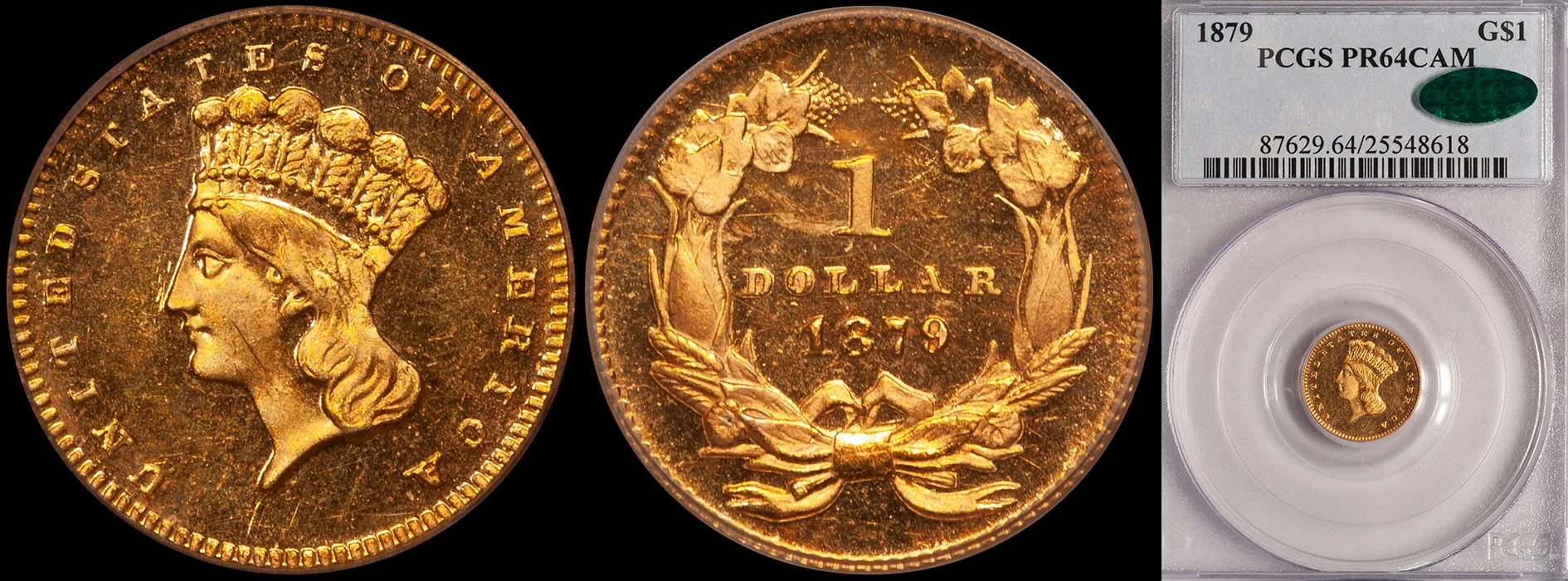
Proof Gold Coins - Mintage Figure Variance - While it is difficult to make sweeping generalizations about the survival rate of Proof United States gold coinage, some factors exist that help to determine the rarity of many issues. It is interesting to analyze these factors and apply them to the various denominations. For the most part, Proof gold coins have small mintage figures. With the exception of some of the later date Type Three gold dollars, most issues had fewer than 100 struck and nearly all of the pre-1880 issues have mintages of 50 or less.

As a good rule of thumb, it is a safe assumption that around half of the original mintage figure for a specific issue of Proof gold is known. In other words, if the original mintage of an 1876 gold dollar is 45 coins, it is likely that 20-25 are known today.

What are the factors that exist that make a Proof gold coin more or less common than its mintage figure would suggest? These include the following:

1. External Economic Factors: During hard economic times, Proof gold coins may have been melted or spent. As an example, in the Depression of the 1930’s, Proof eagles and double eagles were spent as they were not worth a significant amount above face value. Other periods of economic hardship that saw a reduction of Proof gold populations include the Civil War and the Reconstruction Era, the Depression of 1873-1878 and the Panic(s) of 1893 and 1907. I believe that this had a very large impact on Proof gold survival rates.

2. Coin Size: This actually works both ways. As mentioned above, during tough economic times, small coins are more apt to survive than large coins. But, a coin as small as a gold dollar is more likely to be “lost” than one as large as a double eagle. Both factors certainly contribute to survival rates of Proof gold.

3. Popularity of the Denomination: Although this is more speculation than fact, I would presume that denominations that have traditionally not been popular with collectors (gold dollars and three dollars) have been more susceptible to loss than more popular denominations such as eagles and double eagles.

4. Hoarding: Certain Proof gold issues were hoarded by contemporary dealers and collectors. This tends to inflate their survival rate. The Proof gold issues most affected by contemporary hoarding include gold dollars and three dollar gold pieces from the 1880’s. It is interesting to note that mintage figures for these two denominations reached record highs during this era; this was a direct result of contemporary speculator demand. 5. Restrikes: Not all Proof gold coins are as rare as their mintage figures would indicate. As an example, PCGS and NGC have combined to grade far more 1875 and 1876 Three Dollar gold pieces than the reported original mintage figures. While the slabbed population is clearly inflated by resubmissions, many collectors are not aware of the fact that the reported original mintage figures of 20 and 45, respectively, does not take into consideration a number of Restrikes that were produced by the U.S. Mint in order to placate collector demand for these two rare issues. Other years with potential Restrikes include 1865 and 1873.

6. Mint Melting/Mint Record Errors: Certain mintage figures for Proof gold coins just seem to make no sense. As an example, the reported mintage for Proof gold dollar and three dollar gold pieces in 1861 is reported to be 349 coins; the highest figure for these two denominations until the 1880’s. It has traditionally been assumed that the Mint was way too optimistic in producing Proofs this year and most were melted at the end of 1861 when they went unsold. I personally would not be surprised if these figures actually represented an error. Another year that has a skewed mintage figure is 1859, the first year of “modernity” for United States Proof gold. The Mint struck 80 examples of all gold denominations, in anticipation of strong demand in the booming new hobby of coin collecting. This proved to be way too optimistic and the vast majority was melted. Another “problem year” is 1910 which has much higher mintages than any other Indian Head design. I believe that the published figures are in error.

Given these six factors, how do they impact the specific denominations of Proof gold coins? My experience with each denomination is as follows:

Gold Dollars: The dates from the 1850’s and 1860’s tend to be very rare in all grades. However, the survival rate of these coins is much higher than expected with the exception of the 1859-1861 dates (whose inflated mintages figures were discussed above under Factor #6). The issues from the 1870’s typically have survival rates of around 50% of the original mintage. The 1880’s Proofs are a real anomaly. From 1884 to 1889, the mintages exceeded 1,000; a huge number of coins by Proof gold standards. But the survival rate is likely between 10 and 20% for each of these. I would ascribe this to numerous coins getting melted in the lean economic years of the early to mid-1890’s.

Quarter Eagles: With the exception of the famous 1841 and 1863 issues, virtually all pre-1870 Proof quarter eagles are extremely rare and most have fewer than ten survivors. The issues from the 1870’s tend to have survival rates of around 50% while the 1880’s and 1890’s seem to be a bit more available in terms of their original mintage. The 1900’s Liberty Head issues have survival rates as high as 75%. Indian Head quarter eagles have an average survival rate of 50% (+/- 10%).

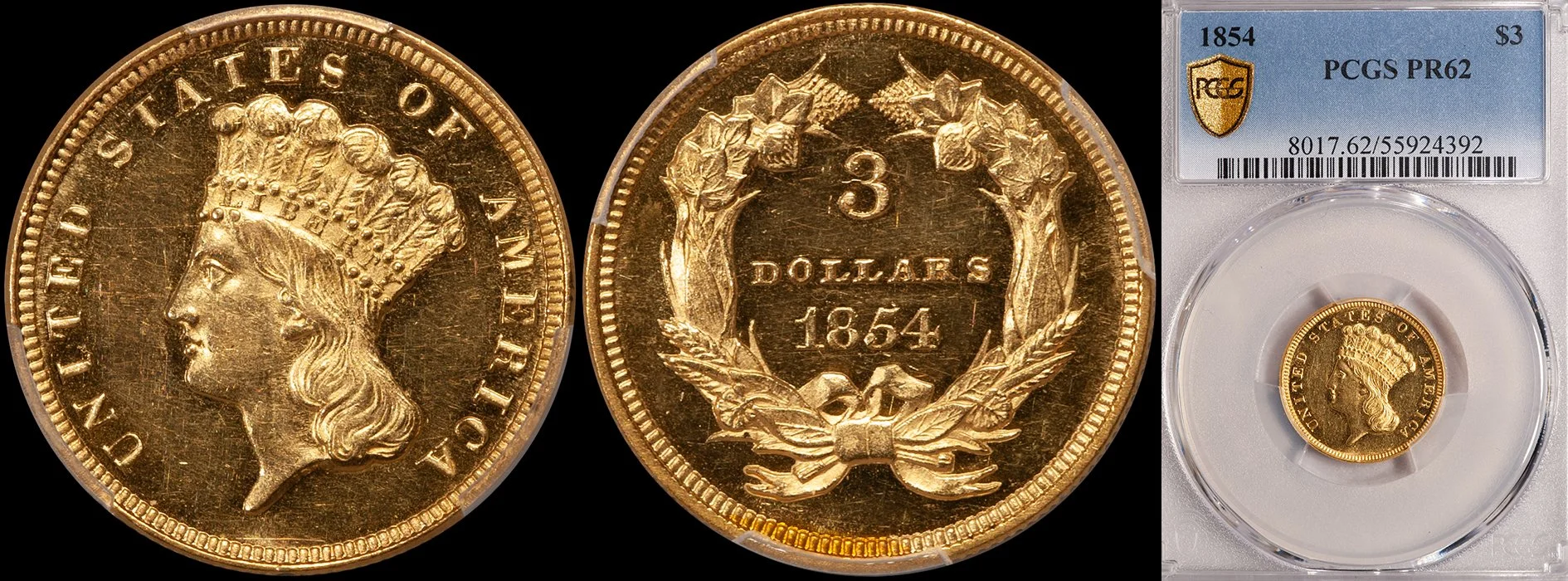
Three Dollars: The issues from the 1850’s are extremely rare in Proof and all have low mintages. The 1860’s and 1870’s issues have average survival rates of around 50% (the exceptions to this are the 1860 and 1861 which had significant meltings) and the 1875 and 1876 (see Factor #5 above). The 1880’s dates mostly have survival rates in the 50-60% range.

Four Dollars: Stellas are really a separate story in and of themselves. Many of the 1879 Flowing Hairs were saved as souvenirs (see Factor #4) and Restrikes exist. The other three issues appear to have survival rates of around 50%.

Half Eagles: With the exception of the 1864 (which had a “whopping” mintage of 50), all No Motto half eagles in Proof are exceedingly rare. The With Motto issues from the 1860’s and 1870’s typically have survival rates of well under 50%; some issues (such as the 1870, 1871, 1874 and 1878) have survival rates that are probably less than 25%. With one or two exceptions, the dates from the 1880’s have also survived with less frequency than one might assume. Most of the 1890’s and 1900’s dates have survival rates of around 50% (+/- 10%). Indian Head half eagles are scarcer on a relative basis than their quarter eagle counterparts and I’d estimate that 30-40% of the original mintage exists.

Eagles: Virtually all No Motto eagles are exceedingly rare in Proof. The With Motto Proofs from the 1860’s and the 1870’s are all very rare and most have fewer than ten survivors. I have always found the Proofs from the 1880’s to be far rarer than most people realize and many of the specific issues (1881, 1883, 1885 and 1889 to name a few) have survival rates of fewer than 25% of the original mintage. The 1890’s are slightly more available (around a third have survived) while the 1900’s dates have survival rates of around 50%. Proof Indian Head eagles, with the exception of the 1908, range from very rare to extremely rare and have typical survival rates of around 25%.

Double Eagles: Only 265 Type One Liberty Head double eagles were made in the Proof format and I would be surprised if more than three to four dozen exist. The Type Two issues are also very rare with a total mintage of only 335 Proofs. They are more available on a relative basis than their Type One counterparts and I think somewhere between a quarter and a third of the original mintage has survived. The Type Three Proofs are the most available Liberty Head double eagles but this is misleading as only a small handful of dates (primarily those dated 1900 to 1907) have survival rates that exceed 30-40%. Proof St. Gaudens double eagles are extremely rare but they have a slightly higher survival rate that one might expect. My best guess is that around one-third of the original mintage exists.