State of the Market: Three Dollar Gold Pieces

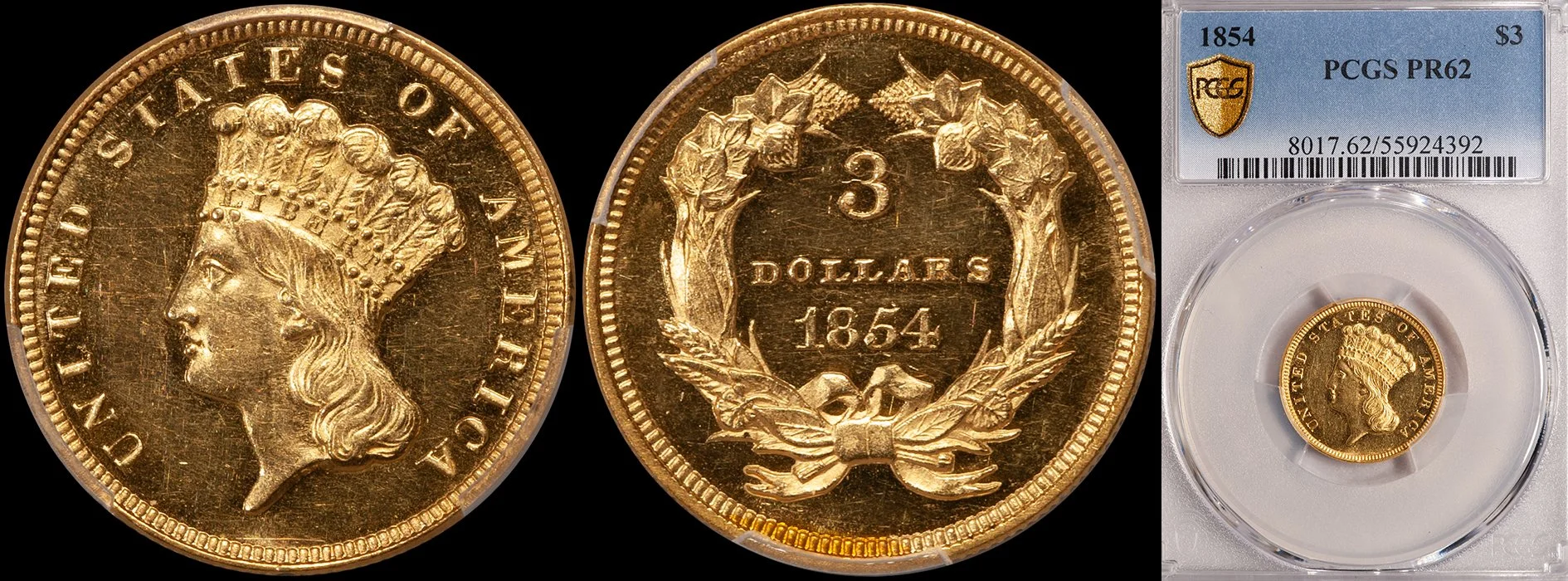
In the fourth installment of my series of State of the Market articles, I take a look at the popular Three Dollar Gold piece series. How has this cult favorite fared in the past few years and what does the future look like for this denomination? After years of neglect, interest in the Three Dollar series spiked dramatically in 2004 and 2005. This can be directly attributed to two reasons: the publication of the first book on Three Dollar gold pieces (written by myself and the legendary Q. David Bowers) and expert marketing and promotion of the series by a few firms which introduced many new collectors to this interesting series.

For a variety of reasons, the promoters who focused on Threes moved on to other series in the middle of 2006 and the last year or so has seen a fairly dramatic drop in prices in the series. I would estimate that high grade common dates Three Dollar gold pieces have dropped between 30 and 50% while rare dates have seen price drops more in the range of 10-30%.

Perhaps the most dramatic price decreases in the entire series have been for common dates in MS64. These can now be bought for $6,000-7,000 but they were priced at $12,000-14,000 around two years ago. MS63 common dates are now $5,000 to $6,000; they used to be $9,000 to $11,000. MS62 common dates now sell for $3,500 to $4,500 and were priced at $6,000 to $7,000 at the height of their popularity.

In my opinion, common date Three Dollar gold pieces are a great value right now if they can be bought at around $6,000. These coins are generally very nice and if you can find a high end example with good color and luster as well as minimal marks at the low end of the current value range, I think this is an excellent coin to put away for a while. I find it a little strange that an MS64 common date is selling for just a $2,000 premium over a common date in MS62. My gut feeling is that an MS62 is not a great deal at this level.

The rarer date mintmark issues in this series are, for the most part, doing rather well. There is strong collector demand for issues such as the 1855-S and the 1857-S and the 1860-S seems to have become extremely hard to locate in grades above AU55.

One issue that is especially interesting to follow is the 1854-D. I have always thought of this as being a coin that, while technically a Three Dollar gold piece, is totally different from the other issues in this series. The reason for this is obvious: its primary source of demand is from Dahlonega collectors, most of who will never aspire to own another Three Dollar gold piece besides this date. Nice AU examples seem to have formed up considerably in the last six months and I would say they are worth between 5 - 15% more than when they hit a comparatively low level last summer.

Another interesting issue is the 1854-O. This date has become the most two-tiered Three Dollar gold piece in terms of value. It is clear to me that NGC tends to be considerably more liberal when it comes to the 1854-O in AU, especially in the upper ranges of this grade. A nice PCGS AU55 or AU58 1854-O is really quite a rare coin and it now commands a strong premium over the typical NGC graded AU55 or AU58. I have also noticed that 1854-O Threes with original color and surfaces and good strikes are commanding strong premiums over bright-n-shiny, processed examples.

So what lies ahead for this denomination?

I think Threes are far too interesting and far too collectible to stay inactive for long. My prediction is that you will see some of the marketing companies that dropped out of the series a few years ago get back in. It’s hard not to like a Three Dollar gold piece that was priced at $10,000 as recently as a few years ago when it is now priced at $7,000.

My guess is that you will see the greatest new interest in the series occur with the most interesting coins. These include the following:

    1854-D, all grades

    All San Francisco issues (except for the 1856-S) in AU50 and above

    Civil War issues, all grades

    Rare low mintage dates such as the 1858, 1865 and 1877 in all grades

Issues with mintages of less than 1,000, AU50 and above

When you take a hard look at this series, it’s easy to see what happened in 2005 and 2006. Prices went up too quickly, too many coins came on the market and the speculators who were driving the market bailed. My best guess is that, starting soon, the Three Dollar gold series will go back to being mostly collector-driven and it will regain its spot as a popular, oddball gold denomination that has long been in demand.
Starting a Charlotte Half Eagle Collection

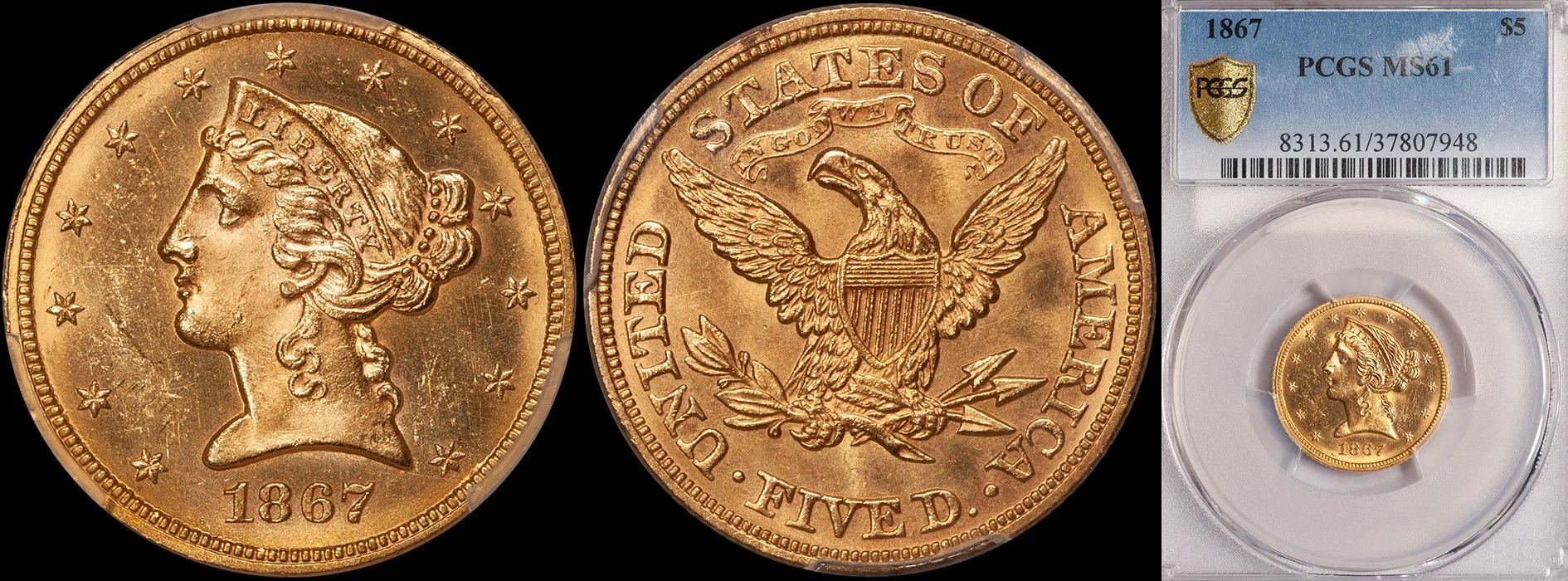
For a collector who is new to branch mint gold coins, assembling a set of Charlotte half eagles is an excellent place to begin. New collectors tend to like half eagles more than the other denominations produced at this mint. These coins are larger in size than their gold dollar and quarter eagle counterparts and they tend to be more available in higher grades. Due to the fact that Charlotte half eagles are currently somewhat out of favor with collectors, many nice half eagles from this mint are currently available. In other words, this is a good time to start a Charlotte half eagle collection due to the fact that a new collector will have less competition than usual and will find a greater assortment of desirable pieces available.

In my opinion, there are basically three tiers of collections that the Charlotte half eagle collector can tackle. For the sake of classification, we can identify these as follows: beginner level, intermediate and advanced.

A beginner level set consists of 24 coins, generally in the EF40 to AU50 grade range. (NOTE: On all three of these sets, if the collector chooses not to include the 1842-C Small Date, the number of pieces he needs to purchase decreases by one). The five key issues in the beginner set are the 1842-C Small Date, 1840-C, 1844-C, 1846-C and 1838-C. With the exception of the 1842-C Small Date, all of the other key issues can be found in nice Extremely Fine for under $5,000.

A few pieces of advice for the collector who decides to work on a beginner level set of Charlotte half eagles:

    Take your time. This set can be completed in a few months but a rushed set will include many low end coins. A set that is assembled over the course of a few years will be more fun and it will include nicer coins.

    Whenever possible, throw in a few higher grade coins. Right now it is possible to buy nice AU53 to AU55 examples of common dates for just $1,000 or so more than an EF40. While this might slow up completion of your set, in the long run a collection with some higher grade coins will be a better investment than one with just EF40’s.

    Try and learn what choice, original coins look like and then become fixated on buying only coins with the “right” look. Whenever possible, avoid bright-n-shiny, processed pieces.

An intermediate level set consists of all AU coins. Most collectors will probably look for the key issues in the AU50 to AU53 range and the more common dates in AU55 to AU58. This is clearly more difficult to assemble than a beginner set, not to mention (obviously) a more expensive one. The dates that will prove to be the most difficult to locate in this grade range include the 1838-C, 1842-C Small Date, 1840-C, 1844-C and 1846-C.

A few pieces of advice for the collector who decides to work on an intermediate set of Charlotte half eagles:

    You are going to be confronted with a seemingly endless array of AU Charlotte half eagles in auctions and dealer’s inventories. Try to make your first decision the right one and don’t buy a coin that you will regret purchasing a few years later.

    Many dates that have seemingly high population figures in the PCGS and NGC population reports are actually quite scarce with original color and surfaces. If you see a nice, original example of a date like an 1838-C or an 1861-C, do whatever it takes to buy it, even if this means your budget is decimated for six months or more.

    In my opinion, it makes more sense to stretch and splurge on the rarer dates in the series than it does on the common ones. While the Charlotte market is in its current slump, this is a great time to be looking for the scarce issues and not worrying about common dates.

An advanced set of Charlotte half eagles consists of coins that grade MS60 and above. If the 1842-C Small Date is not included in this set, every issue is obtainable in Uncirculated; some in grades as high as MS63 to MS64. This is a set that requires a formidable amount of patience and deep pockets to complete. It would take at least $500,000 to form a set of Uncirculated Charlotte half eagles and a truly world-class set could run closer to $1 million.

A few pieces of advice for the collector who decides to work on an advanced set of Charlotte half eagles:

    Whenever possible, buy coins with good pedigrees. High quality Charlotte half eagles from collections formed by such men as Harry Bass, Stanley Elrod, Paul Dingler, Louis Eliasberg, Ed Milas and others are generally characterized by choice, original surfaces and are regarded with high esteem by knowledgeable collectors and dealers.

    Buy the right coin the first time. If you already own a very nice MS63 1852-C half eagle, it usually does not make sense to upgrade this to an MS64. The only time such an upgrade would make sense is if you can sell your existing coin for a good price and the new coin is considerable nicer in appearance when you put the two coins side-by-side.

    Carefully research the price history of expensive Charlotte half eagles. If you are going to spend $20,000++ on a coin, make certain you have a good idea how much other comparable coins have sold for at auction and via private treaty. Avoid dealers who do not help you readily access such information.

As I mentioned above, this is a great time to start a collection of Charlotte half eagles. After the new third edition of my book on Charlotte coinage is released (hopefully by the end of 2007 or early in 2008) I would expect to see renewed interest in this area of the market. This will make it harder to buy nice coins, especially at the currently favorable market levels.

State of the Market Report: San Francisco Gold

In the third part of my State of the Market, I kick it West Coast style and take a look at what’s happening with the gold coins from the San Francisco mint. Are these coins still as dead as the proverbial doorknob or has some breath been jumpstarted into this long-overlooked part of the market? Looking at the market for San Francisco gold coins from a macro perspective, I’d have to say that the overall health of these coins is pretty weak. However, this blanket statement most certainly can not be applied across the board. There are segments of this market that are unquestionably strong and that will, I feel, continue to show strong growth in popularity.

The strongest area in the San Francisco market is rarities and essential one-year type coins. As an example, price levels on 1854-S quarter eagles have increased dramatically over the past few years. In 1999, the finest known example from the Bass Collection sold for just a shade over $135,000. In an auction earlier this year, Heritage sold an example that was clearly not as nice as the Bass coin to a knowledgeable dealer for $345,000. Two other key dates that have seen strong price appreciation in the past few years are the 1864-S half eagles and eagles.

One San Francisco coin that, were it to become available, would almost certainly become one of the most expensive coins ever sold would be the 1854-S half eagle. Only two or three examples are known and just a single piece is in private hands. If this coin were to come up for sale while the market for ultra-rarities remains strong, it could bring as much as $4-6 million.

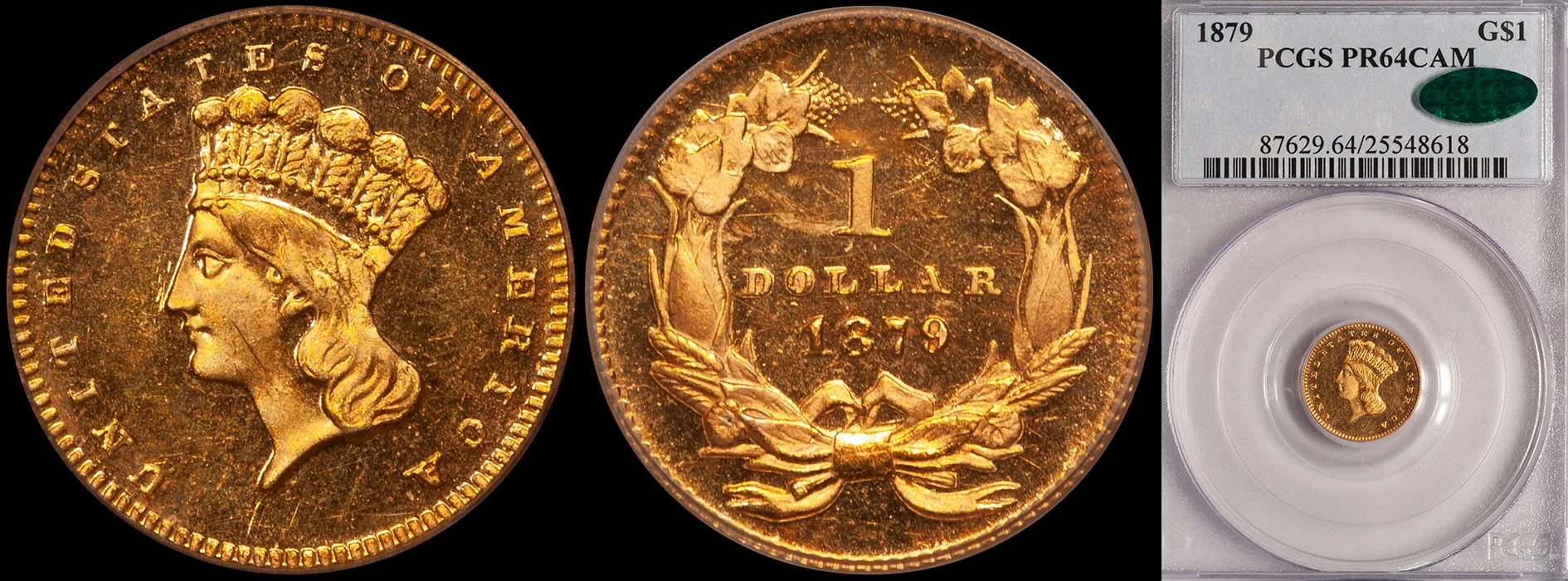
There are a few other segments in the San Francisco gold coin market that I see strength in. One of these is gold dollars. In the past few years, every time I’ve owned an affordable, nice quality example of a date like the 1857-S or 1858-S, it has sold very quickly. Collectors looking for San Francisco gold dollars tend to be interested in coins in the AU50 to MS61 grades and priced in the $1,750-5,000 range. In my experience, higher grade San Francisco gold dollars are not as easy to sell.

Another group of coins from San Francisco that maintain an active level of collector interest are Three Dollar gold pieces. This is interesting because of the fact that, viewed as a whole, this series is currently not in favor. Pleasing Extremely Fine and About Uncirculated examples of the 1855-S, 1857-S and 1860-S have remained very desirable and have not declined in price like the majority of the Philadelphia Three Dollar gold pieces from this era. The one San Francisco Three Dollar gold piece that has declined in popularity is the 1856-S. This is the result of a very large number being available for sale in the last year or two.

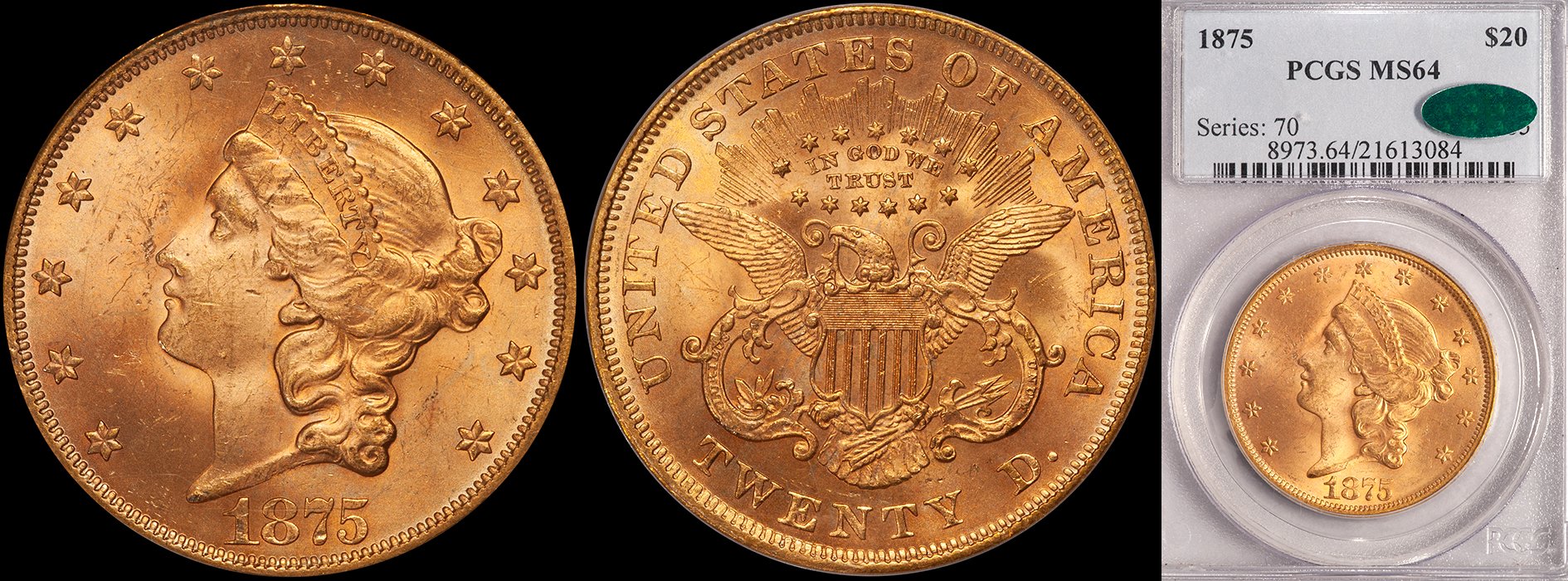
The market for San Francisco double eagles has shown some ups and downs in the past year. High grade examples of the scarcer Type One issues remain in demand and the 1861-S Paquet and 1866-S No Motto have experienced greater price increases in the past two or three years than nearly any Liberty Head gold coins. I have noticed some price resistance on average quality Type Two double eagles from San Francisco and the market for most Type Threes from this mint is down significantly from the high levels of a year or two ago.

There are at least two areas of the San Francisco gold coin market that remain very weak: the rare date half eagles and eagles from the 1850’s through the mid-1870’s and the semi-scarce issues from the 1880’s through the early 1900’s. The reason for the weakness in these two areas is the same: lack of collector interest.

The half eagles and eagles struck in San Francisco between 1854 and 1877 are, for the most part, very rare. But they have never had the collector support that characterizes the southern branch mints or Carson City. As I’ve mentioned before, the lack of a standard reference work on these coins has certainly not helped. But I think there is another factor that keeps collector level down.

A coin like an 1861-S half eagle in AU55 or an 1860-S eagle in AU53 is unquestionably rare. But both of these are already quite expensive; $10,000 or so in the case of the half eagle and $20,000 or so in the case of the eagle. This is a lot of money for a series with virtually no collector interest. If prices were adjusted downwards to reflect these coins as sleepers or potential rarities and not established rarities, perhaps more pioneers would enter the market.

Another factor that hurts these coins is that most are very ugly. There is a huge price spread between grades for coins like an 1860-S eagle. Because of this price spread, there is considerable temptation to take a nice original EF45, scrub it to death and get it upgraded to AU53. In theory, lots of value has been added but now you’ve got an already unpopular coin like this 1860-S eagle that is now bright-n-shiny and that has a very high Trends valuation to boot.

I’ve weighed in on semi-scarce San Francisco gold coins before. I don’t like coins like this very much as, to me, they represent the unglamorous segment of an unpopular area in the market. That said, if you had bought coins like an 1882-S eagle in MS62 a few years ago, you did pretty well, if only because of the rise in bullion prices.

One area of San Francisco gold that continues to shine is high quality 20th century rarities. In the past year, we have seen record prices for a number of Indian Head eagles and St. Gaudens double eagles from San Francisco. The fabulous PCGS MS67 Duckor 1920-S Indian Head eagle at $1,725,000 was a remarkable price for this coin but what was even more incredible was the fact that at least three or four bidders were actively pursuing this coin at the $1million level.

San Francisco gold has underperformed other areas of the rare date gold market but it is not the hopeless laggard it was as recently as two or three years ago. I think we will continue to see small pockets of popularity. Some currently moribund areas that I would keep an eye on include Civil War issues from this mint and Condition Census or Finest Known gold dollars, quarter eagles, half eagles and eagles struck prior to 1878. In addition, I think better date Indian Head half eagles and eagles from San Francisco will be a very strong area in the market in the near future.

State of the Market Report: Dahlonega Gold

In my second State of the Market report, I look at the always popular area of Dahlonega gold and see what’s up with these coins. Dahlonega gold coins clearly remain the most avidly collected of the three southern branch mints. But this market has become very two-tiered in the past few years. Because of this market bifurcation, prices have fluctuated recently and two coins of the same date in the same grade can have wildly divergent values.

1. GOLD DOLLARS

Dahlonega gold dollars are by far the most popular branch mint gold dollars. In fact, I have noticed a number of new collectors in this area of the market in the past two or three years including at least a few who are assembling high quality, complete sets of Dahlonega gold dollars.

The Type One issues have shown a considerable amount of strength in the past few years and I would suggest that these are probably the most popular gold dollars from this mint right now. I am always able to easily sell any Type One Dahlonega gold dollar I have which is priced in the $1,500-3,000 range. The more expensive coins are a bit harder to sell unless they are rarer issues (such as the 1850-D or the 1854-D) if they are choice for the grade with nice color and surfaces. Very high quality pieces are extremely elusive and the few Finest Known or Condition Census pieces which have come onto the market in the past few years have brought strong prices.

The one-year type 1855-D is still extremely popular. A few years ago, there were a decent number of these on the market. But in the last year or so, I don’t think I’ve seen more than three or four and most of these have been higher grade. I think I could sell a nice, relatively affordable EF 1855-D gold dollar multiple times but these appear to be put away in private collections and not currently available.

The market for Type Three Dahlonega gold dollars is a little bit harder to figure out. Clearly, the better dates in this series have been hurt by a number of vastly overgraded coins put into holders by the grading services. In addition, the population figures for dates like the 1858-D and 1859-D have been greatly inflated by multiple submissions. One date which has suddenly become impossible to find is the 1861-D. I don’t recall having seen a slabbed piece which did not have a problem in close to two years. I would have to think if a nice PCGS AU55 came on the market, it would bring well over Trends due to very strong current demand.

2. QUARTER EAGLES

If I were going to assemble a set of Dahlonega coins for my own collecting pleasure, I would probably choose this denomination. Quarter eagles are the hardest Dahlonega coins to consistently find with good eye appeal and there are a few specific dates which have almost disappeared from the market.

The 1839-D has gone from being moderately popular a few years ago to being very popular today. It has been quite a while since I’ve seen a nice Uncirculated piece or a nice, problem-free EF. Most of the pieces currently on the market are processed, overgraded AU’s.

In the Liberty Head series, most of the coins I see offered these days tend to be the more common issues such as the 1843-D, 1844-D, 1846-D, 1847-D and 1848-D. Nice EF examples of these dates have doubled in price in the last three or four years but I still think that a choice EF Dahlonega quarter eagle at $2,500 or so is pretty good value in the big picture. The rare dates from the 1840’s, such as the 1840-D, 1841-D and 1842-D, remain extremely hard to find in properly graded AU50 and better and most of the ones offered at auction these days are low end and unoriginal.

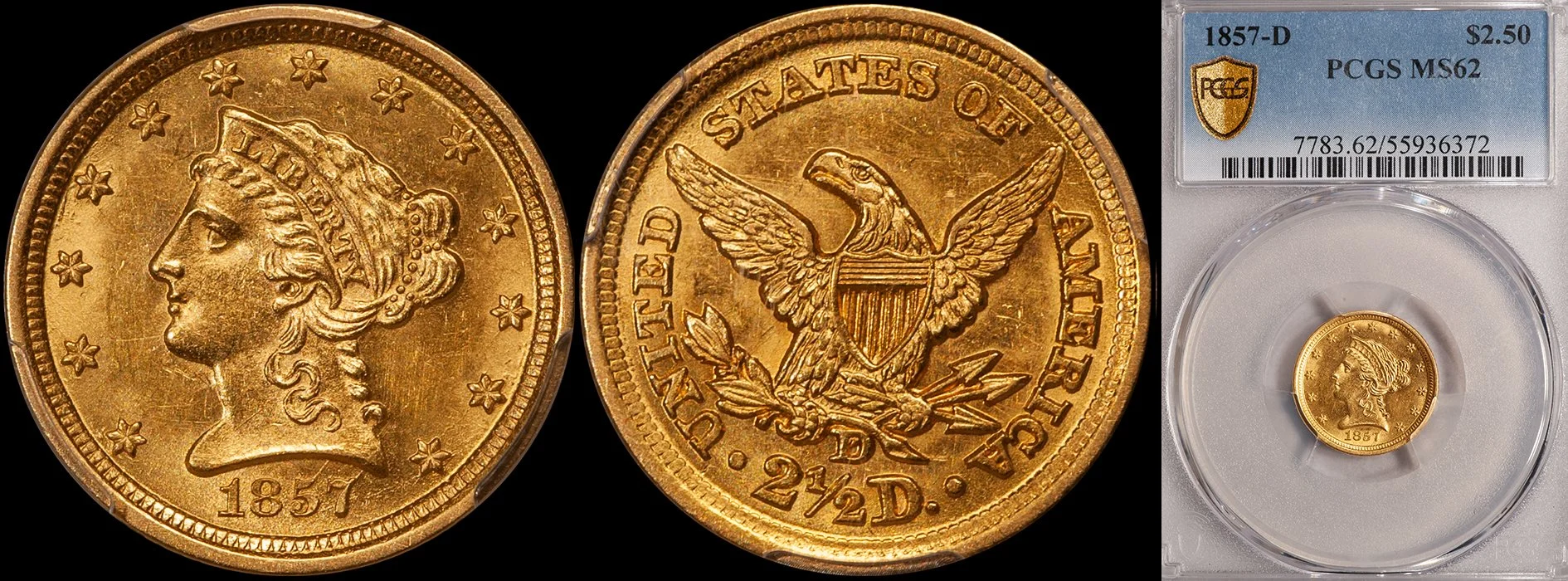
The scarce 1850’s Dahlonega quarter eagles are currently an enigmatic sub-series, in my opinion. I have seen a lot of low-end Uncirculated examples of dates such as the 1852-D, 1853-D, 1857-D and 1859-D in the last two or three years. These mostly tend to be the same group of overgraded coins which bounce from auction to auction and from dealer to dealer, seeming to never find a good home. Two dates that remain truly rare are the 1855-D and the 1856-D. It has been at least two years since I’ve seen a really nice 1856-D for sale and this date has proven to be the rarest Dahlonega quarter eagle, in my opinion, by a significant margin.

3. THREE DOLLAR GOLD

If any Dahlonega coin could be termed “volatile” it would be the popular 1854-D Three Dollar gold piece. This issue is always in demand due to its one year status. What many people have learned, though, is it is clearly not nearly as rare as its small mintage of 1,120 would suggest (a comment on this follows, see below).

A few years ago, the market seemed inundated with 1854-D Threes. I can remember owning no less than four AU58 examples at one time. Prices shot upwards but many collectors realized that $40,000+ for a decent quality example seemed like pretty marginal value when there were more interesting Dahlonega coins available at a fraction of the price. As with the market for Three Dollar gold pieces in general, values for the 1854-D declined in the past year or two. But they seemed to have firmed in the past six months and it appears clear to me that they aren’t going to get cheaper anytime soon.

A note on this issue’s rarity: clearly the 1854-D was saved at the time of issue and its survival rate is considerably greater than other Dahlonega coins of this era. But the number of pieces which appear for sale is misleading. I know of a few 1854-D Three Dollar gold pieces that have appeared in at least four or five consecutive auctions as well as on various dealers’ websites. Properly graded, original examples have never been easy to find and the ones that bounce around these days tend to be the ones which are, to put it nicely, not so “pretty.”

4. HALF EAGLES

For a number of years the half eagles have been the most popular denomination from this mint. Prices have risen for lower grade examples but I find the higher end of the half eagle market to be somewhat weak right now. The culprit for this, of course, is the abundance of overgraded coins. I know that the dealers who specialize in Dahlonega gold coins are happy to purchase all the high quality half eagles that they can find but their complaints are unanimous: the nice coins just aren’t readily available.

I would have to say that two of the most popular Dahlonega issues right now are the 1838-D and 1839-D half eagles. The former was once easy to find in nearly any circulated grade but it is now very hard to find an 1838-D even in EF grades. The 1839-D, after years of languishing in obscurity, has become the “coin du jour” in the half eagle series and auction prices for nice AU pieces have broken the $10,000 barrier in the past two years.

There are a few dates which I never seem to see in higher grades. These include the 1842-D Large Date, 1846-D Normal Mintmark, 1848-D, 1850-D and 1861-D. The other Dahlonega half eagles tend to be fairly readily available in most grades but, as I said above, finding attractive, original coins can be very challenging.

At some point in time, an enterprising dealer will publish a price guide for Dahlonega gold coins which has two sets of prices. The first will be for the run-of-the-mill pieces which are typically offered for sale. The second will be for the crusty, original pieces which are all but disappearing. The price differential right now is only 15% or so. I would not be surprised if in five years a crusty AU55 common date Dahlonega half eagle is worth 50-100% more than its processed counterpart.

One final comment before I end this report. The 1861-D is one date in the half eagle series that is just about impossible to find these days. I used to handle a nice 1861-D every two or three months. Now, it’s more like once every year or two. I believe the reason for this is that the 1861-D is a classic collector favorite and all the nice, middle grade pieces are owned by people who have no real interest in selling them.

May 2007 Long Beach Show Review

With few exceptions, coin shows are, for me, places to buy. So I typically judge my success at a coin show on how much I am able to purchase and if my new coins are interesting. On both fronts, I would have to say that the recent Long Beach show was a strong success. The funny thing is, the show itself seemed pretty slow. Until a few years ago, Long Beach had a very strong collector following and I could always count on staying busy on Friday and Saturday selling coins to collectors. This has clearly changed and I’d have to say that Long Beach is pretty much over these days by Thursday afternoon; i.e., it is a primarily wholesale-oriented show.

I’ve been having trouble buying coins at the last few shows I attended so I decided that I’d make a Herculean effort to find some interesting pieces at Long Beach. And I worked liked a dog; running from table to table and looking through boxes of coins from my usual sources and some dealers who I typically do not patronize.

I didn’t realize how much I bought—or how much I liked what I bought—until I returned home and wrote up my new purchases. Some of the highlights include the following:

    A nice group of choice New Orleans gold coins including a lovely PCGS MS62 1857-O quarter eagle and an 1850-O eagle in NGC AU55.

    A very rare 1841-O eagle graded AU53 by NGC.

    Some attractive Charlotte and Dahlonega half eagles ranging in price from $2,500 to over $10,000.

    A dazzling Condition Census 1852-D half eagle graded MS62 by NGC.

    An 1846 eagle graded MS61 by NGC which is tied for the finest graded by any service.

As for the show itself, I would have to say it was pretty marginal. There was a decent amount of wholesale business being done but there was very little fresh material available. If you were the kind of dealer who regally sits behind your table and waits for coins to come marching up, you had a terrible Long Beach. If, like me, you hustled and hustled, you may well have “bought your way out” of the overall malaise which now seems to hang over the show.

That said, a number of interesting trends became apparent at the show. The first thing I noted was that as soon as many dealers panicked and dumped large portions of their positions on generics, gold spiked upwards. The second thing is that Indian Head quarter eagles seem to be back in play after a year or so in the dumps. I sold a few better dates I had in stock (1912, 1914-D and 1915) for my full asking price to the first person I showed them to. The final thing I noted is that collector grade coins in all series remain very popular. If you had coins like scarce date Bust and Seated silver coins or better date Bust gold, you were going to sell them very easily.

I did not participate in the pre-show auctions due to lack of time and lack of interest. I spent very little time (or money, for that matter...) at the Heritage sale. I did sell a number of coins in the auction and was very pleasantly surprised at how well they did.

I am anticipating that the market will be relatively slow for the rest of the month although I do expect the Baltimore show at the end of June to be excellent. I am attending the summer version of this show for the first time ever (usually I go on vacation at the end of the June but now that I live in the Northwest I actually want to stay around!) and would urge you to do the same if you live anywhere near Baltimore.

Impaired Proof Gold

Impaired Proof gold. What is it and do collectors covet these coins? This article takes a quick look at an interesting, little-understood subject. Proof gold coins were struck in very small quantities for collectors. Mintages figures for most issues produced before 1900 are extremely low; in many cases less than 50 coins per year. The typical survival rate for a pre-1900 Proof gold coin is around 50% of the original mintage figure. Most of the coins that have survived were handled with care and grade PR64 to PR66 by today’s interpretations. But a small percentage of the surviving Proofs were mishandled and now grade lower than this.

There are essentially two ways in which a Proof gold coin can become Impaired. It can either have been spent (accidentally or on purpose) and received wear from circulation or it could have been mishandled through improper storage and/or harsh cleaning(s).

I have heard stories that during the Depression, a number of Proof gold coins were spent by collectors who could no longer afford to have high face value coins. As an example, it is not uncommon to see Proof Liberty Head double eagles from the 1890’s and the 1900’s which are lightly circulated. By the beginning of the Depression, these coins were not worth substantially more over face value and dozens (if not hundreds) of pieces were placed in circulation.

Proof gold coins which are circulated are very easy to spot. They typically show noticeable marks in the fields and signs of friction on the high spots. Because of the fact that proof gold coins have extremely reflective surfaces, these marks tend to be very heavily amplified and appear worse than they might actually be.

How these marks affect the grade of a Proof gold coin is fairly subjective. It is very unusual for a lightly circulated Proof gold coin to be graded less than PR55 or PR58 by PCGS or NGC. If a Proof gold coin saw a considerable amount of circulation, the surfaces may no longer show enough reflectiveness to convince the grading services that the coin was actually struck as a Proof. In the instances when Proof gold coins of a certain year were struck from the same dies as business strikes, identification may prove to be impossible.

Many business strike gold coins with light wear can be quite attractive; especially if they are original and uncleaned. Lightly circulated Proof gold coins tend to be generally unattractive and, as a result, they do not appeal to most collectors. There are certainly exceptions to this rule and I have seen gold coins which grade PR55 or PR58 which have fairly good overall eye appeal.

Proof gold coins with significant hairlines from prior cleanings are another story. These aren’t really “impaired” and the grading services will generally put them in holders as long as the hairlines present on the surfaces are not totally obtrusive. I have seen a decent number of gold coins graded PR60 or PR61 which have clearly been harshly cleaned with an abrasive. If these were common modern issues, they wouldn’t be encapsulated but the fact that they are rare dictates that they tend to be assigned a “net grade.”

I, for one, do not care for harshly cleaned Proof gold coins. Frankly, they are ugly. And if you are going to collect Proof gold coins, the chances are good that you care about the aesthetics of the coin.

But there are circumstances where I think that Impaired Proof gold coins are very interesting. As an example, I recently bought a PCGS PR 1870 quarter eagle. This is an issue with an original mintage of just 35 Proofs. After some research I discovered that this date was rarer than I thought as a Proof. In fact, there are as few as seven or eight Proofs known. I priced the coin at a touch under $5,000 and got a number of inquiries about it the first day it was listed on my website. Here was a coin that was pretty decent to look at, genuinely rare and reasonably priced, considering its rarity.

In conclusion, I don’t think that I would ever make Impaired Proofs a major part of my coin collection but there are clearly instances when selected examples could be pretty intriguing.

The Finest Known 1858 Eagle

One of my all-time favorite United States gold coins is coming up for sale soon. The coin in question: the finest known 1858 Eagle, graded MS64 by PCGS. The venue of sale: the Heritage May 2007 Platinum Night auction at the Central States Convention. The 1858 is among the rarer and more noteworthy issues in the entire Liberty Head eagle series. There were only 2,521 examples produced of which an estimated three to four dozen exist. While both NGC and PCGS show other examples having been graded in Uncirculated, I believe that the 1858 is unique in strict Mint State. The present example has been graded MS64 by both PCGS and NGC and is very choice for the grade.

This coin has a very interesting history. In 1972, it walked into a coin shop in New York. According to the dealer who purchased it, the owner had acquired the coin from the legendary dealer Wayte Raymond sometime in the 1920’s or the 1930’s. It was placed into a specialist collection and was first sold at auction in 1980 where it realized an impressive $115,000.

After bouncing around between a number of dealers, the coin was sold to Warren Miller, a collector from New Jersey who was assembling what, at the time, was the finest collection of Liberty Head eagles ever attempted. It remained in the Miller collection until 1995 when this set was sold by Heritage. Amazingly, the coin did not meet its reserve and it was retained by Warren Miller. It took Miller quite a while to sell this coin, as the market in the 1990’s was not especially good for esoteric high five-figure/low six figure coins; no matter how rare or neat they were.

Eventually, it was purchased by a type collector who was putting together a set of high grade coins designed by Christian Gobrecht. (And hats off to a type/design collector who chooses one of the single greatest Liberty Head eagles in existence as his ten dollar gold representative...that’s my kind of type collector!). He kept it for a decade or so and then made the decision to sell the coin in the auction mentioned above.

So, what is it about this piece that makes it worthy of so much praise? After all, isn’t it “just” an expensive, esoteric coin? In a sense that is true but the market has become far more appreciative of coins like this since the Dog Days of the mid-to-late 1990’s. While few people “need” this coin to complete their date set of 1858 coinage or their Liberty Head eagle set (and don’t snicker at the last comment; more people collect $10 Libs. by date than you think...) lots of people now appreciate one-of-a-kind coins with a real mystique. Just like this 1858 eagle.

Looking at this piece from a more global perspective, here’s what you need to know. It’s the finest known example of a coin that is genuinely scarce in all grades. It’s a No Motto eagle in a very high grade and even the “common dates” of this design type are very rare in MS64. For many years it was the world-record holder for a Liberty Head eagle (business strike) sold at auction and it has a cult following among gold coin specialists. Most importantly, it’s a gorgeous coin for the grade with choice surfaces, lovely original color and luster and incredible eye appeal for the issue. In short, it’s a true trophy coin and a piece which could be a runaway if two or three savvy, big-budget collectors or investors decide they’ve got to have it.

So what’s the 1858 eagle going to sell for this time around? I’d give it a conservative estimate in the $100,000-125,000 range although I think it’s possible it could bring a lot more This is a coin which I will be excited to watch sell in a few weeks when I’m at the Heritage auction in St. Louis.

Are Coins of the Same Grade Held to the Same Standard?

N.M. from Texas recently asked an excellent question which I’d like to try my best and answer. His question, in part, is as follows: “It seems as though the grading services are holding coins like Indian $10 and Saints to a higher standard than say CC $20's or Territorials, etc. I see MS61 or MS62 CC $20 and Assay pieces with terrible surface preservation relative to what 20th Century coins show for the same grade. I don't believe this is just a case of a few over graded coins. We all know that Territiorials and CC's had a hard life but I always thought coins of the same grade were to be held to the same standard. Care to comment?”

This question is very astute and is unquestionably worthy of some analysis. My initial reaction is that N.M.’s observation is absolutely correct. Territorial gold coins and, to a lesser extent Carson City double eagles, are definitely accorded a different grading standard than 20th century issues such as Indian Head gold or Saint Gaudens double eagles. And I think they should be.

There are at least two legitimate reasons why Territorial gold is graded the way it is (which tends to be, for the most part, very loosely). The first is that these coins were typically created in difficult circumstances by amateur coiners using primitive equipment. We expect them to look bad and, usually, the coins do not let us down. The second reason why the grading services have trouble with these coins is that they are genuinely hard to grade. There are about five people in the world who really, truly know how to grade Territorials (I am not one of them...). And none of them work for the grading services.

There is another factor that comes into play here: what I call the “veneration effect.” The graders at PCGS and NGC are savvy numismatic professionals and they get a lot more excited when they see a Bechtler quarter eagle than when they see a 1926 Indian head quarter eagle. Cool, truly rare coins will always get more of a break from an experienced grader than common coins. The graders at PCGS and NGC can deny this until they turn blue in the face but this statement is absolutely, unequivocally true.

Ironically, this is true even within the same series. I contend that a well-known rarity like an 1854-S quarter eagle is graded on a different standard than a common issue from the same series, like an 1854 Philadelphia quarter eagle. Is this “fair?” Probably not. But human beings are subjective creatures and we are influenced by factors like rarity when we determine a coin’s grade; which, like it or not, is subjective in the first place.

When the grading services first began slabbing coins, they were brutal when it came to Carson City gold. I can remember sending them coins which, even back in the late 1980’s, I thought were nice AU’s but which would routinely be graded VF35 or EF40. This began to change a few years ago and now I think the services often overcompensate when it comes to these coins. I’d like to think it has to do with the fact that the graders read my CC book and became more in touch with strike patterns on early CC half eagles or surface characteristics on 1890’s era CC double eagles. But I’m enough of a pragmatist to know this isn’t true. The market demanded different standards and the services acted accordingly.

This blog isn’t meant to be a condemnation of how PCGS and NGC grade Territorials and Carson City gold. As I said before, I believe that virtually no one has a clue how to grade the former and the market standards for the latter have changed considerably. If the market eventually determines that CC gold is all way overgraded, then you’ll see the price spreads between grades become more compact. This has already happened in some 19th century gold series.

In considering the grading of Carson City gold versus 20th century issues, there are other factors to analyze. CC gold is, as rule, rarer and as I stated above, rarer coins are graded more liberally than common coins. In addition, CC coins saw intense circulation, unlike 20th century coins which seldom entered commercial channels. Furthermore, Mint technology in 1920’s San Francisco was a heck of a lot better than it was in 1870’s Carson City and we can (and should) expect a better looking product which should be held to a more rigorous standard.

The bottom line is, if you judge CC double eagles by the same standards as 1920’s Saints, you are going to hate the CC coins and not buy any. But if you learn what the standards are for CC double eagles and try to find coins that are aesthetically pleasing for the grade, you’ll be able to be a happy collector.

Coin Collecting Questions & Answers

I recently spoke at length to a number of people who were strongly considering becoming coin collectors. They all asked me a number of great questions. I thought I’d share one from each of them along with my answers. Q. How do I find a reputable dealer?

A. I recently moved to a new city (Portland, Oregon) and had to find all new doctors, tradespeople and stores. I made my decisions two ways. For the big decisions I relied on recommendations from trusted friends and acquaintances. For the less significant decisions I went with my gut. Choosing the right coin dealer(s) is the same.

If you’ve decided to form a highly specialized collection (Middle Date Large Cents, Three Dollar gold pieces or Civil War Tokens, as examples) find out who wrote the standard reference works and who typically handles the greatest number of choice, high quality pieces within a specific specialization. If you are working on a more general collection, ask around. Post on the PCGS and NGC message boards and determine whether Dealer X has a good reputation or not. I’d also strongly recommend sticking with PNG dealers. These individuals tend to be more established and reputable and most of the leading dealers are members of this organization.

And, finally, trust your gut. If a dealer strikes you as being a blowhard or a sleaze, don’t deal with him. Remember: your first impression about a coin dealer (or just about anyone else, for that matter...) is usually correct.

Q. Can I teach myself to grade coins based on images on websites?

A. Not a chance. Coins are three dimensional objects and until images are capable of accurately representing three dimensional objects they will never show subtleties such as luster and surface preservation. A good photograph can give a new collector a decent impression of a coin’s appearance but a clever photographer can manipulate an image through lighting or digital enhancement(s). Not to mention the fact that most new collectors do not really even know what they are looking at when they view images.

So, how does a new collector teach himself to grade? I’m not sure I can provide an answer that most collectors want to hear. I think that many collectors will NEVER be able to learn how to grade really well because grading is an aptitude. It’s no different than being able to hit a baseball or not. A limited number of people can hit a baseball well and only a few hundred people in the world can do it well enough to play professionally. Same with coin grading.

What the collector CAN teach himself is how to determine of a coin is nice or not. You may never be able to consistently figure if an MS66 is a nicer coin than an MS65 but you can be taught that certain “looks” on a coins are preferable to others. And that, I think, is what the new collector should aspire to learn.

Q. Is it important to go to coin shows?

A. It depends. I personally think that going to third-rate coins shows is a complete waste of time. But for the new collector, a good show like FUN or Summer ANA or Baltimore can be a useful experience. I think shows are more important as fact-gathering sources for new collectors than as places to buy coins. At shows you have to make quick decisions in a setting that is less than optimal. If you establish a good relationship with a dealer or two, you can be sent coins on an approval basis, view them at home, study price and population data and generally feel a lot less pressured than if you have to make a snap decision at the dealer’s table.

Q. How important is price when it comes to buying coins?

A. Everyone likes to feel that they got a fair value when they buy something. The same holds true with coins. But collectors who are totally focused on price are probably going to wind-up with a mediocre collection. I’m not making this statement just because I’m a dealer and I’m trying to “convince” you to pay a price for my coins, or anyone else’s. I can tell you, however, that to buy nice coins you have to be willing to pay a strong price. Collectors who are primarily focused on price are probably going to do this at the exclusion of quality.

So how, then, do you establish what a fair price is for a coin? For items that trade with frequency, like a common date MS65 St. Gaudens double eagle, this is very easy. You can see what examples have sold for at auction and you can check various dealer websites and see what specific coins are being listed for. With rare, thinly traded coins it is harder to determine value. Auction prices realized are certainly a good source. Asking a trusted dealer what you would have to pay for a certain coin is good idea as well.

Do you have questions about rare coin collecting that you’d like answered? If so, please feel free to email them to me at dwn@ont.com. I make no guarantees that they will get featured in future blogs but if I like your question(s) there is a good chance that they will become a topic of discussion.