Grading Services

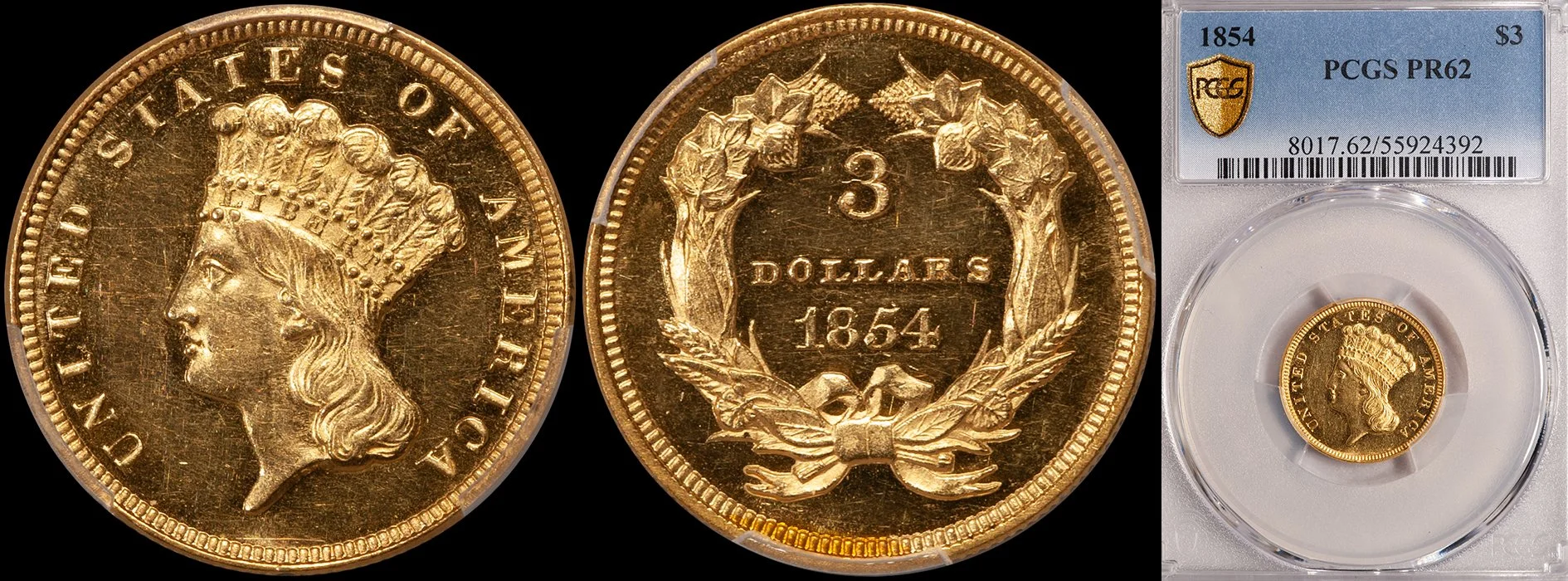
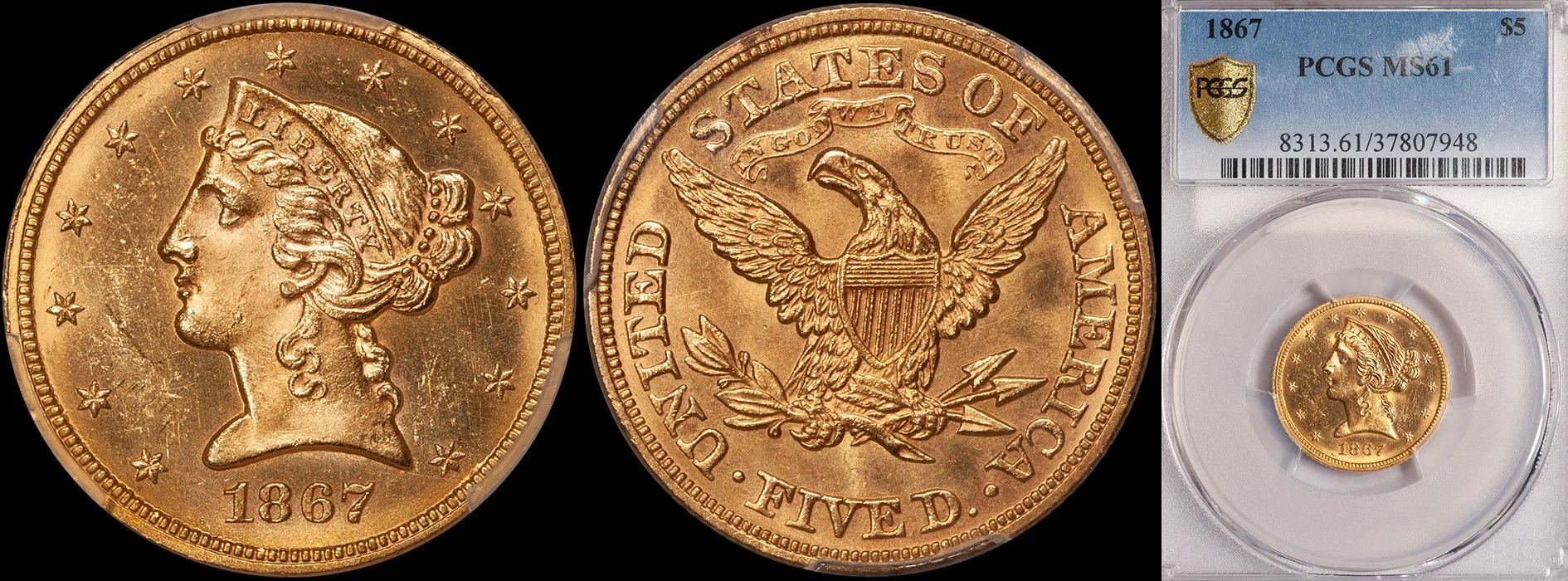
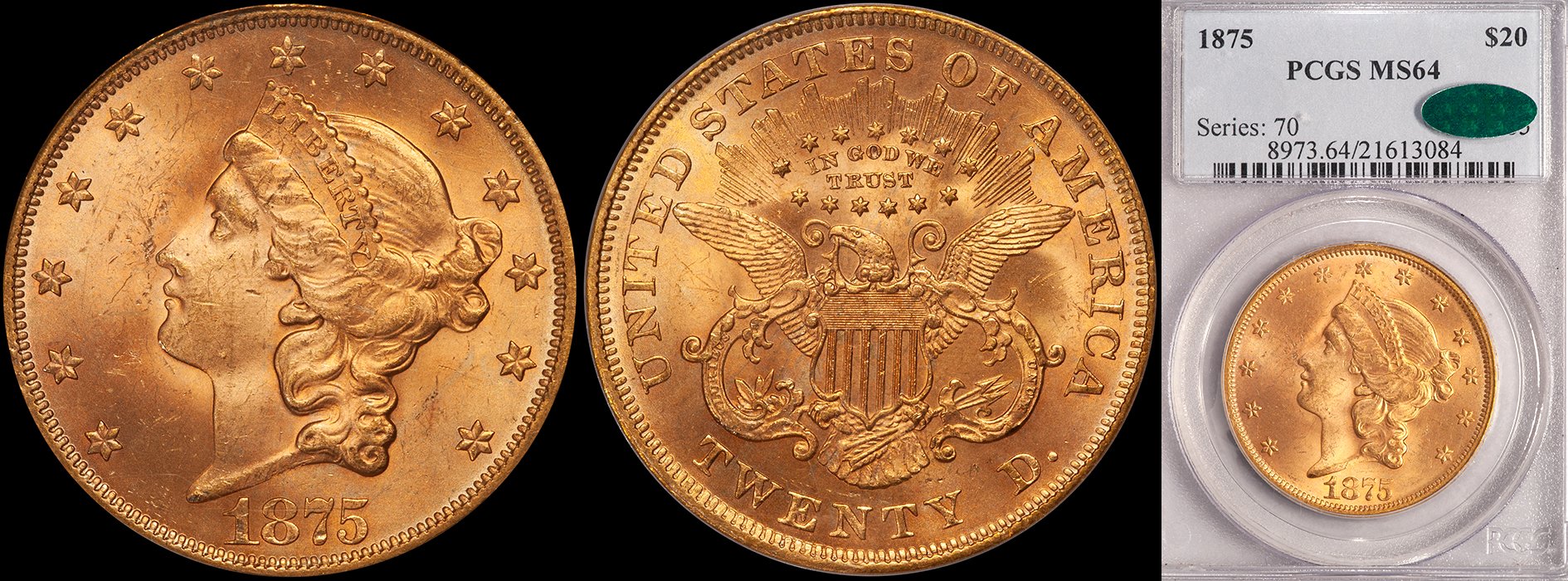
For the most part, the grading services do a decent job. Sure, they blow a few grades every now and then (after all, they’re only human…) and their lack of consistency can be infuriating. If I were the Commissioner of All Things Numismatic, what would be some of the things that I would make the services really improve on? 1. The line on AU55 and AU58 gold coins needs to be tighter. A coin in the higher AU grades needs to have a decent amount of natural mint luster present and not be riddled with marks. If a coin is very lustrous but very bagmarked, it shouldn’t be in an AU58 holder. If a coin has less than a third of its luster remaining, it certainly doesn’t deserve to be in a 58 holder.

The line on MS61 and MS62 coins should be tighter as well. Nearly every southern branch mint gold coin that I see in MS61 and MS62 holders has obvious wear. MS61 and MS62 used to be grades that meant a coin is free of wear. This needs to be the case once again.

2. Both services are maddingly inconsistent on their net grade policy. I have no problem with PCGS taking an AU58 coin that has been cleaned at one time and net grading it as an AU50. But this needs to be indicated on the holder. NGC has been a bit better with this but they tend to be inconsistent with this policy as well.

3. Both services need to reward submitters for keeping their coins original. The only way that people will be discouraged from cleaning or dipping nice original coins is if the services give such pieces high grades on their initial submission. I don’t know how many times I’ve had both services send me a subtle hint that the deeply toned, crusty coins I’ve just submitted could grade higher if they were lighter and more “commercial” in appearance. I’ve had to ruin some really nice coins because they wouldn’t work with this sort of original look.

4. The population reports are a disaster. Clean them up!! I don’t expect them to be perfect but I’d like them to be 75-85% accurate. Encourage submitters to redeem their grading inserts. Hire someone smart to go through submission reports and figure out which populations figures are greatly inflated by resubmissions. I contend that the grading services have been very lazy in this respect and that it would not take much effort for them to make their population figures far more accurate.

5. Stop encouraging submitters to destroy original Proof gold coins in order to get Ultra Cameo or Deep Cameo designations. We’ve gotten to the point where there are almost no original brilliant proof gold coins left. They’ve all been destroyed because the grading services have tacitly told submitters that their coins will be regarded as more valuable if they are bright and shiny and fully show contrast between the fields and the devices. By the time tastes revert back to originality, there will be no pieces left that haven’t been sent to NCS or dipped by submitters themselves.

If I had to address a complaint to each service on an individual basis, I would state the following:

To PCGS: Be more numismatic. With the exception of displaying Registry Sets at Long Beach shows, PCGS has done almost nothing to encourage numismatics. How about some original research? Or increasing the numbers of varieties recognized on holders?

To NGC: Change your holder. Let us be able to see the edges of the coins we own. Give the coins more room in their holders and make the background any color other than bright white which is hard to photo and not always easy on the eyes.
Online Coin Images

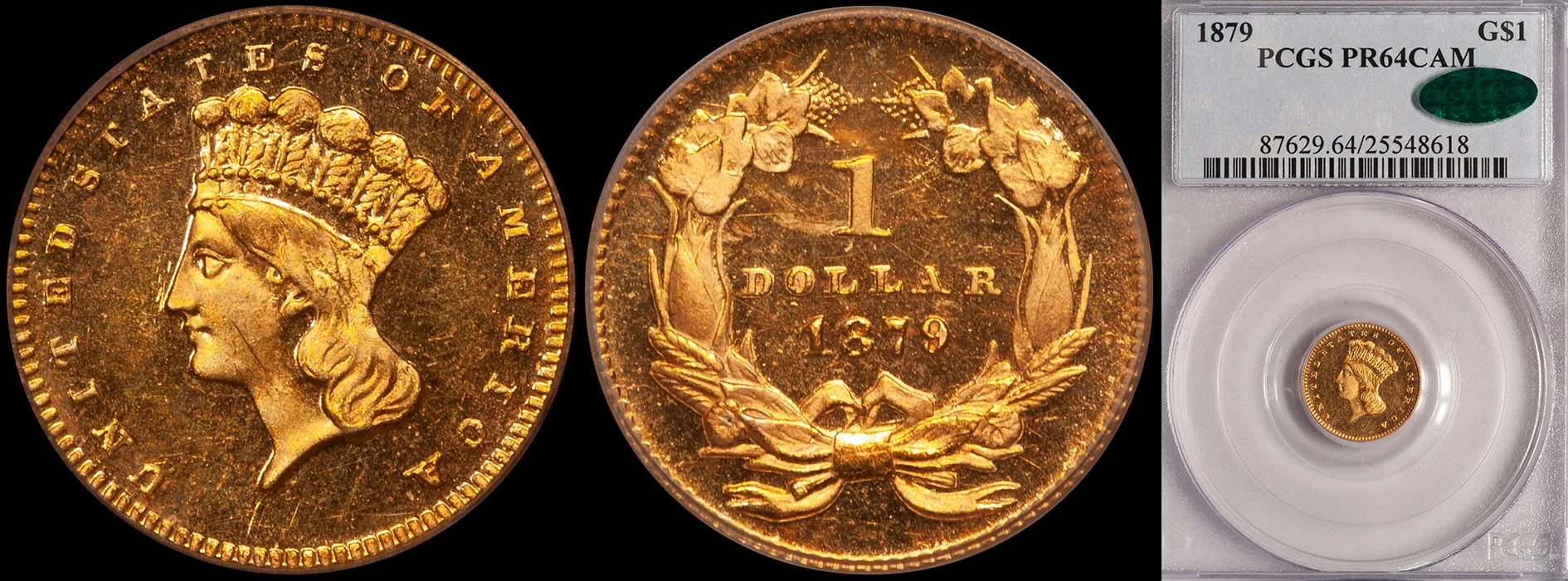
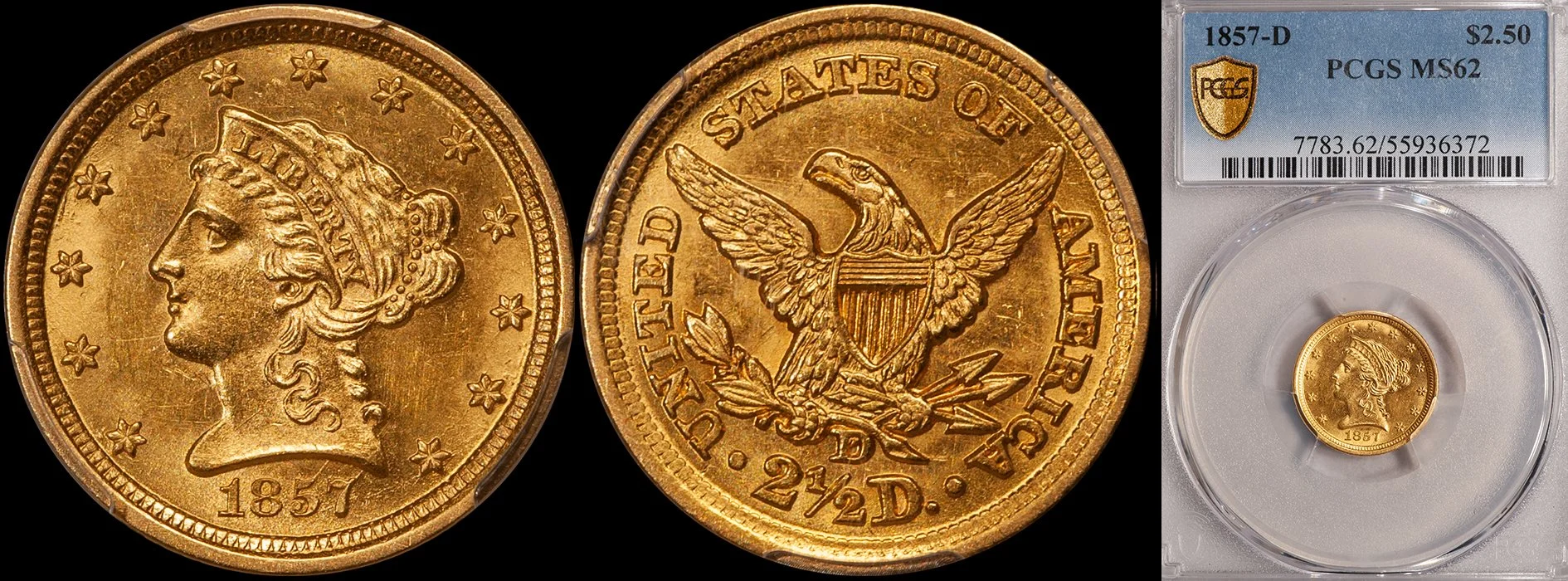
More and more I find myself buying and selling gold coins based on the images on my website and on other websites. Is this a good thing? I am a very strong advocate of the adage that there is absolutely no way that you can accurately grade a coin based on an image. But in today’s Internet-driven numismatic market many collectors and dealers have to make important and potentially expensive decisions based on images.

The reason that I hesitate to make certain decisions based on images is that, frankly, most of them are not very good. The large coin companies, who often handle hundreds if not thousands of coins at a time, are not able to take the time on each coin image that is required for them to be accurate.

There are a few things that I like about coin images. For one, they make nice, original coins look better than the typical coins offered for sale. In the past few years, I have become very “image conscious” when I buy coins. If a coin is overly bright or has funky color, it will not image well and will be a hard coin to sell. If a coin is crusty with dark, natural color and nice surfaces it will image well and, hopefully, be easier to sell.

Coin imaging is still unable to accurately capture a coin’s luster—which is best sensed in three dimensions, with the coin being spun back and forth. That’s one major reason why I am always very hesitant to buy a high grade Uncirculated or Proof coin without seeing it in person. Lower grade coins are different. I feel fairly comfortable buying circulated coins (up to AU50 or so) based on images because on these pieces luster is not an essential characteristic in determining grade.

There are other things to keep in mind when looking at coin images. Many people forget that the typical plastic slab has lots of wear and tear and this often makes the surfaces of coins look scuffy and scratched when they aren’t. In my experience, gold coins in PCGS holders photograph better than those in NGC holders. While I can’t offer scientific explanations as to why this is, my guess is that since coins are jammed tightly into white holders, this makes them a much more difficult subject to image than PCGS coins which float more loosely in clear holders.

As you become more familiar with certain rare coin firms, you learn more about their imaging. All of DWN’s images are taken using natural light and no coins are enhanced with Photoshop or other imaging software. But I can think of at least one major retail firm that blatantly uses Photoshop to make their Proof gold coins seem virtually flawless and an auction company who so totally enhances their color images that the coins in person look absolutely nothing like they do in the catalog.

There is still no substitute for buying coins based on seeing them in person but coin images are clearly getting better all the time and are becoming a huge factor in retail and auction sales. It will be interesting to see how this develops over the next few years, as digital cameras get better and better and new technology emerges that will enable websites to contain three dimension reproductions of coins and other flat objects.

Are Three Dollar Gold Pieces Overpriced?

Few areas in the rare gold coin market have seen as much price appreciation in the past two years as Three Dollar gold pieces. I am asked on an almost daily basis “are Three Dollar gold pieces overpriced?” My answer is for the most part, no they are not. Let’s look at the series in a bit of detail and I’ll make a case for them being fairly priced and also point out the issues that I think are now fully priced.

First, let’s look at the bread and butter issues in the series: the common dates in the AU55 to AU58 range. For $1,750-2,500 you can still purchase a coin that is relatively scarce. While I am not especially excited about the common dates of this type in this grade range, I think that slightly better dates such as the 1857, 1859, 1860 and 1868 are good values. These were selling for $1,500 or so a few years ago and given the rise in gold prices in the past few years and the increased popularity of this series, I have absolutely no problem telling people to purchase these slightly better dates at what is just a tiny premium over common date price.

Are there still dates that are undervalued in this series? You bet there are. I think the San Francisco issues, with the exception of the 1856-S, are all very undervalued and attractive, properly graded pieces in EF40 and better are very sensibly priced. Want to know some other underpriced dates? The 1858 is a fantastic value at current levels and all of the Civil War dates in AU are exceedingly cheap relative to common date prices. And I continue to love the very low mintage dates from the 1880’s, most notably the 1881, 1883, 1884 and 1886.

Want to know another area in this series that is extremely underpriced? Proofs. Ironically, Coin World Trends for most dates in MS64 is now higher than for comparable Proofs. I hardly ever see PR63 and PR64 Three Dollar gold pieces and Proofs struck prior to 1885 are nearly impossible to find. If you can locate decent looking pieces in PR63 and PR64 grades at anything near published Trends and CDN Bid prices, I’d say you can laugh all the way to the bank.

What Three Dollar gold pieces are overvalued? There are a number of dates that I am struggling with buying for my inventory at current levels. I have sold some common dates in MS63 recently for close to $10,000 and this seems like a lot of money to me for these. If you have some extra 1854, 1874 or 1878 Three Dollar gold pieces in MS63 and you bought them a few years ago, take your profits.

The 1854-D and 1854-O issues, while both very popular and both numismatically significant as one-year types, have risen substantially in the past two years. Three years ago, I had a group of four 1854-D Three Dollar gold pieces in NGC AU58 and had troubling selling them at $35,000 per coin. Today, each one of these coins would sell for $60,000-70,000. The 1854-O in AU55 and AU58 also seems overvalued, especially considering how many of them are around and how overgraded most of these are.

Would I encourage a new collector to begin a set of Three Dollar gold pieces today? I would, but not with as much enthusiasm as I might have a year or two ago. I still believe that there are good values in this series but the new collector will have to be far more selective than in the recent past when nearly any Three Dollar gold piece he purchased would have been considered undervalued and desirable by me.

Carson City Gold

Why hasn’t Carson City gold performed well during this past five years? I have been asked this question a number of times in the past few months and I think it is worthy of some consideration. In my opinion, the real reason why you haven’t been hearing much about Carson City gold lately is that there simply hasn’t been much for sale. In the past few years, I can recall just a handful of specialized collections being offered for sale. When I go to coin shows, I don’t see much Carson City gold and what I see tends to either be lower grade examples of scarcer dates or middle grade examples of common CC double eagles.

My conclusion is that the reason why Carson City gold coinage currently appears to be in slumber mode is that there just haven’t been many important examples offered since the Bass collection in 1999-2001 and the Lang collection in 2002 were auctioned by ANR.

Now, I don’t personally think that Carson City gold is out-of-favor or difficult to sell. It just seems that, for whatever reason, most of the major pieces that have traded since the Lang sale in July 2002 have been private, non-auction transactions. In the instances that important Carson City gold coins have appeared at auction, they have generally been one or two at a time and have sort of slipped under the radar. This has been a segment that isn’t easily monitored, unlike other areas of the rare date gold market.

I think this is going to change soon. ANR is offering a very important collection of Carson City half eagles and eagles in their pre-ANA auction in Denver this summer. (In the interest of full disclosure, I should note that these coins are owned by a client of mine and that I helped assemble the collection).

This virtually complete date run of Carson City half eagles and eagles is known as the Old West collection and it contains some very major coins. Some highlights are as follows:

Half Eagles:

1870-CC PCGS AU58 (ex Bass) 1872-CC NGC AU58 1874-CC PCGS AU58 1880-CC PCGS MS62 1881-CC NGC MS62 1891-CC PCGS MS65

Eagles:

1870-CC PCGS AU55 1872-CC PCGS AU55 1874-CC PCGS AU58 1876-CC PCGS AU58 1881-CC NGC MS64 (ex Eliasberg) 1882-CC NGC MS62 1884-CC PCGS MS62

This auction should show gold coin market observers exactly how strong rare date Carson City half eagles and eagles are—or aren’t. Many of the coins are among the finest known and a number are pedigreed to major collections and/or were plated in my second book on Carson City gold coinage. It will be very interesting to see the prices that these coins bring.

For more information on the Old West collection of Carson City half eagles and eagles, look at my website in the coming months as I am certain to write a number of features about these coins.

New Orleans Gold Coinage

Since I reopened Douglas Winter Numismatics (DWN) in February 2006, a primary focus of mine has been New Orleans gold coinage. I have focused on this area for a number of reasons. The most obvious is, of course, the fact that my new book on New Orleans gold coinage is expected to be released this summer and it seemed like a natural to drum up interest for the book by selling the appropriate coins. But there are other reasons I have focused on these coins. After twenty years of intense focus on Charlotte and Dahlonega gold, I am a bit bored with these coins. Now don’t get me wrong. I love C&D gold and these will always be a “bread and butter” item in my inventory. But there are many issues that I have seen over and over and, unless a specific coin is very nice, very rare or very interesting, it doesn’t get me all that excited.

But New Orleans coinage is fresher to me at this point in time. I have always handled nice O mint gold but it seems that in the past, I might have handled three Dahlonega half eagles to every New Orleans half eagle.

New Orleans gold also seems like the best value in the 19th century gold coin market. In most cases, New Orleans pieces are quite a bit scarcer than their Charlotte and Dahlonega counterparts and are often priced at twenty or thirty or even fifty percent less.

Another thing I like about New Orleans gold is the great variety. You’ve got coins from the 1840’s and you’ve got coins from the 1900’s. You’ve got tiny gold dollars and you’ve got massive double eagles. You’ve got No Motto and you’ve got With Motto coinage. This level of variation simply doesn’t exist with the other Southern branch mints.

So what’s happened with the New Orleans market in the past three or four months? There are clearly some aggressive new collectors who have entered the market, including a small number who are buying all of the really rare and very high grade pieces they can find. I have had the good fortune of handling at least a dozen Finest Known or Condition Census New Orleans gold coins in the past ninety days and every one of them has sold quickly to long-term collectors.

Prices have started to show some long-overdue appreciation. In the recent Heritage Central States auction, a dealer paid $86,250 for a PCGS MS61 1854-O Three Dollar gold piece which is, by a huge margin, a record price for this date. In the Heritage April Atlanta auction, an NGC MS64 1839-O quarter eagle sold for $34,500 which is also a record price for this date. I have also noted some very strong prices being paid at auction for coins such as high grade (MS63 and better) New Orleans eagles from the 1888-O to 1906-O era.

My overall take on the New Orleans market is that higher grade, affordable pieces are currently in great demand and will show good price appreciation in the coming months. The very high end material is also in strong demand as I wouldn’t be surprised to see Trends and CDN Quarterly being adjusted upwards to reflect these new prices. The areas that I see the greatest potential growth are the “in between” coins: pieces in the $2,500-7,500 range that are not necessarily very rare or super high grade but which are well above average for the date and which are cosmetically appealing. It also appears to me that the medium sized coins (half eagles and eagles) are attracting the most interest with the new generation of New Orleans collectors.

It will be interesting to see if my New Orleans book has the same affect on this market as my Three Dollar gold pieces book had on that market (prices for Threes have doubled in the past two years). If this is the case, I would suggest that people who are buying New Orleans gold coins now are clearly ahead of the curve and might have some nice returns down the road.

Characteristics of An Ideal Coin Collector

After attending the recent Heritage sale of Dr. Steve Duckor’s Indian Head eagles, I was invited to have dinner with Steve and a group of elite-level collectors. The sale was a smashing success with the final prices realized at least thirty to forty percent higher than I imagined they would be. As we sat at dinner and celebrated Dr. Duckor’s success, one of the individuals at the table made a great comment: “Steve Duckor is the poster child for coin collectors.” I thought long and hard about this comment and suddenly realized that it was, in fact, completely true. Steve Duckor, in addition to being a great guy, is a great collector. There are, in my opinion, five factors that make him a truly special numismatist.

    He specializes in one or two areas and doesn’t wander outside his comfort zone. Steve Duckor specializes in Barber coinage (dimes and halves) and 20th century gold (Indian Head eagles and Saints). By keeping his focus on these areas, he has been able to build great sets and become far more knowledgeable than most dealers. Collectors with a clearly defined focus are unquestionably more successful (and probably happier) than those with a scattered approach.

    He found a “look” and built his collection(s) around it. I had the chance to view Steve’s collections last year and was stunned at how standardized the appearance of many of his coins was. As an example, many of his Barber coins had dazzling peripheral coloration framing frosty centers. His Saint Gaudens double eagle set contains many of the most attractively toned gold coins I have ever seen. When these sets hit the market they will bring record prices because the coins have fantastic overall eye appeal that improves as you see all the coins together.

    He established a strong relationship with a great dealer. Steve was lucky to find David Akers early in his career and this enabled him to not only have access to some great coins but to have access to a great mind. Dave Akers loves Barber halves, Indian Head eagles and St. Gaudens double eagles and his enthusiasm for these series rubbed off on Steve Duckor.

    He was patient and held his coins for the long-term. Many of today’s collectors sell their collections literally as soon as they are finished. This mindset has been fueled by two forces: a strong market (which allows many collectors to realize big profits in a short period) and aggressive marketing by auction firms (which pushes many collectors to sell even if they aren’t necessarily ready to do so). Steve Duckor owned many of his Indian Head eagles for two decades and he realized enormous profits on many of these long-term purchases.

    He is a nice guy and he slowly built a cult following among other collectors and dealers. Steve Duckor is not only one of the nicest guys I’ve ever met, he’s one of the canniest. His coins have a mystique surrounding them not only because they are superb but because they are owned by Steve Duckor. This is a case where a pedigree adds a considerable amount of value.

Will you be the next Steve Duckor? Perhaps not, but I would suggest that by following these five rules (and buying great coins) you have a chance to be.

2006 Central States Show Report

The Central States show is traditionally one of the better shows of the year. In fact, I usually place it in the second tier, immediately after the FUN and Summer ANA shows. This year’s CSNS convention was held in Columbus which does not have a great reputation as a coin town. I would give this show a mixed overall review. The show started out very slowly. It was introduced by the invitation-only PNG day which is usually a dealer dominated affair. This year’s PNG day was exceptionally slow without absolutely no buzz generated. It didn’t help that only a small section of the large convention center was used and it felt like playing a football game in one small corner of a mostly-empty arena.

Things picked up quite a bit the next day. Of course the huge upward spike in gold didn’t hurt. The theme of the show became generic gold as any dealer who had a large number of generic issues was kept very busy. It is really remarkable to see what generics are now selling for. As an example, MS63 Indian Head eagles are now trading at over $1600 per coin on a wholesale basis and this is more than double what they were worth last year.

I expected this show to be very poor for buying but I was pleasantly surprised to find a few very interesting coins. I purchased some interesting early gold, a few important Condition Census branch mint rarities and a nice group of better date St. Gaudens double eagles. I was also able to sell a number of coins including some pieces that I had owned for a while and was getting a little sick of.

Two areas that were extremely strong at the show were Classic Head gold coins and early gold. I bought an interesting collection of branch mint quarter eagles and half eagles and sold every single coin before I could even finish putting them out in my display case. Nice early gold coins were extremely easy to sell and the first person who stopped at my table bought my 1799 $10 in NGC MS63 which I had just raised in price a few thousand dollars after the newest Coin World Trends had increased the levels in this series.

The Heritage auction was mixed. I was able to buy some very interesting coins in the $1,000-5,000 for what I felt were fair levels. In the past few Heritage sales I haven’t been able to buy many “bread and butter” coins and it was nice to be able to purchase some pieces. On Friday night, some exceptional Indian Head eagles belonging to Dr. Steve Duckor were auctioned. The prices were, in my opinion, extremely strong. Two common dates, the 1912 and 1913, both graded MS67 by PCGS, brought $138,000 and $126,500 respectively. These are record prices for these two dates by a factor of at least three times—if not more.

The show finished rather slowly but the root of this problem was that most dealers left early on Friday and PCGS stopped accepting submissions early on Friday due to being hit with far more than they could grade.

May should be a very interesting month. There are no major shows until the very end of the month but the demand for coins remains insatiable. This suggests to me that Long Beach should be exceptionally strong.

Gold Coin Market's Strength

Part of me wants to think that the gold coin market’s currently high values represent a peak and that a correction is due. But the more I look at the market, the more I think that it truly has legs and that prices are not going to go down any time soon. Here are a few reasons why I think the gold coin market is not going to drop any time soon:

    There are a lot more people looking to buy coins than there are people selling. As long as demand outstrips supply, prices are not going to go down. In some areas, like early gold, prices have doubled or even tripled in the past three to five years, yet the current supply of early gold is the smallest I can ever remember. When you see auction sales with a large number of interesting early gold coins for sale, this might be a sign that this area is correcting. But as long as people are more interested in buying than selling, look for prices to continue to rise.

    With gold (and silver) at twenty-five year highs, coin prices aren’t going down any time soon. If both of these markets show a major short-term correction, it is likely that certain areas of the market will weaken. But I don’t think that gold dropping from $600 to $500 is going to affect the value of a rare date St. Gaudens double eagle or a rare Liberty Head eagle.

    There is a lot of money in the world right now. I recently went shopping for a new house in Portland, Oregon and was pretty shocked to see how little $1 million bought you in this once-sleepy market. Not that long ago, one million dollars was a staggering amount of money to pay for a house. Today, it’s what many people pay for their second—or even third—residence. Gone on vacation lately? Taken the wife or significant other out for a fancy meal? Filled up the car? It’s an expensive world we live in these days, and the gold coin market merely reflects this fact.

The most interesting thing about this market is that it is still mostly self-generated. People really want gold coins; unlike in 1979-80 and 1989-90 when they were told they really wanted them. If you remember those two markets, you can remember insane price manipulations and wacky hype that, viewed today, seems like…well, insane hype.

One has to wonder, what will happen to gold coin prices if the Chinese decide they want to play. Or if someone really clever decides to corner the market in MS65 Indian Head gold (it’s SO easy to do!) and then expertly market the coins. Then today’s seemingly “insane” gold coin prices could actually look cheap.

Coin Consignment Questions

As a dealer there are few things I like more than getting coins on consignment. To my way of thinking, you’ve got to love receiving nice coins for inventory without having to write a check for them. In a market like this, where it is very hard for me to buy nice, fresh coins, I am enthusiastic about receiving consigned coins from gold collectors. But I have noticed that many potential consignors do not fully understand the process. Here are my answers to some consignment related questions. What consignment rate do most dealers charge?

The usual rate ranges from a low of 5% to a high of 10%. The rate depends, of course, on the size of the consignment, the relationship of the consignor to the dealer and what sort of coins are involved. If one of my very best clients was consigning a nice group of fresh $5,000-10,000+ coins, I would be likely to charge a lower rate than for someone I barely knew offering me a group of slightly better date Type Three double eagles. Consignment rates are generally lower when the money generated by sales is applied towards new purchases from the firm chosen to handle the consignment.

What should consignors expect from dealers?

The consignor should expect full paperwork from the dealer explaining the consignment rate and the expected length of the consignment process as well as payment and return terms. The consignor should also expect that the coins will be imaged and described in a fairly prompt period of time. The image(s) and description(s) should be of a similar quality to the dealer’s regular inventory.

What consignor requests are considered unrealistic by dealers?

Some consigned coins sell quickly and some take a long period of time to sell. Don’t expect the dealer to sell all of the coins in a week. Price your coins fairly. If the consignor paid too much for a coin from another dealer do not expect the dealer who is now trying to sell the coin to be a miracle worker. The dealer should not be expected to write unrealistic descriptions or to make an ugly coin look nice through the miracles of digital photography.

Are consignment sales better than putting coins in auctions?

This really depends on the coins and the firm(s) in question. Without blowing my own horn too loudly, I would say that in most situations my firm is a far better choice to sell certain coins than a major auction company. The main reason for this is personal service. At an auction, you’ll be one of 100+ consignors at any given time while at my firm, you may be one of only two or three consignors. I tend to know the coins I specialize in far better than an auction company and, in my opinion, can do a better job pricing and marketing them. But my ability to outperform an auction company is probably best exhibited in my ability to sell United States gold coinage. I do not think I would be a great choice to sell a collection of Peace Dollars. I think the same can be said for most specialist-dealers when they operating outside their realm(s) of expertise.

In most cases, consignment sales can be a true win-win situation for dealers and collectors. It is a scenario in which both parties are working for the same goal and one that, as long as everyone understands what is expected of each other, should turn out well.