Advantages of Using Auction Representation

If you bid sight unseen on coins at auction there is a better than average chance that you will buy an overgraded, low end item. I recently spoke with a collector who was new to the rare gold coin market. He purchased a few books from me and we chatted about various branch mint issues for around thirty minutes.

The next thing I knew, he called me and told me that he had entered bids on around fifty lots in a major firm’s auction. I didn’t know this person well enough to yell at him (plus he was way too nice a person for me to raise my voice at) but, after talking for a few minutes, I found out that he had literally looked through a Heritage catalog like it was the latest offering from a clothing retailer and ordered one of this and one of that; like it was pants, shirts and ties.

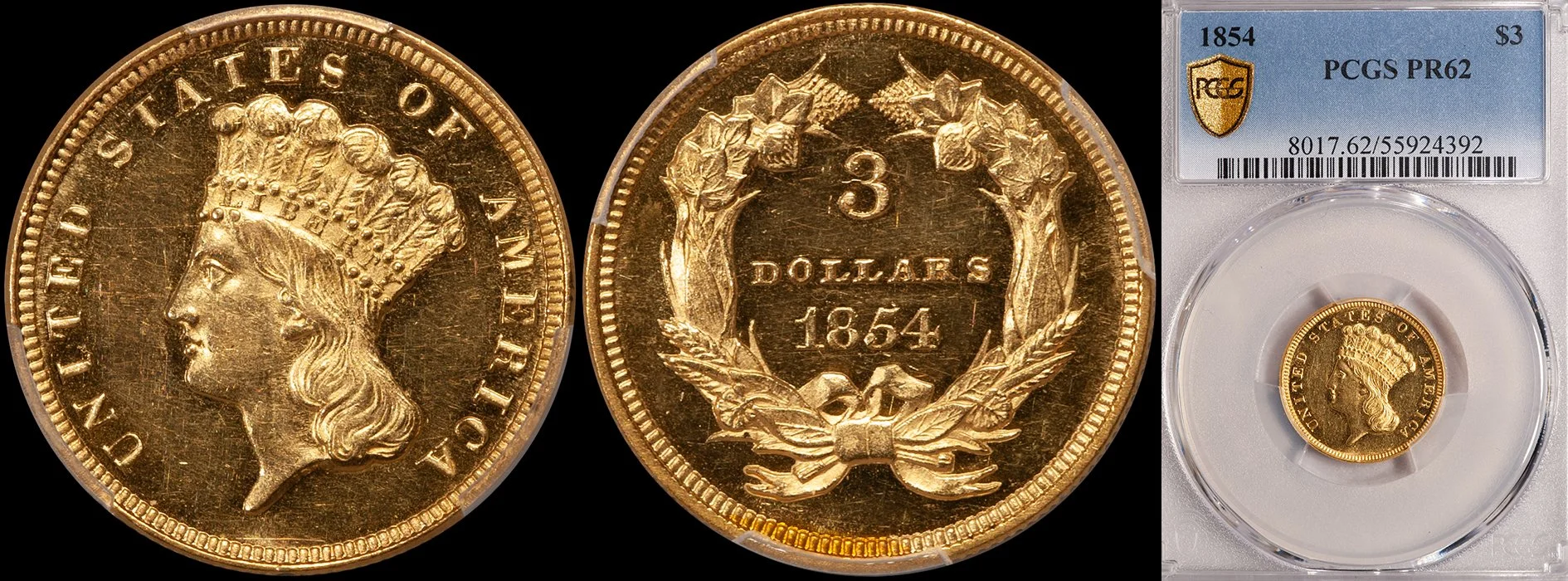
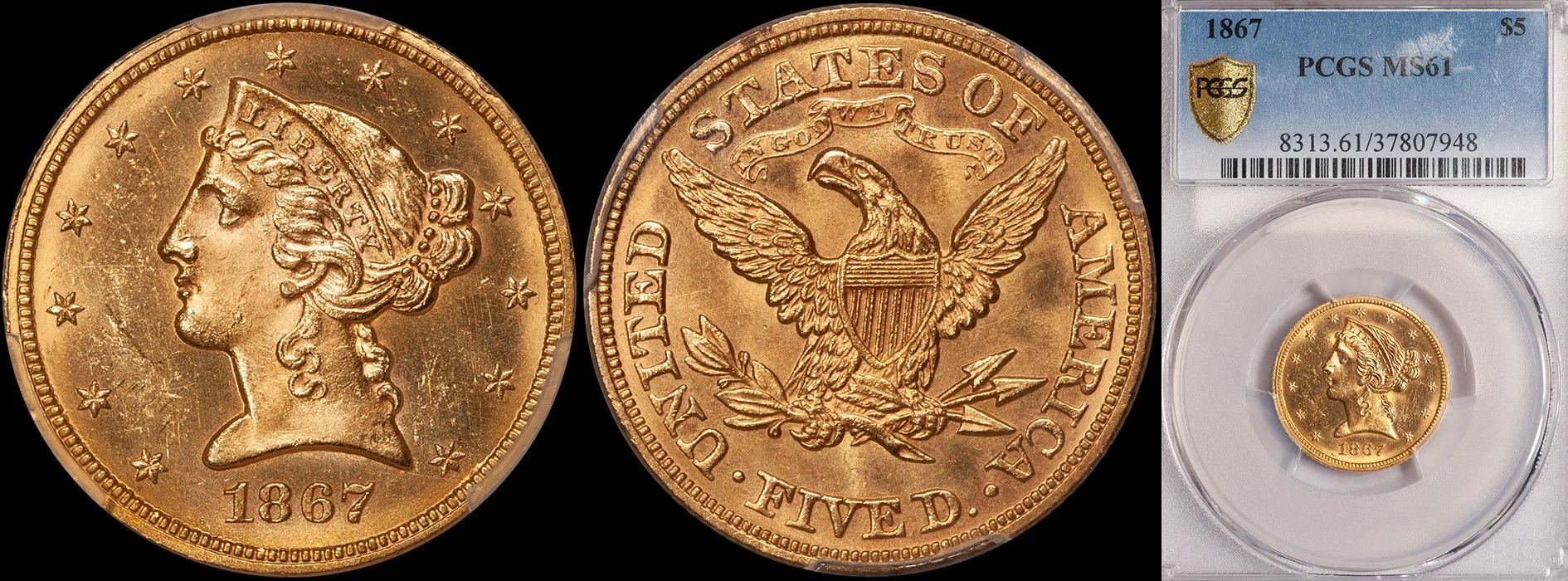
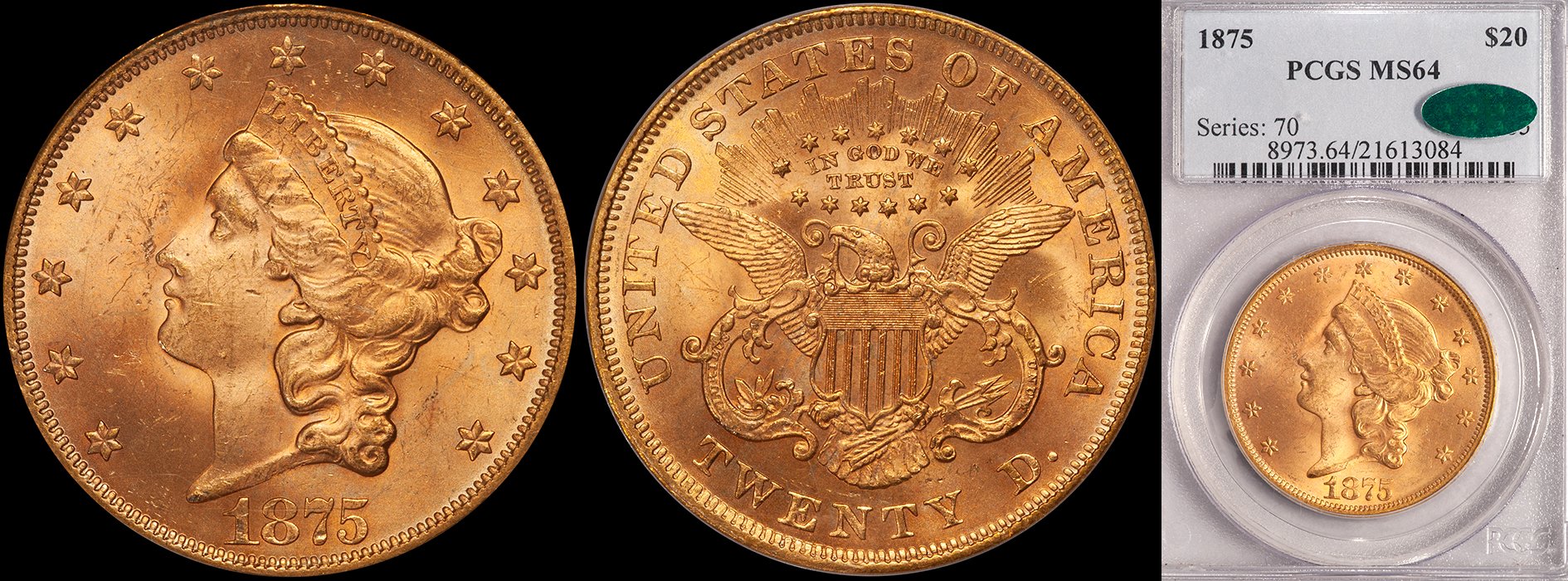
Here’s the problem with blindly bidding at a coin auction. Despite what you might think, it is IMPOSSIBLE to accurately grade or determine the appearance of any coin based solely on an image. To see the fine nuances of a coin, such as luster and the quality of the surfaces, you absolutely must see it in person and view it in three dimensions.

When I mentioned this to the collector, he stated that the descriptions in the catalog told him most of what he needed to know. I, in turn, mentioned that these descriptions are written by employees of the auction company and while interesting to read, they tend to dwell on the positives of a coin rather than the negatives.

It is a huge disadvantage to a bidder to not see a coin. He is bidding against experts such as myself who are not only more knowledgeable about gold coins than he is but have had a chance to see the coins in person, view them in good lighting and use a magnifying glass if necessary. With these advantages, there is just no way that a sight-unseen bidder stands a chance against me.

Unless there is something wrong with the coin. Here’s a good rule of thumb for coin auctions: the worst lots in the sale—the ones that dealers pass between themselves during pre-sale viewing and giggle about—are the ones that ALWAYS wind up selling to “smart” collectors who bid sight unseen.

The collector has a few options in his arsenal. He can hire an agent to view the coins for him. He can establish a relationship with the auction company and have lots sent to him for pre-inspection. Or if he’s really lucky, he can find someone he trusts at the auction company to look at the coins for him and give him judgments.

Auction companies have dome a masterful marketing job convincing the new collector that the auction experience is totally without pitfalls and the fact that there is an underbidder for every coin means that no purchase has more than 5 to 10% downside. Wrong! What if the other bidder(s) on a certain lots is also uninformed and the smart bidders (i.e., those who had actually seen the coin) dropped out at 30 or 40% lower?

Bidding at auction is a great way to add rare coins to your collection but just remember that if you are bidding based solely on images, flowery descriptions and price histories from other auctions you are setting yourself up for a potential disaster.
Rare Coin Market Liquidity

One of the clear indicators that a market has graduated from an early stage to a later stage in its development is that liquidity spreads to all areas in the market; even those that were left behind in the early stages of the market. This was clearly the case in a market such as tech stocks in the late 1990’s. Is this case in the rare coin market? I do not think that there is a clear answer. I recently read a numismatic newsletter that stated that because of the fact that nearly all 18th and 20th century non-gold coinage had increased in value in the past five years, it was inevitable that weak areas like Seated and Barber coins would rise. I do not agree with this.

Gold coinage is a different market because of the huge rise of bullion prices in the past year. With gold having doubled in value from less than $300 an ounce to over $600, gold coins have seen a level of demand that is unparalleled since the late 1970’s/early 1980’s. At this point there are really no weak areas in the gold coin market because just about any coins that are round and gold have a strong intrinsic demand right now.

In the past few years, there have been some areas in the gold coin market that have been underperformers. These would include $5.00 and $10.00 Indians, Classic Head quarter eagles and half eagles, No Motto gold from Philadelphia and San Francisco gold coinage. For the most part these former weak sisters have seen stronger demand than I can recall in the past year. But how much of this is actual demand for these specific series and how much is gold-based demand?

In this day and age, many formerly weak series become stronger because of cunning promotions. Until recently, a nice AU55 No Motto half eagle or eagle from the Philadelphia mint was a very hard coin to sell because there was minimal demand. Today, the demand for such a coin is twofold: it is gold and, perhaps just as importantly, it is a coin that suddenly has a promotional apparatus supporting its market. I would contend that it is actually more significant that it is being promoted than anything else. Most of the new buyers of No Motto gold are not collecting this series because gold has doubled in value in the past year. They are collecting it because one or two major coin marketers have made a compelling case for the collectability of these coins.

The major reason why certain series continue to be slow performers in this strong coin market is because they are not being effectively promoted (I do not, by the way, consider promotion of coins to be a negative thing as it increases demand for many series that deserve to have more collector support). Seated and Barber coinage appear to be cheap and undervalued because no one is doing even basic promotion of these series. The same holds true with Peace Dollars and Silver Commemorative half dollars. The easiest way to make Peace Dollar prices increase is for new collectors to come into the market and for dealers to start actively buying and selling these coins. If a book on this series was to be published and collectors learned the ins and outs of each issue, you’d see prices rise almost immediately.

How Often Should You Sell Your Coins?

As a coin collector, how often should you be selling your coins? One of the great things about being a collector in a strong market such as this is the possibility of selling coins after a fairly short holding period and either making money or, at the very least, breaking even. In my opinion, understanding the selling process is every bit as important—if not even more important—then figuring out how to properly buy coins. Back in the Bad Old Days of the 1990’s, if you tried to sell a coin you bought within a year or two of its purchase, the chances were excellent that it would cost you dearly. Assuming you paid the then-typical 20-30% dealer markup, your decision to sell quickly was likely to cost you as much as 35-40%. Ouch!

In 2006, coins are more liquid than I can ever remember. Unless you grossly overpay for something that you probably had no business buying in the first place, you are likely to be able to sell your albatross-in-the-making for a number that doesn’t make you want to cry.

This is both good and bad. It has enabled collectors to look at certain pieces as rent-a-coins that they know they are only going to have around for a short period of time; not unlike a baseball team trading for a potential free agent knowing that this player will help them during a pennant run but will probably be gone the next year. In my opinion, I think it’s great that collectors buy certain coins knowing that they will not be putting them away forever. As I stated above, it familiarizes them with the selling process and it helps to recycle coins that might otherwise not sell.

But there can be a downside to this process as well. Collectors who are new to the market have been spoiled by the seeming boundless strength of the past two or three years. They have a mentality that says “if I buy this coin at auction I really can’t overpay. And even if I do, someone else will come along in the next auction and pay even more than I did.” For the last few years they have been right. But when the market slows down, collectors with this attitude are likely to be left holding coins that will radically decline in value.

I think the perfect compromise is to have two segments to your collection. Have a core collection which amounts to, say, 75% of the dollar value of your holdings. These are the coins that are your specialty and the ones you are likely to keep through the next few market cycles; both up and down. In addition, have a non-core holding of coins that you think are interesting and appealing but which you know are not going to remain in your collection for more than a year or two.

Liberty Head Double Eagles

In the past few years, Liberty Head double eagles have become more popular than ever with collectors. I attribute this to a number of reasons:

    My books on all three types of Liberty Head double eagles alerted collectors to the rarity of these coins. Each of the three types have been expertly promoted and marketed by large retailing firms, greatly adding to the number of advanced collectors seeking these coins.

    The price of rare St. Gaudens double eagles rose to the point that most collectors of average means could never hope to assemble a date set. The Liberty Head coinage offered greater “bang for your buck” for the collector of average means.

    The soaring price of gold in the past three years has focused a considerable amount of attention on all large-size gold coins.

Until a few years ago, the prices for the classic rarities in the Liberty Head double eagle series (dates such as the 1854-O, 1856-O, 1861-S Paquet, 1870-CC and the Proof only issues from the 1880’s) were very reasonable in comparison to other important gold coins of comparable rarity. Today, prices for many of these rarities have shot out of sight. Are there still good values in the Liberty Head double eagle series?

I think the answer to this is an unqualified yes. Here are some issues in each of the three major design types that I feel are undervalued:

Type One: In my opinion, the Philadelphia issues struck from 1853 through 1858 are greatly undervalued in higher grade (AU55 and above). Despite high original mintage figures, these have comparably low survival rates and are typically seen in low grades when available. Another date I like is the 1859. This date is far rarer in high grades than most people realize.

Type Two: Virtually every Type Two struck before 1872 is very scarce in Uncirculated. In my opinion, many of these dates are undervalued, especially in MS62 or above. Very high quality Type Two double eagles of any date (even common issues like the 1873, 1875, 1875-S and 1876) are very rare in properly graded MS63 and above and are not fully appreciated as type coins.

Type Three: Although they have risen in price in the past few years, the rare Philadelphia issues from the 1880’s are still undervalued. I almost never see business strikes from 1881, 1882 and 1886 and when I do, the coins tend to be awful. Pleasing, original examples of these dates in AU50 are even rarer than their low mintages suggest. A slightly less “sexy” date that I think is very scarce and undervalued is the 1880, especially in MS61 or better.

Old Coin Holders

No term gets collectors or dealers more excited than “old holders.” An old holder coin is one that has been graded approximately ten years ago (or more) by PCGS or NGC. Old PCGS holders are often easily identified by having a green label insert and are sometimes smaller in size than the current capsules. Old NGC holders tend to have a somewhat chunky configuration and a totally different internal label which lacks a barcode. Say the words “old holders” and most collectors and dealers think of upgradeable coins. Clearly, grading standards were different back in the late 1980’s and early 1990’s. Many coins were very conservatively graded in the early days of PCGS and NGC and these can often be upgraded today if resubmitted.

So it should be a slam dunk when buying old holder coins, right? I mean it’s got to be a guarantee that an MS64 in an old green label PCGS holder is today’s MS65, no? Well this isn’t always the case. In fact, I would contend at this point in time many green label holders are, in fact, potential downgrades.

Oh sure, there are still some deals out there with groups of PCGS and NGC coins graded in 1990. These invariably wind-up in auction where dealers slug it out and play games of “bidding chicken” to see who is willing to stretch the most on potential upgrades. But I would contend that many of the stray old holder coins that collectors see at shows are time bombs.

Let’s say that PCGS had graded 250,000 coins by 1991 (and I’m willing to bet the actual number is substantially higher). The graders at PCGS are only human and certainly 2% of the coins that they had examined were errors on their part. Assuming that these numbers are correct, that means that 5,000 old holder coins exist(ed) that have major problems. These coins have been recolored or expertly repaired or have rim problems. Many of them have not been removed from their old holders because experts have seen them and determined that they will not upgrade. In many cases the only buyer of such a coin will be a naïve collector who is “certain” that “just because it’s in an older holder it has to upgrade.”

Look, I like old holder coins as much as the next guy. Show me an 1839-C quarter eagle in an old PCGS AU50 holder and my hear starts racing with visions of a five or eight point upgrade. But more often than not, most of the old holder coins I see these days are mistakes that are destined to be entombed in their final slab until the game changes.

2006 Atlanta ANA Show Report

The Atlanta ANA show was among the oddest coin conventions I have been to in many years. This show was, at times, an exercise in futility yet it featured crowds that were far greater than at any show in Atlanta since the heyday(s) of the great regional conventions that were held there back in the mid-1980’s. The pre-show activity was extremely strong with most dealers reporting very strong sales. The hot gold market was a major catalyst here, with many buyers seeking pieces like MS63 to MS65 Indian Head eagles, better date Saint Gaudens double eagles, New Orleans gold and gold commemoratives to fill orders. Nearly everyone I spoke with claimed that they would have happily spent double what they were able to write checks for at the show. The competition for the few available fresh coins was brutal and the quick lesson learned by most dealers was if you saw something you liked, you bought it first and worried about the price later.

The show was extremely crowded but there seemed to be very little actual retail buying taking place. I was so busy running around the bourse floor looking for fresh coins to buy that I was not able to spend as much time being my table as I would have liked. When I was there, I found most of the people to be new collectors who were either attending their first large-size show or who were looking for items such as Dahlonega half eagles priced at under $1,000. I must give the ANA some much-deserved compliments on their pre-show publicity as the crowds really were impressive from a numbers standpoint.

The highlight of the show for me was the sale of the Duke’s Creek collection of Dahlonega gold coinage. I was pleasantly surprised at the strength of this sale. I wound up purchasing ten lots which constituted around one-third of the dollar value. Three coins (the 1855-D and the 1861-D gold dollars plus the 1854-D three dollar gold piece) broke the $100,000 mark and a number of price records were set for individual dates. I am working on a detailed analysis of the sale results which I plan to have posted on my website by the end of the week.

On Saturday morning the area around Atlanta was hit by tornados and, in case you haven’t had the pleasure of being woken up by a screaming tornado warning siren at 4AM, it’s interesting to say the least.

Going into the traditionally strong Spring season, my best guess is that the coin market will continue to display a good deal of strength. I look for the rare gold coin market to be extremely strong due to the run-up of bullion prices to $600 and over, plus the upcoming releases of at least three potential classic books on United States gold coinage within the next few months.

TFSB or the Theory of Frontloaded Set Building

In my recent April newsletter I mentioned one of my rare coin theories: EEEES or Easy Explanation Equals Easy Sales. In the spirit of wacky acronyms, here’s another one for you: TFSB or the Theory of Frontloaded Set Building. Assuming that you are collecting coins with the completion of some sort of set as a goal, you are probably building your set the wrong way. Typically, collectors are stingy when it comes to key issues and they tend to overdo more common issues.

Here’s an example of what I mean. When I have the chance to look at a complete set of coins (whether it is a date/mintmark run or a type set) the first thing I do is look at the keys. If someone has a date set of Dahlonega half eagles, I am going to be much more interested in how their 1861-D looks than their 1847-D. In nine cases out of ten I find that the 1861-D is one of the lowest grade coins in the set and generally has poor eye appeal while the more mundane 1847-D is among the nicer coins.

If I were building this set I would do the exact opposite. I would have the 1861-D be among the nicer coins in the set (perhaps even the nicest) and not worry as much about the less rare coins.

One of the reasons I find the Duke’s Creek collection of Dahlonega gold to be interesting is that it was (knowingly) assembled using the TFSB. As an example, in the gold dollar set, the two best coins are the 1855-D and the 1861-D. This makes sense since they are the two rarest. Now think about how the overall impact of the collection would have been if these same two coins were the lowest grade members of the gold dollar date run. Still an impressive set, no doubt, but not nearly as memorable as a set in which the two keys coins are also the two highest ever slabbed by a third-party grading service.

One of the negative impacts of Registry Mania is the tendency for people to get carried away about common coins in uncommon grades. In order to score more registry points, collectors will pay very high premiums for common coins, just to get some needed set value points. Rare gold coins are not really affected by this (yet) but it is possible that Registry Mania could force future collectors to make some purchases that do not adhere to the TFSB. I would caution any set collector to weigh his decisions carefully and to always save his “stretches” for the key date coins that will add panache to a set over the long term.

EEEES Theory of Coin Collecting/Investing

The EEEES theory of coin collecting/investing has proven to be remarkably successful in the past five years. And what exactly does this acronym mean? It stands for “Easy Explanation Equals Easy Sales.” Yes, I know it sounds like something from a bad marketing seminar but it makes a lot of sense if you analyze its meaning. In the past five years, we have seen an influx of new collectors into the hobby. Many of these collectors have immediately started purchasing expensive, high end coins. But unlike their counterparts from past generations of numismatists, they had very little background, other than what they read on a few websites. For them, ease of understanding was critical in the decision to buy a specific coin.

And this is exactly why coins like High Reliefs and Stellas and $50 Panama-Pacific Rounds/Octagonals have become so popular in the past five years and risen dramatically in price. In a nutshell, coins like this are easily understood by both new buyers and new sellers. Putting it another way, if a coin can be easily explained by the new breed of Internet coin dealer, it is easy to sell. Because of EBay and the success of Internet coin auctions, many purchases have become impulsive. An impulsive coin purchase is much more likely to involve a coin that requires little analysis than one that takes a page of pontificating to explain.

The EEEES theory shapes many of my purchasing decisions. I am much more likely to purchase an 1838-D half eagle than an 1849-D half eagle because the former has a great story (first-year-of-issue and one year type) while the later has nothing especially remarkable about it.

I think that the market for certain “easily explained” coins has become a bit on the frothy side. As an example, prices for coins like 1911-D quarter eagles and 1909-O half eagles are hard to justify given the relative availability of these issues in most grades. But to the new generation of collectors, these are venerated key coins in popular series. To a collector who has only just become a serious buyer, the fact that a 1909-O half eagle in MS61 or MS62 has tripled in price in the past few years is not relevant as his point of reference about coins might only go back a few months.

I expect Easily Explained coins in all series to remain in the forefront of the market as long as it stays bullish. Some of today’s avid new buyers show no inclination to become well-read, complete numismatists and will, therefore, never be able to understand subtly rare coins. For better or worse, the demand for the 1838-D half eagle will continue to grow at a much stronger rate than for the 1849-D half eagle.

How Important is Strike?

How important is strike when it comes to determining the desirability of a gold coin? In my opinion, probably not as important as it should be and for what is probably an odd reason. For certain series, strike is a critical component in determining the value of a coin. As an example, a certain date in the Mercury Dime or the Standing Liberty Quarter series might be worth $1,000 in MS65 with a normal quality strike but $20,000 with a sharp strike. There are no gold series in which strike carries a significant premium. Why?

I would have to say the answer has to deal with clever marketing. A few decades ago, some clever marketers made up Full Split Band and Full Head designations and proposed that they were worth enormous premiums. It was discovered that these coins were, in many cases, very hard to find with a sharp strike. You could look through roll upon roll of common coins like the 1945 Dime and not find one with Full Split Bands. Clearly the few examples that were well struck were worth premiums.

Why aren’t gold coins marketed with strike designations? Probably because no one has (yet…) thought of a way to make collectors pay a huge premium for a St. Gaudens double eagle with a full torch or a New Orleans quarter eagle with complete feathers on the eagle’s left leg. But if PCGS or NGC were to suddenly bless the concept of strike rarity in certain gold series, you can bet that certain issues would suddenly command huge premiums.

Why should gold coin collectors care about strike? In my opinion, poorly struck gold coins often have bad eye appeal and should be avoided. However, there are exceptions. As an example, certain branch mint issues are always weakly struck. I have never seen an 1856-D quarter eagle that was not very poorly struck and because of this I will not use strike as a consideration when determining whether of not I am going to buy an 1856-D. But an issue like the 1848-D quarter eagle is usually well struck and if I am offered a piece that has a distinctly below average strike, the chances are good that I will pass.

It is important for collectors to learn which issues are well struck and which are not. This is one reason why my books on gold coins go into careful detail on strike for every branch mint issue. If you pass on a lovely original 1849-O eagle just because it has weak stars, you are making a big mistake: every known example is very flat on the stars. But if you are offered a nice Uncirculated 1847-O quarter eagle with an extremely weak reverse, some basic knowledge of the series will show that this issue can be found with reasonably sharp detail on the reverse.

If you decide to collect U.S. gold coins (or any coins for that matter) learning how the coins are supposed to look is any extremely important consideration. Look at as many examples of what you collect as you are able to. Read all you can. The more information you have at your disposal, the more informed your buying decisions will be.