Gold Coin Coloration

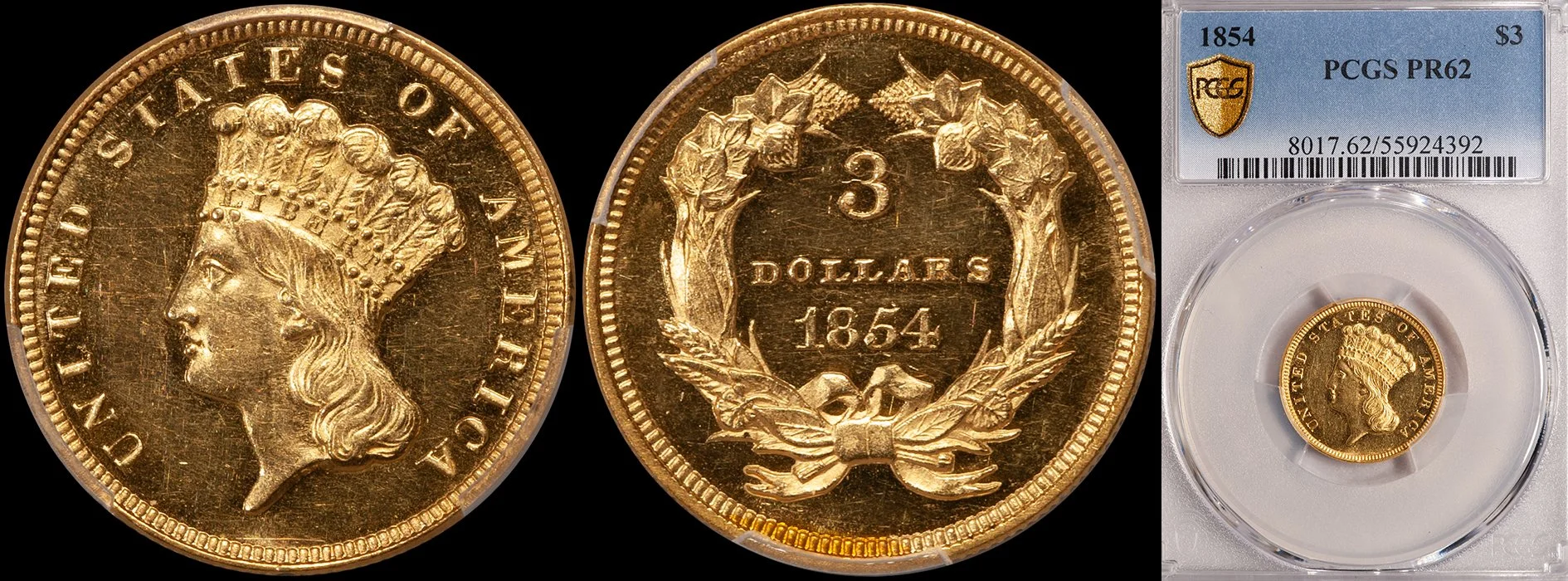
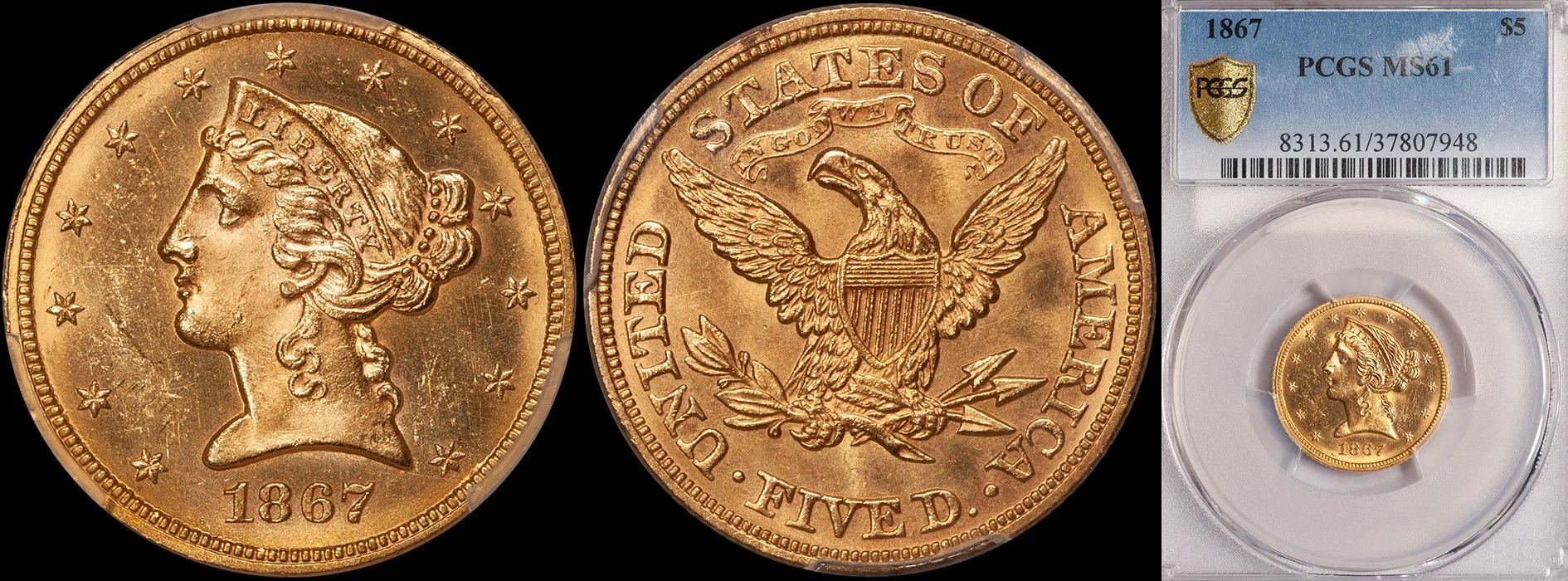
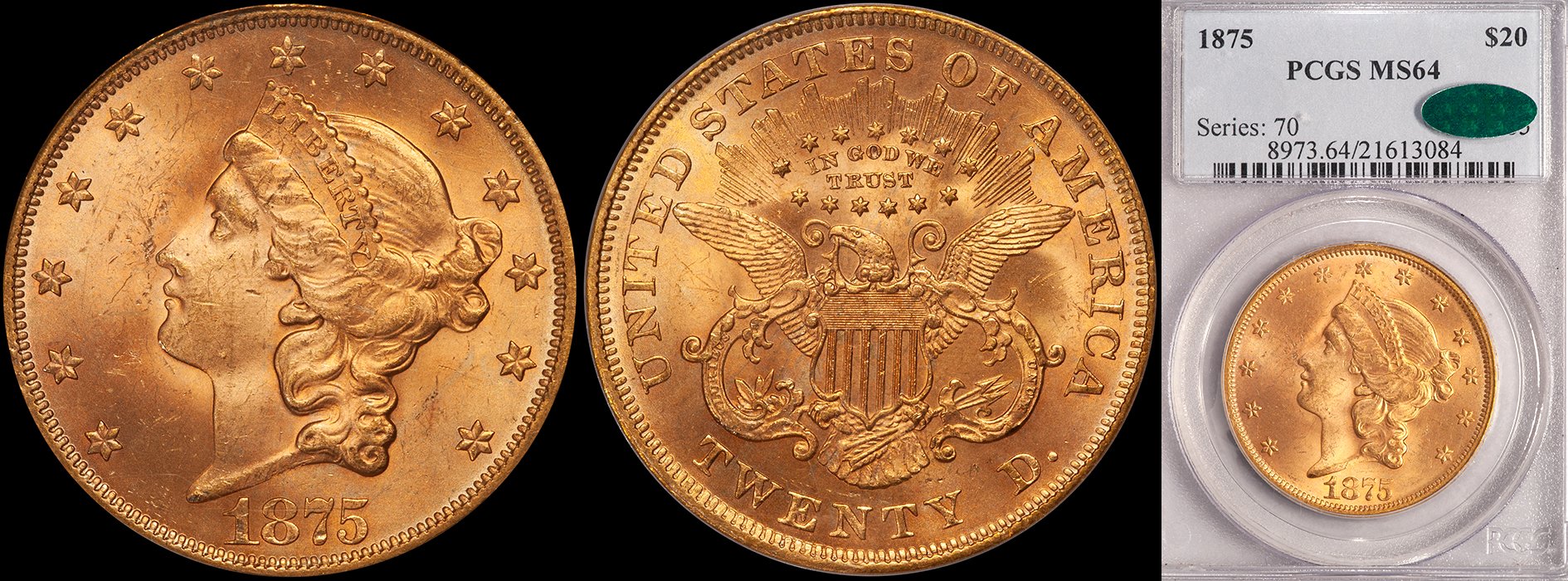
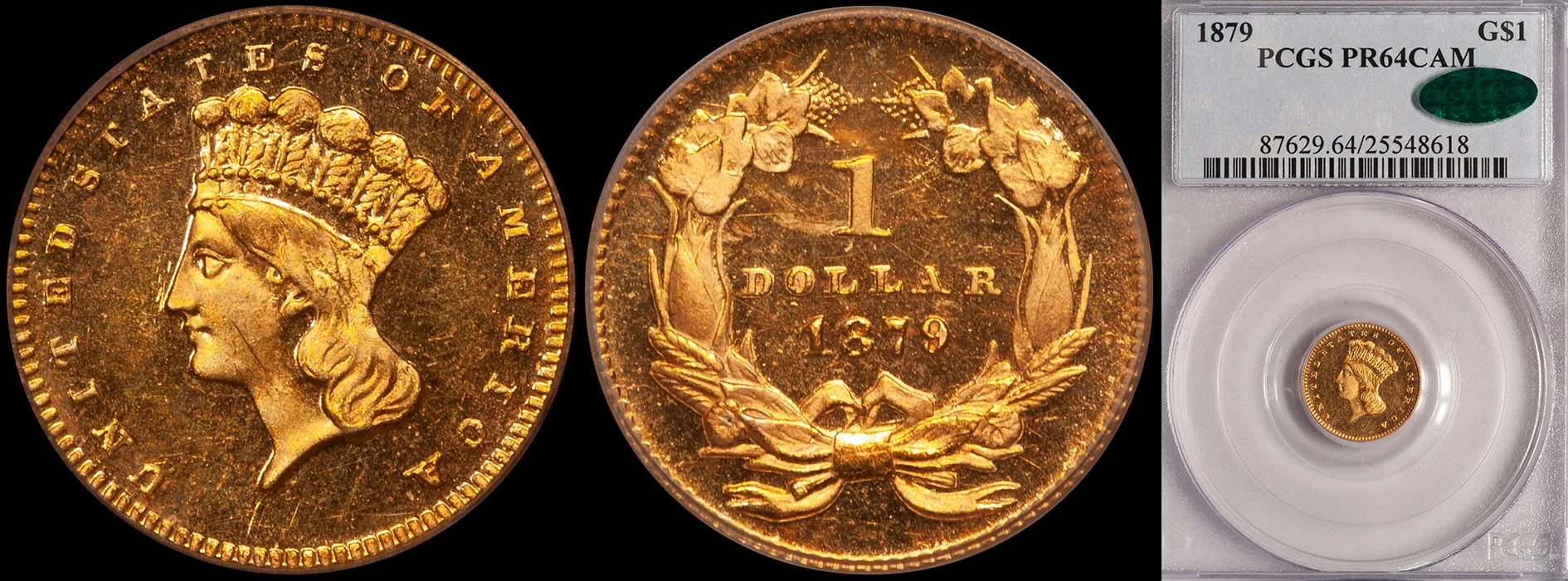
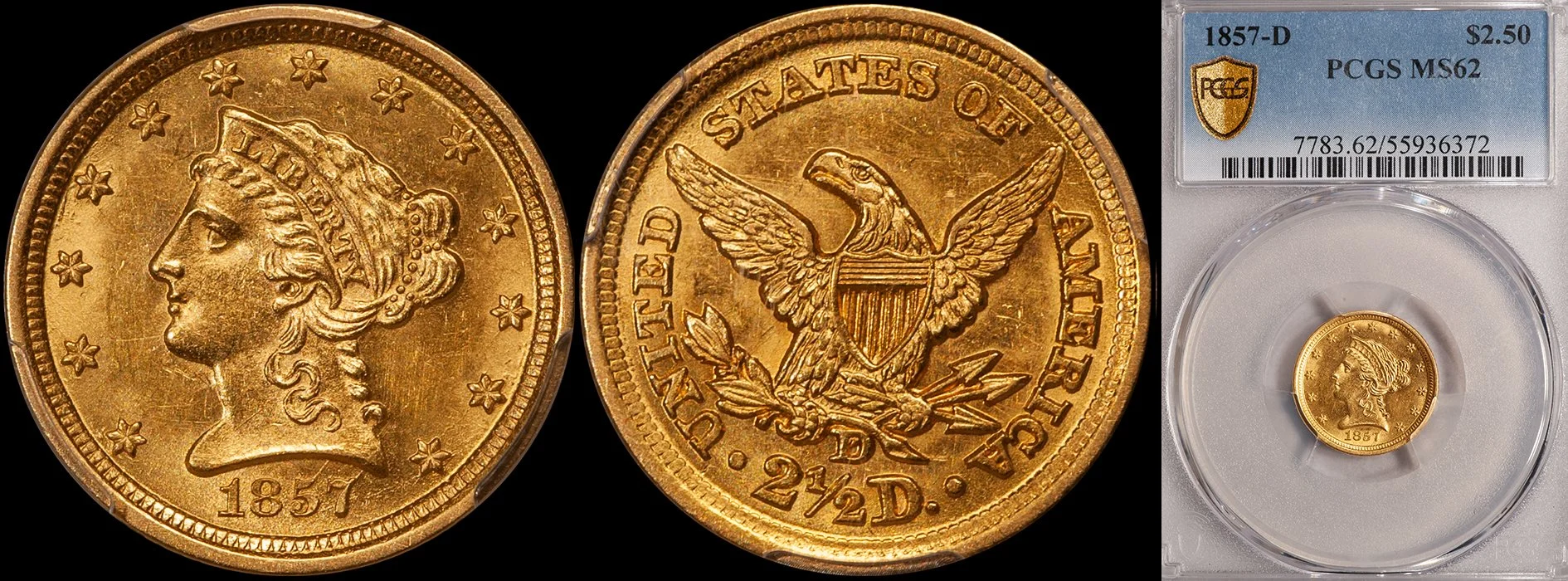
Why don’t gold coins with great coloration sell for a significant premium as copper, silver and nickel coins with a similar appearance do? On certain types of gold coins, superb natural coloration can sometimes be seen. As an example, some of the high grade gold dollars from the 1870’s and the 1880’s can be found with magnificent rose, orange and green-gold hues. Proof silver type coins from this era with wonderful color traditionally sell for big premiums over pieces with average quality coloration.

I believe that there are a few possible answers to this question.

First of all, many insanely toned silver coins are often very common pieces which are given big premiums solely because of their color. Dramatic multi-colored toning might be the only reason that someone wants to buy an otherwise-mundane coin like a common Peace Dollar or a silver commemorative half dollar. Clever marketers were quick to see that this was the best way to turn a $50 coin into a $10,000 coin. If a big marketing company starting selling MS67 and MS68 gold dollars for a big premium because of their color, their thinking just might catch on with the mainstream.

The second reason has to do with the fact that toning on gold coins tends not to be as visually dramatic as on silver or copper coins. You don’t see gold coins with stunning rings of peripheral blues and reds. But the natural coloration of gold is warm and attractive and most uncleaned pieces are fairly pretty to begin with. In my opinion (and if you disagree please don’t send me an irate email…) the natural appearance of most silver and copper coins just isn’t as pretty as their gold brethren.

It seems to me that superbly toned gold coins are a great market play right now, especially if they can be obtained for just a small premium over “normal” examples. If and when PCGS and NGC start designating eye appeal on their holders (NGC has semi-embraced this concept with the star designation) it will be interesting to see if very pretty gold coins sell for very big premiums.
The Graying of the Coin Business

The coin business continues to grow but will there be any dynamic younger dealers left to service the next generation of new collectors? I am in my mid-40’s and I represent one of the last waves of coin dealers. If you go to any coin show, you’ll see plenty of dealers in the 40-60 year old range. But you’ll see virtually no coin dealers in their 20’s or early 30’s. This worries me. What sort of future does the coin business hold if there are no up-and-coming dealers?

The lack of young dealers means that this business will become more “self-serve” in the coming years. By this I mean that most collectors will have to purchase their coins through impersonal sources like EBay with little or no guidance from a trusted resource. For some people, this will be no problem; they do not need the guidance they get from a dealer. For others, they will never get the satisfaction that a good dealer-collector relationship can provide.

I think the lack of young dealers boils down to one major issue: the extreme expense it takes in starting and running a successful coin business in today’s market. When I opened my business in 1984, I had less than $50,000 in operating capital. Today, it takes a significant six-figure investment to run a coin business.

I would personally like to see organizations like the Professional Numismatist Guild (PNG) create mentoring programs that match young numismatists with dealers and foster an environment that encourages more young people to choose numismatics as a career. Some large firms like Heritage and NGC offer internships for college age numismatists that are a great introduction to the reality of numismatic as a career.

While I’m not sure that I’d like to be 25 years old again, I’d sure like to be well-positioned in a growing industry that has a future leadership void. Teach your son or daughter how to grade coins…you have a better chance of him becoming the next Jim Halperin than the next Tiger Woods!

San Francisco Gold Coinage

Having just returned from a nice long weekend in lovely San Francisco, I found myself often* asking the question “why doesn’t such a great town with such an indisputable numismatic history have a more active collecting base?” I can think of at least four reasons why San Francisco gold coins lag their fellow branch mints’ popularity.

    No one has written a book on these coins. Without seeming too egotistical, I think that my books on Charlotte, Dahlonega, Carson City and New Orleans books have been real shots in the arm for each of these mints. If and when someone writes an accessible, concise book about San Francisco gold coins, this will remedy a century of neglect. I won’t be writing this book. Will anyone step up to the plate?

    Unlike the Southern gold coinage, production of San Francisco issues dragged on for nearly a century and entailed denominations ranging from gold dollars to double eagles. There are simply too many coins for most collectors to keep track of and they come in too wide a range of size. If I were the Czar of San Francisco Gold Collecting, I would try to market these issues in three age brackets: the early years (pre-1880 issues), the middle years (1880-1906) and the late years (1908-1930).

    Continuing on the same track as Reason #2, there are too many different types of San Francisco coins to get all-encompassing collections started. The individual who collects St. Gaudens double eagles is unlikely to collect gold dollars. This seems to be a case of “never the twain shall meet” and because of this, San Francisco gold coins continue to have small pockets of cult interest that never merge together to form bigger interest groups.

    Despite not being very popular many San Francisco gold issues are already very highly priced. This makes it harder to market them as undervalued sleepers. In a related vein, many of the early issues are very rare in all grades. Very rare coins are hard to promote because they are hard to find in any quantity.

* = OK, so I’m exaggerating here. I actually didn’t think about business or coins at all the whole weekend but on the plane ride back the subject did come up once or twice…

Does Size Matter?

When it comes to collecting United States gold coins, does size matter? For better or worse, I’m afraid it does. Most new collectors of gold coins are immediately attracted to big coins, especially double eagles. The classic entry position for most collectors is to buy some gold bullion, then graduate to something semi-numismatic like a Krugerrand or a Maple Leaf then to St. Gaudens or Liberty Head double eagles. This has been a pattern that many companies have pushed through their marketing.

When someone is new to collecting and spending a few thousand dollars on a coin for the first time, it is difficult to understand the concept that intrinsic value has little bearing in the world of rare gold. But this is exactly the reason why most new collectors shudder when they think about spending $5,000 on a small coin like a gold dollar or a quarter eagle.

There is another factor at work that keeps values of smaller coins below their larger counterparts. As most well-heeled collectors approach middle-age (or beyond) their eyesight no longer allows them to carefully view a small coin. Paying $5,000 for a gold dollar that you can’t even see keeps the average 50-60 year old collector away from little coins.

But there is a loyal group of collectors who like little coins. Just like some dog owners prefer mixed breeds to pedigrees (after watching the Westminster Dog Show last night I just had to make a dog reference…) some collectors like little coins for exactly the reasons that others do not: they are irrestible little “rogues” that require a bit more work to love than their bigger brethren.

I think some of the best values in the market are in the smaller-sized denominations. There are many gold dollars and quarter eagles that are superb values (feel free to email me at dwn@ont.com and I’ll provide you with a list of ten undervalued gold dollars and quarter eagles) especially when compared to eagles and double eagles. I will continue to actively buy and sell these smaller denomination coins—as long as I can still see them!

Die Varieties of Gold Coins

Will die varieties of gold coins ever be popular? For years I have tried to drum up interest in what I regard as major varieties of U.S. gold coins. By “major” I mean varieties that are significant and readily visible to the naked eye. Minor varieties do not interest me. The fact that that a mintmark is slightly further to the left on one coin versus another is mundane. But I am interested in an issue that has, say, two distinctly different mintmarks. We are in a golden age of numismatic research. This generation of collectors has access to greater information than ever before. One of the few areas that has not had really fertile die variety research is United States gold. Some upcoming books will change this.

As an example, Harry Bass’ research on early gold coinage has been improved by John Dannreuther and a book about the varieties of early gold is expected to be published soon. It will be interesting to see what effect this has on the market for rare varieties in this area.

Given the high average cost of most gold coins, my guess is that this will never be an area that becomes wildly popular with variety collectors. But certain expensive coins like Bust Dollars and early Large Cents have avid variety followings and perhaps gold will follow suit someday.

At this point I regard Liberty Head gold varieties as an area that really does not merit a premium but which has some potential. I wouldn’t pay a premium for more than a handful of these varieties but it’s nice to know you can buy something with possible added value for essentially no premium.

February 2006 Long Beach Show Report III

Another observation from the Long Beach show: I’d estimate that close to 90% of all United States gold coins, regardless of denomination or price level, have been “messed with” at one time. This degree of messing ranges from light old cleanings to recoloring, to application of putty or other foreign substances to hide hairlines to massive reworking of the coin’s surfaces. What this means to the average buyer of United States gold coins: a caution flag waving in his face every time he makes a purchase. Quite frankly if you are buying coins based on a sight-unseen basis or primarily through Internet-based auctions, it is inevitable that you are buying many problems coins; despite the fact that they are in PCGS or NGC holders. More than ever, it is essential for collectors to purchase coins through a knowledgeable, trustworthy dealer.

I had the chance recently to view two different sets of 20th century gold coins. Both were highly ranked in the PCGS Set Registry within their respective series. And both sets, in all honesty, were full of problem coins; the kind that, if the market stops surging upwards, are destined to show substantial drops in appreciation. I know the owners of both sets. They are nice guys but they have always been the sort of rugged individuals who have eschewed help from other dealers and “done it themselves.” You have to wonder how much better their sets might have been if they had decided to trust a dealer or two and get some help instead of arbitrarily filling holes.

February 2006 Long Beach Show Report II

The Long Beach show is in full swing and I expect that this will be the busiest of the four days of the convention. Here are a few observations I have made:

    Where are all the PCGS coins? With the exception of generic gold and modern coins (plus some Morgan Dollars) there are almost no PCGS coins in dealer’s cases. This means one of three things: PCGS is grading so tightly these days that no one is sending coins there; PCGS coins are so liquid that no one has to display them—they just sell themselves or all the notable PCGS coins wind-up in auction. I’m not sure if I know exactly what the right answer is, but the current disparity between PCGS and NGC product on the market is nothing short of remarkable.

    Baltimore is the new Long Beach. As recently as five years ago, Long Beach was a show that I wouldn’t have missed even if I were on my death bed. Today, the show just seems to lack the sizzle it once had. The Baltimore show (which is coming up in March, by the way) seems to have that old electric feeling and I would now rate it as the #3 show of the year, after FUN and Summer ANA.

    I had a chance to look at the gold coin lots in the Heritage sale and was thoroughly unimpressed. I personally bid on less than twenty coins and was aggressive on only a handful. There were a few Three Dollar gold pieces I liked and the NGC MS62 1799 Small Stars Eagle was lovely. I also liked the NGC MS60 1844-O eagle and some of the lower valued Saints were attractive.

    I spent some time at the ANR table and looked at highlights from their upcoming March sale in Baltimore. Yow!! There are some amazing coins in this sale and I will be discussing them in greater detail in the coming weeks in a series of Raregoldcoins.com Market Reports.

February 2006 Long Beach Show Report I

The February 2006 Long Beach Show opened today. Traditionally, Wednesday is a dealers-only event with trading occuring off the floor in the morning and on the bourse in the afternoon and early evening. Buying activity, in my eyes, could be described in three words: really, really difficult. I looked through dozens of dealer's coins today (including a number whose coins I do not look at until later in the show) and I have to admit that this is one of the harder shows I ever attended in terms of buying. There just isn't alot of material out there and what few nice coins there were have staggering price tags attached. I am hopeful that more coins will turn up later in the week but I am not holding my breath...

This is really par for the course at a Long Beach show. For some reason, this is a very hard show to buy at. It has been for many years. I would assume that part of the reason is that the services are tight at Long Beach shows and not many fresh coins get made. I expect that the upcoming Baltimore show in March will present me with more interesting buying opportunities.

But I am not returning empty-handed. I was able to buy around a dozen interesting New Orleans gold coins including a Condiiton Census 1855-O eagle, a lovely AU58 1845-O half eagle, some very high quality quarter eagles and a pleasing "slider" 1855-O gold dollar. I will have these coins listed and imaged on my website by Monday and would suggest you call me at (214) 675-9897 if anything captures your fancy.

Indian Head Quarter Eagles

In the past few years, Indian Head quarter eagles have been very successfully promoted. A not-as-well-known but equally successful promotion has doubled the price of common date MS65 Indian Head half eagles in the past year. I have recently witnessed an interesting trend that I think might foretell the next price run-up in the 20th century gold coin market. A few dealers are starting to quietly accumulate better date Indian Head eagles, especially issues such as the 1908-D With Motto, 1909-D, 1909-S, 1912-S, 1914-S and 1915-S. The desired grade range for these coins is MS63 to MS65 with most of the activity seen in the MS64 range as this is a “sweet spot” from the standpoint of price (most MS65’s are expensive) and rarity (many of these dates are nearly impossible to find in Gem).

It makes sense to me for a lot of reasons that this series is due for a promotion. The coins are beautiful (I personally like the design even better than the St. Gaudens double eagle), the set is relatively short (only thirty-six coins including the 1907 Wire Edge and Rolled Edge varieties) and, unlike Saints, it can realistically be completed. Most importantly, this series is a sort of final frontier in 20th century gold as it is really the only denomination left that hasn’t been promoted and seen significant price run-ups.

This is a great set for a collector to assemble but it takes deep pockets, especially in MS64 and higher grades. How can the collector of more modest means take advantage of what could become an interesting market play in the coming years? I would suggest purchasing a few slightly better dates in MS64 or MS65. There are only two truly common issues in this series: the 1926 and the 1932. They are currently valued in the $2250-2500 range in MS64 and around $5000-5250 in MS65. I’d suggest the collector look for marginally scarcer dates such as a 1908 With Motto, 1912, 1913, 1914 or 1914-D. These currently sell for modest premiums in MS64 and MS65 despite the fact that they are many times rarer than the 1926 or 1932.

A few buying tips: avoid coins with heavily spotted surfaces as they are hard to sell (a few small, unobtrusive spots are OK), be careful for coins with deep, detracting marks (especially on the face of Liberty) and watch out for coins with funky color (yes, they are even in NGC and PCGS holders).